Joy Lane on Six Years at City College and the Engineering of a Breaking Point
✨ Episode Summary
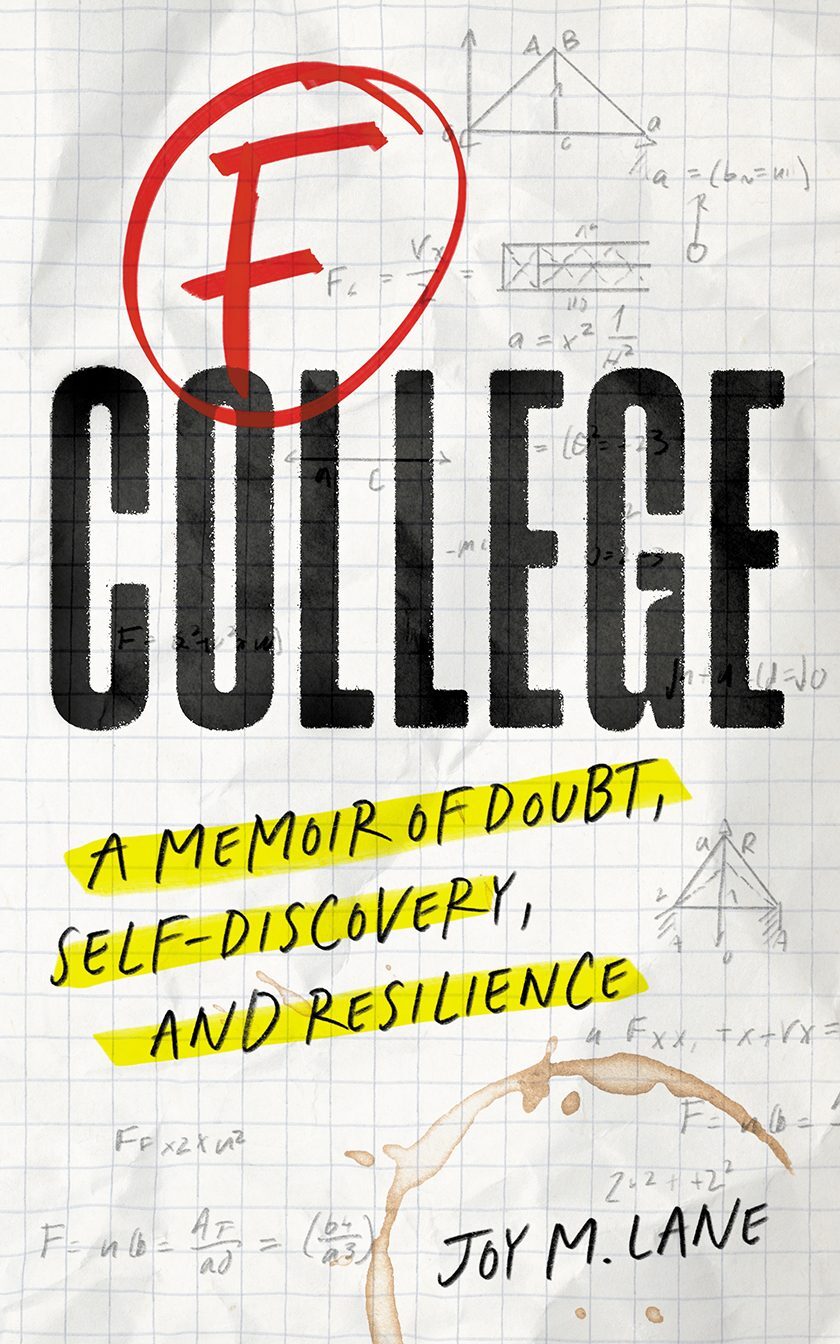
Joy Lane is a senior mechanical design engineer who also lectures at an engineering college. Her debut memoir, F College: A Memoir of Doubt, Self-Discovery, and Resilience, starts on the day she lay in the grass at 23, ready to walk away from her last final after six years at City College, and builds her story the way an engineer builds a system. The book comes out October 20, and a Goodreads giveaway drew 240 sign-ups before she had told her friends about it.
In this episode of Author Hour, Joy explains the classroom moment that convinced her to tell her story, why the first draft took three months and the editing took a year and a half with Scribe Media, how an audience poll settled her provocative title, and why she thinks the full story will take four books.
“I want to normalize the struggle, because it is hard. But I want to show that hard things are worth doing.”
⭐ Top Moments
- 240 readers signed up before she told a friend. Ahead of launch, Goodreads ran a giveaway of 100 copies. “I’ve been kind of slacking on my marketing and I didn’t tell any of my friends and I checked my Goodreads and like 240 people signed up.”
- Three months to write, then Scribe ran with it. Joy wrote two pages a day and finished the draft in about three months. Editing took a year and a half. “I wish I’d known how thorough that the Scribe editing process was going to be because once I finally surrendered my edited manuscript, then you guys [Scribe] just took it and ran with it. And then it was really easy.”
- The line of students that started the book. Lecturing at an engineering college, Joy looked up during a quiz to find a line of stressed students waiting for her to check their answers. “I think it wasn’t until I started working with students who were in that exact pain point that I really realized, oh my gosh, I need to tell people that I had a hard time.”

Joy Lane
Senior mechanical design engineer, college lecturer, and entrepreneur Joy Lane likes working closely with people and making new stuff. When not sketching out wild ideas or grading assignments for her students at Cal Poly, Joy can usually be found at the beach with her faithful dog, Boone, daydreaming about the next big venture (and, occasionally, landing a decent shot on the golf course).
★ Scribe Case Study
Joy Lane Turned Six Years at City College Into F College, and 240 Readers Signed Up Before She Told Her Friends
Engineer Joy Lane wrote F College to normalize the struggle she hid through six years at City College. Before launch, 240 readers signed up for its Goodreads giveaway.
📚 Books by Joy Lane
Transcript
Lex Statzer: Today on Author Hour, we have author Joy Lane, who wrote F College, a memoir of doubt, self-discovery, and resilience, which comes out October 20th. Welcome to Author Hour, Joy. Yay, thank you so much for having me. I'm happy to be here. So today we're going to look into what your book is about, who it's for, and how it came to life. So before we get into the book, let's go back a little bit. Six years at City College, 13 restaurant jobs, Calculus III three times. Somewhere in that grind, when did you realize your story was one that other people needed to hear?
Joy Lane: Oh, that's a great question. You know, and I wish I could say that while I was going through it, I knew that this was going to become something. But it definitely wasn't until probably another decade later when I started working with youth, and I'll say young adults. I get to, I have the privilege of lecturing at a great engineering college now. And there was this moment that happened. And it kind of just was my eye awakening moment where I was giving a quiz. And so all I was doing was just sitting at my desk, and I was grading papers. And a student came up to me. And before they submitted their quiz, they asked if I would look over their, just their answers. And I was like, like, I don't really do that. But okay, sure. So I'm looking down. And then when I look up, I realized the entire class noticed and I had a line of students waiting for me to check their work before they submitted it for a quiz, which is not allowed. And then in that moment, I kind of just was like, wait, everybody stop. Are you okay? And that was the moment when I just was looking out at this classroom of students, and they were so stressed, which I can relate to. And then something I started seeing just, you know, and confident students were coming to me and just expressing all this stress, all of this anguish, and this pressure that they had put on themselves to make it through engineering. And they really felt like they were the only one. And, you know, I've been kind of timid about my own personal story and struggles. But it was through some of those conversations when I started opening up to students like, hey, I had a hard time also, which is hard to see, I think, at this point in my life now. So a very long winded answer. I think it wasn't until I started working with students who were in that exact pain point that I really realized, oh my gosh, I need to tell people that I had a hard time. And it's really hard to start your story at the very beginning, because it's very ugly. And I didn't know what I was doing. But I'm hoping that by being honest and vulnerable in that beginning point, what it took for me to overcome, that's really what I'm what I'm going for.
Lex Statzer: Yeah, it sounds like that full circle moment was where you were able to stop and reflect on your own life. And it's exactly it's interesting to see people near us in that way. And it takes us back to a time where we felt the exact same way. Yeah. So looking inside F College a little bit, you don't just tell your story in this book. You build it like an engineer. So there's equilibrium, stress, breaking points. When did thinking like an engineer become the way that you made sense of your own life?
Joy Lane: Man, again, I wish I could say it was while I was going through it. Sometime in grad school. So spoiler alert, I make it through college. It takes me nine years to get my bachelor's. And at that point, I was just convinced I was an idiot still. And then at some point in grad school, I had started working as a design engineer. And then for me, that's when it really started to click. And so in grad school, I started designing real systems and whole systems. And it wasn't until I could see the whole picture where it really started to click for me. And so that's kind of when the equations flying by, all those moments actually kind of happened. And I was like, oh, that's why I needed to learn calculus. That's why I needed to learn heat transfer. And then all these classes that were just boring classes finally became, oh, wait, this is actually real life. But that took me much longer, unfortunately, to see. So now I'm trying to give it to, hopefully, readers in small doses. There is quite a bit of engineering in this book. And I hope that isn't a turnoff for non-engineers. I think one of my missions with this is to make engineering accessible, especially to younger readers, and just by expressing it in a way where hopefully they can start to see the world through some of those equations.
Lex Statzer: Yeah. So walk us through the framework in F College. What is this book in its heart?
Joy Lane: Oh, man. This book is essentially my almost breakup letter to college. It starts really heavy with me laying on the grass, just being like, I don't want to do this. And I think I had to hit that point. I know I did. I know I had to get to that point, laying in the grass, ready to give up on everything. Because by being willing to give up college, I really had to ask myself, why am I here? What am I looking to get out of this place? Because for so long, I put all this weight on my GPA and how I was performing in class. And that's where all my value, I thought, was coming from. And so for me, I think hitting that breaking point was everything. So it is a really hard place to start a book by picking it up and being like, this girl's depressed. Which is true. That's in there. So it is kind of a tough sell. But the framework, you really start at that really low point with myself when I'm 23 years old, ready to walk away from my last final. And then I kind of wind it back and I take you through that very last semester. It's my sixth year at City College. So I've been called the female Van Wilder. I lived in the same place for several years. Everyone kind of just knew what joy was about. And I think it was a lot of fun in some ways, but I don't think people realize the weight that I was carrying inside. Because as much as I was happy to joke about, you know, bartending and being cool and knowing all my professors on a first name basis, there was part of me that felt very uncool with that. So this story is really just me coming clean and going back to that place with that 23 year old girl who was really just struggling to figure out what it was all for.
Lex Statzer: Yeah. And going back to that place, was that hard for you emotionally? Was it difficult to relive something that was so difficult for you? Yes.
Joy Lane: Yes. And I have been blown away by this process. Just some of the emotional depth that I didn't think I still carried all of that weight with me. Or, you know, it's one of those things it's in the past. I'm over it. I've come so far in my career. Now, none of this matters. But by sitting with that girl who was so broken and so hopeless, it really cost me to kind of look back and start asking myself questions. Does everyone feel like this in college? Is this necessary? Do we need this level of stress to get performance out of young adults? And so I think sitting with it for me has been highly emotional. You know, my first draft that I submitted to Scribe, the editor said something to me about my timeline, because I don't really talk about the future where I am successful. And I don't really talk about the past where all that weight came from. And so he kind of challenged me to share a little bit more of my past, which was really hard for me. And so I think it caused me to go inward in a way that was so wrong and so emotional. But by doing that, I think I had to kind of become that scared girl again, conquer the fears again. And then I could talk about it and then kind of work through it. But it took me, yeah, probably a couple years just to kind of sit with that anguish and then get to the point where I'm ready to release that version, not only for myself, but just in the sense that if somebody is going through it, I really hope they can relate to that darkness and then also find the light.
Lex Statzer: Yeah. So this book, as vulnerable and deep and emotional as it is, could have been a series of social media posts or a late night Reddit thread. What made a book the right vehicle for this story?
Joy Lane: You're asking the tough questions there, Alexa. You know, it's funny you say that, because when I was going through this in college, it's when Facebook was still very new. And they for your status, it was like Joy Lane is and you would just fill in the blank. And I used to put the just most outlandish comments. And I was so raw in those days. And so it could have been, it could have been a series of posts and things. I think after those years, I got a lot quieter on social media because I realized, oh, people don't sit with these heavy feelings that well. It's not really what they're, it's not that dopamine hit that you're looking for on social media. So then I kind of turned inward. And then over the last decade, I've been writing each chapter, mostly independently. This never really started as a full book. It wasn't like a story I was willing to tell. It kind of each chapter is almost an independent vignette, if you will. So it kind of was a standalone. And then it wasn't until a couple years ago when I decided like, hey, I can really string this into that last semester and fit everything in there. So I did change the timeline a little bit, just so it all fit within that last semester. So I took some liberties there. But the book kind of just grew itself. And I always knew that ending for me, it's a very sad book. I think it's a dramedy, if nothing else, just because there are it's, it's an emotional roller coaster. So it's structured in a way where you the reader are going to feel like a college student, you're going to class, you're going to work, you're meeting your friends, you're going back to class, and then you kind of start to get over it. Like, I'm starting to feel stressed. And that's intentional. So you kind of, you know, build, it's a slow burn, if if I'm being honest. But yeah, the book kind of came out of just a natural progression of this is where this girl gets to what's that final choice, you're laying in the grass, what are you going to do about it? So I would say it just kind of came together.
Lex Statzer: So amazing. So thinking through your experience as a student, and now your work with students, what is something that everyone seems to get wrong about community college students? And what would you like to set straight?
Joy Lane: You know, I think people get a lot of things right about college. I think at one point, I definitely was that stereotypical college student that had fallen behind. But there's a lot of people where that's not true. I think it's very, it's a smart decision. It's economical, you can live at home and save some money. Like there's a lot of classes that you should take before you go into upper division engineering, specifically. So it was the right move for me in many ways, it allowed me to work and pay off college as I went. So I was able to kind of pace myself and go a little bit slower. But one of the great things about community college that I went to is a lot of the professors were retired in this gorgeous little beach town. And so I didn't suffer from less education. If anything, I had these really prestigious professors. There's a few that you'll meet in the book that I hope they're not insulted in any way. It's a huge compliment to me because I look up to these individuals. But I got a great education at City College just from these professors that have been doing it for so many years. So yeah, justice for the community college, I would say. So it was a great starting point for me. And it's really where I found myself.
Lex Statzer: Yeah, justice for the community college. Absolutely. So picture the one reader that you wrote this for. Maybe it's someone in a parking lot before an exam wondering if today is the day that they quit. Who did you imagine while writing this book?
Joy Lane: Oh, man. First of all, I love that you've read through this book. It shows in your questions. Thank you. Because I spend a lot of time in the book, deliberating before I go into the next area of the chapter, which just shows a lot, I think for me, my just kind of trepidation, which I think is hopefully relatable. But I hate to say that my original dedication was to my 12 year old self. And because she was the, she was the girl who wanted it first. And I think throughout childhood, you know, you're kind of asked, like, what do you want to be when you grow up and everything feels like you can do it. But inside of me, there was almost this knowing of, it's going to be hard. Yeah. And that's, I think what's it was in it was fear, if nothing else. But I think, you know, I think I, I want to find the neurotypicals, the ones that are struggling. It's not that you have to struggle to relate to this book. I think it could be for anyone who's already been through college, somebody who's about to go through college. But more than that, it's for those of us who, you know, don't get perfect scores on something. And those who feel a lot of test anxiety, that's a very real reaction for students. But it's for those people, the people that aren't told how often they're intelligent, people who aren't allowed to work with their hands. You know, you sit in a classroom for eight hours a day as a child, and then you're told that you're a bad kid. But, you know, and so part of my goal is just to get kids working with their hands again, sewing machines, theater, arts, bringing that left side and right side of the brain together, and finding the ones that have just been kind of outcast. So there's a part in the book where I find out I have ADHD. And it's very pivotal for me, because it was the first time I was told that I wasn't crazy. And so the doctor that explains it to me, he uses a bell curve. And he talks about, you know, normal distribution, everyone has ADHD, especially these days. But on the left and the right side, those outliers feel it a little bit deeper. And I think those are the people that I'm really looking for. And I think those people are brilliant. And I want to find them and I want to empower them and let them know, hey, just because you don't fit the mold, doesn't mean you can't fulfill your dreams. So that's what I'm looking for.
Lex Statzer: No, how inspiring. I got diagnosed with ADHD when I was an adult. So after I graduated college, and it was so interesting, the validation I felt to be able to look back and be like, that makes sense. Everything suddenly makes sense. And it just even when you're an adult, getting diagnosed with something and you can reflect and be like, that those pieces fall into place now, right? It's such a good feeling to be able to put a name to something. So I can imagine a lot of people really getting something out of that. Good. I hope so. So if a reader takes just one thing from F college, what do you hope it is?
Joy Lane: Oh, man. So thankfully, I have a great publisher. And they had me fill out a document. And on the very top, you define your North Star. And I thought that was an easy homework assignment. I was going to fill it out, you know, in five minutes. And I think I sat with that for weeks. What is my North Star? What is the point of writing this, this book that exposes all my flaws. And what I was able to come down to was, if nothing else, I want to normalize the struggle, because it is hard. But I want to show that hard things are worth doing. Even if you're challenging yourself and you're questioning the entire time, am I meant for this? Am I right for this? Am I supposed to do this? There's something inside of you that wants it, which just tells me that you can do it if you want it bad enough. And I think I had to go through this journey of struggle to get out of it so that I could help others like, hey, just because you're struggling doesn't mean that you're not going to be okay. And so that's, I want to kind of just broach that subject, because engineering is kind of one of those daunting things. But I want people to pick this up. And if nothing else, they can even mock me as the protagonist, like, oh, man, this girl, she's really overcomplicating this, really overthinking this, you know, and that's what I want you to feel. Because I want to make it so obvious, because these doubts are so silly when you can see somebody else going through it. So that when somebody ultimately does get to that point in their life, they can hit that moment of, oh, okay, I know what to do. I know how to get through this. So if nothing else, I just want to keep you on the straight and narrow, but I would like to be the light and the flag at the end of the road. Like, hey, come here, come to me, come to me eyes on me, you know, so that yeah, it's a big goal. I don't know if this book is the right vessel for that. But it's, it's something that means a lot to me. So and I think starting at the very, very bottom in the darkness is the best way to start that story.
Lex Statzer: And I'm sure it means so much more to the readers who are going through that, to see you hit that kind of rock bottom, that this isn't a book about an inspiring book, just about how you can be anything you want to be and that it's easy to do. So you're saying it's not easy. It wasn't easy. And it's okay if it's not easy, because I was able to get out of it. And here's what it was like when I was in it. And here's what it was like on my journey out. So I can see that being so inspiring and so relatable. Absolutely. So speaking of your publisher, how did you and Scribe Media find each other? What made you trust us with something that was this personal?
Joy Lane: Yes, for Scribe, I have to point all the way back to Tucker Max. So he released a book while I was still in college. And it was called, I hope they serve beer in hell. And it was a group of my guy friends, they were telling me about it. And I remember being so shocked. And I was a little bit taken aback. Who would write something so shocking? And you know, and the, the way he spoke, and he was so honest, and so unabashedly himself. So that kind of put Tucker Max on my radar. And I think something that really spoke to me is even if I myself didn't, I wouldn't necessarily act out he did in college, you know, I don't have to be that exact character. But something about it stuck with me, that something could be that honest. And then sometime around 2020, when COVID was happening, I end up getting laid off from my engineering job. And I was kind of just going through it. So I took that time to write my master's thesis, and I was being productive. And Tucker Max released with his partner, I forget his name, but they released a how to write your memoir, describe for free on YouTube. And I remember being like, Oh, wait, that's that crazy guy who wrote his memoir, let's see what he's up to. And so I kind of, it kind of fell back on my radar, I had been thinking about writing because I'd been writing on the side for a while. But that was kind of the journey that I took. And then when he released the scribe method, how to write your memoir, I think that's when it was the first time I realized I was writing a memoir, because I had never thought of it that way before. Yeah. And it was really great. So he just released kind of, first, you write it for yourself, then you put it in your bedside drawer, and you close the drawer, and you never open it again. And then if it keeps calling out to you, then you might have a story. So then I kind of just went through that process where I allowed myself to do that. But yeah, scribe scribe to me was always the goal. I like the concept of self publishing, owning your royalties. And it's been it's been the best journey. So good.
Lex Statzer: So you mentioned that you didn't initially set out to write a memoir. At what point did the story become your story? What did that look like?
Joy Lane: Oh, man, these these great questions. Well, you know, it's funny is so I had like an original chapter one, it was called optional. And it was just me trying to explain what I'm doing, why I'm writing a story. And it kind of goes back to I've been writing a story since I was, you know, seven years old, I used to handwrite stories and all these things. And I always wanted my protagonist to be this perfect. She's beautiful. She does ballet, like she's like, everybody loves her. And she's perfect. And that was always kind of my thing. And so when I started writing this story, I was using I don't even think I had an alias name, but I never mentioned the character's name. And there came a point where somebody was talking to her directly. And she needed a name. And it was in that moment where I was like, I think it's me.
Lex Statzer: So is this me?
Joy Lane: Wait a second. Yes. I'm the main character. So but it took me it took me so many years just to kind of be okay with that. And it wasn't until 2020. When I started following the scribe method when I really internalized. This is a memoir. This is my story of how I got to where I am from where I was. But yeah, that was a lot of acceptance. That was probably the hardest thing for me to accept was being the character and allowing the reader into any of my thought process because it's crazy up here. But yeah, I think that was probably the hardest part. So that happened sometime around 2021, I'd say.
Lex Statzer: Okay, so what did actually writing this book look like week to week? Was it harder or easier than an all nighter gluing a popsicle stick bridge together?
Joy Lane: I love that. Thankfully, I had two wonderful friends to build that bridge with. We're still great friends of mine today, actually. So that's kind of the one of the best themes out of all of this is the friends I build a long way.
Lex Statzer: Oh, good.
Joy Lane: I'm writing the book was really easy. It's crazy. Once I had signed my contract with scribe, I think it took me three months. And I was done. And I have a couple local spots around here that I like to go to. My favorite little pub has an outdoor patio that's gorgeous looks over Paso Robles. And so I wrote it there. And I my goal was to write two pages a day, every day, no questions asked. And I just allowed myself just to kind of I mean, word vomit and just put something on the page. And then editing kicked my ass that probably took a year and a half. Yeah. There is that side of the story. So I think writing itself once I allowed myself to get there was great. And then for me, I wish I wish I'd known how thorough that the scribe editing process was going to be because once I finally surrendered my edited manuscript, then you guys just took it and ran with it. And then it was really easy. So I think writing a second book, I know the process a little better and how much support I have on my side. But yeah, the edits are what killed me killing your darlings. And, you know, asking yourself, does the reader really need to know this much, you know, it's brutal.
Lex Statzer: It's brutal. And the thing about scribe is that we aren't Yes, people, which is a common theme. I when I do these author episodes, it's there's a lot of pushback during that editing phase. And typically, I mean, we want the best book to be made. So that's where that comes from. But it is an interesting process of like, you put your heart on the page. And then now you're having to rip your heart up a little bit. And that's terrifying. That's that is overwhelming. I can imagine. Did you get any standout writing advice along the way?
Joy Lane: Oh, man. I think so. I my favorite is they brought in a writing coach for me after that first manuscript. And it wasn't the writing necessarily. Mark did a great job explaining me to me. It was amazing. And he was like, it's not your writing that suffering. It was more like the framework than anything else. So leave it to me to do everything backwards. Because I kind of had the manuscript written. And then he's like, wait, now we need to add framework and make it make sense. So they brought in coach Gail and my time with her. Again, it wasn't necessarily the writing we were focused on, but just kind of how to tell the story how to let it come out of you. Somebody told me something along the lines of, like, you have a way of saying a lot, like you put a lot of yourself out there, but you're still holding back like you still keep yourself at a safe space.
Lex Statzer: Mm hmm.
Joy Lane: Which I think just goes to show if I'm taking you deep with me know that I am deeper than that. Yeah, there's still a wall. There's still a door that you'll find that in my reading where I'm telling you pretty intense things, but I still kind of you'll feel me kind of still pulling back. So I think working with with coach Gail and learning how to kind of spoon feed the reader, but still trust them that they're smart enough to piece it together was probably the hardest part was finding that balance where I trust the reader and I trust myself to tell you the right things. But I think that was the craziest part of the journey was really weaving it together and making it make more sense.
Lex Statzer: Mm hmm. So that's that's the interesting layers of vulnerability is that there could be something that seems like it's so raw, but really it costs us nothing to give to somebody else.
Joy Lane: Right.
Lex Statzer: And then there's something that is maybe not nearly as deep, but we're protecting it so much harder. And it's harder to to kind of get away at those pieces that are like, wait, but I want to keep this one. This one's just for me.
Joy Lane: Yes.
Lex Statzer: So is there anything that surprised you about how a book actually gets made during this process?
Joy Lane: I think I mean, all of it has been amazing. So I work in engineering, made it senior design engineer. So I get to be a part of new product development all the time. So, you know, I had my convinced myself convinced I'm an expert. You know, I go from concept to product all the time. And then for a book, watching that come together, the layout, you know, they're asking me questions like, what color do you want the pages, cream or white? You know, and I was like, I don't know. I don't care. What do you think? So I do care. But like little things like that. And like the cover, I didn't realize just it took months to get the cover, right? Because I had this I had this idea of an engineering paper, which could mean anything to anyone. And then they bring in this artist, bless her for going into my brain with me and really pulling this out. But we had a crazy title. So F college is very striking.
Lex Statzer: Yeah.
Joy Lane: And not in the best way to everyone.
Lex Statzer: It's definitely alarming in a way that strikes your interest. Absolutely.
Joy Lane: I hope so. And the best part. So my project manager has, I mean, carried me through this shout out to Jamie. So but we got to this point where I was really struggling with a title. And I was like, I mean, this is what I want it to be. But people are going to hate it. I work in education. I'm going to lose my career because of this. So she said, Let's do a poll. We'll pull the audience. And I mean, like, but the amount of insight that I was able to access through this team. So and it was like the best because F college came in second, it wasn't the first and the people who left it loved it. And the people who hated it, hated it, you know, how dare you do this? This is the worst. And I was like, Oh, I'm gonna.
Lex Statzer: That's the way let's do it. Let's do it. Yeah, absolutely. That's polarizing piece of it makes it so much more interesting. That's a hook. That's absolutely a hook because love it or hate it. Now you're intrigued.
Joy Lane: But yeah, you're thinking about it. And so and that's the thing is, I think a lot of people assume by the title that it's anti college. And this is, you know, I'm anti the establishment. And let's tear down the whole institution. And I have moments where I feel that way. But yeah, but it's not. Yeah, if anything, I think students are going to read it. And they're going to say, Oh, I could do it better than she did. And I'm like, Yeah, prove me wrong. Be better. Please, please.
Lex Statzer: Yeah, that sounds good. That sounds like a good plan. Yeah, yeah, I love that. I love that mentality, especially it's so clear that you've really had time to process everything and that you've come out the other side and you're able to root for everyone that's in your situation and relate to them while also detaching yourself and being like, look at this light at the end of the tunnel, which is huge for a story like this. So to the person carrying their own six year old story, too scared to actually start writing their own book, what would you say to them?
Joy Lane: Do it for yourself. Do it for the tears you're going to cry when you have to sit with who you were. And there's something that's been so healing about this journey for me. And I really went into it as just another task that I gave myself. But by really sitting with your own words, it's do I feel that way? You know, like, have I felt that way? Do I still feel that way? So it forces you to ask these questions that you might have never put into words. So I think the process alone, do it for yourself. Write it out, you know, have that manuscript printed and then put it in your bedside drawer and just let it sit there. So you are your first reader. You know, if it doesn't do anything for you, then it probably won't help anyone else, which is kind of where I've struggled, honestly, so much like, will this even help anyone? But yeah, I think the process of going through it and letting the words out and then refining that and then sitting with that person and then kind of looking at from where you are now, it's just allowed me to have such a full 360 view of my own kind of life. And it sounds cliche, but a higher purpose. And so it's really allowed me to ask myself questions that they're bigger than I can even dream. You know, who's going to have visibility on this? What kind of students are going to read this? Like, maybe you'll get to work with these people. Like, what about, you know, education for third graders, fourth graders, yet like things I was never really letting myself think that it was going to happen to me. All of a sudden, I'm dreaming bigger and I'm starting to feel a connection with people that I haven't felt before just by allowing myself to connect with me first. So I do it.
Lex Statzer: Do it. Absolutely do it. And that's the beauty of books is that they're so sacred and so singular. They're one of the only things that can open doors before you even walk through and into the room. They outlast your life by who knows how long, hundreds of years. And there's just something so irreplaceable about putting it into a book for yourself to help others, all of the above. Definitely. So you turned six years of doubt into a book. So what now? Is there another story in you or was this the one you just had to get out?
Joy Lane: There's definitely more in there. And so I feel annoyingly to my publisher. I think there's four. I think it takes four bucks to tell the story.
Lex Statzer: Sounds great.
Joy Lane: I love it. I have all the working titles in my head already. And they all kind of have a sad note to them. There's hope sprinkled throughout. But now that I'm at this point in my career, I'd say, I'm nervous to release everything that it's taken. But yeah, the next one really is the finishing of my bachelor's and what that looked like, because I actually do start getting good grades. But even that was really hard for me the denial like, Oh, my teacher must have done something wrong. But there was a switch that happens in my brain. And I that's the story I'd prefer to tell where I'm just like, I'm smart now. Yeah, there's more there's more in there. There's a lot to it. I do go on to get my master's degree. That was a whole journey. And I'm working as an engineer. And, you know, I got to the point where I went through it. It took me 12 years of college in total. So I told a student that one time and, and they said, Do you realize I started kindergarten and then graduated high school before you got out of college? And I was like, Oh, I know. I don't like that.
Lex Statzer: Yeah, no, that's not that's not a fun one to hear. Thank you so much.
Joy Lane: Yeah, great. That put it in perspective for me. But that just kind of like I had to kind of again, go within and I was like, That's okay. You have a ton of experience. Look at all these. Yep.
Lex Statzer: And you did it 12 years and you did it. So that's what matters. Yeah, yes.
Joy Lane: And slowly and you know, just paying for everything and working full time the whole time as well. So but yeah, there's definitely more in there. I'd like to tell the part of the story where it gets better. But that's not until I think that that's a good hook, though.
Lex Statzer: I mean, you got to you got to stick with the story to ride through all the darkest parts so that we could get to to the light. So I mean, that's that's a good hook already. I like it. So this one might be a little bit tough. But if you could pick one line from f college and put it up on a billboard, what is it?
Joy Lane: Oh, man, that's that is tough. That is tough. You know, gosh, I don't know. There's so many, there's just so many little references in there. And, you know, it's kind of cliche, I could have turned this into a text very, very easily. There's a lot of times I'm, I'm kind of indirectly quoting, you know, Einstein's in there. And there's a lot of like movie references. And I could have put all that in the footers. But there's one and it's a Bible verse. It's kind of silly, but it was the only thing I knew to really like turn that tide. But it's, though the darkness may last through the night, joy comes in the morning. And because that is something that I tell myself from time to time. And it's so cliche. I you know, and I tell the reader about the struggles of just growing up being named joy, how silly that is.
Lex Statzer: Yeah.
Joy Lane: Make that connection. And I fought it and I fought it. And then now in my 30s, you know, people tell me like, oh, you're so joyful. And I don't think they realize that I had to grow into that. It took me so long to like truly become effervescent, you know, if I am or you know, like these words that people have used to describe me and I'm like, I don't think you know me at all. But that one has really, really clung. I've come to that because there's you know, there's dark times and then finding joy in spite of that and knowing that joy will always show back up like it's still here and then taking that thought process and applying it to myself like, hey, you will show back up. You're still here. You're going to wake up in the morning and keep going. So that's I mean, it's a it's a quote from somebody else. But I think that's probably one of those things that just kind of like, hey, remember, there's a little bit of joy and it's it's going to come back.
Lex Statzer: Yeah, yeah, that's beautiful. There's always going to be night, but there's always going to be morning. I love that. So F College hits shelves October 20th. Where can people grab it? And where do they go to keep up with you?
Joy Lane: Yes, it's available on Amazon as well as Kindle, which I think is also through just my Amazon link. And then Goodreads is running a special where they're giving away 100. And I've been kind of slacking on my marketing and I didn't tell any my friends and I checked my Goodreads and like 240 people signed up. So I was like, oh, amazing. So enter while you still can, I would say. And for keeping it with me, I'm I can't keep up with myself. But I mean, email is always good. I'm not huge on socials. I'm trying to come back around to it. LinkedIn is great. I'm trying to be a little bit more active on posting and kind of an experiment we're launching. It's F college dot university, which again, is kind of just for shock factor. And ultimately, it's going to house all of the books, the F college series. So there's more to it. And so I know using the words university is kind of terrifying. And I've had, you know, other I've been searching on the side, am I allowed to do this, but it's more than anything. You know, I am I'm not trying to say that I'm a thought leader, or I'm this very profound thinker or anything like that. But I'm looking for that like minded person who's just kind of willing to admit, hey, maybe there's a little bit more to graduating high school, go to college. And I know the American dream is changing vastly over the last five years, I'd even say, you know, after COVID hit, I think everyone really started to evaluate what it takes to support yourself. Is this supporting my dreams? Is this supporting my family? And and really asking ourselves what matters. And so I just kind of want to bring up some of those conversations, and give people a space to just start challenging themselves, challenging others, and then realizing that through asking questions and challenging and debating, it's not disrespectful to ask questions. And I want to kind of bring people back to the table to have the conversation. When I go back to those outliers, you know, and now we have politics, where it's left and right, and all these things. And I'm like, wait, what if we get back to that middle ground, and we can remember that we're people and we're humans, and we need to love and lead and light and all these things. And again, I don't think I'm going to be the one to lead the charge or anything. But if I can start to find that group of people that's willing to sit down and say, hey, I think that we're at a point where we need to have more conversation. That's what I'm looking for. So if college university is is out there, there's like a wall you can post on, there's a certificate you get when you enroll. So just something to make you feel like you're part of something because I think it's so easy these days with social media being fake, just to feel a little bit cast out or a little bit like what you're doing isn't enough. And I just want to remind people that hey, just the day to day if you have groceries in your fridge, you're doing it, so just something like that. So we'll see.
Lex Statzer: Well, perfect. I would argue just after this interview that you are a thought leader and you are a profound thinker. Absolutely. But thank you so much, Joy, for joining me on author hour. I speak for the entire scribe team and a good amount of readers out there when I say that we cannot wait for college to hit the shelves.
Want to Write Your Own Book?
Scribe has helped over 2,000 authors turn their expertise into published books.
Schedule a Free Consult