Lies, Damn Lies, and Marketing: Atul Minocha on Fake ROI and the Book That Paid for Itself in 6 Months
✨ Episode Summary
Atul Minocha is a partner at Chief Outsiders, a national fractional-CMO firm, and he wrote Lies, Damn Lies, and Marketing to help CEOs tell real marketing from the charlatans. When he decided to publish, he budgeted about $60,000 and told himself that recovering it in three to five years through new projects would make it worth it.
It did not take three years. "I actually recovered my $60,000 in six months." Forbes, Forbes Entrepreneur, and Inc. all named it a top business book of 2021: "they all put my book as one of the top seven books to read that were published in 2021."
The idea that started it all was chapter 14, on fake ROI. "unless you give me an ROI, I won't fund your project, that actually forces people like me to come up with lies."
⭐ Top Moments
- The book paid for itself in six months. Minocha expected a three-to-five year payback on his roughly $60,000 investment. The reality was faster. "I actually recovered my $60,000 in six months."
- A top-seven business book of 2021. Within two months of each other, three outlets featured it. "they all put my book as one of the top seven books to read that were published in 2021."
- The fake-ROI trap that started the book. Minocha, a trained engineer, argues that demanding ROI on everything backfires. "unless you give me an ROI, I won't fund your project, that actually forces people like me to come up with lies."
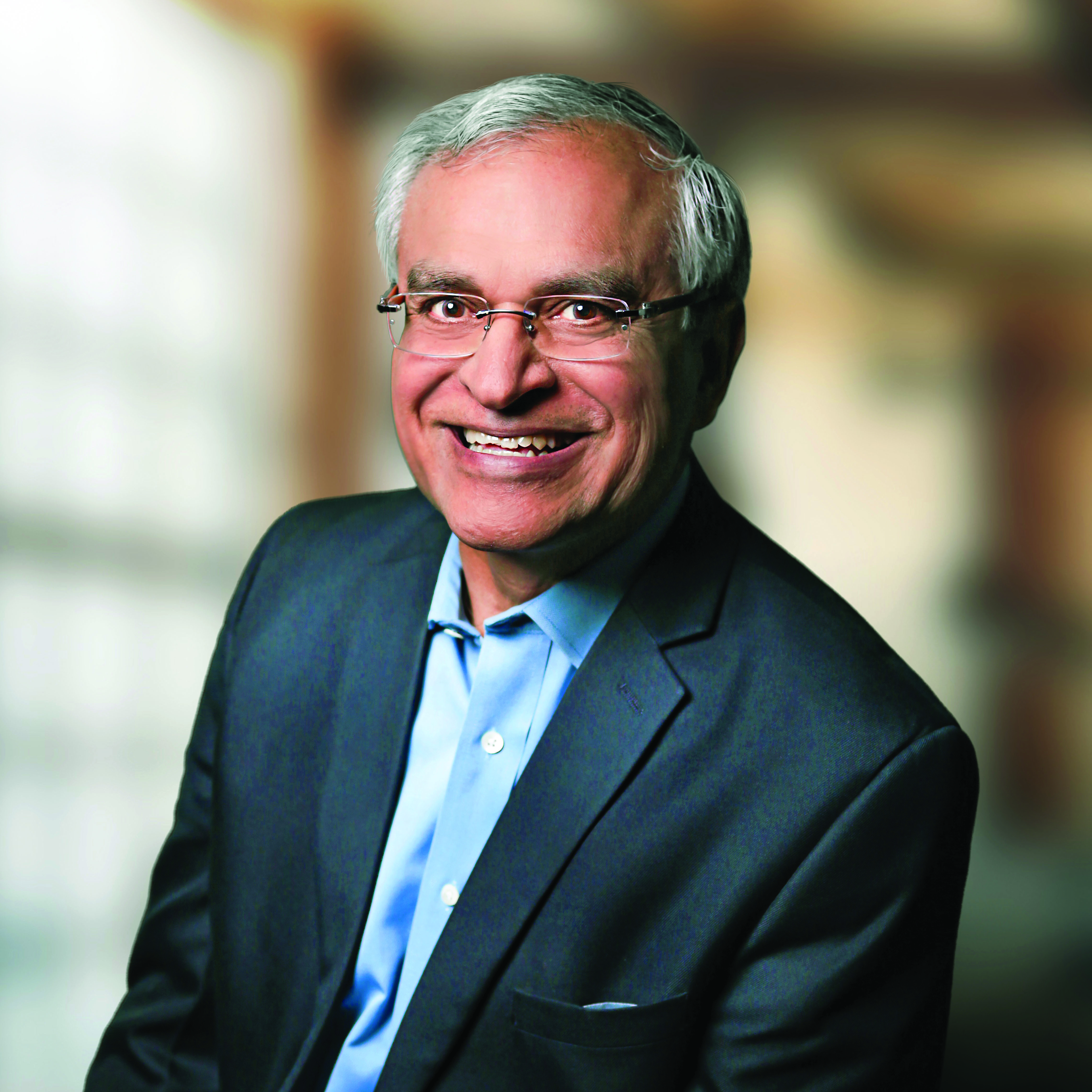
Atul Minocha
Atul Minocha is a partner at Chief Outsiders, a marketing consulting firm that helps CEOs accelerate growth through strategic planning, customer insight, and disciplined execution of well-crafted marketing plans. With experience in startups and Fortune 500 companies like Honeywell, Kodak, and Toyota, Atul works in a wide range of industries, from automotive and healthcare to industrial goods and technology.
Atul has a degree in mechanical engineering from the Indian Institute of Technology Delhi and an MBA from Yale University. He is a professor at the Hult International Business School, a mentor and an angel investor with Sierra Angels, a Vistage speaker, and a Forbes contributor.
★ Scribe Case Study
Atul Minocha's Lies, Damn Lies, and Marketing Paid for Itself in Six Months and Hit Forbes' Top Books of 2021
Atul Minocha, a partner at Chief Outsiders, wrote Lies, Damn Lies, and Marketing to cut through bad marketing advice. The book recouped its roughly $60,000 cost in six mo…
📚 Books by Atul Minocha
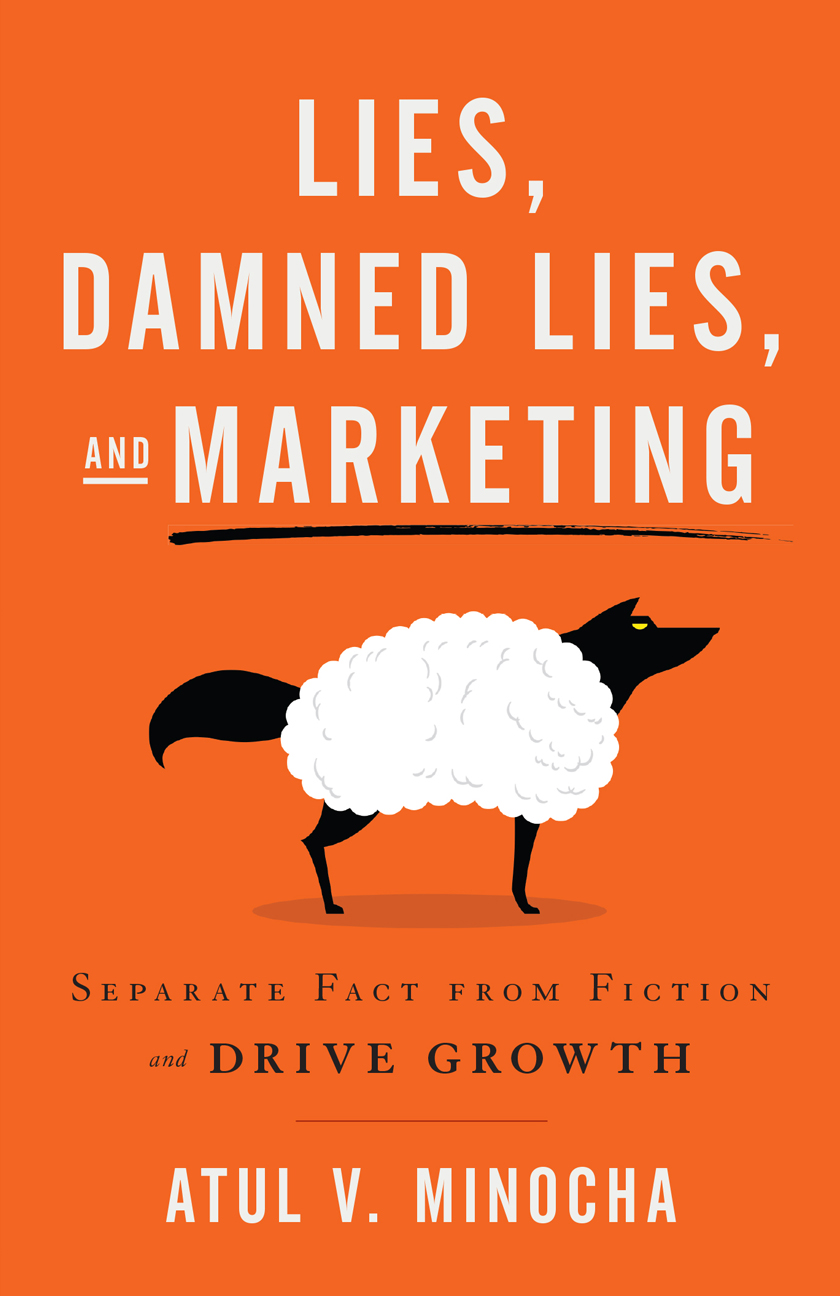
In this episode of Author Hour, Travis Stoliker sits down with Atul Minocha, a partner at the fractional-CMO firm Chief Outsiders and author of Lies, Damn Lies, and Marketing. They talk about fake ROI, the difference between big-M and small-M marketing, and how the book paid for itself in six months.
Transcript
[0:02] Travis Stoliker: I am joined by Atul Minocha, the author of Lies, Damn Lies, and Marketing. Thank you so much for being with me. Can you introduce yourself?
[0:12] Atul Minocha: Yeah, thanks, Travis, for inviting me. I am the author of Lies, Damn Lies, and Marketing, and I'm a partner at a company called Chief Outsiders, which is, it originated out of Texas, but now we are a national firm and there are about 125 of us. And our mission in life is really to help midsize companies meet their growth challenges. So that's what we do for our work. And this book is actually helpful in that regard, because my experience in working with Chief Outsiders was that most CEOs have had some bad experience with marketing. And that started bothering me, that how come I love a certain field and how come others who are smarter than me don't find it or have had a bad experience? So as I dug through it, that's what led me to write this book called Lies, Damn Lies, because I discovered that, yes, there are some charlatans, there are some misconceptions that are promoted by, frankly, people like me. So I'm sort of setting the record straight by what are the lies, what are the damn lies, and what's real marketing.
[1:15] Travis Stoliker: And your subtitle for your book is Separate Fact from Fiction and Drive Growth, right? So can you tell us a bit about the small M and big M and some of the concepts that are in your book? Yeah.
[1:29] Atul Minocha: So let's start with the facts and fiction kind of thing. So one of the 19 chapters, so everything is based on fact versus fiction. But the one that was actually the seed of the idea of a book, which actually ended up being chapter 14, so it's not the first chapter, it's chapter 14 on, it's called Fake ROI. And I trained as an engineer, I'm a data guy, ROI is easy for me to think about and think through and calculate and all that. I mean, that's how I think, right? As an engineer. But one of the things I discovered was that in the field of marketing, which is heavily influenced by consumer behavior, or human behavior, I should say, so this applies even to B2B world, sometimes ROI is not the easiest thing to calculate. So when CEOs or decision makers sort of say, no ROI, no funding, they're actually hurting themselves. So I'm not saying that ROI is a bad thing, but making it an exclusionary item that unless you give me an ROI, I won't fund your project, that actually forces people like me to come up with lies. Because the only way I can get funded is I'll make up some numbers. And once I make up the numbers, yeah, then it will float through. But then two years from now, people say, well, what happened? Well, you know, it was a made up number. So that's my chapter 14 where I talk about the fake ROI and the damage it does in getting away from some real good marketers.
[3:03] Travis Stoliker: How does that, you know, I'm always remembering that old quote, the, I forget who said it, but 50% of my advertising budget is wasted. I just don't know which 50%.
[3:14] Atul Minocha: Yeah, that's precisely right. And that's what leads me to the big M and small M. So most of the visible marketing that you and I see, companies spend, that falls into what we call the small M marketing. You know, it's the logos, it's the content, it's the LinkedIn thing, it's advertising, it's radio spots, it's podcasts, trade shows. That's all small M marketing. And that's where the quote applies. I don't know which one is working, which one is not. But the big M marketing, which we as a firm insist on that should be done, it's really only about 10 to 15% of your overall marketing budget. But it's the crucial 10 to 15% of your marketing budget, because it should be done in advance of you spending money on small M. So that's the strategy. That's sort of deciding what your messaging is going to be, what your positioning is going to be vis-a-vis the competition. What is it that the customer wants? A high-level pricing position as to are you going to be a premium product or you have a range of products where you're going to do some good, better, best kind of a positioning. So all that falls under big M marketing. Once that is done, that reduces the chance of your 50% small M marketing dollars going to waste. So I don't guarantee that you'll get 100% of the thing, but maybe the 50% will become 20% that will go waste or 15% that will go waste. So yeah, so big M is the one that is a smaller piece, but it's a crucial piece that helps you conserve or fine tune your spend on the small M.
[4:50] Travis Stoliker: And you really need to think through those big M marketing strategies and pricing before you move on to the tactics.
[4:59] Atul Minocha: That's correct. Yeah. So A, the message that I have to get across is A, big M is important. And B, the sequence is important as well. So you cannot say, yeah, let's get going with the trade shows. Let's get that advertising going. And then once that's running, then we'll revisit big M because that's putting tar before the horse. You know, so yeah.
[5:19] Travis Stoliker: Right. Right. How does this concept apply, you know, when you're talking about if you're just doing things based on ROI, that can send you down a bad path. One of the things that I recall is around vanity metrics and action metrics. You know, if you just tell a marketer, hey, you need to improve this click-through ratio. Well, that might mean you're getting people to click on things that they're not actually going to buy. And that's a vanity metric, right? Or you know, hey, we need to get impressions up because we're trying to do some brand-related issue. How does vanity metrics versus action metrics kind of apply here in this ROI world?
[6:00] Atul Minocha: I think it applies squarely in it. And it's when I think of the second edition of the book, I think I'll probably add either another chapter or expand my chapter on these metrics. Not just ROI, but I mean, I talk about SEO and things like that. So this relates to that. So one of the examples I give in the book is that, you know, I mean, intuitively to me, when your email open rate is 2% and you're trying to change it to two and a half, that doesn't sound, I mean, something doesn't sound right, that how can, how is it that there's certain things that you're doing where 97, 98% is going waste and you'll feel happy if only 97 and a half percent went waste? I mean, that to me, structurally, something is not right. I'm again, I'm not saying that extra half a point is not worth something, it is, but structurally, something is not right. So those, that to me is like a vanity metric, right? Or similarly, I've seen a version of that where we say that, okay, you know, I bought a list of 10,000 names and I had a certain sales number that I achieved through that. Now let's buy 50,000 names. Well, if from 10,000 names, you only made 10 sales, then maybe something is, let's fix that before we spend money on the other 40,000 and start spamming them to whatever channel you're using. So these are all vanity metrics. Now, again, I'm an engineer, I love to measure, I love to know how we are doing. So sometimes it's difficult to come up with the right metrics, but you have to do it. One of the, probably the most stark example I give, and it's a real example, is that if I describe Route 101 between San Francisco and San Jose, and it's full of these big, huge Apple billboards, most of them are used for iPhone advertising. So I've, and they've been there for 15, 20 years that iPhone has existed. And of course they modify and change. And one of my questions, sort of rhetorical questions is, who in the Apple Cupertino headquarters is measuring ROI on the millions of dollars that they are spending? How many, are they able to identify how many more iPhones have been sold because of, you know, that particular billboard or that particular billboard or even billboards in general? And the answer to that is no. So wait a minute, isn't, wasn't Steve Jobs and Tim Cook kind of highly numerically oriented people? Yes. But they were smart enough to know when not to push on that, because if they had said the statement that, you know, no ROI, no funding, we won't have those billboards. But the reason they have the billboards is because that Route 101 is chock full of stuck traffic. And it's good to get people to think about the phone they are already using, if they are iPhone users or things or phones that they should be using if they are, you know, Samsung or other phone users. So that would be an example where ROI by design was not included in the decision-making because they knew that it's going to, it's not possible to get there and it still is done now.
[9:08] Travis Stoliker: But they were able to do their big M marketing to make sure that they knew that the message, the pricing, who they're targeting was right. So even though they couldn't directly attribute this billboard generated this many clicks in this many sales, because they spent that time on the big M marketing, they know that that message that they have up there is going to resonate with their audience and it's going to convert at some point, even though it's not directly measurable. Is that right?
[9:37] Atul Minocha: Totally correct. And I'll even go a step further. So most of those ads, not all, but let's say many of those billboards will feature photographs taken by you and I on our iPhone. So it'll say shot on the iPhone. Think about it. What is it doing when you see a nice picture, but it's a portrait or a landscape or some unusual thing or a building, it's a shot on the iPhone. If I'm not an iPhone user, most of us are not as good photographers as the ones who are featured there, right? If I'm not an iPhone user, I say, you know what, I wish I could take a picture like that. Maybe I should switch to an iPhone. So it serves the purpose. If I am an iPhone user and I still cannot get those pictures, I'll say, wait a minute, I should actually go to the genius bar and figure out what do I need to learn, which will create stickiness, even though I am an iPhone user, but it'll make sure that I stay a loyal iPhone user because now I know what it's capable of doing, even though I've not been able to achieve it, but I know what it's capable of doing. So I'll stay with my iPhone. So it actually reaches the perfect audience. I mean, there's not a single person who is not their target. Even if you are an iPhone user, they still send the message, which is an appropriate message.
[10:53] Travis Stoliker: Right. That makes a lot of sense. And you see people, especially now, skipping to the end.
[10:59] Atul Minocha: I'm talking about Apple and it's no surprise that I'm using their marketing service. Maybe I'm tiktoking.
[11:06] Travis Stoliker: Yeah, that's right. And it's it seems today, you know, there's every Twitter or Instagram or TikTok reel about, oh, you know, now with the algorithm for marketing, you just send up 40 different images and you let the algorithm determine what is working and you just double down on the thing that's working. But that's kind of getting it backwards, isn't it? Because you're not spending that time to make sure that your actual message, you're connecting with your audience. You're just looking at, you're optimizing for clicks or some other sort of ROI based metric that might not actually be, you know, as you optimize towards those things, it might be getting you further and further away from your audience and you don't even realize it.
[11:51] Atul Minocha: That's right. And just because AI has made it so much simpler to generate content, doesn't mean that you should. In fact, I would argue that we have reached a point where there is so much AI slop that it doesn't take much to stand out by just staying away from the AI slop. You know, so just do something a little different, you know. So again, I talk about that at least in two of my chapters in the book, that quality always trumps quantity. And AI has doubled down on the quantity side of the equation and hasn't done much on the quality side. So what does it mean? If you truly believe what I believe, that quality trumps quantity, then the situation is absolutely right for you because enough quantity has been generated in terms of AI slop. So now you just have to focus on quality and stand out.
[12:46] Travis Stoliker: Yeah, that makes perfect sense, which, you know, this talk about AI leads perfectly into I understand that you have an AI tool for growth.
[12:55] Atul Minocha: I did create one. Yeah, I do have that. In fact, I framed it on the book and a few other books that I believe in. And you can, I'm curious, how did you discover that?
[13:07] Travis Stoliker: Just in my research, it said that Chief Outsiders had an AI tool for growth that you had built based on your book and wondered, just wanted to check in and see how it was going.
[13:18] Atul Minocha: So yeah, so I'll give you a little story of that. So I was working with a client of mine, a real favorite client of mine in Texas. And normally our projects last six to nine months, but I've been working with them for four years at that time. And I was sitting with the CEO and maybe go to dinner or something. So he very casually asked, he said, you know, ultimately we'll be ending our project with you. So we're going to miss you. And how do we, how would we manage without you? So on the flight back, I said, this was about two and a half, three years ago. On the flight back, you know, JAB GPT had just come on. So I said, you know what, let me see if I can create an avatar of myself. So over a period of a week, I did that. And I turned it over to Jorge, the CEO, and let him play with it. And the idea was that it'll never be a substitute to what I deliver, but it'll, it's all, the model that I had was that if somebody calls me out of the blue and says, hey, I heard you help companies, can I buy you a cup of coffee? Can I spend some time and pick your brain? I usually say yes. So I'll go to Starbucks and spend an hour, an hour and a half listening. So I said, this is the equivalent of that. It's not going to substitute my month's worth of deep dive work on a specific project, but it'll, it'll be a substitute to a Starbucks-based interaction where somebody's just picking my brain, you know, I'm experiencing this, what should I think about and blah, blah, blah. Yeah. So it actually worked quite well. Now, to be perfectly honest, I've switched away from ChatGPT to Claude and Claude doesn't have that. So I still have to transfer that to Claude.
[15:06] Travis Stoliker: Yeah. Wow. That's amazing. So Forbes had featured your book as one of the top seven books in business to read when you came out. Can you tell me about that experience of getting featured in Forbes and how that felt?
[15:22] Atul Minocha: It was an unbelievable experience. I mean, as a first-time author, just getting the book out was difficult enough or unbelievable enough. Then seeing it on the Amazon website, that was something. And then in the first few weeks or so, it sort of ranked pretty high on the Amazon sales list also. So that was good. And then a few months later, you know, Forbes and actually Forbes Entrepreneur and Inc., they all, within a span of two months, they all put my book as one of the top seven books to read that were published in 2021. So that was unbelievable. I mean, from a feeling standpoint, and actually even from an ROI standpoint, it was actually very useful. So I'm giving you some secrets here, Travis as the CEO of Scribe Media. So when I decided to do this book, the math that I had done was that it's going to cost me money. And I think if I remember right, it was costing me about $60,000 with some marketing things attached to it. And my goal was that if I can recover the $60,000 in three to five years by getting more projects my way, that'll be worth the effort and the money spent. So I was looking for the $60,000 to come back to me over the three to five-year period. When the book first came out and the Amazon thing hit and my project load increased, I changed my three to five-year expectation to maybe two years. Long story short, when Forbes and Inc. and all that, and then I got a further slew of projects, I actually recovered my $60,000 in six months.
[17:05] Travis Stoliker: Wow, that's amazing return on investment.
[17:08] Atul Minocha: So to talk about ROI, even though I would have been happy with three to five years, but ultimately when I do the math, and after that, I've stopped doing the math. You know, once I said, okay, I've recovered my investment, I'm whole now, so.
[17:24] Travis Stoliker: Wow, that's amazing. What was, you know, our favorite question on Author Hour is, what was an unexpected great thing that happened as a result of the book? We've talked about Forbes, but was there any, you know, I know you're a professor as well. Was there a student that walked up or a CEO that walked up and told you, your book helped me at the perfect time? What was one of those unexpected great moments that you just loved about being an author?
[17:51] Atul Minocha: Yeah, well, I don't think there is a huge, big thing that happened, but and I wasn't expecting any of that anyway. What did happen is what I was expecting, which is that the CEOs will find it useful, whether they are my clients or whether they became my clients or whether they're not yet my clients. I've received very good feedback in terms of how it has helped them sort through certain things. So that's one. Even though the book was not written for students per se, I've been invited to guest speak at different institutions around the country and actually overseas as well on the book and how it's, how I came about that and what's the lesson to be taken for a fresh graduate. So usually I get called in at the last class of a marketing course to sort of say, you heard everything, you learned everything. Now this guy will tell you what not to do. So that's been a fun experience when I'm telling students that everything that you learned is useful, but only to a certain point. So let me give you some real experiences. Yeah, so those have been some good experiences.
[19:00] Travis Stoliker: Do you have any advice to an author that is looking to get more speaking opportunities and how you go about that? What a good playbook is to run to get more speaking engagements?
[19:11] Atul Minocha: Be truthful, be authentic, and you guys, Scribe Media, were extremely competent and extremely good in providing that guidance. I mean, I cannot say enough good things about the guidance I received while I was working under your umbrella, and that was very, very useful. Again, focusing on authenticity, don't focus on, and one of the things I remember is they said that instead of expanding your scope for that, I'm going to write a book that's good for CEOs, good for CEOs, good for CMOs, good for students, good for early career, mid-career, you might think that you're expanding your pool, but you're actually diluting. So where Scribe Media's emphasis was, think of one person, one real person, and use that person's real name, who would benefit from this book? So it's as if you're coaching him or her, it's as if you're addressing him or her. And that was very useful.
[20:14] Travis Stoliker: Oh, that's great. And I was wondering, what did bring you to Scribe?
[20:19] Atul Minocha: One of, so once I crossed the line that I think I need to write a book. And the book idea had been brewing for six, seven years, by the way, but once I crossed that threshold, I talked to two of my colleagues, both of them had published books. Now, one is our founders of the firm, and they used the Forbes publishing company. The other one is a colleague of mine, Karen, Karen Hayward, she used Scribe Media for her book, her book is called Random Acts of Marketing. So when I talked to Pete Hayes, who's author of the Growth Gears book, and Karen Hayward, who's the author of Random Acts of Marketing, and what was their experience, so I actually spoke with both of them because both of them had good experiences. But then there were certain things that I learned in my interaction with Scribe Media, which tipped me over to you guys. And I still say that it was the best decision I made as far as book publishing is concerned.
[21:15] Travis Stoliker: Oh, that's fantastic. And I was wondering, do you have any advice for somebody that is struggling for maybe five or seven years with the book idea, but they just can't get it done? What advice would you have for somebody that is stuck in that still the book is in their head, but they just can't get going?
[21:36] Atul Minocha: So I got lucky that this thing transformed into a book because of COVID. I mean, I remember exactly, it was March 17th, I was on a flight from Dubai to Los Angeles, COVID, this was in 2020, and COVID had just sort of hit the States. And it was a 15-hour flight, and I'm thinking, is my business going to go down in terms of chief outsiders? Will I have clients? And will I, you know, things like that. So I said, you know what, I'm probably going to be stuck in my home. I may not even have a bunch of clients. So maybe this is the time for me to put pen to paper and finish the book or get going with the book, so to speak, because the idea existed in terms of slides that I was using for various presentations that I would give, but it wasn't a written format, you know, so I said, okay. So by the time I landed in Los Angeles, I decided that I'm going to write. Now I didn't know Scribe Media, so I said, okay, the first thing I'm going to do is I'm going to talk to Pete, I'm going to talk to Karen and figure it out. And that's got started. So this was March 17th, and I think I signed my contract with Scribe sometime in April, April 20th, yeah.
[22:48] Travis Stoliker: Wow. You moved quickly. Once you were ready to go, you knew on that flight, you were ready.
[22:53] Atul Minocha: Yeah, I knew that this is my chance. And here's the other thing, you know, what was keeping me from finishing the book? It was that every three, four months, I would discover something new that I would add to my slides. So it kept growing, right? So when something is growing, you don't want to sort of say, okay, enough is enough, now I'm going to push the print button. But when COVID happened, I said, you know what, now is the time to do the print button because I'm not adding to the slides, this is it. And, you know, so that's how I did it. Now, I'm sure that's not very useful advice to, because they'll say, okay, we'll have to wait for another COVID, but you just have to sort of get over the hump to get going.
[23:31] Travis Stoliker: Yeah. And I think, as I recall from your original author hour, you really thought that your business might be in jeopardy, but publishing the book, your business actually exploded is what I understand.
[23:47] Atul Minocha: Actually, you know, it's actually even better than that. So in the flight, my assumption was that business is going to be in jeopardy. I have no business, I have very few clients, and I'll be stuck at home. And of course, other healthcare issues too, as to whether I'm going to be alive or not. That's a bit, yeah. Interestingly enough, even before the book came out, the book actually, the business did not drop off, it actually increased, so that created a different problem for me, so, you know, at that time you had different tiers of programs that, how much help you need. So I had signed up for the cheapest program where I said, I'm going to do everything, but then that was another assumption that my business is going to get reduced, it did not. So I said, you know what, now either I'll have to push the book back to the back burner again, or I need to sort of focus on my business and get more help from Scribe Media, so that's what I did. So then I upgraded my program with Scribe where I would get more help from Scribe and continued with that. So I experienced the growth, COVID was good for our company.
[24:56] Travis Stoliker: Wow. So you went into it, COVID is going to hurt my company, let me get this book out. Let me use the least amount of support and time because I'm going to have the time myself to pour into the book. Then your business explodes, you increase your investment to actually get help doing the book and supporting the book and launching it, and then you release, thinking that it's going to take three years for a payoff and it's really six months and you get a return on investment on your book. Correct. Yeah. That's incredible. That's exactly right. Yeah. Wow. I, that's why I love doing these because those stories just delight us.
[25:37] Atul Minocha: Yeah, sure. Yeah. And again, I cannot say enough good things about Scribe Media. So, I mean, you guys, you guys earned every bit of it, so.
[25:46] Travis Stoliker: Oh, thank you so much. Well, Atul, is there anything else that you want to say in closing?
[25:51] Atul Minocha: No, this has been fun. And like I said, I have a few other books in mind, including a second edition of this one, because this one doesn't touch AI. So there are a few other things that I've been thinking about that I can add. So one day, I think I would love to get some conversation with somebody in your team to sort of figure out as to how do I do the second edition while I'm still chewing on the other two books.
[26:14] Travis Stoliker: I'm looking forward to that. I'll make the connection right now. Great. Thank you so much, Atul.
[26:19] Atul Minocha: Thanks, Travis. It was fun. Thank you.
Want to Write Your Own Book?
Scribe has helped over 2,000 authors turn their expertise into published books.
Schedule a Free Consult