Life Is Hard and Then You Fly: Gina Vance on Turning Pain into Purpose
✨ Episode Summary
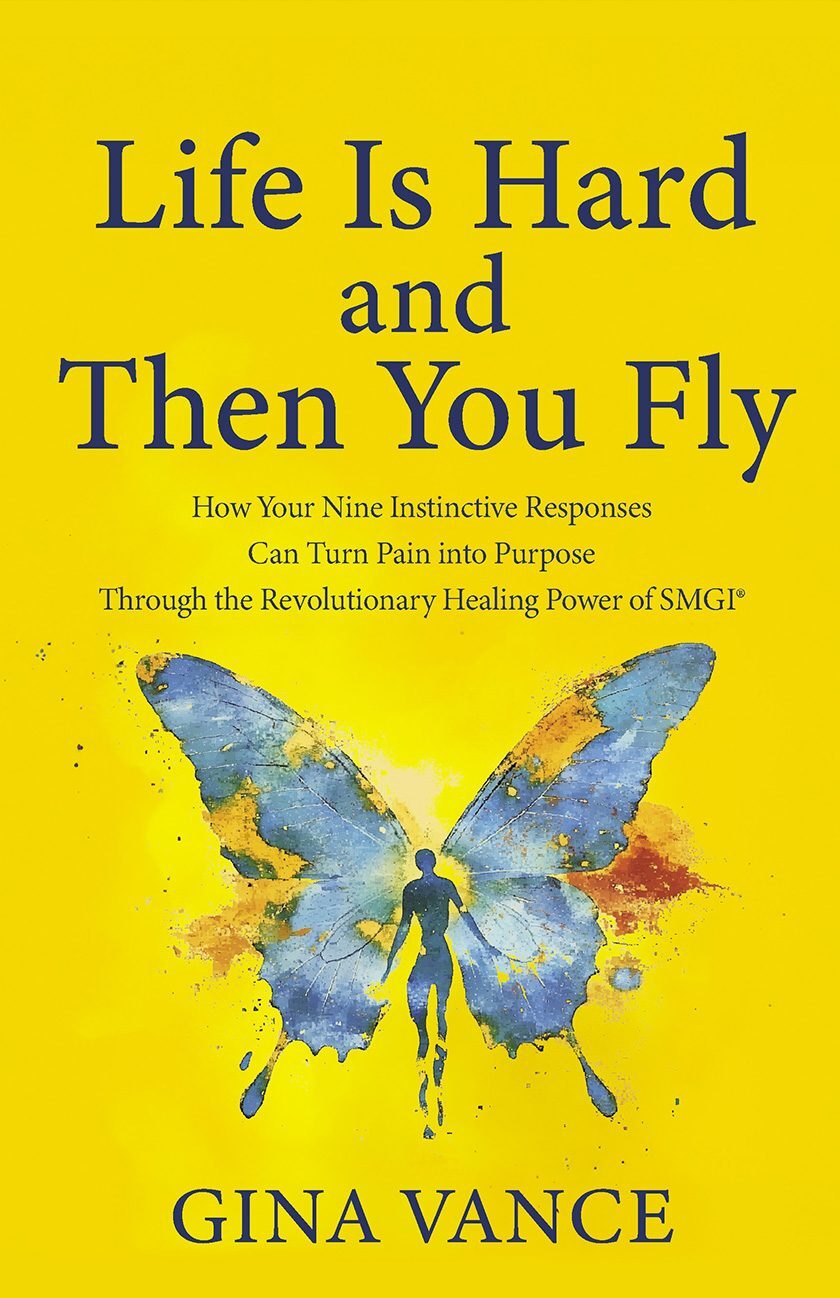
Gina Vance spent years in excruciating pain while working as a lighting engineer, and the search for a way out became her life’s work. She created SMGI, Somatic Mindful Guided Imagery, and has guided clients for 25 years. Her book, Life Is Hard and Then You Fly, maps nine instinctive survival responses and the four essential steps readers can use to stop fighting themselves and move through pain.
In this episode of Author Hour, Gina tells host Lex Statzer where the title came from, why she counts nine survival responses instead of just fight or flight, the four universal fears that keep people from doing inner work, and why she built the book around the one thing she had not seen on any other healing book.
“We are, no matter how powerless we feel, we are powerful.”
⭐ Top Moments
- Nine responses, tested on real clients. Gina on what happened when she first shared the model: “Their eyes would light up, and sometimes they would cry with relief.”
- Built around what makes it different. “Truthfully, it was my spiritual inspiration that encouraged me to organize the book around the nine survival responses, because that is something unique about the book, 'cause there's a zillion books about healing, and healing trauma, and somatic work, and so on.”
- What changes when the work lands. “Things happen and you're not even trying to do them. You are just different. You're more free.”

Gina Vance
Gina Vance, creator of SMGI, is a mind and body healing teacher, speaker, and guide. She helps people transform trauma into triumph through inner journeys that reconnect them to peace, power, and their deepest wisdom.
★ Scribe Case Study
Gina Vance Turned 25 Years of Healing Work Into Life Is Hard and Then You Fly
Gina Vance, creator of SMGI, wrote Life Is Hard and Then You Fly with Scribe Media to turn 25 years of guiding clients out of pain into a book readers can practice on the…
📚 Books by Gina Vance
Transcript
Lex Statzer: Welcome to Author Hour. Today, I am here with author Gina Vance, who wrote Life Is Hard and Then You Fly: How Your Nine Instinctive Responses Can Turn Pain into Purpose through the Revolutionary Healing Power of SMGI. Gina, welcome to Author Hour.
Gina Vance: Thank you, Lex.
Lex Statzer: So the book is out now, and I actually wanna begin with the title. So the old line that we hear is, "Life is hard and then you die," right?
Gina Vance: Mm-hmm.
Lex Statzer: You changed the last word. Where did "and then you fly" come from for you?
Gina Vance: It just dropped in. I was, uh, fussing over the title. I had a whole different title. It was, um, I was gonna call it Wild Ride into Healing, and but something about that wasn't quite right. And so 'cause it wasn't about riding horses or things like that. So actually, I was in a cabin in the woods that I'd had sequestered myself in to, uh, write. And I was just fussing at, what's the title? What's the title? And that just dropped in. And it's, you know, it's totally inspired, but also very much my personality. Mm-hmm. And i- in my history, there was a lot of pessimism, uh, 'cause life was hard. And so, uh, that, that saying caught me, "Life is hard and then you die," yeah. And then it's just kind of the... Now, the, the book is like the antidote to that.
Lex Statzer: So before this book, before any of this, you were a lighting engineer.
Gina Vance: Mm-hmm.
Lex Statzer: How did that experience from drawing blueprints redirect you to writing this book? What did that journey look like?
Gina Vance: Hmm. The journey, uh, I, I was doing that, that career, and then the, the journey to the book really started with, uh, excruciating pain. And, um, I remember on the l- one of the last lighting projects I was on, it was an outdoor landscape lighting project, and guys were climbing 50 feet up into the tree yeah, after dark to aim the lights and put filters on them, and then lock them into place. And I had to roll myself around on a, a chair with wheels 'cause I could not stand up straight, and I was in a lot of pain. And the pain really got me started on a path of exploration about how to get out of the pain, because all of the conventional things that I tried didn't work. And even the, you know, so-called alternative things, uh, most of those didn't work either. And looking back, that was actually great because it kept me going so that I could learn the tricks to get myself out of my pain pickle, and also, um, help practically anyone else do the same.
Lex Statzer: Yeah. And now you have a book to do exactly that.
Gina Vance: Yes. Yeah.
Lex Statzer: So most of us have ever really heard of fight or flight, maybe freeze or fawn thrown in there into the conversation. Mm-hmm. But you count nine survival responses. How'd we get to nine?
Gina Vance: You know, I started seeing... Well, freeze made a lot of sense when I learned about that, you know- Mm-hmm ... 10 or 15 years ago. But then, um, the fawn s- raised a, a few hackles in me because it's like m- there's a lot more than just fawning in that response. And, and there's a wonderful psychotherapist that uses many similar methods called Janina Fisher, and she lists out submit, and I, I just knew in my bones that was right. Mm-hmm. And then, then I came across somebody had created flock- Oh ... for the attach response. And, and by then I just started to realize that it was a, a little bit ridiculous. Yeah. Everything starting with F. And, and so I just i- in meditation, you know, I just asked, a- you know, the way that's laid out in the book, "How many are there exactly?" Mm-hmm. And so then I got the list, and so that's where they came from. And you know, m- when those things come through, I don't attach to them like, "Oh, yes, this is, uh, the absolute truth." Mm-hmm. So then it was, "Okay, well, let's see." And then I started sharing them with clients, and it wa- you know, they would, like, their eyes would light up, and sometimes they would cry with relief. And, um, I realized, you know, this is a good model. Mm-hmm. And, and it's really helpful for clients. I really didn't set out to make it an academic tome, but really, it, it's what I've found has been most helpful for my clients. And when I say most helpful, it lessens their resistance- To themselves and how they've messed up- Mm-hmm ... and what's wrong with them, so that they can appreciate, "Oh, okay, it's not my fault that I've been stuck in, in a pattern or, or a habit," and it makes sense. "Oh, okay, I'm not so messed up as I thought." And then they can go further and get a lot more done more quickly.
Lex Statzer: Yeah, I mean, you even say that none of these responses are dysfunctions. They are kind of an intelligence. What do you mean by that?
Gina Vance: That's kind of my whole shtick. Because the whole world, you know, tells us that we're dysfunctional somehow and we need to be better. You know, from, uh, stinky armpits to, you know, get a deodorant or, or no one will love you and you'll be abandoned. You know, but it's really everywhere. And, you know, right from day one, when we're little, our parents love us and wanna keep us safe, so, you know, they tell us the rules of the world, which are really helpful to a point. So we can... You know, it's like if you start a new job, you learn the culture, you know, how they do it here, what's, what's not really welcome and what they do wanna hear from you and see from you. But then once you learn the culture, it becomes very limiting if that's what you're honoring instead of yourself. And, you know, it doesn't mean that you're s- you're not smart. So, you know, if you were a prisoner in a Nazi concentration camp, you're not gonna put your hands on your hips and say, "That's violating my boundaries. I'm gonna put a healthy boundary down right now." Right? Right, right. No, you do, you do what you need to do to survive until you're free- Mm-hmm ... and then when you're in a safe context, you know, you can feel free to put your hands on your hips and just declare whatever is in your heart and soul to declare.
Lex Statzer: Yeah.
Gina Vance: So, yeah.
Lex Statzer: That's exactly... I mean, it's, it's in the name. They're response. They are you responding to whatever situation you're in. And somebody could say, "Oh, well, I, I naturally have a fight response." Well, that might not be true for every situation, right? Like, it's, it's all about the context that you're in and, and how you handle different situations.
Gina Vance: When it's healthy and free-flowing, and about what's happening in the moment. Mm-hmm. For most of us, when the fight response is activated to help us, whatever it's trying to help us with, we don't have the sense that it's complete. So it's almost like the button is stuck on. Mm-hmm. You may know certain people that they're always saying no, or they're always arguing, or, you know, they're al- they're... It's like the fight response is applied to everything, and they just can't help it. Yeah. And so that's what the book is kind of differentiating. When it's free-flowing, man, it is there. It's gonna help you do what you need to do to survive. And then for many of us, various of those survival responses are still kind of stuck on in the background. And we can u- exert our willpower and show up, you know, and pretend I'm calm, even when the, there's a lot of stress going on in the background, 'cause there's another part telling me, "You're gonna die. They're gonna throw tomatoes at you. Close your throat now and stop talking." And so the beautiful thing is- Like if you're giving a presentation or something, even like with what we're doing now.
Lex Statzer: Mm-hmm.
Gina Vance: You can begin to notice that a part of you is trying to protect you that way by shutting you down in some way. And without fighting it, you can do the four essential steps trick that's in the book so that you can keep going, recognizing, I- no one's gonna kill me right now when I'm giving this talk. It's, it's okay. Yeah. Even though there's that part that's like, "Whatever you do, stop
Lex Statzer: now."
Gina Vance: Yeah. Right? And then that's also, it's a little bit diagnostic. So if I was gonna do another talk, I would want to do it more comfortably and feel like I have better access to my authentic m- voice. Mm-hmm. And so then I could, between talks, I could follow that feeling in my body to what it's connected to, and I could either clear that out of my subconscious, or I could access the remedy for the part of me that learned that speaking up authentically, I could die
Lex Statzer: So a huge chunk of this book is about SMGI.
Gina Vance: Mm-hmm.
Lex Statzer: Walk us through what is SMGI and who is it for?
Gina Vance: SMGI is an acronym for Somatic Mindful Guided Imagery, and it is not for everybody.
Lex Statzer: Hmm.
Gina Vance: It's not for people who want, you know, to have a watch waved in front of them and be hypnotized and then wake up and be all better- Sounds nice ... which is really the doc- It, it does sound nice. And all of us, there's a part in all of us that wants that.
Lex Statzer: Yeah.
Gina Vance: Right? And so we don't wanna shame that part, just recognize it, right? Mm-hmm. I'd rather, if there was a pill that could make all my discomfort go away, why would I not wanna take that?
Lex Statzer: Yeah.
Gina Vance: So we all do have that part, but this is usually for people that have tried the treatments or, you know, the remedies of, of whatever form, and they've found that either they haven't worked or they haven't worked well enough, and so they wanna go deeper. And there's a universal fear about going inwards too deep. Mm-hmm. Um, so that's the importance of a guide guiding you or, like in the book, guidelines. It's telling you, "This is what you can expect. This is how you do it. These are some of the kinds of things that happen when you do, and it all ends up good."
Lex Statzer: Mm-hmm.
Gina Vance: Because it, it requires, usually for most of us in this current consciousness, it requires enough pain for us to have the courage to delve into something that is seemingly unknown and that we have a lot of fears around. The... I learned early on when I had a wellness center and we would have meetings once in a while with the, all the practitioners, and a few of the practitioners said, "Oh yeah, my client is having this kind of success." But they said to me, "
Lex Statzer: I don't have to go to Gina Vance, do I?"
Gina Vance: And we all laughed, and then I left that meeting thinking, "Wait a minute. I'm very warm. I'm very friendly." "I'm very gracious. Why, why do people, are they afraid to go to Gina Vance?" And I got the response similar to the, the nine survival responses. There are four universal fears. One is, is I know I will change, and if I change, I don't know what I'm gonna lose.
Lex Statzer: Yep.
Gina Vance: I know that I will feel, and I'm not sure I can come back from uncomfortable or overwhelming feelings if I do. And I'll find out the truth of who I am, and if that turns out to be the things that I'm afraid I might be, then where does that leave me?
Lex Statzer: Yeah. I don't know if I can face that, yeah.
Gina Vance: Exactly. And the fourth one is I will cease to exist. Yeah. Which in an odd way is kind of true because I'm, I'm no longer the th- the 13-year-old girl that I was.
Lex Statzer: Mm. Mm-hmm.
Gina Vance: Right? Bless her heart with all of her pink hearts up on the wall and love will see us through everything. Um, love is all that matters. You know, bless her- Yeah ... I'm just not her anymore, so she in a way has ceased to exist. Even though I can refer to her, she's not here anymore living my life.
Lex Statzer: Mm-hmm. Mm-hmm.
Gina Vance: And so those are the things that keep people from doing inner work, and then there's a lot of inner work that is, let's just say not real smooth.
Lex Statzer: Okay.
Gina Vance: So there is a lot of pain involved. Like right now, medicine journeys with psychogenics are very popular. Mm-hmm. And I get... A- and, um, and oftentimes very grueling.
Lex Statzer: Mm-hmm.
Gina Vance: Right? I'm facing my fears, and all this stuff is coming up, and some people want that, right? Just like, you know, people that do y- what do you call that? Fighting in the ring that's popular. MMA. Oh,
Lex Statzer: yeah. Yeah, yeah. Yeah. Yeah, exactly.
Gina Vance: All right? So yeah. I'm not... I don't like pain, so that's not fun for me, but that's fun for some people. Mm-hmm. Right? So all of us actually need to do hard things. That's part of what life is about. And what's hard for a given individual, that's all relative to your own personal experience, your own sacred soul path. So we all do need to do hard things, and yet doing those hard things when we connect to meaning, that this hard thing I'm doing is gonna lead me to something good and beautiful, that's often the missing piece. And there are many, many well-meaning, and I learned this very well, uh, as, as a patient, client, well-meaning practitioners who will use their techniques with you, and sometimes the experience is so harsh and leaves you feeling so icky that you never wanna go back there again.
Lex Statzer: Mm-hmm.
Gina Vance: Which in some way is a shame, however, your soul knows what it's doing. So even when people have experienced a lot of that, there's something inside of them that still makes the call and makes the appointment because... A- and even if they show up and say, "Nothing else has worked. I doubt this will work either." Maybe not. And yet there's a part of you that knows that it might possibly, and that brought you here. Might be still showing up. Yeah. Exactly. Exactly. Yeah. That's the beautiful thing about human beings is, is, you know, if they're still here on the planet, they haven't given up.
Lex Statzer: Mm-hmm.
Gina Vance: And there's a lot of hard stuff that goes on that y- would encourage you to just leave.
Lex Statzer: Mm-hmm.
Gina Vance: Go, to go to a better place where it's peaceful and there's no pain, or at least it's black and there's no pain.
Lex Statzer: So SMGI is a hard thing.
Gina Vance: It is the antidote to the hard thing.
Lex Statzer: Okay.
Gina Vance: So it's the easy way to do it and get it done more quickly.
Lex Statzer: Mm-hmm.
Gina Vance: But just like in college, it's much easier to write a paper, blah, blah, blah, blah, blah, blah, blah, and much more time-consuming and difficult and experience-requiring to really distill it down to the simple essence.
Lex Statzer: Yeah.
Gina Vance: Right? And, and so there's a lot less pages and a lot less words, and a lot more, "Oh, that makes sense." So that's what SMGI I've come to understand is. It includes all of the wonderful modalities that are out there. And so someone says, "Well, we, in this modality, we do this." So let's, let's say EMDR. Yeah. Right? So you, you know, think about your trauma, and then l- follow my wand or my finger and we'll reprocess it, and, and your, your brain will process it differently and you'll feel better. Well, in SMGI, that happens naturally, right? Mm. Your eyeballs just switch from your left brain to your right brain while you're on an inner journey. So it is the gentler, easier way to get things done, whatever it is you wanna change, more efficiently and effectively. And I only learned this because I was a hard nut to crack and hardly anything worked for me. Mm. I was so frustrating 'cause I wanted- Mm ... out of pain. And many things made it worse, and so... And it took a long time, took five years. Mm. And I appreciate now that I was learning a lot of nuance, but it, it was, it was really sad because, you know, the thing that so many people say, oh, like now we have with, like, diets or eating, eating programs, right? "Keto is the thing. Oh, carnivore is the best. Oh- Yeah vegetarian." Right? Well, it depends on the person. And so with SMGI, w- what's gonna work for all of those categories? And essentially, it's somatic. You follow sensation in the body to the, to your strength and courage and to the remedy. And it's mindful in the way that is very non-threatening and non-demanding. So in conventional mindfulness, the w- well-meaning enters in with, like, "Oh, welcome it. Give it love." And with this, it's like you don't have to lie.
Lex Statzer: Yeah.
Gina Vance: Right? I'm noticing this pain. I'm acknowledging it. I'm allowing it to be here right now. But that doesn't mean I like it or want it. But that, that lessens resistance, and which is something I learned a lot about because that's all I knew how to do was resist, and I didn't realize that was making it worse. And then when I did, I didn't know, like, well, what do you do? How do you not resist? And then the guided part is that if you guide yourself, if you're, if you're wa- walking through the book and guiding yourself through the steps and working with the different parts and aspects of you, or you have an external guide that is guiding you through the steps, and you also meet, in your inner world, inner guidance. Mm-hmm. However that shows up for you. Could look like a coyote or a lion. Once it was Tony Robbins. You know, could look like your dead grandma. How... It could be a talking rock. Whatever it is, there's a lexicon, uh, of symbols and images in each person that your subconscious knows exactly what they mean and how to use them to help you create the changes that you wanna change. And the imagery is your imagination, so we're working in the realm of the imagination, however you imagine. You don't have to see pictures, but the prompts invite you to imagine helpful experiences. And the wonderful thing is that there's a lot of research that shows what we imagine, it changes our biology.
Lex Statzer: Mm-hmm.
Gina Vance: So our, our biology is l- living that experience. And the beauty of that... Well, like with athletes, they can perform better. Mm-hmm. Uh, they imagine throwing that javelin just perfectly every time. But for the rest of us, we feel better. It's like that, we replace overwhelming, powerless, helpless experience with experience that feels very powerful and delicious. So those feel-good hormones and chemicals are released, and they move through our body. And we can... There's, with the four essential steps, it's very easy to activate those feel-good hormones and chemicals to move through our biology.
Lex Statzer: Speaking of biology, what's so interesting to me about the book and this conversation already is there's both the physical pain and the mental pain present- Mm here, or the emotional pain present here. Where is the connection there?
Gina Vance: Emotional pain is physical.
Lex Statzer: Mm-hmm.
Gina Vance: Right? We were saying, "You hurt my heart. You broke my heart."
Lex Statzer: Yeah.
Gina Vance: So i- in the old days, it used to be disparaged if it was emotional or mental. Mm-hmm. People used to ask me a lot, "Well, was it physical pain?" Right? And yes, it was very physical. And it was only later that I realized it was related to emotional and e- energies that were held, stored, and carried in my mind-body system- Mm-hmm ... that were persistently nudging me to come heal them, but I had no clue about that in the beginning. But what I really came to realize for myself is that emotional pain, you feel it physically. It's pain.
Lex Statzer: Yeah.
Gina Vance: So that's one of the things about SMGI is we don't really have to get into the minutia much, it's just pain, right? What- whatever your pain is, would you like to change it? What would you prefer? What would you like? What would you love? You don't have to believe in anything. And the moment you start telling, "Here's what... Well, I would prefer this,"
Lex Statzer: oh,
Gina Vance: guess what? You're doing that hypnosis thing wh- where the feel-good hormones and chemicals start. Mm-hmm. "Well, I would like," right? Then it's an even better thing. "What I would love is," and then you're, like, really the cascade of feel-good hormones and chemicals are happening, and you visited that experience, so now it's more of a possibility for you.
Lex Statzer: Yeah. Is there a part of SMGI that, in your experience, people seem to struggle with the most?
Gina Vance: Pre-experience of it, right? Okay. So, you know, if they ... The people that know someone and they say, "What have you been doing?" You know, "And I want some too." Then they're just like, "Okay, let's do this." And they're, they're always a bit nervous because it's the unknown. But people that will find me, like Googlers, it's like, "Well, how is this different than what I've done before?"
Lex Statzer: Yeah. "
Gina Vance: And what's gonna happen to me?" So I work in three different counties. My hometown in Modesto, California. I go there still one day a week. It's a couple hours away from where I live. They're more like, "
Lex Statzer: What's gonna happen to me? What are you gonna do to me?"
Gina Vance: And, and here in, in Marin County, in Sausalito, it's more achievement-oriented. You know, they're like-
Lex Statzer: Okay ... "Okay, let's do this." Yep.
Gina Vance: Right? And then in between, I, I work in a Walnut Creek office, and between those two cities, and it's a kind of a blend of like both the- they're achievers, but also there's the fear of what's gonna happen. And so it's really interesting to, to experience the different kind of cultures.
Lex Statzer: Yeah.
Gina Vance: And yet it's, in one sense, people are the same wherever you go.
Lex Statzer: Mm-hmm. Definitely.
Gina Vance: Yeah. So that's really the only difficult part about it is just crossing that threshold of fear into the unknown to experience it. I can't ex- even in the book, I cannot explain it in a way that will allay those fears. When you experience it, then you will believe, oh, oh, oh, really? Mm. This is all? Huh. Wow.
Lex Statzer: I also, I imagine there's a lot of people who have that mindset of it, it might work, maybe it works, but I don't think it would work for me. You know? Mm-hmm. Like, I'm different, right? Like, that this isn't something that I could see helping me. I could imagine you dealing with that a little bit as well.
Gina Vance: You know, I really don't. By the time people get to me, they're like, they just wanna hear my voice and they wanna hear it explained- Mm ... again so that it can validate that feeling that they have inside-
Lex Statzer: Mm ...
Gina Vance: that maybe this can help. That's the great thing about my work. I don't have to convince anybody of anything.
Lex Statzer: Yeah.
Gina Vance: And a few times, someone might get as far as calling me and, and that conversation ends very quickly. Right? And as soon as they start asking for my credentials, and then they're... It's like I know that's their fear talking.
Lex Statzer: Yeah.
Gina Vance: Right? Da, da, da, da, I, I don't know why, but I don't wanna do this. I'm all done, and just don't wanna be rude and hang up right away. Okay. Right. So mostly I live in a wonderful bubble of people that are gung ho about doing inner work. Let me rephrase that. They're not really... It's not the inner work that they're so enamored with, it's that they want more freedom. They want to be able to change what they haven't been able to change. And so if they have a sense that this can help, the r- direct referrals are real easy 'cause they see the dramatic change in- Yeah ... in, in the people. And then the other ones that, you know, thank goodness for the internet, right? 'Cause they can research as much as they want until that feeling inside gives them a really strong yes.
Lex Statzer: Yeah. At the center of this is what you call the central self, this calm, steady part that's meant to be running things. What would you say to somebody who's like, "I'm pretty sure there's nothing calm in there at all?"
Gina Vance: Mm-hmm. I would say, "Okay." Right? I'm not gonna resist that. And I would just ask them, "Well, well, what would you like to be different in your life?"
Lex Statzer: Mm.
Gina Vance: Right? Whatever that is, because we really start with, you know, what is their desire? What do they want to be different? And then w- we can just, I can guide you inwards and, and we can see what needs to happen inside of you in order for you to create that result. And then along the way, the calmness is a net effect- Mm and that connection to their central self is a net effect be- And I... And it might not be obvious at first because I'm guiding them, just notice that part that is feeling sadness right now. Well, who's noticing? That's the central self.
Lex Statzer: Mm. Mm-hmm.
Gina Vance: Right? And notice this, and notice that, and that is like a trick to bring them into their center that's noticing these- Mm-hmm separate things.
Lex Statzer: Yeah.
Gina Vance: So, you know, you don't have to be convinced, you don't have to believe anything. And, and it would be a disservice to, you know, try to get someone to believe, because it's really about their own direct experience. And so, and it's, it's about deeper things. If someone comes in and they're talking about a, a political figure, right, you know, or what they believe about such and such, it's like, okay, what does that bring up in you? Mm-hmm. 'Cause it's not about that out there, it's about what's being activated in you, and how do you want that to change if you do?
Lex Statzer: Mm-hmm.
Gina Vance: So, you know, anxiety, feeling stuck are the, are the most common things that people bring in, stuck in a pattern or s- repeating relationship things or... So if we simplify it, you know, it's anxiety and feeling stuck in some way, and people wanna get unstuck, and they, they want to be less anxious if possible. I've had people, one, one man I'm thinking of, he had repeating nightmares since he was five years old. He said he wanted help dialing them down. And I said, "If you could, would you like to be free of them?" "Well, no, that's not possible, so just help me dial them down." It's like, okay. So right, we just did the, we did the protocol, and then guess what? The nice- nightmares disappeared and never came back.
Lex Statzer: Hmm.
Gina Vance: So it's very different than going to a counselor who is advising you, which is a valuable service, so valuable. And it's almost like... And counseling can always be valuable if you have someone that is great for you, but it's almost like you graduate and, from being told, given wisdom, and you wanna access your own inner wisdom.
Lex Statzer: Yeah.
Gina Vance: I work with a lot of people in, that come out of 12 step programs, and so there's a lot of wisdom that they get in those programs. And then the, for some there comes a point where they want more, and they wanna access what's true for them.
Lex Statzer: Mm-hmm.
Gina Vance: And so for a given path, that might show up at, at a different juncture, or not at all. Wow. You call your readers love
Lex Statzer: workers.
Gina Vance: Hmm.
Lex Statzer: What kind of reader did you picture while you were writing this book?
Gina Vance: My clients
Lex Statzer: Yeah
Gina Vance: You know, when I first started out 25 years ago, you know, I naively said, "Okay, spirit, send me people I can learn from." And then I quickly amended that to, "Okay, send me people I can learn from in pleasant ways."
Lex Statzer: Yeah. Yeah.
Gina Vance: Uh, and then over time, I refined that intention. Only send me people that will benefit from our work- Mm-hmm ... that will bring me benefit on my personal path and professionally, and will benefit everyone that I work with because of our time together. And so that was my clear intention, and that is all that walks in my door or is, shows up on the other side of the Zoom call. And what I've come to understand, you know, in marketing, you're always trying to find your niche. Who's my niche? What are my people? Do they wear nail polish? Do they drink tea or coffee? And again, it's deeper than that.
Lex Statzer: Mm-hmm.
Gina Vance: Those things, it, it doesn't matter. Do they vote for Trump or, or the other person? It doesn't matter. But the, the people that are interested in working with me and doing this kind of work that is mentioned in the book, their primary value is love- Mm-hmm ... and service to love. They wanna grow love in their own life and on this planet.
Lex Statzer: Mm-hmm.
Gina Vance: And that doesn't mean that anybody else, that that's not their primary thing. Maybe their primary thing is to, you know, climb rocks with just a finger hold and, and, you know, no, no gear and, you know, just live, adventure to the edge, and that's a, that's a beautiful soul path, right? Mm-hmm. But this, this work is really for people who that is their primary value. And so, you know, that's really more people than we realize. That's most people.
Lex Statzer: Mm-hmm.
Gina Vance: Right? 'Cause we could say, you know, human nature is to want to help others, right? Even though we see a lot of examples of the opposite of that, that's like the distorted, pained version of human nature that we're seeing. But ultimately, human nature, we, we wanna help other people, right? Mm-hmm. We wanna f- give love and feel love in, in all the varying degrees. So that's where that phrase came from, just the recognition of my people who I'm here to serve.
Lex Statzer: With those clients, I mean, you s- you talk a lot about cases in the book. Mm-hmm. Is there any case that really sticks out that you find yourself thinking about more?
Gina Vance: The one about Tilly, who in her, in her inner journey experience, y- several sessions in, she rescued a younger part of her, I think five years old, who was pinned under a perpetrator, feeling suffocated. And in her experience, she had helpers in her imagination who said to her, "Give us permission to take him away." And so she did, and then these helpers took the perpetrator away and e- and evaporated the perp. And a couple reasons that one kind of stands out is that we are, no matter how powerless we feel, we are powerful, and it's important for us to say, "I don't want this. Help. Get rid of it."
Lex Statzer: Mm-hmm.
Gina Vance: And, and there is help available in your inner world, but also in your outer world in the form of other people. And then the other thing about that is as a protective response, we carry caricatures of our various perpetrators around with us in our inner world that are still doing that thing, whatever it was. And so it's like we're never free of them until we, we follow that, that stress response to that experience of being violated somehow, and then we make it stop- Mm-hmm because we have the power to do that. And we have the power, the ultimate power, to do that in our inner world. A lot of times we've learned, because of our experiences in the outer world, that we are powerless. I'm pinned down here, there's nothing I can do about it, or I'm stuck here. I- there's nothing, I have no power to change this. And oftentimes that's true, like if you're in the Nazi concentration camp, right? Mm-hmm. And but in your inner world, you are the ultimate sovereign authority, and you get to kick shit out, you get to bring in good stuff. And, uh, when you do that, you feel different. You feel more free, and also you no longer have that made-up caricature dogging you in the background. Mm-hmm. Usually it's unconscious, right? It just shows up as depression or some kind of body pain or whatever. So, you know, and it was very touching and poignant, 'cause a little five-year-old girl being hurt. But just... And in metaphysical circles, you know, they say, "Well, one of the rules is that you have to give permission. Your guides and allies aren't gonna just take over your life." And to me, that's analogous with being in the best restaurant on the planet with a server who takes such pride in serving you and in their profession. They would never dream of, like many of us experience, as soon as we have a mouthful, you know, and the server comes over, "How is it?" Yeah. Right? And we're like... It's kind of like the dentist, right? Is asking you things and you-
Lex Statzer: Yep. You're like, "What am I supposed to say?" Yeah.
Gina Vance: Exactly. But the, like, these servers, they are there to serve you.
Lex Statzer: Mm-hmm.
Gina Vance: So they would never dream of intruding. Oftentimes they'll, you know, if you ask, they'll recommend things, and it doesn't take much. You might just, it seems like, whoa, I just thought that I wanted some salt, and then they're right there.
Lex Statzer: Yeah.
Gina Vance: Right? So that's the analogy that comes to mind for me of the al- the various allies that we meet in our inner world. They aren't there to tell us what to do, just like a, an outer world SMGI guide isn't here to tell you what to do, but to help you to do it. You get to be the hero. And occasionally, when there's an experience that's so, feels so egregious, you get to experience being helped.
Lex Statzer: Mm-hmm.
Gina Vance: Which for some people that might be their first time of ever experiencing that.
Lex Statzer: Yeah. I cannot imagine how liberating that must have been for her to work through. Wow. Yeah. This book is really doing three jobs at once. It's a memoir, it's client cases, and it's a workbook from which you can actually practice. How were you keeping that all straight while you were writing the book?
Gina Vance: I wasn't, but, you know, it was really kinda modeled after that 25 years of just repeating to clients the same things over and over and over. And with each client, different stories would come through in order to validate their experience and support them in what's, knowing what's possible. And it's still, and it's kinda fun, that still happens, that sometimes I'll tell a client, "You know, I've never said that to anyone in 25 years, so I'm imagining that's just for you." Aw. 'Cause sometimes they'll say, "You say that to everybody, right?" Uh, and there are certain things that, yeah, this is basically how it works. But, you know, the, certain inspirations come through when we gather. And so, you know, a few, maybe, I don't know if it was five years ago or more, it was probably m- maybe six or eight years ago, I had a friend and she sometimes just pops off with kind of psychic information. And she popped off one day, we were doing something, she said, "Oh, your grandmother's here, and she says you should write your life story."
Lex Statzer: I'm like, "What?"
Gina Vance: And, uh, I'll think about it. But it took me a long time, uh, 'cause I'm bored of my story. It's like, it doesn't have any more juice for me.
Lex Statzer: Mm-hmm.
Gina Vance: And also, a lot of my story, my, my primary adversary was my mom, and I, I s- kind of wanted to wait for her to pass away, 'cause I didn't want people to come after her with pitchforks. And also- I wanted to be able to tell a story in a way where the reader could have compassion for my mom. Mm. I'm not sure I accomplished that in the book, but it was an intent. And, and even with that feeling like I'm not sure I accomplished that, I realize it's okay because y- people will come to their own version of that as they move through the steps, whoever was their primary adversary or series of adversaries, right? Because the whole forgiveness m- thing is often really unfortunately thrust upon us. Yeah. It's like the cart before the horse. And so as you heal yourself and your own parts, then forgiveness becomes moot- Mm ... because, like, that person that hurt me and terrified me and that I couldn't get away from, they're just... They have no effect on my life anymore. I'm safe, I'm good, and I, I can take care of myself even if someone similar came to hit me, right? Mm-hmm. Right? I can defend myself now. So y- so putting the book together that way, honestly, I got, you know, those, uh... Truthfully, it was my spiritual inspiration that encouraged me to organize the book around the nine survival responses, because that is something unique about the book, 'cause there's a zillion books about healing, and healing trauma, and somatic work, and so on. So, okay. And so then I'm just tuning in. It's like, okay, what's the layout? Okay, what are the chapters? All right, what goes in this chapter? And as I was writing, like, chapter one, it's like, "Why are we putting this here in this chapter?" It's like... And then by the time I got to the end of the chapter, it's like, "Oh, I see why that was there." Mm. So the book was written with a stronger foot in the subconscious, the right brain. And of course my left brain is, is wonderfully adept, but it wasn't in charge. And the- because then we really g- would've got stuck about, like- Mm ... you know, all the perfectionism and... So that's basically how the layout and the, the words in the book came through. And when I'm working with clients, I'm guiding them through these steps, but I'm also endeavoring to help them guide themselves through these steps between our sessions or after they're complete with our sessions. And some are not... Well, let me say most are not interested in that, but it's okay. What I've learned is W- work between the sessions isn't what gets it done. You, you make all kinds of changes in your, your two-hour session, and then you get to live those changes, and the ca- the benefits cascade maybe for the rest of your life. And one of the really fun things is you just find that in similar situations, you are so different, and you're like, "Whoa, how did I speak up for myself without being angry, without even trying?" That, and it just, like, slid right out of my mouth. Whoa. Or, oh, I just left that party and I had a lot of fun, and I didn't, like, not know what to say to anybody, and whoa, I didn't go over to the ladies that I could see clearly felt really awkward and try to be friendly and help them feel, you know, better. It's like, wow! Mm-hmm. So it's... Things happen and you're not even trying to do them. You are just different. You're more free.
Lex Statzer: Yeah. Um- It's, it's amazing when your conscious catches up with your subconscious.
Gina Vance: It is amazing. That is part of the fun.
Lex Statzer: Yeah.
Gina Vance: Right? And really, the, the journeys are really a treasure hunt, and what good is treasure if it's not gonna keep paying off, right? And so it's so fun to hear the stories of what people say has changed for them. You know, there was one woman, she came for weight loss, and I think... And, and she had a lot of childhood sexual trauma. I think maybe session number eight, I, in the check-in, "So what have you noticed is different since last we met?" She said, "You know, there's this one thing." Every day for the last 20 years, when I wake up in the morning, there would be this ticker tape going across my awareness of mean, hateful, angry words. And that disappeared, and it just hasn't come back. And I said, "Wow, don't you wonder what thing or series of things we did to create that?" 'Cause she'd never mentioned it, so it wasn't something we worked on.
Lex Statzer: Mm-hmm.
Gina Vance: Right? It was a net effect of moving through the steps that are outlined in the book, connecting to your strengths, clearing your inner clutter, rescuing your parts, and then the magic unfolds. You get to experience your life is different than it was. You are different. You're more free
Lex Statzer: Well, Life Is Hard and Then You Fly is out now.
Gina Vance: It is.
Lex Statzer: Where should people go to get it, and where can they find you or an SMGI guide if they want to go further?
Gina Vance: Yes. The, the book is available wherever books are sold. And so where, you know, wherever your favorite place to support to get books, you can find it there. And you can find me at ginavance.com. That's my personal website. And there are many guides that I have certified that have gone through my training course, and you can find them at somaticmindfulguidedimagery.com.
Lex Statzer: Perfect. Well, Gina, it has been so much fun to have you. Thank you so much for coming on Author Hour.
Gina Vance: It's been a pleasure being with you, Lex.
Want to Write Your Own Book?
Scribe has helped over 2,000 authors turn their expertise into published books.
Schedule a Free Consult