Mother of Disruption: Jess Von Bank on Keeping Humans at the Center of AI
✨ Episode Summary
Jess Von Bank has spent her whole career in talent technology transformation, helping enterprises design the systems people work inside every day. Her book, Mother of Disruption: Reshaping the Human Contract in the Age of AI, argues that the companies racing to deploy AI need to make sure humans win too, and offers leaders a mother’s lens for doing it.
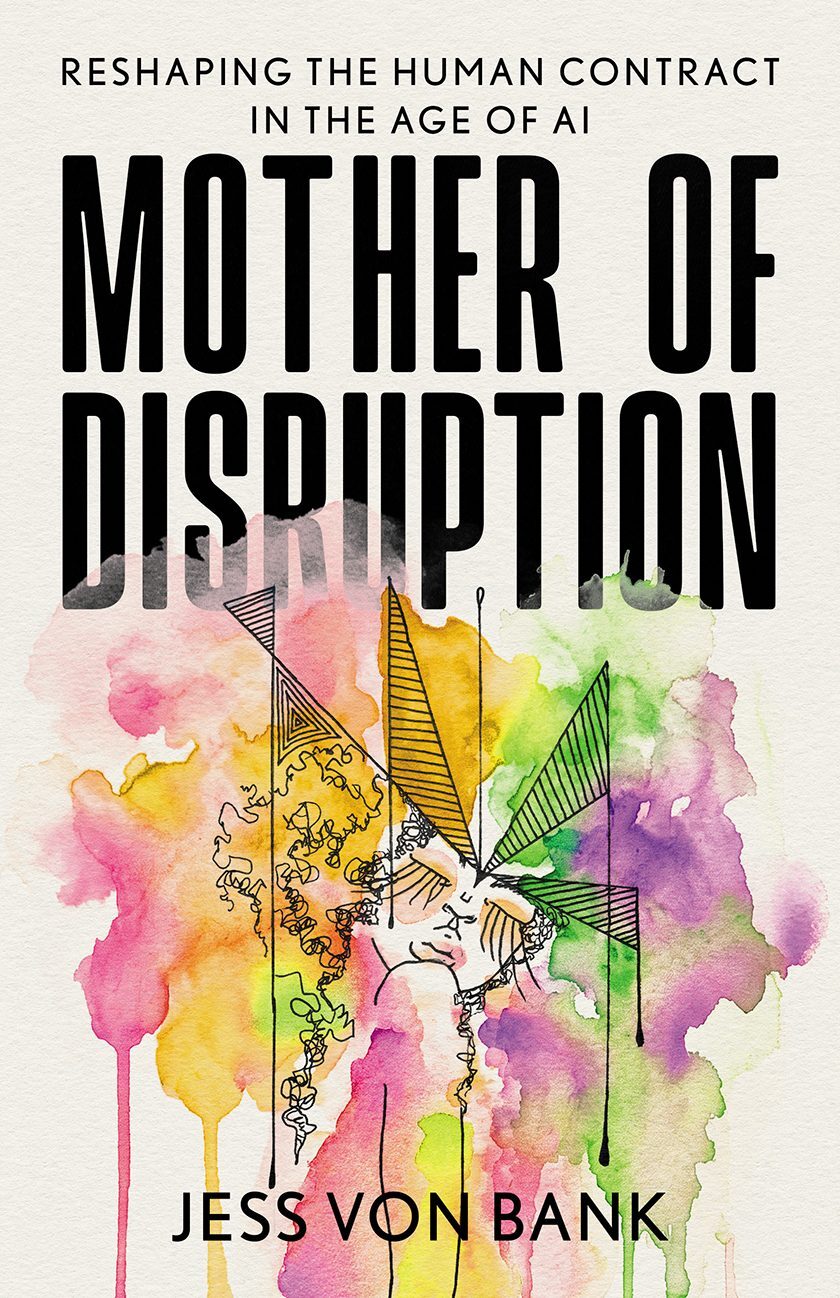
In this episode of Author Hour, Jess tells host Lex Statzer how most of the book poured out in four days, why she treats fear as information instead of resistance, why she calls herself pro-AI and anti-harm, and what a farmer father taught her about change. She also shares how the Scribe team protected her voice, from the editor who found the book’s title to the designer who adapted a friend’s watercolor art for the cover.
“Everybody who touched this made it better.”
⭐ Top Moments
- Humans need to win. “Can we please say that humans need to win in this conversation? [...] Corporate profitability should not be at the expense of humans.”
- Fear is information. “Fear is literally information on what would be required to move us to safety. That's all it is.”
- Working with Scribe. “Working with Scribe, fantastic experience. True, and I'm not just saying that. A fantastic experience because everybody was rooting for me, everybody was, was excited for me, and everybody was very careful of that process.”

Jess Von Bank
Jess Von Bank is a technology humanist, future-of-work advisor, and systems thinker. She is the co-founder of Now to Next, a transformation firm specializing in the human dimensions of enterprise AI. Raised in small-town North Dakota with shoulders that know how to lift, Jess has spent more than two decades working across talent, technology, and systems design. She is a mother to three daughters, the founder of a nonprofit for girls, and an endurance athlete. Jess measures every system by how well it serves the people inside it, and believes any future of work that fails its people is no future at all.
★ Scribe Case Study
Jess Von Bank's Mother of Disruption Puts Humans at the Center of AI
Jess Von Bank has spent her career in talent technology transformation. In Mother of Disruption, published by Scribe Media, she makes the case that humans need to win in …
📚 Books by Jess Von Bank
Transcript
Lex Statzer: Welcome to Author Hour. Today, I am here with author Jess Von Bank, who wrote Mother of Disruption: Reshaping the Human Contract in the Age of AI, which is out now. Jess, welcome to Author Hour.
Jess Von Bank: Thank you for having me. I love being here. I love being an author. How's that?
Lex Statzer: Yeah, how's that feel?
Jess Von Bank: Pretty good. The book's been out for two, two weeks and two days, I guess. And it was a fun pro- somebody told me, I don't know, you probably get a lot of author reactions. Somebody told me, "If you're still in love with the act of writing after you've gotten through bringing a book into the world, you are lucky." Yeah. Because at some point, it turns into, like, a whole process, right? I, I can say I'm still in love with the act of writing.
Lex Statzer: Good. Good. And you're really, like, in that prime time where it's so fresh that you get to just soak in the feeling of being like, "I'm an author. I wrote a book. It's out there," which is just such an amazing feeling. Was there a part of the book-making process that was the most special moment to you?
Jess Von Bank: Hmm. You know, I wrote ... Uh, so I write like a volcano. I always have. Like, when I have a spark, a moment, a thing, like, I can feel it. Like, it doesn't matter where I am. I can be on my yoga mat, I can be on a paddleboard, I can be in the middle of nowhere, and like, and what? Like, it comes out, and I have to, like, get it down. And so that's how most of the book came out, in, like, four days last fall. And then I had it, and I sent an early draft to, like, some trusted, like, early readers and stuff. So the, so most of the book itself, I sort of lived with, and it was like Play-Doh for a little while. But I have to say, once I knew what needed to be refined, and, like, where the mortar needed to be filled in- Mm-hmm ... where the cracks were, and, like, the special things, like the dedication, the prologue, the way I even chose to have the cover art designed by a dear friend who's a watercolor artist. Like, I feel like the finishing work became really, really special because it was like, this is where you preserved, like- Protecting the voice of the book when AI can write anything, right?
Lex Statzer: Mm-hmm, mm-hmm. And
Jess Von Bank: we all have opinions about that. Protecting the voice of the book was, like, a fierce thing throughout the whole process, but then at the end, making sure that it felt human and it felt like an actual piece of art, which is how I see any book. And I s- Mm-hmm ... especially wanted mine to be received. I didn't want it to read like a business book, I didn't want it to read like a book about AI, even though I was sort of tricking people by having an AI conversation within it. I wanted it to feel like a beautiful piece of writing. Yeah. And so it's like, I know, it was all the finishing work at the end where I was like, "This is where I'm gonna make sure it feels that way."
Lex Statzer: Yeah. I mean, that final stretch is really like when you're doing a 5,000 piece puzzle and you've m- labored over it for a month, and then you're on the last 15 pieces, and it's like just clicking into place and you're watching the whole thing come together. I- it's- Yeah ... such a special time. Yeah. Yeah.
Jess Von Bank: Wow.
Lex Statzer: So I wanna know what moved you to write this book, and why write it now?
Jess Von Bank: Hmm. So I've been-- My whole career has been in the talent technology transformation space. So what a, what an interesting space to be working in when AI sort of hit all of our collective radars a few years ago. And I was already in the space of digital transformation, helping enterprises digitalize work experience, design workforce experience, figure out how to deploy technology well for ultimate business value, but also in a way that it felt good to work with systems that we use in the workplace. So I was already in, in that, like neck deep in that work, helping enterprises evolve with technology. And then AI comes around, and the conversation felt really different. The-- I think we went through a few phases with it. First, it was like this shock and awe, and it felt like literal magic. Yeah. Most of us saw ChatGPT for the first time, and we were like, "What? How?" Like, you know? Yep. And it felt like magic. And then we had, like, fun playing with it. And then it got better and better. Like, the way this stuff gets better so fast is crazy. Mm-hmm. It got better and better. And, like, our first-- I didn't even ask if I can swear on this podcast. Go for it. Our first, like, holy shit reaction turned into an oh shit moment because we- Yeah realized how many pieces and parts of work it could replace. And then it felt like, wait, this is starting to feel, like, weirdly personal. Like, how much of us it could mimic. And if it can mimic, it can replace. And so we're having this weird, like, identity crisis with AI. Obviously, there's a lot of job displacement, which is, uh, disruptive if it affects you, and it's unnerving if, even if it doesn't. Like, you realize- Mm-hmm ... everybody has to evolve. It-- One, you're not gonna find your way forward in the future of work if you don't. Two, you don't even trust it yet, even if you're a high adopter, like, how this stuff works, how it changes so fast. It's just this rat race everybody is trying to keep up with. And then you're not even sure what you're excited about because we can't see-- I used a term in the book called oculism. It's like we're looking through this tiny little keyhole, and we can only see what we can see through this keyhole. There's so much outside of that. That's what this moment feels like. So you're trying to be excited about a future that you can't even imagine or describe right now. Mm-hmm. It's a weird time. It's exciting. It's all of these things. But that's why I was, that's why I finally said, "Okay" I need to write about what I know about transformation, what we get right, what we get wrong, and how we can help people transform in good and positive, healthy ways right now. But I also need to call a spade a spade. We're gonna get a lot of this wrong, and I need to, like, point out what we're probably going to get wrong so we can minimize as much of it as possible and remember that humans need to win. Hmm. Like, tech is gonna work Like it's tech. Tech is gonna work, and everybody is gonna have the same AI in their organizations. Like, that's a t- the technology will always be a commodity, but how do we make sure that human outcomes become part of the conversation so people are working in systems where they can thrive, not get burned out, feel joy, feel a sense of value and purpose? Like, there was al- always a lot of that missing from the work conversation before anyway. How do we make- Mm-hmm ... sure that stays in the conversation now?
Lex Statzer: Yeah. I love that. A- and something that's so special about this book is that you take it to a personal level. One of the things that you- Yeah ... talk about in the book is that you say your dad tended soil, and your mom tended souls, and you were able to absorb what work meant from them way before you even had words for it. Yeah. So take us there. What was that upbringing like? What did that teach you about work and the meaning of work?
Jess Von Bank: Yeah. Well, I think, you know, if, if this conversation is already familiar to someone, that means you work in business, and you touch tech, and you understand systems that we all have to use to get work done and business processes and stuff like that. So if this conversation is even remotely familiar to some, to some of you, that means you're already, like, super familiar, right? And I n- Mm-hmm ... most of the world is, is frontline workers. Much of the world doesn't sit at desks on laptops and think all day long about AI and how technology helps us work. But yet when you think about it, it's 2026 outside of work. What year does it feel like inside of work? That's system design. That's literally how work systems are designed to help you do your job and be effective and measure whether or not you're effective so you can get paid and promoted and that kind of thing. So that's what I'm talking about. Most people know that, like when you say it in just simple language, but they don't think of it like system architecture and technology deployments and AI agents running around, taking over work processes. So I, I really wanted to just change the language and make it available to everybody. My dad was a farmer. He understood transformation more than most transformation consultants do. Uh, one of the lines I use in the book is, "You don't shout a harvest into existence." You don't. You can plant seeds. You can study the soil. You can do all of the nurturing and, and development. You can study the weather patterns, but you can't actually affect the weather. Like, there are some things you can design for, you can control. There are many things you can't, but what you can do is prepare fertile ground for how change happens and what actually grows out of the ground, uh, where you plant seeds. And so I really wanted to use somatic- Physical, lyrical language to help us remember we, we know what we know, and we experience- Mm-hmm change as human beings, as physical creatures. We're, we're touching a lot... Like, technology affects our lives in a lot of ways, but I wanted to give us like a, a, a system of language and understanding that everybody can relate to, which is why I started... I, I wanted to zoom out and sort of take it back to, to that, to soil and souls.
Lex Statzer: Your whole argument kind of turns, turns this idea over that AI didn't break work It exposed something that was already broken. So, so what was already broken?
Jess Von Bank: Yeah. So, so the example I used earlier, it's 2026 outside of work, what year does it feel like inside of work? That's design friction. That's- Mm that's literally like, think about, it doesn't even matter what job you do. Think about core business processes that exist in any job. You show up to work, you might punch a clock, you might log your time, you get paid a certain way. You use whatever you use to like file an expense report or submit time off or send emails or share a document or a report. The way we experience our lives, like our personal lives, we talk to systems. Like, we get, you know, we get personalized, targeted ads in our social media feeds because we bought- Yep ... something, we said something over here, and now Instagram knows we want this pair of boots. Like, think about how seamless and connected, almost like intuitive and embedded technology is. It anticipates what we want to do- Yep ... and it makes it super easy for us to do that. That is not how work works. Like, we sit down in our day jobs and we're like, "What do you mean I have to navigate this clunky system and navigate this, like, long, complicated menu or like find an employee portal to go submit a..." Like, it's like- Yep. Where the technology that we use in work is so far behind the way we experience technology. Technology should feel kind of invisible in a good way. It sh- should feel super intuitive. It should actually be kind of fun. Some of it is like, actually fun to do. It should certainly make our lives easier, or we wouldn't do it. If we downloaded an app on our phones and it made zero sense, was hard to use, provided us absolutely no value, we would give that about five seconds to ascertain we would never use it again. We would probably delete it, and we would never go back and re-download it to see if it got any better. It would literally be gone. Out of sight- Yep ... out of mind forever. But we're not, we, we, where we set the bar for like the work stuff that we use much, much lower. Like, we, we force fit people into working in ways that aren't intuitive, don't make any sense. They actually make us k- kind of miserable sometimes. We just, so instead of h- making people work for the tech as designed, I beg us, I beg us, let the tech work for humans the way they are highest value producing, work most naturally. Like, literally design the tech to work for us the way we are when we're at our most impactful, idea-generating, you know, sort of selves. So, so what a great time to like reverse the system a little bit.
Lex Statzer: Yeah. So a business hearing this thinking, "Yeah, I would really like the tech to work for the people in this company." What is the first step to that reversal process?
Jess Von Bank: Yeah. So anybody who, who, you know, has ever done any sort of transformation or design thinking or change management is pr- probably pretty familiar with, like, the tech comes last. You start with mindset, people, process. In our new business, we use what we call the four set filter, and still, like, no matter what framework you wanna use for this, you get to the tech last. Mm. You literally have to, like, earn your right to get to the technology conversation to say, now what is the piece of technology that would actually support the, you know, this experience if we were to design it to work this way? What's the tech that we could configure to support this experience and measure it at scale? So the technology is important, but it's not the first thing that you rush to. You have to actually start with, what are we trying to solve for? Literally.
Lex Statzer: Mm-hmm,
Jess Von Bank: yeah. Instead of running around looking for a problem to solve, what is the problem we're trying to solve? Design for that outcome, and start with, who are we designing for? What's the outcome we're hoping to measure? What does that need to look like? Is this something that needs- Yeah ... to look, you know, fantastic, it needs to be an excellent experience, it needs to feel good, or whatever. And then you get to the tech as a design constraint. You don't just flip on tech and do what it's capable of doing. You configure the tech to the experience and the outcome that you're trying to design. Right now we're, you know, we're, we're two years into sort of the investment and experimentation phase of AI. Mm-hmm. Everybody just turned on everything. They sprinkled AI glitter on business as usual. Truly. Yeah. Business as- Yes ... usual. So all we've done is perfect old ways of working. We haven't actually changed and updated and redesigned new ways of working from the starting point of AI. So this is kind of like, okay, go back to the drawing board. What... If you were to redesign any core business process from the starting point of AI, forget what the AI can do. Actually say, how would we build a marketing department, or how would we create a demand gen funnel for our business, or how would we handle revenue reconciliation? Like, take anything that exists in almost any business, and imagine what would be possible with better tech, more p- you know, m- more, more capabilities. But don't just, like, turn on the tech and say, "I guess that's the way we work now." That part- Mm-hmm ... that's the part that people don't... That technology doesn't change the way you work. You change the way you work, and that's a mindset shift. It's a new approach to new ways of solving problems. Then you build trust and belief in a sort of that new way of working. Then you build skills and capabilities so people actually know how to operate in that environment. Then you give them the fancy new Copilot license or whatever you're gonna use to sustain that
Lex Statzer: Yeah, I mean, pushing AI or just new tech in general on a broken system just creates a faster broken system, right? Yes. Like, it might, it might finish a task much quicker, but we're not getting at any of the, the central issues that, that are at the core of the company. Absolutely. Yeah.
Jess Von Bank: Yeah. Totally. I mean, imagine, like we all get spam messages, right? Like- Mm-hmm ... whether it's in your LinkedIn inbox or your, you know, you get sales outreach in your, in your work inbox. So AI is really good at writing. Does that mean you wanna spam more people faster? No. What if you could use AI to actually do better targeting and more personalized outreach to your actual target audience? Like, what if you could use the tool to say, "Act- I don't need to email 10,000 people when 9,000 of them are not even a target prospect for me. What if I used AI to distill down 1,000 actual viable prospects? And what if I used it yet again to say, what are they actually trying to buy, and how..." Like, like literally just- Mm-hmm ... think about how you would use the tool differently. Not spray and pray even more than before, but use it to do better audience segmentation and targeted marketing and personalized outreach that feels... D- everything doesn't need to be human, but if it's not humane, it should be... If it's not human, it should be humane. So how do I u- how do I use technology to actually create that high touch experience, even if it's technology powered? Yeah. That's the better framing for don't tech everything. Think about how tech can help you do, you know, sort of humanize experiences that, that you're trying to deliver.
Lex Statzer: Yeah. And, and at the center of Mother of Disruption, there is a diagnosis that you call the five wounds. H- first I w- I wanna know why the word wound?
Jess Von Bank: It kind of, it stops you in your tracks, right? Definitely. It, it almost feels like a little bit of a gut punch. So I wrote most of the book, and then when I... This piece was a- I went, this was one of the last pieces. I went back and add it because I felt like we really needed to sort of like name the thing, and I'm kind of a yoga junkie and stuff, so maybe this is like, may- maybe this is too yogi. But if anybody can relate, you have to name it to tame it. We hear this term a lot when people talk about their nervous system and even breathwork and stuff. Yep. Name it to tame it. And if you don't recognize what somebody is feeling, where their mistrust is coming from, where their fear of, of becoming obsolete is coming from, what it means to, to feel loss of mastery in a trade or a discipline that you've spent years cultivating skills around. Even identity, you know, displacement- These are like real valid reactions we're having to a massively disruptive consequential technology that we don't fully understand and don't fully trust. Mm-hmm. And don't fully trust is for good reason. Like fear is information. If people feel fear, uncertainty, doubt, fear is not resistance just because. There's actually good information in that. What information are you missing? What information would make this feel safe to you? What information would let you trust what you're receiving from these algorithms, from these chatbots? So fear is information, and if you don't acknowledge where it's coming from, then it's almost impossible to sort of, to, to wave people through. Like, well, they just need an adoption program. They just need a training module. Somebody just needs to sit down with them and show them how the, how this works, and then they'll be a believer. Mm-hmm. And then they'll be a high adopter. I just think that's the wrong approach. Number one, understanding where people are coming from makes them really valid from an input perspective. I would want them in the design team saying, "Here's how we might change this workflow in a way that makes it easy to adopt, exciting to people who would say this is a much better way to do this, make people trust the outcome. Ooh, this is really good, high quality. Oh my God, this is so much better than before, the way I used to generate this report or whatever." Mm-hmm. Like put those like skeptics and pragmatists into your design sessions because they'll actually be able to advise it better instead of like a high believer, super adopter rushes to pick up every new cool tool right away. That's great. That's great, but they're, they're probably gonna skip over a lot of questions around privacy and safety concerns and guardrails and how do we govern and manage this? Like that's fine too, but, but those are important questions, and it all sort of belongs at the table. So, so the five wounds of change was me sort of saying, "Can we please understand where this is coming from?" And it's for good reason. All questions are good questions, and you need to resolve, like people are-- have a hard time believing in something that's not all that well explained. And right now, that's a lot of this AI stuff people are being asked to absorb at a crazy pace, by the way, and just change ways of working overnight. I'm not saying slow down. I'm not saying stop. I'm not saying more policy, more governance. I'm saying there is a way to be innovative and drive progress and not skip over our actual approach and stance and sort of attitude about what's changing.
Lex Statzer: Yeah, I, I really love the way that you reframed fear there. Like, that I, I honestly, I think fear of change, whether it's in the technological landscape or just the workplace in general, whatever it is, so natural. But there's a shame to it of like, maybe I'm just not able to adapt like everyone else. Yeah. Maybe I'm, you know, holding us back. Maybe I'm the problem- Yeah here because I'm afraid. And I, I love the way you put it that like we are getting information out of that. There, that resistance, it's, it's not there just because you wanna be difficult, right? Right. Like, it's there because there is an uncertainty that makes you feel Kind of off kilter in a way.
Jess Von Bank: Yeah. Yeah, totally. Yeah. And fear is a very healthy... Thank God humans have the instinct of fear. Yeah. Fear is literally information on what would be required to move us to safety. That's all it is. Mm-hmm. Like, if you protect kids, pets, like anything other- yourself, fear is I don't feel safe for whatever reason in my current envi- there's something in my environment that is causing me not to feel safe. What would it take to move me to safety? That's what people are fearing. So it could be fear of job loss, it could be fear that I don't have the time, the skills, the ability to learn something that's new and different for me. It could be fear that my information is going to be mishandled and used in misappropriate ways. It could be a fear of cybersecurity. It could be, it could be we're ruining our planet. I don't like- Mm-hmm ... I don't like this. I don't trust it. I'm not going to use it because... There's a lot of really valid stuff in there that we should spend a bit of time with, because I do think if we just wash everything over with technology, we're gonna get a lot more wrong than we need to, and we could be getting more right if we took a moment to understand what's possible, what needs to be protected, where the guardrails need to go. I mean, I have three teenage daughters. I'm not gonna hand a chatbot to young people without knowing that the makers of that technology have made it impossible, impossible for them to get into deep water in a conversation that has no business happening in an algorithm. Mm-hmm. Like, we're seeing some of the lawsuits and some of the... Like, it should be impossible for that conversation to go there. And if I don't know that you have that guardrail in place, whoever designed this chatbot or this algorithm or whoever is wrapping safety and governance around it, then that means I need to wrap safety and governance around it, or not, not hand it out. Mm-hmm. And that, so that's the part that workplaces are struggling with right now. They're trying to put policies and governance and guidelines in place for appropriate AI use. We're not even talking about, like, ethical, moral, safe data privacy use. We're talking about, like, how to actually be productive at work, but all of that. Like, this is a really big bag of, of conversations to be had. So that's, that's where the, the book came from. Like, please see this as a design opportunity. Please invite more people into that conversation and recognize, like, be willing to unpack what needs to be unpacked here, and have a sense of, like, hope and optimism for what we get to design and how we can do it better.
Lex Statzer: Yeah, and, and how it can revolve around the person- Yes ... like you're talking about, rather than the person revolving around the technology. Yeah.
Jess Von Bank: Yeah. It drives... It honestly drives me crazy. I've been in the tech space for a long time, and, and I get it. Like, tech companies, AI providers have licenses to sell, tools, applications to sell. The whole AI conversation has been a corporate conversation aroun- around profitability.
Lex Statzer: Mm-hmm. Mm-hmm.
Jess Von Bank: If corporate capitalist profitability for business is fine, like I know that that's a box that can and will be checked, but can we please say that humans need to win in this conversation? Mm. Corporate profitability should not be at the expense of humans. We don't have to forsake things like privacy, data, safety, you know, surveillance, you know, stuff like that. We, we don't have to... We can create a world that we all want to live in, where people have access to jobs and income, and we have a healthy economy, we have a healthy planet. Like, we can, like, we can have more than just corporate- Mm profitability in this moment, and I... We're sort of missing that sort of like humans also need to thrive part of the conversation, and I'm a massive advocate of making sure that stays front and center.
Lex Statzer: Yeah. I mean, there's, there is this danger that you're highlighting, but there's also this hope that you're able to weave in as well, where there, there is a space where this can work so well, which is exactly your point of, this isn't an anti-AI, anti-technology- No warning book at all. This is a- No ... there is a, there is a, like you said, an opportunity here to go down the right path. Yeah.
Jess Von Bank: I'm, yeah, I, I know I sound like such an antagonist sometimes, and I love it. Like, I l- like I w- I welcome the conversation. I'm pro-AI, anti-harm, and it's the anti-ha- like, I'm just gonna die on that hill. I think you can be anti-harm and still be pro-technology, and it's deciding what we want in this moment. You know, even the whole, like, introducing technology and AI into learning environments for young people, tricky conversation. Literally a tricky conversation. Do humans actually develop better, learn more? Do we a- you know, the whole reason you go to college isn't to... Maybe it's to know more about the field of psychology or accounting or whatever, but, like, the whole point of pursuing education is to learn how to learn.
Lex Statzer: Mm-hmm.
Jess Von Bank: And, and does AI actually teach us how to learn? I don't know. Or is, or does it just become an answer machine at scale, and we just turn off our brains at some point? Like, so what are we all doing here, you know? It, it's- Yeah ... that whole conversation that is really tricky, and I wanna make sure that that tricky conversation feels accessible for everybody to participate. This isn't a tech bro moment. This is not destiny just because a few people developed a super powerful tech that is the biggest deal of all time. Great, fine, but everybody please stay at the table and decide what we're gonna do with this moment.
Lex Statzer: Yeah, yeah. Keep the soul in the conversation. Yeah.
Jess Von Bank: Yeah.
Lex Statzer: So- If a reader walks away from Mother of Disruption after finishing it, and they take away just one thing- Mm ... what do you hope it is that they take away?
Jess Von Bank: So I wrote this very intentionally from my perspective as a woman, my lens of motherhood. There's no more... And you don't even have to be a mom. Everybody understands the lens I'm talking about.
Lex Statzer: Mm-hmm.
Jess Von Bank: When you're responsible for somebody else's safety, privacy, literal human development, what they learn, how they learn to, you know, to thrive and persist in the world, whether or not they're happy and experience joy. Like, nobody gets this more than somebody who's responsible for that for somebody else. And so, I mean, the first working title was literally Work Like a Mother. It was a, it was offering sort of that maternal system design thinking and lens to say, "What if you thought this way about the people in your workforce and the way you're rolling out AI for, for your own business benefit? But what if it was for their benefit, too?" Mm-hmm. "And how are you going to protect people?" Not jobs. Stop rushing to protect jobs. You know? Like, we think we have to hold on, like, oh my gosh. Fine, let jobs evolve, but how are you gonna protect people and livelihoods and ability to earn and have a, a life and afford education and stuff like that? So how are we gonna protect people in this moment? It's... So I offer that lens. Like, literally, think about the lens of maternal instinct and caregiving and human development. It's such an easy lens to look through. There's nobody we feel more protective of than young people. Mm-hmm. So just, like, think about, what if we were to protect the people we're responsible for? Mm-hmm. What would that look like? What outcomes w- would we want for them? And how can technology deliver some of those outcomes better? And what do we need to protect to make sure doesn't happen? It, to me- Mm ... it's so simple. It's a little refreshing 'cause it's a little different. We're not used to talking this way, I get it- Mm in, in our businesses, but it's a pretty helpful lens to look through.
Lex Statzer: Yeah. A- and you're not only protecting the people today, but you're setting the standard for what's to come, right? Yeah. Like, there's a legacy there in how we handle this conversation in the early days so that as these young people grow up and enter the workforce themselves, what is that gonna look like for them? Yeah.
Jess Von Bank: Yeah. I mean, this is a really natural lens for me to reach for. I totally get it because my three daughters are teenagers in high school- Mm-hmm ... right now, so they're all entering the world of work in the next decade, and this is my lane. Like, this is the literal, this is my platform, this is what I do, I've done for my entire career, and I have a big voice in this space. So I feel a sense of responsibility to use my voice and my influence and my platform well to say, "Wait a minute, I can help us do this better." But I'm not just thinking about them, I'm thinking about all of us. Like-
Lex Statzer: Mm-hmm ...
Jess Von Bank: all of history, think about this, like, all of history is going to look at this generation, this moment, and say, "What did you do with this?" Mm-hmm. You were handed the most powerful, consequential technology of modern history. What did you do with it? Mm-hmm. Did you change the world for good? Did you leave something behind that's better than what we had before? Did you improve education? Did you improve health? Did you improve the climate? Did you cure some diseases? Did you help people live happier lives without burning them out? And like, you know. I think this is, like, I hate to be so... Actually, I love to be so, so, so big about it because- Mm-hmm ... this is a big moment and opportunity. So I think of this as a little bit of an inheritance we get to pass down. And for me, because it's work I can actually do and impact, it's, it's trying to make it practical. So whether you work in business, you lead an organization, you lead a team, you actually hold budget and decision authority. No matter who you are, I want everybody to have a question they can ask, something they can do differently, something they can offer in a conversation they're a part of because everybody can have some impact here.
Lex Statzer: Mm-hmm. And, and there's no better way to cement your voice in this conversation and your legacy than writing a book. So-
Jess Von Bank: Yes ...
Lex Statzer: what an incredible, incredible way to, to get this out there. And we, we started talking about the book-making process. So I'm gonna close talking about- Yeah ... the book-making process. This book is very, as we've spoken about at length, very technologically focused, but it also, as you mentioned earlier, is meant to be read almost poetically. There is a narrative element to this book as well. Mm-hmm. So what was the hardest part for you to get out onto the page in that way, and what was it like to build this book with Scribe?
Jess Von Bank: Mm. I loved this process. So for me, writing is a- it's my favorite form of expression. It comes pretty naturally to me. Mm-hmm. The hardest part was honestly, and I write quite lyrically, poetically. I w- like, I ha- I sort of gush when I write. Like, it-- I use a lot of run-on sentences. I use a lot of emotive, descriptive language. I wanted to stay really, really true to that because that's my voice. Mm-hmm. And, and I think our voice, our art, our creative expression, oh my God, like, AI is taking everything. It'll-- it will literally will not take that. I was super protective- Yes ... of that, but I needed to translated it-- translate it. I needed to make sure, like this is a business book. I didn't want it to read like a business book, but I wanted to reach an audience of people who could actually affect change in their organizations. So I needed it to translate like just enough to like, I'm not gonna give you a playbook. I swear, I swear I'm not gonna give you consultant stuff. I'm gonna give you something you can work with, whether it's a list of questions, ideas, something. So for me it was like finding the right balance. How do I give you something you can actually do something with, but have it read beautifully, have it touch you somewhere a business book would not touch you? Have it like literally feel-- like I wanted people to feel something. Like literally, I wanted you to feel punk. I wanted you to stand on your chair and pump your fists in the air. I wanted you to cry. I wanted you to have like your own memory and recall. Like I wanted it to lit-- because that's the only way for people to p- feel hopeful, to feel inspired toward change. So that was the writing process Honestly, I was really... So working with Scribe, fantastic experience. True, and I'm not just saying that. A fantastic experience because everybody was rooting for me, everybody was, was excited for me, and everybody was very careful of that process. How do you preserve the artist, the voice, the writing as an art, and how do you also bring that to market in a way, like, you can, if no- you can write a book, but if nobody reads it, you know, kind of thing. So how do we make sure it gets into the right hands where it can actually have impact? And I have to call out Dave here. I had the perfect editor. I was really nervous, 'cause I had already vetted somebody else, and I was like, "Ugh, it doesn't feel right. They don't get it. They just don't get it." Like, I wasn't getting like the- Mm-hmm I'm like, "No, this isn't the one." And then we moved to Scribe, and then I met Dave Jarecki, who took his first pass at the book, and I could tell, he was like, "Oh, uh-huh. Okay, I got you." And he's the one that came up with the ultimate title. He's like, "I know you have this, like, placeholder title, but you're kinda punk, you're kinda rock." He's like, "What do you think of this?" I knew. I'm like, game on. Here we go. It's a great
Lex Statzer: title. This is happening. Yep.
Jess Von Bank: Mm-hmm. It needs to be a rock band name, right?
Lex Statzer: Yeah. Yeah, it's a great title. Yeah.
Jess Von Bank: Literally with even the cover art, my friend Ari was the inspo. She's a watercolor artist. She did all the pieces in my house. Uh, she's so incredible, and I wanted the art as well to be- Yeah ... human. Like, literally human. And then Anna on your side took Ari's art, and she's like, "Okay, I hope I can do her justice." Like, there were so many like artful steps, and each one- Yeah ... completely paid homage to, like, what it needed to be and how it needed to stay. Like, everybody who touched this made it better.
Lex Statzer: Oh, that is so special. I love that you got to have your friend do the art. Like, that is such a- Yeah ... beautiful moment. And, and something that I love about the way that you wrote this book is ridiculously reflective of the message within this book of, like, it needs to be bold and loud. Yeah. Because AI, the conversation of AI is disruptive, whether we want it to be or not. It is. We are all getting, like, this ripple effect, and so you going so hard with the way that you told this story is-
Jess Von Bank: Yeah ...
Lex Statzer: like, it's just ironic how, how much it mirrors the actual conversation you're having. Yeah.
Jess Von Bank: Completely. Like, I literally... The reaction I'm getting to the book is, like, people are like, "Oh my God, I literally met your parents in this book." Aw. "And now I know your friend, the postal worker, in this book, and now I know how you grew up." Like, it feels a little bit memoirish, but I'm a storyteller, and I think story is such a powerful vehicle. It connects- Mm-hmm ... people. It gives us something that we can actually relate to. You didn't have to grow up on the farm I grew up on, on to understand what it means to harvest a crop. Like, it's just relatable- Yeah ... stuff, and we do... Like, what do we do in business? We play, like, buzzword bingo, and we talk, like the way we talk in business, I'm like, "No, we're gonna have a human conversation here, please." And so I did leverage a lot of storytelling in, in bringing it to life. Number one, I know no other way, and number two- Mm-hmm ... I think it's more effective than forcing us into corporate speak about business terms, about... But, like-
Lex Statzer: Mm-hmm ...
Jess Von Bank: okay, that... I, I thought we could have a bit of a moment here if we tried it with a different language system.
Lex Statzer: Yeah. And, and this is a conversation about humans more than it's a conversation about AI, and there's- Yeah ... nothing more human than emotion. Yeah. So you really brought that emotion. Yeah. Yeah. So to close us out, Jess, where can people find the book, and how should they keep up with you?
Jess Von Bank: Yes. So we grabbed the domain, motherofdisruption.ai, and that is honestly that landing page we're keeping updated all the time with media around the book, with where I was at a speaking event earlier this week, we did a book signing. Like, so that landing page, so motherofdisruption.ai, is the most up-to-date at all times. Mostly Amazon. Honestly, you can find the book hardcover, paperback, or e-book on Amazon. The audiobook will be available in January, and one of my friends was like, "I'm not an Ama- I like independent booksellers." There are so many independent booksellers that you can also find. We put a couple of them up on the site, so you can support your, your independents as well. I'm all for it. So those are all of the ways. I'm super active on LinkedIn and Substack. Substack is kind of my weekly newsletter, and LinkedIn, I talk about this stuff all the time, every day. It's like my, my evangelism platform. Just to give people kind of like something to latch onto, to, like, give language to something that people are having a hard time, like, naming and feeling and stuff. So follow me anywhere and everywhere. I love messages from people. Tell me what you think, what your questions are. I love getting that kind of outreach.
Lex Statzer: Perfect. Well, thank you so much for having this conversation that desperately needed to be had, and I mean the book, but also this interview- Yeah ... specifically. And the book is out now. You can grab it wherever you get your books, and Jess, thank you so much for coming on Author Hour.
Jess Von Bank: Thank you. This was so fun.
Want to Write Your Own Book?
Scribe has helped over 2,000 authors turn their expertise into published books.
Schedule a Free Consult