Must: Dr. Stephen Rue on Turning Your Pain Into Purpose
✨ Episode Summary
Dr. Stephen Rue is a lawyer and a doctor, and he wrote Must: Becoming the Person You're Meant to Be out of his own history. His father left when he was six, his stepfather died by suicide when he was 11, and his mother built her whole life around her two children. The book is his answer to a phrase he believes in deeply. "your pain turns into purpose."
Since launching with Scribe in September 2025, the book has resonated widely. "over 19 book awards and accolades from my book since it was originally launched in September of 2025 through Scribe." "my book is an Amazon bestselling book in three categories." Readers around the world have written to say it moved them.
Asked what he most admired about his mother, Rue pointed to the message she left him. "tell them, Stephen, tell them to love and tell them to be loved."
⭐ Top Moments
- Pain into purpose. Rue built the book on the losses that shaped him, and on the belief that suffering can be transformed rather than carried. "your pain turns into purpose."
- 19 awards and an Amazon bestseller. The book found its audience fast. "over 19 book awards and accolades from my book since it was originally launched in September of 2025 through Scribe." "my book is an Amazon bestselling book in three categories."
- His mother's legacy. When he asked what to tell his readers, her answer became the heart of the book. "tell them, Stephen, tell them to love and tell them to be loved."
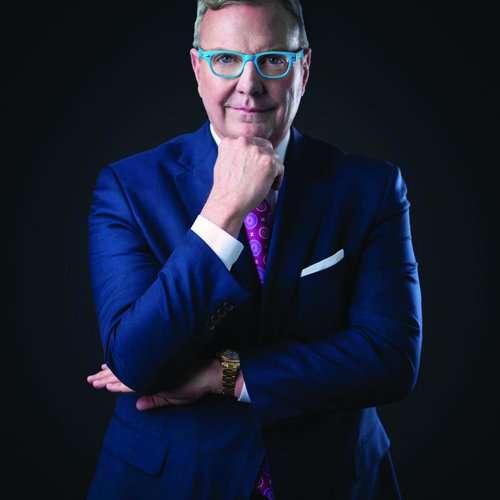
Stephen Rue
Stephen Rue is a lawyer, certified trauma recovery life coach, speaker, and author. He holds degrees from SMU and Loyola University and has completed leadership training at Harvard Law School. Drawing on more than three decades of study in psychology, neuroscience, philosophy, and personal development, he wrote Must: Becoming the Person You Are Meant to Be, a guide that blends memoir, psychology, and motivation across three parts: exploration, implementation, and integration.
★ Scribe Case Study
Dr. Stephen Rue Turned Pain Into Purpose With Must, Winning 19+ Awards and Becoming an Amazon Bestseller
Dr. Stephen Rue turned a childhood of loss into Must: Becoming the Person You're Meant to Be. Since its 2025 launch with Scribe, the book has won 19+ awards and become an…
📚 Books by Stephen Rue
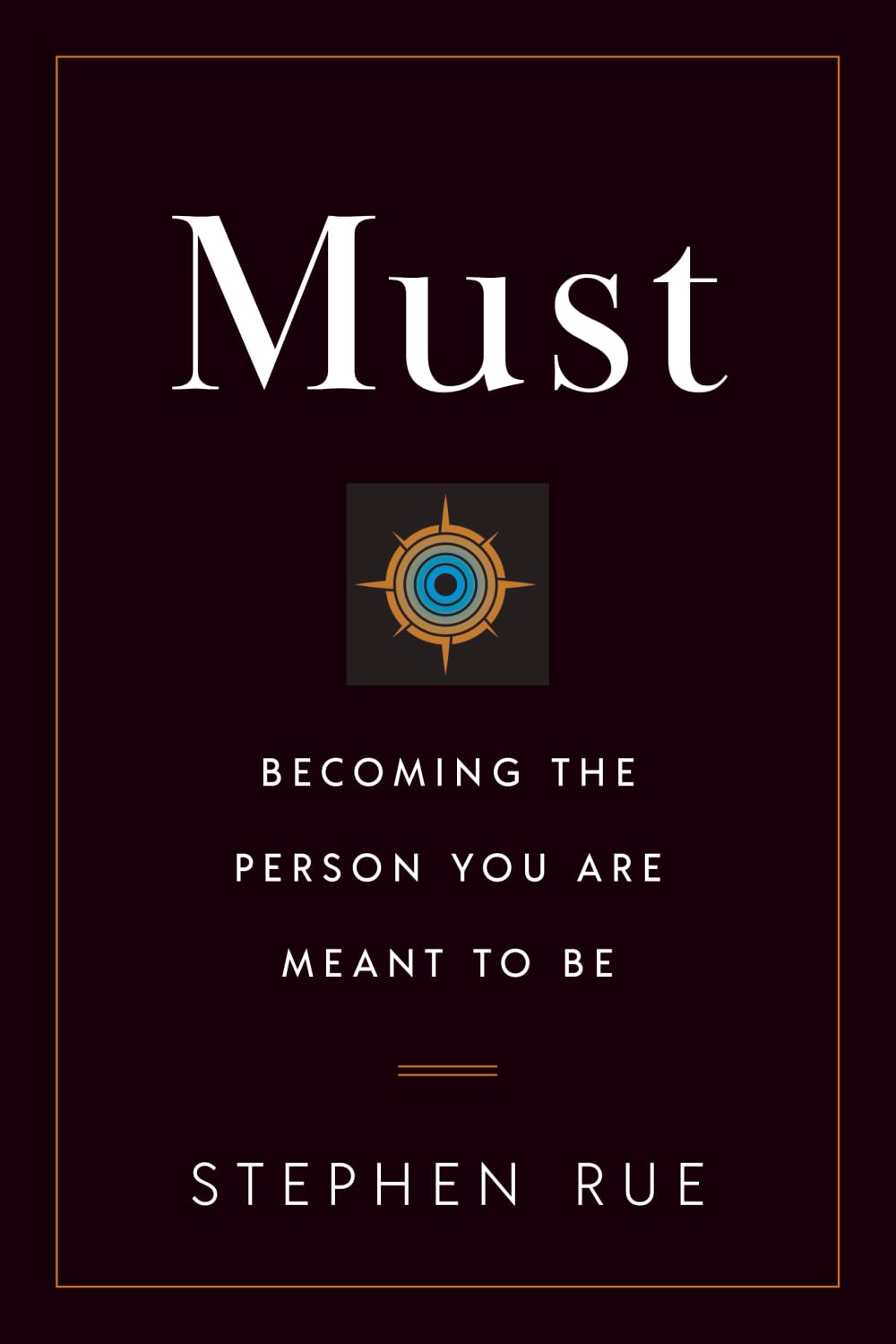
In this episode of Author Hour, Travis Stoliker sits down with Dr. Stephen Rue, a lawyer and doctor whose personal-development book Must: Becoming the Person You're Meant to Be grew out of his own history of trauma and his mother's example. They talk about turning pain into purpose, the awards the book has won, and what it means to become the person you already are.
Transcript
[0:02] Travis Stoliker: Welcome to another episode of the Author Hour podcast. I am so excited to have Dr. Stephen Rue with me today. Stephen, can you introduce yourself and tell us about your book?
[0:12] Dr. Stephen Rue: Hey folks, I'm Dr. Stephen Rue, just, I'm Stephen, and I wrote Must, Becoming the Person You're Meant to Be. It's a personal development book about how to find where to get in your life to have an authentic identity. Most people just don't know where to go in life when they want to improve themselves. There are so many books out there, books on habits, on goals, on mindset, on grit. Whatever you want, whatever flavor of book that you want, it's out there in personal development. However, people don't know which one to get. Go to the bookstore, go to Amazon. What are you going to do? Which book to choose? I decided to write a book because it was my mission, my purpose, my must, my non-negotiables in life, based on my own personal history of going through traumas in our lives as children and then as young adults. My father wasn't really in my life. He abandoned us, and I didn't really know him. He divorced my mother when I was six and basically left our life. My stepfather, who I loved dearly, I called Dad, committed suicide when I was 11. My mother had her own problems as a result of that, but yet she found her non-negotiables, her purpose in life, which were her two children, myself and my younger sister. We were her must. After my stepfather had committed suicide, she was in the bedroom in the closet where he had died, and she was on the carpet trying to clean the devastation out of the carpet. She saw me, and I looked at her, an 11-year-old boy, and she got off the ground and said, Stephen, I will never let something like this happen to you again. At that time, I didn't realize totally at the time, but in reflection, I have realized that that was her must. We became her non-negotiables in life. She became a schoolteacher. She tutored at night. She struggled to do everything within her power to even neglect her own best interests on many occasions for her children. She recently, unfortunately, died this past December at age 88 of acute myeloid leukemia. From the time that she was diagnosed to the time she passed away in hospice at home, it was only 19 days. But through her entire life, she was my inspiration for my book, Must, because we must find what's important to us in our lives. In my book, Becoming the Person That You're Meant to Be, it helps with that identity gap of where you are, where you as an individual are stuck in life. You can be successful in many ways and still be stuck. You can be not satisfied with who you are, where you are in all of the various aspects of your life, but you don't know where to begin. I have a conversation in my book with you, the reader. Take you through the yellow brick road of discovery so that we start with mindset. We talk about our core beliefs and our values. We talk about our personal narrative. We talk about our personal standards. Then we talk about purpose, and then we talk about our non-negotiable actions and habits in order to accomplish those things and live in accordance and alignment with our values and our beliefs and our refined personal narrative. That is a narrative, a personal story that we shred away our limiting beliefs and our learned helplessness. That's what this book is about.
[4:23] Travis Stoliker: What did you most admire about your mother?
[4:25] Dr. Stephen Rue: Her love. When I was writing my book, I talked to her a lot about it because, to me, I was pouring out my vulnerable soul to the world, each individual reader at a time. Part of my mission is for people to understand that we all have our flavors of suffering. We all have our events in our lives that we have to overcome, that we have to refuse to allow to make those instances elements of our identity. She taught me those lessons. The most important lesson was, because I'm writing another book, and I asked her, I told her I was writing, what do you want me to tell the readers? She says, tell them, Stephen, tell them to love and tell them to be loved. That's one of the greatest legacies of my mother that I want to say now to everyone.
[5:28] Travis Stoliker: I think that is just beautiful. Your book is such a great tribute to your mother and how she picked up all those pieces and was able to produce such an exceptional person in you. Super lawyer, now doctor, published author, all of the accolades. One of the things that you just said, I'm a relatively new father. I didn't have my kids. I didn't start until 37, so I've got an eight-year-old now at 45. Thank you. Like your mother, that is my purpose. I wish I would have done it younger. I hope I did it at the right time. One of the things that I'm, as we gear up to going back to school, that you mentioned that I want to drill in on a little bit. You mentioned how the bad things that happen to you don't become your identity. It feels a bit like our culture has that flipped around now. In school, for instance, they'll try to identify a kid as, you have anxiety because you don't want to give the... The one that came up recently was you don't want to speak in front of the public. You don't want to give that speech. Well, you have fear of public speaking. Well, everybody has fear of public speaking. I fear that we are labeling kids so young of, well, you have anxiety, you have this, you have... Are we getting that wrong?
[7:01] Dr. Stephen Rue: Well, we definitely are getting that wrong, but it's also inevitable. Because what happens, part of my book, Must, Becoming the Person You're Meant to Be, also deals with all of the science. Yes, I'm a doctor now, and I'm a lawyer, and I'm going to be an Indian chief at some point too. In other words, the letters of degrees count, but being human counts more in that we all are individuals in our formative years that hear things of, we cannot do this. It's the mindset. We have fixed mindsets. We have growth mindsets. And what's interesting is that when we are told these by parents, by teachers, by friends, by colleagues, even now at work, oh, you can do this, you're great at this, you're not so good at that. We get this, and what are we going to believe about ourselves? I am. I ask everyone in my book and in life to write down, just flow it out on paper, give you a pad of paper. It says, I am, and just flow it out. Just write it all down, and you're going to find some interesting things about yourself that come from your past. And what you find from your past is that there are limiting beliefs that aren't true. They just simply aren't true, but you believe them to be true. You didn't ever take the time to question the premise of that alleged truth. And so we do that on a regular basis. Every human being does that. And as I said, it's usually well-intentioned. Oh, I don't want you to get hurt. You shouldn't do that. And unfortunately, we teach our children, who grow up to be adults, who have children, that they are limited in some. They have a fence around them. And the fence, the parents put a fence of protection, but the fence becomes a cage of beliefs. And so we need to open up that gate to the fence and explore to get into what I call your must zone. And what that is is when you were doing the things that are non-negotiable in your life and aligned with your values and beliefs and your standards, then all of a sudden that sense of fear becomes a clarion call. It's wonderful, actually, because you're alive. When you're a little bit of fear, a little tingling of alertness, oh, I don't know what's going to happen here, congratulations. You have broken through the comfort zone and now into the must zone in which you are experiencing life. Your life is no longer boring, is it? And it's full of potential. You may not win the thing that you want to win, and you may have many, quote, failures before you win, but a failure is a learning experience. People look at the word failure just like they do with people's limiting beliefs. Yo, you can't do that. You should never have failures. Everyone that's successful in life has failures, and usually those are the people that have more failures than the other people. Congratulations, you failed again. You know what to do. Edison says, I learned one more time how not to do it. That's wonderful. And so we need to understand that we can go outside of that comfort zone, and we should in order to live a really wonderful life, the life that we are intended to live and be, so that on our deathbed we don't regret what we should have done. People never regret on their deathbed, oh, I wish I made more money. I wish I had this particular car. They don't think about that. They think, oh, I regret I should have had a better relationship with this person or that person. I wish I had followed my dreams and not been afraid of something. Because the reality, Travis, is that the things that we fear, what's interesting is the things that we correlate to suffering are things in our past, things that we fear are things in the future. But right now in the moment of this very, the moment of now, right now as we're right here, the lesson of mindfulness is that we are okay right now, but we need to then use our now. Our now is an ever-moving target because it's now. We need to go after what we want in life and realize that those elements of suffering that really have pushed us back don't need to have the power that we give it. We choose the level of our suffering from our past.
[11:55] Travis Stoliker: Oh, that is beautiful. We choose the level of our suffering from our past.
[11:59] Dr. Stephen Rue: We do. We do. And here's another thing about suffering is that most people look at suffering in a very, it's like suffering is a trauma tattoo. It's something that we keep in our soul and in our psychic about who we are. We did this, so therefore we are a victim. We did this, and I can't do that. I can't be loved. I'm not enough. Those are the kind of things that we tell ourselves because other people told us that or events happened and we're trying to figure it all out. We're all in our life, no matter how old we are, still trying to figure things out. I'm a teacher now, but I'm also a student. And so the main thing about suffering is that people think, oh, you're saying that caused you this great suffering. Well, that was horrible. That's horrible. That's horrible. And that you could have blessings and goodness before, and you get blessings and goodness afterwards, but not then. But the reality of it is that you have it then as well. Your blessings are there simultaneous with your moments of suffering. In those moments of suffering, to some degree, the moments of trauma, those setbacks, those alleged failures will happen in your life. But at the time of your element of failure, at the time of your obstacle, at the time of that trauma, you're still blessed. And if we focus a little bit on that, our life could be revolutionized. We could have a wonderful breakthrough. I often think about my stepfather when he was in that closet we talked about earlier. And I don't know what he was thinking. I can't imagine other than he was in deep despair to take his own life. But those moments and seconds before he did that, I've often wondered if he had that slight shift in perspective and realized that he had these blessings. He had a beautiful, wonderful wife. He had two wonderful stepchildren. He was an eye surgeon. He had so much to live for and for life itself. And I encourage everyone in my book and in life to do exactly that. That's why in my book, Must, Becoming the Person You're Meant to Be, I go well beyond just the traditional discussions of those things I talked about, your mindset, your core beliefs, your values, your personal narrative, your purpose, your habits, et cetera. But then I say, you've got to apply this to your life. We need to deal with our suffering. We need to deal with counting our blessings and looking at life from a positive side. Martin Seligman, who is the famous psychologist who wrote about and teaches on positive psychology, speaks of the fact that we have a negative bias in our lives, that it's partially in our DNA because we're fearful. We want to survive. And the only way to survive is to be a little titillated to make sure that nothing comes around us that can harm us. A saber-toothed tiger may not come and eat us. And so we don't have saber-toothed tigers anymore, but we conjure our own metaphysical, other kind of saber-toothed tigers in our life that most of the time don't ever come to fruition. They never come to our door. And yet we fear them. We create those limiting beliefs from those because we fear that monster may come and ruin our little paradise, our Camelot of our comfort zone. So I talk about suffering. I talk about blessings. And when my stepfather had, if he just changed his perspective, would that have changed your life? And I'm asking the readers, the viewers of this podcast to look at life from that perspective. Seligman says we have such a, in our DNA, 40% or more of our well-being, our attitude, our psychological attitude is genetic. It was shocking, but that's the science. And then we deal with another 10% to 15% of people about what happens to them and how they identify with what happens to them. So we're left with less than 50% of our focus in our lives and to the positive, which means we have to be more conscious, more intentional, more purposeful to aggressively pursue the goodness in life, the positivity in life. And that's well beyond happiness. Happiness is transient. It comes and goes. It's great to have. But what we need is flourishing. Flourishing is our race standard of overall well-being in our lives. Knowing that we are loved, knowing that we are enough, knowing that we can contribute to other people, that we have a legacy of love, just like my mother said, to give love and be loved.
[17:22] Travis Stoliker: That is just beautiful. Your book has just been on a tear winning awards. Can you tell us about some of the awards that your book has won?
[17:34] Dr. Stephen Rue: Just, you know, the Paris Book Fest, over 19 book awards and accolades from my book since it was originally launched in September of 2025 through Scribe. And I couldn't be more happy with my publisher. I couldn't be more happy with how Scribe has really backed the book and backed the purpose behind the book. It's great to deal with a publisher who really cares about their authors and the mission of their authors. And that's my personal experience with my book, must become in the person you're meant to be. And the greatest thing about it is the most rewarding thing is not the book awards. It's not the personal feel of accomplishment. It's that individual reader that it changes their lives. I've had countless people from actually around the world contact me. They email me, they DM me on social media. I've had personal conversations with many people that say that it has moved them and allows them to look at their lives in a different perspective. It changes their own perception of their identity and that identity gap that exists. So that they can become the person they're meant to be. You see, the beauty of becoming the person you're meant to be is you don't have to go pursue this person. You have to discover that person within yourself. That person within yourself. The person that you want to become is already in you. It's already of you. It's part of your I am. You just have to etch a sketch the negativity. Look, I'll be 66 in two days. And when I was young, there was a little toy called an etch-a-sketch, which is you can have two little knobs and you can draw little figures on this screen. One of my favorites. Yeah, and then you finish with it, you shake it up and the image leaves you. Well, we need to shake it up, our own personal etch-a-sketches of life to get rid of some of these images that we just carry with us that are tattoos on our soul that no longer serve us and are simply untrue. And the beauty of it is once we do that, there's a vacuum there in our identity. And we need to pour the goodness of who we want to be and who we really are, our authentic self into that vacuum.
[20:08] Travis Stoliker: I think that is just beautiful. I'm wondering too, you know, some of us have some of those people in our lives that are, they want us to stay that old version of ourselves. Sure. They want us to stay, you know, friends from school or friends, you know, maybe family members that don't want you to change and go and pursue this new version of yourself. How would you recommend that people deal with that? How do you be true to your family roots but not allow that to shackle you to a version of yourself that isn't your authentic self that you should pursue?
[20:52] Dr. Stephen Rue: They, everyone that says that to you and everyone that feels that way, even if they don't say it because they can still make implications and inferences, make you feel that you shouldn't do it, even if they don't say it. A lot of that is because they love you. They care for you and they don't want you to leave. They love the person that you are now that they relate with. If you go and do these wonderful things, then unfortunately, it makes them reflect on their own lives and their own times and things that they haven't done for themselves. How could they improve? Here's the reality of it. All the self-improvement books that sell every year, that's a small sliver of humanity. Most people will never pick up a personal development book. Most people will never walk into a church. Why is that? I think they're afraid. They don't know how to become something else. And I want people to know that they're loved, that they're enough. You are right now as I speak. You are loved. You are enough. And you are loved. And so in knowing that, you have the most ultimate, you're doing your friends a favor by giving them, by moving forward and making yourself an example to them, you can either say, I'm sorry I'm leaving you because many people have said, I think it was Jim Rohn that said that you are a combination of the top five people you are with most of the time. And so, but that is true. So we need to be the least common denominator in the room, meaning we can learn from all of the luminaries that are around us. I've been very blessed. I know Brian Tracy and Jack Canfield and Tony Robbins and Dean Goreski. And I know, I knew Zig Ziglar. I've known so many wonderful people in my life that I just come across. I almost feel like I'm the Forrest Gump of personal development that I've met so many people in my life that now I can write about, I quote, I get inspiration from. And it's just an absolutely wonderful adventure that I'm on through this book to help other people.
[23:18] Travis Stoliker: How did you become who you are, Dr. Stephen? You had every reason to say, you know, I had this obstacle. I had everything that you went through. How did you become who you are? And then how did you get to that point where you knew you needed to write this book?
[23:38] Dr. Stephen Rue: You know, you've heard this phrase many times, your pain turns into purpose. And I think that's absolutely true. It became my purpose to also serve the life of the sacrifices of my mother. I know I've already spoken about my mother. I am a mother's boy. I always will be. 66 years old or 99 years old, I'll still be a mother's boy. And in honor to all the dedications that she did, again, she was a teacher. She taught third grade for decades. All these kids became adults and always would reach out to her and tell her how much they appreciated her. She would go and give them coats and food and supplies when they couldn't afford it, their families couldn't afford it, that kind of person. And so she became my inspiration. And I was so discontent with myself. I didn't know who I was. I was far from my own personal perception of who I am now. I was very discontent. I was very unhappy. I didn't really know how to relate to people. And so I dug into my education. My mother wanted me to be educated. I went to Southern Methodist University in Dallas. After that, I got an MBA. After that, I went to law school. After that, I studied negotiation and leadership at Harvard Law, professional education. After that, I went to LSU and learned, I got certified in trauma life coaching. And then I received my doctorate in organizational leadership, working on wellbeing and performance. And then even on my birthday coming up, the 66th birthday of my life, I started a new course at Harvard Medical School, taught by Dr. Robert Seligman, who is the director of the Harvard longevity study, adult longevity study called the Harvard Happiness Study.
[25:42] Travis Stoliker: That is one of the longest running studies on happiness ever.
[25:46] Dr. Stephen Rue: Over 85 years. That's exactly right. And I'm going to have the honor to meet him Thursday. Wow. So I'm really thrilled about that. So as I said earlier, the teacher is always still the student, but I got into like the Tony Robbins. I went to seminars. I still have a series of his cassette tapes. Back in, I guess it was the late eighties, early nineties that I listened to at my kitchen table with a cassette recorder. That fueled me. That gave me hope. That made me feel like I had a way to get out of my doldrums. That was get out of the rumination of the negativity in my life. Slowly but surely. I remember when I was 40, I never was an athlete, everybody. Never was an athlete. And I remember I was single at the time and I was out at a bar and I heard these athletic looking guys talking to these ladies about, oh, I'm running the marathons. And I go, wow, that's pretty cool. Wonder if I could do that. And then now I've already run 14 marathons including seven New York City marathons. But you know how you did that? How I did that? I made the decision to do it. As Tony Robbins said, you have to take immediate action, some kind of massive action to get going, but it doesn't have to be that massive actually. Incremental small steps is how I got to where I am. Incremental steps, how you run a marathon. Step at a time, how you write a book. A word at a time or a thought at a time. How do you do anything? Incremental and you allow it to build. How do you work out? How do you just announce more weight or pound more of weight? And you incrementally grow. That's how we grow. Incrementally, just like tree with, you look at tree rings. Cut open a tree. You're going to find rings. The tree incrementally grew. And that's who we are. If you cut us open, we would have rings in our life in a way showing how the evidence of our rings is our improvement, our progress. A lot of people say the true wellbeing and happiness and flourishing is in the progress of life. It's in the journey of progression and not in the destination. That's for sure. That, so I've gone to perpetually meet all these people, learn from the masters. And what is mastery? Mastery is, as you may have read, for example, with Robert Greene's books and other books about, you know, what the 10,000 hours to become a master of something and that you can do that. Well, I've certainly put in my time, my effort and all that. A lot of people aren't willing to do that, but they should because they should care more about themselves and actually have a catalyst to do something better. But I want to go back just for one second. I know I'm going off a tangent for a second, but when people think about we're mastering our lives to get better physically or mental health or in relationships or in business to excel in whatever we want to excel in, in the circle or wheel of life, in our health and vitality, in our relationships, in our career, in our finances, in our personal growth, in our spirituality, religion and wellbeing as a whole and in our legacy, how are we doing in that wheel or circle of life? In what areas are we mastering? But also what's interesting is this. No one ever talks about this. What are we mastering in our lives that's negative and not for us? What are the habits that are not serving us well? What have we done for those 10,000 hours of our lives or however time it is and what we focus on that we need to unmaster, that we need to etch a sketch, that we need to shred, that we need to simply dispose of? I'm a firm believer you don't need to go through years of evaluation of yourself to simply decide to change now. I am a firm believer of that. When people come to my law office and see me, I've represented thousands and thousands of clients. I've seen them at their darkest, deepest times from horrible personal injuries, tragedies, to despair in their relationships and they all come out hopefully a little bit different because I'm a little bit of a different lawyer because I give them my personal development stuff. I give them my personal development Kool-Aid. I'm sorry, that's who I'm going to be and that's what I'm doing. If they want a different lawyer, then they should go get a different lawyer because I'm here to help them as a human being. And I tell them they need to be walking out the door different from when they walked in my door and I believe that everyone can do that. It's a matter of what we focus on. We have a thing called the Reticular Activating System which is part of our brain that screens what we focus on because there's so much stimulus and if we didn't have that, we would literally go crazy. We'd have so much stimulus that we would not be able to focus on anything. So, for example, when's the last time that you thought about, oh, I need to go to the dentist? And then you're driving down the street by your home. I never knew a dentist's office was right there. How did that dentist's office get right there? Because your subconscious is looking for it now. We need to do that with our lives. We need to intentionally focus on what we want to focus on that's going to be good. We don't need to focus on the guardrails of a turn in our life. We need to focus on where we're going to try to get to. That's what we need to do.
[32:07] Travis Stoliker: And that seems so important right now.
[32:11] Dr. Stephen Rue: I had the pleasure of meeting Billy Graham. Oh, wow. And Billy was from New Orleans. I live in the New Orleans area and we went through Hurricane Katrina. And I was down there filming a documentary. I was the president of Motion Picture Association of Louisiana at the time. And there was all the international press around Billy Graham. He was looking at the Lower Ninth Ward. And he was there with his son Franklin. I personally am a Christian, but I honor everyone's belief in their own spirituality. And I don't impose mine on them. But I'm a Christian, so I just wanted to disclose that. So it was particularly important for me. It was wonderful to meet Billy Graham. And all these reporters were trying to ask him questions. He wasn't answering any of them. And then I spoke up. And I said, Reverend Graham, what can we learn from Hurricane Katrina? He got out of the minivan that he was about to leave in. His son helped him out, came right to me. And as I'm looking at you, he was looking at me. I look at eyeball to eyeball. He said, what can we learn from Hurricane Katrina? Well, if ever there was a time to turn to God, it is now. And I've always taken that with me. Because no matter what's happened in your life, whether you're religious or not, that's a wonderful phrase to consider. If there was ever a time to move on in your life, if there was ever a time to change, if there was ever a time to have a better relationship, if there was ever time to believe in yourself, it is now.
[34:00] Travis Stoliker: That is so true. Who is that one person or that one perfect audience for your book? Like, I know that these are these are lessons that apply to everyone. But who is it that should would benefit from picking up your book right now? And also, I didn't know you were president of the MPAA. So I'm assuming that this book has turned into a movie.
[34:26] Dr. Stephen Rue: Of the National Association in Louisiana, the state version.
[34:30] Travis Stoliker: That's amazing.
[34:31] Dr. Stephen Rue: Yes, yes.
[34:33] Travis Stoliker: I learn something new about you every time.
[34:35] Dr. Stephen Rue: Yeah.
[34:36] Travis Stoliker: Yeah.
[34:36] Dr. Stephen Rue: But we had a lot of films back there in Louisiana. But back to what we're talking about, who is my perfect person that the book can help? That is really anyone that feels hurt, feels that they are stuck. Anyone that doesn't know where to go, that needs a conversation with a friend. That's me. I'm not trying to talk down to them. I'm talking with them. I'm sharing. I've been there. Again, I might have a different flavor of suffering than you have had, but we all have suffered. We all have obstacles. We've all had failures. We all have something that injures us. And that's who I believe I can help. The book can help. And to get unstuck and to get back into the integration of your life, into your being. We're human beings. Being means to do something. Stop being human something else's. I don't know. Human pauses. We need to be human action. Okay. Human interaction. Even better. That's who the book is for. My heart and soul is in this book. And I didn't write it for thousands of people. I wrote it for that particular person that is reading it.
[36:05] Travis Stoliker: May I ask something that might be uncomfortable? Did you write this book for your stepfather in that closet? Yeah.
[36:15] Dr. Stephen Rue: I wrote it for my stepfather. I wrote it for my mother. I've never had children. And I wrote it for the reader and other people's children. Wow. I wrote it for you.
[36:31] Travis Stoliker: Wow. Wow. I know from firsthand experience. We were talking before on the first company that I had with my friends. And he passed away from a heart attack at a young age. And went through my first period of grief. And two other friends passed all within the five-month window. First time I'd ever really struggled with grief. Yeah. And it was two of the books back here that got me through it. That completely changed my life. That's good. And Dr. Stephen, I know that your book is going to do that for thousands of people. So, thank you for writing it.
[37:17] Dr. Stephen Rue: It's very much my honor and pleasure. Thank you so much for having me. It was just great. I want to leave everybody with a couple phrases. I want to welcome you to your becoming. Right now, I want you to do something after listening or watching this podcast. Do something that you've always wanted to do. Take that first step. Simply do it. That mastery starts immediately. You're loved. You are enough. And you are loved. So, let's do this. Okay?
[37:49] Travis Stoliker: Oh, fantastic. My last two questions. Yeah. What was your return on investment with publishing with Scribe? Did you get your money back? Was it worth it?
[38:03] Dr. Stephen Rue: It has been one of the best decisions I've made personally or on a business standpoint in a very long time. It was worth it. Now, look. Let me tell you something. I had long nights thinking about it before I made the decision. And I am so pleased that I made the decision to go with Scribe and allow Scribe to publish my book. But also, all the great individuals at Scribe, from the editors to the personal individuals that help in every single way. It's a team. It's a family at Scribe that you become part of. They legitimately care. Not just a little bit. They're not blowing smoke. They legitimately care about you. And I would do it again tomorrow. And I likely will. So, I thank Scribe because Scribe becomes a foundational part of what I needed to do to get my word out, to get my message out, to fulfill my purpose in life, and to help the legacy of myself and my mother. So, I thank you so very much for that opportunity. Because, look, I have all kinds of degrees, the ABCs of degrees. But what I don't have, I don't know how to publish a book. I don't know how to properly edit a book. Scribe does. And I'm so blessed to have made that decision. I actually got out of my comfort zone, got into my must zone, felt the clarion call of a little bit of fear, and moved forward. And as a result of that, my book is an Amazon bestselling book in three categories. It's won 19 book awards internationally. I get contacted from people around the world who buy my books. So, is it a good investment? Excuse me? It's a spectacular investment. It's an investment in myself. And it's an investment in my legacy. It's an investment in my purpose and in my dream. So, thank you.
[40:19] Travis Stoliker: Well, we are just honored to be along and have the privilege of working with you and looking forward to the next one. And I know for certain that you're just at the beginning of this book journey, too. Not with just the multiple books that you have queued up and are ready to go. But also, probably the most common theme that I hear from talking to authors is I had no idea that this thing would come five years later. For example, Candler Cook, who he was a walk-on athlete, and now we just found out that his book was optioned and it's being turned into a major motion picture. That happened out of nowhere. Or another author that I talked to, and it was two and a half years after his book was published that he had his best sales month ever. One group ended up adopting it as their course material for their entire course. So, my last question that I want to leave us with is, because you're the most qualified person of anybody with all of your work and all of your background. For that person that is struggling, they know they have a book in them, but they don't know how to start. They can't get over the fear to actually say, I'm ready to publish. I'm ready to hit submit. I'm ready to call the publisher to get a deal. I'm ready to overcome that last fear. What advice would you give somebody in that spot? That's real easy for me. I know exactly what you should do.
[41:54] Dr. Stephen Rue: Go ahead by yourself in a room with no one else around. Give yourself the moment to start. Give yourself the moment to write down very imperfectly your thoughts. You're perfectly imperfect. So, let's make it that way. People don't want perfection, by the way. People want vulnerability. People want to see your scars, your real life, your real being. Please be brave enough and vulnerable enough to pour that onto the paper. It doesn't have to be perfect. Write it and start it, just like we talked about running marathons or writing books. It's a word at a time, a step at a time. And then you have started that momentum. And once you start the momentum, get other people involved. Declare to the world, I am writing a book. Write a contract to yourself. Write it down. Put the date on it and say, I, John Doe or Jane Doe, I am writing this wonderful book on this topic. Its working title is such and such. And I'm going to complete it and give it a deadline. You can change it down the road, by the way. But write a deadline and then sign it. That's a contract with yourself. That's a declaration of your own independence, of your own creativity. You're giving yourself the license to move forward in your lives. Once you tell other people that you're doing it, then it becomes more of an acknowledged commitment. And people can be encouraging or not. But you are putting it out to the world and universe that I'm doing this. Wow, how exciting is this? I'm living. I'm a human being because I'm doing it. I'm acting upon it. And then contact someone like Scribe. Contact Scribe. Go ahead and do it. And then, because they can help you along in the process too, by the way. And so you're no longer by yourself. You're no longer in that room by yourself. You have someone that can help guide you, can fill in the gaps of the things that you don't know. As I said, I'm a highly educated, formally educated person. And there was a hell of a lot of stuff I didn't know and didn't know where to turn to. Turn to Scribe and guess what? Scribe had those answers. Scribe had that guidance. Scribe became my guide down that road towards starting the book, writing the book, clarifying the book, dealing with some of the editing issues, publishing the book, launching the book, and becoming part of the Scribe family. That's what you should do, my friend. But I want you to start today. Not tomorrow. Today. Even if it's a couple words, start today. The next day, add some more words. Add a paragraph. Add a page. Then you got something. But please do it.
[45:10] Travis Stoliker: Do it for yourself. That is perfect. Dr. Stephen, thank you so much. We're so proud of you and looking forward to our next Author Hour where you can tell us all the new successes that have come as a result of your book and all the people that you've helped. So thank you so much. Thank you.
Want to Write Your Own Book?
Scribe has helped over 2,000 authors turn their expertise into published books.
Schedule a Free Consult