Small Changes, Big Transformation: The Self-Care Dare with Carrie Cox
✨ Episode Summary
Carrie Cox owns Crew Fitness, with a gym in Mobile and another in Houston, Texas, and for eight years she has run a member challenge called The Self-Care Dare. It started as a morning text message to the people taking the challenge, then grew into emails and blog posts built on five factors of wellness: mindset, nutrition, fitness, sleep and connection. Then her members asked for more: “people kept asking, you know, can I get a copy?” and “really, they said, put this in a book.”
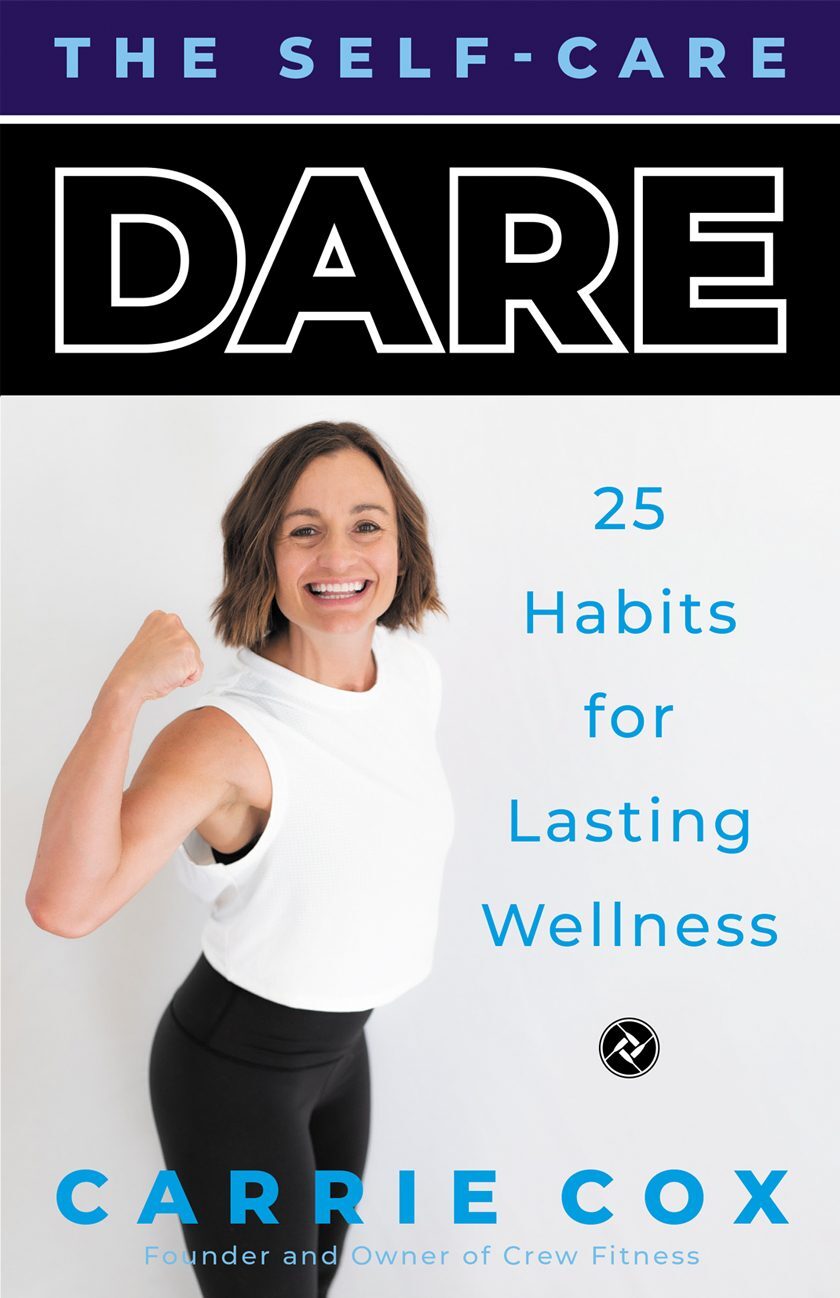
Her first plan was a spiral-bound printout from FedEx. She wanted a real book instead, and she found Scribe through a book already on her shelf, Ben Bergeron’s Chasing Excellence. The result is The Self-Care Dare: 25 Habits for Lasting Wellness, which carries advance praise from gym members who, in her words, “really credit this challenge and these ideas with transforming their life.” Her advice for anyone with a book inside them: “Just start.”
⭐ Top Moments
- Her readers asked for the book before it existed. The Self-Care Dare began as daily text messages to gym members, outgrew a text, and became emails and blog posts. Then the challenge took off. “It was last year we had such great success on this challenge that people kept asking, you know, can I get a copy?” Carrie could have stapled the dares together. She chose a book for a simple reason: “I just value books. I wanted to hold it. I wanted it to be a book.”
- The advance praise comes from her own gym floor. The book was written for the people Carrie sees every day, from a 73-year-old member who rides the bike almost daily to a 16-year-old who shows up on his own to train. Two of the advance praise quotes on the book come from those members, people who “really credit this challenge and these ideas with transforming their life.” Next, she wants to take the challenge to other gyms with the book and a habit-tracking app: “I would love to bring the challenge of the self-care dare to gyms across the country and say, here’s a book.”
- A book on her shelf brought her to Scribe, and Scribe pushed her to write the why. Carrie found Scribe through Ben Bergeron’s Chasing Excellence: “I had it sitting on my shelf and saw Houndstooth Publishing and that’s what brought me to [Scribe].” The 25 dares were already written. Scribe suggested a new opening section explaining how the five factors of wellness work together, and that became a research project into sleep and connection. “So really part two was written before part one. And part one was a challenge. But I really enjoyed it.”

Carrie Cox
Carrie Cox is the visionary founder and owner of Crew Fitness, a boutique fitness concept with locations in Mobile, Alabama, and Houston, Texas. With over a decade of experience in the fitness and wellness industry, Carrie has inspired countless individuals to embrace healthier, more fulfilling lives. She champions accessible and achievable wellness as the creator of Crewathlon, a dynamic multisport event that unites fitness and community. A sought-after speaker, Carrie connects with audiences through relatable and actionable advice. She lives in Mobile, Alabama, with her wife, Mary Kendall, and her three daughters, Maggie, Sadie, and Mary Frank.
★ Scribe Case Study
Carrie Cox's The Self-Care Dare Turned Eight Years of Gym Texts Into the Book Her Members Asked For
Gym owner Carrie Cox ran The Self-Care Dare for eight years as texts, emails and blog posts. Her members asked for a book, and she found Scribe on her own bookshelf.
📚 Books by Carrie Cox
Transcript
Lex Statzer: Welcome to Author Hour. Today we have Carrie Cox, author of The Self-Care Dare, 25 Habits for Lasting Wellness, which is out on October 6th, so next week. Carrie, welcome to Author Hour. Hi, thanks so much for having me. Of course. Today we're basically going to look into what your book is about, who it's for, how it came to life, that kind of thing. But before we get into the book, take me back a little bit. What were you doing when the ideas for the book first started forming? Like, what was the moment when you thought to yourself, this is something other people need to hear?
Carrie Cox: So it's a great story. I'm a gym owner. I've got a location in Mobile and a location in Houston, Texas. My gym is called Crew Fitness. And just like other small boutique fitness community gyms, we run challenges. Each year we run two or three challenges. And this challenge is called The Self-Care Dare. And I guess we've run it now for eight years, but it's evolved over the years. And when we started attaching habits to the dare, you know, most gym challenges just ask you to show up a lot. And so we wanted to take it a step further. And so we first looked at nutrition. And then when you get into nutrition, you realize that it's a lot trickier than just telling people what to eat and when to eat it. That if you're not sleeping right, then it's hard to eat right. And if you're not fueling for exercise, it's hard to keep exercising. And so we just kept kind of growing. And we went from just fitness to just fitness and nutrition to overall wellness. And the first year I started attaching habits, I would send out a text message each morning to the, you know, 50 or 100 people taking the challenge. And the double dare is what we call it. We'd say today's double dare is to stop drinking things that aren't water. You know, drink mostly only water. Maybe an occasional glass of wine, an occasional soda, but not an everyday soda. And so we double dare you to drink mostly water. And then it just generated more conversations. The next year, I couldn't fit it all in a text message. And so it became an email. And then it kind of gained momentum. And I put this framework behind it to where on Mondays we talk nutrition, or on Mondays we talk mindset. On Tuesdays, we talk nutrition. On Wednesdays, it's fitness. On Thursdays, it's mindset. And on Fridays, we talk connection, both human and spiritual connections. And the framework is what really made it take off. And so it really evolved. And the idea for a book actually wasn't mine. It was last year we had such great success on this challenge that people kept asking, you know, can I get a copy? I've got all of your blog posts and I can pull them up and your emails are great. But can we print it out? I want to share it with my mom or whoever. And really, they said, put this in a book. And so the original idea was just to take the 25 dares and to put them in a book. But once I started talking to an editor and the publisher and, you know, it kind of needed more context. So from there, it became a bigger project than I thought it was going to be. But it really was a lot of fun. So long answer to a short question. The idea behind the book, it was a long evolution. It just it grew from truly from text messages into blog posts and now it's a book.
Lex Statzer: Yeah, amazing. I can imagine how fulfilling it would be to take something that you've already implemented into your life in such a way where it's already such like the framework of the self-care dare isn't just something that popped out of your head one day. It's something that you've been practicing and working on with others. And so walk me through that core framework. What are the key pieces of the self-care dare?
Carrie Cox: So I define five factors of wellness as mindset, nutrition, fitness, sleep and connection. And I think they really all work together. And I think when you know, if you're really weak in one area and really strong in another area, if you can play on your strengths, you can bring that weakness up. And I think that we really reach maximum potential as far as health and wellness is concerned when we optimize all five. And I think when one is out of balance, then it's very important to try to use the strengths to bring up the other. And so if a person is struggling to work out, everyone knows at this point, you should work out. Everyone wants to work out, but not, you know, I think the statistic is 25% of Americans or maybe 20% of adults are working out on a regular basis. And that's, it's not because they don't know that they should work out. And so I believe it's because something else is missing. Either sleep is lacking or motivation, which would be mindset, discipline. It's not just mental toughness. We talk mental toughness a lot. Mental toughness isn't just doing something hard even though it's uncomfortable. Mental toughness would be doing what you don't want to do because you're supposed to do it because you have, because you understand long-term goals. And I believe that that is a factor for why people don't do something they want to do. It's that they haven't developed this practice, this mindset of big picture thinking. No, I want to, I don't want to do this now, but I understand that it's going to get me to a place that I do want to be. And so it's not that they can't work out. It's that their mindset's not there yet. And so if we can first adjust mindset, then the other factors start to fall into place. Or maybe someone really is locked in and very disciplined in a, in early riser and they eat well, but their schedule is jam packed and there's just truly a lack of time. Well, then we, we start talking, okay, now how can we fit in maybe small snacks of exercise? And we, we talk about that in the book and we talk about, you know, if you start at the top, who do we want to be? And then we work down, how do we get there? What does it take to be, what does it take to be a fit person? Well, it takes fitness. What does it take to be whatever? And then we can plug in how to get there, kind of reverse engineer how to get there. And of course my specialty is obviously fitness, but the more I've done in fitness, the more I see it's so connected to all of the other factors in, in wellness, truly.
Lex Statzer: Yeah. I can imagine, not that I can imagine. I know that for a lot of people, fitness and nutrition and mindset are huge and they understand that, but I'm super interested in the principles of sleep and connection. How did we get to those?
Carrie Cox: To answer your question about connection, it's a really good question. And I'm, I'm going to roundabout kind of answer your question with a question. You know, if a person's got mindset there, they're mentally tough. They've got everything dialed in. Nutrition is dialed in. They're working out four or five times a week. They're sleeping to optimize everything. Everything's there, but they're not sharing this with anyone. My question is, then what's the point? And I'm not going to leave it at that because there is some science to back this up. This has been studied. This has been studied a lot. And there is a lot of research that shows even without fitness and proper eating, and even without perfect sleep, people who have strong connections live longer. And people who have strong connections have stronger immune systems. It's almost like when people have people as a reason to live, they live better. And so I don't think that any of the previous habits, mindset, fitness, nutrition, sleep should ever encroach on connections, truly. And I think that, you know, as you, in the book, we talk about healthy connections and unhealthy connections, and people that boost us up and people that bring us down. And, you know, the idea that you will always care about the people, about what the people around you care about. And I believe that strongly. If you look at the five people that you spend the most time with, you have similar values, whether you realize it or not. And it might just be in the television shows you watch, and it might just be in the foods that you eat together, but you tend to value what the people around you value. And so if you know that you disagree with some values, some core values that the people closest to you carry, then my suggestion is not to cut them out, but to take one step back and to then find people, they are there, who do value similar things that you value. And that will just amplify, it will amplify what is important to you. And that's definitely one of the specific dares, is to find the people who value what you value and be around them more.
Lex Statzer: Yeah, I love that. It's almost like a fulfillment piece. You can do all of these other pieces and have the best life on paper, but if you're not striving for that connection, there is this unfulfillment. Absolutely. I want to know, I know you said that somebody recommended that you write a book based off of the principles, but you could have done a series of posts, you could have done a course, you could have just made the email campaign a little bit more robust. What made a book the right move for these principles?
Carrie Cox: That's an excellent question. I guess I would have to say I value books. I love reading. And at 25, substantial. I mean, each dare, we call them, each dare is about two pages. It's not a lot. But at 50 pages right there, just with the dares, it felt substantial enough to be bound. And truly, the first idea was to print them out and go to FedEx and have them put that little spiral around it. That's what I was going to do at first. But we just kept talking about it. And I just value books. I wanted to hold it. I wanted it to be a book. And so the more we talked about it, the more I really said, this is what I want to do. I want to see if we can get this picked up and make it happen.
Lex Statzer: What a good answer. I love that just loving books makes a book the right vehicle for the message. I think books are legacy. Books are the things that outlast everything else. I'm going to switch gears a little bit, though, and ask you, there's probably so many, but what is the most common misconception you see in your field? And how does the book address that?
Carrie Cox: Oh, I think that the most common misconception in fitness is that you have to go hard every single day and that every workout has to take a lot out of you. And I counter that. In fact, I don't just counter that. I reject that. And especially for people in their 30s and beyond, there's strong evidence contrary to that. And I would say that in a seven-day week, you only need one or two really hard workouts. You need two strength workouts and you need two actually easy workouts. And by easy, we call it zone two, which is zone two out of five. Think brisk walk to light jog. So you're winded, but you can still answer a question and you're working, but it's work that doesn't feel like it's crushing you. So that's different for everybody. Of course, the fitter you get, I know, you know, marathon runners that can run a marathon at an eight-minute pace or seven-minute pace or faster, and they can be conversational jogging for an hour at, you know, an eight-minute pace, which is probably my one-mile sprint. And so I'm not conversational at that pace at all. So of course that varies by person and by fitness level, but that very fit marathon runner is conversational. For a person who's just starting out on their fitness journey, that zone two pace is very likely a brisk walk with a friend preferably. So now we're hitting connection and fitness at the same time, and it should be conversational. Work that connection, enjoy it. It should not be a chore to exercise every single time. So I would say that's the biggest misconception in fitness. And then the other one is that choosing the program is what matters, that the right, you know, people gym hop a lot and that's okay. And everybody's trying to find, you know, what's the next best thing. And the science actually says, or the research really says that the best fitness is the one that you keep doing. It's the one that keeps you coming back. And so consistency is more important than program.
Lex Statzer: Wow. The one that keeps you coming back, that's amazing.
Carrie Cox: That's it. It's the one that you like the best. As long as it keeps you moving, that's where you need to be.
Lex Statzer: Wow. You did just touch on this perfectly, but just to dive a little bit deeper, who exactly did you write this book for? Describe that reader. Great question.
Carrie Cox: It was initially written for the people that come to Crew Fitness. And I'll paint you a picture. My oldest member is 73 years old. Ms. Barbara is wonderful. And she comes in and she gets on the bike and she's never pushing to capacity, but she shows up almost every day. And then my youngest member is 16 years old. And this person, he is incredible. He's fast and he works really hard. And he shows up on his own to work really hard. So a broad spectrum, but it's just regular people, everyday gym goers who care about fitness and who care about health, but maybe not super obsessed. It's not, they haven't, they haven't made, they're not tracking macros and counting every calorie. And they've never thought about the relationship between sleep and fitness or that you need to sleep if you worked out really hard. They've never considered these things, regular people. And so it's very approachable. I mean, again, this is, if you do log and weigh and count your calories and weigh your food, that's fantastic. You probably know everything that's already been written in this book. We start really simple for a person who's never thought about any of these factors of wellness. And then by the end of it, you're going to have a really good idea. And we're going to put some really good habits into motion and they start really simple and then they build on each other so that it never feels like you are diving headfirst into a cold plunge. That's not fun. No one wants to do that. And so we start very approachable and, you know, back to your original question, who's it written for? I would say it's written for a person that cares about health and fitness and wellness, but has never really been controlled by it.
Lex Statzer: Thinking of that reader, that everyday gym goer, that regular person, if they only remembered one thing from this book, what should it be?
Carrie Cox: It would be that we are the sum of all of our small actions. All of our small actions make up what we look like, how we feel, how we approach life, what kind of people we attract and what kind of friend that we are to people, what kind of family member we are to the people we care about. It's those small choices. And so, you know, I keep going back to drink mostly only water. It's such a simple rule and it does leave some wiggle room. Certainly love to have a glass of wine or champagne at a birthday party, coffee every single morning of my life. But the rest of the day, it's mostly only water. And I think that is a simple change that is not imposing on life for anyone, but it can really have some big implications. If I can get, I actually get excited when someone tells me, oh no, I drink two or three Cokes or Sprites a day. I actually get excited because I say to them, well, first thing, I'm going to get you down to one. If you'll give me two weeks at just capping it at one soda a day, then I'm going to ask you to take it down to half a soda a day. And then I'm going to get you off the soda. If I can get you off of a full flavored soda and you've been drinking one or two or more a day, you're going to lose weight by doing nothing else. And they, you know, when I frame it like that, people get really excited. But if you say, no, you can't drink three sodas a day, you're losing your money. Like you can't shame that. They didn't, you know, it's okay. I get excited because it means that one small change is going to make a really big difference. And so rather than shame a person for habits that happened over time, we're going to break it down also over time rather than in an instant. And then there's going to be some really big rewards. So we are the sum of all of our small actions. And so we're going to start trying to get those small actions, our habits, our daily, regular, regular day things. If we can get those perfect, then it's going to be fun to go on vacation. It's going to be fun to go to a celebration. It's going to be fun to break that regular habit, but we can't have default be bad. We want default to be close to perfect. So that's kind of the idea here is let's get all of our default choices as close to perfect as we can with some wiggle room. And I think it just makes a sweeter life.
Lex Statzer: Yeah. I think what a lot of people seem to believe is going hard immediately. You start with just cutting out everything, right? And then you backtrack because that's a huge step. And so it sounds like taking those small, little, actionable steps makes all the difference, right?
Carrie Cox: It's game changer. That's exactly right. It's not fun. If you've been living your life a certain way for so long and someone walks in and shakes you and says, now you must live this new life, you might go into it really hard and say, okay, I'm in and I'm going to do it. And you might be good for a season, a few weeks or a few months, maybe. If you make it a few months, you might keep it, but it's pretty hard to get there. Yeah. I usually see people, if they make too much change too fast, it doesn't last for more than three or four or five weeks. And then they're right back to every old bad habit. And that's what we're trying to break. We're trying to layer these things on easily in an approachable way so that we get those small choices right by default.
Lex Statzer: Amazing. Switching gears just a little bit, how did you find Scribe? What made you decide to work with Scribe on this book? Scribe has published a few other authors that I've read.
Carrie Cox: The main one that I said, I'm going to look it up. His name is Ben Bergeron. He coached the CrossFit champions in 2015. He is also a gym owner. I follow him on social media. You guys published Bergeron's book, which I loved and I've given to a few people. And so when someone said, write this, make this a book, I pulled that book out. I think it's called Chasing Excellence. It's a fantastic book. You guys published Chasing Excellence and I opened it up. I had it sitting on my shelf and saw Houndstooth Publishing and that's what brought me to you guys. And his book is fantastic. He also talks about the same five factors. In fact, I think he calls them something different, but he talks a lot about getting those things right on his podcast. And so he's a great writer and great businessman and excellent in fitness as well.
Lex Statzer: So walk us through that writing and editing and just book creation process. What did that look like for you day to day, week to week? Was there anything that was really surprising about it? Was there anything that was more challenging or easier than you expected?
Carrie Cox: So I have to talk about the writing process in two stages. And the book is really two parts. Part one talks about the five factors of wellness and we dive into why does mindset matter? Why does nutrition matter? How does it connect to connection and how do all of these things play together? And that part actually came second because remember it was written for the gym. It was daily double dares. And so we'd send out these daily double dares as we called them. And that writing process started as text messages and some of them, I'll have to be honest, was kind of fly by the seat of my pants. It would be, you know, I'd have them scheduled to go out at 5 a.m. every day and I would be getting into bed like, oh no, I haven't done the double dare for tomorrow. And so the first year there was no continuity. There was no structure. It was just improve, eat your protein, eat protein. And then the next day might have been make plans with someone that matters that you haven't seen in a year or, you know, clean out your junk drawer. That was a double dare one time. That's not, that one didn't actually make the book. But the idea was the double dare was taking it a step further. And then as that evolved, the next year I put some structure with it. And so the first year I put structure with it, we spent a week on mindset. We spent a week on nutrition. We spent a week on fitness. And then I realized that it's kind of everything all at once. So that's how the structure came. On Mondays, you get a dare that challenges your mindset. So then I want you to think about, the first one is to practice gratitude. And I want you to make gratitude a habit every day this week. And then on Tuesdays, we talk nutrition. And so on Tuesdays, I'm going to give you the first one is to drink mostly only water. I want you to work on that for a week. So this framework of starting easy, that's when it started to click. Week one is easy. Week two layers on week one. And so you get a little taste of each factor each week. And then it got too big for a text message. But at least the framework was there. And so the next year, they became emails and blog posts. And now I've got the framework, and I've got the ideas for the most part, we changed some for the book, but I've got part two written. And then when I came to you guys to scribe, it was suggested heavily that we put something together a part one that explains why. Why does, like I said, how does this connection, how do these five factors work together and play and play together in overall wellness. So really part two was written before part one. And part one was a challenge. But I really enjoyed it. I really did. It caused me to dig a little bit deeper into some of the questions that you've already asked. How does sleep matter for wellness? And why does connection, you know, that doesn't have anything to do with your health, or does it? And the more you look at it, it really does. And so it was a real research project, I'll say, to put that part one together. And then the writing, writing is kind of natural to me. I like it a lot. I like talking a lot. I was a schoolteacher for a long time before I was a gym owner. And I just like words a lot. And I need to stop saying a lot. I'm sorry. But writing and speaking comes naturally. Reading comes naturally. I pour through books and research and my brain is just always on. And so that part one research project it really became was a lot of fun. And it was a neat challenge.
Lex Statzer: Wow. Okay. Was there any really good writing advice that you received during the process?
Carrie Cox: My favorite writing advice that I've ever received was from my high school speech teacher. And she it was just like, keep it simple, stupid. But she said, everything you write should be written for a fifth grader. You should always she said, and she said this regarding college term papers, no matter where you go, everything you write should be easily comprehensible to to a person of 12 years age. And I go back to that. Often, I go back to that. And I think about those words. And I think about the ideas behind them. No one's going to miss it. If you write for a fifth grader, and that doesn't mean dumb it down. Fifth graders are smarter than you think. Fifth graders have a great vocabulary. But we do not have to show off our own large vocabulary in our writing. And we do not need compound complex sentence structure to communicate ideas effectively. In fact, it works better when we keep it simple.
Lex Statzer: Yeah, it's that accessibility piece, making sure it's accessible to the masses, especially when you're writing a book like this one, where you have such a wide audience. And it could be anyone picking up that book, right?
Carrie Cox: Yes. And I specifically chose a conversational tone with this book. There is some first person plural in the book that I had the editor advised against. They wanted me to change it. And I pushed back, I gave in on some things that were suggested. And I pushed back on some. And this first person plural, we, a lot, you know, I talk about, we are going to, this is hard for us. And I felt strongly about that. Because number one, I want the book to be completed in community. The goal is that a group of friends or maybe a gym takes it on as a challenge in their own gym, or maybe a church's small group does it as an extension of whatever else, you know, maybe they have a Bible study, but maybe they also incorporate wellness in some way. Anytime it's a small group of people, I want the book to be completed in community. But also, these are challenges to me too. And I want the reader to feel like I'm in it with them because I am. I am in it with you. It is a collective effort. And I think we get better working together, truly, in life, in work, in family, in friendships. And so I felt strongly about that second person plural, and we stuck with it. First person plural, sorry, first person plural, we.
Lex Statzer: It sounds like you're really walking the talk of that connection piece that you're talking about. I mean, it sounds like this was a project of connection for you, going back to how connection is so healthy for the mind and for the body. It sounds like this was an exercise in connection for you. Is there any ways in which your community grew even as you were just writing the book before we got to this stage where it's about to come out? What did that look like for you?
Carrie Cox: Absolutely. Yes, there's no doubt about that. This was certainly an exercise in connection because it was written for people that I'm going to see every single day. Originally, the dares were written for the people in the gym, and they show up to work out, so I'm going to see them. So they come in and we're talking about it. And what's challenging about getting four to six servings of fruits and vegetables in a day, that is hard. You've got to eat fruits and vegetables at every single meal or for some snacks if you're going to get to six servings of fruits and vegetables. So we come in and we talk about it. And once you start making it a habit, it's doable, but it's never going to happen by accident. I mean, I can list out a day of nutrition that's not even unhealthy that gets almost zero fruits and vegetables. If you eat a bagel for breakfast and you have a sandwich at lunch, maybe some chips on the side, and then for dinner, you have a piece of pizza, you have not had fruits or vegetables today. And that happens a lot. So it certainly is conversational and sparked conversations. In the gym, how do you do that? Where are you going to get that? Well, here's something I do. But over time, these conversations, they do breed friendships. I mean, one of the quotes on the book from Travis Bailey, actually two of the quotes, the advanced praise quotes are from gym members in my gym who really credit this challenge and these ideas with transforming their life. And I say that I'm so proud and just astounded, I think that these ideas for the gym can have such profound meaning. And they really can. If you adapt these suggestions, these dares, and you make them habit, especially if you're going from sodas in a day and sedentary and maybe not nurturing the connections that you say are most important. If you really take these habits, these dares, and you make them habit, it can have profound change. And so it's really incredible and humbling and just incredible, just awesome that these people have had such great change.
Lex Statzer: Yeah. Oh my gosh. Building onto that connection piece, do you have any advice in a book community to any listeners who have a book inside them but maybe haven't started their book yet?
Carrie Cox: Oh, yeah, just start. Just start. I mean, you can't finish it until you just start. And so what if it takes years? And no, you don't have time right now. No one has time. Just put some words on a page. And when you do have some downtime, I don't care if it's sitting in the waiting room at a doctor's office, instead of scrolling Instagram, write some words down. And they probably be bad at first. Of course, they will be. They're not published yet. You get to come back to them. But put the ideas on a page somewhere and keep going and then revise them later. Just start.
Lex Statzer: Yeah, just start. Looking into the future, how do you hope the book will fit into a bigger picture of your work, of your personal life, of that community over the next few years?
Carrie Cox: Great question. I feel strongly, passionately, very excited about the ideas that small changes bring great adaptation, bring great transformation, that small changes bring great transformation. I want to share those ideas to a broad audience. And I'd love to stand in front of people and talk about small changes. I would love to bring the challenge of the self-care dare to gyms across the country and say, here's a book. In fact, here's an app. Let's track our habits. Let's check this out. And let's grow together. I want to share the ideas that it's not as hard as people think. It's overcomplicated by every fad diet and trend on the internet and every medicine out there. It's overcomplicated too much. If we can simplify these things and make small changes, we can have profound transformation. I want to share those ideas with a broad audience.
Lex Statzer: With a book like yours that has so much actionable insight in it, this might be a really hard question. But if you could put one line from your book on a billboard, what would it be?
Carrie Cox: Ooh. One line. One line I really love. It comes from one of the connection dares, which is to make your most importance the most important. And I'm using the word most importance as that's describing the people that you claim are most important. Are the people that you claim most important receiving your energy, your time, and your attention? And that doesn't mean that they have to live in your same house. But if it's your parents, even if they live in another state, do they know that they are most important? But as far as a single line, I would just like to broaden that into not just the people, but do the things you say are important? Health, fitness, nutrition, sleep, connection. Are the things that you say are important actually the most important by your actions?
Lex Statzer: Yeah. Do you prioritize your priorities? Yeah, absolutely. That makes perfect sense.
Carrie Cox: Yeah.
Lex Statzer: Well, where can people find you? Where can people connect with you? And how can people find the book?
Carrie Cox: Cool. Great question. I am on Instagram and Facebook and TikTok, Carrie Cox. There is an Instagram for the book, The Self-Care Dare. There's underscores in that. There's a website. I also built an app. I built an app with snippets. You can't find the whole book in the app. So I think each dare, there's no first, there's no part one, and it's just a habit tracking app. So you'll get basically that old text message version of each dare. And it's going to remind you each day to keep not just today's habit, but each of the previous days as well. And so there's some connection in there as well. You can join a team. So if you do do it in community, you can use the app to track your habits and see who's really keeping these dares. So check that out. It is on the Apple app store. It's not yet on Android, but we are excited to get it there as well. So download the app, The Self-Care Dare. Check me out on Instagram, TikTok, and Facebook. I'm everywhere.
Lex Statzer: Perfect. Well, I think I speak for the entire Scribe team and a good amount of readers and your community that you've built out there when I say that we cannot wait for The Self-Care Dare to hit shelves. Thank you so much, Carrie.
Carrie Cox: Well, thank you so much, Lex. I've really enjoyed this.
Lex Statzer: Thank you.
Want to Write Your Own Book?
Scribe has helped over 2,000 authors turn their expertise into published books.
Schedule a Free Consult