Soul Satisfaction: Dr. Laura Brown Turned a Book on Gut Health Into a Five-Year Compounding Asset
✨ Episode Summary
Five years after publishing Beyond Digestion with Scribe Media, Dr. Laura Brown's book on gut health is still doing the work: it brings new patients to her naturopathic practice from across the province, earns her speaking invitations, and draws referrals from other physicians. In this conversation she explains why a book is an investment that pays off through the opportunities it opens, not through book sales, and why the professional editing behind it made the difference.
⭐ Top Moments
- A Book Is an Investment, Not a Royalty Check. "You don't make money writing your book, right? It's an investment into doing it. You make money based on the things that the book brings you, the opportunities that it brings you." Laura reframes the ROI question entirely: book sales are few and far between, but the doors the book opens are where the real return lives.
- Patients Find Her Through the Book, Already Trusting Her. "I've had numerous contacts like that with patients all over the province saying, hey, I found your book. I've read it. Now I need your help." One reader even stopped her at a local open house to say a friend's copy had helped him lose 40 pounds. The book does the credibility work before the first appointment.
- Professional Editing Made It "Night and Day." "The caliber of that versus the caliber of going through something like I went through with Scribe, it was night and day." Laura describes the layered editing process as a genuine education in what separates a polished, credible book from a do-it-yourself one.

Dr. Laura Brown
Dr. Laura M. Brown, ND, is a naturopathic doctor and the author of Beyond Digestion. Naturopathic medicine is a second career for her, one she pursued out of a love of science and a drive to solve the health puzzles that conventional care had left unanswered. In her practice she focuses on gut health and the root causes of digestive problems, blending evidence-based nutritional medicine with time-honored, whole-person care. Published in 2021, Beyond Digestion grew out of what she treats most often: it weaves the de-identified stories of her own patients together with well-researched medicine to make gut health approachable for readers and clinicians alike. The book is an Amazon bestseller in the Irritable Bowel Syndrome category and continues to bring new patients and speaking invitations to her years after its release.
★ Scribe Case Study
Dr. Laura Brown's Beyond Digestion Turned a Book on Gut Health Into a Five-Year Compounding Asset
Five years after publishing Beyond Digestion with Scribe Media, Dr. Laura Brown's book still finds her patients, books her speaking invitations, and earns referrals from …
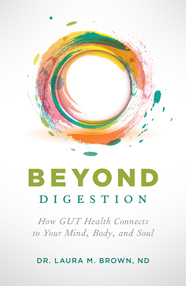
📚 Books by Dr. Laura Brown
Transcript
Soul Satisfaction: You don't make money writing your book, right? It's an investment into doing it. You make money based on the things that the book brings you, the opportunities that it brings you. It's bringing it home. And what does it mean for your business? You know, what is it that you're writing is going to help others in a way that you're already helping them. It's just another tool in the toolbox. setting all those expectations with the authors early on in the process so that they clearly identify why they're writing the book, who they're writing it for, and what are their expectations going forward. So you can kind of begin with the end in mind.
Eric Jorgenson: Before we get to the book, I would love just a little bit of background on sort of you and the mission that you were on before the book sort of became a gleam in your eye.
Soul Satisfaction: Absolutely. So naturopathic medicine is a second career for me. I pursued it with the love of science and the love of learning how we're knit together, but also passionately looking at how to solve some health puzzles or problems that I had on my own plate that weren't getting solved and. it gave me the opportunity to learn from the inside out. And I'd learned so much through reading. I felt that it was something on my heart to put a book together and give back to the community in a way that I had taken so much from with regards to reading books. And working with Scribe was a really great opportunity to help me learn how to write a book because I really needed that help.
Eric Jorgenson: So when did the sort of epiphany hit you that a book would be sort of the next step for you in your career?
Soul Satisfaction: I would guess it was about 2017. I had done a number of You do your five-year business plan. You do things that you want to accomplish in your life. And I had come a long way in the things that I wanted to accomplish, but writing a book was still kind of sitting there. And I was getting little nudges from different places, including some really weird clouds in the sky, if that counts, that look like a feather. Um, it's, it's weird how things talk to you sometimes, you know, whether you see it because you want to see it or believe it, but so there was things there. And then I had, at the time it was book in a box that I had subscribed to the email. So I was learning about what was going on and we, we had. you know, some nudges there. And then the conference was coming into Toronto. So I'm just outside of Toronto. So I thought, oh, this was 2019. It was the beginning of the summer. I'm like, no, I don't have time, da da da, too much going on at practice. And then it was like, no, it's coming. It's either I'm going to do this. It was like when I went back to school to get my naturopathic degrees, like either I'm going to do this or I'm not. So let's just get on with it because it's just going to keep bugging me if I don't do it. So I went and went to the conference. It was, I think it was two or three days in Toronto. And that was in 2019 in August. So I began writing immediately afterwards. I didn't even have a title or what I was going to write about, which I was totally embarrassed by when I was at the conference because everybody else was a little bit ahead of me because they'd made their decision to do that so much ahead. But I just had, you know, said, no, I've got to do this. But I wasn't fully prepared. But Sometimes I do things a little backwards, but I got caught up and got the topic and started writing. And that was just before the pandemic. And in 2020, after just having changed location and setting up new clinic location and different style of practice from multidisciplinary to a single practitioner, I was writing this book and I just loved delving into writing. It was a great opportunity to A, fill my time, but B, just entertain me for months on end. And then it published in 2021 in February. So that was our five years. That's our five year anniversary this year.
Eric Jorgenson: Wow, that is fantastic. I think you've maybe without realizing you did yourself a service and coming in without a firm kind of structure and title. I think some people sort of think that's the easy part. And then they end up, you know, putting walls in the wrong places and have to sort of renovate the whole house to about part way through. So I acknowledge it can be sort of uncomfortable to like write without knowing where the boundaries are. But at some point, you've got to kind of confront that anyway. And if you don't, if you're not anchored to anything, I think it can be quite liberating actually to just sort of get a lot of things down on the page and then see what naturally comes rather than feeling like you're just filling a rigid bucket.
Soul Satisfaction: Yeah. Yeah, that's true. I remember having some ideas about things and we talked about that in the conference and who was our main guy at the time? I'm trying to remember his first name. Tucker. Tucker. Yeah. So Tucker said, that's a horrible idea, Laura. Don't write on that. And then soon enough there were like all these books that came out on a similar topic months later. And I'm like, Tucker, that wasn't a horrible idea. I could have wrote on that. But at the end of the day, I came to the subject that was best for me to write. So I appreciated the process and he was just really great at challenging people and I, and that's all good. So brought me to a place where I wrote the book that I was really intended to write and all's well as it ends well that Shakespeare always says. So yes.
Eric Jorgenson: Yeah. So tell me about where you ended up and the sort of creative journey towards it. I think this is a lot of authors get sort of lost in the woods along the way to, as you said, like the book I was meant to write. How did you sort of feel your way towards that?
Soul Satisfaction: Well, it was bringing into what am I treating most in practice that I could use this book to help existing and prospective patients. So what is practical? What is applicable? And then what also rings true to me, and we know when we're in medicine, often we attract people into our practices that have similar issues as ourselves. It's just that kind of principle that happens. And for me, it was digestion and a lot of issues with food sensitivities that had come up. And I was trying to understand that more. And then I had a number of patients with different aspects. And then why did they have those issues? and how are we unpacking it? And ironically at the time, gut health was very early in its infancy of understanding the gut microbiome was just beginning to be talked about. So this was really on the cusp of conversations that have opened up so much more since then. But if I bring it back, this is still really foundational in its principles. And I could tell a story that wasn't just mine. I have been able to, with the consent of my patients, obviously eliminating any identifiers, speak of the stories of a number of different patients throughout the book. So it's a nice storytelling at the same time as bringing the medical and well-researched evidence-based medicine into it, but then also the time-honored practices of things and that whole idea of transforming energy. because really everything in the world is energy, and when we're eating, we're just transforming energy. And if people aren't transforming the energy appropriately, what's going on? So it's digging into that aspect of it. So I went through and I was peeling the onion in many different ways for different people, but it was always the physical layer, the emotional layer. the cognitive layer and then the spiritual layer and going through that as we went through the book and talked about different aspects of gut health and how it connects to the rest of the body. So it made for a really nice story.
Eric Jorgenson: Yeah, I like it. I really love books are sort of able to dissect a topic at a number of different levels at the same time and helps you really gain sort of in one book, a meticulous understanding of a of a subject. And I think you hit on another indicator there that's a very generalizable principle, which is whatever you find yourself talking about the most during the day, like whatever people come to you for and the conversation that you had a thousand times like that's usually an indication that you benefit from just like getting that down and writing because it could scale, you know, so much better and it saves you some of that. And then you can go deeper when you actually do, you know, when you've got a sort of a pre-educated, pre-selected patient who comes in to actually work with you. It's like, OK, I already know everything you think. I already know kind of your worldview, your philosophy and subscribe to it. You know, I've already done X, Y, Z. You know, what's the next step? How can we go even further?
Soul Satisfaction: Exactly. They come with that initial level of trust under their belt if they've read your story or read your book. And I've had numerous contacts like that with patients all over the province saying, hey, I found your book, I've read it, now I need your help. Or I've had other situations where I'm like out at a local open house or something and they're like, hey, you wrote that book. And I'm like, yeah, my friend gave that to me. I lost 40 pounds. And I'm like, did you intend to lose 40 pounds? Yeah, that was great. It was good help. I'm like, oh good, it was good help. Yeah, no, it was all good.
Eric Jorgenson: Yeah, that's fantastic. When those kind of long loops close, when a stranger or a friend of a friend of a friend knows you through your book before they meet you, especially if they have a story like that, that is, you know, your book changed my life. Like that is that is really remarkable and rewarding. I hope you hope you still hope you pop some champagne that night.
Soul Satisfaction: Yeah, it just makes you feel good inside that you've made that difference that you intended to make. And that, wow, it was even done through just some reading material. And then I think, well, there was a lot of books that I read that did that for me. So, wow, I've kind of closed that loop too, that I've given back in a way that I had appreciated from others so much. That was really nice.
Eric Jorgenson: What was it about the sort of gut health movement? You said it was just sort of coming to be known in like 2017, 18, 19, as you were working on this and getting into it. What changed? What was there like a breakthrough of some type that sort of because I have heard about it more and more. You can feel sort of more people getting into it and becoming conscious of it. What what changed? What triggered that sort of awareness and growth?
Soul Satisfaction: I think the scientific tools in order to analyze the microbes in the gut and to appreciate that there's no one right microbiome that everybody's their own environment and ecosystem, but there's some commonalities, common families that are very healthy for us. And then there's ones that if they overgrow, it's not so healthy and it's just the appreciation and then it's not just the. Just those microbes themselves, they were now able to measure what they make. So we were starting to understand that they actually make vitamins. They actually make neurotransmitters. So things like serotonin and melatonin, your gut makes 90% of the serotonin in your body. It's serotonin is not just used for happy mood. It's used in many other aspects and it's understanding that and then melatonin, there's 400 times more melatonin in the gut than the brain. And it's like, well, what's the difference? So there was questions being asked, there was microbiome models being made in university labs to see what was going on as they were, you know, And it was just kind of starting up at the time. So it was new for somebody to be talking about so much that goes on essentially in your poop, you know, but it's not just your poop. It's, it's microbes that actually line the gut because that's where you meet 80% of your environment. It's where over 70% of your immune system sitting and understanding and appreciating that. And then through COVID. when we were trying to understand more about the immune system, there was some good change being put into the system to be able to support those research projects on a number of fronts, and this was one of them.
Eric Jorgenson: Interesting.
Soul Satisfaction: The pharmaceutical companies started to take notice because they found that they could actually patent some of these microbes that they could make that were able to treat some diseases. So again, some money was getting filtered into the research engine.
Eric Jorgenson: So we're now a little more than five years out from publishing your book. Can you tell us a little more about what you've done with the book in the context of your business and your career over the last five years?
Soul Satisfaction: Absolutely. So initially, when I was looking to find ways to best market the book, I found a list of podcasters that were doing sessions on that house across North America. And I would connect with them. Do the podcast with them they would release it to their listeners and then I would get a recording of it. Put it up on my socials put it up on my website so that I could share it with patients potential. Readers that type of thing and out of that I ended up getting some more contacts I think as far as way as New Zealand. doing a podcast with somebody there on the microbiome. And that was also shared in. So it was, I was able to use those links into newsletters when I was sending to patients and then patients would share those with their friends and family. And that was able to now, you know, gain more interest into, you know, growing my patient population, which was wonderful and also growing more readers who were interested into the topic.
Eric Jorgenson: That's fantastic. Have there been some, I like to call them like unexplained good things that happened as a result of, you know, your book being out there in the world?
Soul Satisfaction: We talked a little bit about it earlier with regards to meeting people that have read the book, you know, friend of a friend or a neighbor gave them a book and you'd meet them. They're like, Oh my goodness, you wrote that book. I, you know, I had lost 40 pounds. We talked about that. So that was a really, you know, really good one to hear. And then just other people who have read the book and then they come and see me to, to. dive into things more in depth with their own personal health. So that trust factor that's already laid down with regards to them already spending time, I always say it's like spending 20 hours with me for $20 essentially. So it's a good value for their money. And it's also a good one to give to patients who are already coming to see me so that they can read it and come back with their questions.
Eric Jorgenson: And are people good about doing that?
Soul Satisfaction: There's always, yeah, they're very good about doing that. Yeah. And I mean, there's the things that you're looking for as well when you're thinking about, Oh, why would somebody want to write a book? It's giving you the credibility in the marketplace. It's giving you a chance to say, Hey, I'm an expert in this field. I've done the research. I've brought this, you know, to the public in a very digestible way. And it's, it's adding value in, in that realm of topic.
Eric Jorgenson: Yeah. Do you find you use it more in that it's more helpful in getting new patients or that it's more helpful in sort of accelerating the conversation and progress of the patients you already have?
Soul Satisfaction: It's a little bit of both actually. I see it on both levels because there's foundational information in the book that allows people to read it and maybe understand areas that we might not have had time to go through when they're in an appointment setting. and it would give them a chance to go, oh, that also applies to me, but I didn't think it was applicable. I didn't think it was important, so I didn't tell you about it. But now that I, you know, so it's opening those conversations to get more of a holistic point of view. And as a naturopathic doctor, we are in the business of holistic medicine. So a lot of things apply into what we're trying to do to find out the root cause of something.
Eric Jorgenson: Yeah. Have you done more speaking, anything else like that since, since having the book out?
Soul Satisfaction: I do a lot of public education. I've been invited to do talks in different areas. Some of the local health networks inviting me into more of a conventional setting to, to speak to the public and public health. So it's really helped elevate the, the knowledge of how gut health is connecting into a lot of the different chronic diseases, which is an area that public health is always looking to address.
Eric Jorgenson: I bet. Yeah, it's an interesting thing, you know, how hard everybody in the medical profession has to work to sort of keep up with new discoveries. You know, we've got it. I know it's a sort of a perennial complaint how little the mainstream medical focuses on nutrition and preventative care. So I imagine this is a topic of great interest for many doctors, many nurses, many, you know, hospital systems, things like that.
Soul Satisfaction: It does. It opens up that conversation in those realms as well. And I mean, they're not necessarily trained in those aspects of nutritional medicine and gut health and how that connects. So it's helpful for them to know that, hey, here's somebody that knows what they're talking about. So the referrals from a medical doctor to my practice is often very helpful as well.
Eric Jorgenson: Yeah, interesting. Okay. And finally, tell me about the, I know you sort of did the guided author path with Scribe. So you did the writing on your book. We just sort of helped you through the process of editing and progressing there. How did you decide how to publish it? Did you consider any other paths?
Soul Satisfaction: So it was technically self-published, but all the editing was done with the Scribe talent team. And that was an excellent process. The different layers of the editing was very formidable. The opportunity to go through that from many different perspectives to see, you know, is what's being wrote truth? Is it factually Supported is it and then is it grammatically correct? Is it readable? Is it likable? Is somebody going to stick with it? Just all the different layers of the editing process was. It was it was a great learning experience for me and help me understand the different aspects of publishing and why when somebody would go out and just do like a self published book. How you know. how, you know, well, the caliber of that versus the caliber of going through something like I went through with Scribe. It was, you know, night and day.
Eric Jorgenson: Yeah, we like to say, have professional is unprofessional. And so getting all the details really, really matters. From an editorial perspective, from a design perspective, layout, everything really has to come together to have that element of professionalism and polish that lends additional credibility to what you do and helps build your reputation. I think that's such an important piece of the book writing process. I'd generally like to ask, you're five years out now. You said it was maybe seven since you started the Project 8. What advice would you have for somebody who's in your shoes eight years ago thinking maybe, as you said, they've had a book on their list for a long time. It's on their life projects or they think it'll be a boon to their business, but they haven't really yet taken that first step to make it sort of an inevitable project. What do you say to somebody in that position?
Soul Satisfaction: I think it's setting expectations is really important. And it was set with me when I first started as well and appreciate it. You don't make money writing your book, right? It's an investment into doing it. You make money based on the things that the book brings you, the opportunities that it brings you. The book sales themselves are few and far between to have a best seller. You can pay people to have a bestseller. I've had people approach me and I could pay 120 US dollars to have it on the New York Times bestseller list. Is that really, you know, I always wondered is that really in balance with things? It's bringing it home and what does it mean for your business? know, what is it, you know, what is it that you're writing is going to help others in a way that you're already helping them. It's just another tool in the toolbox. It's another tool in the toolbox. And it's a really awesome tool to have. And if you're at a point where you feel that you have enough that you want to express in a book, and it doesn't have to be a large book, it could be a small book, there's been some very effective small books on topics that just give people enough information to get to the next step. It's setting all those expectations with the authors early on in the process so that they clearly identify why they're writing the book, who they're writing it for, and what are their expectations going forward. So you can kind of begin with the end in mind.
Eric Jorgenson: Yeah. I always encourage people to sort of zoom out. The return on investment is rarely going to come from royalties themselves, from the book sales. But through that broad perspective of your practice, your reputation, the experience that your patients have, the people that aren't even your patients that you've helped, the opportunities that it's open for you, do you feel like you've gotten a good return on the effort and investment of writing your book?
Soul Satisfaction: I do. I feel a good soul satisfaction that I did it. I'm very happy that I did it. And I feel that it's helped others in a way that I had anticipated, but also in ways that I didn't. And that's affirming. That's wonderful.
Eric Jorgenson: That's fantastic. Thank you. I think we should probably title this episode soul satisfaction. I love that phrase and appreciate I resonate with it. Like it's so it is very satisfying on a spiritual level. I feel it in my bones when I put a new book out into the world. It's a great, great label for it. Thank you, Dr. Brown, for writing this book, for being here today, for offering advice to authors coming down the road. Thank you for working with us and taking care of people, doing what you do to help everybody learn about themselves and how to make the healthiest and most high vibration, high vitality, healthy versions of themselves.
Soul Satisfaction: Exactly. That's the name of it. It's just that energy transformation. So thank you very much for the opportunity. I appreciate Scribe and that opportunity to be able to find the appropriate way to express what I had in me to express through writing a book. And I'm sure there's many more people looking for that soul satisfaction.
Want to Write Your Own Book?
Scribe has helped over 2,000 authors turn their expertise into published books.
Schedule a Free Consult