Teaching Kids to Live Without You: Yarona Boster on Unspoken Signals
✨ Episode Summary
After two decades in early childhood development, psychology, and lifespan coaching, Yarona Boster wrote Unspoken Signals to give parents three foundational pillars (connection, autonomy, and competency) for raising children who can thrive without them. Two months out from launch, readers Yarona never expected are responding: grandparents, non-parents, leadership coaches, and one early reader who told her the book was "as important as the Bible." Her advice to aspiring authors is direct: "Don't wait until the pretend perfect time. There is no perfect time. Jump into the mess."
⭐ Top Moments
- The three pillars that hold up every human life. Yarona walks through self-determination theory's three components, connection, autonomy, and competency, and explains why "connection, connection, connection" matters most at the youngest ages. She illustrates the framework with the conversation she had with her four-year-old son Connor after their cat died. He insisted she put his shoes on; she told him, "Mommy and daddy will not always be here to put your shoes on for you." His answer, after his grandfather later passed: "You'll always live here in my heart."
- "Your job isn't to protect them at all costs." Yarona's core thesis is that the parenting job is not protection but preparation. She came to it through her own experience of "excessive death and loss" while taking care of loved ones into their deaths. The realization changed how she coaches every parent she works with: "You will not be here forever for them. You want to know that you gave them the tools they could function in life without you."
- The block at chapter six, and the one voice that finally helped. Yarona got stuck around chapter five or six because too many people were giving her opinions on the manuscript. She brought in one book coach and Scribe. To aspiring authors who feel the same overwhelm she says: "Don't wait until the pretend perfect time. There is no perfect time. Jump into the mess."
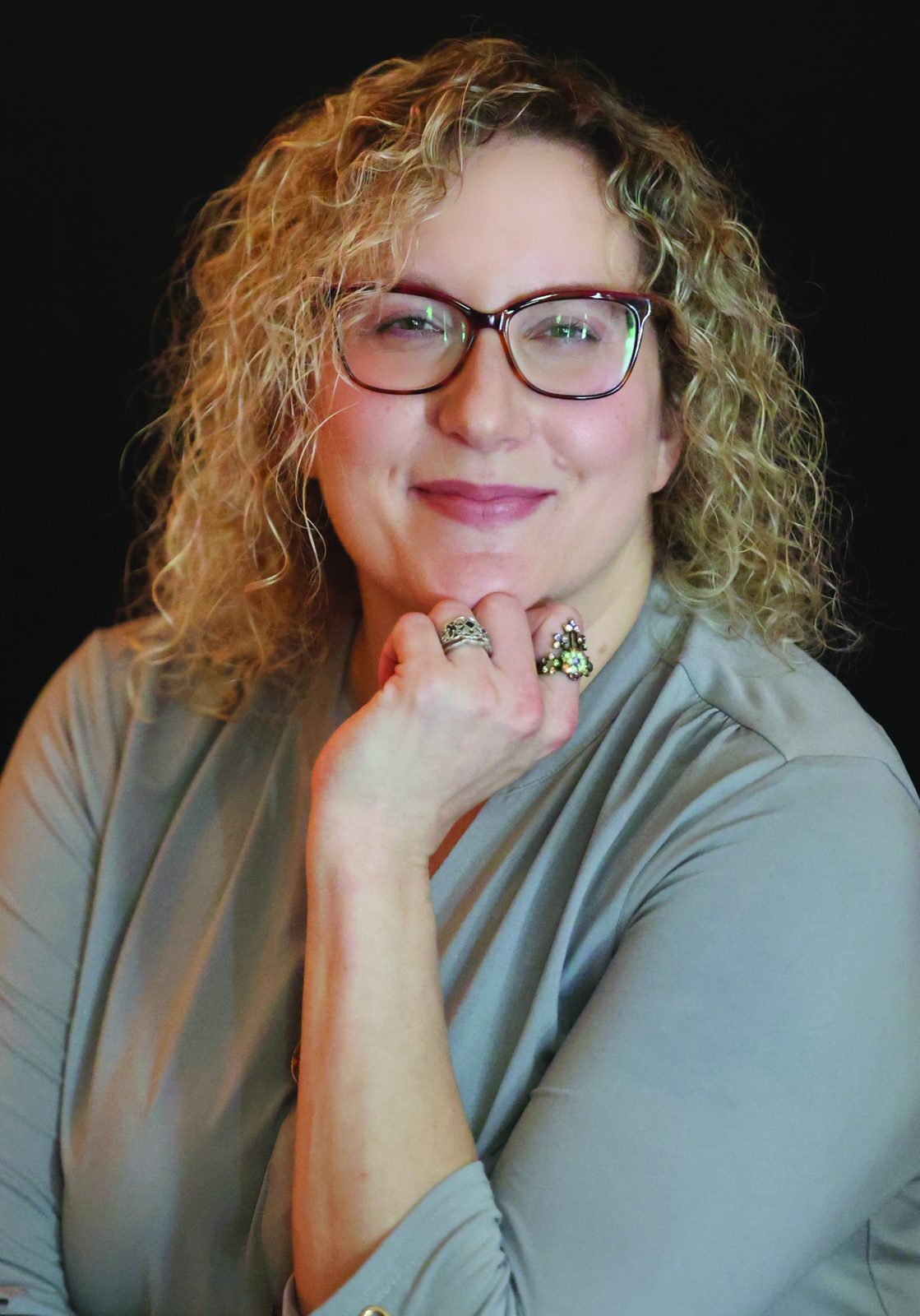
Yarona Boster
★ Scribe Case Study
How Yarona Boster Finished Unspoken Signals After Hitting a Block at Chapter Six
Two decades in early childhood development. A book stuck at chapter six. One book coach, Scribe, and a clear vision Yarona refused to let other voices dilute.
📚 Books by Yarona Boster
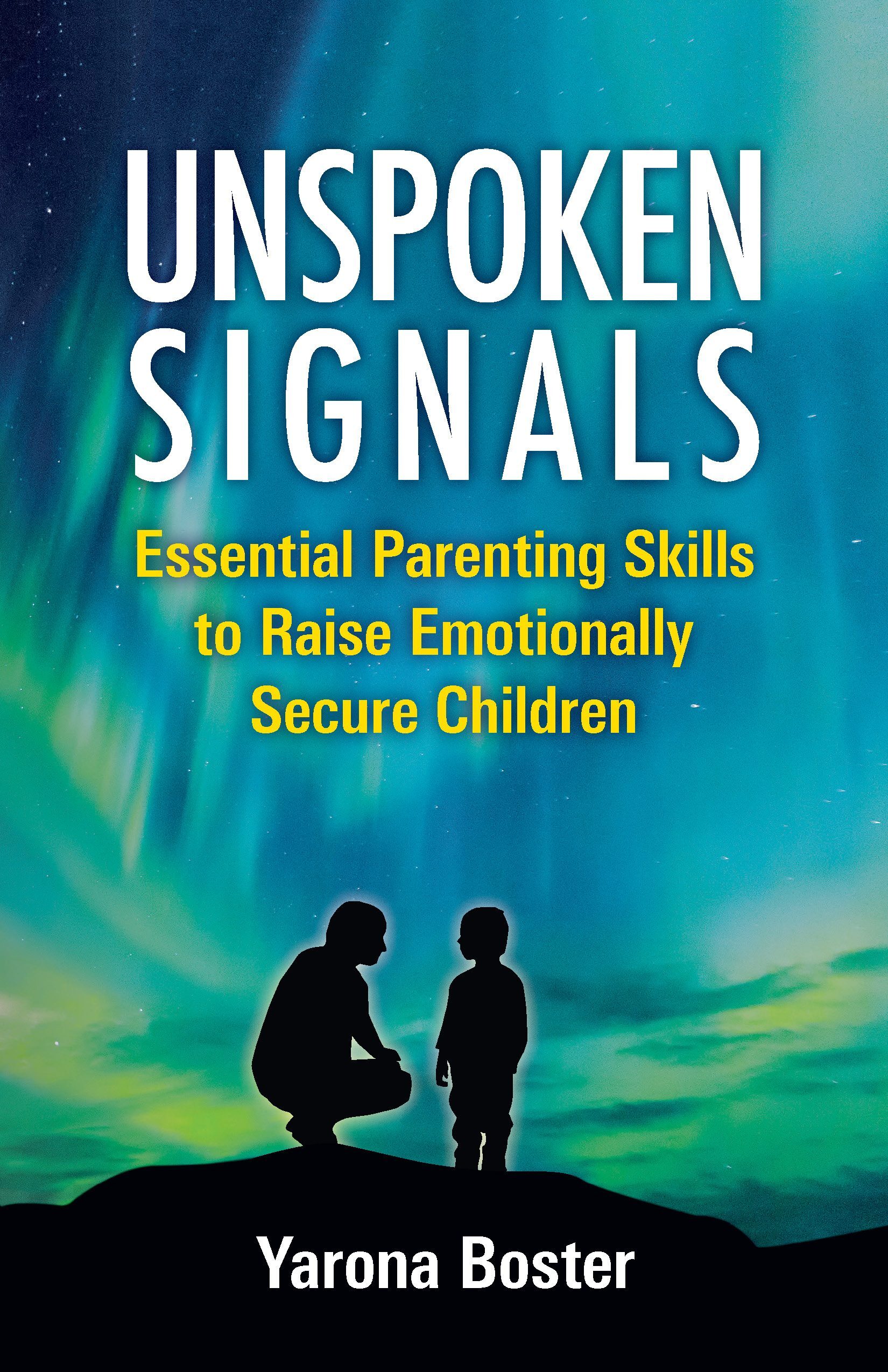
In this episode of Author Hour, Eric Jorgenson sits down with Yarona Boster, author of Unspoken Signals, to explore what it truly means to raise a resilient child.
Yarona draws on nearly two decades of early childhood development, psychology, and coaching to make a provocative argument: a parent's real job isn't to protect their children at all costs, it's to give them the tools to thrive without them.
She shares the personal losses that shaped the book, breaks down the three core pillars every human needs to function (connection, autonomy, and competency), and explains why most of what we call communication is happening beneath the surface, in signals we're sending before we even have words for them.
She also offers candid, practical advice for aspiring authors on trusting your vision, filtering the noise of too many voices, and finding support that guides without controlling.
Transcript
Yarona Boster: It was not an easy road. And one of the reasons for me it wasn't an easy road was because I had so many people giving me their opinions and I didn't know what to go with. So having guidance is important. But if you're a person who tends to get a little like overly swayed by many, many other voices, don't allow so many other voices into your space with that. So if you're a new author jumping into it, find trusted voices. Of people who understand the distinct nuance between telling you what to do and and giving you a lighted pathway.
Eric Jorgenson: Yarona, thank you for being here.
Yarona Boster: Thank you for having me, Eric. Lovely to be here this time of day.
Eric Jorgenson: Well, I ⁓ excited to talk about your book, to speak about your book on spoken signals. What is the origin of the title?
Yarona Boster: In the world, most people don't realize that communication runs so much deeper than we think. A lot of people measure communication in terms of words. But the reality is that there are so many components to communication that are nonverbal, that are cued well before we have the words to actually understand what that means. And in the world of human development and child development and child rearing, children. Pick up what you're setting out there long before they actually understand it on a much more linguistic level. So it's really important to understand what's happening beneath and the signals that we're sending that go unspoken so that we understand what we're really truly communicating to the person who's receiving it.
Eric Jorgenson: And I'm gonna tell everybody who's listening on audio right now that you're missing out because Yarona is also ⁓ making wonderful gestures that deepen the communication clarity that she's bringing out audio. So, you know, you practice what you preach there. Would you share a bit of your background before you decided to become an author? Just set the stage for us.
Yarona Boster: So for the last and I'm going on two decades now, I've been in the world of early childhood, human development, psychology and coaching. And all of that is to say the inner workings of the human have been a part of my life for a really long time. When I decided to become an author, it wasn't a momentary decision. It wasn't a one day I woke up with a light bulb and said, I'm gonna write a book. It was more of an incremental process of understanding that I had a lot of value I wanted to put out into the world. And I wanted to figure out what was the best, most receptive way people would be able to get that. And in everything that I have been creating since I jumped from the traditional world of the public health arena into the entrepreneurial world, I realized there are a lot of mechanisms. And writing a book is one of those really superb mechanisms.
Eric Jorgenson: What was it about I mean, as you say, many mechanisms and a a gradual process? What was the the dawning process?
Yarona Boster: The well, the dawning realization was that while I could speak a lot, I could also write a lot. And there's just a very nuanced process to the way people comprehend things. So understanding that, okay, well, if I want to make my splatter, splatter as big as possible, I'm gonna need to do that in a way that makes sense for as many people are who are receiving it as possible. Now, in this day and age, one of the things that I have definitely noticed. is people are reading a little bit less and listening a lot more. So I realized, okay, well, I so I created a podcast and I started off onto that platform and then I became a public speaker and started into that space and place. And as a coach that, you know, I was speaking to people one on one, but also I realized, ⁓ I could create a program. But I have always been a book reader. I and I no, no, I'm gonna take that back. I haven't always been a book reader. I at the age of 11 became an avid book reader. I was very resistant to it. I'm a Gen Xer. So when I was growing up, you know, TV was you had to get up and actually physically change the channel. But I was still obsessed with TV. So as a young kid, I was that kid who ran downstairs for Saturday morning cartoons and things like that. But at the age of 11, I became a real book reader when my sister forced a book on me and said, just read this one book. And then books just became a big part of my life. And my family was a family of readers. We would all come to the dinner table and everybody had something they were reading. So I I've always seen what happens in the process of when somebody's reading, yes, they're going to someone else's created world, but they're also a part of the creative process at the same time because they have to take the words from paper and create their own imaginary world in their own mind. And they we interpret words very distinctively differently. So all of this is to say that I knew book a book had to be somewhere in this piece of the puzzle, in in all the things I was creating. And it started with co-authorship books. So this is technically my third book, but my first solo book. I started by writing two co-authorship books, jumping in on two co-authorship books. And I would say that's a really fun thing to do if you're. brand new to the idea of I wanna write a book, I wanna write a book, but you're a little bit nervous and you're a little bit, ⁓ what what's the process like? So that first creative space to just sort of jump in for practice's sake and for just the that experiential aspect of jumping into a co authorship is a really great place to come to because it gives you a little bit of an understanding, but there is nothing. Nothing that surpasses the solo book writing process for a full three sixty experience from a completely different place in space if you've never written a book before.
Eric Jorgenson: Yeah. I like the co-authorship tip. It's a continuation or ⁓ maybe even a stronger form of you know, if you're very intimidated by the process, you just want to be surrounded by people who almost take the process for granted, who know for sure that you will finish a book because they've written and published tens or hundreds of books before. And there's a lot of work to it still and it's still intimidating, but it's it's a lot less of a lost in the woods feeling if you're working with somebody who's done it before.
Yarona Boster: Right. And if you if you get good guidance. I will say this. I've had now both two spectrums of the guidance. One who was like, just give me this. That's all I need. And then and and it was like, get the assets in, get the get the the ⁓ chapter in, this is how many words, dah dah. And it was like, okay, that's it. And another who went the opposite, who was like, We're gonna meet every single week, we're gonna do this, we're gonna really super structured. I'm the kind of person who likes balance. So I would say if you're looking for some measure of in-between that, where you get really good guidance, but also feel like you have some autonomy over it, that's that to me, that's ideal. Find a co-authorship where you feel like you have just enough guidance to get you through, to get you to the next steps, but not so much where the person is constantly like, no, no, no, fix this part, fix this part, fix this part. No, I don't like that. I don't, I don't like that. And yeah, evaluating that kind of person and the or the people who who do those together. That's that's a artwork in and of itself. So
Eric Jorgenson: Yeah. ⁓ d do a sample project before you, you know, get you get married, perhaps. Yes.
Yarona Boster: Yeah. Exactly. Yeah.
Eric Jorgenson: What was the original idea for the book and and how did it develop through your process?
Yarona Boster: So the original idea for for the book really came from a place where when you take the road of parenting, you realize it's probably one of the hardest roles you'll ever take on in your life with no training. We have this idea that because we can procreate, we can be a good parent. But that is not the case. And no child comes with their own user specific manual. And as I thought more and more about that, one of the places and spaces that I was learning from in my own professional world was just how many parents feel so lost and overwhelmed. And there's so many self-help books out there, and there's so many parent guiding guidance books, and there's so much to the process. And there's so many places we can go wrong, just as human beings. And one of the things I always tell parents is assume you will make mistakes. Just make that assumption right away. You're gonna make mistakes. It's a given, a guarantee. You could be the best, like most educated person on the planet. You could come from the world of child development and human development, and still you're going to make mistakes because you're human. So just start from that very base level. And what I realized as I was thinking about all this and as I was coaching and as I was working with so many parents who were like, I just need some guidance. I just need to. Have some foundational understanding. I had this very interesting conversation with a congressman. And I said to him: if we could get human development into the core education system curriculum, just basic human development, so people could understand not just that they were growing as a person, but how they were developing from the inside out, we could change the nature of the way people become parents. And so everything sort of congealed with all of that. And on top of all of that, it came from a very dark place in my life. I was experiencing a lot of excessive death and loss in my life. And I was taking care of my loved ones into their deaths. And I was just it, I was on this repeated road confronting life and death. And I learned some of the greatest lessons I ever had from death. And I had a couple of light bulb moments with some of the parents I was working with. I realized that what parents were really getting wrong was that they thought it was their job to protect their children at all costs. And I realized it's not. Your job isn't to protect them at all costs, it's to give them the tools they can learn to protect themselves because you will not be here forever for them. In the grand scheme of life, in the natural course of events, you will leave long before they do. And because that is the case, you want to know that you gave them the tools that they could function in life without you. And because I was experiencing this death and dying experience so much, and I was realizing that so many people get to the end of their life and all they want to know is their loved ones will be okay without them. And that okay was coming from a place not of will they be financially successful. Will they have a family? Will they all the the the surface level things? But will this my death break them? Will they be able to recover from this loss? And I realized, gosh, you could be a multi-billionaire. You could be the most, the high the you could earn the most money on this earth, but there is one thing you cannot protect your children from, and that is the death of you, the loss of you. And so everything started to congeal around this place of understanding that loss is inevitable. And if we can teach our children, if we can teach our parents how to parent their children with the loss of them, with the reality that you have to give your kids some foundational tools for living a life without you, then everything else would fall into place. Will they stumble? Yes. Will they fail? Yes. Will they experience loss? Yes. Will they hurt? Yes. Will pain be an inevitable part of living? Yes. All of that is true, and they can still succeed. they can still live a fruitful, healthy, wonderful, glorious, incredible life.
Eric Jorgenson: It it's interesting that this we think about this probably a lot as adults in middle age, but ⁓ it sounds like you're applying this lens even to super early childhood development, right?
Yarona Boster: Yeah, absolutely.
Eric Jorgenson: So how do you s you know, how do you prepare a how do you parent a child, a young child, with a thought in mind, you know, thirty, forty years down the line that you're working backwards from this idea?
Yarona Boster: I'll I'll give you a really core component to this. In ⁓ early childhood, which is birth to three, which was my specialty field, we call one of the domains of early childhood development self-help and adaptive skills. Self-help and adaptive skills are learning the basics of how to feed themselves, how to dress themselves, how to, you know, how to go to the toilet, how to do all of these things independently of us. It is the first measure of I'm not gonna toilet you. I'm not gonna clothe you. You're gonna have to do these things for yourself. So when my son was just ⁓ before he turned four, we his our cat was dying and we had to deal with that loss. So the reality is that loss comes. And I I started to see losses as foundational. When the child is really young, the loss is small. It's like, you know, losing, well, losing a pet is not so small, but losing their favorite toy or breaking their favorite toy. I started to see that as, ⁓ that's a foundational loss. Because here they have to now deal with the loss of their favorite stuffy that got lot left at the airport and will never be found again. Instead of just buying them a new stuffy, we talk about how that experience goes. ⁓ gosh, this is really hard. We sit with them in their pain. We sit with them in that hurt. Because for that child who doesn't have the emotional development yet to experience it, really what it's all about is just being there with them in the struggle and the pain and the experience of that emotional turmoil. And it moves into these places of learning that these losses just build on each other. They're called as I said, they're called foundational losses. So one is like, you know, the loss of a toy, the loss of a good grade, even though you studied really hard, not getting into the after school program you wanted, not getting this, not getting that. Losing a friendship, losing a a first relationship, losing a job, losing a home. All of these things, they build to the biggest loss of all. Now, my son, unfortunately, who's only eight, has already experienced two deaths in his life. So he's already had that experience. But another area that we talk about it from is from the place of the natural life cycle of things. So we teach children, you know, birds that are in that sky, they may not be there tomorrow. Some other predator might come down and swoop up and grab it. The trees are losing their leaves. They'll rebound again. The life cycle of things. So we teach young ones from the life cycle of things. We teach young ones that here's here's the process to it all. There's a process, there's a cyclical nature to life. Life is come, life comes, life goes. And we teach them that. And then and then it becomes less hard for them to deal with. Now I will say this. When so when my son after we lost our cat, my son was ⁓ insisting I put his shoes on for him. Like we had like a ⁓ an argument over putting his shoes on and I said, Connor, remember mommy and daddy will not always be here to put your shoes on for you. You have to do it for yourself. I know it's hard. So let's figure out how you how to make it a little bit easier. Let's break this down into steps. So we did all of that. But then we moved into this interesting conversation about We moved into this interesting conversation about how he was going to feel when mommy and daddy were no longer here. And he said, ⁓ I'll be okay. And I said, Yeah, that's great, buddy. Yeah. And he said, Yeah, because you'll always live here in my heart. And that was when I knew he had gotten what I had been working to teach him. Secure attachment means that wherever you go, you still get to hold on to somebody right here. Whether or not that person stays in your life for a period of time or whether they're gone forever, I still get to stay here. And so I've been teaching him that. And then when my father-in-law passed and he had to experience that at the age of six, that was a whole other process to it. And when we hugged and he said, My heart hurts, and then he looked at me and he said, You know, but maybe it's not such a bad thing because grandma and gobka fall all the time. So now they won't fight anymore. And that was his way. Of finding, I hate to call it the silver lining, but finding a different perspective on the pain. It didn't negate the pain and loss, but it gave him the opportunity to see the experience from a multitude of perspectives. And these are the things that I teach parents. These are the things I teach people. How do we open, broaden our view, our landscape of how we experience loss? And how do we communicate that to one another? From the most visceral human space.
Eric Jorgenson: Yeah, it's an amazing story. So that sets a great stage. I I assume ⁓ now that the goal is to, you know, you've got decades of experience in this. And I ⁓ you know, as a young parent, a parent of a young kid myself, I'm like, I hope I'm getting some of that right. So is this book for someone like me in this situation who's like, well, you're run a Is doing a very good job of carefully choosing her words in very specific moments and like thinking about parenting for this incredibly long term view. Am I the target reader?
Yarona Boster: Yes, you would definitely be the target reader. Although I because I work now in lifespan developments, one of the components to my podcast we just did, we talked about parenting, parenting from a with adult children and that dynamic as well. Because I always tell people like once you become a parent, you never stop. It never stops. Even when you're in your 80s and they're in their 60s or 50s, you never stop being a parent. even when you've lost a child. And I've had that experience as well. And then my sisters had that experience as well. So you never stop being a parent. And it is a different role. So my book is really help what I call the foundational process for parenting. It's really coming from a place of really what is foundational understanding of what you need to develop with your child. And it comes from so in psychology, there's a term it's ⁓ there's a There's a theory, it's called the self-determination theory. And it posits that every human needs three, three things to function optimally as a human: connection, control, and competency. Or in the self-determination theory, it's really connection, autonomy, and competency. So at a young age, at the youngest age, we need connection as much as possible. Connection, connection, connection. Why? Because we're creating secure attachments. Once you create that secure attachment place, you can then leave the nest and you'll always feel like you have a secure grounding. Connection is by nature what we need as human beings. We are not just social creatures. We are we are ⁓ what's the word? ⁓ my gosh. We are yeah, I'm forgetting the word. It's fun.
Eric Jorgenson: Good at this game. Give me some cues. Let's taboo it.
Yarona Boster: We're more than social. We are we are hyper social creatures. We are we are excessively social like bird like bees and and ants, we are excessively hype social social species. And so connection is massively, massively important. And in this day and age with technology, I do talk about technology in the book as well. We've created a massive measure of disconnect, unfortunately. See, what we're doing right now is we're having a synchronous conversation. So I don't know how you're going to respond. You don't necessarily know how I'm going to respond. And that little bit of tension, that little bit of awkwardness means that we're responding in real time to each other by the cues we're sending each other and by the moments where we where conversation naturally kind of ebbs and flows. But we've created a very asynchronous world in the digital space where people are. Either hyper focused and jumping on something that someone else is saying and they're excessively reactive to it because they don't have the person in front of them to read the deeper meaning beneath the message, to understand what the intention is behind the message, or we're so disconnected in that asynchronous communication that we don't even see it as a necessity anymore. And that's really scary because human to human Synchronous interaction is core for why we've gotten to the place we've why how our civilization has evolved. We're devolving in that. So connection huge. Competent or I should say ⁓ autonomy or what I call control is the ability to to choose for oneself. Every person needs to feel like they have some measure of, you know, there's a fallacy of control, but some measure of choice in their lives. Every human needs that. Our as a human being, we are born into this world singularly. Even if we're born as a twin or a triplet or anything like that, we are still born singularly into one body. And because of that nature, it means that we need to feel like we have some measure of control. So when you have a little one held as your little one?
Eric Jorgenson: Almost dear.
Yarona Boster: Almost a year. Yeah. So your little one's going to go through the places where they start to say no to you. ⁓ when the no comes, you're gonna go, wait a second, you have to listen to me. And they they do from a place of you know more than they do. Because of that, you're giving them your experience, knowledge, and wisdom, but they still get to make choice. So there's a distinction between real choice and, you know, ⁓ fabricated choice that we give our kids, right? Do your homework now or you're getting no TV. That's not really choice, right? Do you want to do your homework now or do you want to do it after dinner? That's real choice. They still understand the rule is they have to do their homework. And that's a societal rule. All of this I explain in my book, but and then the final piece, the competency, is really the ability to do for oneself and for the greater good. When we actually feel like we're capable of doing for ourselves, we feel like we have value and we matter. When we have the ability to contribute to the greater good, we really feel that value magnified. So when we have those three pieces, and that's the core of my book, we've re and how we communicate that to our to our kids, those are the really the most strongest, most important and most impactful ways to foundationally raise a human being.
Eric Jorgenson: That's awesome. Yeah, I I always ask or or try to determine what transformation an author is offering a reader, right? Like what am I gonna be able to do as a result of reading this book that I can't do today? And I feel like this is a pretty clear and powerful transformation that readers can go through. I I I'm curious kind of where it fits into I'm gonna have a hard time not making this a ninety minute podcast because I'm very personally obviously invested in this. And so I could I could definitely just like sit here and make you recite the entire book to me, not of personal curiosity on accident. But tell me where this book fits into your broader career, business, purpose, like and what are you hoping that it will do for you? As we record this, we're we're pretty fresh off of the publication. So I know we're only maybe two months into this book being out into the world, but I'm curious for your your vision. What what motivated you to do it in the first place?
Yarona Boster: Well, and just so you know, today as we're recording th today was the release of the audio book.
Eric Jorgenson: ⁓ awesome. Fantastic. Do you read it yourself?
Yarona Boster: I do. The foreword was re read by a different narrator because that would just be weird.
Eric Jorgenson: Yeah, fair enough. No, you you your your delivery is excellent. I'm glad that you it's not it's no picnic to read your own audiobook, but I'm glad you I'm glad you did it.
Yarona Boster: I am so my friend owns Edge Studio and I and we were chatting about that. And he said, you know, you either love it or you hate it when you're narrating your own book. There's not a whole lot of in between. And one of the things I said is like, you know, I I come from that world of how do we play the vocal instrument that is our voice, not just in singing, but in speaking. So we play with there are in linguistics we call it prosodics and super segmentals of speech. So there are the vocal varieties. We have eight different vocal varieties: pitch and tone and duration and stress and ⁓ and so many other pieces. And I loved playing with that. So for me, it was a stretch into that. And even in the discomforting moments where it was like, ⁓ God, this is taking forever. The exhausted in the exhaustion of being in the studio for 21 hours, I was like, okay. But I was leaning into that discomfort. And I always tell people, listen, if something's making you uncomfortable, lean into it, because that's where growth is going to take place. Right. Like let yourself lean in. So for me, it was fun. For other authors, it might not be so much fun. I loved the process of it. Where I see the bigger picture, where it goes, my hope is that people will read this book while it's through the lens of parenting, they will understand that it's a much greater. Expansive understanding of where we come from as human beings, how we're raised as human beings, how we move into life evolutionarily on our own as individuals, and how we want to show up in the world. And I think that's really important. Some interesting feedback I received from people who are not parents who read the book. They got the perspective, and people who are grandparents who read the book, and people who are, you know, in all different walks of life. Some people viewed it as a great leadership book. Some people viewed it from the lens of, gosh, this is a book that I can give to my children, but I also see it now differently from a grandparent's perspective because I'm in that one removed. So now I see it in that space. I from people who were reading it who were not parents, somebody said to me, This is a humanities book. This is a book for people to better understand themselves as a human. So I got so much feedback in that way that my hope is that people, well, while it's through the lens of parenting, they will start to be able to better reflect on the unspoken signals in their own lives and how those show up from how they were raised. Because we are a relational species, which means that when we move into the world, if we were born completely in isolation, we would not know how to human. ⁓ But because we're not born in isolation, we're relational. So a lot of times we take our cues from the people in our sphere and the environment. So we take our cues from all of that stuff. And what's amazing about that is it's kind of like mirrors all around us. And how we're seeing ourselves in mirrors, we don't see ourselves through the eyes of ourselves. We see ourselves through the eyes of others first. And then we explore that environment as infants. We explore that, we explore that. And then suddenly we gain that relational better understanding of whoa, what does that mean for me on my journey of self in in conjunction ⁓ with my journey of others, with the journey that I make with others in my lives in in my life.
Eric Jorgenson: Fantastic. Have there been any unexpected good things that have happened as a result of this book being out of the world yet?
Yarona Boster: And I had I've had some really impactful. I know this is gonna sound, you know, well, maybe it won't sound cheesy, but some of the reviews I was not expecting. Some of the people who read it, like I had somebody who told me, okay, I don't know if I can write this in the review itself, but this book is as important as the Bible. And I was like, What? Like that that was unexpected to hear an You know, I've gotten a couple of book awards and that's been beautiful and validating. But what's been the most validating is just what people have experienced from it, how much it's widened their lens on themselves that I wasn't sure I was hopeful for. But that has been a beautiful, a beautiful, welcoming surprise and and really humbling in so many ways.
Eric Jorgenson: Yeah, it's really cool. Like when when the message you intended to send seems to be the one that got received. And I'm sure but just by the nature of this book, you'll receive some really personal and moving stories and reviews and have some conversations that you know, I find I I've talked to a lot of authors and I find even even the ones with extremely big numbers when asked that question almost always cite something that feels really small and really personal. is, you know, a book group of eight people or a conversation with somebody whose life was saved like the the the meeting of the right book at the right time for the right person is can be so transformative. And you never know who who your book is going to reach and how you're going to help them. I'm excited to see. Hopefully we can talk in another year or two and you'll have just like a binder full of, you know, very moving notes you've received by then.
Yarona Boster: Yeah. Yeah. It's been wonderful.
Eric Jorgenson: What advice do you have for an aspiring author who's just sort of considering setting foot on the path?
Yarona Boster: Assume it's gonna be hard. Assume that the message you start off with may very well not be the message you end up with. I ⁓ and and you're definitely gonna hit some some walls and some struggles. Like one thing I will say is it it was not an easy road. And one of the reasons for me it wasn't an easy road was because I had so many people giving me their opinions and I didn't know what to go with. So Having guidance is important, but if you're a person who tends to get a little like s overly swayed by many, many other voices, don't allow so many other voices into your space with that. Go for a couple of really well experienced guidance, people who can really help you process what you need to process. I ended up I had a blocking moment after about ⁓ chapter five or six, I kind of got stuck. And one of the reasons I got stuck was because so many voices kept filtering in, telling me how to do it, how to go, what to do, you know. And I was like, gosh, there's I'm overwhelmed with the amount of decisions of what, you know, where to navigate next. And when I was able to then finally get quiet and I jumped in with a book coach, one singular book coach who understood what it took to guide me on my own path, not tell me what to do. Because those were the voices that kept screaming the loudest. They were trying to tell me what to do. You know, the difference between someone giving you advice and someone actually trying to help guide you by giving you space to find yourself, very distinctively different. So if you're a new author jumping into it, find trusted voices of people who understand the distinct nuance between telling you what to do and and giving you a lighted path.
Eric Jorgenson: Mm-hmm. Yeah, that's that's great advice. You can definitely tie yourself. Gulliver's travels, right? You can you can really get the Lilipesians out and you get a thousand tiny threads and feel very stuck. And I totally agree. Having finding somebody who's a a coach, not a not not a critic. And there's an old truism of like, you know, you're your your readers can tell you what's wrong, but they can't tell you how to fix it. They they can identify problems but not solutions. And so when you have people being prescriptive about a solution of what you should do, you can pretty safely discard it unless they're, you know, a a respected peer author in your space who totally gets your reader and what you're trying to achieve with the book and understands your vision deeply. And that's just a lot of context to build before somebody can really come in with meaningful advice.
Yarona Boster: Definitely. I and I will say, I I still remember this one meeting I had with this woman who, I mean, she's just she's an icon in some worlds and she's super marketing woman. Like she is just up there, right? Well, as soon as she she she jumped on this call with me and it was like a a 20, 30 minute call, and she's immediately telling me that my book cover is all wrong and and all this sort of stuff. No, you can't do that. And she was telling me all this stuff, and I was like, Gosh, the red flags that are coming out from you are really large. Like you want to control this creation that I'm making. And so I think that's really important to pay attention to. Are the they trying to control your story or are they trying to give you a light to so that you can walk down the path in your own term, on your own terms? Because I've gotten feedback from on the book cover. It's not your traditional parenting book cover. And she was immediately like, ⁓ well, if you're gonna market it this way, you gotta make it a like you gotta do what everybody else is doing. And I'm like, I'm I'm I'm not. If I wasn't the person I was, ⁓ I am. I would have not I probably would have listened to her. And I would have done something that went against the grain of what was speaking to me on a very visceral level that needed to be. And yeah, so I didn't listen and I did not return to having more conversations with her.
Eric Jorgenson: Well, good for you for you know, having the conviction to stick with your own vision. You know, some some people, as you say, are s are easily swayed by strong opinions even when they're not, you know, informed by your own desired direction. Yarona, thank you so much for for taking the time. Is there anything else that you want to offer an aspiring
Yarona Boster: Author, you only get this one life. You only get this time, and you don't even know what you're gonna get tomorrow. So don't wait until the pretend perfect time. There is no perfect time. Jump into the mess. It's gonna be a mess. If you have the right support structure, allow yourself to jump into that mess. And I would definitely highly, highly recommend jumping into that mess with Scribe because you guys gave me exactly in my opinion what I needed to to do this with the right kind of support mechanisms that weren't overly, you know, authoritarian authoritarian and weren't ⁓ overly late and weren't chaotic and not and under organized and things like that. So it was just the right amount. So I would I would definitely say that. Yeah.
Eric Jorgenson: Well, we're we're very honored to play a part in bringing this important book out into the world. I'm delighted that we could we could do something together. And ⁓ yeah, I I agree. ⁓ I think there's we love mess in the words of Marie Kondo. And and we've helped many authors down the way, and you know, you kind of show up with this shambles of ideas and and papers, and no matter where you start, we can get you to the finish. So you gotta but you gotta believe and you gotta keep moving. And just yeah. One foot in front of the other. Yarona, where should people follow along on your journey if they want to learn more about you, about your book, about the speaking, everything else that you do?
Yarona Boster: You can go to Yaronaboster dot com. You can also go to footprintscoaching.org, which is specifically unique to my parent work, ⁓ parent and loss work that I do and my book is housed there. And you can also find me on LinkedIn because I'm pretty that's my most active place in space. So LinkedIn and my websites. Yeah.
Eric Jorgenson: LinkedIn could use a lot more emotional security.
Yarona Boster: ⁓ that's a whole other conversation.
Eric Jorgenson: For to be continued at a future time. But thank you so much. I appreciate it. I'm gonna check this book out. I hope you do too. It's Unspoken Signals by Yarona Boster.
Want to Write Your Own Book?
Scribe has helped over 2,000 authors turn their expertise into published books.
Schedule a Free Consult