The $25 Millionaire: Why Delay Is the Real Enemy of Wealth with Christopher Day
✨ Episode Summary
Christopher “Toph” Day grew up poor on a farm, built eight businesses in seven industries, and is now a three-time Scribe Media author. His newest book, The $25 Millionaire, and its companion guidebook make one simple case: the real enemy of wealth is not a low income, it is delay, and small amounts invested early can grow into seven figures.
In this episode of Author Hour, Toph explains why he picked $25 a week, the “million dollar lesson” of starting at 18 instead of 30, why the message had to be a physical book on your nightstand, why he came back to Scribe after his first book, and how a ghostwriter with zero marketing background turned out to be the best thing that happened to that first book.
“Your origin does not dictate your destiny.”
⭐ Top Moments
- A repeat Scribe author. Toph first worked with Scribe Media on Pillar-Based Marketing, after a friend recommended it. He came back for his next two books. “The biggest checkmark of approval you can get was a return, a repeat customer, right? So here I am again with Scribe.”
- The ghostwriter who knew nothing about marketing. Toph insisted his first ghostwriter have a marketing background. She didn’t, and her questions made the book simpler. “And sure enough, she had zero background in marketing. And it was the best thing that ever happened to us.”
- Why it had to be a book. The message could have been a course or a viral thread. Toph wanted something readers could hold. “You had to be able to see it and touch it and feel it and hold it and put it on your nightstand in those moments of weakness to flip back to some of the pages that you might highlight when you read it.”

Christopher Day
Christopher "Toph" Day grew up poor on a small farm in Indiana. No financial map. No head start. He went on to co-found eight companies across seven sectors, with multiple exits to Fortune 500 companies, and serve as CEO of one of the most active early-stage venture development organizations in the United States. Toph hosts a nationally recognized innovation podcast, was named the Indiana Chamber of Commerce Dynamic Leader of the Year in 2024, and is an IBJ Media Indiana 250 Most Influential and Impactful Leader.
He wrote this book because no one ever handed him the map.
He wants to hand it to a million people.
★ Scribe Case Study
Christopher Day Came Back to Scribe Media for The $25 Millionaire, His Third Book
Christopher "Toph" Day published Pillar-Based Marketing with Scribe Media, then came back for The $25 Millionaire and its guidebook.
📚 Books by Christopher Day
Transcript
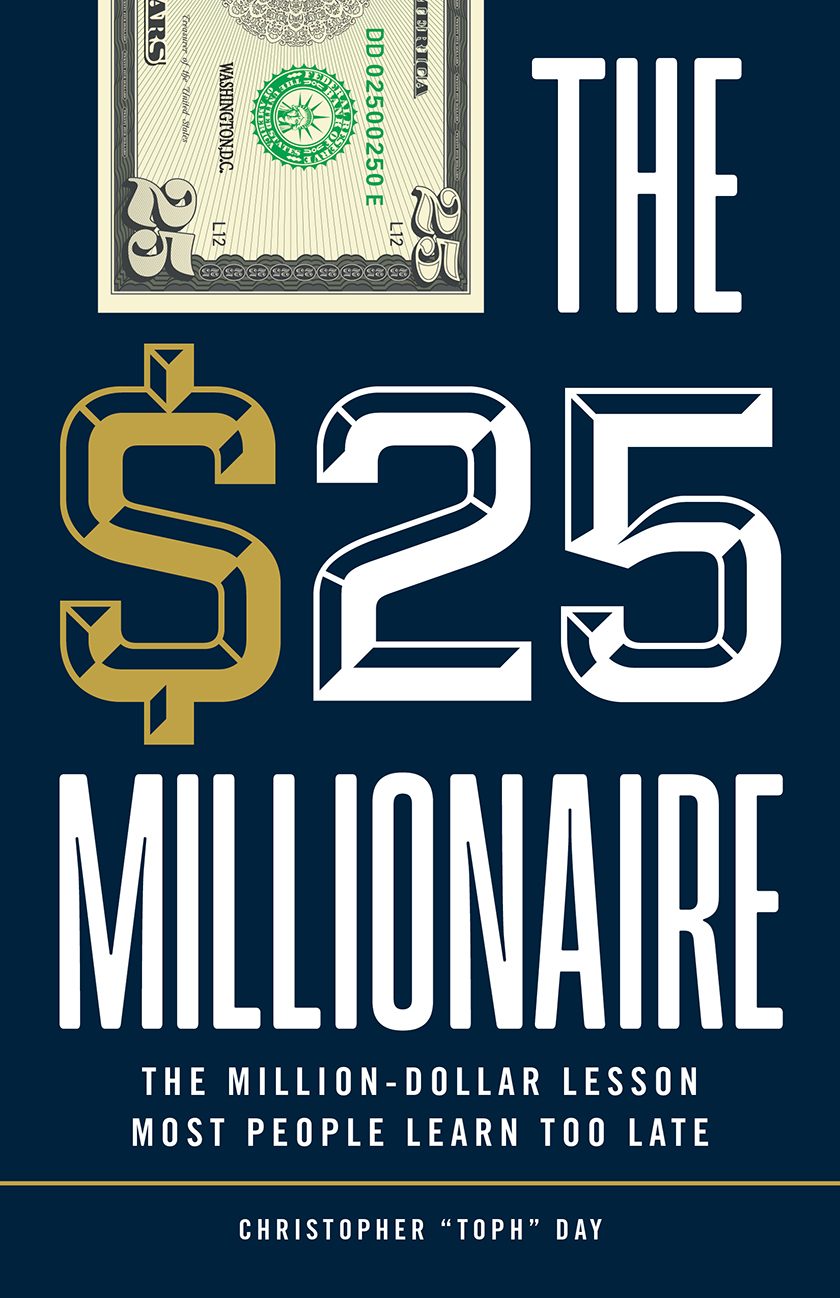
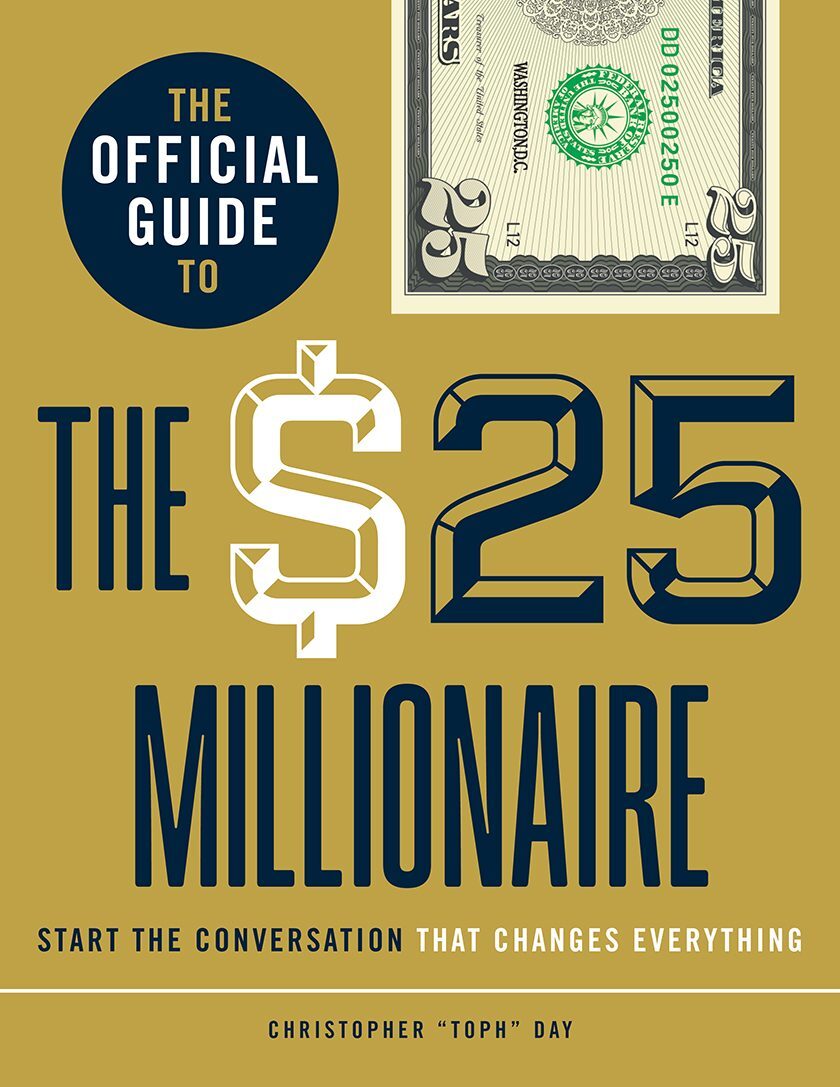
Lex Statzer: Welcome to Author Hour. Today we have author Christopher "Toph" Day, author of The $25 Millionaire, The Million Dollar Lesson Most People Learn Too Late, and the guidebook, The Official Guide to the $25 Millionaire, Start the Conversation That Changes Everything. They are both coming out on October 20th. Toph, welcome to Author Hour.
Christopher Day: Hi Lex, thank you so much for having me. I'm super excited.
Lex Statzer: Amazing. Today, we're going to get into what your book actually promises, who it's written for, and how it went from an idea to a finished book. So the book opens with a line saying, your origin does not dictate your destination. So before we talk about anybody else's money, let's talk about yours. Where did your own relationship with money begin? And when did it click that the thing you'd figured out was not common knowledge?
Christopher Day: So I grew up poor on a farm, on a particle board floor, and I always thought that to, in order to achieve wealth, that you had to start a business and take a bunch of risk and try to achieve wealth that way. That was the only path. And that like the stock market or things of that nature were for other people. It wasn't for me because I didn't grow up in a wealthy family or in a wealthy town. And it didn't really click for me until probably the 2010 kind of timeframe. Fairly long, fairly along my journey. I was probably 40 years old-ish. And I'd heard about this idea of compounding, etc. But when I was around 40-ish, it clicked for me that, oh my gosh, you can actually put in a little bit of money and get wealthy. And I started to think about how I could build a million millionaires, and it's too hard with all the regulations, etc. And so I kind of shelved that. But that's kind of my quick high-level journey. Grew up poor, didn't think it was for me, thought I had to take risk. I became a serial entrepreneur, eight businesses and seven industries. And then I realized, oh my gosh, I should have been doing this all along as well.
Lex Statzer: So thinking about the number you chose, because it's kind of the whole hook, right? Not $5, not $100, $25. Why is 25 the right unit? And what does that specific amount do for someone that a different number might not?
Christopher Day: Yeah, absolutely. A word just escaped my brain there, and it came back to me now. So the $25 is really for two reasons. Number one, depending on how you invest the money, which the book talks about, whether it's tax-free when you take it out or whether you have to pay taxes when you take it out. But at a high level, the reason I chose $25 is because of taxes and because of volatility. And so if you put your money in and didn't pay the taxes beforehand, like if you don't and you pull the taxes out, at $20, you would end up with around $1.1 million. And when you pay taxes on that, it would be less than a million. And so I bumped it up to $25. So if you do pay taxes when you pull it out, if you didn't select the Roth, then you would still have a million dollars. The other reason is volatility. And so people can argue, should the number be $25 or should it be $31? Because 31, using Monte Carlo exercises, you could argue that it should be $31. And that's a fair point. And that's math. And that's a fair point. But if you just look at $25 based on 10% per year over a long period of time, 47 years, that's going to equal about $1.4 million if you start at 18 years old. So that's why I chose 25.
Lex Statzer: I like it.
Christopher Day: It sounds like a bill on the cover.
Lex Statzer: I know. That's why it sounded like it was just kind of a hook, something interesting to get people interested. But no, there's math behind it. That's super interesting. So one of your arguments is that the greatest destroyer of wealth isn't a low income. It's delay. Most people assume that the problem is how much they make. So make the case. Why is waiting more expensive than earning less?
Christopher Day: So time. So the enemy we talk about in the book is delay. That's the villain of this whole hero journey, right? It's got to have a villain. And that villain is delay. And so many people have heard about the idea of compounding. But what we don't talk about is how time is so critical in that idea of compounding. So what do I mean by that? The simple arc of the story in the book is if you invest at $25 at 18 every single week, you're going to wake up at 65 and have around 1.4 million. And I should also preface this with past performance is not indicative of future results and et cetera, et cetera, consult your advisors, et cetera, et cetera. But $25 at 18 is roughly 1.4 million based on 10% at 65. If you do the exact same thing at 30 years old, you end at 65 with $400,000 roughly. That's the million dollar lesson. So that's the story arc of the book. And so that first 10 years and not to 10 years between 30 and 40, the 10 years between 18 and 28 or 20 and 30. Those are critical. It's like a snowball. Right. And so having that additional 10 years that continues to double over time, it has more repetitions to double. That is the key to building long term wealth is to start early. Small amounts of money will equal big results.
Lex Statzer: Okay. So with this framework, where do people's assumptions about returns or time usually trip them up? Like what are the misconceptions? What are people typically getting wrong with this?
Christopher Day: So fear, I can't afford it. I can't come up with $10 or $20 or $30. I want to time the market. The market seems to be at an all time high. I'm going to wait until it market adjusts. These are the common reasons why we don't do it. I think there's a fourth one I'll add is I also built a website called buildamillion.org. So buildamillion.org, which is kind of a take on, I want to help build a million millionaires. And also how do you build a million dollars? But if you go to that website and you click on the wealth calculator, I think as humans, what I have never seen in my life, and I've talked to many, many people as writing this book, and nobody else has seen it either, is I put a dynamic calculator, dynamic wealth calculator on that website that shows you a term that I coined called the time tax. And so it shows you, when you go to the website, it's preset to the book at the 18 and the 30 years old, the 25 bucks. And it shows you both lines. And you can slide these radio buttons back and forth depending on what age you are and how long you might wait before you start at whatever dollar amount. And these two lines slide back and forth and they show you the gap of if you wait, if you succumb to the evil villain of delay, this is how much money you're going to cost yourself, right? Assuming that the market returns an amount of money. But I think it's, we don't teach this at scale to our kids still today. It baffles me. And I think the biggest reason is that most of us were not taught. Mm hmm. As we stand, as we record this podcast today, 90% of Americans will never become millionaires because they were not taught this simple lesson. They were not shown. Maybe it's a better word. They were not shown this simple lesson.
Lex Statzer: That was an effective plug for the website. I'm writing it down now. I gotta check it out myself. Wow. Okay. So this could have been a course, a newsletter, a viral thread on social media. Why was a book the right vehicle for the message?
Christopher Day: I think that this is something that human nature again comes into play. And I felt like that this was something that had to be tangible. You had to be able to see it and touch it and feel it and hold it and put it on your nightstand in those moments of weakness to flip back to some of the pages that you might highlight when you read it. And so those are things around consistency. Never break the chain of compounding, right? Never stop. And so human nature is I talk in the book about automating it. And I literally talk about exactly how to automate it. In fact, the book has in chapter 9 and 11, it has four example plans of how you go do this. It's not theoretical. It's literally a how to. And so there's four example plans we can talk more about in a minute. And then in chapter 11, it steps one through X. I think it's 12 steps how you actually go set up the account. This is you can become a millionaire today as easy as setting up a gaming app. This 30 years ago, it was much more difficult. But today it's literally if you can set up a gaming app or subscribe to Netflix or something, you can figure this out. Those steps walk you through it. It's super simple. Automate the habit so that you never think about it. Because human nature, when the market crashes, which it will again, it will crash, but it goes up and down. That's the volatility. The human nature side is, oh my gosh, I'm going to stop investing until it comes back. That's exactly when you should be investing because that's called dollar cost averaging. So your purchasing power is increasing when the market's going down. When it comes back up, you've bought lower and you're now going to have stock or ETFs. This is an ETF strategy. For low cost, your purchasing power will increase. And so that's how you build wealth. I share a story in the book. In 1987, I was a senior in high school and we come into the next class after lunch period and Black Monday is happening. The stock market's crashing 22% in one day. The teacher was in a fit and the world was ending. And that's all we talked about for this one hour class period was how everything was going to H in a handbasket and everybody's going to die. And it's going to be awful. And we will never know a better world in front of us. And I was kind of silent. And this shocks me about what I'm about to say shocks me because I should have listened to myself at that very moment. And I'm pretty, I like to share thoughts and participate in conversations. And third of the way or halfway through the class, he's like, you know, Christopher, you haven't said a word. And I went by Christopher back then. Now I go by Toph, but, and I said, well, I don't understand why everybody's so upset. I said, it's just paper. It's just paper money. So don't sell. And you haven't lost anything yet. Oh, you don't know what you're talking about, you know, et cetera, et cetera, et cetera. Well, I went back when I was writing this book and research the exact history of what happened on Black Monday. And here's what happened. It crashes 22% in one day. Everything's the earth is going to stop spinning. In 48 hours, the market had recovered 57%. In less than two years, the market recovered to where it was before the crash happened. Since then, 2,800% increase in the market. If you had started investing at that point in time, or if you had kept your investments and didn't sell them on that day, you would be just fine.
Lex Statzer: So you mentioned a few plans, chapters nine and 11. Walk me through. What are those? What are those saying?
Christopher Day: So the four plans, the first one is called the starter plan. And the next one is the inflation plan. The next one is the generational wealth plan. And the next one is the nexus plan. So the starter plan is the $25 that we've talked about. Now, of course, you know, in the future, a million dollars won't equal what a million dollars is today. So then I did an inflation adjusted plan, which means you put in about 40 bucks a week and you increase it 5% a year. And that will get you in the high $3 million range, which will be a basically the equivalent of a million dollars today in the future at 65. Then if you want to up it a little bit, if you want to max out your Roth 401, your Roth IRA, or your 401k plan, that's about $144. And that's going to put you in the generational wealth range, which is gonna be nine or $10 million. And then the nexus plan is if you believe this is a high conviction plan. So those first three plans I mentioned, those are just based off of 10%. And we can argue if is it 9% or 10.2 or 9.8 or 9.3 or whatever. And that's a fair argument. But the short story is you're still going to end in a really good place. Even if it's seven or 8%, it's going to be great. But what if it's 12 or 13 or 14%? It's going to be insane. And so that's the high conviction plan. The high conviction plan is if you believe that the next 30, 40 years are going to be as good or better than the last 30 or 40 years, which I personally happen to believe, I could be wrong, but the nexus plan invest in a number of ETFs that buys the market across all of the industry segments and sectors. Well, not necessarily all, but the big ones that theoretically will benefit from all the modern technology we're experiencing today. Now that's set at 14%, which may not happen. That might end up being 12% or it could be 8% or it could be zero. Right? And full disclosure, right? You always have to do the disclosures, right? The future success is not in the past performance, but that ends at $26 million at $100 a week. Well, and so this is so simple to do that even a barista can do it, right? Whatever your occupation is, humans today, most of the people have smartphones. They have subscriptions to things they haven't used. They buy a case of beer, maybe a bourbon, a bottle of bourbon. They might buy seven lattes during the week. We buy all these things as humans that we forget we're even buying that equal $5 and $10 and $30, and they add up to hundreds of dollars or thousands of dollars. And so if we just take a quick look at our lifestyle, cut out a couple of things that we'll never even miss. I mean, think about a latte, you drink it and it's gone, right? So a dollar today equals $88 in the future. So just every time you spend a dollar, take it times 88. That's how much wealth you're giving away over time. And so, yeah, that's the high level of the plans. And I tried to lay them out very logically. And by the way, these aren't the only four plans, right? You could do anything. But the key is starting and start today.
Lex Statzer: You mentioned that we aren't showing young people how to do this because we weren't shown ourselves, right? You also write that schools taught us to earn, not to build. What is the one thing you wish someone had sat you down and explained at 18? And why do you think it is that almost no one does?
Christopher Day: I wish someone had set me down and show me the wealth calculator that you can go play with on build a million dot org. I think that's the missing component. I think the missing component is physically seeing these oscillating curves move as you play with time and money. And this doesn't look like anything's happening. So if you do this at 18 years old or 20, 25, 30, even 40 years old, it's going to look like nothing is happening. So let's just let's assume you start at 18. It's going to look like you really haven't done anything in your mid 30s. And even at 40, you're gonna be like, man, this isn't really working in your mid 40s is when it really starts to show up. And when that compounding starts to turn over every several years, that's when it really starts to equal big money. Why we don't teach it, by the way, I love our educators. I know many educators. I love them and their passion, et cetera. I don't know is a short answer, but I can only suppose. So one is we talked about, right? Not just educators, but the vast majority of our population never learned this. And by the way, parents, it's not your fault, right? If you weren't taught, you wouldn't know. It's all good. The guide talks about that. It makes it easier for parents or educators to have this conversation with the next generation. But if we look at our education system in K through 12, it really is still works today. The way it was designed over 100 years ago, really to teach people how to kind of work in factories and make things, which is, which is great as well. By the way, you can make a lot of money making things. I'm not saying that's not good. I call those skilled professions, but things don't work in rows and columns, right? They're dynamic. And so I, I, this is, you know, the most important book I believe in the world is the Bible. And, and after that, I think we should be using this book, which allows you to give your first and best as well. But like, I think we, we just didn't learn it ourselves in mass. And so we don't teach it and we're creatures of habit. And so we just do what we're comfortable with. And for some reason, people are afraid to talk about money. And we shouldn't treat money as some scary object, right? We should talk about it in a way where we can leverage it for human good. That's what I believe.
Lex Statzer: So now picture the reader who is afraid that it's too late for them. We talk about time. We talk about delay. Maybe he's 40 rereading your subtitle in a driveway, half convinced he's already missed his window. What do you want that person to understand before they close the book?
Christopher Day: The best time to start is yesterday. The second best time to start is today. So if you're 40 years old, $243. So in the book, we talk about this at 18, at 25, 30, 35, 40, 45, 50, what you have to do to catch up. Even if you can't do $243 a week, that sounds like a shock to the system, right? That's a lot of money. We'll start with $25. Right. And then bump that to $30 and then to $50 and then to $100. And over the course of a year or two, get that thing bumped up as high as you can get it and try to get to that $243 as fast as you can get there. But the question I would ask the 40 year old, if you haven't started, and by the way, I have a lot of friends in their 30s and their 40s who have not started. That's okay. Don't get upset with yourself. Just start today. And so that's just the whole key. The thing I would ask myself if I was 40 year old and hadn't started and I'm just going to give up and not do it and hope for the best. Well, would you rather still be at 65 and have $600,000 or zero? Right. I'd rather have the $600,000, right? Another thing I would say is a lot of people work in jobs that have 401ks and they either don't participate in that 401k or they participate just a little bit and a lot of companies match a certain percentage of your 401k. That is free money, quote unquote, free money. And so at least doing the minimum amount in your 401k to get the full match, because then you've just doubled what you're doing, right? With that match money. Absolutely. I have a friend that has a HVAC company and a thousand employees and a large percentage don't participate in a 401k. And so now I want to talk to how do we get this book in the percentage of those folks who have not participated yet? Because again, they haven't visualized or been shown. I like that word shown better than taught, right? But they haven't been shown if they just start now, they'll, you know, think about people at 18 are like, oh, retirement, that's so far away. I'm invincible and I'm never going to get there. Well, I would ask the 18 year old to look back at your high school life. How fast did that go? That was four years, right? And most people graduate from high school or graduate from college like, oh my gosh, I'm already here. Well, the same thing is going to happen to you when you're 40 and 50 and 60. It's going to go by in a flash. It feels like it's forever, but every time you look backwards, it feels like it was just a blip. Yeah. And so start today with whatever you can do.
Lex Statzer: Good answer. Start today. So thinking about your bookmaking journey, how did you and Scribe end up finding each other? What made you comfortable handing over a system that you are very clearly and rightfully so passionate about?
Christopher Day: So this is the second book that I've written. The first book is called Pillar-Based Marketing, and I worked with Scribe in doing that book. And I was introduced to Scribe from a gentleman named Sangram Vajre, a friend in the tech ecosystem. He had written a book and worked with Scribe. And there are so many different platforms out there. It just blows your mind, right? And who does a good job, who doesn't, et cetera. And this goes back to the good old relationships in life. And I'm like, well, if it works for Sangram, it can work for me. And so I think it's an extra testament to Scribe, right? The biggest checkmark of approval you can get was a return, a repeat customer, right? So here I am again with Scribe. In the first one, we used a ghostwriter. And this one, I did it myself. Some days, I'll tell you, I wish I had used a ghostwriter, I think. But yeah, that's how I found Scribe, was through a friend that recommended on the first book and was really happy with how it turned out. And so here I am again.
Lex Statzer: So speaking of the actual writing process for this book and the guidebook, your book preaches consistency over brilliance, beginning over waiting. Be honest, did writing it actually test that philosophy? What did the week-to-week discipline really look like?
Christopher Day: Brutal. There were several times I thought about giving up. And because there's so many stories in the book that intertwine with each other and numbers that connect to each other, and it's hard to keep track of them all. And I started this in January. I came home one night, six o'clock on a Friday. This came pouring out of my system. I think it was gurgling around the back of my brain for the last 15 years. And it was almost like a calling. And it just poured out of me. And I probably slept six hours that weekend. And I kind of finished a rough first draft at 3 a.m. Monday morning, just going solid. It was just, I was just in flow state. And every week since then until probably what, roughly a month ago, I have worked every single night, every single weekend, nights anywhere between two and six hours on the weekends, sometimes all weekend. I've missed so many things with friends. Oh, we're going here. We're going there. I've got to keep going on this book. And several times I feel I'm a human too, right? I kind of wanted to give up. I'm like, no, this is too important. We have to get this into millions and millions of hands. We are going to build a million millionaires. And when we get to a million, we're going to do two and then three and then 10 and then a hundred. And let's flip it to 90% today are not going to be millionaires. Let's flip that to 10%. Let's invert the percentages. But it's just like anything, consistency beats brilliance, like just small steps equal giant leaps.
Lex Statzer: It's just like you said, it was a calling and it's hard to ignore the calling, even when it's as hard as you just described it. During that process, was there a piece of writing or storytelling advice that somebody dropped along the way that just really changed the game for you?
Christopher Day: During writing this book?
Lex Statzer: Any of them.
Christopher Day: You know, there were several things I would, you know, after the first draft and there were several sections in the book, I literally just tore out and threw away and started over. There's so much when it comes to investing, finance, et cetera. And I was really trying to keep this just like super simple because like you can make investing simple and I started to let other things creep into it. So I think, I don't, I think more during the process when I would talk to friends, et cetera, they'd be like, that's, you're getting too complex, back it off. And so I tried to touch on a little bit, like what is Roth? You know, what does that mean? Some of those types of things, kind of like the buckets that you fill up first, second, third, fourth, if you start doing this. And I feel like I started to get even a little bit too detailed on that. Hopefully it was a happy medium there because what I want the reader to come away with, like it really is as simple as starting today. Pick a platform. Here's the steps to set up the platform. Here's how you automate. Here's some example ETFs you can choose from and you can start. You want to make some changes in six months? That's cool. Make some changes in six months. But the, the, the hardest thing to do in life with anything, and I've been a serial entrepreneur, right, is starting. And if we can take the first step and actually start, things will get easier. Doesn't mean it will get easier to keep with it because car breaks down, whatever it might be, and there's an unexpected bill, but just stick with it. And that's why I say the automate thing is to try to take the human emotion out of it because what will usually happens is people kind of forgot that they did it. And so it's just building silently in the background.
Lex Statzer: I can imagine it would be really hard to simplify such a, an intense and complex world. I mean, finance is intimidating for a lot of people and there's just so much to it. So how were you able to get away from that? There's too much detail here. I'm, you know, over explaining or this is just too high level for where we're at in the book. Like, how were you able to pull yourself back and really simplify in that way?
Christopher Day: What I tried to stick to in the book was small amounts of money, long periods of time by the market. That's it. And so ETFs, if some of the listeners aren't familiar with that, it's exchange traded funds. So basically it's clusters of stocks in an ETF. So you can, you can buy the NASDAQ 100 or the S&P 500 or healthcare, a set of healthcare stocks or a set of rare earth stocks, et cetera. And so they're very, they're very low cost. Typically you can be as low as like 0.03%, which is great, right? So the lower those ETFs typically have lower costs, which means you keep more of your money. Now there are, there are a couple of ETFs I have in the book. They're actively traded ETFs. And so those, those costs will get up more towards, you know, 0.6, 0.7%. But they were chosen kind of intentionally, especially with that nexus plan. But I just try, I tried to really stay grounded in the simplicity of small amounts of money, long period of time, and then by the market and under each plan, that would mean by the design of that plan, you would buy different segments of the market. And so I am actually buying the ETFs in the book. I invest in myself. So I'm, I'm walking the walk that I'm, that I'm talking. Yeah. But every week I am buying these ETFs. I don't even look at it.
Lex Statzer: Looking back at all three of the books that you've published, what, even if it was back in your first book or if there was something that changed in this new process with your, with your other two books, was there something that caught you off guard about how a book actually gets built start to finish?
Christopher Day: You know, I didn't know what I didn't know when I first started the journey, right? And I just figured it'd be super complex and just relying on experts, right? Because we all can't be experts in anything. So that's why I work with Scribe. The biggest thing that caught me off guard was the act of using a ghostwriter. And I'll tell you a quick story. This is a great story. So when writing that first book, we were writing a book about a niche in marketing that can get very technical. It's pillar-based marketing, but the company we had, you call it AI today, but we call it machine learning back in the day. Very, very data intensive, complex. And how do you tell that story in a simple way? And I remember when we started working with Scribe, like the ghostwriter has to have a background in marketing. And I didn't feel like anybody was listening to me. And we got our first call with our ghostwriter. And sure enough, she had zero background in marketing. And it was the best thing that ever happened to us. Wow. Because during the ghostwriting process, she would be like, that doesn't make any sense. And so she would ask us questions and we would answer those questions. And sometimes there are probably two or three times during that four, five, six month process of ghostwriting where we get frustrated, like, what do you mean you don't understand that, right? And she would just keep asking questions. And then sooner or later, sometimes an hour into a specific point, she'd be like, so actually you're saying X, Y, Z. That's exactly what we said. She's like, no, you didn't. But what she said was totally right. And it was magical, right? That's a real skill set. These ghostwriters I have so much respect for how they can take a topic they know nothing about, but because they have the creative skills and their brain works in a different way, right? It was magical. And so that was the biggest shocking thing I had was not being afraid of using a ghostwriter and not being afraid that that ghostwriter may not know anything about your topic.
Lex Statzer: Yeah. I mean, it sounds like she was the first student of your first book. And I know people talk about the best way to learn something yourself or to further your learning in something is to teach it to somebody else. It really shows you not only what you know and what you don't know, but also what is simplified enough to transfer to another person. And so she really forced you to rethink all of these concepts that you were probably so familiar with that they were just like second nature to talk about. But now it's like, oh, there's a whole other way to have this conversation to make it approachable and accessible.
Christopher Day: 100% correct. And we always used to talk in that company. When everybody in the company can explain this to grandpa and grandma and they understand what we do, we know we have achieved success.
Lex Statzer: Yeah. I mean, that's what it is. I have a boyfriend who works in tech. And I'm like, if you can explain it to me, you can explain it to anyone. And that's exactly the journey that you went on. So one of the questions I love to ask, your whole message is start now, start small. So to the person sitting on their own hard-won knowledge, convinced they need to know more before they begin writing a book of their own, what would you tell them about just getting started on that project?
Christopher Day: Have no fear. We can be our own worst enemies. Just have no fear. What's the alternative? What is the alternative? The alternative is having to work the rest of your life. The word freedom shows up 88 times in this book for a reason. Wow. This is about achieving freedom.
Lex Statzer: It's the same message of why you should start investing at 40 if you feel behind, why you should start the project if you feel behind. I mean, where else would you be if you didn't?
Christopher Day: It's exactly right. Do you want choices? You know, right? As my son, my son's a freshman in college now, but as he grew up, the first two things I taught him was no, and then life's not fair. You got to get up off your rear end and go get it, right? It sounds familiar. Nobody's going to hand you anything. You got to go out and achieve things. You got to go get it. And so, yeah, I think we can be our own worst enemy. Fear is an easy thing that creeps into humans and put the shoulders back and take the first step and start. Once you start, it's not nearly as scary as it first sounds.
Lex Statzer: If you had to pick, this is a hard one, but if you had to pick one line or insight from the $25 millionaire, throw it up on a billboard where a stranger drives past it every morning on the way to earn their income, what does it say?
Christopher Day: Your origin does not dictate your destiny.
Lex Statzer: That's a good one. So, the $25 millionaire and the guidebook are out October 20th. Where should people go to grab a copy and where can they keep up with you?
Christopher Day: So, feel free to go check out Amazon or almost anywhere you buy books. They're available all over the place. And you can find me on LinkedIn, Christopher Day or Christopher Toph Day. I'm on LinkedIn and you can find me there. And also go check out buildamillion.org. Hopefully, this ends up becoming a curriculum in schools across the nation, in high school and in college. One more thing I would say is this is not a book. This is a movement and we owe it to ourselves. We're talking about changing family lines, not only our individual lives, but our family's lives, our friends' lives, our loved ones' lives. And if we all just do a little, we will wake up in a decade or two and live in an entirely different world where people are a part of the country's success, of the company's success. All these companies that we read the headlines about, you can own part of them through these ETFs for $25. You can own a part of hundreds of companies.
Lex Statzer: Buildamillion.org, right?
Christopher Day: Yes.
Lex Statzer: That's my first stop after this. Well, thank you so much, Toph. I speak for the whole Scribe team and a lot of future readers who are about to learn the difference between earning and building when I say that I cannot wait for the $25 Millionaire and its guidebook to hit the shelves. Thank you for coming on.
Christopher Day: Thank you, Lex. I enjoyed it. It was a blast.
Want to Write Your Own Book?
Scribe has helped over 2,000 authors turn their expertise into published books.
Schedule a Free Consult