The Adventure Advantage: Mike Boydell on Threshold Moments and Writing Through Change
✨ Episode Summary
Mike Boydell had never put pen to paper when the pandemic grounded his CEO advisory practice in 2020, and three weeks of writing alone produced exactly one beautiful paragraph, so he brought his scribbles of notes to Scribe Media and turned the idea behind a national-newspaper op-ed into The Adventure Advantage, a book he now carries into leadership engagements and that organizations ask him to walk 50 people through at a time. Halfway through writing, his father was diagnosed with terminal bone marrow cancer, and finishing became a race: Boydell reopened a locked manuscript, added a poem written for his father, and got an advance copy into his hands in his final days, close enough for his father to keep editing it from a hospital bed. Three years on, the book still holds its author to his own material, as Boydell puts it, “every time I get annoyed by my perfect plan, not going, it’s like, yeah, I should talk to the person that wrote that book.”
⭐ Top Moments
- The threshold every first-time author has to walk through. Boydell works with CEOs and leadership teams on threshold moments, and he applies the same frame to writing a book. The resources are lined up, the logic is settled, and the only thing left is the decision. As he puts it, “there will be a threshold moment where cognitively, it makes sense. You’ve got all the resources lined up. There’s no excuses, but you haven’t gone through that emotional final threshold of just deciding, you know what, I’m just going to do this.”
- Three weeks of writing alone produced exactly one paragraph. Boydell had never really put pen to paper, and he was writing in the shadow of two academic PhD parents who taught him that an opinion had to be sourced. He sat down with everything set up, and “after two or three weeks, I would have a really beautiful paragraph. And that’s it.” He researched his options, chose Scribe Media, and says of the promise that the team would help him write the book that was inside of him, “that’s what Scribe delivered.”
- Finishing the book became a race to put a copy in his father’s hands. Halfway through writing, his father was diagnosed with bone marrow cancer of the terminal variety, and when it turned into leukemia he had about six months left. Boydell reopened a manuscript that was already locked, added a poem called Clean Pass written for his father, and rushed him an advance copy. His father kept editing from a hospital bed, and in his last days, holding a book he could no longer read, he whispered, “did reading your book give anyone else this big a headache?”
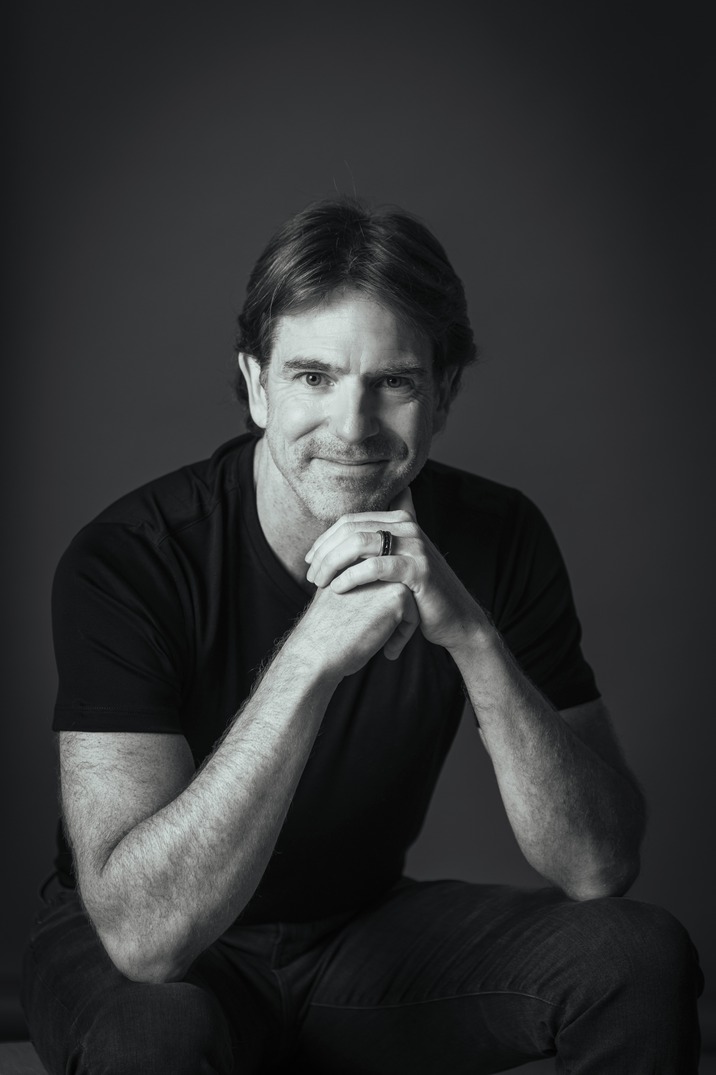
Mike Boydell
Michael Boydell’s passion is understanding and addressing the unique needs of high-performing individuals, specifically CEOs, executives, elite athletes, YPO forums, global organizations, and their teams. Michael graduated with a BA Psychology from Queen’s University and an MBA from the Richard Ivey School of Business. He is an experienced executive, holding positions as CEO, President, start-up founder and Board member with high-growth, international companies. Michael’s work with Young Presidents Organization as a globally-certified coach draws from his own 19 years of personal Forum experience. His athletic experiences in team sports and endurance-distance triathlon deeply inform his approach.
There aren’t many advisors who know exactly what it’s like on a day-to-day basis. Michael does. Michael launched his advisory business in 2009 to an exclusive CEO client base in the US and Canada and has quickly become a go-to expert for people who want to gain more freedom and self-actualization in their busy lives. In 2015, Michael designed and delivered a leadership program for the International Board of YPO in Osaka, Japan. He is an accredited Board Director, has advanced certification in the Birkman Method and Tilt365 leadership tools, and is the creator of The Fear Less Advantage™ framework for whole-life performance. His methods have been increasingly used as part of one-to-one advisory relationships, off-site Board and corporate retreats, organizational growth strategies, YPO Forum retreats, and as part of company-wide leadership programs. Michael is the author of an upcoming book.
★ Scribe Case Study
Michael J. Boydell's The Adventure Advantage Went From Scribbled Notes to a Copy in His Father's Hands
Three weeks of writing alone gave Michael J. Boydell one paragraph. Scribe Media turned his scribbled notes into The Adventure Advantage, and he got a copy into his dying…
📚 Books by Mike Boydell
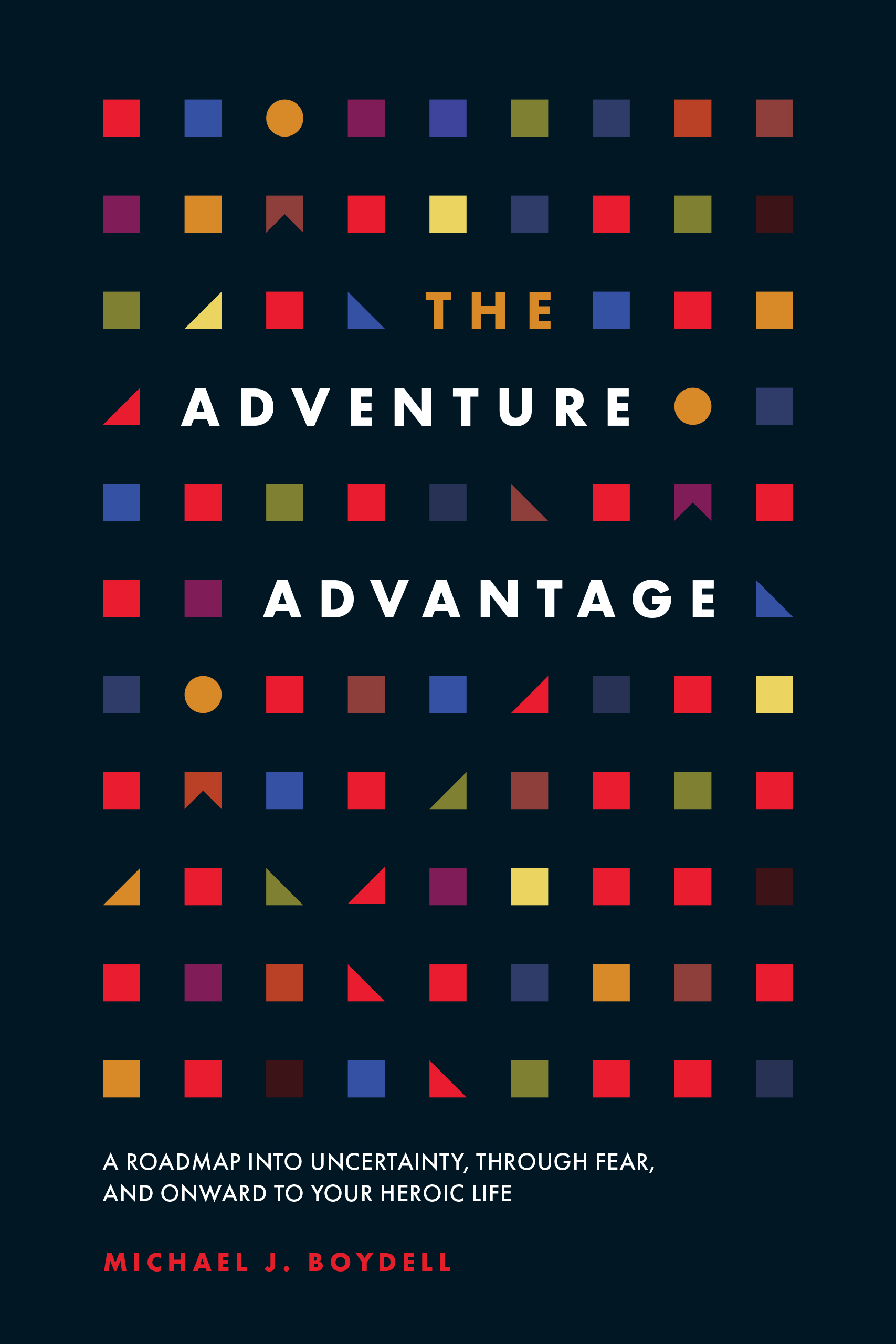
In this episode of Author Hour, Scribe Media CEO Travis Stoliker sits down with Mike Boydell, author of The Adventure Advantage, to talk about the op-ed that sparked the book, the three weeks of writing alone that produced a single paragraph, the race to put a finished copy in his father's hands, and the emotional threshold every first-time author has to walk through.
Transcript
Mike Boydell: There will be a threshold moment where cognitively, it makes sense. You've got all the resources lined up. There's no excuses, but you haven't gone through that emotional final threshold of just deciding, you know what, I'm just going to do this.
I don't actually know what's on the other side. So it's that last threshold move that I'd encourage people to really just grab hold of and go through. You don't know how it's going to go.
You can't know how it's going to go. You, you just know that it's your future's on the other side of that. So that that's some, some ideas around first time authorship.
Travis Stoliker: I'm honored to be joined by Mike Boydell, one of our most famous authors and just somebody that we talk about a lot inside of Scribe and Mike, thanks so much for joining me, Travis, a real pleasure to be here.
Mike Boydell: Uh, I have to start at the outset by saying that Scribe really helped me in a pivotal moment when I had ideas and possibilities and scribbles of notes everywhere and Scribe helped me turn all of that into an actual book. So, uh, I'm, I'm really appreciating the time and appreciating Scribe's help with me along that journey. Great to be here.
Travis Stoliker: Uh, well, thank you so much. You have a mission statement that I just love being a catalyst for people in threshold moments of change, liberating the best in each of us for the betterment of all of us. Can you tell me about where that came from and how that became your mission?
Mike Boydell: Sure, sure. It was not a straight line. Let me, let me start with that as always, as always.
Yeah. If I had given you my mission statement in my twenties or thirties or even my forties chapter, it would have looked a lot different, a lot more grandiose, a lot more probably egocentric and, you know, going through enough change in my own life and having numerous people be change agents for me or catalysts for me or picking up, you know, stories from cross generations and different cultures and different times. It, it just really struck me that it's part of the human condition that change is what it's all about. And I'm kind of living with uncertainty, living into the unknown from our first breath to our last, it's kind of what, what life is.
And I truly believe that change is the medium through which we are constantly tested and we're constantly invited to renew ourselves. And those that build muscle memory and going through that, or just have the bravery to go through it without knowing what will happen, there is something inside you that will be liberated. And, and so that's what I try to do with my, my body of work is, is offer people up something that is meaningful to them at a dose that's sort of appropriate for them as they're moving into one of those pivotal moments where they don't know what the future looks like, but change is really undeniable and, and more effort, more of the same isn't the answer and that's a hard place to be.
And it's a hard place to feel alone. And so just kind of offering people something that helps them liberate something in themselves, I believe then has this compound effect to others, whether it's coworkers, whether it's, you know, a partner, a friend, a family member, a spouse, a child, there's just a compounding effect to that. So by liberating the best in each of us, I believe that's the natural flow after, you know, everybody wins in those scenarios.
Travis Stoliker: Absolutely. And one of those moments was what led you to the book, The Adventure Advantage, right?
Mike Boydell: Yeah. Yeah, I had, I had an interesting epiphany type connection when the pandemic happened, I mean, it happened to all of us around the world in some way, shape or form, but I, I remember very clearly early on. So this is sort of April, May, 2020.
And so many of us were glued to the TV and it's like, we were just watching change unfold and waiting there. There was the concept of waiting for the world to go back to normal. And it, and it felt to me like we were in the greatest reality show of all time that we think we're watching the show as audience members when we are in fact the show.
And so it's the first time that I decided to write something about that. And so I wrote a piece called COVID reality show, something like what is your response ability? And it got picked up by a national newspaper as an op-ed.
And so I kind of started this, this idea of those that aren't sitting waiting for the world to come back, those that step into the growing pains of all of that change and the saying goodbye to the way things used to be, which is hard, those that did that early and got through that cycle early would have an advantage. And that notion kind of sparked the idea of moving life, moving through life with, with a mindset or a posture of adventure that you just never know what's going to happen. And so if you can be open-minded to how change is inviting something of you, it's not happening to you that there's an advantage in that.
So that's what kind of sparked the idea of writing the book, The Adventure Advantage.
Travis Stoliker: Man, that, that hits so close to home because I was really, I think of myself as really fortunate because my wife and I, our only child at the time was between, I think like two and three and five at the time that the pandemic was really in the height of everything. And to your book, me and my three and four year old, because it was kind of a long period there, we would do these two hour adventures where during that we would spend all this time outside and in the park. I look back and just, I'm so fortunate to have had that time with them, but I'd never thought of that observation that you had that it was, it was almost like, wait for everything to come back to normal.
But the only thing that we have is the here and now the only thing we have is right now. So if you just wait, you're missing everything. Yeah.
I'd never thought of it that way.
Mike Boydell: Yeah. It's like, you know, the famous Viktor Frankl quote, if I get it at least directionally correct, it's the notion of the last of the human freedoms, the ability to choose one's way, regardless of the outside conditions, which might be annoying or not to our liking, or they might be horrific, but that is the last of the human freedoms, the ability to choose our response in any given situation. And what you described was what a lot of, a lot of people did.
They chose to respond in a different way to change and create something new. There's almost like a blank page starting over for each day. Cause we didn't know how long it was going to last.
And not everybody did. Not everybody did.
Travis Stoliker: And what brought you to Scribe at the time and to turn that op-ed into a book? Where were you at in your life then? How did, what brought you to that point?
And I'd love to know more about the experience. Yeah.
Mike Boydell: Like, like a lot of people, I was shut down. So up until that point and maybe the 10 years prior, um, I had been really enjoying my own consulting practice, just work, working with leaders, working with teams, any kind of growth activated individual around the world who were navigating that sense of change. And we're on a mission of change, whether that was on their own with a team, with a large corporation, big organization, whatever it was, but the mission was based on accomplishing something they couldn't do on their own.
So I'm a big growth guy, big T performance guy, you know, how we, how we leverage ourselves and our differences and all of that kind of stuff. So I had a practice. I was enjoying that work thoroughly and traveling all over the world to do it.
And, and of course, pandemic comes along. And by the summer, it was clear summer of 2020. It's clear.
Okay, we're going to be, we're going to be shut down for a while here. So I've always been someone that's been passionate about words and, and the use of words and language and conversation. And most of my work was, was in person.
I had never really put pen to paper before, and it just seemed like, well, if you're ever going to write a book, if you're ever going to get this stuff down on paper, like you're all out of excuses, you have paper, you have a pen. You, you have a candle, even if you don't have electricity, like let's go. So there was just something about that moment that was undeniably inviting to start the process.
I came to Scribe and I'll get into a little bit of, of my, my first time author pain here without going into too much of my backstory, both of my primary parents were PhDs, academic PhDs. And so there was lots of writing and lots of book publishing, but everything was with detailed research and source material, and you weren't allowed to just have an opinion so much. You had to have it sourced.
And the idea of plagiarism was huge. And so, you know, I, I decided to write the book on my own at first and I, and I would sit down and have all my set up and do all the thing. And, you know, after two or three weeks, I would have a really beautiful paragraph.
And that, and that's it. And it became clear to me that this wasn't going to be an academic public. This is something that had to come from inside of me and I needed help to do that.
And so I researched a bunch of different options and that's how I landed on Scribe and I loved that notion of. Uh, and I forget what the, what the tagline of Scribe was at the time, but it landed on me as basically we're going to help you write the book that's inside of you. And, and that, that's what I wanted.
And that's what Scribe or that's what Scribe delivered.
Travis Stoliker: And how has it been since the book has launched there? One of the questions that Eric loved to ask on the old Author Hour with him was, which I just love is what are the unexpected great things that happen as a result of the book that you didn't anticipate?
Mike Boydell: Yeah, I'll give you, I'll give you two. One is slightly ego stroking and one is annoyingly personal. So the, the, the ego stroking one is.
And I should also qualify this by saying, I appreciate authors have different objectives and, and different reasons for writing. And sometimes it's commercial and sometimes it's personal. Mine was very personal.
So I didn't have this grandiose notion of being a best-selling author and, you know, thousands and thousands of books and keynotes and all that kind of stuff. It was more of a personal expression I wanted to get out of me, but, or, and after a very meaningful launch party, which my wife orchestrated and happened very soon after my father passed away, we just had a bunch of swag put together. So hats and t-shirts and that kind of stuff.
And so I would, when I could travel again, I would go through airports and I'd just have The Adventure Advantage hat on, just a baseball cap, and it was so rewarding. Just to meet people that were kind of just passing by who were in some kind of of anxious panic or frustration or something, which airports are full up and just strike up a conversation and just have some open-ended questions. Just get into something very real and have them say, who, who are you?
What, like, where did you come from? Who are you? And what is this adventure advantage thing?
And I'd say, I don't know. There's, it's like a book that might be of interest to you. It might be a value to you.
And here's what it is and here's where to find it. And it's been a pleasure meeting you and just have those kinds of human connections. So that has been number one answer, a little bit ego stroking.
Cause that it's, it's fun to be out in the world with the book. The other surprising answer, which is the, the personally annoying one is I would never put myself out there as the penultimate expert on navigating change. Change is just hard for everybody, no matter your reps with it.
And so over the past three years, shockingly, my world has continued to evolve and change and best laid plans went sideways. And so the, the personal annoying, surprising part is having this book out in the world, having my name on it, having people in my circle and sphere know that I wrote this book. I have no defense except to continue to grow and move myself through change.
So every time I get frustrated, every time I get annoyed by my perfect plan, not going, it's like, yeah, I should talk to the person that wrote that book. Sometimes I wish I hadn't written it. Cause I could just pretend that I don't know this stuff and be angry and blameful, but it's almost like a, a, a personal mission to live by.
I guess that would be the, the other side of the surprising piece.
Travis Stoliker: Yeah. And your book went through a bit of a transformation as I recall too, right? Through it.
I believe that was when your dad got sick and it kind of changed the meaning for you, if I recall.
Mike Boydell: Yeah, very much. It started out being a book written for all the people that are going through big change, but are not going to buy a book on their own, or, or they're not going to buy an outstanding book with a purple cover called rediscover untether your soul or something like the world is full of those kinds of incredibly valuable books and content and podcasts. But most of the cohort that I would work with on the executive side is just never going to go there.
So the initial idea was to encapsulate all that same good work, but put it in a form that would have people say, Oh, that sounds fun. And then I can sort of secretly give them the medicine once they've opened the book. So starting with the adventure concept felt like a good platform.
You're quite right. About halfway through the book, my father was diagnosed with bone marrow cancer of the terminal variety, but we weren't sure if he would have two years or five years or seven years. And it just became a very personal experience of watching him deal with all of that and adopt the same kind of concepts of, of The Adventure Advantage that I was writing about.
And then of course, everyone else has to go through their relationship to change and uncertainty and impermanence and all of that stuff in relation to him and how does that affect? So all of that hit about halfway through the book and definitely it became more personal at that point. And when he, when his cancer turned into leukemia, of course, leukemia, when it manifested into leukemia, and then it's just a matter of time, he had about six months left at that point.
And then for me, it became a race because I wanted to get the book out into the world. I really, it felt meaningful to share that experience with him. And it felt like a meaningful milestone to have him hold a copy before he passed away.
So yes, the book took a more personal form. I ended up writing a very personal poem that I put at the beginning of the book called Clean Pass, which was really dedicated to him. I, I opened, I reopened the manuscript.
So all the experienced authors and editors and publishers know once you lock it down and say, we are good to go. You do not open that thing up again. I opened it up again, changed a few things here and there to make it more personally connecting.
And then basically rushed him an advanced copy. And in a fun final story on this is that in his last couple of weeks, I would send him PDFs of this chapter, that chapter, and not only could he not stop himself from being a constant editor. So he, from a hospital bed, he would be on the phone telling me, you know, I wish you had talked to me earlier because I could have helped this or help that, or this is going to be great for readers.
This is going to be hard for readers. But at the very end of it all in his last few days, when he actually had a copy and he couldn't read by that point, much less see very well, but he whispered to me as he was going through these agonizing headaches, he said, did reading your book giving, give anyone else this big a headache? And it was, it was the perfect, the perfect way for us to communicate because we use that kind of very dry, very sharp humor as a way of dealing with the real painful stuff.
And that, that had always been his way. And so those last few moments, you know, you just don't get those back again, super precious. And again, as per your question, it became a much more personally meaningful project by the end, for sure.
Travis Stoliker: Oh, I can't even imagine what it was like. I mean, being able to share those laughs with somebody, I imagine he was in either a hospital or a hospice or, and it's just so hard to have humor in those places when everything is so morbid and just sad. And it's just such a great moment when you're able to break that tension with some laughter.
And it sounds like always the academic too, still, still critiquing and editing the book.
Mike Boydell: And the father too, right? Always the father and always the academic. We get a double dose.
Travis Stoliker: Yeah. Uh, wow. So what brought you to the book and how, how did you decide that you wanted to do this?
Obviously the op-ed did great. You're somebody obviously that's very articulate, articulate, knows how to use the word very well, but it's scary to write a book. How did you come to it?
How did you know that you needed to write it?
Mike Boydell: Well, it's a bit like having kids. If you knew, if you knew what it was actually like, you probably wouldn't do it. If you, if you had full knowledge, I'm not sure there'd be that many authors or that many parents.
Right. So, you know, there, there's not, there's not a super articulate answer to that. Travis, it just felt like this is, this is the time.
I think I was, I was nearing 50 in a sort of as an age milestone. Again, I was completely grounded from being able to travel apart from doing virtual work here and there. And it, it, I think maybe the other catalyst was my sons were turning, they were entering late teens, early twenties.
And, and so there, it felt a little bit like maybe there could be something in it for them one day. You know, having a sense of the work I do in the world and having something to leave behind and having them pick it up or not in kind of on their timeline, on their calendar, I also had two bonus daughters at that point in time through my, through my marriage and notice those two young women equally going through difficult things in their life. And so I think that that just became part of it is, is let's just get some stuff down on paper that's been super valuable to me and share it with those in an immediate circle.
And, you know, if, if it gets picked up beyond that, then all the better.
Travis Stoliker: Yeah. That is just a beautiful thing to have that as a legacy for your children.
Mike Boydell: Yeah. It's, it's the opening dedication to both of my sons and I named them in the dedication, but I, I basically say how it, how it thrills me to witness you adventure, you know, as they find their way with their own lives and, uh, as the saying goes, you know, leave, leave the parental troubles behind, go make your own trouble in the world, go, go make your own difficulties in the world. And, uh, it's a joy to watch them, watch them do that.
Travis Stoliker: And how do you apply the book in your practice? Is this something that your clients pick up? Is this something that leads you to new clients?
How, how do you use it in your work?
Mike Boydell: Yeah, I, I think a lot about the metaphor of playing jazz in my work. So I don't come with the book. I don't lead with the book.
I don't have one way. I don't have a methodology. I kind of trade in the world of just good conversation and listening, really deep listening.
And, and if there's something that I think I could pull out of the kit that would serve that person in that moment, in that way, at that dose that then I'll bring it, so the, the book sort of serves as part of the toolkit, if you will. So I have a number of corporate engagements where I'm working with CEOs and leadership teams and, you know, it's, it's all the normal sort of performance stuff and, and anything you'd find in, in sort of a classic leadership situation, and it's very applicable there because I, I just use common human language. We just dumb it right down to, you know, you've got sort of four essential resources that's built into every single person in the world, whether you're male or female or anybody in between.
We're all born with vision. We're all born with a sense of presence. We're all born with empathy.
We're all born with bravery. It's just probably that over the first 20 years, you've learned to use some of those more than others. And for good reasons, but there's a way to sort of liberate that.
So there's some basic concepts like that, that, that I'll use with clients. I also do individual engagement. So any individual that's going through a deeper level of change across their big domains, professional domain, relational domain, personal domain.
So I do those kinds of very intensive individual sort of client engagements. And then I do a bunch of retreats. So whether those are very curated, focused, eight, 10 people, a couple days where I can introduce ideas, but as we've discovered already, what really brings them to life is the storytelling and the common humanity between it.
You know, on the surface, the details seem so different, but the common humanity is there. So if I can be a catalyst for those deeper connections and people walk away with a clear sense of being emotionally attuned and cognitive clarity, and they're ready to embody things in a different, more consequential way, that's a win. And then occasionally I'll do something like an actual program that's based on the book.
So every once in a while, somebody will say, can you work with 50 of us and take us through the book and the concepts? And that that's more of a surface level thing, but it's a great way for people to get a sense of what the work is all about.
Travis Stoliker: Right. That's a great way to use it. And I love that you're not just using it as the cliche lead magnet here.
Just you're using it when it actually serves a purpose for that unique client. Would you have any tips or advice or anyone that is considering writing a book, maybe some fears that they might have, any, any suggestions or advice to somebody who's considering writing that book that they should?
Mike Boydell: Yeah, I'll, I'll, I'll draw from some of the language I've adopted over the past few years. So if, if, if we think about what is, what, what, what is a horizon? A horizon is something that's sort of calling us forward.
It, it, it, it feels compelling. It's uncertain, but it's distant, but it's calling us forward. And for a lot of people, that's how the idea shows up.
It's like, I think I'll write a book how, when, where I don't know, but it's calling me forward. So if that's the case, continue, then we can get at this concept of adventure and what that's all about. And, and adventure is basically when, you know, your perfect plans get, get doused with, with water or fire or whatever, so just know that.
It's going to be a bumpy road. And all of the work that I've kind of come to now is really around working with people and threshold moments. And so that would be sort of the final thing I'd offer to new first-time authors is that there will be a threshold moment where cognitively it makes sense.
You've got all the resources lined up. There's no excuses. But you haven't gone through that emotional final threshold of just deciding, you know what, I'm just going to do this.
I don't actually know what's on the other side. So it's that last threshold move that I'd encourage people to really just grab hold of and, and go through. You don't know how it's going to go.
You can't know how it's going to go. You, you just know that it's your futures on the other side of that. So that that's some, some ideas around first time authorship.
Travis Stoliker: And all of the best things happen on the other side of that fear.
Mike Boydell: That that's where courage lives. That's where bravery lives. It doesn't, it doesn't live on this side of the door.
It lives on the other side. Yeah. Waiting, waiting for you.
I mean, that's the other thing to be, be positive about.
Travis Stoliker: Well, thank you so much. I really appreciated this time with you and thank you so much for putting that book out into the world and we appreciate it and just a pleasure being with you today, Mike.
Want to Write Your Own Book?
Scribe has helped over 2,000 authors turn their expertise into published books.
Schedule a Free Consult