The Black Sheep Advantage: Dr. Thom LeBeau on Writing the Book You've Put Off for 20 Years
✨ Episode Summary
Dr. Thom LeBeau is a podiatrist and entrepreneur who sees about 250 patients a week, and who first started talking about writing a book back in 2004. "I apparently have been talking about this book for 20 years." This year, with Scribe, he finally published The Black Sheep Advantage.
What finally moved it from someday to done was accountability. "once I had a team around me, I didn't want to disappoint them." The payoff turned out to be personal as much as professional. "it was cheaper than therapy. And I learned a lot about myself."
His message to anyone whose book has lived in their head for a decade is simple. "just start. And I think it'll be one of the most rewarding things you ever do."
⭐ Top Moments
- A book 20 years in the making. LeBeau had talked about this book since 2004 but a demanding medical practice kept it on the shelf. "I apparently have been talking about this book for 20 years." What changed was a team he did not want to let down. "once I had a team around me, I didn't want to disappoint them."
- Cheaper than therapy. Writing the book turned into a process of self-discovery. "it was cheaper than therapy. And I learned a lot about myself." He realized he had become a doctor, in part, to be seen.
- His advice for the author who is still stuck. After two decades of putting it off, his counsel is not complicated. "just start. And I think it'll be one of the most rewarding things you ever do."
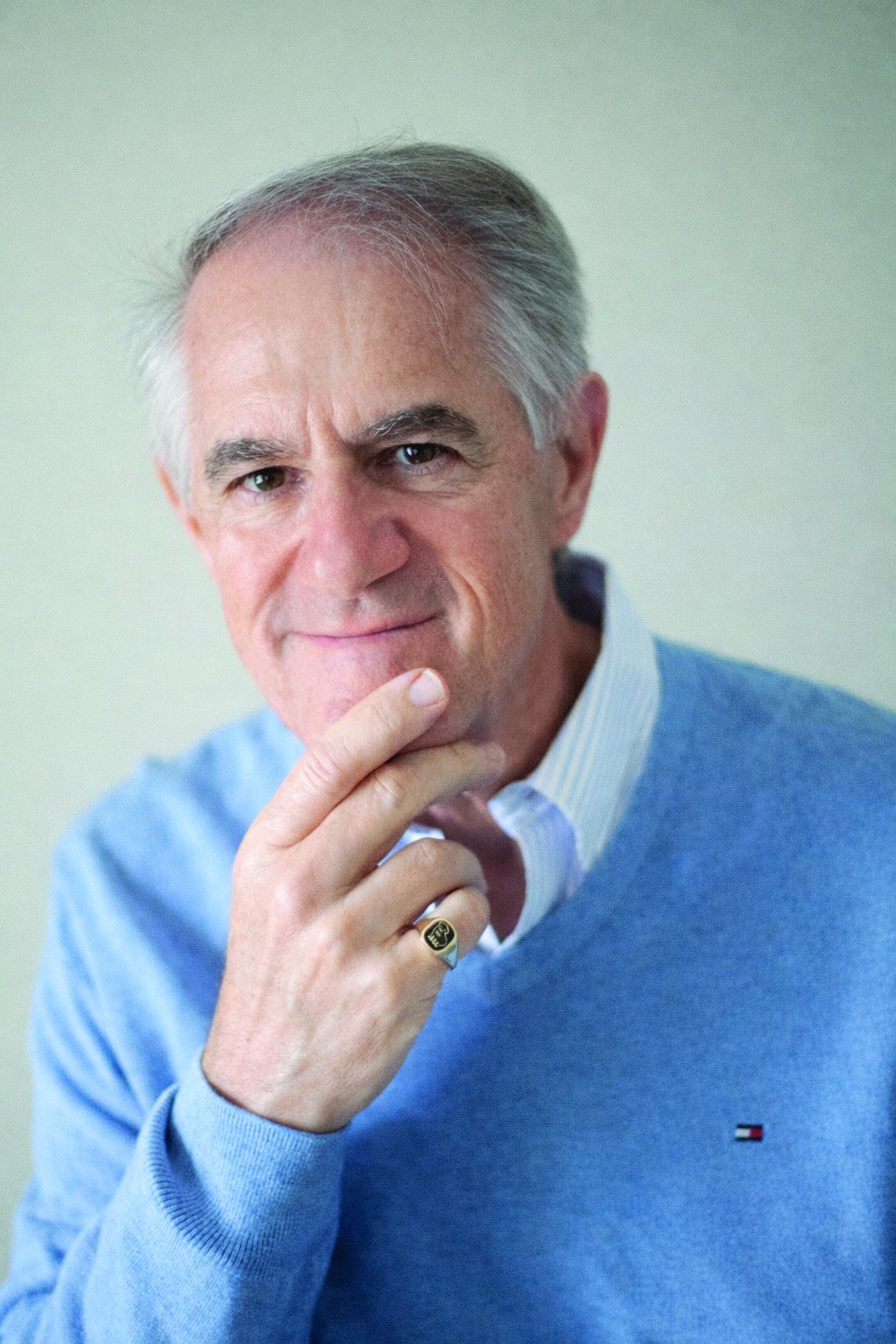
Dr. Thom LeBeau
★ Scribe Case Study
After 20 Years, Dr. Thom LeBeau Finally Wrote The Black Sheep Advantage
Dr. Thom LeBeau talked about a book for 20 years. With Scribe he finally wrote The Black Sheep Advantage, and calls the process cheaper than therapy.
📚 Books by Dr. Thom LeBeau

In this episode of Author Hour, Eric Jorgenson sits down with Dr. Thom LeBeau, a podiatrist and entrepreneur who spent 20 years talking about a book before he finally wrote The Black Sheep Advantage with Scribe. They talk about what finally got it done, what he learned about himself along the way, and his advice for anyone whose book is still stuck in their head.
Transcript
[0:02] Eric Jorgenson: Dr. Thom, author of The Black Sheep Advantage. Thank you so much for taking the time to share with us today.
[0:08] Dr. Thom LeBeau: Eric, thanks for inviting me. Really appreciate you being here and being able to share my little bit of story with you.
[0:16] Eric Jorgenson: Yeah. Before we get into the meat and potatoes of the book, can you share a little bit of your personal background? I know from your author bio that it's varied and interesting, so I want to pull your string on that.
[0:27] Dr. Thom LeBeau: Definitely varied. Definitely varied. Yeah, so kind of started out in a big family, six of seven kids, and ended up all my brothers. All my brothers were engineers, and I ended up going off in another direction. So yeah, it's a doctor and started out in engineering as well, followed on my brothers, and then ended up taking a left turn and ended up becoming a doctor and an entrepreneur along the way. So that's the professional side of things.
[1:04] Eric Jorgenson: And moved around a lot. I saw that you had origins in Michigan, as did I. So you started out way north and ended up way south. I didn't know you were a Michigan guy. I grew up outside Detroit, so a little less exotic than the far reaches of the Upper Peninsula. The Upper Peninsula. Exactly. Yeah. You got rid of the accent.
[1:24] Dr. Thom LeBeau: Well, no, I got rid of that as soon as I could. I still have family members who sound like they just walked off the soundstage of Fargo. Oh yeah, I have a couple of sisters who sound just like the star in that movie. So yeah, I have to go back and watch the movie now and listen to it, but that upper accent is very unique, for sure.
[1:48] Eric Jorgenson: So when did the tickle to write a book enter your life?
[1:54] Dr. Thom LeBeau: Interesting story. I just reconnected with a buddy of mine who lives in London, and he found his way into the book as part of my inspiration. But I reconnected with him a few years ago, and he said, so what are you up to? We were catching up. And I said, oh, I'm writing this book, and he said, oh, is that the book you were talking about in 2004? I'm like, yeah, I guess it was. So yeah, I apparently have been talking about this book for 20 years. But it was really, I just, a couple of years ago, I decided I was going to finally do something. And I heard of other people who were looking, you know, professionals who are wanting to write a book. And, you know, still being a practicing physician, it's pretty difficult to find time to do that. And I would start and I would stop. And so I finally found Scribe, and thank God you're here, because I can now say I'm a published author. You are a writer. I am not. I'm still not saying I'm a writer, but I will say I will proclaim myself being a published author with the help of Scribe.
[3:11] Eric Jorgenson: What holds you back from saying that you're a writer?
[3:14] Dr. Thom LeBeau: It's a good question. Maybe when I write another book, because I heard you on another podcast, and there was a conversation between you and this author. And he said, you know, I'm thinking about my next book already. And there was this conversation about once you've done it, now you know you can do it, you can do it again. And so now all of a sudden I have a second and a third book in my head and, you know, already doing outlines of a couple of ideas. But boy, that first one, I just kept struggling. I would write down ideas, I would think of stories I wanted to add, and I would just not organize. And I wasn't into a routine and seeing 250 patients a week, still hospital cases and all of that. So it just never happened. Anybody out there who's thinking about writing a book, having someone, you know, thinking about this today, if I do a morning walk and if I miss next Thursday, I'm going to disappoint me. But if I go for a walk with a friend and I have a meeting every, you know, every time we're going to go, I'm going to disappoint someone else. So once I had a team around me, I didn't want to disappoint them. So I was there and did the work. And every Friday afternoon was set aside for me to spend time. And it worked. It worked for me. So it forced me to do the work and show up and finally get the say on paper.
[4:52] Eric Jorgenson: Yeah. The accountability and just the camaraderie even sometimes can be a huge inflection point. How did you find your way to scribe? You sort of glossed over that, but you got this book you've been working on for 20 years. And then how did you how did you come to scribe and why did you pick us?
[5:12] Dr. Thom LeBeau: Yes. So I think it was, you know, I started looking and I knew there were companies out there that could help you and help you with the writing, help you with the editing, the organize, all of that, because I think one of the things that I really like about this whole process is I keep learning new things. I didn't know anything about publishing, you know, when when we got to the point where we're talking about what kind of paper and design of the you know, what goes on the inside jacket of the I was like, I have no idea. I've never done any of this. And I'm so excited that I have someone standing there with me helping me along the way. So yeah, I mean, that whole thing was was exciting. And really, it came down to I knew other professionals who had written books and I asked around and they're like, oh, yeah, just go to the Internet. And so I went to the Internet, of course, and I looked at a couple of different groups and scribe just after talking to the intro people. And then I think it was there was a online course, a weekend course that you guys had offered. I didn't actually do the course, but it was available online. I dug into a little bit of that and it I was there. I'm like, oh, this is it. This is what I need something to help me hold my hand along the way.
[6:37] Eric Jorgenson: So, yeah, I sometimes say our unofficial motto is we help busy people write books. And, you know, with your your caseload, your life, your, you know, being a hospitalist and seeing hundreds of patients and still trying to write a book, that is maybe no better example.
[6:56] Dr. Thom LeBeau: Yeah, exactly. And I if there's anybody out there that has my kind of crazy schedule and so on to write a book, it's possible you just have to get with the right team.
[7:07] Eric Jorgenson: Yeah. So let's talk about the book idea. I mean, I imagine it transformed a lot over, you know, decades of sort of thinking and putzing and shaping and molding. What was your initial idea? How did it change before it became the book you finally published?
[7:24] Dr. Thom LeBeau: Yeah. So my initial idea was when I was a kid, if the crowd was going in a direction, I was going in any other direction to that. And that was me. And as a young person, it was not very easy. You know, everybody wants to, you know, be part of the crowd. Everybody wants to fit in. Everybody wants to find their place. But I always felt like I don't know why those people are going in that direction. And so as a young person, it was pretty difficult. And I struggled even into young adulthood. Everybody's going this direction. Family's going this direction. All my brothers, engineers. I was like, man, I found myself in a really stinky wastewater treatment plant going, man, it stinks here. I don't want to be here. I should do something else. So it really was I was in my mid 30s. I was already a physician by then. And I had a self-made billionaire hobbled into my office. And asked me for my my medical help. I helped him with his problem. He gave me edification, a pat on the back and said. Keep doing what you're doing. Don't worry about everybody else. Don't worry about what they think. And that guy was Tom Monahan, the founder of Domino's Pizza. Oh, wow. So, you know, it it it really made a big difference in my life because, you know, if you can land the helicopter and in the outfield of of Tiger Stadium and have people give you grief about it and you not worry about it. It's it it was that story that really made me think, huh? All right. I guess make some waves. Keep going. Don't worry about everybody else. Do your do you, I guess.
[9:18] Eric Jorgenson: Yeah, well, it seems like one of those epiphanies that is almost folk wisdom. Like everybody knows that everybody kind of parrots it. But we also need to be reminded and encouraged to do it because it's not natural. It's it's hard and it does wear on you and it is tiring. But it also I agree that it's usually the right thing to do, usually the right advantage or a source of advantage, even if it's not necessarily the right, right thing to do. But those little moments of encouragement can go a long way. And some signposts as well, which I interpret is what you hope the book would give to your readers.
[9:56] Dr. Thom LeBeau: Yeah, the book is really it's a conversation starter. And it's been interesting, even though we just launched not long ago, I'm already getting input from places I did not expect. My niece is a counselor and she works with neurodivergent people. I had to look it up. You know, I'm hearing that word more and more now, but it's like she wants to use it in her patient population. Certainly not what I intended the book to be written for. And, you know, I thought business people, I thought entrepreneurs, I you know, I was in network marketing when I had was doing some of my thoughts about writing the book. So I thought those people might be interested, but I'm getting interest from all kinds of places and it's pretty exciting. So I just have to I think I've decided just let the universe come to me and tell me, OK, this is another place where your message could help somebody.
[11:07] Eric Jorgenson: Yeah, I think there's a lot of places there's an element in which everybody feels like. You know, we're a herd of people who feel like we're out of the herd, exactly in one aspect or another of our lives or at one time in another or another of our lives.
[11:23] Dr. Thom LeBeau: Yeah, I think I think at least one time in your life, there's been a time when you felt like you were going the wrong direction and sometimes you just need a little encouragement and know that what you're doing is probably the right thing, if you if it feels right. I mean, in my professional career, so I'm a podiatrist by training. I do lower extremity, but engineering background. So in my office, patient comes in and they either have plumbing, electrical or mechanical problems. That's the way I hear them. And of course, I set my office up that way. I'm I have a whole department where I have a chiropractor on staff and they do all the electrical stuff. I do vein work in another department. That's all plumbing stuff. And so for me, it makes sense to set up an office that way because all of those things are connected. I'm the only podiatrist in the state who has a chiropractor on my staff. Yeah, but it makes sense to me. And of course, I get a lot of people who shake their head and they wonder, why are you doing that? And I'm like, because it makes sense to me and the patients like it and it makes sense to them. So just one little example of why I do what I do, even though the conventional wisdom might not be that way.
[12:50] Eric Jorgenson: This is maybe a little esoteric, but I think difference is good for its own sake. You know, if every podiatrist in the world practiced the exact same way, we'd have no one experimenting with, you know, a new and better way. We'd have nobody who is capable of solving an unsolvable problem for, you know, a unique or new case or a new condition. It's I think just, you know, through through God's eyes, looking at a civilization, having a bunch of people like a flock of black sheep trying a whole bunch of different things is going to result in a lot more new knowledge and new solutions than, you know, a sea of oneness of everybody just kind of conforming and following each other into the best practice or whatever the sort of, you know, party line is. And so I think that's why I'm so much interested in the industry.
[13:35] Dr. Thom LeBeau: You know, so back to my career, one of the things that podiatrists deal with is open wounds. And what's, you know, most people would think, well, diabetics have open wounds and that's why I deal with them. Well, the biggest. So about two-thirds of all wounds in the lower extremity are actually caused by vein problems. Now, the interesting part is, wound care centers don't treat veins, and vein centers don't treat wounds. But I treat both because one goes hand-in-hand with the other. If I can treat the vein problem, the wound gets better. So why not do that? It just doesn't make any sense to me. I'm, in my own way, quietly, desperately trying to tell people, hey, why don't we put these two together? And so it'll be interesting if I can get that word out, because I've already had some interest from that part of my world, and saying, no, we should do things, because medicine in general is kind of struggling right now. Corporations are coming in, and private equity is coming in, and kind of consolidating medicine now, and taking it in a direction that some of us don't feel very comfortable with. But, you know, it is what it is.
[15:03] Eric Jorgenson: Is that on your list of second, third book ideas? It probably is.
[15:08] Dr. Thom LeBeau: Yeah. Yeah. Yeah. Well, I also have an idea of, I kind of thought about how long I've been doing this, 35, 36 years now. So I sat down and I calculated, rough calculation, how many patients have I seen in that timeframe, and it's about 350,000. You know, when I say that out loud, it just makes me tired. So, but I think after I calculated that number, I sat back and I thought, well, what have I learned from that? And it's really interesting. So I have a whole book idea about that, and a quote from my mother, which goes something like, if you live long enough, stuff is gonna happen to you. She used a different word, but, you know, I cleaned it up for your show. But yeah, I mean, people are not prepared for what's gonna happen to them physically. You know, they might gather their funds and decide, okay, I have enough money to retire, and I'm gonna go play golf, or I'm gonna do something like that. But I don't think they're really prepared for the eventual decline of their physical body and how little they know about what's gonna happen to them. And I see it every day, so. So anyway, that's, yeah, another book idea.
[16:37] Eric Jorgenson: Yeah, I think my mom's is, you know, aging isn't for the faint of heart, something along those lines. Something like that, yeah.
[16:45] Dr. Thom LeBeau: And there's a whole bunch of those sayings. You could probably do a whole book just on the sayings of getting old, but, you know, I don't wanna bore anyone or make them, you know, depressed.
[16:56] Eric Jorgenson: No, we're gonna swing the pendulum the other way, actually. I'm gonna ask about your happiest moment, your highest moment in the writing and publication process. What's been your fondest memory?
[17:07] Dr. Thom LeBeau: Well, I, you know, what's interesting is, when I, when we finished the book and it, I actually had it in my hand, I thought that was gonna be the high point. And then I realized, oh man, now the work starts. Now I have to get the word out there and, you know, get out on podcasts and, you know, get out of my own way and start spreading the word. So, you know, that was both a high point and a, oh no, now more work. You know, what was really interesting is that I, and I've said this multiple times to friends, that writing a book, and I mentioned, oh, I work with Scribe, and, oh, well, how much did that cost? And I said, well, it was cheaper than therapy. And I learned a lot about myself. Yeah. So, that part was really exciting because, like, I realized that, you know, many people become doctors to help people. I didn't come to that at the beginning. I realized that I became a doctor to be seen. Six of seven kids, everybody's an engineer. I, so it took a lot to figure that out. And I learned that during the process. So, now I realized I get paid twice. I get paid to take care of people and I get the psychological income of, you know, helping someone. So, that part didn't come right away. It came later and it was during writing the book I realized that, so.
[18:52] Eric Jorgenson: Wow, what a gift, yeah. Yeah, it really was. Yeah, really was. Well, going back to your first half of that answer, I'm curious how you have sort of deployed the book in your life, in your practice. Is it a part of, you know, how you build a relationship with patients or is it kind of separate from your practice?
[19:13] Dr. Thom LeBeau: Well, I think my personality certainly comes into play with my practice. And people know that they can come and talk to me. I'm, I think I'm pretty well known in my patient population that I'm the explainer-in-chief. You know, my little example of using plumbing and electrical, they love that stuff because, you know, the body is really complex. And if you've not trained in the industry, you're kind of lost as to how it all works. It's just, I mean, I've studied it and I feel it's magic. But if you think about the heart is a pump and arteries are pipes, and if they get clogged, it's not gonna work. Or if the pump fails, it's not gonna work. So I like to use those kind of analogies. And so some of the stories in the book are just me telling stories. And I use that in my practice all day long. Just, I love to teach. And so that's kind of what I'm looking forward to as I move forward with getting the book out in the world is to see how I can turn on some lights for people who, you know, are just kind of floundering and looking to figure out their way in the world because let's figure, you know, that's what it is for everyone. You know, we're all here. It's a journey trying to figure out our path and trying to figure out if our path is the right path. Of course, your path is the path. It doesn't matter if it's the right path or the wrong path, it's the path. So, you know, for me, embracing who I was was a huge turning point in my life. So now I don't worry about who's agreeing with me or disagreeing with me. Well, except for me, maybe my wife. I'm always looking for her acceptance and agreement, but, you know, she's up there in the picture up and over my shoulder. But yeah, she was a white sheep who had black sheep tendencies. And it was really, it has been really fun to watch her blossom and allow herself to let her black sheep tendencies come out, so.
[21:39] Eric Jorgenson: Yeah, sounds like you've been a bad or a good influence, depending on, you know, what frame you're in.
[21:44] Dr. Thom LeBeau: I'd like to think good. She's still sticking around. So we, and we, she's really been supportive. That's been great. Like I said, it was cheaper than therapy. So she says I keep growing and learning and becoming a better person. So that's what it's all about.
[22:02] Eric Jorgenson: Yeah, and you know, there's very few books are born into the world without a muse or a supportive spouse. So a lot of, many dedications or, you know, foregone evenings that have to go into getting these books out into the world. So it's very nice to see. Exactly, exactly, yeah. Yeah. If we just launched this book, so let's project out five years into the future. What do you hope is gonna happen? What do you hope will transpire or you'll hear in the next five years to make this book really feel worth all the effort that went into it?
[22:37] Dr. Thom LeBeau: Yes, I think this book is going to be a first step in my next chapter in my life. What I'm starting to call the third third of my life. You know, I've been a physician for 36 years. I'm still, I'm in my sixties and I've got about 32 months before I say, okay, I'm done seeing patients every day. So I kind of have a, just short of a three year runway. And now that with the help of Scribe, I have, it's opened my eyes to all the things that I really wanna do. So being able to write additional books, more public speaking. When I was working in network marketing, I was speaking to groups weekly, three, four or 500 people a week. And as large as 3,500, it was the largest group that I ever spoke in front of. And what a buzz just to get in front of people and take just one single message and get it across. And to see people get it and see the lights turn on for them. I think that would be, that's where I'm going. I don't know the path to get there. I think books and the ideas that I have, I think are an avenue for that. So I'm on another podcast next week. And so my goal is to get on a couple of podcasts a month while I'm still seeing patients every day. And so hopefully that gets us the word out and we'll see where all of that goes. And I have a complimentary workbook that I have been working on. So that's gonna be out soon, just about have that finished. So that's kind of a workbook exercises, everyday exercises to help people go through kind of the ideas in the book and see how they can incorporate it in their lives. I have an online course of me speaking or teaching the book. So that's in the works as well. So in my spare time, when I'm seeing 250 patients a week. So those are my ideas. And I think podcasts are probably the best way to get to my target audiences. So that's kind of my game plan.
[25:22] Eric Jorgenson: Love it. Yeah, and that's fun. So you've got your hands full and you're just lining up things to keep your hands full when your hands are no longer overflowing. Yeah, that's right.
[25:30] Dr. Thom LeBeau: I'm already, I don't think I can sit still. No. You know, I have friends who golf a couple times a week and they play pickleball and do all that. And that's great. I love to be active, but I have to have, I have to be contributing something.
[25:49] Eric Jorgenson: Yeah.
[25:49] Dr. Thom LeBeau: You know, I've been a caregiver my whole career and I need to help people in one way or another. And I think it's going to be, that's going to be my next chapter. Continue to help people, but in a different way that's less strenuous on my body of, you know, seeing patients every day. Yeah, love it.
[26:11] Eric Jorgenson: I think I've heard this referred to as like a tribal elder phase of, you know, giving back, teaching, mentoring, you know, encouragement, leadership. And it's a, you know, it's an important role. And I feel like some people just retire and never talk about everything that they learned. Exactly. Don't give back to, you know, their industry or, you know, kind of pay it forward to the people. I mean, everything that we all know, we learned from somebody who was a little further up the path than us, which is why, you know, I ask every author on here and you are an author, whether you like it or not. Now you've got a book out in the world. I don't care whether your relationship with that label is, I'm gonna use it for you.
[26:52] Dr. Thom LeBeau: I'm working on it.
[26:53] Eric Jorgenson: Yeah, what advice do you have for somebody who is where you were maybe, you know, three or four years ago, who's saying, I got it, I got it. I've been talking about this book for 10 years and, but I don't know what next step to take. What would you say if they were sitting across the table from you?
[27:10] Dr. Thom LeBeau: Well, I'll answer that question just a second, but I have this thought in my head that I wanna share with you. I just heard this recently and it was these three phases of our life, learn, earn and return. Once you learn something, learn your craft and then you learn how to earn from that. So we go to college, we learn things and then we have this phase of our life where we're earning and earning and earning and taking care of ourselves and our family and all of those. And then I'm getting to the time where it's time to return what I've learned. And so that's kind of where I am. Depending on where you are in your life's journey, I don't think there's a better way to mark your path or return the knowledge that you have, have accumulated than writing a book. And it's just been a great journey for me. And now I feel like a beginner. And what a great time in life to be feeling like a beginner is learning new things. So for me, it's been amazing. My wife is like, oh, you're like a little kid because you got a new shiny toy. You're an author now. And I'm like, yeah, and it is. So that part I think is amazing. So just, I don't wanna quote Nike, but just do it. You know, it just, it seems really difficult and a huge mountain to climb. But in working with Scribe, it was, what I loved about it was, it was not such an insurmountable thing. It was a step-by-step thing. And I just, I really enjoyed the way you guys broke it down into simple steps, simple phases. And it made it doable. And for anybody who's thinking they can't do it, just start. And I think it'll be one of the most rewarding things you ever do.
[29:24] Eric Jorgenson: I love it. And that's a good metaphor. Nobody goes and climbs a mountain without a guide, a Sherpa, a map, something to help them. Scribe the Sherpa. Break it down. Thank you so much, Dr. Thom LeBeau. Where would people find you? Follow your other podcasts?
[29:41] Dr. Thom LeBeau: Yes, our website is drthom.org. That's D-R-T-H-O-M.org. And we've got, it's a place to find us and follow us. And you know, all the usual places you can find my book, even internationally. Fantastic. That was exciting. My mother is Polish and I actually found the Amazon Polish website. So there was my book on the Polish Amazon website. Nobody's bought a book from there, but it was pretty exciting to see.
[30:15] Eric Jorgenson: It is crazy the reach that a book can have through all these languages. And you know, the world's a big place. And if you haven't put yourself out there in a way that the whole world can sort of get a glimpse into your head, you might be surprised at what happens. The book, again, is The Black Sheep Advantage. And thank you again for taking the time to write it, to put it out into the world and for sharing a little bit more about yourself today.
[30:39] Dr. Thom LeBeau: Thanks, Art. Keep doing what you guys are doing. It's a great service for all of us who need that little bit of help. We appreciate you very much.
Want to Write Your Own Book?
Scribe has helped over 2,000 authors turn their expertise into published books.
Schedule a Free Consult