The Listening Advisor: John Gatewood on Why Human Connection Beats Algorithms
✨ Episode Summary
After 45 years in wealth management, including 38 at Northwestern Mutual and growing a firm from $300 million to almost $2 billion in assets under management, John Gatewood wrote The Listening Advisor to teach the skill he says advisor training ignores. As AI commoditizes knowledge, his argument is that an advisor’s value is the human connection: listening so clients feel heard, and speaking so clearly they are ready to act.
In this episode of Author Hour, John tells host Lex Statzer what his first mentor taught him about emotional decisions, why three words, “tell me more,” open up the conversation clients avoid, and why a study of 12,000 advisor meetings found advisors doing most of the talking. He also shares the editing advice from Scribe that turned his instructional first draft into a book readers call readable.
“Failure is rarely a knowledge problem. It is almost always a relational communication problem.”
⭐ Top Moments
- Nobody teaches the human part. John’s case for the book: “So when you look out there and you look at advisor training, it’s all about portfolio construction, financial planning strategies, technology, tax strategies, compliance. Nobody is teaching the human part.”
- From textbook to story. The Scribe edit that changed the book: “I had all the lessons, but then he [my editor] helped me to think about how I can write it more like a novel, more like a story so that it’s not just a textbook.”
- Advisors talk 84% of the time. The blind spot the book is built to fix: “The advisors spoke much more than the clients, 84% of the time. However, 87% of the advisors felt the opposite. So there’s this perception gap.”
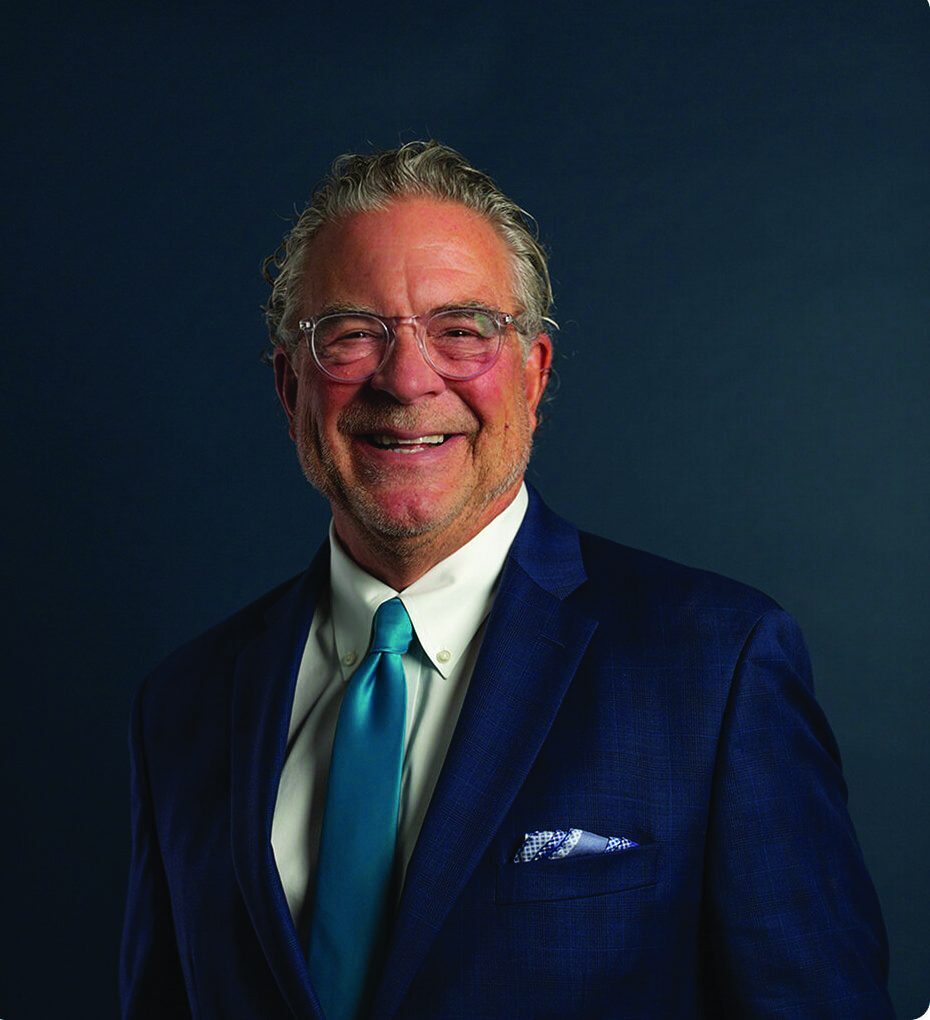
John Gatewood
John Gatewood, CFP®, CLU®, is the founder of Gatewood Wealth Solutions. He has been a top ten representative at LPL Financial and was included on Barron's list of the leading 1,200 financial advisors in the country. John has also been honored as a Forum representative for his outstanding performance at Northwestern Mutual. A frequent speaker at industry conferences, John is the son of Robert P. Gatewood, CLU®, inventor of the survivorship life insurance policy. He is the proud father of two children. In 2015, John lost his wife, Annie, after her courageous battle with ALS. He is now blessed with his life partner, Judy.
★ Scribe Case Study
John Gatewood Wrote The Listening Advisor to Teach the Skill Advisor Training Leaves Out
After 45 years in wealth management and growing a firm to almost $2 billion, John Gatewood wrote The Listening Advisor with Scribe to teach advisors to listen.
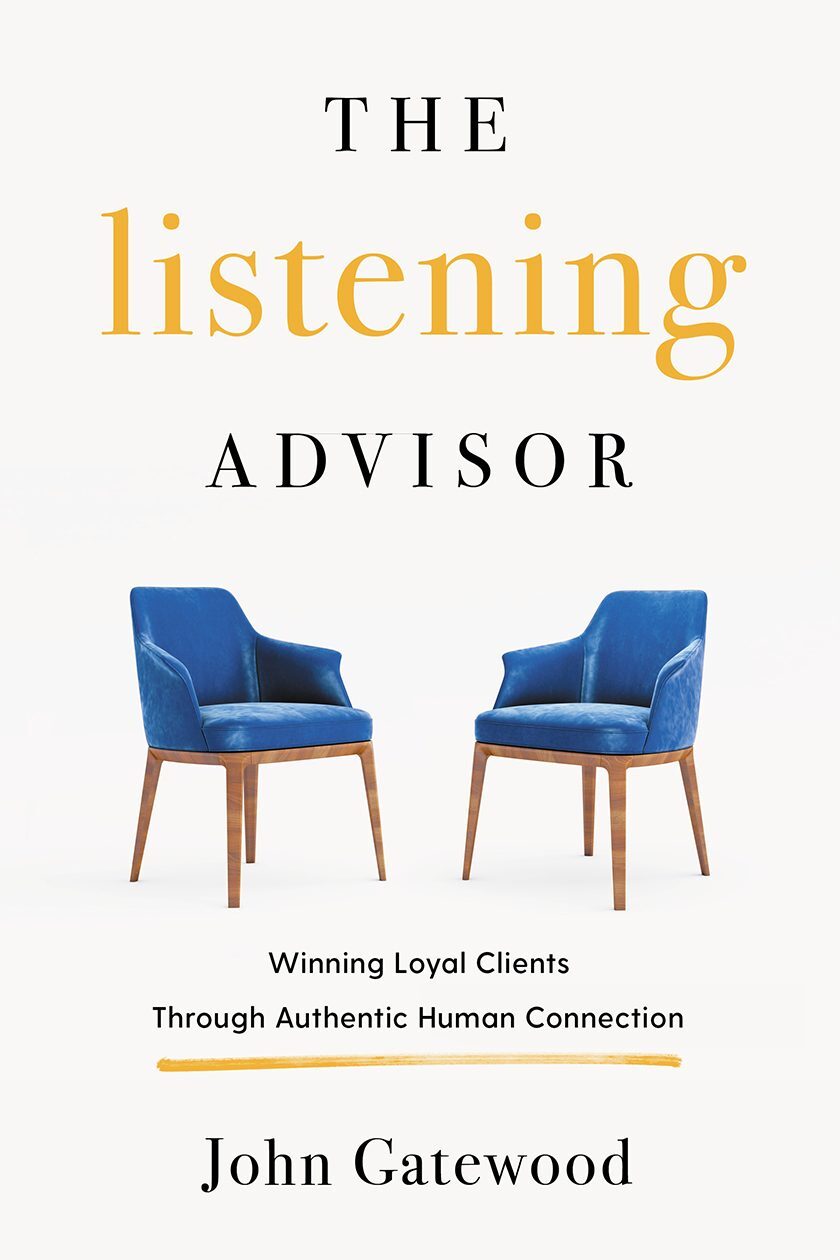
📚 Books by John Gatewood
Transcript
Lex Statzer: Welcome to Author Hour. Today, I am here with author John Gatewood, who wrote The Listening Advisor, Winning Loyal Clients Through Authentic Human Connection. It's out now. John, welcome to Author Hour.
John Gatewood: Thanks for having me, Lex.
Lex Statzer: So today, we're going to talk about the skill that decades and decades in wealth management taught you was the rarest of them all really, and why you think it's the one that no algorithm will ever take. So I want to begin in the prologue, actually. So it opens with a line that's kind of central to a lot of the book. So you say, my father was one of the greatest inventors in the history of life insurance. I am not an inventor. I am a listener. So your dad, he kind of solved the problem of explanation, and you set out to solve the problem of connection. So when did you realize that those were two very different problems, and that this connection was kind of going to be your life's work?
John Gatewood: Well, when I worked with my dad during my, between my freshman and sophomore years of college, and he had a very successful practice in Washington, D.C., where I'm from, but he had a boardroom where he had one wall painted black, then he'd bring in the high net family, the attorney, the accountant, the stockbroker, the banker. And what he would do is whatever the concept was that they were going to describe, he would draw it on the board. So it was clear and simple, understandable, and it was compelling to the client to move forward on. Then after he finished the drawing, he pulled out his Polaroid camera, took a snapshot of that and gave a copy to each of the people in the room. And that was the summary of the meeting. And then what he would do is he had a team of professionals that would follow up with each of the advisors, and they would put together a quarterly report of all the things that were supposed to be accomplished from that meeting. And so he was really a precursor to what today is called the family office. But he was a master at communicating complex topics simply in a way that people could understand and it was actionable. Now, when I entered the business, I wanted to be a similar version of my dad in that I wanted to be the central advisor to the mass affluent. So I wanted to help people reach financial independence, but have a plan to do it. So I started in 1981, which is a long time ago. And I don't know if you're aware, but back then, you know what interest rates were?
Lex Statzer: No idea.
John Gatewood: 18%. Imagine trying to buy a home and your mortgage interest rate is 17%.
Lex Statzer: Right.
John Gatewood: And people are complaining about 7% today. Now imagine going to a financial service world in that environment. Nobody's doing anything. They're all worried that they're going to lose their jobs. I mean, we were in the worst recession since the Great Depression. But anyway, what I wanted to do was to see what was it that distinguished the elite advisors that had thriving practices from everybody else. And what I observed was that they had a unique way to create an authentic connection with their clients where they felt truly heard and understood and that they spoke so clearly and concisely in a way where clients said, wow, let's do it. Not just let me think about it. That authentic connection really was a result of two things. One is listening clearly and then speaking clearly. So imagine that you were an advisor and the client says, wow, Lex knows me so well. She knows exactly how I feel. She knows exactly what I need. It's like she is in my own shoes. Not only that, Lex is so clear when she speaks, it just makes total sense to go ahead and move forward. And I'm confident in moving forward. Well, how does that happen? It doesn't happen just because we have a knack. Yes, you'll have some people that do have a natural knack. But that's what I thought in the beginning. Well, you either had it or you didn't have it. Or maybe they were given a book by somebody or they bought a book or they had great relationships. No, I discovered that these are skills that are learnable, teachable, and measurable. So I spent my career the last 45 years learning how to be a better communicator, going to conferences, getting coaching, reading books, and finding ways that I could be a better listener, how I could ask better questions, get to the depth of the matter, what really matters to the person, learn how to uncover that elephant in the room that nobody wants to talk about, that once they do, they've done it in a way that because now the client feels so confident that it's okay to talk about the elephant in the room. You know what's interesting today? People will type stuff into AI, things that are so personal that they would never tell anybody else. Why do they do that? Because there's no judgment. They won't know and go and tell anybody. So how can we learn to communicate and present ourselves in a way where clients feel totally confident and free, judgment-free of being able to say, hey, you know, I made this big financial decision. I took $50,000 out of my 401k because I wanted to help my son whose business was failing and we didn't want to have the business fail. Yet we know it's advisors that, oh my gosh, they made that decision and that's going to impact their ability to retire when they want. Well, we don't want to judge. How can we allow the clients to be able to bring up those things? So that's what really drove me to write the book because what I wanted to do is to memorialize all the things that I learned that made me successful. I was very fortunate. You know, I was a top at Northwestern Mutual for 38 years. I left there and became top 10 at LPL Financial. I was a Barron's top 1200 advisor. I took a firm when I left at 300 million in assets under management, almost 2 billion in just a couple of years. And then I sold it. And now this is my mission. I want to help advisors learn to communicate better in a way where they're creating an authentic human relationship with their clients.
Lex Statzer: So, I mean, you've taken this technique, this skill that you've honed for your entire career and you made it into a book. What made now the moment to turn that into a book? And was there some kind of event that made you realize this is not only a message for the people I serve, but just for the general public?
John Gatewood: That's a great question because it is absolutely the time. So when you look out there and you look at advisor training, it's all about portfolio construction, financial planning strategies, technology, tax strategies, compliance. Nobody is teaching the human part. How do you speak and communicate with a client? How do you present? How do you ask questions? How do you get them to take action on something? Nobody does that. So here's the statistics. There are more advisors retiring than are entering the business. So that's a problem. 40% of advisors are going to retire in the next 10 years, yet only 7% are under age 35. Imagine that. And you add on top of that, 72% of new advisors fail in the first few years. Failure is rarely a knowledge problem. It is almost always a relational communication problem. Same thing with advisors. You have many advisors out there who have plateaued. They can't seem to get to the next phase of growth in their business. And it's not that they're bad advisors, they're good advisors, but they have never learned the skills that matter. And why is it important today? Number one, because they aren't training yet. Secondly, because AI is going to commoditize knowledge. Everything that people want to learn, all the solutions that they want to find out, can be found through AI. AI is going to process things much faster, much clearer. Now the advisor still has to have the knowledge because the advisor is the one that is advising. They're the one that are saying, hey, this is what you should do. AI is simply providing information. So that's why the timing of this is right on. And so that's what I'm trying to do. I've started this company right now. I'm essentially getting the word out. But in 2027, what I want to do is have speaking engagements where we have keynote and 45-minute speaking. That will lead to workshops where people can actually get the skills. And then that will lead to coaching where people who want the skills but really want to master them will get help. We're also going build a certification program so that people can go through and become certified as a listening advisor and then eventually have an avatar that will be a coach 24-7, 365 that an advisor can interact with to get help on the coaching side. So that's where I am right now. I don't know how I'll be remembered. I know my dad was very famous. I'm not looking for fame. I just want to make an impact on the industry.
Lex Statzer: Do you think that that gap in the industry of lacking that human connection was what drove you to study it and perfect it? Or do you think that you were already doing that and it just happened to align with this isn't something that we're seeing enough of from advisors?
John Gatewood: Yes. So I really did it just because I was trying to memorialize everything that I've learned because since I sold the business, I've been working part-time as the Director of Advisor Development. That's the D-A-D. I'm the dad. I'm the old guy. So I wanted to institutionalize everything for the firm so that whoever my successor would be would be able to walk in and then train on that framework. But as I got into it, I thought, well, why don't I just do this for the whole industry? I mean, there's a lot that I've learned. I'd love to train people so they can be better at communicating, where they can work with clients so they feel truly heard and understood and ready to act. That's my mission. So it wasn't that I was planning on it. It just kind of evolved. And then the fact that today is an even more important time for this just happened to be more coincidence.
Lex Statzer: Yeah.
John Gatewood: I mean, that the stars aligned on those two things.
Lex Statzer: No, it works out perfectly. Like you mentioned with A.I. on the rise, that is integral to how this industry actually is getting shaped. And I think that human connection is more relevant than ever with this kind of technological development. So I did want to go back in time a little bit before we get too into the book. So you grew up as one of 13 kids in D.C. and you would walk to school to save on bus fare, collecting tips, yet collecting tips on your route. And you've said that that route taught you that how you treat people determines how they treat you. How much of the listening advisor was was forming during that time?
John Gatewood: Well, that's a great question. So there's actually two things. So I my parents would give us a dollar each week to go on the public bus to school. So it was basically a dime each way. But what I would do is walk to school, which is about an hour walk. So at the end of the week, I'd have a dollar in my pocket. My feet might have been sore, but my pocket had some money.
Lex Statzer: Yeah.
John Gatewood: And then I delivered the Washington Post. And when I delivered the post, I would have to go collect for the payment for the for the subscription. And what I learned was that when you treat people well, you know, you talk about them, you get to know the people that that you're that are on your route. You find out about their kids, their lives. You thank them for being customers of the Washington Post that I would get tips. And the reason that I was driven to go and collect the money was because that's how I got paid. Yeah, I got paid through the tips. And then I caddied at Congressional Country Club. And that was another thing, you know, so you get to know the players, the better you treated them, then the tips were bigger. So what I learned was that success is going to come from how you treat people. And I think I translate to our our industry. People come and work with us and they stay with us because of how we make them feel. If all we're doing is every time we talk to them, we're telling them things, we're telling how smart we are, all these strategies that we've learned. Here's all these solutions that you could employ. That's not a relationship. And I think that even today, relationships are even more important. Look, we are all time starved. I mean, even finding the time for a client to come in today is hard because they're all time starved. And, you know, they have all this technology and noise around them. So just be able to come in and have a relationship, to have a period of silence where they can actually think, you know, this is this is something that people value. Another thing that they value is availability. So not only that we're human, but that we're available to them. We're present in the meeting, not just they're presenting. You can be there presenting, but not really be present. You know, these are just little things. By the way, the book, it's not one thing that's a silver bullet. It's all the different things that are in there. How do I ask the questions? What are the questions I should be asking? How do I know if I'm getting to the core? How do I know if what I heard is the actual thing? You know, am I answering the right question or am I answering a question that I thought was the question, but it's actually different than what the client said?
Lex Statzer: Yeah.
John Gatewood: You know, when I'm going to explain something, how can I explain it clearly, concisely and in a way where the client says, wow, let's do it. Let me think about it.
Lex Statzer: Yeah. I mean, what you're referencing now and what you talk about in the book is this shift. You even call it the shift, right? It's from being interesting to being interested. I'm sure there's a lot of advisors out there who have built a whole career on being the smartest, most impressive person in the room. So this idea of removing yourself in that way from the equation almost feels kind of like a threat to their identity a little bit. So what does that shift cost a person? And how do you know when someone's really made that shift?
John Gatewood: Yeah, it's a great question. And the shift is real. So let's go back in time to 1981 when I started. People came to us because they wanted information and solutions, right? You didn't have the internet when I started. So, I mean, it was just barely getting started in terms of programming, but you didn't have this connectivity the way that we have now. So the value that we provided was the information that we gave. The value we provided was the solutions that we gave, okay? And like my dad always told me that there's no competition for excellence. If you're excellent at what you do, you won't have competition. And I added to that saying, but excellence is not a destination, it's a journey. You have to be constantly finding ways to improve. Well, your knowledge is one of those things. However, that is what's expected, right? I mean, they want you to have the answers. They want you to have the knowledge and the solutions, but they can get it on their own now. So what's the difference? What's the value we're going to provide? The value is our ability to create that authentic human connection, which wins clients who refer, advocate, and never leave. That's what that's all about. And I've heard advisors say, well, I don't want to be a therapist. Well, the reality is that a lot of times we are therapists. Families go through hard times. They have issues that arise. They have the son who can't get a job, he's on drugs, and those things are hard to talk about. But the reality is that the money is not there for money. The money that they have is for the things that they value in life. And we have to understand what the life values are. So can I tell you a story about my first mentor in the business? And this may shed some light on why this is so important, especially the listening part.
Lex Statzer: Yeah, absolutely.
John Gatewood: One day he sat me down and he said, John, I want you to learn this important lesson. The decision to buy life insurance someday is a logical decision. Everybody agrees. I should probably buy life insurance someday.
Lex Statzer: It's a good idea.
John Gatewood: But the decision to buy life insurance today is an emotional decision and emotions are caught, not taught. So what does that mean? Information alone doesn't motivate people to action. And you know how we know that? Gyms are full in January and empty by March.
Lex Statzer: Yeah.
John Gatewood: Look at how much information there is on physical fitness and nutrition, yet we're still in a nation where we have people that have horrible nutrition and people that don't work out and aren't physically fit. So it's not the information that motivates. It's the emotions. So it's like, imagine a guy and keep telling, you know, you go work out, go work out and he says, yeah, I just don't have time. All of a sudden he has a heart attack. He goes to the doctor. He says, you got to go watch your diet and start working out. But actually, you know, he's peddling like a madman on the elliptical, right? Because he wants to be, he doesn't want to die. Well, the emotions are what drive decisions. And what that means from a listening standpoint is we have to get below the surface level information that clients are telling us about their goals. And I want to retire at when I'm 65, want to have $10,000 a month of income after tax. I want to be able to have a vacation home in Southwest Florida. I want to be able to travel to Europe. So you can go ahead and quantify all those numbers. You can create a financial plan, but those are just numbers and information. What's driving that. Okay. Why do you want to retire at 65? Why what's, what's behind that number of the $10,000 a month? Well, you start to dig, you find out, well, you know, the wife's parents retired and didn't have enough money for retirement. And they had to go rely on their parents. And they said they'd never want to be in that position again. Well, now you have something that really matters. Here's the reason why you need to start saving this amount today and start investing in this way, because you want to make sure that you're not in the same situation that your parents were say it's not the $10,000 a month. It's not the house, the vacation home. It's not the trips. It's what's driving it is they don't want to be in that same situation that their parents were in. That's very emotional. So how do we uncover these emotional core values that people are thinking about? Those are, these are all just tools that I've trained and I write about in the book to see how can we get to the core so we can help people take action on the things that we know are in their best interest.
Lex Statzer: It's really, it's just like you say in the book, great questions beat great answers. It's about uncovering, just as you're saying. And I think another part of this that you also talk aloud about in the book is not only asking great questions, but receiving the answers to those questions without judgment. And you even make a neurological argument that when a client feels judged or rushed, they literally can't process good advice, but when they feel heard, they can think more clearly. So there's this connection that you call the biological precondition for the real conversation. Why does that reframing matter so much in this industry?
John Gatewood: Well, isn't that interesting though? So I'm just talking about communication skills, but when you look at the neuroscience, there's an actual physical reason why the skills matter. Because as you say, when people feel judged, then they, their brains start going to the fight or flight part of their brain, the amygdala. And what that does is that blocks clear thinking.
Lex Statzer: Yeah. They shut down.
John Gatewood: They shut down. Right. That's there. There's the trust hormone that gets suppressed. Okay. So that's why even from a biological standpoint, knowing how to communicate in a way where people do feel unjudged safe. I know people don't like that word safe sometimes, but that's the truth. Right. And if they don't feel that they can safely say something without being judged, then they're going to have this neurological biological reaction that's actually going to prevent them from being able to listen and process information the way that they would normally do if they were in an unjudged safe type of environment.
Lex Statzer: Yeah. I mean, that defense mechanism comes up where all of a sudden you have to cover up for something. It feels like you're under attack, that fight or flight, just as you're saying. I mean, it's so interesting. I think we've all been on the other side of that, where we're in a situation where we feel judged and looking back. Yeah, absolutely. There was a part of me that shut down. It's so interesting to know that that is biological. That wasn't just an emotional response. That was a physiological response.
John Gatewood: Absolutely.
Lex Statzer: So a big chunk of this book, and you mentioned it earlier as well, is naming the elephant, the stuff that clients don't want to say out loud. And as we're doing this work to uncover the emotional side, how often is the thing a client says the problem is not actually the problem? And how do you get through that elephant? How do you get to that core of what they're not saying?
John Gatewood: Yeah. So, yeah, I talk about the elephant in the room or what I would call, in my words, the unmentionable thing. It's the one thing that they should be talking about, but they don't want to talk about it. I mean, have you ever been in a conversation where you know there's something on the person's mind, but they just don't want to say it?
Lex Statzer: Yeah, you can feel it.
John Gatewood: Hey, you know, you okay? Yeah, I'm fine.
Lex Statzer: Yeah. Yeah.
John Gatewood: You know, there's something there. Well, you can sense that oftentimes when you're in a client conversation. Okay. When you sense that moment that there must be, or maybe something on their mind that they're not really saying, how do I then get that out? Well, there's various ways. One way would be, I would just say, hey Lex, you know, it seems like there might be something else that's on your mind that's bothering you or concerning you about your situation. Can you tell me more about that? Other times it may be that I think I know what it is. You know, let's say I'm talking to a couple and maybe I think that they're really not on the same page in terms of how they want their money distributed when they pass away or something like that. And I'll just say, hey, you know, it seems like maybe you two are not on the same page as to how you want things distributed when you pass away. Is that, you know, am I hearing that correctly or feeling that correctly or is there something else? Or whenever they say, hey, yeah, you know, we're not sure what we want to do with our money when we pass away. Use three simple words. Tell me more. Tell me more. Help me understand. Because when they say we're not sure we want it, we know how to, how we want our estate divided. That's just a surface level answer. So those three words are so simple yet so profound in communication. How many times you've been in a conversation where somebody says something and then you just go to the next thing.
Lex Statzer: Yeah.
John Gatewood: Yet if they say, tell me more, well, well, let's see what else can I keep diving down until I find, you know, all the different things that are important to them with regards to that particular matter.
Lex Statzer: Yeah. That also speaks to the power of silence and space of tell me more opening that door further for them and then just leaving it open and letting them walk through it how they want to walk through it. Right.
John Gatewood: That's a great point. You know, the other thing that leads to is silence.
Lex Statzer: Yeah.
John Gatewood: Have you ever been in a situation where there's like this silent pause between you and whoever else you're talking to and then it starts to get uncomfortable?
Lex Statzer: Yep. I'm horrible with them.
John Gatewood: And then what do we do?
Lex Statzer: Fill it.
John Gatewood: We rescue the silence, right? We start speaking. We ask a question and they're thinking, oh my God, they're, they're not saying it's also, you start talking to him.
Lex Statzer: Just ramble. Yeah.
John Gatewood: Right. Well, think about how important the silence is. How much time do people have to actually process information and think they have so much noise in their lives. To me, silence is a gift. It's a way of showing respect. But you ask a question, what are they doing? They're thinking, let them think, give them the, give them the time and space to think. Yeah. But what do we do? We go on, we rescue the silence. We start talking. Well, what does that do? That interrupts their thinking. And then it also redirects their thinking because then it's, they start focused on what you just said rather than what they were thinking about. So yeah, I mean, no, I, there's, there's no hard and fast rule. These are skills, right? So the book gives the skills, that's the science, you know, the silence, the tell me more, the open-ended versus closed-ended questions. The, you know, that's a great question or that's a great answer. All those different things are, are tools. That's the science. The art is how do we apply them in a particular conversation? And that's where coaching is required because you have to watch yourself and you have to have others watch you because we don't really know how we present ourselves. There was a study by this company, Jump AI. What they do is they record client meetings and they produce this AI organized report, summary of the meeting. They have action items that go right into the CRM. And so Jump evaluated 12,000 advisor meetings. And you know what they found? The advisors spoke much more than the clients, 84% of the time. However, 87% of the advisors felt the opposite. So there's this perception gap. Do you remember when you first recorded yourself? Right. And then you watched it.
Lex Statzer: Painful, but yes.
John Gatewood: Painful. Okay. Well, people don't do that. They, they perceive that they're a particular way. Now let, let me tell you why there's this misperception of time. In the book, I talk about how time moves at different speeds for the speaker and the listener. So if you've ever been speaking, you know, you, you go, you're asked to go speak someplace, right? So you prepare all your notes. You're speaking. All of a sudden you look at your watch and you're only halfway through your notes. Does that ever happen? Yep. Yep. So what happens when you are in the speaking mode, you get into what's called a flow state and the time perception is much faster for you. Now imagine that you were the person in the audience listening to this boring guy, John Gatewood, and you're sitting up there and talk, talking about alphanumeric equations for algorithm or ethic, whatever. Yeah.
Lex Statzer: Yeah. Oh my God. It would crawl by. Yeah.
John Gatewood: Yeah. You're sitting there, you keep looking at your watch and then, you know, it's like five minutes before you're not saying, oh my God, that went by so fast that I can't believe I still have five minutes left. Oh, okay. So that same dynamic happens in a client meeting when the advisor is speaking, the advisor is in a flow state and they don't realize the time is going faster for them and slower for the client. Now there are ways to help the client be more engaged through things like questions, stories, and things that engage the mind where the mind becomes active as opposed to being passive where it's just receiving information. But at the end of the day, that perception difference comes from the fact that time goes in two different speeds with the speaker and the listener.
Lex Statzer: What would you say to the advisor listening to this that's like, I have so much information to provide. Where's the space to ask these questions? How do I give up some of that speaking opportunity when I have so much to go over on my end?
John Gatewood: Do you really have that much to go over or are you just trying to prove how smart you are? There you go. Does the client want to know how the watch works or what time it is? Now, of course you're going to have some people that want to know how the watch works, but most people don't want all that information. And what information is actually relevant? Is everything that I have in my brain actually relevant? So what we end up doing is we start giving people information that they don't even need or they start answering questions that were never asked or they give too much information so that clients can't even make a decision. So that's why in the book I talk about simplicity. How can we keep things simple? And I talk about Mark Twain. You know what one of Mark Twain's famous quote was?
Lex Statzer: Which one?
John Gatewood: I would have written a shorter letter, but I didn't have enough time.
Lex Statzer: Yep.
John Gatewood: It takes time to write something and say something shorter than it is to just continue to blab things out.
Lex Statzer: Oh, absolutely. Yeah.
John Gatewood: So that's why one of my big points I make in the book is that the meeting is not the dress rehearsal. Okay. You know, when I was in college, I was in a band and I played the guitar and sang. I can't tell you how many hours I would sit there playing the same notes over and over and over and over again, just trying to perfect it. And then we get together as a group and we play as a band and we just make the minor modifications. So by the time we got to the studio, I mean, we are ready. I mean, we're, we're on, we're on it, ready to perform. We weren't there to just jam. But you know what most advisors do when they go into a meeting? They jam, right? They wing it. What do they actually prepare? They prepare the financial plan. They prefer the portfolio analysis. They prepare, you know, some idea that they might, they want them to take action on. They may want to find a way to have them bring over their 401k or to buy some life insurance, to set up their estate structure in a particular way. You know what they don't do? They don't sit down, take the time before the meeting and think, wow, what are the key questions that I should be asking to make sure that I have a clear understanding of what's important to the client? What information is there that I'm not really sure I know all of it? And how can I get that? You know, what questions can I ask to get that information to the client? Hey, I've got this concept that I want to convey. How can I say this clearly, concisely, and in a way where the client says, hey, let's do it, not let's think about it? Or is there a story that would help them to get motivated? How can I tie this concept into what it's actually going to do from the emotional side of the client that if we do this, here's all the emotions that it's going to solve.
Lex Statzer: Okay.
John Gatewood: So the reason why emotions are key is because it's pain. If, if the pain of change is less than the pain of staying the same, why would anybody want to change?
Lex Statzer: Yeah.
John Gatewood: I mean, unless we can put them in a better position where they say, Ooh, I feel so much better. Now I feel peace of mind. You know, I'm confident. It's clear, whatever it is. Okay. Whatever that emotional feeling is, the emotional driver, we have to be able to find it through questioning and we have to be able to present it clearly through our speaking.
Lex Statzer: For an advisor listening right now who talks too much in meetings, and maybe they know it, maybe they, maybe they already know that they're not implementing these skills in the way that they should. What's one practice, just the first step you'd have them try in their very next conversation?
John Gatewood: Well, it's funny because I can't tell you how many advisors that I talked to who are exactly that. They know they talk too much.
Lex Statzer: They say, I know I talk too much.
John Gatewood: Well, okay. So we'll stop it.
Lex Statzer: Yeah. Yeah. Be quiet. Be quiet.
John Gatewood: No. So the first thing is, remember you have to have that, it's that shift. Remember you're talking about, well, you talked about the shift. You have to think how am I supposed to be effective in a meeting? It's through being in the ask mode. So what can they do immediately before every meeting? Why don't you first think of the questions that you can ask that may help you to go deeper with the client and then use those three words when the answer comes, say, tell me more, start some place. That's one of the things that about improvement, don't try to just do everything all at once. It's too much. Find one thing exactly like what you're saying. Okay. I talked too much. How could I do that? Okay. I'm going to make sure that I ask a question every five minutes or whatever it is. They have to have something that, that, that they're going to do. I think that having some questions written out thoughtful before the meeting and then using the tell me more, like just, just start there. Do that.
Lex Statzer: Yeah. Simple. I mean, anybody can employ three words in a conversation. Absolutely. So thinking about the book writing process, was there a really good standout piece of advice that you got along the way, whether it's about writing or just the making of a book, the marketing, where you go with it next. What was, what was the advice that really got you through or stood out to you?
John Gatewood: Well, it's interesting because I've been a writer all my life and even with gateway wealth solutions, which I've had for 45 years, I did all the writing. You know, it was everything that was part of the firm's content. I wrote it. And when we had it, I would ghost write for the other advisors. You know, I wrote everything. It was on the, on the website and so on. When I wrote the book, my first draft, I wrote it and it was more instructional. And the best advice I got was when I had my first edit, when I was using scribe media and Mark, who was my, my editor read through it and he said, you know, how can you make this more readable, like a story, you know, when you're reading a novel. And so that's, that's, that was the best advice for writing. Cause you know, I'd never published a book before and I didn't really know what are people going to want in the book? How can I make this where it's readable? It's like a story. So that helped me enormously to be thinking about what I'm writing. I'm not just writing a textbook, right?
Lex Statzer: Sure.
John Gatewood: I had, it's funny. All the stories were this. I had all the stories in there. I had all the lessons, but then he helped me to think about how I can write it more like a novel, more like a story so that it's not just a textbook. So what the feedback that I've gotten from people that have read the book now, they, they love it because it's readable. There's lots of stories that they can relate to. So, cause basically what I would do is talk about the stories where I failed, but then that failure led to a learning lesson. And then at the end of each chapter, so rather than being a textbook at the end of each chapter, I have questions that the, that the reader can ask themselves specific to what I spoke about in that, in that chapter. So they can self-evaluate.
Lex Statzer: So you really, you had to learn how to get readers to connect with a book about connection. So it's kind of a, a double-edged sword there. Yeah. You got to get the reader to connect with you so that they can connect with their clients and whatever industry they're in. Yeah. So the listening advisor is out now, where can people go to grab a copy and where should they go to keep learning from you?
John Gatewood: So they can grab a copy on Amazon or any place that they buy books, you know, Barnes and Noble, wherever they, so it's out everywhere. If they want to learn more, if they go to my website, the listeningadvisor.com, I have lots of great stuff on there. I have a section where I have podcasts or it has the as seen as they want to hear more or podcasts. I have a section where I have blogs that I've written. So what I've been trying to do is to write blogs where I have good ideas and information that people can take and bite sizes and say, Ooh, let's see if I can implement that. Also on there, you know, we're going to be doing offer speaking workshops, coaching, so they can, if they want to, you know, if they like, if they're firm, so those are more for firm wide things. So if they, if they have a firm where they want to offer this to their, all their advisors or a company that they want to provide this to all their advisors, all that stuff is available and they can engage me through the website.
Lex Statzer: Perfect. Well, on behalf of the whole scribe team, who is so proud of helping you get this book out into the world and every client out there who just wants to feel truly heard. I am so glad that the listening advisor is able to reach the advisors who need it. Thank you so much for coming on author hour.
John Gatewood: Thank you.
Want to Write Your Own Book?
Scribe has helped over 2,000 authors turn their expertise into published books.
Schedule a Free Consult