Treading Water: A New Orleans Cop's Untold Story of Hurricane Katrina with Chad Perez
✨ Episode Summary
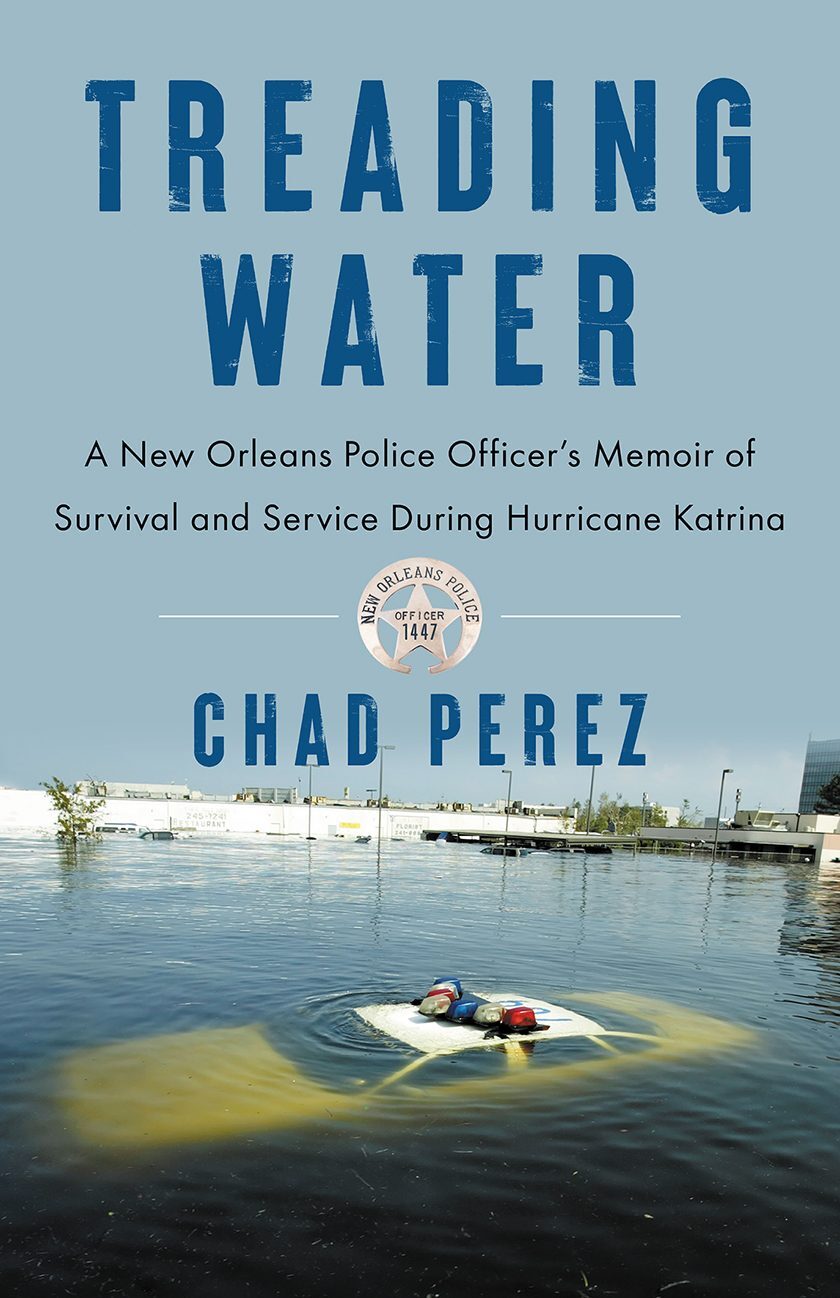
Chad Perez drove into New Orleans as Hurricane Katrina hit, the only car heading into the city on Interstate 10, because he wanted to be in the middle of it. His memoir, Treading Water, tells the story of the five days that followed from inside the New Orleans Police Department, where officers who had lost their own homes kept working with no reinforcements, no supplies, and no playbook.
In this episode of Author Hour, Chad talks about the drive in, what the country got wrong about the officers who stayed, the middle managers who held the department together, how the storm changed the way he saw the people he policed, the box of medals his wife framed, and how Scribe Media helped him turn a hodgepodge of memories into a book.
“When I realized police work is what I do. It’s not who I am.”
⭐ Top Moments
- From police reports to a book. Chad had written plenty of long investigative reports but never a book, and found Scribe Media while searching for help. “So this is the process for me. I can just sit there and have someone help me put this thing together, gather my thoughts.”
- Writing it was therapeutic. Chad set out to tell the true story of five days after Katrina, and found the book became much more. “I can tell you that writing that book took me to places I didn’t know I needed to go to, and it was therapeutic.”
- Every officer has a book in them. His advice to first responders sitting on a story: “Don’t think you have to get it perfect, get with somebody like Scribe that can help you put these thoughts together and then just get it out there.”

Chad Perez
Chad Perez is a serial entrepreneur and highly decorated law enforcement veteran who has served in SWAT, narcotics, and gang investigations. He has received eleven award medals, including a Medal of Merit, a Purple Heart, and a Lifesaving Medal, and is a two-time Officer of the Year recipient. Following his law enforcement career, Chad founded Pinnacle Security and scaled it to four hundred employees, earning a spot on the Inc. magazine list of fastest-growing private companies four times. He is the co-founder and CEO of Aegis Response, a business providing alternative response services for law enforcement agencies. Chad lives outside of New Orleans with his wife, Leighet; their son, Braiden; and their dog, Max.
★ Scribe Case Study
Chad Perez's Treading Water Tells the Untold Story of New Orleans Police After Hurricane Katrina
Chad Perez had written hundreds of police reports but never a book. Treading Water tells the five days after Katrina from inside the NOPD.
📚 Books by Chad Perez
Transcript
Lex Statzer: Welcome to Author Hour. Today, I am joined by author Chad Perez, who wrote Treading Water, a New Orleans police officer's memoir of survival and service during Hurricane Katrina, which is coming out October 20th. Chad, welcome to Author Hour.
Chad Perez: Thank you for having me.
Lex Statzer: So let's begin at the opening of the book. The book opens on kind of a chilling image. Every car streaming west out of New Orleans and you driving east passed the State Trooper roadblock into an empty city because you wanted to be in the middle of it. Take me back to that drive. What was going through your head at that time?
Chad Perez: Yeah, so I was actually on a pre-vacation at that time. I left home Friday afternoon after finishing work. So the storm was kind of brewing at the time. There was not a bullseye in New Orleans at the time, but the storm was growing in the Gulf. So I was watching it from far away. I had some phone calls, communication with my supervisor who said, look, you're on approved vacation. So, you know, I'm not going to ruin your vacation. We can handle this. Right. Just something inside of me told me like, this is going to be different. And, you know, I've always been the type of person throughout my career. I've always wanted to be the guy that's wanted to be the guys in the action. Right. You know, I wanted to be the guy chasing the bad guy, making the bigger ass, doing those things. Right. But I guess it probably goes back to me being a child wanting to be like on the football field, the guy making the play, the guy throwing the, you know, the winning out in baseball. So, yeah. So the storm really blew up Sunday morning. I woke up and said, look, I'm coming back. I had ridden out of town with some buddies of mine, so I didn't even have a car. So the buddies that were there said, look, when I'm said, here, take my car, drive back. We're going to head to Houston and evacuate. So I did that, got on the road, started heading back to the city. And, you know, I was heading eastbound to the city and it was bumper to bumper traffic, gridlocked, cars not moving, heading out. I was the only car on interstate 10 heading into the city, which was pretty eerie. Right. You know, it's gridlock going out. Got pretty close to the city, city called Laplace, which is, I guess, probably about 30 miles outside of New Orleans. Hit a roadblock with state troopers. So when I pulled up, he was surprised to see a car heading to the city, right. When everybody's trying to get out. So I showed my ID, said, look, I'm a police officer. I need to get back into work. Funny thing is I was driving my buddies, like $130,000 Mercedes at the time. I'm a young, young cop, right. This little sports Mercedes. He stepped back, look at the vehicle and said, I said, look, I get it. This isn't my car, but I've got to get back to work. So he's like, all right, man, go ahead. So started making my way back to the city. So once I, I had to go some alternate routes to get into the city because everything, they did contraflow is what they call it. So that's where at some point they opened both sides of the interstate, eastbound and westbound. And at this point they had both sides of the interstate heading westbound up into that checkpoint that I got to, that I ran into. I mean, that's to get more vehicles out of the city, right. And get some of the flow of people that are left in the city out quicker. I started to go some alternate routes, but I'll tell you what, once I got into the city, it was an eerie feeling. You know, it was, it was like a ghost town once. So I parked my buddy's vehicle down into my police unit that I had at his, his apartment and then started making my way back to my house. I lived in St. Bernard Parish, which is just outside Orleans Parish. It's kind of the neighboring parish. So probably 15 minutes from the city. And I, you know, I can tell you as I was driving, the only people I saw on the road were cops. So police cars with blue lights flashing at that time, just trying to try to be a deterrent and a visible, visible presence for the people that were, were leaving the city. So it was an eerie feeling. You know, they, they have an old saying, the calm before the storm. And, you know, that's really what it was like.
Lex Statzer: So for the people who only know Katrina from the news, set the scene, what did the city feel like after those first few hours, but before the levees gave way?
Chad Perez: So I went to my house, gather some things, you know, and normally when as a police officer, when you report the duty, I tell you like bring three days worth of clothes, some snacks, right? Cause you're going to go to the station. You're going to stay there until the event passes. And it usually 24 hours pass and you go home. So I did that, got home, you know, when I was driving down my street to pack things, most of the, most of the homes in my neighborhood were boarded up. You know, you put boards, wooden, wooden boards over your windows so that, you know, flying debris doesn't break the window. And I debated myself. So, you know what? If this storm hits the way I feel it will, boarded up windows, it's not going to stop flood water. So I didn't even bother with it. But I did just like I did every storm, packed my little bag with three days of clothes. That's just like police t-shirts, an extra pair of uniform pants, a baseball cap, some socks, underwear, things like that. A couple of snacks, do some beach jerky, chips in there. I'm like, yeah, I'll just go to the station. And, you know, if it passes through, I'll come home tomorrow. So I went back to the station and I could tell you the night of the storm, unlike a lot of times where we have to sleep at the station and we stay overnight and I have to line up some office chairs and make a bed to sleep overnight. We actually had the opportunity to go stay at a hotel in downtown New Orleans. So we did that, you know, throughout the night, we were kind of hanging in around the lobby of the hotel, sitting in the hallways, just kind of talking and, you know, really, I don't say have a good time, but it was, you know, a bunch of police officers kind of hanging out together like we always do for storms, playing card games, things like that to pass the time. And at some point the storm came through overnight. I had gone to sleep, I guess shortly after midnight. And at some point the storm started coming through and it woke me up in the early morning hours. And I can tell you when I looked out the window, I've been through a lot of storms, a lot of hurricanes, but what I saw is something like I've never seen before. Just the strength and the roar, you know, you hear people talk about like this freight train sound and that's what it was. It was just like a freight train that was just keep kept coming and coming and coming, never did pass, you know, road signs were falling and blowing down the street. Buildings, the side of buildings were kind of toppling and bricks were falling. So it was very, very, very unusual, not like any storm we have been through. So the storm blew through in the early morning hours, sunrise came, walked downstairs into the Lobby Hotel and everybody was kind of gathering around and we walked outside. And at that time, there was like a mist, it was still raining, but it was not like a downpour, right? The winds were kind of starting to die down and we walked outside and everybody was kind of talking like, man, we may have really dodged a bullet here. At the time, I was working in an area of the city called Sixth District, which is kind of, they call it Central City. So it's north of downtown Lake Pontchartrain is, I'm sorry, it's south of downtown Lake Pontchartrain is north of the city. So we were on the southern side of the city and we walked outside and there were downed trees, power lines, kind of the sides of buildings falling, some houses that, you know, porches had fallen, but nothing we hadn't seen any before in a storm.
Lex Statzer: You write that the real story of those five days has never been told, that it got buried under a couple of scandals and the politics that came after. What did the country get wrong about the New Orleans Police Department and what did you most need to correct with this book?
Chad Perez: Yeah, the country got a lot, a lot wrong. The news media got a lot wrong. You know, one of the biggest pieces was that, you know, we were police officers working, but we were victims of the storms ourselves. And that's never been told, right? You know, there were a few isolated incidents that happened during the storm that kind of took over the political narrative and cast a broad brush around all the police officers that were there, which was not indicative of actually what happened. You know, there were, you know, 80% of the city sat on the water. My community in St. Bernard Parish, the entire community, 100% of the structures in that parish were underwater. My home sat in 20 feet of water for three weeks. So the police officers that showed up with basically the clothes on their back that night to report the duty, come Monday, that's all they owned. That's all they had left was what they brought with them to work. So that got lost in the narrative, right? You know, police officers that had to do what they needed to do to survive, you know, just like citizens that got stranded. We had police officers that got stranded in their homes. Police officers were sent home on Sunday night and were told, report to work Monday morning. At the time, the city was trying to save overtime money. So instead of paying people to work overnight, they sent people home and said, report Monday morning. Well, that was the height of the storm. So there was a lot of police officers that were trapped in their homes with the rise of floodwaters. You know, in the book, I talk about a police officer had to shoot his way through the attic vent to get out of his roof to be rescued. A police officer that was rescued, showed up to work soaking wet with his dog and his badge, and that's what he showed up to work with, right? He had to swim out of his home. So those stories have gotten lost, have never been told. So there's, as I say, a viable aspect of what we went through. Like every citizen that you saw sitting on the roof of their homes that got rescued, walking on the side of the interstate, that lost everything, the police officers were in the same boat, you know, but they stayed, you know, I should say the large majority of them stayed and served and served with honor because, you know, that oath they took meant something. So even though they lost everything, they tucked it away and went to work that week after the storm.
Lex Statzer: Let's talk about those officers that stayed and the ones who didn't. So roughly 250 out of 1,700 officers never showed or walked away. You don't let that go, but you write about the ones who left without celebration and without contempt. How did you decide how to handle those officers on the page?
Chad Perez: Yeah, I can tell you in the event as it was unfolding and, you know, we realized on, you know, Tuesday that there were people that was officers that were supposed to be there that never showed up. Come Wednesday and Thursday when police officers were leaving and just banning posts, you know, leaving us, there was a lot of contempt. There was a lot of anger. You know, there was a lot of talk about, you know, how could you leave? First, how could you abandon the oath? Secondly, you know, you're supposed to serve the city. How do you leave the citizens? Right. And then how do you leave your fellow officers? You know, we were there trying to survive. You know, we had to break, literally break into a Walmart so that we had food to eat, water to drink, and that we had clothes to put on our back. I mean, think about that. You know, we're in a major American city and the city had no provisions for us. By, you know, Monday, Tuesday, Wednesday, we were still hoping that reinforcements from somewhere were going to come and they never showed up until Saturday. You know, we went five days and the only reason we were survived was because we were able to find rations to survive, right? We were able to break in Walmart and get those things. Those police officers that abandoned left us in a neat time when you needed that support from one another. You needed to have each other's back, right? So, you know, it was, it was a feeling of abandonment and there was a lot of distrust at the time of that. I could tell you 21 years later, you know, a lot of life experiences, my experiences through a lot of life experiences after, I would say the contempt part is no longer there. You know, I look at people, they made decisions on their own for their own reasons, but there's still a level of trust and I can tell you even to this day within the department, there's kind of a divide, the people who stayed and the people who left. Not all the people who left were fired, a good number of them were, but there were some that were given some suspension days, some that were never disciplined at all because of favoritism or whatever it may be. So, that really caused a divide within the department for a long time, you know, but 21 years later, I can tell you the contempt part for me personally is not that no longer there, but there is a kind of a distrust, like, could you trust that person, you know, if you needed to.
Lex Statzer: Yeah, that trust got broken. But speaking of those officers who did stay and reported for duty, they did almost unimaginable things. I mean, you mentioned the officer who swam out of his house and reported for duty with just his badge still soaking wet. When you think about the people who held that line alongside you, what characteristics do you most want readers to see?
Chad Perez: I would say, you know, you hear the word hero gets thrown around too much just these days, right? It's such a watered down title, right? You know, they were heroes, but in the moment, you didn't think about that, right? They were people that believed in the oath that they took, you know, they wanted to help, you know, they wanted to continue to serve the people, you know, they sacrificed their own personal losses. And I'll say for that week, for weeks after, because they stayed in the city to serve, you know, most police officers didn't get to their homes, didn't see their families for two, three, four weeks after. So, you know, if I was to describe, you know, who, what they embody, they embody service, they embody sacrifice and courage, you know, they face things that no American police department has ever faced before or since, you know, when not only were they responding to, at the time, the largest natural disasters countries ever seen, but they were victims of it as well. So they couldn't respond, handle things throughout the day, and at the end of that shift, go home. There was no home to go to, you know, my partner and I slept in a car for weeks, you know, the police officers that were sleeping on the side of the roadway, sleeping on the sidewalk, you know, in our camp at Walmart, they had to go get tents and set up in the parking lot to sleep and live on. So, you know, they had no way to process what was going on, right? All they could do is tuck it away and keep moving forward because they believed in what had to do, you know, so I would call them heroes, absolutely 100%. I don't know if that term even does justice for them, you know, they were more than that, you know, they served in unimaginable conditions, faced with unimaginable challenges when there was no playbook to follow.
Lex Statzer: There's a thread running through the whole book that when leadership at the top went silent, authority fell to whoever stayed and really improvised. What did those five days teach you about what leadership actually looks like?
Chad Perez: Yeah, I mean, one of the big things that came out of that were a ton of leadership lessons. You know, during the event, the leadership at the top failed completely, it was non-existent. From our perspective, where we were within that week of the storm, our leadership came from our local leadership within our police district, and I would say every police unit and every district around the department, around the city at the time, they were held together and they were led by the captains, the lieutenants, and the sergeants, those middle managers, right, within the organization that stepped up and led from the front in the most critical times. You know, when leadership fails, and I would say this for any organization, right, you know, I've gone on since this event, after retiring to build an organization, a security services company, build it to 400 people. One of the things I took from that was the strength of middle management. You know, as a leader, you can't be every place at one time, and as a leader, you have to be able to rely on those middle managers to pick up the parts and pieces during those critical times. You know, I repeat a number of times how there was no playbook. There was no playbook. There was no standard procedure on how to operate within a city to enforce laws and to rescue 100,000 people when you also have no resources, no base to operate from, no food, no water, and no home to go to. There's no playbook for that, right? So a handful of leaders stepped up and improvised and, you know, made decisions. They were not afraid to make decisions, decisions that saved lives, you know, and really saved the city because there was nobody above them making those decisions.
Lex Statzer: One of the things you mentioned a few times that I want to touch on a little bit more is this idea of being both a first responder and a victim. So you grew up, as you mentioned, in St. Bernard Parish, and you watched your own childhood street go under, what, 25 feet of water while you were out rescuing strangers. And so how did you carry being both the first responder and the victim of the same storm?
Chad Perez: It was tough, you know, and I've never had to deal with anything like that before, right? So it was tough. You know, as a police officer, you go through events, right, throughout your career, you know, death. You see people at the lowest point of their life, you see tragedy, you see those things, and you compartmentalize it, right? But then you can escape from it, whether that's go home, whether it's take a weekend off, whatever it may be, to kind of regroup. During the storm, you had to compartmentalize things and tuck them away and not think about it because you had to accomplish the next thing that was in front of you, right? Whether that's you're on the boat, you have to pull the next person off the rooftop, you're driving around, you have to stop that next looter or the criminal that was intent on robbing someone during the storm because they were able to steal a vehicle, those type of things. You had to focus on that, right? Because if you didn't, you know, you could be injured. We had police officers that were shot, you know, during the event. Police officers that were hurt during the event. You had to compartmentalize that. And, you know, I learned a lot about myself during that event, right? That, you know, I could get by without the basic needs to survive, right? You know, food, shelter, water, safety, security, right? Because those things didn't exist. You had the ration, you know, the ration to get those things. You know, I knew my home was probably a loss. I knew probably every family member of mine who lived in the same area because I would say my entire family lived in that area on both sides, my mom and my dad's family. I knew everyone lost everything. You know, I didn't think about it in the moment. You know, there's some parts in the book where, you know, later on in a week where that weight hits me. And it was extremely emotional once I did. And it was really, really heavy to deal with. You know, that's when the human side of things come into play. You know, when you compartmentalize things and you tuck things away, you know, you almost have to function as emotionless. I don't want to say a robot because you're not, right? You're human, but you have to be able to function in those environments. But when that weight hits you and you realize that, like, you know, you are human and that, you know, police officer sitting in a corner who lost everything, her home, her family's evacuated. She doesn't know when she's going to see her husband, her kids, whatever. I mean, she's sitting in a corner of that parking lot, right? And eating a granola bar and drinking from a bottle of water. And she hasn't taken a shower in a week. She's a human, right? I don't, still to this day, I don't know that there's a playbook to deal with that, right? And I think it takes a special kind of person to be able to deal with that. And, you know, maybe some of the ones that left couldn't deal with that, which is perfect and fine. But I don't know that there's a playbook to deal with that. And for me personally, there are some times throughout the book where I talk about later in the week and then some of my, you know, journey a couple of weeks later to go see my family home and stuff like that, where that's when I was able to, you know, I don't want to say decompress, but let the gravity of what happened really kind of, you know, live through that, experience through that. But then once I passed through that, then it was time to go back to work because I had to, you know, go back to the city to serve and go back to living in my car and, you know, in a Walmart parking lot for another week or two.
Lex Statzer: Yeah. Wow. So in the book, you're very honest that you went into Katrina, a hardened us versus them kind of cop, and then something changed. Someone completely different came out the other side of the storm. So what did change and how you saw the people you policed and your role as a first responder?
Chad Perez: Yeah, I would say that during that things were changing within me that I didn't realize, you know, it would be many, many, many years later till I was able to recognize that, right? With that transformation for me was, you know, going into it, I kind of coined this thing within the book. And that actually comes from a message, a pastor of mine later, years later, when I got into church and found my faith, that did a message and a sermon on us versus them, right? Like the divide in whether that's police officers to citizens, police officers to criminals, whether that's racial, whether that's socioeconomical, whatever that is, class, everything, right? There's this kind of narrative that has grown throughout this country of us versus them, right? You have to be us or you have to be them. There's no we, right? So, you know, I talk about it in an experience in my first day of the police academy, you know, as a young 21-year-old kid sitting in that academy class and an old captain walks in and says, look to your left and look to your right. These are the people that are going to be with you. You're going to lose every relationship you have outside of this. These are the people you can trust. These are the only people you can do, right? And at the time you're like, hoorah, yeah, this is great, right? And you go through a career and you realize there's a certain truth to that, you know, while at the time you don't realize it's not healthy, there's a certain truth to that in a number of ways, right? You know, survival, you know, I can tell you the streets of New Orleans are rough, you know, the neighborhoods I worked at as a narcotics detective, working gang and addiction and working SWAT team doing warrants for murder suspects, right? The streets are rough and you have to have some type of belief that, you know, these are the people I can trust. Because if not, you can't trust everyone on the street, right? You can get yourself hurt, you can get someone else hurt. So I get that aspect of it. During the storm that fell, I mean, during the storm that divide fell, you know, nobody I pulled up to pull off of a roof or, you know, pick up on the side of the road or give water to, you know, looked at me as, you know, differences in race or anything like that. You know, they looked at us police officers to get help, but, you know, we weren't spit and polished police officers, right? We were a ragtag looking bunch of people, right? We, you know, we had dirty t-shirts, shorts, some of us didn't even have shoes, had flip-flops on. So, you know, when they looked at us, they saw that we were experiencing the event with them. So that's coming out of that, you know, looking at the have and have nots within the city, who could evacuate people that were left, people that left were poor, people left for the large majority were African-American, right? They didn't have a way to get out, you know? So the people that were there that stayed and worked were all different races and colors, right? We're all different socioeconomic classes. Katrina didn't discriminate on who she took and what she took from people, right? She flooded every neighborhood, every structure. She didn't care what political class you were or anything, right? You know, years later, after leaving the department, kind of once I found my faith and went through discerning, I looked back at my career. I looked at my time during Katrina, I was like, you know what? That speaks to that conversation that Captain had to us in Academy, my career up until Katrina. And then the changes that I went through naturally, without even realizing I was going through it as a result of the event, you know, where I wanted to get to know the human side of people, right? When you see people at their worst suffering, like, you know, whether they're criminal, whatever it may be, right? They're humans. You know, I really got into wanting to know people's story. The second half of my career coming out of Katrina, right? You know, I wanted to know, okay, if you're, if you have you sitting across from me, I'm interviewing you for a crime, whatever it may be like, really what led you down that path? You know, how'd you get there? So when I, when I, I didn't realize that was even happening until years later, when I look back and like, there was a change for me coming out of Katrina.
Lex Statzer: It's, I imagine it's hard not to see everyone as just human when you've seen them be stripped of everything else. Exactly. Looking back two decades later, what would you want a young officer today to take from this story?
Chad Perez: Wow. It's a great question. I would say, you know, learn who you are as a person, you know, learn, learn your strengths, learn your weaknesses, do your best to surround yourself with people within the organization who don't have that us versus them mentality. Number one, right. People you can trust, but people who don't lose that human side of what you're doing. Right. I'd also say, you know, build relationships outside the department. Don't lose, you know, that friend you went to high school with, don't lose, you know, the guy down the street you would hang out with on a Friday afternoon. Don't lose those things because it's so important. From, from a working aspect, you know, I don't know that there's any country, any department in the country, including the New Orleans police department, that is prepared for an event like Katrina, for it to happen again. I don't know that that playbook that was missing then has been built now. I highly doubt it. You know, so I would say, learn what your own limits are for an event like that. Try to figure out why you, why you chose that as a career. You know, are you doing it for a paycheck? Doing it for a paycheck, you're probably not going to be the person that's there five days later after Katrina. You know, are you doing it because you want to serve, serve the community? Do a deep dive into why you joined law enforcement. You know, I think over the years where, you know, when you went, when I'd say the last decade or so, you know, as law enforcement's kind of evolved and, you know, the, the days of people joining departments because it was generational and it was in their blood, whatever those things are, right. I think that's gone, long gone, you know, but I think the young officers stoning, I would say, don't lose who you are as a person. Don't align yourself with the pessimistic disgruntled side of law enforcement, which there is a ton of. Go into it the right reasons and never lose the human side of yourself, the people you work with and the people you interact with.
Lex Statzer: What a message. Wow. So looking at the making of this book, this book exists largely because of your wife, Liette. She's the one who told you the world needed to hear your story. What finally made you believe her?
Chad Perez: Yeah, I think, you know, like when, when I, I left, when I left law enforcement 2012, I had a really, I had a story career, you could call it, I guess, what some people have told me, you know, highly decorated. I've done a lot of things. I worked at the, I worked in the most elite units within the department. You know, I was an innovator. I was, I was proud of my career, but once I left, I never spoke about my career. You know, for, for a number of different reasons, you know, I was, I was trying to move on to a different stage in my life. You know, at the time my son was, when I was, when I left, my son was four years old. So he has no recollection of his dad as a, as a police officer. Right. You know, he doesn't remember my days on a SWAT team, having to leave his birthday party to go because some guy was barricaded in a house. We had to go do a hostage rescue thing. He doesn't remember that. Right. You know, so I kind of tucked it away and went on, on with life and we would be, I don't know, like at a family event, things like that. And, you know, every now and then some, something would come up and I'd tell a little story about something. I'll tell a little story about, not like intentional. Cause I never told stories. I never was like, I never believed in being like the cop that goes, hangs out the bar and tells horror stories. Right. Yeah. Right. That's that I, I, I, I don't like that. I've never was that guy. I had a lot of them, but I never did it. And so I would tell stories to, you know, a little thing here, there to her and to my father-in-law and they would, they would say, you've got to write a book, man, that needs to be in a book. You've got to write a book. And after a time period passed, I was like, you know what? I think I'm going to do it. And then I came home one day from work and she had, I had a lot of awards and medals and things like that and just put in a box and she had them all framed and, you know, I hadn't looked at them in years, like years. Not that I was, you know, I was, I was proud of the work I did, you know, super proud, you know, and I just never, I never talked about it. So I got a chance to read through those things and, and I was like, you know what, I'm all right.
Lex Statzer: Yeah. Are they still framed today?
Chad Perez: They are. Yes.
Lex Statzer: Good. Good.
Chad Perez: Yep. So it was, it was, you know, and once I started writing the book, I can tell you, I went in with the intention of writing a book to tell the five days after Katrina, with the true story of what happened. And the book, that is the largest part of the book, right? That is the media book. That's what the book's about. The book is about what happened on the ground in those five days. But when I finished it, it's so much more than that.
Lex Statzer: Mm hmm.
Chad Perez: So much more came out of that book. And I can tell you it, that writing that book took me to places I didn't know I needed to go to, you know, and it was therapeutic. You know, I would, I couldn't tell you how many times I'd write and have to get up and just walk away because it was so emotional at scene, right? Yeah. So it was, it was a journey.
Lex Statzer: So how did you and Scribe end up finding each other? And what made you trust us with something that is obviously so personal?
Chad Perez: I'll say, you know, I was Googling, I was looking for some assistance. I've never published a book, right? And I knew how to write a police report. I had written plenty investigative reports, right? Very long, detailed reports. I had never written a book. I didn't know where to start. Mm hmm. Like, so I was, okay, do I sit down and just start typing? So I just started looking at, you know, publishers and how would I get this book published? What's it look like? And I came across Scribe. When I, you know, started watching some of the videos and, and doing some of my research, I really like this. So this is the process for me. Like I can just sit there and have someone help me put this thing together, gather my thoughts, right? Because, you know, where the book is now is not where the book was when I started writing it. And it was just a hodgepodge of memories, right? This happened and that happened. Oh, wait, this happened before that and this happened before that. So just going through that process and being able to put that together and having somebody help me kind of, you know, put those events together into what it is today was amazing.
Lex Statzer: One of my favorite questions that we ask, for the cop or the veteran or the first responder sitting on a story they've never told anyone, unsure how to write it all down, but feeling some kind of need to just get it out, what would you say to them?
Chad Perez: I'd say take action and get it and do it. You know, I've got a saying that makes something happen. You know, if I couldn't tell you how many countless times I've talked to people like, man, I could write a book about that. I could write a book about that. I could write a book. Do it. Do it. Yeah, do it. Write it. You know, there's, there's stories out there that need to be told. And don't think that you have to tell the story of you chasing the bad guy and catching them. And with that, no, there's, there's so much more to a police officer's career, right? You know, I tell, I used to tell people all the time as in, you know, I started my security services company, I would have police officers come talk to me about, you know, what it looks like after leaving law enforcement. I'm like, you don't realize how many talents you have and, you know, how much experience in your real world experience as a police officer can translate outside of there. You know, so when it comes to telling a story and writing a book, you know, don't think you have to get it perfect, you know, get with somebody like Scribe that can help you put these thoughts together and then just get it out there. Get your story out there that this, I would say every police officer I've ever worked has a story, has a book in them that needs to be told, you know, and don't let, and I'll say this, don't let the news media or whatever it is, the narrative about that career or that, you know, profession keep you from telling your story. You know, the more you can get out there, I believe the more it will change Americans' opinions on law enforcement and who police officers really are, not as a person wearing a uniform. Because that was one of the big changes for me, right? When I realized police work is what I do. It's not who I am. Let them see the human side of who you are. I think there's a story about a police officer.
Lex Statzer: Treading Water is out when this episode comes out. Where should people go get it and where should people keep up with you?
Chad Perez: Yeah, so you can, you can get the free chapter and sign up for updates at treadingwaterbook.com. I'm on all social media platforms, Chad J. Perez on Instagram, Chad J. Perez on Facebook. Love to connect to people, love to hear their feedback. The book's available on Amazon or will be available on Amazon on October 20th. You know, so I'm looking forward to getting the word out there, you know, let people know what happened during Katrina. Let them know the human side of what the first responders went through and then let them read kind of what that story is of New Orleans, of the New Orleans Police Department and what it was like to be a survivor of Katrina and live life after.
Lex Statzer: Well, Chad, thank you so much for the book, for this conversation, for staying in the eye of the storm. On behalf of everyone at Scribe, it is an honor to help get this story out to the people who need to hear it. Thank you for joining me on Author Hour.
Chad Perez: Thank you.
Want to Write Your Own Book?
Scribe has helped over 2,000 authors turn their expertise into published books.
Schedule a Free Consult