Trust Is Your Currency: Physician Brand Rx with Matthew Ray Scott
✨ Episode Summary
Matthew Ray Scott was an Army psychological warfare officer before he became what he calls a surgeon reputation architect. With orthopedic surgeon Dr. Scott Sigman, his first client, he wrote Physician Brand Rx, a book whose outline was first drafted on a napkin over one beer in a pub in his hometown of Bentonville, Arkansas. The whole book fits in one line: “Doctor, trust is your currency, and your reputation is your bank account.”
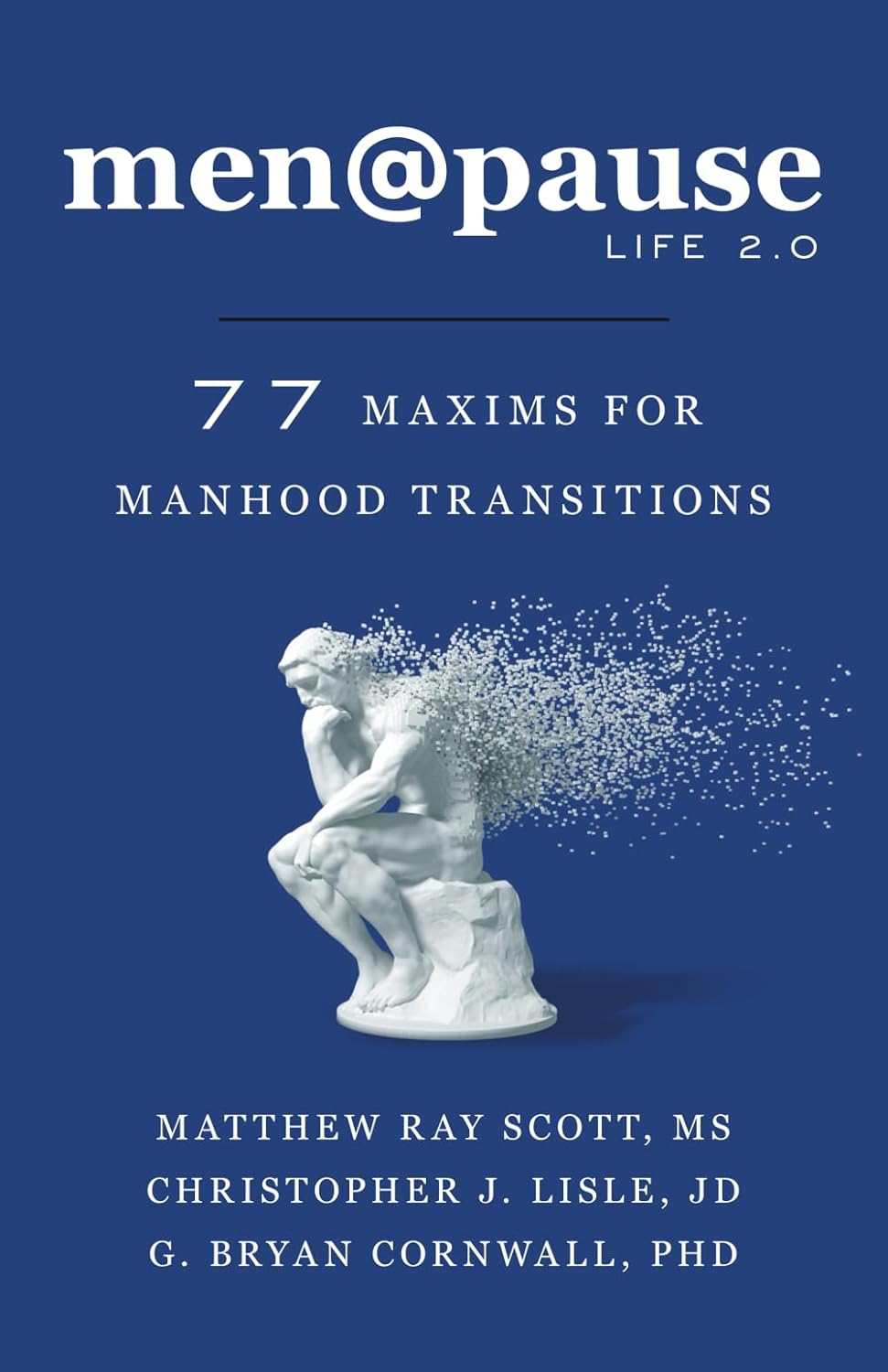
The two already had an award-winning podcast and hundreds of thousands of followers. The book did something the podcast could not: it forced them to answer “what do we believe? For whom?” It is Matthew’s second book with Scribe Media, after men@pause: Life 2.0, and he is already talking with Scribe about a third. His advice for anyone with a book in them: “write a book that sounds the way that you speak.”
⭐ Top Moments
- Why write a book when you already have the audience. Matthew and Dr. Sigman had the podcast and the followers. What they lacked was a single, clear process. “The reason why we wrote a book on the heels of our success with the other digital platforms is it forced us to communicate. Here’s how you do it in as few words as possible.” They were not chasing volume, either: the book is aimed at the private-practice specialty surgeon who wants to earn trust before a patient ever walks in.
- Two and a half years of stalling, then two weeks. On his first book, Matthew and his two co-authors had worked for years in three separate voices. “Before we approached Scribe, we had putzed around for like two and a half years on this and everything.” One editorial note changed it: “that one beautiful sage editing advice, it took us two weeks because the story was there.” He came back to Scribe for Physician Brand Rx, is already talking about a third book, and has sent other clients to Scribe.
- The editors pushed back, and that was the point. Matthew already knew how to speak on stages and podcasts. Writing was different. “I mean, we were in the revision stage for weeks. And I know me, I would have yielded and buckled early, but [the Scribe] editing team is like, no way, Jose, this is how we’re going to revise it.” His takeaway for other authors: “If you want a book done in less time and less effort, then that’s why we chose Scribe.”

Matthew Ray Scott
Matthew Ray Scott once leapt from airplanes as a Captain in the 82nd Airborne Division and a Psychological Warfare Officer. Today he is a surgeon reputation architect, best-selling author, and founder of FEED, the healthcare brand agency named Best Cause Agency by the American Marketing Association.
★ Scribe Case Study
Matthew Ray Scott's Physician Brand Rx Turned a Pub-Napkin Outline Into His Second Scribe Media Book
Matthew Ray Scott and Dr. Scott Sigman drafted Physician Brand Rx on a pub napkin. It is Matthew's second book with Scribe Media, and a third is in the works.
📚 Books by Matthew Ray Scott
Transcript
Lex Statzer: Welcome to Author Hour. Today we have Matthew Scott, who has written Physician Brand Rx with co-author Scott Sigman. Welcome to Author Hour, Matthew.
Matthew Ray Scott: Thanks, Lex. I appreciate it. My colleague, Dr. Scott Sigman, is doing what all great surgeons do. He's operating on the fine folks of Austin right now. Otherwise, he would have joined us.
Lex Statzer: That's noble. That's very noble. So, good excuse. A good excuse. So, today we're going to mostly be talking about what your book is about, who it's for, and how it came to life. So, let's get started. Before we get to the book, let's go back just a little bit. So, what were you doing when the ideas for the books first started forming? Was there like a specific moment or turning point where you realized, I know this is something that other people need to hear?
Matthew Ray Scott: I have a little bit of an unconventional background which sets the stage for this. So, I was an army psychological warfare officer. So, on the behavioral psychology and the neuroscience side of this. And when you go through that training, you learn patterns of communication, how people make decisions, etc. That was the precursor to my healthcare career. So, it turns out that patients, and in my case, surgeons, they have this beautiful complex communication which is, I'm a patient, I'm a human with an anxiety, and they're seeking to have surgeons that not only can give them a quality outcome, but that they can understand. So, I came up with this idea of what if we could be the Jerry Maguire for surgeons that they never knew that they needed. And one of my first clients was Dr. Scott Sigman, the co-author of this book. And he and I decided to put together this step-by-step process of how surgeons can think about their reputation. So, here is the play on words, Lex. Even though we kept the title Physician Brand Rx, and the Rx is the prescription element of this, or a diagnosis element of this, that we flipped the script in the book and we said, surgeons don't want to be influencers. They don't want to do dancing TikTok videos, or even though many of them do, they want to lead with reputation. So, we made Dr. Scott Sigman a case study of how do we get him TED Talks? How do we help him to write best-selling books? How do we help him be the go-to specialist in a crowded specialty where there's a lot of great surgeons? How do we work with industry to help promote him? And the culmination of that is Physician Brand Rx. We said, what if we took all of our knowledge of how to take a physician and or a surgeon equip them to understand what they need to understand about reputation? And our pull-through is the concept of trust and reputation. And three years ago, Dr. Scott Sigman flew to my hometown of Bentonville, Arkansas. And I want to let you know that if an orthopedic surgeon comes to my hometown and I take him to my hometown pub called The Odd Soul over a napkin and one beer, I'm holding up three fingers, Lex, but one beer will draft an outline for what would later become the book that we're discussing today, Physician Brand Rx.
Lex Statzer: Wow. What a story. That's incredible that you two were able to connect like that. So, that actually leads us perfectly into my next question. I want to walk through the core framework a little bit. So, what are the key pieces of Physician Brand Rx?
Matthew Ray Scott: I can say it in one line, Dr. Trust is your currency and your reputation is your bank account. You and I, who could think of ourselves as future patients, we don't know what's really happening. But surgeons are like the NIL athletes. And they're either owning a category in the mindshare of a patient's reputation meets they're the left-handed, one-eyebrowed, left-knee specialist or spine specialist or brain surgeon. But that's exactly what's happening. And surgeons were never prepared for that. You see, the typical surgeon deals with, let me check out what's wrong with you. I'll diagnose you. And then I'll give you a procedure or a prescription. Well, until now, with our book, Physician Brand Rx, they now understand that there's an opportunity to position themselves and to earn digital trust or printed trust before they ever meet with Dr. Sigman. Now, it is true that Dr. Sigman and I have been working with fellow surgeons for years. Whether that's talking conferences, whether that's us being keynote lecturers, podcast, et cetera. But we wanted this book to be the concept that said, here is what branding means to you, doctor. It means who you say you are, who your patients say you are, and who the internet says you are.
Lex Statzer: Wow. I mean, I think that there's such a common understanding from the patient side of that uncertainty that you talked about where you're not sure. This is the expert that I'm talking to. So I have to believe whatever they say, but I'm not quite sure what's going on or how much I can actually trust them. So I can see this being extremely important. I did want to ask why a book? So you talked about how you guys do some keynote speaking, you do other media engagements, but you decided to go forward and write a book about this topic. So you could have done a course, a podcast, a series of posts. What made a book the right vehicle for this message?
Matthew Ray Scott: You're going to appreciate this because Scott and I already had award-winning podcast and hundreds of thousands of followers. We already had that. What we didn't have was a process in 138 pages to clarify everything that you've learned and to democratize that knowledge. In this case, Dr. Sigman as a surgeon and me as what we would call a surgeon reputation architect. And here's what I found, Lex. We'd already built an audience and a following. Our decision to do the book is a little bit contrarian. Respectfully, it wasn't that we needed to sell a hundred thousand books. In fact, if we did our job correctly, we'll sell thousands of books, but just to that left-handed one-eyebrowed surgeon in New York city who generously wants to earn trust and share their knowledge. And so we do what we were getting into. The reason why we wrote a book on the heels of our success with the other digital platforms is it forced us to communicate. Here's how you do it in as few words as possible. And this is our second book with Scribe Media. And the first book was designed that three of us who grew up together, who are parents and who have daughters and who have sons, that we jokingly refer to, it's the stories that we shared at bars, boardrooms and barracks. One of my buddies, we grew up together. His father was our little league coach and he and I served in the military and we jumped out of perfectly good airplanes together. So that created stories. The other individual who was the co-author, he and I grew up in corporate America. That's the boardroom part of it. And then we would meet in a bar, share these stories and say, let's document it. So I did that because it was my first book. They were both authors. It was my first book that I said, what's something that I can leave my kids? And the kind of play on words, Lex, is men@pause, play on words, life 2.0. So we did that with your help at the beginning of the year and we launched it. This book right here is, in my opinion, more difficult to write a book than lead a podcast, lead judiciously right on LinkedIn. It forced Scott Sigman and I to go, what do we believe? For whom? And how do we take everything that we've learned through our experience and put it in 128 pages? And that was our goal.
Lex Statzer: Wow. I love bars, boardrooms and barracks. That's incredible. So you said for whom. So that's actually going to lead me right into our next question. Who exactly did you write this book for? Describe the reader that you had in mind for this.
Matthew Ray Scott: Yeah, we wrote it for physicians who happen to be surgeons. They are primarily private practice, meaning they're typically not employed by a hospital or university. And every day they're working harder for a shrinking result. What we as patients do not understand is being a physician, certainly a surgeon today, it's one of the few professions where it's shrinking reimbursements and rising costs. And every year they have to make do with less. And so we said, let's provide that specialty surgeon a roadmap where they can monetize their reputation, where they can serve more ideal patients, and they can get paid fairly for what they're doing, as opposed to waiting to write letters to congressmen for shrinking reimbursements. And so our ideal audience is that specialty surgeon who says, I love caring for my patients. It's just that every month I wake up and I'm being asked to do more for patients with less, less revenue, less equipment and more expenses. And that's who we wrote it for.
Lex Statzer: That's amazing. This blend of digital brand identity and the surgeon space, I'm sure there's so many misconceptions with that combination. What does the book address when it comes to those misconceptions?
Matthew Ray Scott: You're not invisible. You're just not legible. So there's a myth out there that says, I'm an orthopedic surgeon and I fix your left knee. As long as I do a great job, you'll hear about me. And so what modern day surgeons don't understand is that trust can begin digitally before a patient ever chooses who is their specialist. So now in an AI world, you have patients that are more educated than ever. They can invest the research and the resources to determine who is the best left knee surgeon in Dallas. And they are. And what Dr. Sigman and I are saying is, is if you're either invisible because you're quiet or if you're loud and we don't like who we see, then the patient's not going to have a judgment index. So what we teach in the book is their judgment already exists. It's just that we as the market, we can't read it. We can't understand it. If they're silent, that's a signal. If they're loud and obnoxious, oh, that's a signal. So that's what we're solving.
Lex Statzer: Amazing. That ideal reader that you discussed, that specialized surgeon, if they only took, and it sounds like they're going to take so much from this book, but if they only remember one thing from this book, what should they remember?
Matthew Ray Scott: You're going to be known for something, but you got to be the one that controls what you're known for. You cannot wait for the market to determine who you are, how you're different. And so you cannot wait for a website that never gets seen, that looks like every other surgeon's website. You cannot wait for a patient to determine this is how their unique perspective, problem solving is a fit for me. And so what we teach surgeons and physicians in the book is the ability to help you digitize trust is based on how patients want to choose you versus silent you, quiet you, loud, obnoxious, dancing, tick-tock, look at my bougie Lamborghini you. And we draft that in the book. So what we've learned so far is physicians have been so pleased in the comments that we've received are saying, oh, wow, we thought this was going to be a marketing book. When they read the book, they quickly realized that this is not about marketing. This is about how to authentically position one's expertise and reputation in alignment with how patients want to choose you as the specialist in the specialty.
Lex Statzer: Yeah. And building that digital trust and reputation is huge for physicians, but it's also huge in this digital age for almost any number of people. I mean, it's a message that anyone could get something out of. What is one actionable thing that a listener, surgeon or otherwise, could do this week based on your book?
Matthew Ray Scott: Yeah. One actionable thing that in our case, a physician or surgeon can do after they read the book is understand the concept of how patients make decisions. Respectfully, most physicians and surgeons don't think about that. So this is the behavioral psychologist in me that emerges. I'm focused on how people with bad knees and a hurt brain and a sick heart make decisions under duress and how they do that. This is a whole another podcast, so I won't get into it, but we put it in the book and how they do that has nothing to do with your MD at the end of your name and a fellowship from a fancy university. And that's the misnomer. So the one thing that we tell physicians, in fact, we put it here at the back of the book is physicians don't need to be louder to stand out. Instead, they need to be clear about the problem they solve. That's what I want them to know.
Lex Statzer: Amazing. And for both books, men@pause and now Physician Brand Rx, you work with Scribe Media. We love to have you. It was a pleasure. How did you find Scribe? What made you decide to work with us?
Matthew Ray Scott: So my story, if you're listening and you've got a book in you and you do, is I'm the guy that had some specific knowledge and I said, I'm going to write a book. One day turned into two days, two days turned into two months, turned into two years. All of us who think we've got a book in us, the time that it takes us to either go, well, I'll have a publisher pick me up. And this is like being in sixth grade at recess waiting to be selected for the kickball team. And it is, it's like, okay, cool. Send in your manuscript. Just like kickball in sixth grade, I choose Lex. Hey, Matthew, I don't choose you. Stand on the sidelines. And so I could see the trap of that. The other trap is, well, I'll just self-publish this myself. It can't be difficult. This'll be easy. All I do is I upload it to Amazon. And when the first book that we wrote with you, the three of us, those two were published authors. Okay. And I love their answer. Oh, heck no, we're not going to self-publish this. So they knew better. On the second book, Physician Brand Rx, when I turned to Dr. Scott Sigman and I said, and he knew about the best selling status of our first book and he was going to take my guidance. And I said, Dr. Sigman, let's not putz around with saving a few dollars here and there. Let's have an expert team. And I'll, I'm going to brag on somebody for you, [the publishing manager]. She needs a pay raise because she was so patient and so graceful with the first book, three successful corporate people with egos. And then on the second book, one of the most prestigious orthopedic surgeons, and then whatever I am, a bearded brand guy. And she made it easy for me to say yes to the second book. I'm already talking to her about our third book. And I've already got two other clients that I'm like, don't be a knucklehead, call [the publishing manager], you Scribe. So I'm, I promise you, I'm not paid to say this. If you are a wannabe author and it's taken you time, my response is, how is that working out for you? The concept of waiting for Penguin to pick you up, they still can, by the way, if you want to go that route, but why would you, because the commission range with Scribe is so great. Why would you ever want a publishing house to take money from your intellectual knowledge? And respectfully, we sell enough books that we make money based on the generous transfer that we have with Scribe. We had an editor who had the courage to say, you boys don't know how to use a comma. For the love of all that's holy, Matthew, you talk too much. I'm going to reduce what you just said. And again, I'm not paid to say this. If you want a book done in less time and less effort, then that's why we chose Scribe. And I would not go any other way after that experience.
Lex Statzer: So walk us through that writing, editing, general book creation process. What does that actually look like week to week? What did your days look like? How did that go? [the publishing manager], our wonderful publishing manager, I'm sure made it as easy as possible. We love [the publishing manager]. But what did that look like on your end?
Matthew Ray Scott: So I'll be brief, but I'll tell you what it looked like on the first book versus the second book. On the first book, our original premise was the three of us would have three individual voices, and we would kind of share those, what we call maxims from menopause. It was a disaster. It turns out if you've got three individual voices, you don't have a unified singular voice. So your editing team said, you've got a great book. You've got a great story here, but you need to put this under one unified voice. Well, luckily the three of us did not have three independent egos. We wanted to take what we learned on a certain topic and unify it. And Lex, you'll love this. This came from the editor's guidance. We spent, I'm not even exaggerating, this is how bad we sucked at this. Before we approached Scribe, we had putzed around for like two and a half years on this and everything. We turned the manuscript in. Your editorial team says, you've got a great book, but this is not it. And here's our suggestion. And I kid you not, that one beautiful sage editing advice, it took us two weeks because the story was there. It only took us two weeks to write this in one voice. And that's what became men@pause. So with Physician Brand Rx, it was just myself and Dr. Scott Sigman. He lives in Boston. I live in the mecca of hipster universe called Bentonville, Arkansas, in case you're wondering. And all the cool kids are moving here, Lex. That's what I heard. Yeah. Austin, LA, just turn the lights out. They're all moving to Bentonville. So with Sigman, you know, he's operating on people. I'm traveling around doing my thing business-wise. So we came up with the idea that we would meet on Zoom and we would literally record our Zoom conversations. And we just talked about questions that we knew would be answers, etc. And this is the advice that I would give people, because the best writing advice that I ever received is write a book that sounds the way that you speak. Stop writing a book based on some false prose style analysis. Write the way that you speak naturally. And so Scott and I recorded that and I printed out or I sent us each the transcript. And then we would take markers. And between the two of us, we would say, OK, our goal this week is to have two chapters solidified and unified. And it was the way to go. It was the way to go, because as you know, if you hop on Zoom with the purpose and granted, this is me being he and I being co-authors, but I would tell anyone if you're planning on flying solo and writing a book, have a buddy ask you questions recorded on Zoom. And from that transcript is chapter one, is chapter two, is chapter three. And in my experience, that's better than looking at a blank computer canvas and typing the word the.
Lex Statzer: Yeah. Yeah. I mean, the blank screen is a wall. I mean, that's where writer's block comes from. But when you're having a conversation, the flow just is so much more free. You're able to, like you said, capture your own voice because that's just how you speak. That's how you're speaking to your friend. And that's how your your book should sound. Absolutely. Is there anything that was surprising to you about how a book gets made, both with book one and book two?
Matthew Ray Scott: Imposter syndrome never stops. What's preventing many of us from working with Scribe to publish our first book or second book, our first bestseller or second bestseller, whatever the case may be, is imposter syndrome. And imposter syndrome and resistance always starts off with, yeah, I don't think you got this. I don't think this idea is going to cut it. You should overthink it, stall on it and sit on it. So, number one, resistance doesn't quit after the first draft. It just changes clothes and context. The other surprise is listening. In our case, so Scott and I know how to communicate in the sense that, you know, TED Talks and podcasts and stuff like that. So, we knew how to communicate, comma. Your editing team taught us how to communicate in writing and let silence fill a page where appropriate, let sequence train the reader's brain to go, now I understand what they're saying. So, what I learned was writing a book, delivering a podcast, giving a TED Talk, they're different. So, you must learn the formula to write a great book. And your editing team did not look at our manuscript and go, this is great. We'll just capitalize, we'll correct the misspelled words. It wasn't that. I mean, there was pushback. There was so many revisions. And what I learned was your editing team wasn't saying, we can make this easy on you. We'll just give you a couple of Google Doc revisions. I mean, we were in the revision stage for weeks. And I know me, I would have yielded and buckled early, but your editing team is like, no way, Jose, this is how we're going to revise it. This is how it's going to help you. And that was so good. That's why we're a Scribe partner, for sure.
Lex Statzer: Yeah. Amazing. I love what you said about silence being able to fill the page when appropriate. What did you mean by that?
Matthew Ray Scott: So, what I learned about writing, or in my case, co-writing two different books, is every writer starts off with the ability to go, well, I know how to type an email. I know how to create a LinkedIn post, et cetera. And what most of us don't know is how to string a series of thoughts into one critical thesis. Digitize trust, build authority, monetize your reputation. No one taught me that in graduate school or whatever. I'm not an English major, et cetera. So, what I learned about silence is having the courage like Rick Rubin, the creative artist, does. There's a great documentary right now. He and Jay-Z are on there. And Jay-Z asked Rick Rubin the question about when they first worked together, did he recall what Rick Rubin had on the back of the album? Rick Rubin said, yes. And Jay-Z said, what is it? And Rick Rubin said, reduced by Rick Rubin. So, it was a play, meaning Jay-Z obviously came to him with the original idea, et cetera. And Rick Rubin's job was to slash, remove, reduce, give it breathing room, give it a gasp, give it an exclamation point, give it a ponder. And that's what I learned from your editing team on give it silence, give it motion, give it ponder at the right point in time in the book. And there's a young lady who came to one of our conferences. We have a conference every year. We have people from all around the world and healthcare come. And we call it the content crib, Lex. And we got this bougie place that we rent. And all we talk about is for those of us who are physicians or scientists or PhDs or healthcare, how do we create content? Hence content crib. There's this young lady, she had come a couple of times and she kind of mustered up the courage. She walks up to me and she goes, oh, I got a book in me. And I just, one, I obviously encouraged her. And I said, here's the deal. You better write that first book because you'll learn the art and craft and hopefully commerce of putting words on a printed book and sending it out to the universe. I go, it doesn't even matter if it's great. The act of I'm worthy and I've got something to say, I'm going to trust people, in my case Scribe, to shape it, finesse it. And then let's press send. And I'm proud to say that she's getting ready to produce her first book. And I'm grateful for that. And I recommended her to Scribe, so that helps.
Lex Statzer: Of course. Thank you. We appreciate it. Yeah. This allowance of letting ourselves be perceived over and over again, that is a practice in believing in yourself. I mean, it's that imposter syndrome you were talking about earlier where it never really goes away, but this constant act of putting yourself out there is really the only way to get comfortable with it. And I think that's such an interesting thought is to do it continuously, especially when it's uncomfortable.
Matthew Ray Scott: That's right.
Lex Statzer: I wanted to go back a little bit. So what you were saying about the Scribe editing team reducing, it's interesting to me because it goes back to also what you were saying about self-publishing and trying to do everything yourself and how a lot of people could just say, you know, I feed it into AI or I hire somebody, a yes man, that's going to go in and tell me that it's great. But maybe there's a couple of tiny spelling mistakes or whatever it is. And there is this importance of having somebody that pushes back, having somebody that is willing to argue with you to make the best product possible. And that's what a creative team does is we all want, I mean, you and your coauthor, Scott, you want the best book imaginable, right? And that's why you're able to collaborate so well. And that's what Scribe tries to do as well is we're all here to make the best book imaginable. And sometimes that means you're not a yes man. Sometimes that means you have to start some conflict to be able to get to that point.
Matthew Ray Scott: Yeah, you must have, for any great fiction, nonfiction, you must incite curiosity and provide confidence. Whatever it is that you're writing, you've got to have curiosity on the one hand, I'll pick this up, or confidence, oh wow, the last page that I read gave me the confidence to find myself within that story.
Lex Statzer: Yeah, definitely. So Matthew, let me ask you this, looking ahead, how do you see book one and two, now that you have two under your belt, how do you see them fitting into the bigger picture of your work and just your personal life over the next few years?
Matthew Ray Scott: So I am part of a growing authorship. We lead businesses. We sell businesses. We have employees. So we are orthopedic surgeons. We are brain surgeons. Now on the surface, that descriptor does not mean congratulations, you're an author. So here's what I learned. My family, we've got a big family, my family sits around the dinner table, and if [the publishing manager]'s already getting Christmas dinner provided for her at the Scott household, because we love [the publishing manager], and we sit around and the matriarch of our family is an 85-year-old tattooed Sophia Loren mother, my mother, named Mama Judy. And my mom goes around the dinner table and says, what's your one word for the new year that in times where there's a storm, it'll protect you. And in other times where life is just going great, it's like a windsail. It just keeps fueling you. So my word in 2025 was authorship. I made the decision I was going to be an author for my own reasons. I wanted that. And I promise you that none of those reasons had anything to do with writing bestselling books. Thankfully, it worked out that way, but that was not the motivation. And we're going to start seeing people like me who never, ever, ever would have called themselves an author, but who want to share their lessons learned, their failures, and democratize that knowledge. And we're going to be the fastest. We already are the fastest growing authorship. And so I'm going to continue to write books, but I'm going to do it with friends. And I've had people say this to me, well, Matthew, you could write your own book. And I'm like, I don't want to write my own book. I want to write books with my buddies in bars, in barracks, in boardrooms, and operating rooms. And for the record, Lex, if I approach any of my buddies who are brain surgeons or former paratroopers, they're going to say yes. Because of the, not because it's me, but it's because you have to go through the process of learning, and this is why I hired you guys, how to take that knowledge and put it in. So this is not difficult. Reducing this to 128 pages, thank goodness the [publishing managers] of the world, the scribes of the world are there. Because I'm not exaggerating. I know that my mom next Christmas would have been, hey, how's that word authorship working out for you? And I'm like, ah, mom, I suck. I never got around to doing it. I don't have to say that. This Christmas, I can turn to tattooed hipster Mama Scott and say, we did it, mom. Two bestselling books.
Lex Statzer: Yeah. And that's nothing small to say. That's a huge thing. Wow. So going back to what you were saying about reducing earlier, let me give you a little reduction exercise. If you could put one line from Physician Brand Rx on a billboard, and there's plenty of lines that would make a great billboard, but if you had to pick one, which one would it be?
Matthew Ray Scott: Doctor, trust is your currency, and your reputation is your bank account.
Lex Statzer: I love it. I love it. So where can people find the book and how can people connect with you?
Matthew Ray Scott: Amazon.com is kind of our trusty modern day book library. And then if they ever want to get in touch with me, the same exact title as the book, or if they ever have a bad knee and they need to go to a bougie office in Boston, Massachusetts and meet the most majestic man with majestic afro, then that would be Dr. Scott Sigman. You can find us at PhysicianBrandRx.com. Or if you're on LinkedIn, Matthew Ray Scott.
Lex Statzer: Perfect. I think I speak for the entire Scribe team and a good amount of readers out there when I say that I am so glad Physician Brand Rx has hit the shelves. Thank you so much for joining me on Author Hour, Matthew. It has been the best time.
Matthew Ray Scott: Thank you, Ms. Lex. I appreciate it.
Want to Write Your Own Book?
Scribe has helped over 2,000 authors turn their expertise into published books.
Schedule a Free Consult