Weathering Myself: Live to Love and Love to Live with Pranav Saravanan
✨ Episode Summary
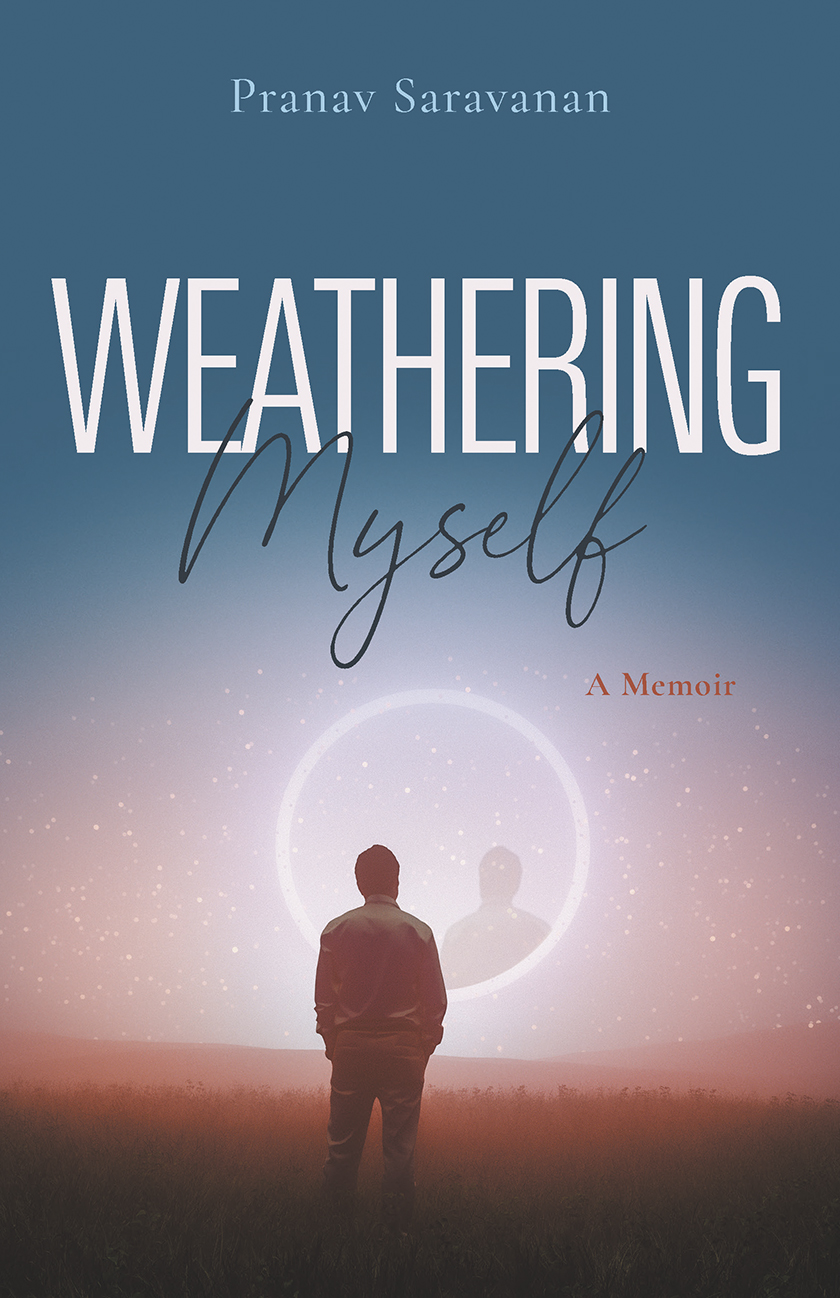
Pranav Saravanan spent his first 25 years as a chameleon, moving through more than 10 cities on three continents and becoming whoever the room needed, while hiding the bipolar traits he first recognized at age 12. After a spiral of heavy drinking, a mugging in Boston, and a DUI, he hit rock bottom at a family wedding in Tokyo in November 2024, and November 10 became his first day of sobriety. In Weathering Myself, his memoir publishing December 8, 2026, he tells that story to start an honest conversation about adolescent and men’s mental health: “We are losing authenticity, and we’re losing human connection. And my book’s purpose is to show the human side of life.”
Content note: this episode discusses suicidal thoughts, alcohol addiction, and mental illness. If you or someone you know is struggling, call or text 988 to reach the Suicide & Crisis Lifeline (US).
⭐ Top Moments
- Why publish it now. “So that’s why I feel like now’s the right time, given how technologically driven the world is, and with how much artificialness there is in the world. We are losing authenticity, and we’re losing human connection.”
- A life of borrowed personas. “And then once I was done with it, the world would burn and crash, and then I’d move to a new identity. So it was basically like I was method acting throughout life.”
- The advice he wants people at rock bottom to hear. “Change little variables in life. Change very little variables in life and start that way. Don’t make the big changes in life first. Make the tiny changes in life.”
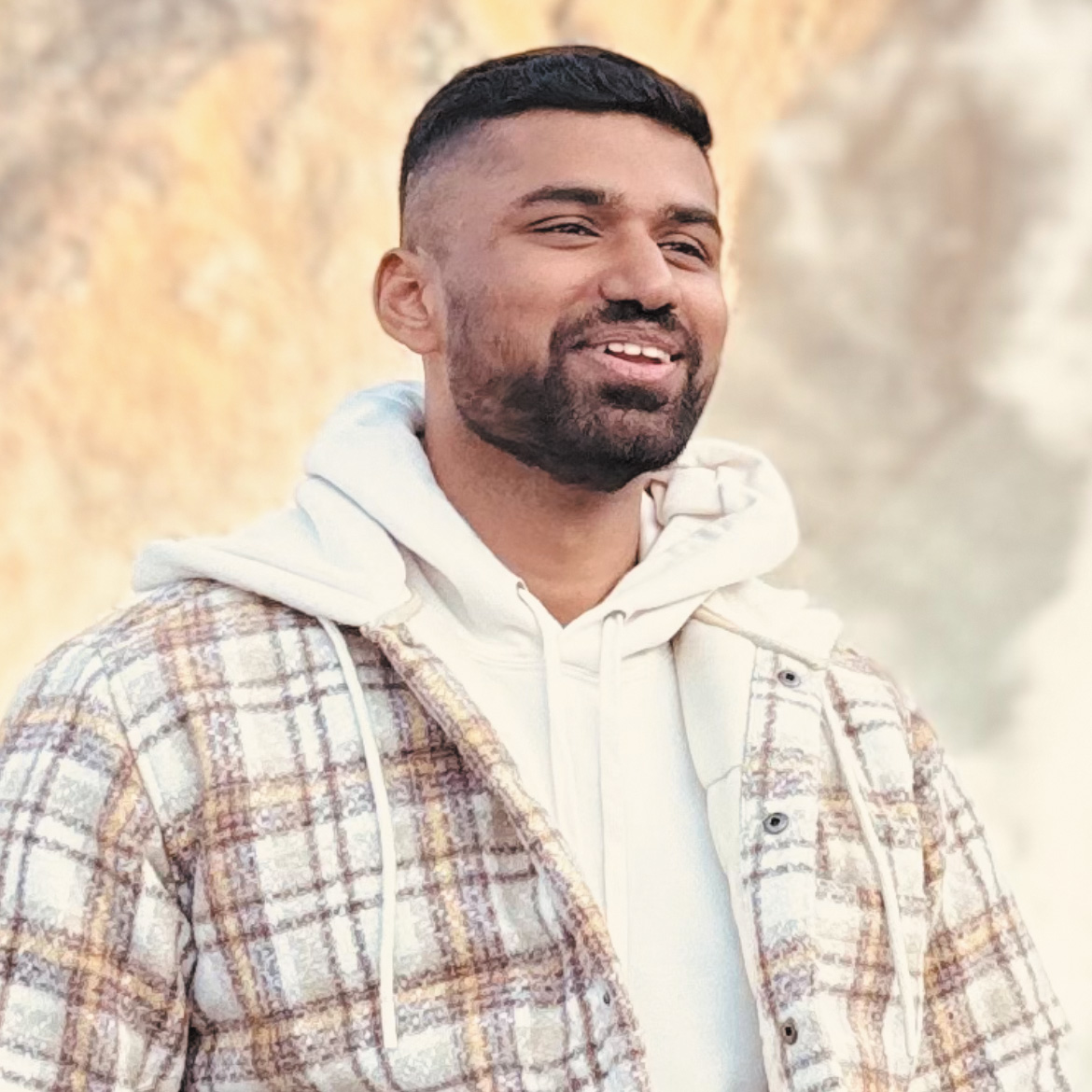
Pranav Saravanan
Pranav is a twenty-six-year-old explorer in life who was born in Chennai, Tamil Nadu, and currently lives in Nashville, Tennessee. Pranav is a strategy consultant who loves the intersection between data and human interaction. In his free time, he enjoys watching thrillers, reading biographies, being a bodybuilder, and exploring new things in life. An avid traveler, he has made it his life goal to travel to every country in the world and learn about various cultures, cuisines, and people. He loves his family and friends, and he lives by the motto of taking life a day at a time and embracing it. This book is his first, and it is dedicated to showing people that taking care of your mental health is important, and ultimately, inspiring people to embrace the challenge of owning who they are.
📚 Books by Pranav Saravanan
Transcript
Lex Statzer: Welcome to Author Hour. Today, I am here with author Pranav Saravanan, who wrote Weathering Myself, a memoir, which is coming soon. Pranav, welcome to Author Hour.
Pranav Saravanan: Hey Lex, thanks for having me. I'm super excited to be here.
Lex Statzer: I want to begin with the inspiration. So what inspired you to write Weathering Myself, and why was now the time to write it?
Pranav Saravanan: For sure. So imagine you're in a different country for 10 days at a wedding that is with a lot of celebrities and a lot of influencers, and there's a lot of cameras, and you're at rock bottom. You have 10 days to survive in this foreign country where you don't know the language, and you don't know what your identity is, and you don't know what life is. Your friends have left you, your girlfriend has left you, your family is about to drop you, your job is about to fire you, and you have no sense of purpose in life. And here you are celebrating the single most triggering thing that could have been, which was love and a wedding. So being in that environment for 10 days, I was at a point where it was either I live to tell the tale on how my recovery and rebound from rock bottom goes, or that's the end of my life, right? And there wasn't really anything in between. It was black or white in that moment, and it was either or. So I bet on myself, and I said that if I ever get to a point where I'm going to be able to share my story and make a difference in our world, that I would publish my story and publish the book and start a dialogue, especially on adolescent and men's mental health. So that's why I feel like now's the right time, given how technologically driven the world is, and with how much artificialness there is in the world. We are losing authenticity, and we're losing human connection. And my book's purpose is to show the human side of life and to be a reminder to everyone that you need to live to love and love to live. And that's the mantra I live by, and it's been serving me well over the last few years.
Lex Statzer: Yeah. So that wedding was in 2024, right? So that's pretty recent that this happened to you.
Pranav Saravanan: Yeah, definitely. It was November 1st to November 11th of 2024. And it took place in Tokyo, Japan. And it's funny because Japan is one of the countries that I've always been fascinated by. I love anime, I love Japanese shows and culture and music. So me going to Japan for those 10 days, I felt would be my calling and a lightbulb moment of, wow, okay, I need to change my life, right? That's what ended up happening. But the way it happened was something I could never have imagined. And yeah, it was a scary moment in life. And the last two years has been a lot of focus on who I am and really understanding my own identity and what my purpose is. So yeah, it's pretty recent. But yeah.
Lex Statzer: So for somebody who doesn't know your story, paint us a little bit of a picture. Throughout much of your life, who were you on paper? And who were you underneath?
Pranav Saravanan: For sure. So I always like to tell people that from year zero to year 24 slash early 25, I would be best described as an extremely extroverted chameleon, right? So the reason I pick the chameleon as my animal of choice to describe me is a chameleon can adapt and change its looks and appearance quite often depending on the environment it's in. And that's what majority of my life was. I was born in Chennai, Tamil Nadu in India, right? Fully Tamilian, and that's where my roots are. But right after I was born, moved to Bahrain with my parents. And after that, after a year in Bahrain, we moved back to Chennai. And then my brother was born. And then two years after that, we moved to Mumbai. And then we lived in Mumbai for two years. And then after that, we ended up going to England for two years. And then after that, it was Hyderabad for a year, Bangalore for a year, and then Nashville for most of my middle school and high school. And then after that, it was college. And then after that, it was work and whatnot. So I've lived in over 10 different cities over three different continents, and like various countries. And that doesn't include all the travel that my family did. And I had to adapt and change in each environment. I was around Tamil people in Chennai. And then when we moved to Mumbai, I had to learn Hindi. And I had to go to a Hindi school, right? So new language, new people, completely different dialect and area. And then when we moved to England, that was the first time I interacted with people of different skin color. And the language barrier was huge. So me having to pick up a third language on top of my first two languages, and also having the fear of being a different skin color, right? So these kind of formative experiences, when you're in elementary school, you don't recognize as, wow, like, there's a lot of change, something needs to like, there needs to be stability. I had never known what stability was. So my mind and body was go, go, go, right. And all of that led to my breakdown and my revelations that have led me to release this book. But on surface, that that's who I am. I'm a world traveler, someone who's highly adaptive, extroverted, can literally get out of any situation you throw at me, right? And I will put on a brave face. And I'll try to execute to my fullest potential and as honestly as possible. But under that is just a kid who has been really clueless on who his identity was for the first 25 years of his life. Someone who didn't know if he was the older brother and the leader in the family, someone who didn't know if he was meant to, you know, what he wanted to do in life, and everything was a constant change. So the insecurity of not knowing stability was always present. And I really compartmentalized that and really portrayed these fake personas, right? And these fake personas were built by these day to day interactions that I had with individuals that meet in these different cities and countries and continents, or it would be celebrities and athletes or influencers and people I could find in social media. So I would look at a Martin Scorsese film, like The Departed, or Goodfellas, sorry. And I'd be like, wow, that's exactly who I want to be like Henry Hill. Like, I want the life of Henry Hill. And then I would obsess over that personality, make it my personality, attract the kind of people I need to make that my reality. And then once I was done with it, the world would burn and crash, and then I'd move to a new identity. So it was basically like I was method acting throughout life.
Lex Statzer: What do you think those masks were doing for you? Do you think that they were a way, like a form of escapism from your real life?
Pranav Saravanan: I think in a way, but I think I just enjoyed it. I don't know if my, you know, I was born to be an actor. I have never acted in my life. So I don't know how that would go. But I just always found it fascinating that I could choose to be whoever I wanted, whenever I wanted. And me having to move every year or two or three gave me the like, feeling of Yeah, of course, I could change who I am. Like, yeah, I was, I was Henry Hill. And, you know, Boston, let me be Jordan Belfort in New York. Do I want to be Mother Teresa in Hyderabad? And then do I want to change into like, a Cristiano Ronaldo personality when I moved to England? Like, those are the kind of conversations and inner monologues I would have with myself over and over again. And it was just this obsession of what, what's my like, you know, like, can I actually become this personality? Right? So that's why I'm telling people like, I'm a, I'm a chameleon, because you give me a situation or a role, I'm going to adapt to the environment and people I'm surrounded by. So, so yeah. Yeah.
Lex Statzer: So at 12 years old, you first recognized yourself in a new way when you were watching a film about a man with bipolar disorder. What was that like? What changed in you seeing yourself on that screen? How did that realization take place? Like what happened there?
Pranav Saravanan: Yeah, for sure. So I'll give you context. This movie called Three in English or Moonu, which means three in Tamil, is a coming of age story about a kid who doesn't know his identity and doesn't know what's going on. But you see him faltering throughout life. And ultimately, he ends up taking his own life. And the inner dialogue or the way they present it is that he is diagnosed with bipolar disorder in his early 20s. And that's what like leads to his episodes, which ultimately leads into taking his own life. And as a 12 year old, I should not have watched that movie, my parents told me several times, and me and my best friend at that time, we said, you know what, screw it, we're gonna put this on, let's lock the bedroom, get under the bedsheets, and let's watch this film. And I mean, I was horrified after watching the movie for the first time, because I saw so much of myself in the little version of him, where he was super charismatic, super outgoing, super loving, and this young, wild and free personality. But then you could see him breaking down as the years progressed. And it just gave me this eerie feeling and thought that, whoa, like, one, I didn't know what this bipolar thing is. Two, like, could I be bipolar, right? And the reason why that even came into my own head was, because of all the masks that I was wearing, like, there had to be a reason why I was doing this and not just wanting to be my authentic self for so long, right? Like, yeah, there must have been a reason why I was doing it. So I kind of planted that seed when I was 12. And when you're, especially in adolescent mental health, you can be misdiagnosed several times, and it could cause a whole lot of misfortune for your family and tragedy, right. And I was well aware of that. And I also did not want to change what I called a quote, unquote, normal life. I wanted to be in normal classes, I wanted to be with quote, unquote, normal people, and I wanted to fit into the normal world, right. So I started putting on personas even more frequently to mask those little bipolar traits that were starting to show up, right. So that movie was like the first domino that led to the 13 years that followed of high highs, low lows, huge successes, huge tragedies, and phenomenal stories that I'll carry for the rest of my life, right. Yeah.
Lex Statzer: Yeah. So you were quiet in that kind of self reflection, you saw yourself in that movie, you recognized yourself, which caused you to go even harder into these personas that you were portraying. What ended up being the catalyst for you realizing, I can't just carry this inside anymore. Like this is something that is true about me, whether I acknowledge it or not. And I think it's time to actually speak up like what happened there?
Pranav Saravanan: Yeah, I think it was a mix of a lot of things, right? When did I actually start making the changes to become the person I am today? I would say I tried to start or I did start failed several times, but beginning of 2023. Right. There was a very intense altercation in the beginning of 2023 that ruined a relationship with my ex girlfriend, right? Okay, that led to a spiral with alcoholism. And that was me drinking five bottles of wine a day, right? I would finish work, come home at 5pm, chug three bottles, like eat a little pasta. Yeah, drink two more bottles, right? And then blackout pass out whatever. So it that that continued through 2024. And keep in mind, I was still working. And I work a strategy consulting job where I'm working 70, 80, 90 hours a week. So how the hell did I do all that? Who knows?
Lex Statzer: Yeah.
Pranav Saravanan: But it really like I was trying I started with therapy. I start then I started to try to quit. Right? I was surrounded by folks who wanted me to quit and who were supportive, but also, I was a liability to myself. Like, in my mind, I was like, I'm gonna keep drinking, drinking, drinking, no one's gonna stop me. So the recovery really didn't fully get into effect until 2024. In 2024. I was mugged in Boston, early 2024. And this was at no fault of anyone, I was heading back from a nightclub and took the Orange Line in Boston down to Forest Hills. And the Forest Hills area, the train station is pretty secluded. And you have to walk through a park with, you know, forestry area. And it's like 3am or 4am. It's like 30 degrees. It's really cold. I'm struggling and my phone is dead. I get out. I'm really drunk and intoxicated. I and I'm trying to turn my phone on. It's not turning on. And I look around. I'm like, holy shit. I'm at Forest Hills. Like this is not where I should be. I don't know this area. How am I going to get back now that the trains are closed and the bus is gone and the cars are gone?
Lex Statzer: I don't know.
Pranav Saravanan: I can't call an Uber. So I ended up getting jumped by a few folks. And that was a traumatic moment. And after that moment, no one in my community in Boston was there for me. And partially because I shut down, but partially they shut down too. They just were fed up with me and I don't blame them. And I have no ill will towards them. But that was a catalyst towards the thoughts of do I even deserve to be alive? Right. And those really dark conversations started happening in my mind, which ultimately led to me and the incidents in November. Right. And so the recovery process was finally starting again. Fast forward to October of 2024, where I was finally getting sober and it was Halloween weekend and I cracked under pressure and I drank way too much, drove my car and I ended up getting a DUI while I had promised my psychiatrist and the whole world that I had quit drinking and it was over. Right. And the DUI, thankfully, no one was injured and everything fell on me. But it gave me an opportunity to reflect on the kind of man I was becoming and the person I was trying to be for the people that care for me. And at that moment, while I was in the holding cell all night, I could only think of one thing. And it was, would my parents even be proud to call me their son? Would my best friends be proud to call me their friend? If I had kids, would my kids want to even look at my face? And these were very dark thoughts, but those were the seeds that were planted into me to be like, you know what, I have to fight for something. This can't be it. I was aware of my potential and I was not willing to give up. And that's when my parents were like, hey, let's go to the wedding in Japan. Let's get an escape and let's see if this might be a change of pace. And in Japan, seeing two people fall in love right in front of me absolutely broke me and I was hammered. I was drunk every hour of the day for seven, eight straight days. I would be disappearing in the streets of Shinjuku by myself, not knowing a lick of Japanese, begging for alcohol or parties at like 12pm on a Tuesday. And so it was bad. And eventually, the last November 10th, the wedding was about to take place and everyone was getting ready at the Grand Hyatt in Tokyo. And everyone was at the lobby. And I'm coming back from a party at 5am with a bag from 7-Eleven with just various kinds of disgusting beers and liquor. And my dad's out in front of the lobby and him and I cross paths. And I mean, everyone knows it. They can smell the alcohol. They can look at my eyes. They're dead. And I'm nonverbal. And everyone's trying to stop me and I'm just not cooperating. And it eventually led to a huge scene where the hotel was like, if he doesn't take care of himself immediately, we're going to have to call the cops. And to give you context, Japanese cops are ruthless. And if I, you know, that was a threat that was given. So thankfully, everyone was able to take me and isolate me and basically hold me in a hotel room for the remainder of my stay in Japan to contain everything that was going on. So November 10th ended up being my first day of alcohol sobriety. And I'm about to hit two years of sobriety from alcohol now. So when I was in that hotel room, the first thought I had was it's time to jump out the window. And then that's when my mom was the person who was there to protect me and make sure nothing wrong happened. She did not leave my side. She was there every breathing second. And she stayed up even when I was asleep. She stayed up staring at me making sure I didn't mess up and do anything wrong to myself or harm myself ultimately, right. And while while seeing that over the course of those 24 hours, all I could do is look myself in the mirror and be like, these people love me. Every single person who's at this wedding cares about me. And I at the minimum owe it to my family to figure this out. And if I if I do figure it out, yeah, ultimately, I wanted to live to tell the tale of just letting people know that being vulnerable is okay. And being not okay is okay, right? It's ultimately what you choose to do with your life needs to make you happy. And only you happy. That's your core principle in life, making others happy that comes afterwards. But as long as your equilibrium is good, and you stay faithful to what's in your mind and your heart and your gut, there's nothing that can stop. And that's the whole point of my book. And the message of my book, it's, it took me 25 years to find my purpose and identity. And now I'm gung ho all about it, right? Like I am, my goal is to be a mental health advocate, like 20 years, 30 years down the line, I want to make an impact. And I hope my book will be able to open the dialogue about mental health with everybody and make it more of an encouraging discussion at work, at home, at different communities, wherever it can make an impact.
Lex Statzer: Yeah, yeah, that's beautiful. You say in your book, and you just alluded to it now, that the thing that pulled you back wasn't willpower, but the people who kept showing up. So obviously, your mother is a perfect example of one of those people. Who else comes to mind when you're thinking back at that time and thinking through your support system?
Pranav Saravanan: Oh, for sure. I mean, there, there are 10 people, 10 to 12 people in my quote unquote, inner circle, who even if we stop interacting this second, and never interact again, ever again, but they're in danger or need me, I will be there. Like even if we have a fallout a year down the line, I'm going to be there for them no matter what, because they were there for me at my absolute worst, and were able to carry me and support me when I needed that support. So my mom is obviously a big one. My dad is the second one, right? My father is very caring, very loving, absolutely has a lot of love to give to the world and to his family, right? Family man, until he dies. So he, he really cares about having as stable of an environment as you can for your family to grow and love. That's his ultimate goal. And he proved that to me over the last two years, right? Our, our relationship was rocky while I was in my alcoholic phase, but it's better than ever. It's stronger than ever. And he is definitely one of my biggest role models and will continue to be until the day I leave the earth, right? So yeah. So so he's definitely one. And then my younger brother, Sai, is, is the third person on the list, right? Sai is the embodiment of just someone who will be there for you no matter what. If he cares about something, he hears very deeply. And he may not show it with his emotions as much, but the kind of stability and sounding board he provides to me and in my day-to-day situations and everyday life is unbelievable. Like no, nobody could replace that. And I could never imagine having anyone else as my, you know, biological brother. So, so I'm very happy to call him not just my brother, but also my bestest friend. So, you know, I'm excited to see, see what life has in store for him and for us together for as we grow old. So that's my family, right? And then there are a few folks also in the book who are there. My first friend is Ben. And Ben is a friend who I met at Berkeley while I was doing my undergrad. And we hit it off from day one. And he is literally a brother from another mother, right? He, he has the old sage advice and wisdom of like Master Oogway from Kung Fu Panda, like Yoda from Star Wars, like his favorite tagline is like, this is the way, I don't know. Like he's phenomenal. And he has threatened to drop me as his friend so many times. And his, whenever he's told me that is when I have significantly made those changes in my life. And the last time when he told me that he was going to cut me out for the rest of my life, and that his kids, whenever he does have them will never get to meet Uncle Pete, right? That hit me like a truck. I was like, this is not going to happen. Like I need to meet his kids. I need to live with like, to see him grow old, everything, right? So that's the kind of impact that Ben has on me. And then there's another Berkeley friend, whose name is Caleb. And Caleb is the energy, the rock star who's like, startup wizard, and will travel the world DJ on the side party all the time. He's like, he's like, the party animal side of my life, right? So he's the person that I could pick up the phone and be like, yo, let's go to Ibiza right now. And he'd be like, already booked a ticket for both of us, right? Like, that's the kind of friend I have in him. And that is a core, core person that I need to have in my life for the rest of my life. Yeah. And then I have some core friends as well from middle school and high school, all my friends from there, you know, A and then J, not going to their full names out, but they know exactly who they are. And T and W, if you guys are listening to the podcast, you'll know who you are. I mean, we had some crazy moments in high school and middle school. And we have done some crazy things. And everyone is so successful. And it makes me so proud to see the kind of lives that they're living. And it makes me want to live just as good and healthy and positive and honest lives as they are. And it really makes me feel proud that friends of mine from when I was 13, 14, 15 are doing so well in life and are truly living to their potential. And I just can't wait to see what what they do. Right. So.
Lex Statzer: Yeah.
Pranav Saravanan: So I'd say those people are like my people. And those are the people who no matter what happens in life, good or bad, I'm always going to be there for them. Not because I feel like I owe something to them, but because I genuinely want to be there for them. Right. And I think that's a big distinction to make. Because a lot of people feel a lot of people feel like, oh, like he may just be doing it for the sake of he feels like he owes it to us or he feels guilty. Not at all. Like I made peace with who I am and my past. I love my past and it shaped the person I've become and the person I'm becoming. And the people who were there in my life, good, bad, have all shaped the person I am. And I'm grateful and thankful for everyone. So I don't feel like I owe anything to anyone anymore except myself to succeed and do what I was set to do. But but yeah, I'll always be there for all these people in my inner circle.
Lex Statzer: Yeah, no, that that speaks to the importance of being there for somebody you care about, even when it's hard, because look at you now and those those voices in your ear really pulled you out of something that you didn't think you were going to get out of. And that's huge. Another voice that is really shaping this narrative is your grandmother. And she had one rule that kindness is free. So don't misuse it. What does that mean to you now?
Pranav Saravanan: Yeah, man, Selvam Patti, right? Like Patti means grandmother in Tamil. And Selvam Patti was my mom's is my was my mom's mom. And she is like my version of Mother Teresa, right? Picture picture an elderly lady, who on your birthday, will donate like 300 free meals to the orphanage and take you there so that you could serve that food to these kids, hang out with them and kind of just, you know, be in touch with the world, right? Understand other people. And she made me do these things since the age of four. And I remember every single time that I've done it. And it's something that my family still does to this day, like, where he be in the US, be it in India, or any other country that my relatives live in. Everyone still does the same thing where whenever something auspicious happens, like we have to give back to the community and our society, right? So I think of Selvam Patti as my true like North Star in my heart. She was she is the singular most important person in my entire bloodline to me. And it's unfortunate that she's not with us anymore. But I feel her spirit within me every single day. And I am at peace knowing that and I'm also at peace knowing that she would be damn proud of the person of the cup. And so Selvam Patti always used to tell us that kindness is free would tell all the cousins that no matter what happens to you, or what happens to someone else, there's always a reason. And the way you react is what will be what defines you. Right? And as a kid, I didn't really understand the gravity of that statement. I understood it as Oh, just smile at everyone. And you know, be helpful. That's what kindness means. Right. But as I've grown older, and as I have gone through the hardships of my own life, a lot of which were self inflicted, I have learned that she did not mean just smile and say yes to everything and please everyone and turn, change your identity every minute, right? She did not mean that. She meant that be authentic to who you are, and be authentic to everyone around you. Think of every she told me every time that you look at you're having a conversation or dialogue with another individual, treat them with the same respect you would treat if the person in front of you was yourself or your family member or someone you deeply, deeply respected. If you can always put those glasses on with the person who's in front of you, you have no idea how easy life becomes. Right. And that's what the last two years has been for me. It's how do I truly understand and embody the words kindness is free, right? Like all kindness is free is, is it doesn't cost any money to say thank you, or please, or sorry, or it doesn't. It's free. Right? Like, why be rude to another individual? When there's no reason to be why blame external factors for things that were in your control, which I'm, you know, at fault for a lot of things that happened in my past. I always blamed on other things, right? But the last two years of really like digging into my own psyche and introspecting and healing, I realized how much in the wrong I was, right? So recognizing that and becoming hyper self-aware was something I focused on over the last few years. But, but also it's just ultimately like, it's not hard to just be kind the way you would want someone to be kind to you. You wouldn't want someone to just be rude to you with no context, right? If someone's rude to you because of context, that makes sense. But, but if, if you and I were having this conversation and I came in with this cold persona and was not willing to engage with you, it would have made this whole like session so slow, dry and meaningless. Right. So it's just what ultimately kindness is free just means like do, do things in society that you would feel like happy doing and feel good doing, right? It's just being a good Samaritan, right? It's truly, it's truly just being a good Samaritan and knowing when to do what and also just recognizing that everyone is going through shit in life. And it doesn't mean that you have an authority over someone to, you know, be rude or be mean or upset or anything.
Lex Statzer: Yeah, absolutely. I think it's, it's so beautiful that her words were with you, even when you're at your darkest, even when you were hitting rock bottom, there was still her legacy was still so important and you were able to bring her with you out of, out of rock bottom and where you are now. And out of all of this, through this whole journey, you not only end up with this beautiful book, but you also have started a nonprofit Root Venture for young men like you. So what is the purpose of that organization? What are you hoping to achieve with that?
Pranav Saravanan: Yeah, for sure. So Root Venture is still in its toddler infancy, infancy era, right? Where the idea came to be while I was in the hospital after a manic psychosis episode last March. And the idea of Root Venture is basically creating an open space and community to all individuals, not just men or adolescents, but all individuals, right? But the focus is on opening the dialogue and conversation and resources and opportunities for adolescents and men as that's an avenue or sector of mental health that's always talked less about. And it's always been, oh, a man should always, you know, like hide his feelings. Right. And I'm very against that. I, I'm on the opposite spectrum of that. I'm show your damn emotions. Like if you don't show me your emotions, like I have no interest in who you are. I'm sorry.
Lex Statzer: Right.
Pranav Saravanan: That's my policy in life. So when, when it comes to this, like, I just think I want to be able to create an environment where men can start that dialogue and really start movement. Right. It's not something that I own entirely. It's basically a movement. And that movement is the first step in my journey to becoming a mental health advocate globally. Right. And that's a journey that might take me five, 10, 15, 20, 30 years, maybe my whole lifetime, but I'll get there eventually. And I'm very confident I will.
Lex Statzer: That's amazing. For somebody listening who has hit their own rock bottom, or maybe they're obsessed with putting on personas that aren't them because they aren't ready to sit with who they are either. What do you want them to hear?
Pranav Saravanan: I think the biggest single biggest thing I want them to know we're here is that there's nothing special about me. Right. I am as average of a human as they count. Like I'm just a normal person in society. It's not like I'm a billionaire or, or anything like that. I am just a dude who is trying to navigate WTF life is right. And I feel like that is what most people are trying to figure out, especially with how the world is today. So a lot of people, especially my age, have identity conflicts and crises, right. And that happens over and over again throughout their lives. So to the people who are at the rock bottom or feel lost or feel like they don't have purpose. All I keep telling like, all I want them to know is just keep going. Just keep going. Change little variables in life. Change very little variables in life and start that way. Don't make the big changes in life first. Make the tiny changes in life. Right. I always was a believer that intensity will always win. Right. I was intense in my love life. I was intense in academia. I was intense in my professional life. I was intense in everything. And that was dangerous. That was very dangerous. And that's what people tend to do when they hit rock bottom or have loss of identity. They become intense in their decisions because they don't understand that there is an alternative to being stable. Like you don't have to go full 360, 180, 360, whatever you want to call it. Right. You don't need to completely change. You need to make those little tiny changes. Right. It could be as little as adding an extra meal to your day. See how that changes you. I promise you it will change you. Right. Or add an extra hour of sleep. I promise you that will change your life. Like it changed my life. I changed. I added 45 minutes to my sleep schedule every day. And holy hell, like it has been amazing. Like I am so in control of my body because of that. It's crazy. So it's those little things that I would have never even thought of in the past. Right. Because there was no one to give me that advice. And I was always in my own head. And I don't blame the people who are in their own head when they're in rock bottom or like at a loss of identity. But all I could tell them is keep pushing and change the little things in life. If it doesn't work, change other little things in life. Right. You get to live only once. You don't get a second opportunity. And you need to make the most of that opportunity. And if that means dropping your family and moving to a new country to go meet new cultures and people and create a new like work as a chef or, you know, write a book or go do it. There's literally no one stopping you. You're the idea that someone's stopping you is something that's placed on you by society. So remove that structure from your head and really think about what you want to do and like how to get there and make those changes slow. Right. And ultimately, my mantra is live to love and love to live. Like what else? What else is there to do? Like just embrace life for what it is and take it up and, you know, have fun with it. Just have fun.
Lex Statzer: Yeah. What else is there? Good question. So Weathering Myself is coming out soon. How can people keep up with you while we wait for the release?
Pranav Saravanan: Yeah, for sure. So I have a website Pranav Saravanan dot com. Easy to find and check it out. Read what's in there. I have some blogs. You can email me directly from there. You can, you know, reach out to me. I'm always there on LinkedIn. I'm also there as Pranav Saravanan and then Instagram is Pranav Saravanan underscore. I'll be posting updates there as well and revamping everything. And then I'll be coming out with Root Ventures official website around the same time that the book launches, which will be within the next few weeks. So I'm very excited for the book to launch and excited to see how it does. But yeah, feel free to look. Just look me up. I'm sure you'll be able to find me. There's got to be some kind of crazy article there from an arrest or from something. But I embrace it. Right. So, yeah. Reach out to me wherever you want. I'm always a sounding board to my friends and people around me in my community. So feel free to just shout out at me and, you know, I'll see how we can collaborate or work together or how I can support you.
Lex Statzer: Perfect. Well, Pranav, thank you so much for not only coming on Author Hour and sharing your story here, but also putting it together in an incredible book that I am certain is going to inspire so many people. Just thank you.
Pranav Saravanan: Thanks, Lex. Thanks for having me. It was a pleasure talking with you and letting people know about the book. So hopefully, you know, if the listeners want to check me out on my website or socials, please do. Definitely, if my story has intrigued you, buy the book, Weathering Myself, a memoir. It will be launching within the next couple of weeks. Really excited to see what the future holds. So thanks, Lex, for having me.
Want to Write Your Own Book?
Scribe has helped over 2,000 authors turn their expertise into published books.
Schedule a Free Consult