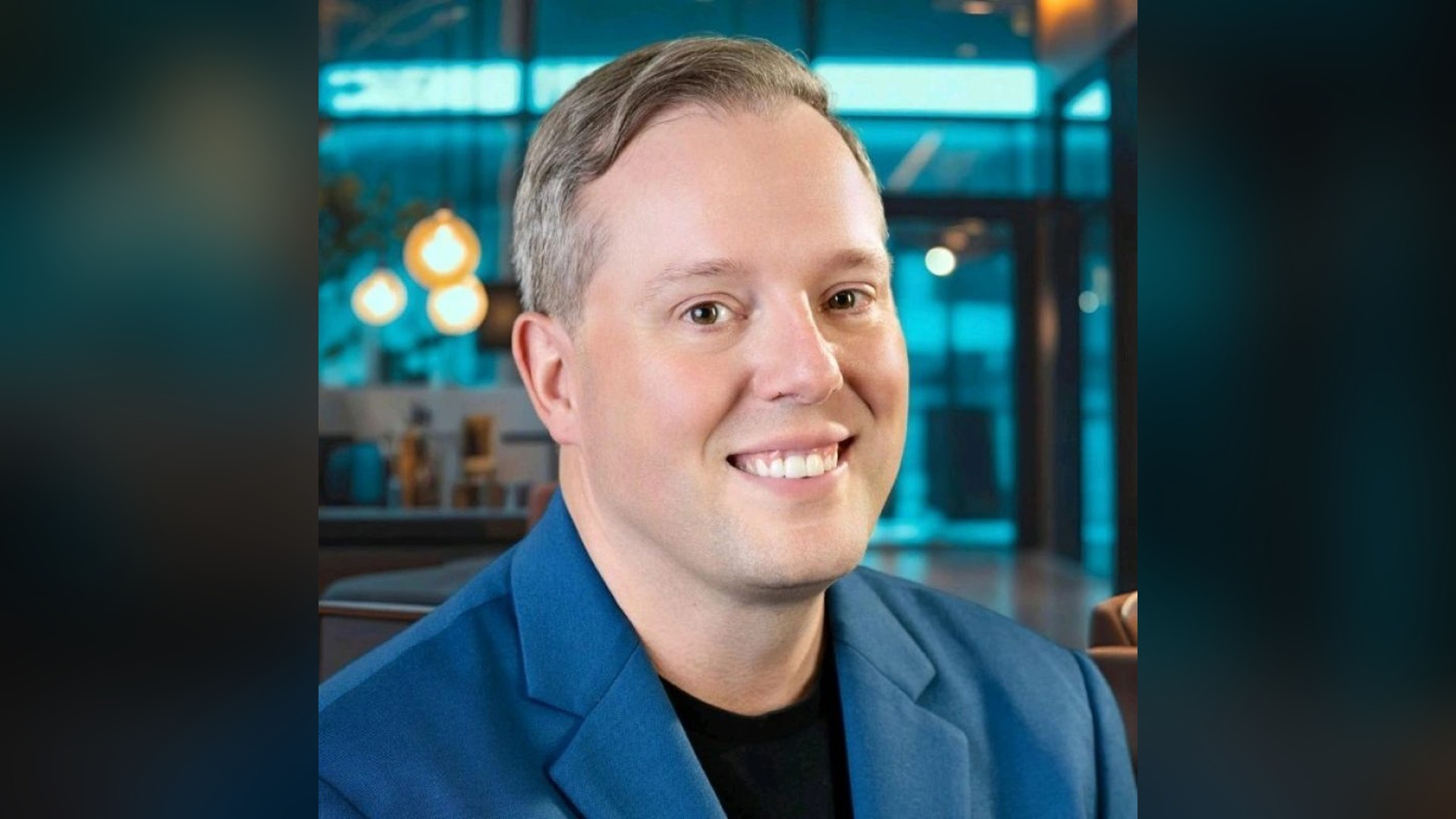
Nicholas Capman's The Passionate Workforce Went to Number One Bestseller and Now Ships to Every New Client of The FDA Group


“I’d say it just gives a little bit more credibility so that when we as a business are talking to people, it’s more about how can you help me as opposed to, I need to see if you’re the real deal.”
Nicholas Capman, CEO of The FDA Group
Nicholas Capman ran The FDA Group out of his car in a parking lot on his lunch breaks. Nineteen years later the company has been named one of the fastest growing companies in America four years running by Inc. Magazine. The book he wrote about how he manages people went to number one bestseller, and now a copy goes out to every new client and every employee who makes it past ninety days.
Four pages in Calibri 11
Clip · Capman on where the book started · 29s
The book did not start as a book. It started as a Word document Capman opened because he kept catching himself saying the same things in the same meetings.
“So I created a Word document. I called it book notes and I had it in Calibri 11 and I had four pages of book notes. And what I would do is I found myself repeating the same things over and over. And so every time I would say something in a meeting or somewhere and I’d be like, oh, yeah, I say that all the time. You know, that’s one of my things. I would just put it in my notes.”
— Nicholas Capman
The push to take those notes seriously came from his Vistage group, where he meets in person once a month with about sixteen other CEOs. One of them told him he thinks differently.
“That was the moment where I realized I wasn’t just regurgitating other people’s ideas. Subconsciously and involuntarily, I had taken everything that I had learned through reading trainings, presentations, seminars, and it kind of had formed into my own thing.”
— Nicholas Capman
The ad that said everything he had been thinking
Clip · Capman on the ad that got him to call · 30s
Capman was not shopping for a publisher. He saw an ad on LinkedIn, and it named, one after another, every question that had been keeping the book in a notes file instead of on a shelf.
“It said everything that I had been thinking. […] How am I going to market it? How am I going to do this? How am I going to do that? And it’s like, hey, do you worry about this, this, this, this? I’m like, yeah, I do. They’re like, do you want to do this, this, this, this? I’m like, yeah, I do. And then I just contacted you.”
— Nicholas Capman
No fluff, and nothing that was a waste
Clip · Capman on the writing and editing · 49s
Capman wanted the kind of book a busy person can get through without a highlighter. What surprised him was how much came out in the edit.
“I was really surprised at how concise it was. […] The person that helped me write the book was just amazing. He was so good. And then the editing process was just so good.”
— Nicholas Capman
“When you get to the end and you’ve cut out all of the if ands and buts, and it was just so concise that there was no fluff. There was nothing that was a waste. I was just really happy with how it came together.”
— Nicholas Capman
Number one, and sixty people at a Barnes & Noble table
Clip · Capman on the one thing he did not expect · 42s
Asked what unexpected good things came out of the book, Capman named one.
“It was unexpected that we would be number one bestseller, right? So that was cool.”
— Nicholas Capman
Everything after that, he said, he had already been walked through in advance.
“I kind of knew from the support of Scribe Media what was going to happen. So no real surprises.”
— Nicholas Capman
The launch itself was a table at his local Barnes & Noble, arranged by walking in and asking. His wife is a perfectionist, and there was a table, balloons, and a poster. About sixty people came, about sixty books went out, and by his count roughly ninety percent of them had come specifically for the signing.
Clip · Capman on the Barnes & Noble signing · 50s
“I didn’t put a lot of pressure on myself. You know, if nobody showed up, I would have been happy. But we probably had about 60 people. We passed out probably 60 books.”
— Nicholas Capman
Where the book lives inside the business
Clip · Capman on the client box and the engraved wine · 57s
The book is not something Capman has to remember to mention. It is wired into two things the company does anyway. Every employee who clears ninety days gets a copy along with a personalized box of company swag. Every new client gets an FDA Group box with a ribbon and confetti, a thank you card, and the book.
“What I put in there is I wanted to send out my book, but I didn’t want to be pretentious. So I also included an FDA Group engraved bottle of wine.”
— Nicholas Capman
There is a third placement, and it costs nothing. When he is in his home office, the book sits on the screen behind him, in frame for every call he takes.
“When I’m at home in my home office, I actually have the book on my screen, so it’s always visible when I’m talking to anyone that I’m talking to over Zoom.”
— Nicholas Capman
A spoke in the wheel of credibility
Clip · Capman on the credibility a book buys · 29s
Capman started The FDA Group at twenty six. He is forty five now, and he remembers being happy when his hair finally went gray, because he needed some level of credibility. The book does that job, and it does it before he opens his mouth.
“This is, I would say, a spoke in the wheel in terms of credibility. Like, what have I done with the FDA Group? What have I done for the industry? What speaking engagements have I done? You know, what awards and accolades? Have I written a book, right? So a book is one of them.”
— Nicholas Capman
That is the shift worth naming. The question in the room stops being whether he is worth listening to, and starts being what he can do for the person across the table.
What’s the ROI on a nice business suit?
Clip · Capman on the ROI of a book · 27s
Capman wrote the book as a personal project. He works in the FDA space but the book is about organizational leadership, so he never expected it to generate business directly. When the conversation turned to how hard that makes a book’s return to measure, he did not reach for a number. He reached for an analogy.
“You know what it is, it’s a nice business suit.”
— Nicholas Capman
Nobody asks a suit to close the deal by itself. It is one of the reasons the deal closes.
“What’s the ROI on a nice business suit? What’s the ROI on preparing before an interview or before a meeting? […] It’s never one thing. It’s a combination of many, many things, but I see it as just a bigger painting of kind of who I am.”
— Nicholas Capman
He reads twelve daily affirmations out loud every day, partially who he is and partially who he wants to become. The book belongs in that column. It is also one of three things he can now check off a very old list.
“Don’t they have a saying, like before a man dies, he’s supposed to have children, write a book, and then something else. I forget. Oh, plant a tree. Oh, well, yeah, I did all those three. I planted a tree. I wrote a book and I had children.”
— Nicholas Capman
What he tells anyone still sitting on a book notes doc
Clip · Capman on writing a book vs running a marathon · 30s
Capman has a second book in him. He has started the notes file again, this time for a book about paradoxes. He also started a technology company, so the time is not there yet. His advice for anyone in the same position is not a pep talk.
“Writing a book is like running a marathon. And so even with the support of Scribe Media, there’s a lot that goes into it. So it’s very time consuming, and it’s also very rewarding. And I think one of the things that people notice is authors tend to write multiple books, just like marathon runners tend to run multiple marathons.”
— Nicholas Capman
He has run one marathon so far. He would like to run another one. He is trying to find the time to train.
Ready to Write Your Success Story?
Join 1,600+ authors who have published with Scribe Media and transformed their careers.
Schedule a Consult
Course
Write and Publish Your Best Possible Book
Six modules. 28 lessons. Everything Scribe has learned helping 2,000+ authors, organized into the same process we use with our professional clients.
A Wall Street Journal Bestseller
The Scribe Method
No catch, just everything you need to write, publish, and own your book.