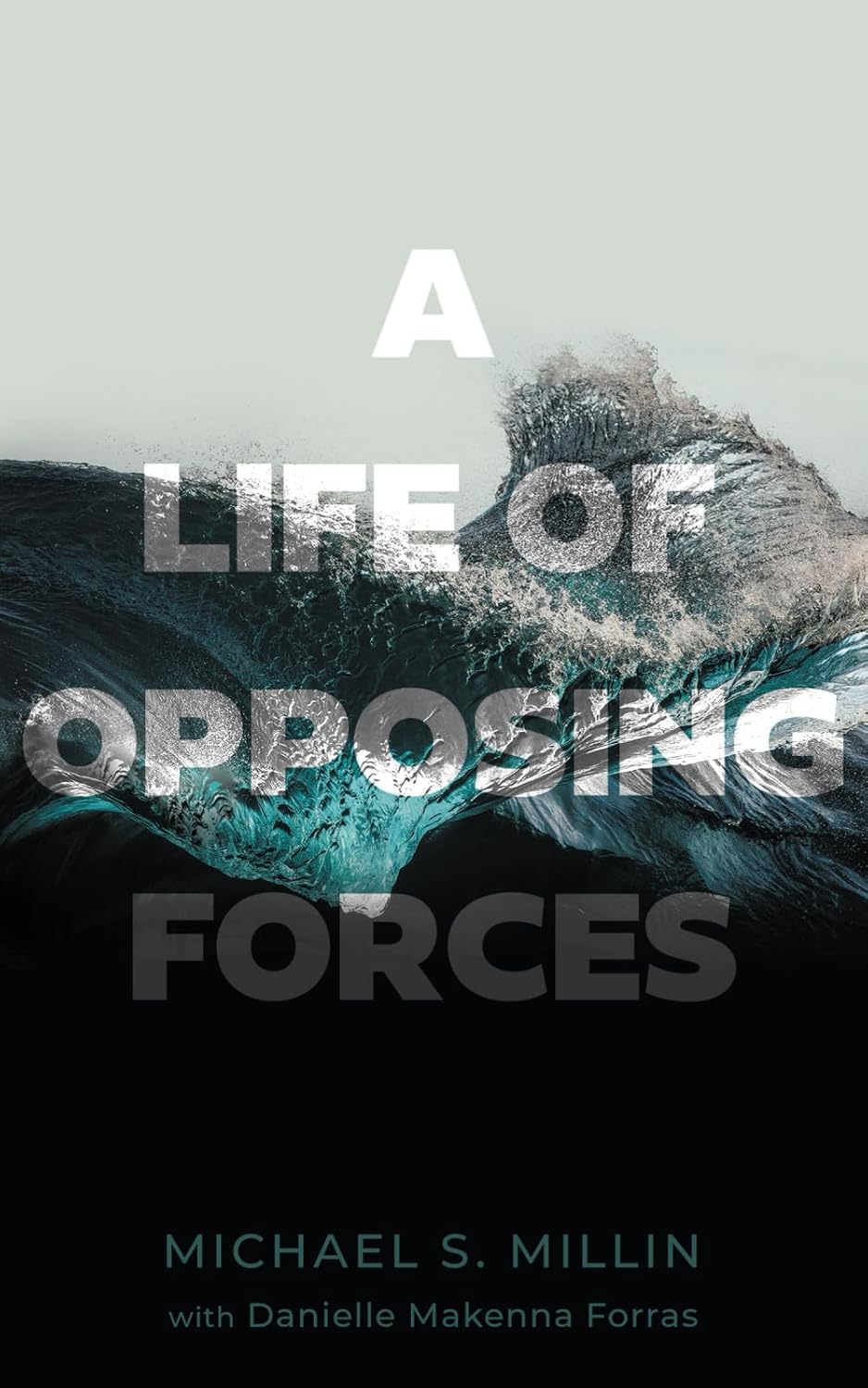
A Life of Opposing Forces: Michael Millin on Breaking the Cycle of Generational Addiction
✨ Episode Summary
Michael Millin grew up in a wealthy part of San Diego watching his parents struggle with alcoholism, addiction and homelessness, then fought his own addiction through a career as a professional surfer. A Life of Opposing Forces is his account of breaking that generational cycle, framed as a letter to his daughter and written for the troubled kid he used to be. He has now been sober for 17 years.
In this episode of Author Hour, Michael tells host Travis Stoliker about the four days alone with a whiteboard that produced the first draft, the friend whose overdose became his sobriety date, why he wanted to show his parents were not entirely to blame, and what surfing big waves taught him about surrender. He also shares how the book is already reaching the readers he wrote it for, in a Ventura County high school and on the counters of his hometown surf shops.
“I always had this feeling like, man, something good has to come out of this.”
⭐ Top Moments
- A framework for kids who need it. “I'm currently trying to get it into the place where I attended high school because I just know that it's basically a framework for kids dealing with generational trauma at home and issues around addiction and all that stuff.”
- Breaking the cycle. “I really wanted to show what my parents went through and it wasn't all their fault. This is something that's been passed down in each generation and it just, the cycle keeps repeating itself.”
- Reconnect with your community. “I want to encourage authors if you're not in your hometown to reconnect with your community.”
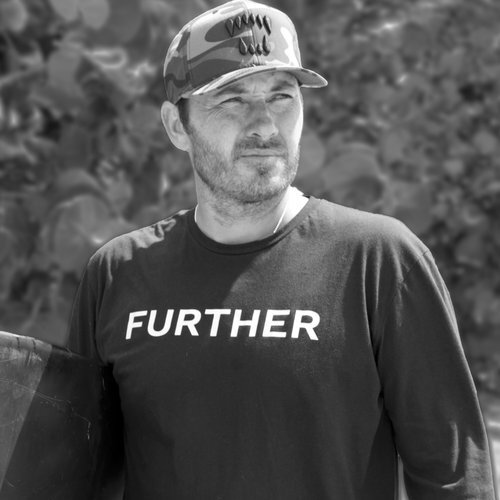
Michael Millin
Michael Millin is a former professional free-surfer who left California with $200 to his name, traveled the world multiple times with no financial support, and lived in Bali for 10 years. He has been surfing for 30 years.
He is a recovering alcoholic with 15 years of sobriety and has spent more than 10 years working in recovery, as a sober companion and managing sober living facilities.
He wrote A Life of Opposing Forces after struggling with complex generational trauma, addiction and loss, and finding a path to healing.
★ Scribe Case Study
Michael Millin's A Life of Opposing Forces Brings His Story of Breaking Generational Addiction to Schools and His Hometown
Former pro surfer Michael Millin wrote A Life of Opposing Forces for kids facing addiction at home. The Scribe Media book is now reaching them in schools and in his homet…
📚 Books by Michael Millin
Transcript
Travis Stoliker: I am proud to be joined by Michael Millin, the author of A Life of Opposing Forces. Michael, really great to have you. Could you introduce yourself and tell us about your book?
Michael Millin: Yeah, Michael Millin. It's great to be here. Nice to meet you, Travis. Yeah, I have a book called A Life of Opposing Forces, and yeah, I've come to find out that authors struggle to describe their book and try to figure out what it's exactly about. What I've been told, though, is there's something for everyone in this book, even though my main focus was writing it to the younger version of myself, troubled youth. I'm currently trying to get it into the place where I attended high school because I just know that it's basically a framework for kids dealing with generational trauma at home and issues around addiction and all that stuff. I walked through all that as a kid and barely made it out of it alive, but happy beard today.
Travis Stoliker: You have so many stories in the book. I wanted to ask you, how did you come about the idea to write this book? Why did you write it? Why this topic with all the stories that you have? What was your hope for the book?
Michael Millin: Like I mentioned earlier, I had a crazy childhood, just insane. I say this a lot. There's always someone who's worse off, but it was wild. The things I witnessed as a kid, I was seeing my parents walk through alcoholism and addiction and watching just crazy fights, fist fights. I've mentioned this before. I watched my dad almost kill a guy with his bare hands when I was nine years old. That does something to a little kid. It freaks you out. Watching them walk through homelessness in my late teen years, seeing them around in my hometown, and I grew up in a wealthy area in San Diego, so it was hard. It was embarrassing. It was demoralizing, all of the above. As I was walking through this, it was weird, though. I always had this feeling like, man, something good has to come out of this. This is just so crazy. I didn't have any friends that were going through this. It's not very common where I grew up, but I feel like if you were to go to an area like Compton or Inglewood, it's more common, the calamity going on, the chaos. Yeah, I always had this feeling like, man, something good has to come in this. I didn't know how it was going to come about, but then I had a friend who had written a book, and he was motivating me to write. He had a crazy story about addiction and stuff. He was like, man, you have a crazy story. You should write. You should start recording. Just do whatever you have to do. Start getting things down on paper. At first, I didn't even want to write a book either. I wasn't interested. I barely graduated high school. I felt like I was a smart kid up to a certain point, and then because I didn't have a very stable upbringing, I gave up on school. I was still able to graduate high school and attend college for a little while. I kept putting it off, and then I got motivated during a certain period, and I went into this four-day isolation box of just getting a timeline together, a whiteboard, making notes. At the other side of that four days, I had the first version of the book. Yeah, it's pretty wild how this has all come about.
Travis Stoliker: Your friend and your hero, Andy, passing away, how did that impact you in your journey to sobriety?
Michael Millin: I was at a point where, like I said, my parents were homeless. I was living in a container, like a glorified shipping container. I had windows and stuff. Nowadays, it's cool to live in a container, but it wasn't back then. I had no toilet. I had no shower, no kitchen. I was just at a bottom. I wrote about this in the book. I remember I was at a complete bottom, waking up hungover one day in that place. It was two in the afternoon or something like that. My dad was banging on the door, trying to borrow $10 from me to get gas, because him and my mom were living in this van, this beat-up van. I just was laying there going, man, this is something that has to change or else I'm dead. I'd almost died already from mixing cocaine and Seroquel. I had a minor heart attack, ended up in the emergency room right after my dad. In the same emergency room, he tried to commit suicide by swallowing a bottle of pills. It's a heavy story, but I feel like you got to be honest about the stuff to reach people, so they know that I'm serious. I'm not just talking things up here. I got the news about Andy. His grandma called me and said he had just OD'd and died. He's one of my best friends. It just was like, this is it. I'm done. I'm going to be dead. If I don't stop today. Actually, the day he died is my sobriety date in the program. I've been sober for 17 years now.
Travis Stoliker: Congratulations. Thank you. How was that 17 years? As I recall, your dad was sober for 15 years and then he relapsed. Was that 15-year tough for you to make sure that you didn't fall into that same trap that your dad did?
Michael Millin: That's a good question, man. No one's hit me with that one yet. Thank you. It definitely was creeping in the back of my mind when I took my 15-year cake. We call it taking a cake for your sobriety. And I was like, wow, this is okay. I really got to lean in here to the program, because I don't want to become a dry drunk. I don't know if you're familiar with that term, but it's like my dad.
Travis Stoliker: What's a dry drunk?
Michael Millin: I mean, God bless him. He got sober, but he didn't work the program, the 12-step program. He leaned into other addictions, gambling, sex, violence. And it's like being a crazy person without the alcohol. And the way you avoid that is by really working the 12-step program, leaning in, attending meetings, being of service to new guys coming through, new or old who are struggling. You got to be in the middle of the thing, constantly thinking of others. Because I've walked through several different periods, really challenging times in my sobriety, because the hardest part is not having any drugs or alcohol to numb the pain. But I got out of it by leaning into the program and finding ways to help others. And I'm sure people do this in other ways, through church or whatever it might be, because as soon as you start helping other people, you're not really thinking about your stuff so much anymore. Right. So that, yeah.
Travis Stoliker: That service above self idea. What is there your title mean with opposing forces? Yeah, man.
Michael Millin: I mean, it was, it was hard to find a title that hadn't been used yet. I'm sure you can relate, but basically the, the battle of light and dark in my own life. And that I'm sure, I mean, so many people can relate to in their own lives. So yeah, that that's, that's sort of how I came up with the title.
Travis Stoliker: I didn't know that you did that podcast with your father. How, how was that? How did that come about?
Michael Millin: It broke me for a good week because I knew my dad had it tough growing up, but he told me things that I didn't know. It's wild, man. I mean, I'll, I'll send it to you if you want to check it out sometime, but it's just, Yeah, please do. It's as bad as it gets, as far as like his mom, you know, beating him and his brother and his dad disappearing with alcoholism and him and his brother living on the street for a while in Hollywood, sleeping in abandoned homes at the age of like seven, eight, nine years old, somewhere around there. And then growing up in juvenile hall and McKinley home, all these home for like home for boys type situations. And so this is what I, this is what I really, cause I've mentioned this before, but I feel like a lot of stories about addiction and stuff. The, the person, I don't want to say they play the victim, but they always kind of blame the parents from what I've read a lot of stories, maybe not all of them, but I really wanted to show what my parents went through and it wasn't all their fault. This is something that's been passed down in each generation and it just, the cycle keeps repeating itself.
Travis Stoliker: What do you think that is too? Is it, you know, I think everyone that I've ever met has addiction either in themselves or in their family and it's touched everyone. Why does that cycle repeat in your, in your opinion? Is it genetic? Is it trauma? Is it coping? You know, cause you're on the top of the world. You're a pro surfer. Kids are looking up to you and things are under the, under the surface are not what they appear like, what, what do you think? Do you have a now 17 years sober? Do you have a good understanding of what you think causes this?
Michael Millin: You know, I, I tried to, I looked everywhere to try to find an answer everywhere, even in sobriety. I mean, you know, going like everywhere from like, I'm like agnostic. I don't believe in God or any spiritual things. This is just some nonsense that keeps repeating itself to diving deep into meditation, seeing different types of healer. I lived in Indonesia for 10 years, seeing different types of healers and psychics and just, just desperate to figure out what happened. And because I had a child and this book is framed as a letter to her, I started having this stuff come up and me, you know, like, what, where is this coming from? And, you know, having said all that, I used to mock Christianity my whole life. I mocked it. I thought it was ridiculous. And, and now I'm, I'm a Christian.
Travis Stoliker: Yeah, I, it's funny. So I was raised Catholic. My grandmother, my maternal grandmother was very big Catholic and I was coming up for confirmation, you know, and, and I asked, I, my grandma was all excited and I asked I don't even really know what this is all about. And he's like, well, you know, this is you giving your life to God. And I'm like, well, I better read the Bible. And so I read the Bible at 12 and it's heavy, you know, especially old Testament. And there's, there's some parts in there that are just real heavy. And I became atheist at 12 and it broke my grandmother's heart, just broke her heart. And I, I lost some friends and I have found my way back to Christianity too. I'm not sure if I'm fully in on, you know, I, I'm not sure about Lazarus coming out of the cave and all of that, but I know one thing for sure, Michael, when I walk into church and my eight-year-old voluntarily comes with me, I feel better every single time being in that community with those people that are waking up early on Sunday and are dressing up and coming to do something together as community. I feel better every single time.
Michael Millin: Wow. That's so cool to hear that. Honestly, like the hair on my arms just standing up listening to you. Yeah. I mean, like I said, I mocked Christianity. This is, this is something that is really just for idiots and it's a way to control the masses. And, and like I said, I'm a Christian now and it's, it's completely changed my life. I really believe this is a spiritual thing going on, a battle that keep like a spiritual thing that keeps plaguing each generation. And it's like, what else would it be? Why would none of my dad didn't want to behave that way. My grandpa didn't want it like his grandpa didn't like, there's something deeper going on here. And, and also, you know, when I was living in, in Indonesia, I saw people use black magic that was so dark and scary and that I don't even talk about it. But so I know that that is real. The evil is real. So that's real. The light has to be real too. And I've also had some pretty amazing spiritual experiences with my wife and with Christ at the center of my healing. Like, so I won't go too into it. Just so I don't freak people out because everyone wants to. Yeah. So there's just been, and that was three years ago when I got baptized and I'm also confirmed. And I mean, I honestly believe that this is the reason why this is in the world right now. Like, cause I was out of yet another bottom in sobriety and I was kind of thinking of just disappearing, going back to Indonesia. I was in LA at the time. And, but then I had this woman come up into my life. Christianity came into my life. This book, I wrapped this up about coming to Christ. Like that's what, that's, that's what this is all actually about. So, yeah.
Travis Stoliker: And we think about that, like your book is helping people and we think about, I mean, one of the most important books ever written, the Bible, right? What else can you buy for 20 to $30 and have so many people's lives changed from it? Think about how many people's lives are changed from the Bible. One of my, when I first started at Scribe about two and a half years ago, I met with one of our authors, Craig, who was in prison, he committed financial fraud and he gets out and he gets scheduled to be on a book tour or excuse me, a little book club. And he gets there and I'm paraphrasing, but he's, he's kind of annoyed because it's like all 80 year old women in the room. And he's like, this is a waste of my time. And he relays that one of the ladies puts her hand on his knee and says, I just lost the love of my life. My husband, we were married for 50 plus years and I didn't think I could go on and I read your book. And if you could get through that, I can get through this and thanks him. And he says of all the accolades, that one moment was the most impactful. What else can do that? But a book and that's what your book is doing, Michael, for so many, so many families that are struggling with addiction and themselves personally. So thank you so much for putting it out in the world.
Michael Millin: Yeah, I appreciate that. Thank you.
Travis Stoliker: So how was it writing with Danielle?
Michael Millin: Like I said, I mean, she's just been a godsend. Like it's, it's yeah. I mean, I, so I wrote that first version that I was talking about earlier and I basically just put it in the vault. I was like, cause I was going through another separation at the time, a breakup. And I was, I was just in a bad way. You know, like the breakups really messed me up. I think more so than the average person, because I, what I experienced as a kid, the something with the, you know, the abandonment and losing somebody love. But anyways, she came into my life and it, you know, I could just be honest with her more so than with any woman I'd been with in the past. I could just, it was, it was kind of like taking, catching me off guard. I was like, God, I'm just, why am I telling her all this stuff? You know, but she, she just, she was nonjudgmental. And so anyways, I gave her the, the stories to, to read and, and, you know, and she came back to me within like a day or two and she was like, you have to do something with this. Like, this has to become a novel. I don't know what we're going to do with it, but like, this is really powerful. Like you have to do something with it. And that, yeah, that it took a little while before we actually dove into reaching out to you guys and doing this, but that's, that's what sparked it. It was, it was her really. Wow. Yeah. And she, I mean, she, like I said, like I, I barely graduated high school and she's really smart. So she helped me like bring it to a certain level. Right. And then we started working with you guys and you just helped us like take it through the roof to a whole nother level. So, yeah.
Travis Stoliker: Thank you so much for saying that. So the team will love to hear that. So thank you, Michael. It's the truth. Can you tell me the story of Bali and the arrest?
Michael Millin: Oh, yeah. Yeah. I was, I was working at a, at a cafe under the table, you know, because I moved out there when I was about a year sober and I was just looking for adventure freedom. And, and I missed out. Like I, I have some good experience. It was surfing when I was younger, but I missed out on a lot because of the issues with alcoholism and all that. So when I got sober, I was like, you know, I want to start living some of my dreams again and getting out and experiencing the world. And so I just, I went to Indonesia and I had to find work, you know, like it, it's a third world country. Have you ever been out there?
Travis Stoliker: No, I wish. Yeah.
Michael Millin: It's really cool. It's an amazing place. So I, I was doing things like I went to Australia and I worked in the mines for a period of time operating like D10 bulldozers and all this huge heavy machinery, which I'd never even stepped foot on in my life, you know, but they taught me how to do it under the table. And I, I mostly ended up working in addiction treatment out there, but this was a job where I was working at a cafe under the table, no working visa. And, and most, most expats do that out there. But anyways, one day an undercover immigration officer walked into the cafe and, you know, said, Hey, are you, are you Michael Millin? And I was, I didn't think anything already, you know, he had a camera around his neck, like he was a tourist and he was like, I was like, yep, that's, that's me. I was going to help you. And he's like, and then he pulls out a badge and he's like, Hey, I'm, I'm undercover in the immigration is how they said immigration. And we got to take you in, you know, and I almost, I almost had a heart attack. Oh, another heart attack. But yeah, I, when sued was like a month of just being drilled by going into the immigration office and I didn't know what was going to happen. I was like, cause they can do anything they want there. They can throw you in jail. I mean, they execute people for having drugs there. Wow. It's, it's, it's like the, it's the wild west. So what ended up happening was I got deported to Singapore. I paid a fine. I got deported to Singapore, slap on the wrist and was able to come back. You know, I didn't work under the table anymore. After that, I did everything the legit way.
Travis Stoliker: What does your experience with surfing and surfing in general? What are the lessons in that for life?
Michael Millin: You know, I, I actually, I surfed yesterday because I don't, I don't know if you guys, are you in Austin? No, I'm out in Michigan. Okay. So I don't know if you've heard, but the waves have been big here in California on the, on Yeah. So I went out yesterday and there's just something about taking like a, but yesterday I took some waves that were probably like over 10 feet on the head, you know, just, you know, maybe bigger, you know, it's, there's a lot of ego in surfing, so you gotta make sure you don't like make, you know, call it too big. Right. So, but it was, it was, it was a big swell for California. And there's just something that like, it just brings you into the present moment. Like nothing ever has in my life. Maybe guys get it from skiing or skiing off huge cliffs or whatever it is, you know, but it just, it locks you into the present moment. It, it has taught me how to take a beating and surrender to the beating until the flogging is, is over instead of like fighting it. You know, it's like, and maybe guys get it through jujitsu. Like sometimes I feel like I'm wrestling the waves and they're just, they're ragdolling me underwater to, yeah. So just take the beating and surrender until things are clear. There's so much that has come out of it, man. And it's also just for me a way to stay centered and balanced. Like when I, when I paddle out, like I still try to get out most days, you know, and it, it just, it makes me feel, it pulls me out of any fog I might be in for the day. It's like a salt water cleanse.
Travis Stoliker: Yeah. I don't know how else to put it. It's beautiful. I wonder too, if there's lessons in there for addiction too, you know, going with the flow, sticking to the plan, you know, as much as you can, letting the, letting the waves pass. When you have those feelings of returning to the old bad habits, this too shall pass.
Michael Millin: Absolutely. Yeah. There's a, there's a lot of, you know, old corny sayings, like, like if you're going through it, like you can't stop the waves from coming, but you can learn to surf, right. You can, you can have some fun with it or get some discipline.
Travis Stoliker: So you've lived so many lives already. Like, how did you was, how did you go so far in surfing? Is this, are these two parts, right? Is, is the reason you were such a successful surfer also what drove some of your addiction and are you, you know, do you go all in and you go that far? Like, do you think that there's some parallels or connections there that you had to. Replace, you know, like you would mention your father, when he went sober, he replaced that with gambling and sex addiction. Was that a risk for you that you would replace your addiction with something that equally damaging?
Michael Millin: The first title of this was all or nothing. That was the first, there you go. It was, but there was too many people who had used that title. So I was like, oh, well, I find this that no one had used this title. That's why I really went with it. And it's pretty cool at the end of the day. But yeah, I've always been all or nothing. Like with surfing, I actually, technically I turned pro, you know, I was getting paid to surf, travel, all that. But I talk about this in the book. Like I, I failed miserably at being a professional surfer. Just because of everything I had going on, you know, no foundation. But definitely there's the, like, I see this a lot of my peers too, who are similar, like that it's like this addictive personality that drives them to be really good. That's really creative. There's like creativity pouring out of them all the time. And it's something that can be, it take you really far, but if you don't learn how to manage it and make it sustainable, I feel like it'll, it'll get you in the end. Definitely. Yeah.
Travis Stoliker: Does that being in that circle with people that are pro athletes, is, is that in those circles is, is addiction really prevalent? Yeah. Yeah, absolutely. So I feel you as this young kid also feel this, like everybody around me is doing it. I want to be a part of the crew. I want to fit in. I want to, so it's, it's also just probably just ingrained in this is what we do together.
Michael Millin: Yeah. You know, and I started surfing to, to serve as like a, it was like a survival mechanism. It was a way to stay away from the home, you know, the, my parents and just be in the water every day, focusing on getting better at something. I'm getting exercise. I'm, I'm build, I built a community that became like a family. It was, it was really, it was everything to me. And you know, not everyone is like that in the surfing world there. There are a lot, a lot of people like that, but I feel like things are changing a bit. I like, it seems like kids are getting smarter and they're staying away from alcohol more and drugs. And especially with this whole like fentanyl crisis that happened in the previous five years or whatever, like there's, but there's still some of it out there for sure. Cause I, I, I hear like, I talk to people and then they'll say like, like kids need your book. Like, how, like, how can we help you get this out there? Like I said, I'm working on getting it. I already got it into one high school in Ventura County. I'm working on my high school now and I hope I can just get some momentum and start getting it to more high schools around the nation. And yeah, that sort of thing.
Travis Stoliker: I have an eight year old and I, I worry, I worry when he reaches those points when, you know, some of his friends are going to start drinking and some of his friends are going to start doing drugs. And I worry how to handle that conversation with them, because I know that if I'm, if I'm too forceful, it will almost make it more attractive, right? Cause there will be this rebellious period. If he's anything like I was, I'll want to do the opposite of what my teacher and my, my parents told me to do. Have you thought about like, what would you tell, I know your book is about this, but what would you tell that young Michael? What, what would be convincing to that young Michael of these dangers to avoid? And how would you navigate that conversation that doesn't make it even more alluring?
Michael Millin: Yeah, I've thought about this quite a bit actually, because, you know, I, I think about the way my dad approached it and he, you know, he was sober throughout most of my younger years that I can remember, like, you know, after the age of seven or eight, but he never, like he, he, his, this is how he put it to me. He was like, when I started drinking a little bit and stuff, he just, he would say, you don't have a chance, kid. You don't have a chance. This is where you'd say, you say, you know, you're, you know, I'm a hundred percent Irish. You know what things are like on our, on our side, your mom's side is like native American and, you know, and mixed with French. And he's like, you, like, you, you've got no chance. I don't know what that did to me, but I remember thinking like, I didn't understand why he couldn't control how much alcohol he drank. I thought I looked down on him. Like I really did. I was like, how could you not control how much alcohol you drink or like, but then I found out, right. And it's like the addictive personality, the all or nothing thing. But then I also think there's a spiritual component to it.
Travis Stoliker: Yeah.
Michael Millin: But I think the way that I would approach it with a young person now is I would at least I'd wait till they're at least a decent age where they could, you know, understand what I'm trying to explain, but I would educate them a little bit more about what alcoholism does. And then I would show them what it does. I would probably take them to like, not to super sketchy, scary areas, but maybe some parts of Skid Row or that aren't super dangerous. So you like, so they can kind of, because I'm a visual learner, like I need to see what something does and the effect it has on people to understand it. I can't just read about it. I got to see like, wow, these people are addicts. They're living on the street, you know, rolling around in their own crap. And like, I just, you know, it's like, so just kind of like planting some little seeds here and there, you know?
Travis Stoliker: Yeah, that's really good advice. I appreciate it. That's going to be helpful. What is next for you? How do we get this book into schools? How do we get you speaking at events to, to share? I mean, you have so many great stories. So you are just the perfect public speaker, get you on podcasts. What's next for you?
Michael Millin: Yeah. I mean, we're, we're chipping away at that right now. And actually it just feels like things are starting to click, right. Even just in this last week or so, you know, and I've felt that before, but because I'm still healing in many ways, you know, like I really, like from just a life of being in fight or flight, I've had to, cause you know, I didn't even know it, but I was in like a low level of anxiety my whole life. And so I'm just learning, I'm working with the doctor and stuff to, I'm on a certain protocol now just to kind of bring it down a little bit and be more level. Right. But you know, now that I'm getting healthier and stuff, like really making a push for the book, like, yeah, doing stuff with schools, it looks like I'm going to be getting some help with sort of like from like a manager type of a person, you know, who has experience in this area. And cause yeah, I mean, like I said, Scribe helped me take this book to a level that I never thought I could reach, but you know, it's like, we didn't really go with the whole marketing plan. Not yet anyways, with you guys. Right. So we kind of been like trying to figure out how to do this on our own and I've been able to get on some pretty cool pods. Awesome. So yeah, yeah. Just, just keep chipping away, man. It looks like I'm going to be in, in Barnes and Noble and in my, in my local city here. Awesome. I just, I, which is, you know, that's, that's, that's pretty cool. So if I can just keep chipping away, getting more Barnes and Nobles and high schools and whatever it takes. Right.
Travis Stoliker: Man, that is a great way to look at it. And, you know, obviously we're here to support whenever you guys are ready, if you need it. And one of the things that one of our, my favorite authors of ours, obviously I can't pick favorites, but Eric Jorgenson, he wrote the almanac of Naval and he's on his fourth book with us and was former CEO. He talks about how authors over index or over focus on the launch week and forget about the long game. That it's just a little bit of effort for the book every week, just a little bit. I'm going to send these two emails to these two schools. I'm going to reach out to this agent, this publicist, and just put them on, you know, get me on their radar. Do a one speaking event or one podcast appearance a week, just those little things end up compounding and you're getting that, that momentum going behind it. And then it's the long tail that usually sells a lot of books. A lot of books have their most successful. Rich Kurtzman is one of them that is just a favorite of mine. He had his biggest selling week, two and a half years after his launch. And where there's so many stories that we have of authors that say, I did this one presentation and then that led to this board seat for this fortune 100 company. These little things that happen as a result of your book and your book is so, so good. You have so many great stories in it. It's, it's, it's definitely going to happen.
Michael Millin: Yeah. And I just wanted to mention that it's been a pretty big deal moving back to my hometown and pushing the book and getting support in my local town. Cause we've been, you know, I grew up in San Diego, but we've been in LA for like the, most of the last five years. And, and then Hawaii for a year, we actually wrote the book when we were in Hawaii. And, but just being back in my hometown, it's like, you know, I mean, moving forward in the future is going to be about like local, right. Being local. And, and, um, I, you keep hearing that and it's so true because like, even just walking into a couple of surf shops and one, I used to work out when I was a teenager and I, you know, I tell them about my book and then now they're carrying the book, like, you know, they put it up front, right near the front register. I was like, man, that's awesome. Just getting in some local core surf shops and hopefully my high school and just.
Travis Stoliker: Yeah. So it's a, you should do a book signing in there to get those in there. And yeah, yeah.
Michael Millin: There's opportunity for that too. And yeah, maybe at the Barnes and Noble as well. And, and in my hometown here, but, um, yeah, I want to encourage authors if you're not in your hometown to reconnect with your community. You know, I was, I was hesitant because I'd been gone for so long and I thought maybe, maybe, you know, there'll be some, like, it'll be tough or something. I don't know. I was in my head about it, but it's been, it's been really amazing. Like there's been just so much support from the local community.
Travis Stoliker: And I'm so glad to hear that. Well, Michael, thank you so much for joining me. And of course, you've got my cell phone number in the email. Call anytime we're cheering for you. And I look forward to our next conversation on author hour.
Want to Write Your Own Book?
Scribe has helped over 2,000 authors turn their expertise into published books.
Schedule a Free Consult