Building the Fort with Chris Heivly
✨ Episode Summary
Chris Heivly spent his career as a startup-community pioneer, from the early days of MapQuest to a decade helping cities grow their own entrepreneurs, and he wrote Build the Fort with Scribe Media to put that hard-won method on paper. Three years after launch the book is still relevant and still selling in bulk to communities, it carries a foreword from Brad Feld with endorsements from Steve Case and Richard Florida, and it made Chris the recognized voice in a field he helped define. The man who failed freshman English and was told “you can’t write” is now a multi-book author working on his first novel.
⭐ Top Moments
- From “you can’t write” to published author. Chris failed freshman English in college and carried the verdict for years: “So I always had this thing that said, you can’t write, you can’t write. So when I talk about the challenge, you can’t have a worse challenge than me.” He wrote the book anyway.
- Three years later, the book is still working. “It’s still very relevant. People still buy in bulk. I go speak on it.” Build the Fort also carries a foreword from Brad Feld, with endorsements from Steve Case and Richard Florida.
- Why he bets on books over everything else. “There’s something about books, the longevity of them and the timelessness of them that we’re contributing to future generations.” As Chris puts it, “We’re planting seeds of trees, we’ll never sleep under, but somebody will. And this is the writing version of that.”

Chris Heivly
Chris Heivly is a life-long entrepreneur, a multifaceted investor (angel, corporate VC and micro VC) and for the last 12+ years a start community builder and consultant. He has been dubbed the “The Startup Whisperer” due to his experiences with helping founders, investors and startup community enthusiasts create environments for success.
For over 30 years, Heivly has worked at the highest levels for some of the world’s most recognized brands, including co-founder of MapQuest, which was sold to AOL for $1.2 billion; Rand McNally, the world’s largest map publisher; and Accenture, the largest multinational management consulting, technology services, and outsourcing company on the planet. He has also personally directed over $75 million in investment capital on behalf of these and other organizations.
Heivly currently serves as one of two managing directors of The Startup Factory, one of the largest seed investment firms in the Southeast. Under his leadership, the firm has made 35 investments in just four years in emerging technology companies.
After TSF, Chris joined Techstars, the world’s largest ecosystem that helps entrepreneurs build great businesses, to develop a new set of products and services focused on helping startup communities grow. This role leveraged Heivly’s experience in building the Raleigh/Durham ecosystem with the expertise of Brad Feld (Foundry Group, Startup Communities, The Startup Community Way) and the Techstars staff. Over the past five and a half years, Heivly created a team of 12, generated consulting engagements (3 months to 3 years), and materially changed entrepreneurship in under-developed cities (Ft Wayne, Indiana; Lima, Peru; Buffalo, New York; Okanagan, British Columbia; Taipei, Taiwan and many others).
Heivly has become a sought-after speaker and go-to source for media. He has been quoted in major national and international outlets such as Forbes, Inc., the Washington Post, TechCrunch, Crain’s Business Journal, Huffington Post, Tech Cocktail, and the Financial, and has appeared in major-market TV stations across the U.S. Because of his stature in the startup world, he was heavily featured in the documentary Startupland, which showcased the world’s most renowned entrepreneurs and startup experts. He is a contributing writer for Inc.com, the nation’s leading entrepreneurial magazine for entrepreneurs and business owners, and has a significant following for Heivly.com, his own highly respected blog that offers brutally authentic commentary on startups and the startup community.
His book, Build the Fort is about how to take the lessons you learned as a 10-year old and apply those lessons to starting anything. His book was inspired from a widely acclaimed TEDx talk in 2014. The book focuses on the months leading up to the decision to start a company and those first three critical months of getting your idea off the ground. His insights are being applied in multiple realms, from any individual with a dream, to startups and companies that aspire to be more innovative, to emerging entrepreneurial communities.
Today, Chris is semi-retired, and picks a handful of meaningful projects to get involved in every year. He produces and hosts a podcast, Your Startup Community with Brad Feld and Ian Hathaway and expects to release his 2nd book this year, Build The Fort: STARTUP COMMUNITY BUILDER, A Global Field Guide for how to get involved, create impact, fund and accelerate your entrepreneurial ecosystem.
★ Scribe Case Study
How Chris Heivly Went From Failing English to a Multi-Book Author With Build the Fort
Told in freshman English that he couldn't write, Chris Heivly wrote Build the Fort with Scribe Media anyway. Three years later it still sells in bulk and made him a recog…
📚 Books by Chris Heivly
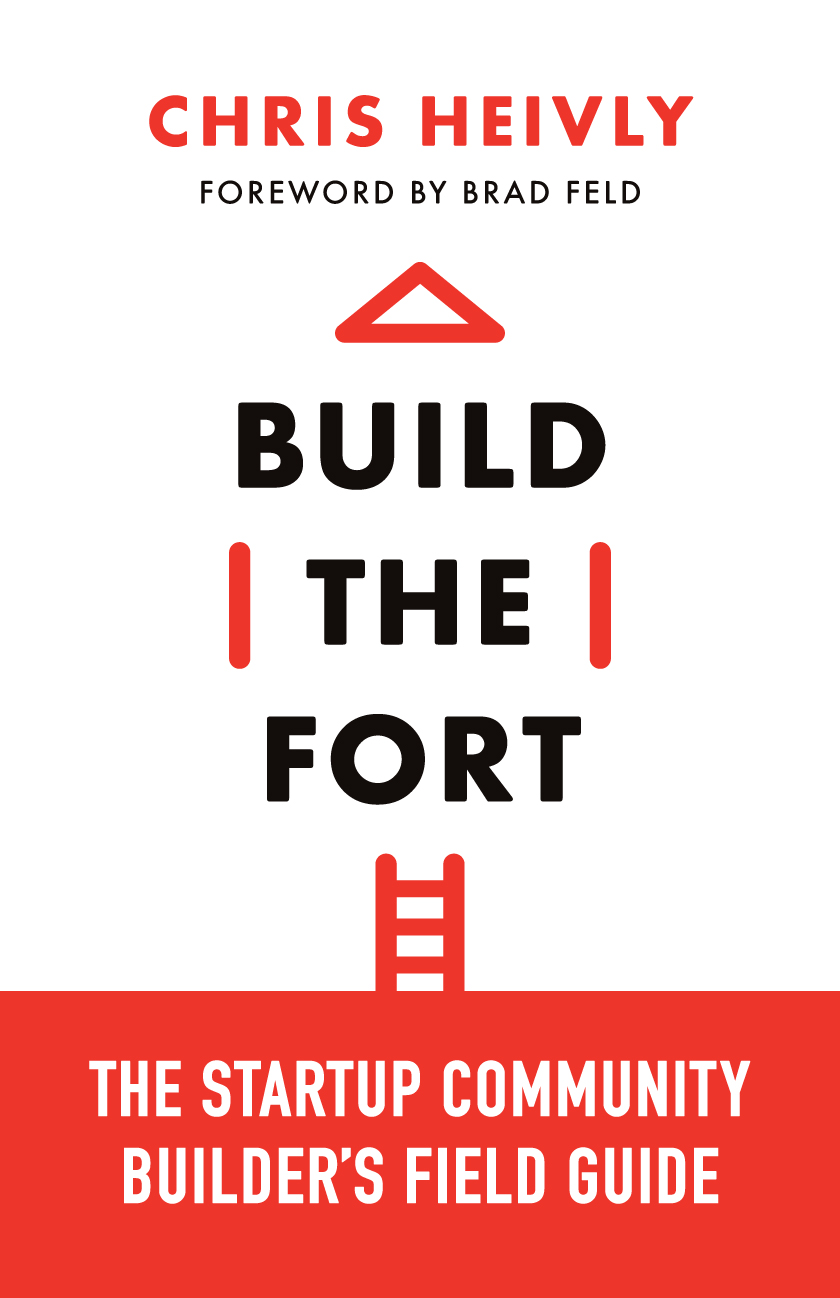
In this episode of Author Hour, Eric Jorgenson sits down with Chris Heivly, author of Build the Fort: The Startup Community Builder’s Field Guide. A MapQuest pioneer turned startup-community expert, Chris was once failed in freshman English and told he could not write. He wrote Build the Fort with Scribe Media anyway, landed a foreword from Brad Feld, and three years later the book is still relevant, still selling in bulk, and still fueling the talks he gives around the world.
Transcript
Chris Heivly: I failed freshman English in college and I failed on my writing, not on the grammar tests. And the professor said, why do you always write about sports? And I said, did you tell me I needed to write about different things? He said, no, I left it up to you. Well, then I wrote about sports. I mean, I'm 17 years old and this is what I know, but he failed me literally like flunked the class. I had to retake it, you know, later. So I always had this thing that said, you can't write, you can't write. So when I talk about the challenge, you can't have a worse challenge than me. You've been told publicly that you're a failure with writing. You told all through college and high school, I couldn't write. But when I got grad school, my professor said, just vomit on the page and edit it later. Like just write. Chris Hively, it's an honor to have you. Thank you. Thanks Eric for having me. Before we like get to the book, can we establish some background, just give us the broad strokes of Chris. Yeah. Well, you know, it's always easy to start kind of chronologically, but I'm going to start with the end. Someone introduced me at a talk I did recently as a serial instigator. And I kind of love that. I'm like, I'm taking that, sorry. But you know, from building forts as a kid to was a geographer undergraduate and a graduate degree in geography, which is probably the only geographer you will ever meet. Maybe, I don't know. That turned into, you know, MapQuest and Ray McNally, which you have to be over 40 to know what Ray McNally is, you know, so cut my chops in the mapping industry. And then, you know, with the success of MapQuest became an investor, ran a corporate venture fund. This is that I could sell people I have career ADD, you know, three to five years. The last 10 years, just trying to help entrepreneurs and mostly folks on startup communities and how great communities foster great entrepreneurs and great entrepreneurs help create great communities and what that kind of is and kind of become an expert in that over the last 10 years and now mostly retired and speak and write. So that's it. That was the second version. I love the count. You know, what are you going to do with the geography degree? Oh, build a billion dollar company. That's what I'm going to do with it. Well, I can tell you, if my dad was sitting here right here, I remember the day I said I'm going to be a geography major and he was just like, what the hell are you going to do with that? I was like, I don't know, but I really like this shit. So we're doing it. Yeah, that was a flyer class I took in college. Actually, I really, really enjoyed it. It is like one of those fascinating things. And I met the history that I've read on on geography. These things seem they seem boring once they're figured out. But the the problem that they present to people who had to figure them out and the creativity it took or courage in the case of like all the physical adventures is unbelievable. Yeah. Yeah. And I mean, I got a wall behind me out behind that stuff of, you know, antique maps and atlases. And I still love that stuff. And there's history in there and boundary changes. But yeah, I'm a historical map. I have one of my own that I love that sitting behind me. It's a map of Europe. It's probably circuit like eighteen thirty five. And, you know, at that point, it's all hand like handwritten or drawn, hand drawn. That's probably a good. But the level of detail, Eric, it's so you're just like, how did they do this at this time period? Even, you know, most maps are made from other maps, by the way. So how did he incorporate probably he, you know, a cartographer do all that? You know, I'll take a picture of it and send it to you and you can see, you know, even like a mountain profile, you know, 3D mountain profile. That's just like, oh, it's just along the side. It's an afterthought. Yeah. So that's my favorite. I can stare at that for, you know, an hour. That's awesome. Yeah. Please, please send me a picture. I think the I think those the map, those historical maps and the stories around them are really fascinating. And then try to understand how they got to actually the end product. Right. I mean, that's, you know, maybe that's, you know, to Roar and both of us saying like, OK, so how the hell did you get to this place? Right. And the snapshot that it represents, what the favorite one I have hanging in my office is the Salviati map, which I think is like late fifteen hundreds, early sixteen hundreds. And it's like Europe and Africa are well fleshed out. And it's only the east coast of North and South America and nothing past it.
Eric Jorgenson: Nothing.
Chris Heivly: But they remarkably, they just left the white space. Right. And so they have a blob. Right. They kind of have the outlines of kind of the West Coast, but it's just like, I don't know what's going on. And it's like there be monsters like, you know, but the white space is this sort of call to action of like, we got to fix, we got to finish this map. Like, show me what's over there. You know, go, go west. Yeah, that's so cool. Yeah. Well, another area where we're connected. I love the maps. Maps tell a story, man. They really tell a story. Yeah. OK, so that brings us. You say now you're retired, authoring, speaking. When did when did books sort of become a part of your career path? Yeah, I don't think my story is too, too much different to anybody else. You know, if I if I kind of really peeled it back, I'd probably find my dad is an was an avid reader, probably read four to five books a week. I enjoy reading. So, you know, I think books were always an important part in our family. I don't I didn't start writing my first book. Scribe helped me with my second book. But so after he had passed some maybe in some weird way, I kind of wrote it for him. I don't think so. I think like a lot of people, I just knew that I wanted to say something in a form that I hadn't. You know, that wasn't a 30 minute speech or or a 500 word blog post. Right. And I will also say I love the challenge of doing something that scares me. And so, I mean, it really was scary to go. Can I really write a book? I don't know. So that's kind of what the book thing did, obviously, as a speaker. It's I always knew, like, tactically, it's good to have a book. Right. So maybe all those things combined. But I don't think I wrote it for money or, you know, consulting or like a lot of people do. I wrote it kind of for me. Just to yeah, just to have written it. Yeah. Yeah. How did it stack up? I mean, you've you've climbed many mountains in your career and you were. So you say intimidated by this in some way, how did it now looking back, how did it stack up against the difficulty of building a company or portfolio or a community? Yeah, I think you're going to smile when I say this. You know, whenever we start a company, we're like, I have no fucking idea what I'm doing and, you know, what are we going to do? And then there's all that fear and doubt that kind of creeps in and the voices in your head. You know, this was no different. So how does it play out? You just sit down and say the hell with it. I'm going to do it. And for me, the comfort, which I've now done on two and soon a third, is that I heard someone say that there's planners and pansters as writers. I'm definitely not a panster, probably because of that lack of confidence I still have in writing. So the way that I can do, you know, go against that is to plan and write an outline. And so to me, for me, all the work is in the outline. And once I saw that outline, I'm like, yeah, that's some pretty good stuff. And I know all about those things and I've organized it a little bit. So that's good enough. Yeah. Checking boxes, you know, literally checking boxes, answering the questions kind of inherent in it. Yeah. The panthers nomenclature comes from writing by the seat of your pants. You're just sort of figuring out what comes as you write, which is like very common in fiction. And yeah, you can kind of tell who the panthers and the planners are by who lands their series, you know, like Patrick, Patrick Rothfuss, we're still waiting on book three for, you know, 10 years and he's a panther or as JK Rowling knocks them out every two years. And she's a meticulous planner. So, yeah, it's each their own, but, uh, and to give you a good to know yourself. Yeah. Good to give you a perspective. I know we're going to talk about, you know, the two business books that we did that I did one with you. I'm writing my first novel, even more scary than a business book. Right. And that outline is 157 pages long. Holy smokes. It's every scene who's in the scene, what's going to happen in the scene that makes to me, that gives me the freedom or the confidence that I, Oh, I can write about that. That's just a story. Tell that little story in there. I got who's in it, what their, what their motivations are, what the goals are. So, you know, it took me six weeks to write the outline. So yeah. What's the novel about? It's about a founder and a super angel and their relationship over an 18 month period as the company does one of these. And, uh, and, and, you know, you, I don't have your parents still around one of them. Yeah. So both my parents have passed. They never understood what the hell I ever did. Right. So I think part of this is kind of like, I want to share with people what the founder journey feels like, because you can't really understand it just watching it. You have to be in it. And so I'm, I'm trying to share that journey, the ups and downs in every hour, right. Of the day. And then how this super angel who's got its own, he's got his own demons kind of come in and out of the, out of that relationship. I like that, uh, the novel approach to that, because, you know, even a biography and autobiography, you sort of read it knowing that it's a happy ending. You know, nobody really writes a biography about, uh, disastrous career. And so there's the selection bias there's you the whole thing, knowing it worked out. And so the, the drama is not really visceral. And I think the only nonfiction book that captured the terror of the seat is the hard thing about hard things. Yeah. And it's really, yeah. If you, if you can write an empathy creation device, you know, I think it'll be a little bit easier to understand.
Eric Jorgenson: Yeah.
Chris Heivly: Founders go through what leaders go through, you know, why, why CEOs get paid a little, little bit more than, you know, you might expect. Right. And, you know, I also love for me at the part is like, not just the empathy across the desk, but what you need to do to actually receive empathy and compassion and how do you bake that into your daily journey and, and being really self-aware. So obviously my character goes through some of those questions. So, yeah, it's what we've lived for years. That's all. Okay. So, so let's do build the fort is the book that you wrote. This was the second book you said? Yeah. So I wrote a book called build the fort and then a subtitle. And then I wrote this book, which I called build the fort. The idea is that build the forts kind of the series, though, as you might see behind me, they look completely different. I see two covers of build the fort. Yeah. The first one is more for founders. It's kind of how to start anything is my kind of sub line for it. The second one is that I did with scribe is basically for economic development folks, all the people in a community and what roles they could play to help drive their community forward, whether it's Traverse city or Detroit or Kansas city or Raleigh Durham. I feel like this has been an area of focus for a really long time. Actually. I mean, my very first internship was in with his, with an economic development and an incubator in Lansing, Michigan. And like, it's a really fascinating thing. And it was kind of at that peak of like TEDx ignite. I mean, it was startup weekend.
Eric Jorgenson: Yeah.
Chris Heivly: Startup stars was really like growing and everybody, you know, kind of all over the country and the world was trying to figure out how do we build these startup communities? How do we support entrepreneurs or recruit entrepreneurs, support small businesses and, you know, recognizing them as innovators and job creators and risk takers that lift up the whole city. Yeah. And the thing that I found and, you know, is that over the last 10 years, that change you just talked about, that it's become important, regardless of most of the size of your city is that we're moving up from an economic development model that was let's recruit the new Motorola plant into our place. And that will be good for our economy. And that's, it just doesn't happen anymore. Right. So the, you know, the focus has to be on organic kind of entrepreneurship writ large, and yet most people have no idea how to do that. So I've spent the last kind of 10, 12 years, not only doing it in my community, but figuring out what the drivers are. And then now I get to go around and wax poetic about how smart I am. Yeah. Be the community builder of community builders.
Eric Jorgenson: Right. Right. Oh, I like that.
Chris Heivly: Yeah. Yeah. It's right after serial instigator. There you go. Add it to your bio. Get that two liner. Yeah. So you guys are, you know, really great enough to work with me on that book. And I'm probably more proud of that than just about anything I've done. Uh, you know, really had a great experience getting it out here. We are three years later. It's still very relevant. People still buy in bulk. I go speak on it, you know, so all the things you want. Yeah. So let's, let's talk about that kind of the aspirations and the reality of it. What, what did you hope that that book would, would do for you when you set off on writing it or set off on publishing it? Um, just basic, you know, number one, New York's times, bestseller list, million copies sold, uh, invited to the original Ted, not the Ted X, you know, just the basic goals and aspirations. Yeah. Whatever he's saying in balanced, you know, self, uh, yeah. The shit you think about at night when no one's around and you just, you and your head, you know, I had a very realistic view. I knew this was a niche audience, but I knew it needed to be done. I knew that I could promote it and get it into places. I knew it would be a talking vehicle for me. So my, my ass, I, I, when I kind of hybrid published my first book, the woman is a, was a very well-known New York agent. And she told me early on, she said, well, just so you know, like, and I don't know what the real number was, but like 98% of all books on Amazon sell less than 500 copies. Uh, I'm sure you have some similar data point that you share, but yeah. Yeah. It's pretty well known. The median is a few hundred and the average is not much higher than that. Yeah. So, you know, but so I had, you know, and I didn't think I'd get famous or, you know, cause this is niche stuff. Right. So I think my expectations, of course, there's always that little piece of you that says, God, what if this took off? What if this went viral? Right. But that's just, you kind of laugh at those things. Well, it's a, it's a good example. Like, I think this is a good example of a book that makes you famous in a room, like picture your room where your community is. And like, if that, if this book, this project makes you famous in that room and recognize and respected and appreciated, and everyone sort of knows who you are and what you stand for and what it's like to work with you and understands the depth of your expertise, then like that book did its job and, and your career and your place in that community is very different than it used to be. Very well said. I'm going to steal parts of that, you know, starting with the, in the room. Yeah. And that's exactly what it did for me. And I'll say even more. So, I mean, there's a lot of books about maybe how you start something, AKA my first book. The second one is super niche, but by the way, still unknown to most people in the world about how to start a community's form and how do they flourish and grow and what were the dynamics and they're completely 180 degrees different than the way most people think it should work. So my point to get out there was kind of to take a big steel bat, you know, and pop people over the head and say, stop, it's, this isn't the same thing. This isn't like running, you know, your government office. This isn't like raising money for your new performing arts center. It's completely different. And yet most people kind of start with those, those kinds of models. And so I just know it, it needed to be said, and it needed to be said my way, which is stupid, simple, right? Like, like, I'm not going to be the, you know, the smartest talker or writer, but I'm going to make sure it's very accessible. So let's, let me get it out. Legibility is an underrated goal. It really frustrates me when people with, with unique expertise seem to go out of their way, which is most of the academic packaging to like make the ideas inaccessible or difficult to understand. They're making themselves look smarter or better, but it's actually the opposite. I think it's, I mean, and you being in this, there was that old like Hemingway thing. That's like, if you want me to write a quick book, great, but a shorter book takes more time or something along those lines. Right. However, yeah, I would have written a shorter letter, but I didn't have enough time. Yeah. It's kind of, I think the one liner. I mean, so like everything I try to do is it's gotta be accessible. It's gotta be, I want to explain this to my parents, right? Like here's why I do things. And so, by the way, how many entrepreneurs you see that pitch and just pitch with too many four syllable words and I don't, and acronyms they don't understand. And you know, that's not helpful. So anyhow. Yeah. That's my approach. And this is another, I think this book in your authorship of it is another good example of like writing the book only you can write. You know, there's very few people that have had the experience kind of at multiple levels of this game that can speak to the, you know, the entrepreneur, the investor, the community builder, and the community builder of community builders. Level. And, you know, if you can make a unique contribution to the, you know, the canon, you know, it's almost an obligation to do so. You know, again, well said, I think, I think I felt that. I think that was a driver. Like I need to get this out there. I can have hundreds of conversations in a year or two, but maybe this can actually get this in front of thousands, right? Yeah. How does the, you know, you're a sought after speaker and clearly, you know, this is, this book is sort of an entree into working more closely with the humans. So zoom us out from the book and how does the book fit into, you know, the speaking aspect of your career? I don't even know if you do do consulting, do you do engagements with specific communities or is it kind of an informal mentorship? Like what is the, what surrounds the book in your life? Great question. So I do write a weekly blog and I have for years, it's now more focused, a little less on entrepreneurship and help for founders. It's more help communities, which is including founders. So there's little bits of that for everyone. That's certainly been my jam the last three or five years. And so the book and the blog helps support that. So, you know, you can bite it in a little bite, so you can bite it in a bigger bite. You know, I do a lot of kind of just free mentorship. So if you're in Topeka, Kansas, or let's pick some obscure European city, you know, Italy, which I think I'm going to go speak at in November, by the way, outside of Rome, you know, there's five to 10 people thinking, how can we make our community, you know, a better environment for entrepreneurs to be more successful? And so, you know, I get inbound calls. Everything I do is inbound. I do nothing really, because I don't want that much more work. So if you're inbound, you're already like motivated. Do you know what I mean? You've already kind of crossed the thread. I don't need to sell you anything. This is what I do, but I do a lot of that. And that's just, you know, I've opened office hours. You can schedule on my website and I'll talk to anybody about anything. And so that's really cool because you get kind of the flavors of not just entrepreneurs, but they're the community builders all over the country. And it keeps me current. That's kind of the soup that I kind of, you know, I haven't done any video yet. I've been thinking about it off and on. It sounds like too much work. I don't know if you know, like this AI digital twin stuff. Have you kind of dabbled with any of that or? I haven't dabbled with it, but I'm curious about the AI creation suite in general.
Eric Jorgenson: Yeah.
Chris Heivly: I went really deep on where, you know, I could put both books. I got probably 750 blog posts. I have speeches, audio, video, you know, PowerPoint presentations. I kind of throw it all in and it's basically kind of gets trained just on you. And then I could provide a chat service to others to say, Hey Chris, I would, I'm here in Topeka and I'm, here's what, you know, I got pretty close and then said, and it's feels a little egotistical or something. I don't know what it kind of felt a little, but I'm always kind of looking for ways to find different vehicles to get my message out is I guess the long-winded answer to your question. Interesting. Great. I mean, yeah. Twist, twist my arm and go speak in, you know, the Italian countryside in October.
Eric Jorgenson: Oh darn.
Chris Heivly: Yeah. And we just got back two weeks ago from Istanbul. First time I've been there, you know, and the thing is you meet our tribe looks the same everywhere. Right. So yeah. Sign me up. Yeah. I've heard Istanbul is an incredible destination actually. Yeah. I know we'll be back. It's used to be Constantinople, right? Yeah.
Eric Jorgenson: I really wish it was still.
Chris Heivly: No, no. I just, I, I lament me, you know, most, most renamings you're kind of like, yeah, that makes sense. But Constantinople is just such an unbelievable.
Eric Jorgenson: Yeah.
Chris Heivly: Yeah. I just, I miss it. Yeah. That's a, that's a map reference by the way. Yeah.
Eric Jorgenson: Yeah.
Chris Heivly: Callback. Yeah. I'm aware. I tried to repress them, but they come out anyway. What is your favorite unexpected good thing that has happened as a result of these books being out in the world for you? Well, Constantinople visits aside. Yeah. You know, it's the same thing when you speak, when you write, when someone emails you or comes up to you and says, man, that really did it for me. Like I'm now clear about what I want to do or what I can do. Like when you, I know you're trying to empower people, but when you actually see the empowerment and they come back to you and give you that feedback, it's like, I mean, anytime I get a feedback on anything I write, it's always like, thanks for the feedback. It's whatever writer wants. Right. And so, and I'm still surprised when people go like, Hey, I really loved your book. I've like ripped out pages or whatever. And I've given it to five people on, you know, you go, all right, I did. All right. So, you know, unexpected is I kind of, maybe you write it for yourself. I know you're trying to write it for others, but when others go cool, you're like, wow, maybe, you know, I don't know. Does that make sense? Yeah. I think authors with reasonable expectations are sometimes just surprised to find people reading the book at all. Totally. I don't want to read it again. I know that much. Right. I did. I did my time. Yeah. Yeah. So that's, that's still feels good no matter how many times you get it, no matter where it comes from. That's unexpected. Yeah. You had a pretty, I think Brad Feld, Brad Feld is an amazing figure in the startup community space. And he's been on the, my other podcast, actually, I respect and appreciate him a lot. You got him to write the forward and I'm curious if there's a backstory there. I'm always interested in, I get a lot of questions as well about, you know, forwards and how much they matter and who should write them and how to decide and how to approach people. What was there a story to this one? Well, yeah, it's a big story. The big story goes back 10 years ago or more when I met him and I was thinking about doing an accelerator and Raleigh Durham. And he and David Cohen said, of Techstars said, here's our whole playbook, go at it and keep in touch. And so they kind of set my mental, I think I was wired that way anyway, but that whole kind of give first and just, we're all in this together, no zero sum game. But I stayed in touch with them for a while and focused my efforts on my Techstars inspired accelerator and a lot of community building efforts that I was doing, filling gaps. And then around 2017, we shut down our accelerator, our area had grown up and it's time ADD, time for me to do something else and kicked in again. And the next thing I'm sitting with Brad and David out in Boulder and we decided to start a consulting company inside Techstars to help other communities do what we had done in Boulder. And so I got to work pretty closely with Brad and the rest of the Techstars team. And in fact, my book and he and a guy named Ian Hathaway who came to work for me, wrote another book and pretty much within the same year, it was going to be one book and we had kind of played around with that and did some work and then it was too big, it was too much. And I think perfectly by the way, though I was disappointed not to have a book with Brad, which would have been cool, but we split the book into kind of, they took a more kind of mindset, mental science approach to start a community. It's called the Start A Community Way. And then I went where I'm most best, which is I'm going to go down to the street, right? And talk about tactics and all the squishy stuff. They're going to be the smart guys. I'm going to be the hack, the Philly hack. And so I think the two books ended up complimenting each other quite well. So then to answer your question, to ask him, say, Hey, would you write the forward and kind of be that bridge between our two books? And of course it was a no brainer. By the way, he was also my reference to scribe. Oh, you front ran my next question, which was how did you find your way to us? Yeah. Yeah. So Brad said, I've talked to these guys. I don't know if he did a book with you all. Obviously it would have been years and years ago. But he and I, we still talk a lot about publishing. Uh, he's writing his first novel, by the way, a little more science fiction. And so we've been sharing writing notes and the ups and downs of being a fiction writer and tools and all those kinds of things. So yeah, it's just great to have him write the, you know, I felt lucky and, you know, I don't know what the right word is. I felt good that he would, he would do that for me because he's the dude, right? Yeah. I mean, the, the probably godfather of the space or the biggest name in it. And, you know, just going back to your goals for the book and what you're hoping to achieve with it. Like that, that is a huge thing. And I suspected that it was not, you know, Brad's a super open guy, but I still expected it was not a cold email to book forward conversion pipeline, which, you know, a lot of people start thinking about their forward when they're like about to publish their book and the manuscript is done. And they're like, I'd really love to get Oprah. And it's like, well, what do you, if you would, how is it, how has that relationship been developing? Yeah. Yeah. Oprah.com. It's probably something sneakier. Like, Oh, you know, I'll also tell you though, having Brad write the forward also, I think probably made it easier to have Steve case write a testimonial, Richard Florida to write a testimonial. I mean, those are also huge names and, you know, all around our space. And so, you know, I felt, you know, like it or not, people like to be among their peers. So yeah. Well, it's hard, you know, climbing that staircase of kind of social proof, you know, everybody knows it's an often shared number. There's, you know, two or 3 million books published every year and gaining this sort of social credibility or proof points of success usefulness for the book and the author is work. And there's no such thing as like a better mousetrap kind of solution in this space for sure. So giving some thought to the, the context of your book and the credibility that you can give it is really important. No shortcuts. And by the way, and you have to make the ask Willie, I don't know, but he won't, if you don't ask. So he or she, right. So make that shooters got to shoot. Yeah. Yeah. What advice do you have for authors who are, I don't know what the right number is for you. Six years, five years, kind of further up the road, considering a book, think it might benefit them or, or start to have that itch of like, I think I, I think I have something unique to contribute, or I think I have something that's, you know, that I really want to put down and share with the world. Yeah. I love the question and I've actually, you know, probably you've had 15 to 20 conversations with people saying, so you, you know, I, you know, you're a hack, you did it. I think I can do it. I'm like, yes, you can. Thank you for the insult.
Eric Jorgenson: I don't know.
Chris Heivly: I don't know. It's, it's like the classic, you know, how do you eat an elephant, you know, one bite at a time, you know, the, the, the whole seems much, the whole of the mountain seems much bigger than the actual. And I think as an entrepreneur, we're used to breaking things down into pieces. So for me, being a planner, writing that outline, I think the book, the outline for that book that we worked on together was probably eight to 10 pages, maybe 12. I don't remember. That's gives me, then I can break it down into smaller chunks and I could write that. So I would say, right. You know, and if you are nervous about maybe how your skills would translate, then write an outline, like that's easy, right? It's only eight pages. Anybody can do that. It's a, it's a science project or right. It's an English paper. So, you know, it's one of those things where all of a sudden you turn around and you're like, Hey, I just finished that. How did I do that? Right. I'll ask you the question. How long does it take most people to write a book, especially in like a nonfiction, what we're talking about? I mean, I've heard, I've heard people go to a cabin and crank it out in a week. And I've heard people spend five to 10 years, you know, it's, it's wildly dependent on the person and their habits and their, their scope and how they work. And, you know, to some people writing a book is, is reaching 50,000 words for the first time and everything else is edit editing afterwards. And you know, some people edit once and some people edit 10 times. And so there's a really, I don't think there's a right or wrong answer there. It's probably in months, right? Probably in the six to nine months, maybe. Yeah. I mean, the scribe process, if you come to us with an idea and just say like, Hey, help me write a book. It takes about six months. It kind of, you know, nine on the long run to go from zero to manuscript. When you've got a professional helping you pulling things out and you stay on schedule and you show up to your readings and stuff like that. Yeah. It's, it's six to nine months to kind of get that, get that manuscript really dialed, but that's also, you know, multiple people contributing hours to that. Yeah. Well, I'll tell you from a personal point of view, which I've now figured out really works for me is I actually adjusted my whole sleep so that I like to not send an alarm. So I want to wake up naturally, but I shifted my sleep to wake up at like five or five 30 and I would go down, you know, I do a little bit of treadmill, eat some breakfast and then sit down before the family's up before the sun's up and in a locked room. And I try to crank out, you know, a couple thousand words. Right. And, you know, strung that together. First book, probably more like four to five months, second book, probably more like three to four, but I had a much thicker outline on the second one. So, you know, and then that there's a little bit of discipline in that, but like most things, you know, what am I willing to sacrifice to make this happen? But I think it's just going to magically happen at three, you know, today I'm going to write at three tomorrow. I'm going to write at 10. Like, I don't think that's every writer you, you know, still think this is one of my favorite books of all time, Stephen King's own writing. And it's like, you know, and I saw John Grisham interview in November that got me started my novel. He starts writing on January 1st every year and has for 20 years. He starts a new book on January 1st every year. He's usually done first draft by June, May, June, and then the rest of the year, just trying to get that out. And then he starts over again. So I think a little bit of discipline can help new writers is, you know, make it fit your schedule, but, you know, crank out, leave an hour a day to at least do something. Yeah. I like that a lot. And I think the schedule that you have, which is like a first thing in the morning, high energy writing block that is uninterrupted and protected, you're fresh. There's no interruptions. That's the highest odds of success thing that we see at scrap over hundreds and hundreds of people writing books is like, if you can get that, you know, that protected time in the morning and just have discipline. And it's so, you know, make it a game. Like when, especially when it's generative, when you're just racking up the word count and you're like, all right, I got to get to 40 or 50 or 60,000 words, whatever your target is, you know, and you're putting up a thousand or two a day and you can just kind of like X off that day on the calendar and build a streak. It's very fun. Yeah. Cause it is. I'm like the next thing you know, you're like, well, I got 20,000 words and I've been at it for two months or whatever. Like I'm on my way. I think I can do this. And the editing is no picnic, but like once it's there, you know, especially if you're, if you're working with a team or an editor, like, like Scriber or anybody else, you know, you've, once you're on that conveyor belt, you're like, all right, this thing's going to come out. Now it's just a matter of like, how good is it going to be? How much effort do we put into it? Yep. Yep. Which is a very, it gives you a sense of peace of like, I'll share with you a little story that I tell. I failed freshman English in college and I failed on my writing, not on the grammar tests. And the professor said, why do you always write about sports? And I said, did you tell me I needed to write about different things? And he said, no, I left it up to you. Well, then I wrote about sports. I mean, I'm 17 years old and this is what I know, but he failed me, literally like flunked the class. I had to retake it, you know, later. So I always had this thing that said, you can't write, you can't write. So when I talk about the challenge, you can't have a worse challenge than me. You've been told publicly that you're a failure with writing. You told all through college and high school, I couldn't write. But when I got grad school, my professor said, just vomit on the page and edit it later. Like just write. Well, yeah. The moral of that story to me isn't you can't write. It's that guy can't teach. Yeah, completely. Yeah. Yeah. Well, what's the most famous writing advice there is? Write what you know. Yeah. And by the way, you know, I don't think this guy ever saw a sport in his life. You know, he's a wannabe. You know, I'll stop the tweet. These are the symptoms of institutional decline and academic mistrust. It all started with this guy. Yeah. And I got a book. I am sure he's long past, but I feel like I got a book for you. I know where you can put it to. This is not the segue, but I did find it very enjoyable to send. I had I had a few English teachers that I particularly loved and sending my first book to them was very rewarding. Just just to kind of close the loop. I imagine teachers just have decades and decades of open loops where they're kind of like, I wonder what that person's doing. Yeah, yeah, exactly. And I sent the first one, which is a little bit half biography, half kind of lessons. And I've sent it to all of my mentors in my life and said, you guys had a part of this. And that feels really good, by the way, if that's the only, you know, good thing you do in this book world. Yeah, it doesn't take a lot of it doesn't take a big number to have a rewarding experience writing a book over and over and over again. That's what I hear. Authors kind of the stories that they tell are these like heartwarming moments of relationships that almost always already exist or are strengthened, you know, through the learning that happens in a book. Yeah. And a reminder that we're one of many people in this big old world and those connections matter. It does. And that, you know, we are all where we are. You know, we have learned from generations upon generations that took the time to write their write their things down. And, you know, we're books are a very long term medium. And there's no, you know, I'm a digital creator. I do lots of podcasts and Twitter and blogs. But like, there's something about books, the longevity of them and the timelessness of them that we're contributing to future generations of, you know, yeah, gesture at the shelves behind the shelves behind me. They're important. Yeah. Yeah. You know, we'll never, you know, we're planting seeds of trees, we'll never sleep under, but somebody will. And, you know, this is the writing version of that. Chris, this has been a really fun and amazing conversation. I wish it was longer. I hope we have many more. Is there anything else that is top of mind that you wish? I feel like I would hit minesweepers of stories. And now I'm paranoid that I'm missing a golden nugget somewhere. Well, I got lots of stories. I don't know how many of them are golden, but, you know, one of the things I'd say, you know, I hold these open office hours. I have a, I have a website at my last name, Hively, H-E-I-V-L-Y.com. I have a blog there that if you care about entrepreneurs or your city or how you support entrepreneurship, that's weekly. They're all three to 500 words. So you're in and out really quick. And then I'll give you my email address for anybody who wants to Chris at build the fort.com, or you go to the website and sign up for office hours, 20 minutes virtual. They're my favorite part of the day. I've been doing them for 12 years. And so we can talk about whatever you want to talk about. We're gonna talk about books. We can talk about Traverse City, whatever it is. That's super fun. I love it. Maybe I'll see you in an office hours. Thank you very much for taking the time. Thank you for speaking. Appreciate you writing and sharing everything that you do. Thanks, Eric. Thanks for having me.
Want to Write Your Own Book?
Scribe has helped over 2,000 authors turn their expertise into published books.
Schedule a Free Consult