Chris Heivly: Episode 1173
Read the full transcript
Chris Heivly
Chris Heivly is a life-long entrepreneur, a multifaceted investor (angel, corporate VC and micro VC) and for the last 12+ years a start community builder and consultant. He has been dubbed the “The Startup Whisperer” due to his experiences with helping founders, investors and startup community enthusiasts create environments for success.
For over 30 years, Heivly has worked at the highest levels for some of the world’s most recognized brands, including co-founder of MapQuest, which was sold to AOL for $1.2 billion; Rand McNally, the world’s largest map publisher; and Accenture, the largest multinational management consulting, technology services, and outsourcing company on the planet. He has also personally directed over $75 million in investment capital on behalf of these and other organizations.
Heivly currently serves as one of two managing directors of The Startup Factory, one of the largest seed investment firms in the Southeast. Under his leadership, the firm has made 35 investments in just four years in emerging technology companies.
After TSF, Chris joined Techstars, the world’s largest ecosystem that helps entrepreneurs build great businesses, to develop a new set of products and services focused on helping startup communities grow. This role leveraged Heivly’s experience in building the Raleigh/Durham ecosystem with the expertise of Brad Feld (Foundry Group, Startup Communities, The Startup Community Way) and the Techstars staff. Over the past five and a half years, Heivly created a team of 12, generated consulting engagements (3 months to 3 years), and materially changed entrepreneurship in under-developed cities (Ft Wayne, Indiana; Lima, Peru; Buffalo, New York; Okanagan, British Columbia; Taipei, Taiwan and many others).
Heivly has become a sought-after speaker and go-to source for media. He has been quoted in major national and international outlets such as Forbes, Inc., the Washington Post, TechCrunch, Crain’s Business Journal, Huffington Post, Tech Cocktail, and the Financial, and has appeared in major-market TV stations across the U.S. Because of his stature in the startup world, he was heavily featured in the documentary Startupland, which showcased the world’s most renowned entrepreneurs and startup experts. He is a contributing writer for Inc.com, the nation’s leading entrepreneurial magazine for entrepreneurs and business owners, and has a significant following for Heivly.com, his own highly respected blog that offers brutally authentic commentary on startups and the startup community.
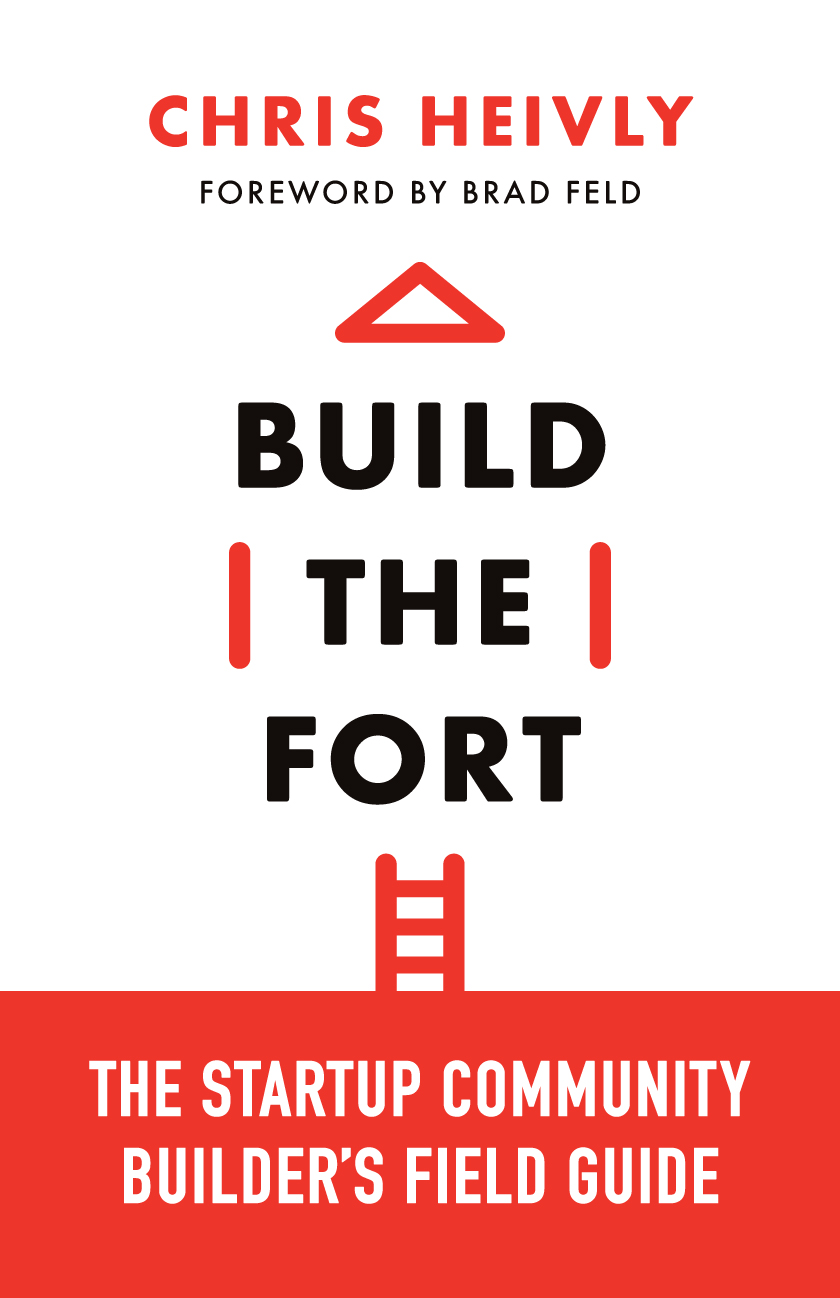
His book, Build the Fort is about how to take the lessons you learned as a 10-year old and apply those lessons to starting anything. His book was inspired from a widely acclaimed TEDx talk in 2014. The book focuses on the months leading up to the decision to start a company and those first three critical months of getting your idea off the ground. His insights are being applied in multiple realms, from any individual with a dream, to startups and companies that aspire to be more innovative, to emerging entrepreneurial communities.
Today, Chris is semi-retired, and picks a handful of meaningful projects to get involved in every year. He produces and hosts a podcast, Your Startup Community with Brad Feld and Ian Hathaway and expects to release his 2nd book this year, Build The Fort: STARTUP COMMUNITY BUILDER, A Global Field Guide for how to get involved, create impact, fund and accelerate your entrepreneurial ecosystem.
★ Scribe Case Study
How Chris Heivly Went From Failing English to a Multi-Book Author With Build the Fort
Told in freshman English that he couldn't write, Chris Heivly wrote Build the Fort with Scribe Media anyway. Three years later it still sells in bulk and made him a recog…
📚 Books by Chris Heivly
Transcript
[0:00:32] HA: We’re driven to accelerate growth in our local startup communities but in the process, we overthink, we overanalyze, and overload even our simplest activities. Before long, our community’s goals buckle under the weight of our complex adult concerns. Our motivation dries up, our best ideas fade away, leaving entrepreneurs no choice but to find another city in which to make their dreams come true. The solution: channel our inner 10-year-old and build the fort. Welcome to the Author Hour Podcast. I’m your host Hussein Al-Baiaty and I’m joined by author Chris Heivly, who is here to talk about his new book, Build The Fort: The Startup Community’s Builders Field Guide. Let’s flip through it. Hello friends and welcome back to Author Hour. I’m Hussein, of course, and ‘m here with my friend Chris Heivly today, who just launched his second book, Build the Fort: The Startup Community’s Builder’s Field Guide. Chris, welcome to the show, my friend.
[0:01:37] Chris Heivly: Thanks Hussein, I look forward to what we’re going to talk about.
[0:01:41] HA: Yeah man. Hey, look, we were just talking off the air here about startups and how much fun they are and how I started one when I was in college and all these fun stuff but before we get into the juicy topic of startups and your book, which is amazing, I really want to kind of lay the foundation down for our audience and talk a little bit about your personal background. Perhaps where you grew up and kind of led you down this path of you know, getting into startups and cultivating that space but maybe, was it a person that inspired you, was it an event that inspired you? I’d love to know a little bit about your history.
[0:02:16] Chris Heivly: Well, thanks for asking because no author, you know, wants to not spend an all-time talking about themselves. So you know, I –
[0:02:24] HA: You got to get uncomfortable off the bat, you know what I mean?
[0:02:26] Chris Heivly: Yeah, exactly, so uncomfortable. You know, Hussein, the bottom line is I like to just build things. I like to start things, I like to figure things out and I think I’ve been that way all my life starting with you know, building forts, which is kind of a metaphor that I use in everything that I do. Yeah, as an adult, I didn’t think I didn’t know what an entrepreneur was, I’m a little on the older side. All you youngers kind of, you know, know about that, kind of in high school and even college. I didn’t even know that was a thing you could do. You know, the way I characterize what my journey is that early on, I was more of an intrapreneur, which means how do you start businesses or new products inside bigger entities but then, eventually became an entrepreneur and then with success became an investor. Then with some of that success, figured out that how important startups are to any city’s economy and started figuring out, “Well, how do you build a community or an environment where more startups can succeed?” and kind of that’s been my last startup is kind of how to consult and figure out the art and science of community building.
[0:03:26] HA: Yeah, that’s so powerful. When I got into your book, you know you talk about this move to Colorado where you just sort of started navigating that space of what it’s like to cultivate a place where, you know, incubation can happen, ideas can flow, people can run into one another. I really like that. Can you share a little bit of your story of when you started your first startup? It’s called the Triangle Startup Factory. I love the factory idea because I got a story for you but I kind of want to know what that was like for you and you know, I know you started it back in like, 2009/2010 or so. But I want to know, you know, because that was an interesting time in our culture of course, what was going on, as far as the banks, all that stuff. I really want to know what kind of, you know, what that was like for you because I’m sure it wasn’t super easy but yeah, tell us a little bit more.
[0:04:14] Chris Heivly: Well, let’s be clear, as much as fun as we were saying startups are, they’re never easy, right? Because if they were, everyone would be doing it. It’s not for the, you know, the weak of heart or mind but you know, where I was sitting in 2009 is that I had started reading about a new kind of incubator. In fact, it’s such a new kind of entity that we don’t call it an incubator anymore, we call them accelerators. And the two biggest tech incubators/accelerators, one was in San Francisco of course called Y Culminator. It’s still around and still, one of the best engines for startup facilitation and the second one was in Boulder, Colorado called Tech Stars and I was new to a community in Raleigh, Durham, North Carolina at the time which is still basically home, you know, circa 2009 and I’m reading about this and what they basically do is take in 10 startups at a time. I really modeled the startup factory over the Tech Stars program and so they bring in 10 startups at a time, invest about USD 25,000 in each, and for three months those startups and their teams, usually one to three people, because they’re at their earliest stages of the idea phase and they come into a common space and we just facilitate mentorship on steroids and my thought was, “Well, if one startup is fun, then 10 at a time should be a complete blast, right?” and it was. You know, so the good news is, obviously I‘m kind of, you know, I have a lot of experience, AKA, I’m on the older side but what that meant was, I wasn’t building any one company at the time. I mean, Startup Factory is kind of like a company. It was really just an entity by which myself and my partner at the time, Dave Neil, could figure out how to bring a community of like-minded entrepreneurs, some with success, some with failures, some investors, the whole community of actors and bringing them in for these 10 groups, companies, fledging little, you know, entities, and bring them into our space for three months and really help these people succeed. I got to tell you, nothing like it in the world. You know, the goodwill, the, you know – and by the way, everything is done on kind of a – what we call a give first basis, right? Everyone’s just volunteering their time. Yeah, we did that for four or five years. It was a blast.
[0:06:30] HA: What an amazing sort of story and really taking your experience and applying it in a way that helps others in such a profound way. I mean, obviously, I feel like that’s one of the most underrated things I feel like in the world is to have someone like you in a startup-like corner, right? I feel like that’s the one thing I always look back when I was a kid in college and starting up my little graphic design. Little print shop, you know, I was kind of mentioning earlier and my dream was to like, have this like, “factory” that people would visit and kids would come and learn how to screen print and you know, just kind of get involved and see it and you know, I love speaking to kids. So I always thought about like, “Oh, it would be cool to have them come and do field trips to the shop and always, like, it was like the Willy Wonka factory of printing. And I just wanted to kind of expose the printing world to the youth because I just felt like when I was a kid, you know when I was going through high school, middle school, I didn’t see what I was doing like anywhere. I didn’t really have a graphic design class. I didn’t have a screen printing class but it was so fun and so creative, you know? And T-shirts are a huge part of our culture and I knew so many kids that would be interested in that work or going into the graphics world, right? And for me, wanted to just create a space where people could see it because I always – the print shop that I learned everything from was just like, you know, sometimes those, I guess you could call them like, dirty type of businesses, they are always in like warehouses tucked God knows where, right? Like no one sees anything and I just wanted to not do that. I want to display the work so people could really – especially the youth, see what is possible for their creativity. I love the idea of how you were like, you know, “Well, if we can do one startup here, what’s it like to do 10?” you know? Because then you’re just really kind of adding fuel to that fire and it’s just really cool. So I just appreciate that about your book, how you kind of took a deep dive there but you talk about this, you know, it’s a complex system and from the bottom up, the way you kind of design and help people build these things is the idea that it’s from the bottom up, network-driven peer approach versus a top-down sort of patriarchal type of approach. Can you speak on that a little bit in structuring startups?
[0:08:54] Chris Heivly: Yeah, mean, there’s a big “aha” in this and whether you know it or not, you actually just touched upon it in your story about inviting kids into your t-shirt shop. At the end of the day, almost nothing is all, but almost every entrepreneur I know has an inherent give back. You want to share and help others, okay? And that’s not a transactional mindset, right? That’s not like, “Okay, I‘m going to help the kids but I need to get USD 15 an hour out of it” right, you know? Or “Someone needs to give me free stuff.” Entrepreneurs don’t think like that and in fact, the best entrepreneurs, the ones that have grown one or more multiple companies over years of effort know that their success is based on the amount of help they get to make a few better decisions here and there, right? And to make less bad decisions that end up making it harder to grow a business because let’s face it, it’s hard. So that notion, right? If you think about that, it’s really more of a kind of one-to-one mentorship, peers. You know, like again, we call that give first, the idea of give first is like give without any expectation or get anything in return. If you go to your kind of, that model that you mentioned about complex systems and I’ll dev into that in a second but the idea that the best startup communities, those are all the actors, those are founders, employees of those small companies, serial founders, successful founders that are maybe retired. Investors, economic development folks, university professors or researchers, or instructors, right? This whole – all these actors that make up a startup community and just about every city in the world, if not America, right? How do those people come together? Let’s go back to what you just kind of tickled on. It’s a basic desire to say, “What can I do to help you? What can I do to help?” and the problem is, when people don’t view it in this – in that basic core tenant. When they think about startup communities as a business, they screw it up, right? They bring this kind of structure and hierarchy and we got to figure out how to make this happen for our community. Nothing like, “How do we put a performing arts center” right? Or some, you know, community foundation, right? So they take this very structured hierarchal because most of the people that do this are kind of late in life. They’ve been successful running businesses or government entities, that’s what they know and what this book is about, the first thing that says is, “Actually, this is the wrong way to think about it.” You have the wrong mindset, you have, what’s called, a complicated mindset. We need to embrace what we call a complex mindset and the idea of a complex mindset is based in the idea that it’s not top-down and assigned and structured. It’s actually the opposite, it’s grassroots. It’s lots of little connections. In fact, I say, s0, right? It’s not, you know, obviously, it’s a riff on death from a thousand cuts. It’s success of a thousand nudges and everyone doing a little part of meeting with one founder and saying, “How can I help?” That’s what makes a really great community. So what the book is about is say, I know the mindset you have, most of you coming in. Let’s suspend that for a second and let me tell a bunch of stories of why we need to rewire how you’re thinking.
[0:12:18] HA: That’s really cool because I feel like an early startup, you know, it’s like a baby plant. Like, it’s so – it’s kind of fragile but you kind of like, you have to kind of experiment around it and sort of pamper it in a way but the whole idea is playfulness actually leads to sort of innovation and that free-form thinking. Again, especially, at the early stages where you’re developing different things. If you’re developing a product or even a tech product or whatever it is, an app but then there is a moment or a conversation or someone comes in and kind of helps you nudge it to go left a little bit and then now, it’s Uber, or now it’s whatever, right? But in order for those moments to happen, you got to allow the free form, the innovation, the trying and failing at things. I mean, I think that’s a big one, right? With entrepreneurs, it’s like for me, like, I tried and failed at God knows how many things. That became a part, like a habitual thing. If I’m not trying something that’s not innovating, I’m not growing, I’m not meeting new people and I feel like that was, for me, in my mind at least, I was like, that could be the death of my company if I’m not going out meeting people and seeing how I could improve. So that’s really powerful.
[0:13:28] Chris Heivly: There’s an old adage from Dwight Eisenhower that got repurposed by a guy named Steve Blank. The Eisenhower adage was, “No battle plan survives its first contact with the enemy.” The status version of that is, “No business plan survives its first contact with a customer” right? So to your point, successful startup building is about experimentation, iteration as you’re in this discovery process to figure out what we call product market fit. If our audience can think about for a second, say, “Okay, there’s not an exact playbook to run here.” If there was, we’d all be running. You and I will not be talking, we’d be extremely wealthy people, right? We would have built 14 Facebook competitors by now, right? So if it’s not one playbook that you have to run if it is this kind of experimenting and iteration and a lot more questioning than answers, then a structured approach to helping hundreds of startups would be the exact opposite that you need, right? And so, you know, if we take my journey example of helping build single companies and then the startup factory helping 10 at a time, twice a year, so 14 to 20 companies at the time, now, what I’ve been doing the last five or six years is how do I help hundreds of companies in a city? How do I build an environment, a mindset, you know, a whole set of activities around making sure that we give space for hundreds of people with ideas to start their companies and hopefully succeed?
[0:14:55] HA: Yeah, that’s so powerful and you know, thinking like a community, this mindset of community building, you know, as a startup community builder yourself, what challenges have you faced? How have you sort of overcome them?
[0:15:07] Chris Heivly: Yeah, well, it’s like a startup. Some of them you overcome and some of them you don’t and some of them hurt you and I still have the, you know, the wounds from some of these but my latest startup being the last five or six years, both in partnership with the company called Techstars in Boulder and then now, since I’m mostly retired and writing, you know, a book and doing some small projects. Six years I’ve been thinking about the science and the art of how the startup communities get built. I’ve done deep dives and spent significant amount of time in over 15 global cities from places of smallest, Fort Wayne, Indiana with 250,000 people, and as large as Lima, Peru with 10 million people and then I have my own experiences over the last 12, 13 years in Raleigh Durham. So what I can tell you is it’s really hard, okay? It’s hard because it’s not a company. There’s not a CEO or a king of the startup community. Remember, it’s grassroots. It’s more of a network with nodes and people are connected to each other. So how do you get a mindset, a culture around helping each other out, not bringing a transactional mindset, not trying to own or control certain things and so in the places that it’s more difficult, you have maybe an older, more patriarchal, more structured culture. Where they’re like, “No, no, no, we do it my way because I’m “the CEO” of the thing” and then the best communities, it’s the opposite. So you can imagine the challenges are if you’re either doing it on your own or doing it as a consultant is how do you shift people’s mindset? How do you educate, bring awareness, hopefully, inspire them to think differently than maybe what their natural kind of mindset would be? So there is a lot of coaching and prodding and nudging and then experimentation just as much as you do in your startup and so if you can imagine all of the friction points and all of the restarts that you have in trying to do that. So it is mostly people, to be honest with you but it’s also kind of the right activities that fit the right culture because every city has its own culture.
[0:17:09] HA: Definitely, and I am sure in your experiences, you’ve come across many startups, not only communities but businesses and companies that were sort of on the verge, and maybe you came in to help them out a little bit. Can you share a success story or two of a startup community that effectively apply some of the principles that you outline in your book?
[0:17:31] Chris Heivly: Yeah. I mean, I’m going to go to my own community in Raleigh, Durham, North Carolina. I’ve been working in that community for 12 or 13 years. It was kind of a little stagnant when I jumped in and I ran around and I met 275 people for coffee, lunch, or end-of-day frosty beverage meetings, about 275 and about five or six months, and luckily, my new friends in Tech Stars in Boulder gave me a couple kind of north stars to think about, one of which was this give first. You know, when I look back today maybe we could have found, maybe we found 25 or 35 kind of you know, early, early, early seed stage startups but here we are, 10, 12 years later and you know we have exits like Jesslips and its share file. It was exited now onto a second startup called Levitate. We have the Shoe Box, it’s a really cool company that I spend a lot of time with. James Avery at Adzerk, now renamed, Kevel, whose starting to grow five, six years later after his start and really taking off in terms of some ad-supported software. Then I just gave you some specific examples but I want to make sure I give you the squishy example. I don’t know how I’ve influenced hundreds of people. I know that I’ve met with hundreds of people. I know that I’ve been there when they’ve needed me and they’ve been there when I needed them and you never know what your influence is going to be. So I know that those examples are people. You know, Scott Wingo, whose now on his fourth startup, who started a whole venture fund just for kind of mid-sized companies locally. I know that working together and doing all the things that I’ve done to be a community builder has impacted their ark and hopefully for the better and that’s kind of the bottom line of the book is don’t look for any big silver bullets or some big magical one thing you could do. Just get everyone to do lots of little things and all those thousands of things add up to be something really meaningful.
[0:19:30] HA: Yeah, I love that so much because and I think your magic thing is the idea of like, “I’m going to go out and meet people. I’m going to go out and see what I can give. I’m going to go out and see” and it’s that being proactive I think that where it resonates with me a lot and I’m glad you went there because that was the thing for me, was to, “You know, how do I build my startup” and it’s really – you got to be a part of the community. It's like who are you serving and not just like for work and for t-shirt projects or whatever but it’s like, “All right, well, what else can I do? Well, I can speak” so then I went and started speaking at high schools and middle school and it was all for free, you know? Just because I enjoyed it. I can write so I started writing a few articles here and there for the local little newspaper, you know? Whatever it was, it’s just like, “How can I serve?” “How can I show up?” and of course, showing up for coffee, showing up for some frosties, you know? Just kind of celebrating with other entrepreneurs. I feel like sometimes today and I’m sure you get this too whether it be on LinkedIn or just community stuff; I feel like people are quick to pull the sales pitch because they’re eager, and I get it because you’re excited. You’re eager, you’re young, but I feel like it’s the relationship-building that in the back of your mind is just like, “This person doesn’t have to be a customer.” This person can be a friend and matter of fact, your friend is probably going to be the best customer and so I thought about it like that and that’s how I was able to sort of stack up the leads if you will, and the people and honestly, the coolest thing I think that I’ve gotten out of my startup and how I grew it was all the relationships. I think back and I’m like, yeah, we did so many fun projects but I still talk to some other people that I’ve worked with four, five, six, seven, ten years ago, you know? That’s really profound. I think that adds to my health and well-being, you know what I mean? Something that we sort of neglect talking about in startup communities is that like how do you maintain your health and well-being, and it’s just like not everybody needs to know that you’re selling something. Not everybody needs to be a customer. They could just be humans that you enjoy their company with, right? That is actually really cool, and I like that you brought that up, but of course, all of those things can lead to a successful startup. Can you share a little bit, maybe some advice for someone who, like you is starting out as a community builder or looking to get involved in a local startup community? What are maybe one or two tips that you can give them to kind of lean on, to kind of get their journey going?
[0:21:58] Chris Heivly: Well obviously Hussein, the first tip is go buy the book because it’s –
[0:22:02] HA: One hundred percent.
[0:22:03] Chris Heivly: I’m trying to spell it out for your newer current community builders but so the beauty is, you know again, to expand on the point you just made, everyone has a role to play and everyone can play a role. I think the best founders build the best startups and the best startups are in the best startup communities and so you know, now reverse that. If we can build a really good community, we can inspire new businesses that end up doing unbelievable things that help our whole city and our whole economy and by default, we’re helping founders do their job better and I think great communities support that. I did a workshop a couple of weeks ago in Columbia, South Carolina and I was doing a workshop on how to be a really good mentor and a man raised his hand. He said, “I work at the bank, other than them needing me for bank stuff, what do I have to offer?” and I said, “How many people do you manage?” He said, “Well, at times I’ve managed up to 300 people.” I’ve said, “Have you hired people?” “Yeah.” “Have you coached and counseled people?” “Yeah” “Have you had to fire people?” “Yeah.” I said, “There’s a whole lot of business experience just in that” and if I am a new founder, scaling my t-shit business from eight people to 15 people and I need to know now how to manage 15 people and some of which I didn’t know before they came in as opposed to my friends who I hired beforehand, right? I’m going to need to know how to navigate that. I’ve never been a leader before or a CEO or manager like everyone has something to offer. Everyone has a set of experiences that make you an expert as compared to everyone else, right? So just be willing to share that willingly and freely and it’s funny, he smiled and he nod his head. He’s like, “I got it. I got it” and I said, “You know, half of the journey of being a good mentor, which also means being a good community builder is just being there and listening to people and hearing what they need and then going out and trying to facilitate getting them that” whatever that thing is. So for startup community builders, a lot of times it’s like, “You know what? I think we would love a kind of monthly meetup that helps me figure out how to do better marketing on Instagram and Facebook. Great, let me go find an expert, let me find someone who’s willing to do it one hour a week, let me find the space and let’s spread it out to all of our little network of founders. If you’re interested in this, I am going to sponsor this meetup and by the way, we’ll get some local company. We’ll buy the pizza” right? Or whatever. It can be as simple as that, so I mean, the world is your oyster as a community builder. It’s the mindset you bring to that, which is kind of what the book is all about. It is more about a mindset. Yeah, there’s lots of tactics in there but the main thing is, “Here’s the mindset I want you to walk in with” and the best way to facilitate your piece in that.
[0:24:46] HA: Man, that is so powerful. I love that you shared all of that because you’re 100% right and that the idea is that are you the dot connector, you know what I mean? Are you the person that just if you know a set of people here and a set of people here and there’s people that you’re not going to know but guess what? Your phone is so powerful. This is the thing that I always told myself. It was like my phone is the most powerful thing I carry. It is a weapon. I can literally reach out for help, I can contact this person who can get me in contact with another person, right? Most people are open to doing things, especially if in the long run it helps them and if you can pitch it in a way that, you know, make sure that they get something out of it of course but yeah, these little things that you could do that could help the community and grow it, like you said, you can just facilitate it and be a part of it in that way. You don’t have to be the guru who knows every single thing. As a matter of fact, it’s probably better that you don’t know every single thing and let the experts do what they’re good at, you know what I mean?
[0:25:41] Chris Heivly: Yeah, I don’t know, do you know everything? I don’t know everything.
[0:25:45] HA: Hell no, you know? And nor do I want to. I feel like that would be a lot of work.
[0:25:51] Chris Heivly: Last night I got to the end of the Internet, I don’t need to learn any more.
[0:25:55] HA: Well yeah and then you know, with things like ChatGPT and you know all that, it’s like you don’t really need to know everything, right? But it is how you ask. It’s how you position yourself and you know, what’s your intention is and I think for example for me, my intention was to let these kids see what’s possible in the graphic design world and so once a month, we just – I just literally would call schools and I say, “Hey, I could do two things for you.” “I can come out and speak to the kids or you can do a field trip and come out to my shop” and so many teachers were just blown away by that because no one does that, you know what I mean? Here’s the upside of that, so many of those schools, guess who they wanted to print their t-shirts, right? So at the end of the day, I got work out of it and it was the simplest and most fun thing I can do. Yeah, so I love that, and of course, you know, when you put those kinds of things on social media, whatever, your whole business just looks great, you know? It’s a good-looking thing. So you know I got to ask you like writing a book, in your case, writing two is no easy feat, man. You got to do a lot of work, a lot of leg work but what was your favorite part of pulling your book together and what did you learn from that journey?
[0:26:59] Chris Heivly: Well, I actually like the writing part. I’m not having much fun with all of the other parts like helping to choose covered designs and fonts and you know, all the stuff. Luckily, I had some help from the Scribe people on that but I actually love writing and I have two or three more books kind of designed out. So I haven’t been able to write for three or four months because I am busy doing all the other stuff but I can’t wait to get back to the writing. When I write, I ended up – it’s so funny. Again, expanding on what you just talked about, when I write, I write an outline. A very detailed outline and then I’d say, “All right, who can I talk to that knows more about this thing than I do?” It makes me go out and reach out to a lot of what I call professional friends. These are people that I’m very, very close to. You know, I am not hanging out with them every weekend but we’ve helped each other out. So I get to reconnect with them and run some thoughts and, “What do you think about this thing?” and they’re like, “Oh yeah, I remember when I did that” and so I can’t wait to jump back in for book three just to reconnect with all those people and do that whole give first thing.
[0:28:06] HA: Sorry, onto my last question, which is basically around a feeling and that feeling, what is the feeling you hope for when that reader puts down your book, a community builder, what is the feeling you hope to evoke in that person?
[0:28:19] Chris Heivly: That’s a great ending question and I’ll kind of do a little bit of a politician thing. I think I’m going to answer a slightly different version of that question. What I run into all the time and the hundreds kind of either current or future startup community builders around the globe and the thing that they are most trapped by is, “What do I do tomorrow?” and what I hope the book gives you, in fact, I say it explicitly is here’s where you can start. Here is what you can do tomorrow, it doesn’t cost any money, it may cost a little bit of your time but it is an action plan and with a good mindset to say, “Here’s what I can start doing tomorrow” and that’s what I hope people come away with is, “Hievly has done it again, he simplified the complex. He is giving me a little bit of a roadmap. It made me feel a little more confident that I can go and do this new thing tomorrow and know that I am going to have an impact by doing it that way.”
[0:29:18] HA: Yeah, that’s so powerful. I can’t tell you how many times I ask myself that especially as a young entrepreneur, “What do I do tomorrow? How do I deal with that?” so that’s very powerful. Thank you for sharing that. Chris, it’s been an absolute pleasure having you on today. Of course, your stories and experiences go so extensive in such a beautiful way in your book, so I can’t wait for people to check that out. The book is called, Build The Fort: The Startup Community’s Builder’s Field Guide. So besides checking out the book, where can people find you, Chris?
[0:29:49] Chris Heivly: Head over to heivly.com. By the way, I have a free networking eBook and a couple other freebies there. You can also sign up for office hours, I have an open couple of hours a week that I spend, you get 20 minutes shot, we’ll talk about whatever you want to talk about. It’s at heivly.com and that’s my personal website.
[0:30:09] HA: I love it. Well, thanks for coming on the show today, man. Congratulations on the book. If you are out there and you are listening, go get the book. It’s an amazing read. Chris, absolute pleasure having you on today, my brother.
[0:30:18] Chris Heivly: Thanks, Hussein.
[0:30:20] HA: Thank you all so much for joining us for this episode of Author Hour. You can find, Build The Fort: The Startup Community’s Builder’s Field Guide, right now on Amazon. For more Author Hour episodes, subscribe to this podcast on your favorite subscription service. Thanks for joining us, we’ll see you next time. Same place, different author.
Want to Write Your Own Book?
Scribe has helped over 2,000 authors turn their expertise into published books.
Schedule a Free Consult