Chase the Light: Becoming Unbreakable After a Head-On Collision with Cesar Perez
✨ Episode Summary
Cesar Perez was an actor, musician and motion designer on the rise, with a role opposite Daniel Radcliffe and a day on set with Clint Eastwood behind him, when a drunk driver and then a semi truck hit him head on at the end of 2017. He spent the next five years in and out of hospitals with a traumatic brain injury and more than 30 procedures. His mom suggested journaling, and the journal became Chase the Light: The Gruesome Art of Becoming Unbreakable. He chose Scribe for one reason he states plainly: “I wanted to own all the rights to it on the IP.”
“The book literally became an Amazon bestseller. The first week it was out” Since then it has brought him college campus speaking, messages from readers he has never met, and a documentary built from his family’s recovery footage and the criminal trial, which he owns outright. Next on his list is a feature film script. Of the finished book he says: “it’s everything I wanted and more.”
⭐ Top Moments
- A bestseller in week one, a documentary after it. “The book literally became an Amazon bestseller. The first week it was out” Cesar had been in the film industry a long time and knew what a story like his could become. His family had filmed his recovery, he interviewed the EMS crew, nurses and first responders, and his dad filmed the drunk driver’s criminal trial. The documentary is done, and he says of it: “I have I own the IP. I own everything.”
- Why he chose Scribe: the film rights stayed his. After researching several publishers, Cesar made his call on ownership. “I went with Scribe because I started realizing that I wanted to create my own film, my own documentary. And I wanted to own all the rights to it on the IP.” He now has a feature film script half written and a pitch deck ready. The finished book, in his words: “it put my vision, you know, on paper and man, it’s it’s everything I wanted and more.”
- The unexpected result: strangers telling him the book reached them. Asked for the most surprising good thing to come out of the book, Cesar pointed to readers. “It’s just realizing how many people my story has touched, you know, thanks to the book and the messages that I normally get” On college campuses, one man who had just lost his job stayed through the whole talk. Speaking requests now come from people who were in the last audience. Cesar’s summary of why he keeps doing it: “something wrong happens in your life doesn’t mean you can’t give your life purpose again.”
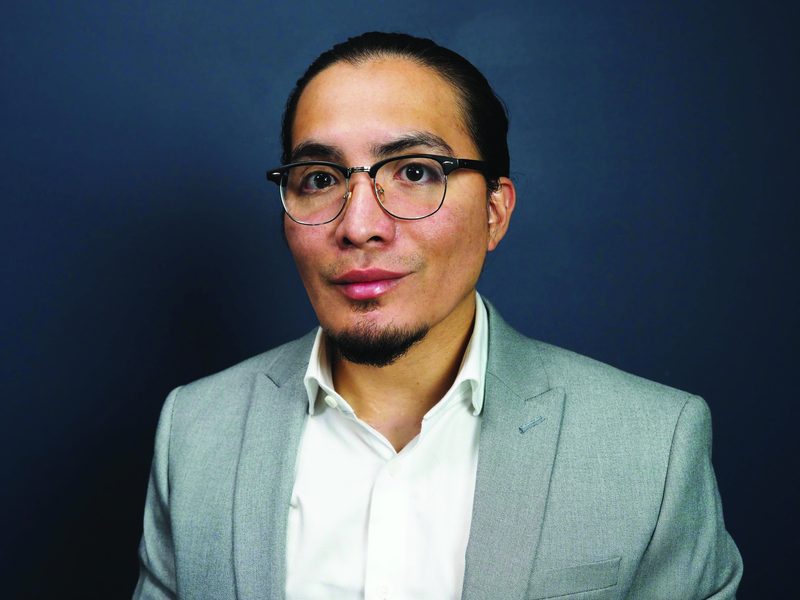
Cesar Perez
Cesar Perez is a Salvadoran immigrant who spends every day of his second chance at life striving to be the best possible version of himself. A passionate storyteller, he picked up the pieces of his broken past and bound them together into a new whole, full of love, persistence, faith, and determination. He wrote Chase the Light with a newfound yearning to guide others through the darkness.
★ Scribe Case Study
From a Head-On Collision to a Bestseller and a Documentary: Cesar Perez’s Chase the Light
After a drunk driver nearly killed him, Cesar Perez turned a one-handed journal into Chase the Light, an Amazon bestseller and a documentary he directed and owns.
📚 Books by Cesar Perez
Transcript
Travis Stoliker: I am honored to be joined by Cesar Perez, the author of Chase the Light, the Gruesome Art of Becoming Unbreakable. This story is absolutely amazing, Cesar. Could you please introduce yourself to our audience and tell us a little bit about your story in this amazing memoir?
Cesar Perez: Yeah, thank you for having me, Travis, honestly. Yeah, my name is Cesar Perez, or Cesar Perez to be honest, but everyone calls me Cesar. And I'm an author, actor, musician, and a lead motion designer. So put all that together into one, honestly, I'd say I'm a storyteller through and through.
Travis Stoliker: So what happened? You were on quite a rise in your acting career, and then something happened, tragically. Could you tell the story?
Cesar Perez: Yeah, unfortunately, you know, life throws curveballs at you. And I was already in the film industry. I was, I came in, in production, you know, like that was my, my primary role, but like I wanted to be part of the creative process and bringing the story to life, bringing the message across. And so that got me in position and the casting director saw me, he was like, you'd look up perfect for this. Would you mind auditioning? So I did. I didn't expect much, anything of it. Turns out, now I star opposite of Daniel Radcliffe in Beast of Burden. So if you roll the credits, I'm like on there twice, part of the cast, but also the art department. So that just kind of snowballed, got me an agent. And then I was filming with Clint Eastwood on 5017 to Paris. And then I had an audition for Venom. And this all happened like in 2017, at the end of 2017. And then that audition to go for Venom, I never got to it because I was driving down to go see my girlfriend, well, ex-girlfriend in Savannah. And I got hit head on by a drunk driver going 76 miles an hour, I believe. And then a semi truck hit me head on as well, going over 70 miles an hour. And that's kind of like where my life really went black. Everything I had accomplished thus far kind of just went out the window. Like my goals were just a distant memory at that point, because I spent the next five years in and out of hospitals, getting over 30 something procedures. I had a traumatic brain injury. I had every injury you can imagine, really. And I've had every type of therapy too. So from music therapy, vocational therapy, physical therapy, obviously. It was just, you definitely go through some dark moments. And for me, my family was that foundation on which I was able to build myself again. They never left my side from day one. And that's kind of what I credit to my book. It was actually my mom's idea. She told me, hey, start journaling. She thought it would help me heal my broken soul and everything I had lost. But I started and I listened, but not because I was expecting to heal or feel better. I just did it because I couldn't do much of anything else. I could only type with my left hand. I couldn't walk, couldn't really do much of anything else. Everything that I had, all the outlets that normally I would have, I didn't anymore. I played five different instruments and I could barely move. I could barely talk. I love working out. I couldn't do that. So it was just a bunch of emotions that I had to let out. And my mom's idea was journaling. And I'm glad I did because after a while, I saw that there was a message. I felt the audience could benefit from and my readers could benefit from.
Travis Stoliker: When we were talking earlier, you had a quote that I had to write down that I just love because, you know, now I'm 45 and it took me this long to realize that family is the only thing, the most important thing. And you said, my family never left me. They showed me what true love actually is. And then you said, putting my experience down in words helped me heal. And you you kind of glossed over a bit. You had traumatic brain injury, a paralyzed right arm, a snapped femur, shattered face. You coded more than once. You had to relearn to breathe, eat, walk and talk. You had every reason to give up and your mom gives you this idea to journal and that leads to a book. How I mean, you are just a remarkable, remarkable example of somebody that can overcome. Just I'm so honored to be talking to you.
Cesar Perez: Oh, thank you. Thank you, honestly. But yeah, credit to my mom. I mean, when I when I coming up or growing up and being an author was not one of my on my bingo card. It wasn't something I was going to check off. Right. Like it never crossed my mind to do that. But again, I had all these injuries. I did. I died on scene three times, twice again at the hospital. So the fact that I was still alive and I had a possibility to get my life back, just kind of it made me angry, obviously, at first, you know, and then also made me depressed. But my mom was like there was no outlet for me. So she started she was my therapist, my psychologist, all in one. This is just something to start writing. And I did. And I felt that my experience could help others. You know, navigate through their life altering moments, whether it be an accident, whether it be an illness or an event that happened in their life. That just kind of makes them feel like there's no point in tomorrow. Right. Because that's where I was. That's where I was stuck. I was like, why? Why do I want to continue? Right. Like this is how life has treated me when I've tried to be the best person I can be. Like why? You know, and so those are the thoughts and the negative questions that really pop in your head, stay in your head really for a while. And if it wasn't for my family, my mom in particular, you know, to be there and help me, guide me, be that light for me, you know, and kind of bring me out of that darkness. I don't know where I would have been. So now that I'm on the other side of things and people, when they see me, they don't realize everything I've been through. It's just a testament to my family, the love, the care I received, but also to the resilience of the human spirit. You know, like we're capable of so much and we just we just got to hold on for one more day.
Travis Stoliker: Do you still journal?
Cesar Perez: I do journal. I do journal still. Mostly just because it's it's it became a good habit for me. You know, it just kind of helped me put things in perspective. And it keeps me motivated, honestly, because sometimes because so many years have passed now since the accident. This happened in 2018. And now I'm just like I all that energy and that, you know, determination that I had to get my life back. I don't ever want to lose that. So I still journal. And every now and again, I go back and reread my book, you know, because I don't want to lose that that perspective of life, you know.
Travis Stoliker: I started journaling about four years ago to overcome some depression after some friends passed away suddenly at a young age and and what what was amazing to me that I don't know if you experienced, but I would basically just write down all of my thoughts and summarize what my day was like. And I would get so much gratitude out of it, you know, because by the end of the day, I'm exhausted and I'm thinking, oh, you know, all this stuff went wrong and I'm, you know, I'm thinking about all the bad stuff. And then I go through and I'm like, oh, this amazing thing happened. This amazing thing happened. And it just brought this like gratitude to my life. Made me realize how much I was just ignoring.
Cesar Perez: Yeah, no, it definitely it did that for me as well. So I experienced the same thing you did. But not only that, I also helped for my mom again, it was her idea that it would kind of serve as a catharsis for my my broken soul and everything. And I didn't think it would. But as I started writing, kept writing more, I realized that I wouldn't cry as much, you know, like what used to hurt me. Like, I guess I was kind of building a scar over everything that had happened. And so now I was able to recount everything, retell it, you know, repetitive, doing it repeatedly, you know, just telling everything what happened. And it kind of just kind of helped scar a little bit, you know, and it wouldn't hurt as much. I would just be able to tell it. And which has helped me a lot now as I'm doing speaking engagements. You know, it's just like it's easy for me to talk about it because I'm an open book, literally.
Travis Stoliker: So how did that work? How did it go from journaling to a book and then all of the amazing doors that that's opened for you since? How did that whole process happen? Obviously, your mom was a huge part of it.
Cesar Perez: Yeah, she was a huge part of it. But I also give credit to one of my friends, Chris. He gave me once I got discharged from the first hospital, he and I was able to read. He brought he bought me a book. David Gavia's Can't Hurt Me book. And I was immediately, you know, thrust into it. And that determination that he had is something that I attribute also to my recovery. I was like, I'm not going to sugarcoat it. I'm just I know he says, let's stay hard and everything. And that's kind of what I had to do. You know, like I had to just push past everything. And I'm glad that I did. I didn't sugarcoat it. I didn't. I was like, if I don't do this, who's going to do it for me? You know, at the end of the day, if I wasn't able to get better, it wasn't going to be because I didn't try, you know. And that was my mentality. That's kind of what I kept kept going. And now the only difference between my story and obviously David Goggins is because I felt like I had worked so hard, you know, like my my comeback story kind of started from, you know, I was in a good place in my life, you know, professionally in my acting career, my music career. I was where I wanted to be. You know, like I was definitely getting to where I wanted to be. And then, you know, this happens and you got to start all over. So where everyone's most comeback or, you know, memoirs start from bottom, you know, like a trajectory, like, oh, you got to go up. Mine kind of went like and it's like getting back to where you were. It kind of feels depressing and really hard to just do it again, you know. And so that's kind of the I guess the wall I kept hitting. I was like, why do I want to put in all this effort into getting my life back again if this is how it turned out? Right. And eventually I was like, no, I got to get past it. Nobody's going to do it for me. So when I left Shepherd and there's a. There's a moment in the book, I think I talk about it, where we either separate my mom was wheeling me out, and I told her in between all my tears and I was crying, I was like, I'm going to get everything back that was taken from me. She was crying, too. But she told me, I know you will, because that's how I raised you. And so I'm glad to say that now, years later, you know, I've gotten everything back faster than I was before. You know, like every morning I wake up at 515 and my wife can attest to this. And I go run a 5K and I hit the gym for an hour, you know, not because I have to. I do it because I had that mentality throughout my recovery. It helped me get to where I am. And now I just don't want to lose that, you know, that discipline and that mentality of being the better version of myself than I was yesterday. And so I continue to strive for my goals. You know, I'm acting again. And I'm back. I told my mom when because my the job I was at, I was at Cox Media Group. And I was like, I'm going to get back everything that was taken from me. I'm back there. I have a better job. So literally I've got back everything.
Travis Stoliker: Amazing. Goggins would be impressed with that wake up time, too.
Cesar Perez: Right. Especially because I don't go to bed early either, which I should. I should. That's something I got to work on.
Travis Stoliker: But it's how you're staying up late and waking up at 515.
Cesar Perez: Yeah, because I got like I'm doing like five different projects. I got my acting stuff. So I go to bed like at 12, 12, 10.
Travis Stoliker: Man, that's impressive. Yes, I have to do now. So your book ends up opening all of these doors. You're speaking and inspiring college kids. You're now your book is now a documentary that's on the documentary circuit. And can you tell me about how your book opened up all these doors?
Cesar Perez: Yeah. So the book literally became an Amazon bestseller. The first week it was out and I told my mom when I wrote it and I published it, I was like, if only you two had bought it, I would have been fine because when I told them I was going to publish my memoir, it was I said I was going to do something. I'm going to do it. You know, and the fact that it's helped so many people that I get messages from people that I don't even know, you know, and tell me how it's helped them get through their their husbands, you know, recent diagnosis, whatever it is they're going through. When I went to college, the college campus to speak, you know, someone was saying, hey, I just lost my job. I don't know what to do. And then he was like, he stayed through the presentation. He's like, it's impressive. Like everything you went through, like that's the mentality I want. And so I tell everybody, you know, reach out. I give them my socials, everything, because not everybody has the family I have. Obviously, I don't think everybody is as close knit as my family was. I feel very blessed in that regard. But they were my light for me, you know, and the book is called Chase the Light. So I want to be able to be that light for other people that are going through their life altering moments, you know, and kind of just help them come out of that dark moment during and just, you know, see at least brighter days, you know.
Travis Stoliker: Man, you're just so impressive. It's hard to even know where to go next. How did this become a documentary and how is that going? Like one of the biggest things that we hear, especially from our authors, that are writing a memoir is how do I turn this into a film? Now, obviously, you had a lot of background and know how to do this. But how did that all how did that all work out? How did your book go to becoming a documentary?
Cesar Perez: Yeah. So in this is is crazy, crazy part, right? Like there are my recovery. Obviously, it's been like five years of full recovery surgeries, procedures, therapy, and my family, they took videos of me throughout my recovery, throughout my procedures and everything. Not because I was going to make a documentary, but rather because they didn't know how I was going to be post-accident, you know, like if I was going to have some mental issues or memory issues. So they just wanted to have stuff available for me to go back and look at. And thankfully, all my memory is still there, except two weeks, like right after the accident and two weeks post after the accident. That's stuff that's blank. I don't remember. And I'm actually OK with it. You know, like I don't remember the accident. I can drive. I don't have that trauma. So thankfully, I remember everything else. And so they they have all these recordings of me going to my therapy and everything. And I was like, that's stuff that I didn't know. Obviously, through my recovery, I was learning everything that happened. And then I realized that the drunk driver was also from the same place I was born in El Salvador. And, you know, as an immigrant, I've always tried to break that lens through which we're viewed as, you know, like we're just delinquents coming to the U.S. when we're not. You can't paint everybody with the same brush. Right. And so it was just very, I guess, distraught. It made me distraught, you know, like learning that he was from the same place I was. And so I was like, there's a lot of elements that my story touches. You know, there's a lot of themes that it touches. So I was like, if I I've been in the film industry for a while, so I know all the production side of things. This is a documentary. This is a story on itself, like it's written, you know. So I'm going to turn into my own documentary because I always wanted to be a director. You know, like whether it was in production, whether it was in as an actor, I always wanted to be able to tell my story, direct my story. And here I was with a once in a lifetime kind of opportunity, once in a lifetime kind of story. I was like, I'll do this myself. So I bought all the equipment. I went back and interviewed the EMS crew, the nurses, the first responders. And then for the drunk driver's criminal trial, I told my dad to bring the camera because I wanted to record it partially because I didn't trust myself. I didn't want to do anything stupid. And I knew if cameras were on me, like I would be OK. So he brought the camera and we recorded it. And all that stuff's in the documentary. And it's raw footage. Like it's I mean, it's raw emotions. You know, nothing is scripted. And it's stuff that still breaks me, you know, because my mom went with me and seeing her cry, seeing her pull out photos of me, how I looked before, you know, throwing me at him and or on the table, not at him. And, you know, just crying. How can you give me my son back? You know, when I'm still trying to recover, it's stuff that still moves me. You know, my mom is is my biggest treasure. And seeing her cry, it makes me emotional still, you know. But I knew there was the words could go so far, you know. But if I had this footage and I could put it all together, I was like, I have I own the IP. I own everything. I want to be able to make my documentary, put it out there and just help anybody. You know, like that was the whole purpose. I wanted to help others with their life altering moments.
Travis Stoliker: If you don't mind me asking, what was the result of the trial?
Cesar Perez: Yeah, no, the result of trial was I think he would, if I remember correctly, he was sentenced to eight years and then he was he had already served one or two, I believe, by the time the criminal trial came around. So he had it served like another six years post trial. But I literally Googled him not too long ago and he went back to jail for something else. So I don't know what happened to him.
Travis Stoliker: Oh, man. And well, hopefully it wasn't another car accident.
Cesar Perez: Yeah, it didn't it didn't look like it was another DUI or anything like that. I think it was just like another issue, you know.
Travis Stoliker: So now what is the plan? You're speaking, you're inspiring. I love how you inspire people. And you gave me that example earlier that you were talking about somebody coming up to you and saying, I overcame this. Like those things are that's priceless. Being able to be an example to say, hey, reader or hey, viewer of this. I went through this. You can get through what you're going through. That that's got to just be besides for your mom, that's got to be one of the most fulfilling things I would imagine.
Cesar Perez: No, it definitely is, because like I said, it's been happening more often now, especially because now, like when people see me, obviously, you're not going to think, oh, this guy coded three times. We had like three facial reconstructions. You know, everything was broken. But it's a testament, you know, to my determination, my resilience, but then also what we're capable of, you know. And so I've had other people come up and talk to me. Hey, I had just had my an injury in my back and everything. But looking at you, like how how did you get through all that stuff? And I was like, I explained to them my mentality, but also, you know, the exercise and I help them wherever I can, you know, like just giving them some tips throughout my recovery, what helped me not just mentally, but physically. And it's it just makes everything worth it in the end. You know, I again, I still don't think this should have ever happened. Right. But as part of the theme and part of the message in my book, it's just because, you know, something wrong happens in your life doesn't mean you can't give your life purpose again. And I'm glad I found mine again and I'm able to shine some light in others.
Travis Stoliker: I thought, if I can get out of this, there's nothing I can't do. As long as there's breath in me, it's still possible to live a beautiful life. Those quotes from you, I just I'll never forget. I think that that's like really encapsulates your personality about this. To be able to persevere through all that you went through. That's amazing. It's it's really amazing, Cesar. And we didn't really close that loop, too. So your friend Chris, I think, gives you David Goggins book. Is that what led you to scribe? Like, how did you go from your journaling to a world class book and then a documentary and then, you know, possibly a movie? Like, how did that all come about?
Cesar Perez: Yeah, it came from again. I've always been a very fitness advocate, wellness advocate, whatever you want to call it. Like, I've always loved working out, you know, and right then after the accident, I was like, I felt useless, you know, worse than that, really, because I couldn't do much of anything else. I couldn't even eat by myself, walk by myself. I had to, you know, get some help to go to the bathroom, tie my shoes. So it was very depressing. And I've always had that outlet of being able to go work out, going to do stuff. And my mom was like, hey, your brain is a muscle. So why don't you train that? Read books and like learn new software. So literally, that's what I did. I started learning new software for my work. Was I ever going to go back to work again? I didn't know that at the time, but I was like, it's not going to be because I didn't try or because I'm not prepared by the time that does come to me. And so I kept writing, kept working out. I mean, kept working on software, learning new stuff. And I once I started reading David Goggins book, I was like learning and figuring out how I could get my memoir published. And that's how I got in touch with Scribe. I did several research, you know, with different publishers. But at the end, I went with Scribe because I started realizing that I wanted to create my own film, my own documentary. And I wanted to own all the rights to it on the IP. And so that's why I was like Scribe was the best, the best solution and the best, I guess, the best offer for me.
Travis Stoliker: And we're honored that you chose us. Your mom is just an inspiration, inspiration. I want to take a totally weird turn because I'm a tech nerd by trade. So I wonder, you know, as I mentioned, Cesar, before we started recording, you know, I'm wearing a ribbon because I'm on a school board and we tragically lost two students that got hit by a car and passed away in their funeral was actually today. And so I'm wearing this to honor them. And it's amazing to be talking to Cesar on this day. And this is totally an aside. So if you don't want to talk about this, I totally understand. But, you know, I'm a tech nerd. It feels like we're on this cusp of having cars be automated. You know, we've got Waymo and we've got, you know, all the other companies that are doing it, I think it's like a million people a year die in car accidents. It's like 35,000 in America, obviously with what you went through, with what your family went through, with what this family locally is going through. How do you think about self-driving cars? Like, is this something that's exciting for you? Could this help avoid some of these drunk driving, you know, accidents that took so much from you? And how do you think about this?
Cesar Perez: Yeah, I mean, for sure. Drunk driving, number one, should never happen. Right. But like these automated vehicles, you know, it does help a lot, at least for me also, you know, like nowadays, even though I'm fully functional, I can I can drive, I can do everything. But like one time, maybe like a few months ago, like I felt like I'd left the brake a little too soon. And I was already parked. But I almost hit the car that was in front of me and it automatically stopped. Like it broke, hit the brakes for me. And so I was like, and thankfully I didn't hit it. You know, and with the new technology and all the stuff that's coming out, I'm like, that's that's great. Right. But at the end of the day, I also want to make sure that I'm in, you know, I guess I'm not inebriated and I'm not. I have all my senses on me, you know, like I'm not going to rely just on technology or just like I want to make sure that I'm also doing my part. So I think both things go hand in hand, you know, like use technology to the best of your event, your availability, but then also make sure that you're good 100% to drive it should you need to.
Travis Stoliker: Yeah, absolutely. Yep. And I was wondering, too, because we were talking about the speaking that you do. So my favorite question that we've asked on Author Hour for a long time is. What is the. Coolest, unexpected thing, the unexpected result that came from your book, you know, sometimes it's somebody coming up to you at one of those speaking events and saying that your book helped them get over this. What is what is the most surprising, unexpected good thing that happened as a result of your book?
Cesar Perez: I mean, I would. Yeah, I would have to say like the random people, and I wouldn't even call them random now, like I'm just like a reader. So people who have read my book know about my story because not everybody has read the book. Some of them have known my story and are waiting for the documentary. And I'll go with that. But it's just realizing how many people my story has touched, you know, thanks to the book and the messages that I normally get and people who do come up to me and tell me, hey, dude, you're an inspiration. Like, I don't know how you did it, but you've you've kind of given me that. That, you know, hope that there is better days ahead and that there's no reason why I shouldn't continue trying to better myself and better my situation. And at the end of the day, like that's that's the cherry on top for me, because like I said, if only my mom and my dad had bought it, I would have been OK because I did what I said I was going to do. But then to see the change, the lives that I've changed and touched with my story is something that, you know, makes it worth it all in the end.
Travis Stoliker: Man, that's perfect. How have the speaking opportunities been coming to you?
Cesar Perez: Yeah, it's been at first it was just by what you call it word of mouth, you know, like friends who have been involved in the community or friends who have been involved in the college campuses. And now it's just more and more, you know, people who do go to these speaking events that I that I go at or I am at that. Then they're like, oh, hey, I need you. I would like for you to come speak to this this organization or come here and speak to our school. So now it's just been, you know, picking up five events. People have just been reaching out.
Travis Stoliker: What's on the horizon now? Obviously, you mentioned that your documentaries doing the circuit. I'm sure on the winning some awards this year. Yeah. What is what's next for you?
Cesar Perez: Oh, the next thing for me is ideally right in a perfect world. Perfect scenario. I do already have a script written or half written or to turn this into a feature film. And if you think about I don't know if you've seen the movie Broken with Jake Gyllenhaal. And basically it was about the the Boston bombing. And basically it's kind of like that, like that recovery process. And just it really shines through with the resilience of the human spirit and everything we're capable of. So that's kind of where it's it's headed. Like, that's kind of the idea. I have the script. I have a pitch deck written. So that's that's the next the next goal to actually have a feature film. The documentary is done. That's rough, raw emotion. You know, nothing scripted there for the film. It would be basically taking the book or the story and then just, you know, prepping it and scripting it for a feature film.
Travis Stoliker: And where can people find you? Where can they find the book? Where can they find your documentary? How can they support you? Because I know a lot of people are going to want to support you.
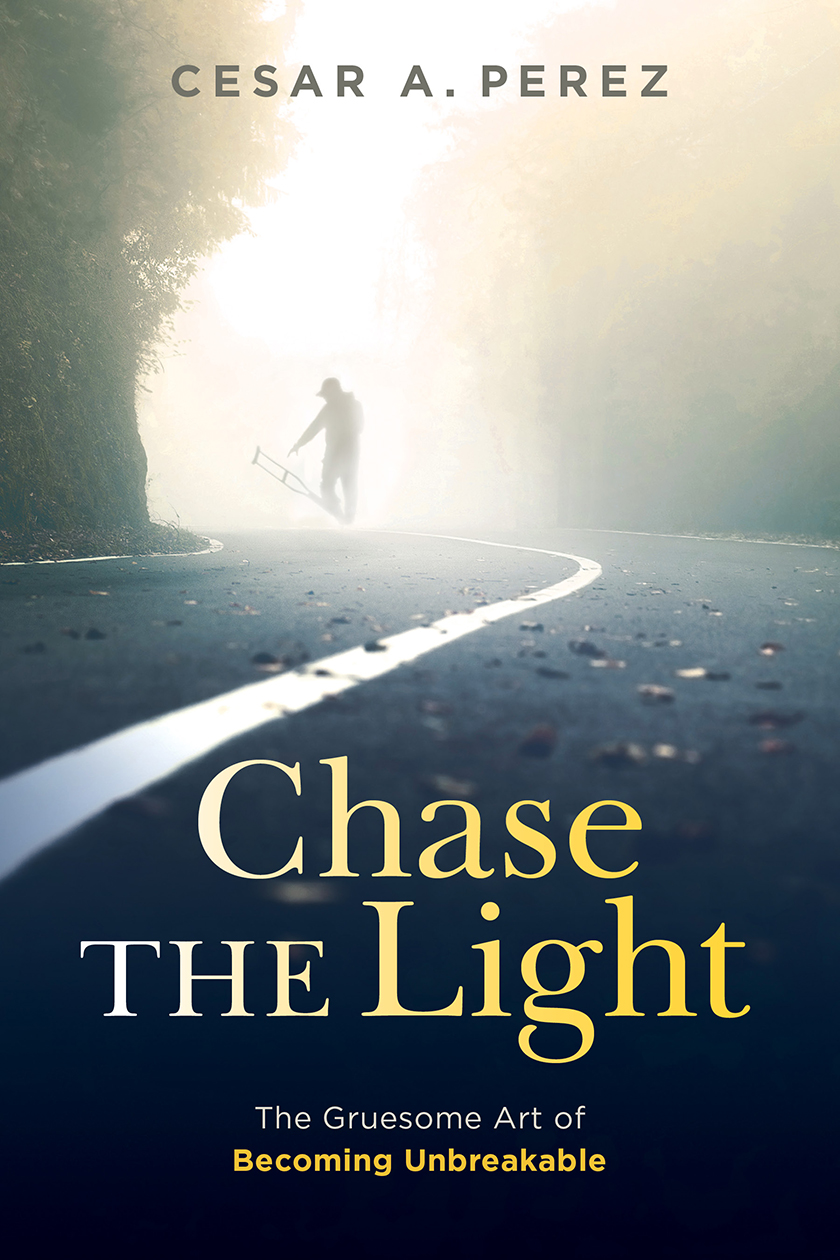
Cesar Perez: Absolutely. No, thank you. Thank you. Yeah, they can find the book on Amazon. Chase the light. The gruesome art of becoming unbreakable. And then they can follow me on my socials. Cesar CESAR underscore press P.E.R. Easy fit F.I.T. Again, I made that Instagram account way before that, but I was very into. I mean, I still am into fitness, but now there's a lot of more acting stuff, more production stuff on my on my Instagram. But yeah, reach out. And I tell this to everybody, like reach out. You know, I'm an open book, like I was saying, literally. But I do I do just want to help anybody going through their life altering moments, you know, like my life. My family was that life for me. And I feel like it's my turn to kind of help be that life for somebody else.
Travis Stoliker: Is there any message that you want to deliver to David Goggins?
Cesar Perez: Yeah, no, thank you, honestly, because without that book, I really needed that push when when Chris gave me that book. I was like I really was in a dark moment and I didn't know if it was worth it to keep pushing myself past my limitations and past that pain, because there was so much pain, especially going through these surgeries, procedures. But reading the book and realizing, hey, nobody else is going to do it for me. And at the end of the day, it's not going to be because I didn't try. That kind of put me in a new perspective on life and a new appreciation, too, for everything. And so thank you, David.
Travis Stoliker: You know, he will love that. He will love that. And thank you so much, Cesar. I I'm so excited for you. I want to meet your mother because what a what a what a powerhouse. And we're just all cheering for you. If there's anything that we can do for you, please let us know. And you've got incredible story that you're going to inspire a lot of people and help a lot of people. So thank you for putting it out in the world.
Cesar Perez: Oh, no, thank you. Thank you, Scraggs, honestly, because it put my vision, you know, on paper and man, it's it's everything I wanted and more.
Travis Stoliker: Thank you so much. We're honored to be a part of it.
Want to Write Your Own Book?
Scribe has helped over 2,000 authors turn their expertise into published books.
Schedule a Free Consult