Civilized Savage: Why Winning Is Endless and Showing Up Is Nothing with Chris Paradiso
✨ Episode Summary
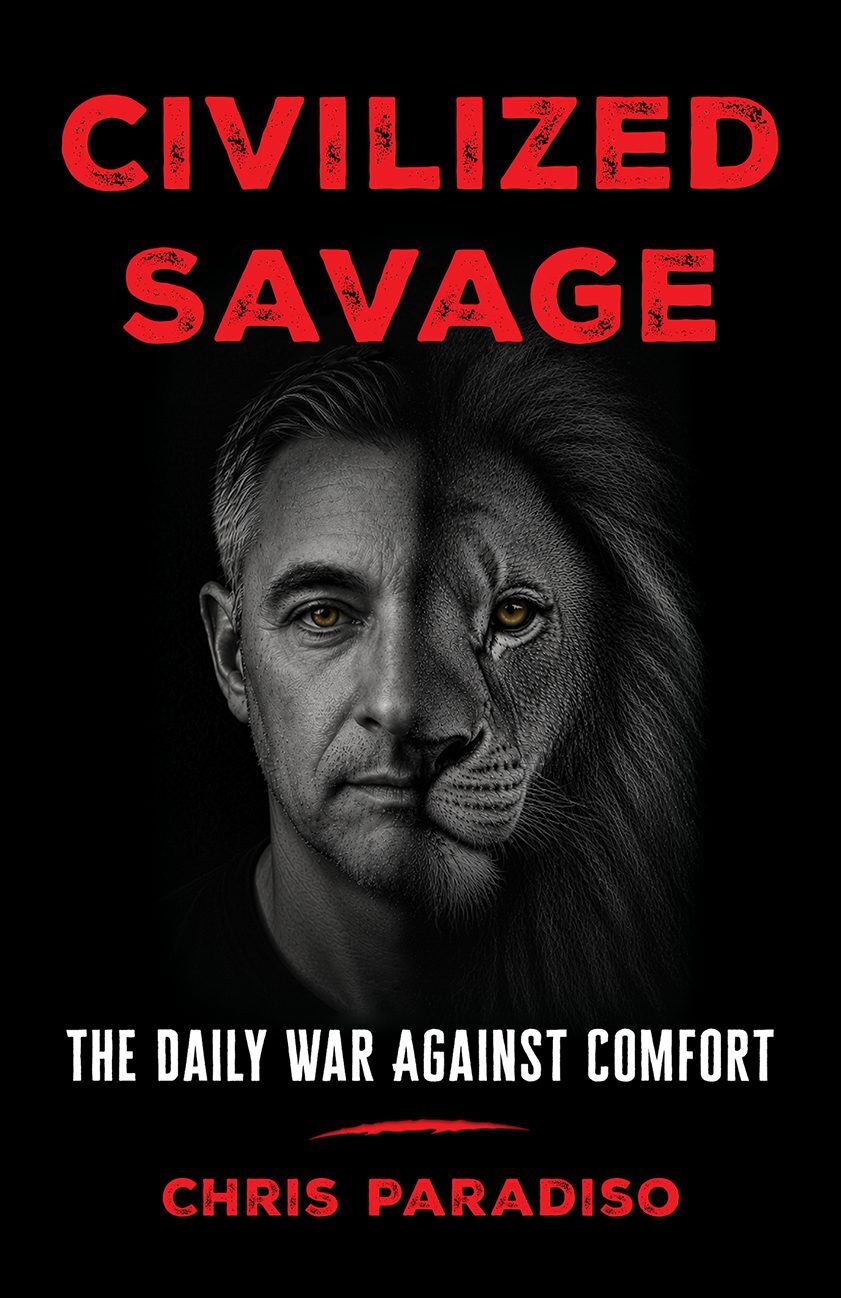
Chris Paradiso scored 49 points and set a school scoring record in an overtime win, then watched his father drive past the McDonald’s he had promised and take him back to the gym for 100 free throws. That night sits at the center of Civilized Savage: The Daily War Against Comfort, the book Chris wrote first for his two children: winning is endless, and every morning the score starts at zero to zero.
In this episode of Author Hour, Chris tells host Lex Statzer why “showing up is half the battle” is a lie, why his family motto is “you win or you learn,” and why he burns the backup plan. He shares what his son said about the book on his way to Marine Corps boot camp at Parris Island, why he fired three people before finding a Scribe team that listened to understand, and why his next book is already forming.
“But he said, when I read it in the book, it really stuck with me.”
⭐ Top Moments
- A team that listened to understand. Chris fired three people before Scribe. Here is what made the difference: “But I think the most important thing I got from Scribe is people that listened. Listened to understand. They didn’t listen to hear.”
- His son read the book on the way to Parris Island. Chris wrote the book first for his kids, and it landed: “He said, Dad, I read your book. And an easy life isn’t worth living, is what Nono said, you’ve always taught it to me. But he said, when I read it in the book, it really stuck with me.”
- Coming back for book two. With 50 to 60 more “societal lies” written down, Chris is already planning the next one: “I am so grateful and excited that I will be working on my next project with Scribe because the experience was just awesome.”

Chris Paradiso
Entrepreneur, insurance industry leader, investor, and advocate for leadership and community, Chris Paradiso is the founder of Paradiso Insurance, a nationally recognized independent insurance agency. A partner of Oakridge Dairy and owner of Schofield Springs, he also leads Paradiso Presents, helping insurance professionals grow through leadership, marketing, mentorship, and innovation. Chris is the founder of mastermind “57 Lions No Sheep” and a member of The Greenwich Group. He serves on many boards, including Adelbrook, the Padre Pio Foundation of America, Building Homes for Heroes, the Stafford Board of Education, the Wall of Honor, and Rough Notes, and has coached and volunteered at the Special Olympics.
★ Scribe Case Study
Chris Paradiso Wrote Civilized Savage for His Kids and Found a Team That Listened to Understand
Chris Paradiso fired three people before finding a Scribe team that listened to understand. He wrote Civilized Savage for his kids and is already planning book two with S…
📚 Books by Chris Paradiso
Transcript
Lex Statzer: Welcome to Author Hour. Today I am here with author Chris Paradiso, author of Civilized Savage, The Daily War Against Comfort, which is coming out October 27th. Chris, welcome to Author Hour.
Chris Paradiso: Thank you for having me.
Lex Statzer: So today we're going to kind of go into the standards that you refuse to lower, the people who set that standard for you, and why you wrote it all down. So let's actually start on a night that you have not forgotten. 49 points, a school scoring record, an overtime win, and then your father drove you past the McDonald's he promised you and back to the gym to shoot 100 free throws. So what was your dad actually teaching you in that parking lot? And how does it tie into Civilized Savage?
Chris Paradiso: I think, you know, to answer that as a 10, 11, 12 year old would be very different than the way I answer it today. I thought about that. What was he trying to teach me back then? That I can certainly tell you, I didn't catch it until later in life. And what he was trying to teach me is that the definition of winning is thought in a different manner from different points of view. And I also feel that he was trying to teach me that preparation is everything. And maybe I didn't prepare well enough because the weekend prior, I spent time watching college basketball and I never forget what he said, you're never going to get better watching, you're going to get better doing. And I can remember where I was sitting. I can remember how dinosaur, this big old TV, which kids of today's era have no idea how big TVs were back in the 80s. And then, you know, as crazy as it is, I remember like it was yesterday. Yeah, I could tell you what type of car we were in when we drove by McDonald's.
Lex Statzer: So how did that tie in when you were thinking about writing this book? That message clearly stayed with you and you learned from that. But how did you decide to tie it into the book?
Chris Paradiso: Well, I think because winning is is such an important part of my life and I'm just careful on how I say it, because when we look at winning, my one question is, how would Lex answer what is winning in one word?
Lex Statzer: And that's a hard one.
Chris Paradiso: It's a very hard one. And I can tell you what you're probably going to say, but I won't answer it. I'm going to ask you, what's the first thing that comes to mind when Lex thinks of winning? What's one word?
Lex Statzer: One word to think of winning. I think relief, that might be a weird one, but I think I'm a competitive person.
Chris Paradiso: So yeah, but that's a lot of people. I've never heard that, Lex. OK, so you might be weird, but weird is, in my opinion, is beautiful. It's good. Weird is most people are not going to agree with me. Mine was endless. Yeah, because winning is endless. I might have won that basketball game, but when I go to bed that night and wake up in the morning, I'm not a winner anymore. And that's where I think my father lived his life. And what I've seen and what he taught me is that every day, every single day, you have to get up in the morning and you start the score is zero to zero. And that's really the life lesson. Just because you won a basketball game doesn't mean you really won.
Lex Statzer: Yeah, that reminds me of when I was playing basketball in high school, our coach asked us in the locker room one time, he said, what's the most important game this season? And I immediately knew because I was also raised by a very winning is important family. I said, the next one, the next one is always the most important game. And I think I think about that all the time of what is the most important game? What is the most important thing in your life? And it's the next one. Exactly that. Yeah.
Chris Paradiso: Well, what's what's what's the opposite, Lex? What's the opposite of winning?
Lex Statzer: Oh, my gosh. One word.
Chris Paradiso: One word.
Lex Statzer: I mean, losing feels too easy.
Chris Paradiso: Well, what do you think?
Lex Statzer: I think it's two words. I would say giving up. I would say that's the opposite of winning.
Chris Paradiso: I sum it up as losing, but my real intentional word that I teach my children, you win or you learn. So there is no losers in my family. And I will tell them I will not allow you to lose. I will allow you to be defeated. Because you will be defeated, but if you learn, that is what puts that realm in you being defeated versus losing. You win or you learn, but you never lose.
Lex Statzer: It's that Rocky quote. You it doesn't matter how many times you get knocked down. It matters how many times I get back up. Yep, absolutely. So speaking of your kids, you open the book by saying that you wrote it first and foremost for your children, Mia and Johnny. So you could have just kept living this example right in front of them. Why did it have to become a book that they could hold in their hands?
Chris Paradiso: Because of the lessons that I learned from my father. That he I only wish, unfortunately, he had cancer for many, many years, but the after my mom died of cancer, he was around three or four years and driving the hour to sometimes four hours back from the hospital. In some cases, you know, for two and a half weeks, I lived with him in his hospital room. The stories he was telling me are invaluable. But how many people don't put that down in writing for their kids? Because I do think some of us live a different life. I know society is filled with meteorocracy. They love it. They love it. Society loves that. It loves balance. Terrible word in my household. Balance. How many hours are in a week, Lexi? I own a business and I hear and I do interviews and someone says I want balance in my life. My first question, Lex, how many hours do you work today? And you tell me I work 40 to 45. Great, Lex. You want balance. How many hours are in a week? Most people can't answer, it's 168 hours, if you work 45 out of 168, you're not balanced now, what more unbalanced do you want? It's the way we think. And I think we have to be cautious with the way we think, how we feed our most important muscle in our body, which is our brain, how we feed it is vitally important. The vitamins matter to the brain.
Lex Statzer: Hmm. And in a book, I mean, that's a legacy. That's it. Like I said, something you can hold in your hands and it's something your dad taught you. You taught your children. But now more than that, it's something that lives way beyond your family.
Chris Paradiso: It does, but it also gives my children the ability to understand how dad might be different. And I think my sister being special needs, we, you know, you say special education, but I always say she's special. Right. It's it's it's a different it's it's a difference. But being special and being different is beautiful. And I think as I teach my kids, not that you need to stick out in the world, but you need to stick out in your head when somebody tells you something that, you know, they look at you with 10 heads. So this past weekend, my son's in Paris Island and most that know that it's the Marine Corps. He's at boot camp, which is by far the hardest thing he's ever going to do in his life. And when people say why. He can answer why the Marines over the army. He said, Dad, I read your book. And an easy life isn't worth living, is what Nono said, you've always taught it to me. But he said, when I read it in the book, it really stuck with me. I think I'm running from something I fear. And you've always taught me face face your fears because fear isn't real. It's not real. And I know people are going to challenge me. And they do all the time. Fear is real. It's really in your head. If it's real, then everybody would fear the same thing you fear. Otherwise, it's fake. You're afraid of snakes, Lexi?
Lex Statzer: No, I'm a rodent.
Chris Paradiso: My wife is petrified of spiders.
Lex Statzer: Yep.
Chris Paradiso: She weighs a ton more than this tiny little spider, but she she'll literally jump up on the bed and run from it. That's in our head. It's not real. So, you know, I just think it's critical that I write all of this down for my kids to understand why. Why we are a little different and why it's OK to be different and why it's OK to challenge. The norm, challenge average, don't allow other people to tell you what your ceiling is. It's not right.
Lex Statzer: I love that it's called Civilized Savage. I think that's such a fun title. And Mike Hunt describes you in the foreword as civilized on the outside, savage underneath. And I think we're getting a little bit of that picture now. Right. When did that phrase become the thing that you realized you were really writing about?
Chris Paradiso: Well, I was sitting the first time I ever went to In-N-Out Burger and being on the East Coast, we don't have them. And I'm sitting with a good friend of mine while he actually was running a conference and he stayed behind. And he says, hey, would you go out to dinner with my wife and somebody that works for me, my my my son-in-law, Joel? And so I said, where do you want? He says they want to make sure they witness your face in your first experience in the In-N-Out Burger. I was like, great. So we went out and with Joel, I'm sitting there, I'm eating whatever this thing's called, animal something food, animal style, animal style food, which he ordered, which wasn't on the menu. But he says, don't worry, it's secret. OK. And we started talking and he said, hey, I noticed that you recently took a challenge with the David Goggins challenge and you did it in the in the Northeast in a snowstorm. And at one point, I believe it was negative 17 degrees. I said, oh, it was all of that. And he looked at me and just so you know, he was a drill sergeant for the army for 17 of the 20 years he was in. And he looked at me and he says, you're a civilized savage. And I asked him to define that and that word stuck with me. So when I said I was doing a book, nobody could change my mind. Civilized, savage and a lot, even my wife says, I'm not quite understanding. They're two extremes. I said, they absolutely are. And I can name a lot of people who live civilized, savage. The most important person in my life is God and Jesus lived the civil. I mean, he died. Savagely, and I think of how many great people like Mother Teresa, you know, just so many people, Nelson Mandela, I mean, you think about what he did in his life. I mean, he was a civilized, he was civilized. He never came out of prison and went after people. He came out of prison to make the world a more beautiful place to positively impact. Now, I say savage is because that is where you see that vision. You know, I call it it's a part of grit because you go from motivation, which everybody has, you move from motivation to discipline because motivation has an expiration date and then we have discipline and some of us are very disciplined and some of us are, but at that point to the edge of discipline, we come to grit and I will define grit for you because this is the civilized, savage mentality. You have a vision of where you're going to go and no matter what it takes, no matter what gets in your way, no matter how big the speed bump, nothing distracts you from that vision. Nothing, I ran over 48 miles this weekend and I started at 10 o'clock at night and by 10, 20, 10, 30, I arrived and finished and my wife helped in the middle of the night, getting me water in certain places. It was 29 degrees and I didn't want to carry water because I didn't want to waste energy. So I had dropped points of water and, you know, in the middle of the night and I live out in the woods, other than a spotlight, there's no streetlights. And, you know, she says, well, what were you thinking about? I said, I had the audio book on, which is one of the greatest books you can read if you are a civilized, savage, and that's written by David Goggins. His first one, Can't Hurt Me, which is also by Scribe, I believe.
Lex Statzer: Yep.
Chris Paradiso: And his second one, Never Finished. And I said, you know, 50 percent of the time I ran in all of those hours, I don't remember anything. I visually had my my halfway point. And in my head, I thought of one thing, that vision of that's a halfway point. And the second vision I had was my home. So I would get back. And in between, you know, I can't really tell you. I just passionately knew with grit my vision and I was going to nothing was going to stop me. I don't care how cold, I don't care of an animal, I don't care. I do not care. I had the grit because I had the vision. And with that vision, you can accomplish anything.
Lex Statzer: I want to talk about this idea of showing up. So. One of your core arguments is that we built this culture that hands out rewards for just just showing up. Chapter three is literally called showing up is nothing. What do you mean here?
Chris Paradiso: Simple. If you show up to work, that does not mean you did a good job. It's kind of like let's look at the opposite of it. People say, oh, I work 90 hours a week. Does that make you successful just because you work 90 hours a week? It doesn't, but I think in some people's eyes, both ends showing up for those 90 hours automatically means he or she works hard. No, it doesn't. It doesn't. Showing up is none of the battle. How you show up and how you take action is what really matters. So if I show up to an interview and Lex, you're going to you're interviewing five people today and you're going to hire one people. But I show up and you don't give me the job. But I can go home to mom and dad and say, but I showed up. Showing up is none of the battle. Showing up and performing is it's. Taking action and how you perform, period. So I truthfully don't believe in any of the BS that I hear about showing up, just showing up is half the battle. If I hear that almost every day of my life and it's disgusting because it's not. I tell my kids, if you show up and you think you're halfway there. You already lost and you're not going to learn from that. Unfortunately, you're going to be a loser. And it's harsh to say that, right? It's harsh to say, you know, people say, don't be a sore loser. Well, what's the opposite of a sore loser? A good loser? We don't we don't ever talk about these concepts that make no sense to me. And I know there's other people out there that will look at this and maybe not as harsh as I look at it. And maybe maybe they'll be more gentle, gentler than I am, which that that could be true. But life isn't gentle. And I'm trying to prepare my kids. I wanted this book to be somewhat of a life dictionary, life stories and how they can see these stories of some of my very close friends who have gone through hell. But you know what they did? As Rocky said, it doesn't matter how many times I get knocked down, it's how many times I get up. Yeah, I'm grateful to have friends who we've all been knocked down in life. Some get up, some get up slowly. I'll get up quickly. Yeah, it's there's a difference in mentality and that civilized savage is going to get up quickly and he's going to be ready or she's going to be ready for the fight to continue. Like a lion, a lion will fight to its death, that's why the cover is the way it is. Winning is endless, we have to get up and fight every single day.
Lex Statzer: And you've really shown in your life that fight every single day. I mean, the three thirty a.m. runs in nine degree weather or negative 17 degree weather. It sounds like sometimes, you know, 38 hour fasts, four straight years of Goggins Method. I mean, for the listener who hears that and thinks that's just insane.
Chris Paradiso: But it's not.
Lex Statzer: What is all of that for? Yeah. Walk me through.
Chris Paradiso: You know, that's the hardest thing. It's like when people say that's insane, it's insane, maybe from your point of view, but it's very normal from my point of view because I have to get up and prove to myself something every day. And some people maybe go through life differently than thinking that. I cannot think, you know, the most important part of this book being released, the most important part is why I get up and live my life this way. And I don't know if you remember, but I'm not going to put you on the spot. It's because when I meet my maker, Lord Jesus Christ, the day I die and I go in front of him, I truly believe I will. My only question of success in life is, did I leave it all out on the field? If I wasted talent that God had given me, I didn't. And that's failure. And I am doing my damnedest to not fail. And I'm trying to teach my kids. We cannot waste God's talent. And when we do, we're also wasting our lives in some senses of what we can't accomplish. Lex, if you don't understand what it is to go out and run 48 miles. You'll never get that feeling that I have had, and it's not saying that I'm better than you if you went and ran 10 miles. It's not saying that. It's for me and how I live my life. And I think there's a lot of people that have a tremendous amount of grit and talent. But sometimes we allow laziness to eat at us. And it actually, in my opinion, it's stealing days and years and months away from your life. So the real reason why I do it is because I firmly believe that the day that I die, I do not want to face my creator. And he look at me and say, you left talent out on the field. I wish you put a little. You gave ninety nine percent. You didn't give a hundred.
Lex Statzer: There's a part of the book where grit is actually not really the hero. Tell me about the Pat Griskis triathlon.
Chris Paradiso: Wow, that was probably one of the most difficult things I did in my life, not that it was difficult for the miles. It was difficult because my mind had a hold. I mean, somebody had their hand on my brain and they kept switching it. Quit, quit, quit in the water. When I hit the water. It wasn't and this is God's honest truth, it wasn't seven minutes in and the first safety boat that was out there, I looked at the safety boat and said, why am I doing this to myself? If I quit, it doesn't matter. Do you think Chris Paradiso isn't that important? Will anybody really care? And I can remember looking up and the sun was actually kind of glaring in my eyes and I said, but I care. And I put my head down and swam and I'm not going to lie to you in my head, this is the truth. A thousand times my brain kept saying, quit, quit, quit. And somehow in my heart of hearts, I fought through that. And now that swim was God awful for me. It was God awful. I. It was a terrible time, there was nothing good, I was probably one of the dead last, if not dead last. I can tell you at a bottom 20 percent for sure. Not that I was looking because I was so focused on getting to the beach and getting out of that cold water that. That's what made it difficult, that was only stage one, stage two, when I got out of the water and looking at my father in law, who was a Marine, with tears in his eyes saying, are you OK? Because I was purple. When you're 50 something minutes in that water, 54, I forget what it was. That water was so cold, it was 59 to 60 degrees. That is a long time to be in that water. And my temperature dropped. I don't even know what it was. All I could tell you is I ended up chipping my front tooth because I was shivering. So I could barely put my pants on to get on because we got biking pants and my shoes. It took me, I would say probably eight to 10 minutes. Because I was so cold, I just could not get. And then I got on the bike and the lack of preparation was what then grabbed me because I met a woman or we were riding together up a hill and it seemed like the hill went forever. And I believe she said it was three or four miles. And I looked over to her and I hesitated because it was probably five to eight minutes that I wanted to ask her a question, but I didn't want to ask because I felt embarrassed. And I asked her, how much farther do we have to go? And she literally looked at me and said, you obviously have not prepared for this race.
Lex Statzer: Hmm.
Chris Paradiso: You're not even halfway up this hill. And I literally said to myself, oh, snap, I won't say what I said, but I'm not going to lie to you in my head. You know, one thing that didn't run through my mind, that second half of that nasty hill, never once did I think quit. Never once thought that. What I thought was, Chris, why didn't you prepare, you stupid SOB, you were dumb, you were arrogant, you were cocky, you thought your training was so precise that it didn't matter. And it did. And I think that's what my dad would have said if he was around, he would have said preparation is everything. My dad prepared for things.
Lex Statzer: Yeah.
Chris Paradiso: So I learned a lot in that race. I learned. I learned a lot, I learned how to deal with negative thoughts and how not to quit. I don't know what inside me clicked. We all have it. It's we get to a level that we need to push ourself, as David Goggins always says, you know, or the military says, when your mind tells you to quit, you only used 40 percent of your fuel. It's your brain trying to keep you comfortable. Something that day was special. And when I finished that race, I visually trained seeing my kids cross. It's one of the only pictures that's in the book. And it's probably one of the most precious moments of my life, having them cross that finish line. Didn't care about time. If you ask me, I don't know my time. I don't care. It never mattered to me. What mattered to me is I got focused. I wanted to accomplish something. And when the fight was so real in the water, it's amazing when you cross that finish line, the utopia, the goosebumps you have. It's that's where, Lex, where I would want you to be able to have that experience, have that feeling that I've had doing some of these, quote, unquote, insane or crazy things that some people say. In my eyes, they're not because it brings me to a place of utopia. Those goosebumps. And that feeling. Just irreplaceable.
Lex Statzer: Speaking of your father and what he would have said or would say, he had this word banger for anyone who starts something and doesn't finish. What does banger really capture that words like lazy or careless or something else might not?
Chris Paradiso: Well, I think because my father was a lot more civilized than I am. I say things may be a little harsh. My father had you know, my father was an attorney, a prosecutor, but went to Holy Cross and finished at Georgetown Law School. So he had polish. He would never use a word of loser or, you know, I guess some would call those harsh words. So my father went to school in Holy Cross, which is Worcester, which is also called Wista. If you're from Worcester, they don't pronounce their arm. So I say that because that's very important. My dad coming back to Stafford Springs after Holy Cross, he never pronounced his R's ever again. So he'd always say, don't be a banger. B-A-G-A, a banger and a banger was somebody who started something and didn't finish. He'd always say, you know, behind closed doors, a banger is basically don't be a half ass. Whatever you do. Don't just show up. Remember, we talked about just showing up, show up and do it to the best of your ability and a part of that don't be a banger was don't try your best, do your best. And there's a huge difference between that, that I tried to educate my kids and people that I surround myself. When I say or you, your child says, I'm going to try my best. You're already giving them an out that it's OK to fail. Why would you do that?
Lex Statzer: Why? Speaking of outs that give you that freedom to fail, there is an idea in the book, Burn the backup plan.
Chris Paradiso: Absolutely.
Lex Statzer: There's this idea that a backup plan is how a lot of people kind of quietly agree to fail before they even start. And you apply it to marriage and faith and parenting business.
Chris Paradiso: I would love schools. I would love guidance counselors to burn the backup plan, because I think they're setting kids up for failure when you say, if you're going for this, we got to have a backup plan. My kids had it. And I said, oh, we're burning the backup plan. We're going for what we want. We got to burn it.
Lex Statzer: Yeah. So for the careful person listening to this, who's always kept a plan B, always feels like they need need that plan B, make the case for them about burning that backup.
Chris Paradiso: How can you give a hundred percent? Of option A, if you already know you have an option B, number one, number two, the most valid thing you can do in your life, most is believe in yourself. And if you tell me you have a backup plan, you don't believe in yourself and you don't believe in plan A. And there's nothing more that I want to help people. That that they value and trust themselves and trusting yourself is going to bring belief in yourself, if you don't believe in yourself, who the hell is going to believe in you? If I don't believe in myself, how are my kids going to believe in their dad? It's not possible. So the backup plan does not allow you to give a hundred percent. You can't fully believe in option A if you have an option A and an option B. You just don't believe you can. And I know there's going to be a lot of people that challenge me on that. I understand that, but I can promise you, just try it once in your life. Go for something and don't have an don't have a backup plan, don't have option B. I guarantee you, you might fight for it and dig a little deeper. And that might actually get you through it. Burn the backup backup plans are nothing more than stealing your thunder in option A. And they're not that backup plan does not allow you to believe in yourself. You've got to believe in yourself 100 percent. And failure. What is failure? You know, my grandfather used to say, I actually put it in the book, I believe. You know what he'd say to Chris? He used to say, you win a lot of basketball games. Name one thing you learn. Name one thing that you learn from winning. I always had to think, he says. You can think as long as you want, but you know what you're not? You're not going to give me a valid thing you learned. You only learn from failure. So the best thing you can do is fail. And when you fail. There needs to be life lessons, you need to keep learning, just like one of those societal lies is don't look back if you don't want to go back that way. That is false. You look back because you need to learn. I don't look back to go back, I look back to learn what did I learn?
Lex Statzer: Look back to move forward.
Chris Paradiso: Absolutely. And then I have friends that challenge me and they say, you should never teach anybody to look back because you only look back if you want to go back. And I disagree. I say you have to look back because I failed. There's a lot of things I failed at. I need to learn from those failures so that I can move forward. Just a different way of thinking, right?
Lex Statzer: Yeah, yeah. And there's this through line in everything you're saying and everything you wrote in the book of giving that 100 percent. And you even mentioned it here that running underneath everything is your faith. And part of your definition of winning is being able to stand before God and saying that you used your gifts 100 percent. Absolutely. How does faith really shape the message of this book?
Chris Paradiso: Well, it's three words. Faith over fear. What do you fear if you have faith in? And I think fear is what stops people from giving 100 percent. What is one thing Lex wants to do in life before before her days are in? You might say, which I've had somebody say, you know what? I want to jump out of an airplane. Well, what is stopping you? And don't tell me money because it ain't that expensive, but you know, it stops a lot of people. I would say stops almost everybody's fear. What are we fearful of? You got to have faith. So that's really where it comes from. It's three simple words. Anything, including being on Parris Island in April and training and coming down that huge wall, 86 foot, whatever that wall we had to climb down. I had some fear because I had to put my my toes. I had a face and only my toes were on the edge. And I had to bend down in a squatting position. And a guy who I never met in my life has his has my hands in his life with one hand up a rope. It was impressive what he said. I won't say it because he dropped the F-bomb, but it got me down there really quick. And it was faith over fear. He says, I'm an effing Marine. What do you think? And I was like, and it clicked in my head, faith over fear, faith over fear. This guy went through. Parris Island to become a Marine, how can I not have faith in him? And that's exactly what I thought, and that's exactly what I went down that wall.
Lex Statzer: Yeah.
Chris Paradiso: Faith over fear.
Lex Statzer: Wow. For the person who's fired up listening to this right now, what's the first thing they should do come Monday morning to become a more civilized savage?
Chris Paradiso: The number one thing is you've got to write your goals down. Number one, and if you already have goals down, times them by three. Times them by three, because you know what we do? We set goals that we can hit. You know why? Because we want comfort. We don't want to fail. We don't want to be a loser. We don't want to fall short. We want to succeed. We want to win. Isn't it amazing? You play basketball like me. It's amazing if I if MJ walked up to you and said, you want to play one on one? Now it's MJ, you might be a little awestruck, right? Most people during his time was I'm not playing him. Because they already knew they were going to lose. Face your fears, don't be afraid to be defeated, because being defeated means we have a learning opportunity and that there's a strong message in that. So I would challenge people on Monday, if you haven't written down your goals, write down your goals. I don't care if it's religious goals, spiritual health, reading, work goals, financial goals, write everything down. And do not do it to the level that you know you can succeed at. Do it to a level that you know that you probably won't succeed at. And then times it by two.
Lex Statzer: Yeah. Thinking about the book creation process, how did you and Scribe end up finding each other and what made you willing to hand over something so hard won to a team to help shape?
Chris Paradiso: Very easy. First of all, Scribe is very professional. I got to work with some really ridiculously good people. I did. I'm not sugarcoating it. I fired three people prior, not with Scribe. So let's just say, I don't care if this sells a million copies, I'm never going to get my money back. And it wasn't for that purpose. I needed the right team that understood me to be able to put this on paper. And yes, they were very professional. Their follow through. Fantastic. But I think the most important thing I got from Scribe is people that listened. Listened to understand. They didn't listen to hear. They listened to understand. Because the other three people, I can assure you, they listened to hear and really, I mean, I probably have eight versions of this book. But only one will be released on the 27th. And I'm grateful that I found Scribe. I'm grateful that I found the people I got to work with. And I mean it because it means the world for me to be able to have this as a life dictionary for my children. And my goal with this book is my children first and foremost. After that is how do we make impact? Will somebody read this book and will it impact them? And I hope people reach out to me because. You know, if they question themselves, they just need to talk through things and you know, it is it is critical we talk through the process because we all are going to have fearful things in our life. I don't care if you set a goal, set a goal, you're going to run 5000 miles this year. You realize that's from Connecticut to California and just about back. That is a long way to run in 365 days. But you know what? There's people that do it. Goggins can probably do it in 30 days, where most of it will take a couple of years. But point being is we have to have faith over fear. And I think a lot of this comes down to who we surround ourselves with. Do you want to live an extraordinary life? Extraordinary is nothing more than extraordinary. There's the word ordinary with a little word called extra to make extraordinary. That only comes from who you surround yourself with. By far, one of the most important things I hope this book teaches my children as I focus with my 19 year old twins, who you surround yourself with. Is vitally important to the direction and the height of your life.
Lex Statzer: Was there during that writing process when you were surrounded by the team at Scribe and your own friends and family getting this book out? Was there any piece of writing advice or just bookmaking advice that really stood out to you along the way?
Chris Paradiso: Yeah. So I have a great I don't want to call her assistant because she's not she's a team lead. And I went to her and I said, hey, we're going to keep me on track. And she says, I got your back. And so we were getting into a chunk of the book with with Jeff and and I said, Jeff, I need to I need you to understand what I mean by this. What I'm talking about. And it was a section about how we always, you know, 40. Your mind will tell you you're done. You're tired at 40 percent. So what I did is I said, hey, Jordan, you know, we were on screen, I said. Can you give me 20 pushups, she says, probably give you 10, I said, go until you can't go anymore, she gave whatever, let's just say 14. I don't remember the exact number. I said, I have a brand new iPhone here for you. Do you think you could give me two more? I will give you this iPhone. Do you think she gave me two more?
Lex Statzer: I bet you she did.
Chris Paradiso: And then I made Jeff do it. Who's helping me put my thoughts in writing and really working with me. And he says, I get the point after he did it. And that that piece there, I think, brought us together really, really well, because. I put him through an exercise, not that I wanted to hurt him, I wanted to put him through a philosophy that I believe in. To be true. That a lot of people will tell me it's not true, but I just proved to two people that my theory is right. Our brain is going to tell us to stop when we're tired, and I'm going to tell you, Lex, and my children, you don't stop when you're tired. You stop when you're done, stop when you're done.
Lex Statzer: When you cross that finish line, just like that triathlon, yep.
Chris Paradiso: And did I stop? I did for the remainder of the day, but you know what I woke up? My father used to put it in a very, very, very, because I loved basketball. Michael Jordan won a championship. He told me this story. I'll never forget this. I could tell you how the degrees out, I could tell you where I was. And he says, I'm going to paint a picture for you. Michael Jordan just won his fifth championship title. And all of a sudden you see him with a cigar, you see him holding, you see him crying, you see sweat and champagne. The next day you see him on a bus and you see him standing up there talking about how they're going to do it again. And you see, I don't know how many hundreds of thousands, close to a million people. It was insane. And he's painting this picture and he says, now the day is over and Michael and his teammates have to get back on that bus. Where do you think that bus is going to take them?
Lex Statzer: To practice more.
Chris Paradiso: Going to take them back to the stadium. And what's at the stadium? He said, their cars. And my dad says, what are they going to do with those cars? They're going to get in the car and drive home. And what are they going to do? They're probably exhausted, dad. They're going to sleep. He says, yes. But the civilized savage is going to get up the next day, which Michael Jordan is because he knows and understand. I was a champion yesterday, but today starts a new year. I want to be a champion this year. I did it last year, but I want this year. And I'll never forget when he said the champion is going to get up and train like he's not a champion. And that's exactly what the Kobe Bryant's and the Michael and I keep relating back to basketball because basketball played such a huge role in my life. I played college sports. So that's just where I go back to.
Lex Statzer: But yeah, there's a professional, I think, ice skater who once said, I compete like I've never lost, but I practice like I've never won.
Chris Paradiso: It's a brilliant quote. I don't know who said it. You probably do. But that's that is that that's a civilized savage. That is brilliance. In one sentence.
Lex Statzer: So, Chris, was this the story that you had to get out or is there already a next one forming for you?
Chris Paradiso: Already a next one forming.
Lex Statzer: I expect nothing less.
Chris Paradiso: Already a next one. So because I think there's still a lot that there's a lot that needs to be more in depth. I think the stories are at a level of, you know, maybe not being at 10,000 square feet, 10,000 feet high when you jump out of an airplane, maybe at 5,000. But I'd love it to bring it down to a thousand so that it's really nitty gritty. So people can really get the feeling of what it is to dive into some of these philosophies and some of these thoughts that, like I said, society lies to us about a lot of things. And showing up is half the battle is one societal lie. I have about 50 to 60 written down. And that's one of the things I want to challenge some of these societal lies so that at least it'll get people to think. Even if you don't agree with me.
Lex Statzer: Well, I can't I can't wait to find out more. So Civilized Savage is coming out October 27th. Where can people go to grab it and where can they go to keep up with you?
Chris Paradiso: Well, Amazon is where it's at. We do have a hardcover. We do have, you know, the softcover and we will be working on the audio book, which will also include some additional that I feel I want to share. I'm so excited for that. And people can find me on LinkedIn. They can find me on Facebook. They can find me on X. I always call it Twitter, but I love X. So at 2.30, 3 o'clock in the morning, you're probably going to get the best of me on some thoughts. And it's Chris Paradiso or Christopher Paradiso on Instagram. And I do share quite a few thoughts when I'm running in the morning. I try to keep it to a minute, minute and a half. And I just hope people will connect and and not only just agree with me. I hope the people who really connect with me that disagree with me and we challenge me and we have some conversations because. I didn't get to the level that I've gotten to, which I'm not near any level that I want to be by people just not challenging me. So my inner circle challenges me to the core.
Lex Statzer: And you don't you don't strike me as somebody who is afraid to be challenged. That's for sure.
Chris Paradiso: I, I, I absolutely despise not being challenged. So I embrace challenge. I love challenges. I love people that challenge me. I don't care if it's a game of ping pong. I love the challenge. And I, I, I guess I'm addicted to competition.
Lex Statzer: Well, thank you so much, Chris, for coming on. I speak for myself, the whole Scribe team and a lot of early morning, no excuse readers who don't quite know that it's in them yet. When I say that I cannot wait for civilized savage to hit the shelves. Thanks for coming on.
Chris Paradiso: Thank you. And I just want to say thank you to Scribe and the team that I got to work with. Absolutely a plus. I am so grateful and excited that I will be working on my next project with Scribe because the experience was just awesome. I'm just grateful. I almost feel like they're friends now.
Want to Write Your Own Book?
Scribe has helped over 2,000 authors turn their expertise into published books.
Schedule a Free Consult