William Manzanares IV: Episode 299
Read the full transcript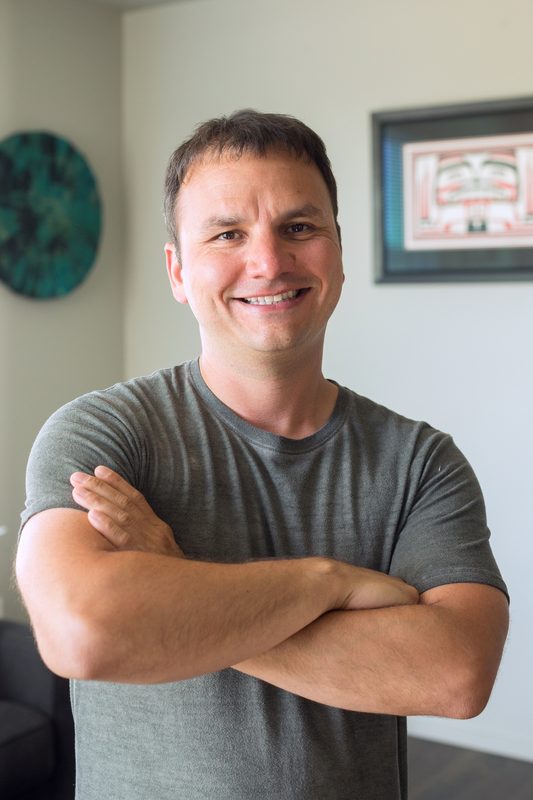
William Manzanares IV
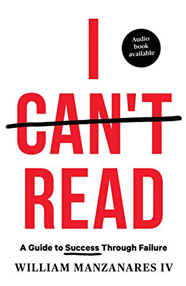
William Manzanares IV is a member of the Puyallup Tribe in Washington State, where he was born and raised in the Tacoma area. He grew up unable to read and later learned that he had dyslexia, but he went on to become a serial entrepreneur, owning and operating smoke shops, convenience stores, and restaurants since 2005. In his book, I Can't Read: A Guide to Success Through Failure, he shares the strategies that helped him thrive in spite of his struggles with reading, hoping to improve literacy and to inspire others, especially young Native Americans, to pursue their dreams.
📚 Books by William Manzanares IV
Transcript
[0:00:14] RW: Hi, everyone. It’s Rae Williams, host of Author Hour, where I interview authors about their new books. If not being able to read or a disease, it would be an epidemic. Millions of Americans can’t read, but illiteracy often goes unacknowledged or unnoticed. If you’re a parent or teacher of a child that struggles with reading, you know the painful way that illiteracy steals their confidence and robs them of the joy that comes from learning. William Manzanares IV, a member of the Puyallap Tribe in Washington state wrote, I Can’t Read to give the literacy conversation a much-needed jump start. He’s sharing his incredible story with us today. Here’s our conversation with William Manzanares.
[0:00:58] WM: It began with, at my companies that I founded. I have them read a book to get a job. The Customer Rules by Lee Cockerell and I made it the standard over the last couple of years and you will not work at one of my companies if you haven’t read the book. At one point, there was a bunch of employees who got really frustrated and said, “well, we can’t read as much as you read, please stop pushing books on us.” Because not only that book, I always try and push them to do one book a month in different areas of life. I sat them all down and told them why books meant so much to me. That’s kind of why this message and why I wrote this book.
[0:01:34] RW: All right. Tell us a little bit about your journey.
[0:01:39] WM: I think everyone out there has a story to tell and a story to write about and my journey’s about leaving a lasting impact for the next generation or people around me. My story is just simply stated is in school and throughout my life, I can’t read. I struggled with a reading disability, disadvantage if you will. My whole life and I kept it secret up till that time when I sat my employees down and told them, “I can’t read, I’m the kid in school that everyone yelled out words to in public reading.” I’m that guy. My discovery of Audible five years ago changed my life dramatically and I wanted to then let the world know or just people in my community know that you can overcome any obstacle in your life if you take on the persona of someone else and that’s what I’m saying with reading. If you take on a persona of someone else’s existence by reading, take on their consciousness and live the life through their memoir, their story, you can get a different perspective on your own.
[0:02:44] RW: All right. In terms of just your journey and your story, how did that parlay into the unique idea of this book? What is that unique idea or story that people can take action on or draw from? I know you kind of touched on it a little bit when you said that taking on the persona, but if you could dig a little bit deeper into that.
[0:03:07] WM: I think in school; we’re told you have to get good grades and go to college to get a good job. I mean, nothing against the teachers and classrooms are telling that, it’s the problem I see is with the system and the way we teach people today. One in five people are dyslexic in this country and over 32 million people in this country can’t read. If the school system works, don’t you think those numbers would be different? You think they’d cater to that? If this was any other business model, it would fail. That’s what I’m out there talking about is the school system failed me. I found a way around it with technology and Audible and putting a lot of lifetime of hard work into that idea of I was too stupid to read. I thought I was too stupid so I didn’t tell anyone. I only told three people in my life and I never told anyone until that moment of frustration with my employees who said, “we’re not you, we don’t want to read this much.” And it finally hit me, “my god, I’ve changed, I’m a different person than I was growing up. I’m pushing books down everyone’s throat.” I’m saying, “you got to read this, you got to do this, this will change your life.” Someone come to me with some drama and say, “have you read this book?” If I hear employees fighting about something. I say, “you guys read How to Win Friends and Influence People because you all need some help because this is not how you should talk to people”. I would totally interject myself in too many situations trying to throw books at them. That opened up my eyes because I started doing more research and then thinking about it is, there’s a bigger problem. More people are affected by illiteracy in this country than any other disease and that’s my frustration, that’s why I wrote this book, to bring awareness. I shocked my employees because they always saw me as this brilliant business guy, I’m not like stroking my own ego with that, but that’s what they would say. I wanted to share and put some light to the subject that intelligence can be in many ways – And the school system failed me and I successfully made it. How many other people did it fail, but they think they can’t make it because they were told they were too stupid to pass?
[0:05:12] RW: You have a chapter in your book that particularly caught my eye. Called, Read with a Purpose and you know, you say you interject kind of your employee situations with have you read this book or that book. Is that that you mean when you say, read with a purpose? When we read, how are we supposed to be interpreting these things and what do you mean by that?
[0:05:30] WM: Reading with a purpose means, what are you trying to solve? What problem are you trying to solve? When I was overweight, I hurt myself and gained a lot of weight back after years of getting it off. I thought to myself, “you read a lot of business books and you preach this lot. Pick up a diet book.” So, I picked up the highest rated diet book that I found on Audible and I just applied it to my life and lost 40 pounds in two months. It made me think about the food system, it made me think about a lot of things and it helped me become the change that I wanted to see in the world because I closed down an unhealthy business and trying to make a healthy convenience store. The reason I said reboot the purposes. I had a purpose to want to lose weight. Well, I went a little bit further than that. If you want to be rich, quit blaming the system, it’s a science, read books on wealth. If you want to lose weight, read books on how to healthily live. If you’re coping with the loss of a loved one, there’s books on grief and loss. If you, having relationship problems, there’s books on how to mend those and how to talk to people differently. There really is a book for everything, but I don’t think the school system’s necessarily teaching that way, they’re teaching you how to pass tests nowadays, rather than how to actually use it to live. The purpose is find your why, like in Simon Sinek’s book, that was really profound, finding your why. My why is I want there to be a lasting legacy of a reading epidemic instead of an illiteracy epidemic.
[0:06:59] RW: What are some of the negatives that you’ve seen from literacy just in general and even just within your business and within your life in general, what are those negative effects, what happens if we are not reading in whatever way we choose to consume books? Because when you say reading it, I understand now, especially you talking about Audible and the different ways to consume that information that you don’t just mean pick up a book and stare at the words with your eyes necessarily. What happens when we don’t do this?
[0:07:27] WM: Well, when I was in school, I would learn like quotes. It was the easiest thing to read slowly because go around telling everyone I couldn’t read. I mean, public reading, classrooms would know. A quote that – a mantra I also live by was learn from other’s mistakes, you can’t live long enough to make them all yourself and by reading for me is, with the purpose and reading, it’s not just reading to read, it’s reading to learn so you don’t have to go through the same struggles that others have gone through. When I talk about Audible, that was my solution five years ago in April 2014, I debated over getting Audible. I’m cheap and I thought, “man, 14.95 a month, that’s a lot of money.” And I debated and I got two free credits and I got The 48 Laws of Power was my first book and I digested it and I said man, “I can retain everything from this book, I have every memory of it. It’s great.” And then it brought me back to this mindset of “oh yeah, when I was read to in school, when the teachers were really young, would read at the class. I remembered every story.” It made this connection and I debated over it and I ended up dropping my Netflix account, so I could have the extra money to do it and I did the 14.95 a month and I started just digesting one book after another because at first I was like, “I’m not going to read a book a month.” Well then, it became a small goldmine like finish this book by this time, finish this book. When I talk about illiteracy, I think people think immediately, stupid people. Propel who are dumb, people who failed or the school system failed them. No, I’m talking about – there’s more people out there who don’t know how to read or even take the time to take each word in and figure out the meaning of it without jumping into conclusions first. We all are trying to survive in this world and we think of survival first so we think of what someone’s game, what are they doing, why are they doing this against me? Rather than stopping, taking breath and saying, “what can I learn from this?”
[0:09:23] RW: Of course, I’m assuming that your book is going to actually be available in audio book form?
[0:09:28] WM: Yeah, I think so many times, an author sees an ebook or a paperback book or even a hard cover as that’s a book. Well, what I’m hoping with my book also is that it has to be in audio form for all the millions of people that use Audible. I had it justified early on like yeah, Audible, Audible, Audible . You got to be on Audible and it makes hundreds of millions of dollars and Amazon wouldn’t have acquired it if it wasn’t a legit thing. Yes, it’s going to be on Audible and the greatest last bit of oomph of motivation I had was I had a narrator lined up and everything because I need to release my audio book at the same time that I released my physical book and I know that’s not usually the standard. Usually you’ll see the physical book come out and then the audio book will follow up in a month or two, I want to make sure that it was all available. And I actually got the motivation because everything was scheduled and nothing against the narrator I lined up, but it fell through. I ended up reading my own audio book and I talk about the problems I had in school in my book and the fear of public reading and I conquered my last fear with this audio book. I read it. I read it out loud. I hope that could be an inspiration to those who still struggle that even my last bit of fear was still motivated by, “I got to get this done.” And that’s why I read my own book for this one.
[0:10:50] RW: I absolutely love that. This will be released, your audio book will be released at the same time as your physical book.
[0:10:56] WM: It was very important to me because when new books get released and the audio book isn’t available. I mean, I can wait a couple of more months but you know, I do audio books, I can read a physical book by the way. It was great because of all my audio reading; I was able to read a couple of books cover to cover. I was like, “heck yeah, this is working.” But for me, for the demographic of who I’m targeting and those who struggle, it was very important that they could have the audio book and the physical books so they could read it along together, otherwise they’re just waiting.
[0:11:27] RW: All right, I love that, thank you. So, when you were writing this book, there’s another chapter that I kind of noticed called On the Other Side and it’s kind of near the end and it’s kind of like the end result of just telling your story and the outcome of that. What is on the other side when we’re able to get into reading and kind of overcome that obstacle and all the obstacles that we have?
[0:11:55] WM: Everyone understands, I phonetically can’t read, I can’t sound out words. I found work arounds and I talk about it on my book how to get worked around all of that. So, if it is a brand-new word that I have never heard before, I have to do some technique and get it so I know what the word is but we all audit. We can all hear right? We all listen for those who aren’t having hearing impaired, we can listen and we can follow instructions. What I talked about the other side is and to touch back the previous question, when I went around try to do more research and going to illiteracy groups and trying to help out and tell them my story. When I talked about my struggle, they keep hearing it as a negative, “oh he can’t read.” Well, let us read this out loud and like I am on the other side. I can read. I have used all my techniques. There is not a word that is commonly used in the English language that I can’t pick out now. I can speed read. I can read faster than people I believe who are more intelligent than me. One of my most intelligent friends that I talk about often, but don’t give his name in the book. Who helped me along the way, he had to stop me once and said, “hold on, hold on, hold on you think faster than me. Give me a second to catch up.” And that’s what I talked about the other side is it will take a long time. It is not going to happen overnight, but if you slowly work at it, you can look back one day and say, “oh my gosh I know how to read.” And that is what I hope this book will do for the millions of people out there is you can read. Quit telling yourself you can’t. You just have to take a step in the next direction towards the side you want to go and when I talk about the other side is, I am there. I can read. I have used all of my workarounds and I am there and I am waiting for you guys who are still struggling and I will see you on the other side when I’m here, waiting for you.
[0:13:38] RW: All right, so circling back to your employees, besides shocked at your revelation what was their reaction after you’d explain to them why this is so important to you. Do they read now? You mentioned that you can’t get a job in your businesses without having read a certain book, so how are they now?
[0:13:59] WM: In general, now years later these employees just know it. Brand new employees just know that it is the standard. It was employees that I had at the time who I started throwing this out at them. The thing that happened they stopped complaining to me at least about anything because now they realized Will was full of take no excuse kind of guy myself now like, “no, I don’t want to hear it. There is Audible, there is Amazon. There’s books, you have eBooks.” YouTube has some free books out there take the time to learn. So, what happened for me personally was the excuse to stop. To me there is no more excuses. The other thing that start to happen in my eyes was how people would come to me and tell me after me sharing my story is their loved ones, their spouse, their kids who have a learning disability or challenge and that’s what actually founded the idea of this book was I didn’t realize that I was not alone. In fact, I am surrounded probably around more people who don’t know how to read than I ever knew before and that was profound to me. I heard more stories about everyone else’s struggle because of sharing my story than if I would have kept it a secret.
[0:15:07] RW: So, in terms of just applying this to the larger idea of just no excuses and overcoming obstacles that you might have, how do we start to do that? So, for you, your solution was you found Audible. You taught yourself different techniques that kind of thing, but just for those of us who have something that we need to overcome or we have something that is perceived as an obstacle or that people have told us that we can’t do, how do we go about shifting our mindset to not make these excuses anymore?
[0:15:36] WM: I can do a quick simple answer and say you just got to do it, but then people get mad. When you give the simplest answer people get mad and I think in so many techniques, people want me to give you this long winded profound 300 page answer to this question when it is just as simple as snap your fingers and get your mind off of that and be in the now, I guess that is the answer is be in the now. Be in the present moment and don’t worry about what will happen or what has happened and just focus on now and what you have to do right now. All our worries come from past or future, there really isn’t a worry in this present moment. I mean now when I say things like absolutely like that I know there is always going to be that person that says, “well actually I am driving the car right now. I need to pay attention.” Well yeah, obviously you need to pay attention to road. I am talking about be in the now. Be in the moment and quit worrying about the negative people because those negative thoughts are just people who made a comment because of their life’s journey. The thoughts you have are yours and yours alone. The countless nights that I had negative thoughts about me not being a good reader and crying myself to sleep, not telling my parents I was too scared thinking I was too stupid that I messed up that I did something wrong and then it was all on me. So how could I dare tell anyone what I was dealing with? And I am glad kids are more open today. I have been on a lot of social media groups where I could see parents talking about their kids’ and struggles and I wait to comment because they are asking groups about parenting questions. My kids aren’t dyslexic. My kids aren’t having any reading struggles so I don’t have to know what that is like, but I know what it’s like to be the person. And when I say anything you want in life is possible, I truly believe it. I truly believe it because the greatest accomplishment I have ever did in my life was learning how to read and so many others can learn so quick especially in grade school, especially in second grade, first grade when you are supposed to learn that. It took me a lifetime so everything else just seems like what is the big deal? What is the big deal? And if you read my book, there is a lot more personal loss and tragedy that I’ve had to endure. And I think everyone in this world has their own story to tell, but mine was I used those times to look to someone else and take on their conscience and that’s why I talk about taking on other books and reading because I read with a purpose. I read to visualize what I want to be in five years and I got there. You don’t get there by just sitting back and asking for it, hoping that it will fall in your laps or wishing for it. You get up and do it every day.
[0:18:16] RW: Right, so with that being said, if you had to issue a challenge and that can be to the readers of your book, to people listening to us, to your employees, anybody if you had to issue a challenge, one thing that you can do to change your lives today and you already offered a lot of insights so, if you can give us a challenge what would that be?
[0:18:35] WM: Well one thing that I would tell myself is, “your future self, your present self and your past self.” When I was going through martial arts I have talked to myself, I said, “okay my current self right now, can I kick the butt of my younger self?” If I can’t say yes that I don’t want my younger self to beat me up and you should always think that your older self might get a little weaker, but you should keep practicing. So, the same thing with reading and the correlation is challenging yourself. Is in your current state of mind, the current place of where you are, intellectually speaking can your present self intellectually outwit your younger self? And if the answer is no then you’d better work on that and then about your future self is wouldn’t you want your future self to be smarter than your current self? Wouldn’t want to say future you, wouldn’t you want to be able to pick up the phone and call your future self, five years from now and say, “hey, all of these problems I am dealing with today what would you do?” If your future self said, “I did nothing, I sat there and complained,” wouldn’t you be pretty disappointed? But if your future self came to you and said, “hey I actually read all these books and everything is cool. My life is so much better now. I talked to all of these people, I got new friends, the loved ones who supported me I helped them back when they had times of loss or sadness.” That is what I would say is the challenges. Challenge yourself, is your future self, even if it is a month from now going to be able to spar intellectually with your current self? Who is going to win?
[0:19:55] RW: That is a pretty interesting challenge because I ask this question a lot and that’s a great one.
[0:20:01] WM: I‘m not doing any of my books. I didn’t talk about this in my book because I thought it would one, for people who out-read me, it wouldn’t mean anything for two, if you looked at my employees. I challenge myself, I said, I’m going to do 30 books in 30 days and I did it. I’m going to do a hundred books in a year just because I saw one of the authors of a book I admire and I put in my book, Yeomni Park was a defector from north Korea. She read a hundred books, at the end of her books, I read a hundred books in a year. I said, “I’m going to do it because she did it.” And after I did those challenges, I realized, if you tell and brag about it around people who don’t read, they’re going to go, “yeah, Will’s just talk about more books he’s reading.” If I told you to read 30 books in 30 days, you’d go, “my god, that’s impossible.” If I talk to my younger self, I would have looked at myself and said, “you’re crazy.” But you can challenge yourself and that’s what I’m saying with everything, challenge yourself to be the better you, that you want to be and you will become that person.
[0:20:54] RW: All right. How can people contact you if they want to get more information or learn more or just you know, just connect with you in general?
[0:21:03] WM: My last name’s hard to say. It was one of the things you had to pick up when you’re in kindergarten, right? Writing out your name. So, I changed it for my personal brand for Will Talks Biz and I had that on – you can find me on Twitter, Instagram, Facebook, my website, the dot com. Yeah, you could find me in all those areas and I put out different content about business. This book’s about my own personal memoire about reading. But I have many years of experience in business and all the joys and roller coaster and pitfalls of business and that’s kind of the advice I like giving out to is career advice to young entrepreneurs and to young people. If you want to learn anything about that, you can go to my websites and have all kinds of content and blogs and everything about that.
[0:21:49] RW: All right, awesome. Thank you so much.
[0:21:52] WM: It’s been a pleasure, thank you.
[0:21:54] RW: Check his book out now on Amazon.com. I Can’t Read. And as mentioned, of course it’s available as an audio book as well. Listen up for us next time on Author Hour.
Want to Write Your Own Book?
Scribe has helped over 2,000 authors turn their expertise into published books.
Schedule a Free Consult