Leah Dean: Assemble the Tribe: Believe in your value, find belonging, be different
Read the full transcript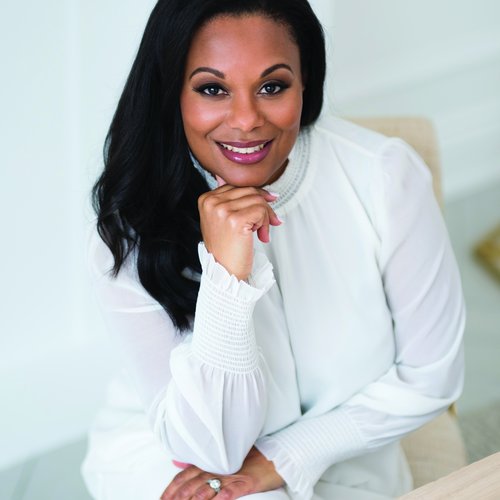
Leah Dean
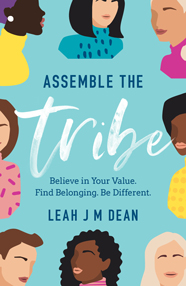
Leah Dean is a coach, speaker, and former chief human resources executive, and the author of Assemble the Tribe: Believe in Your Value. Find Belonging. Be Different. Originally from Bermuda, she has spent twenty years working with leaders around the world to build high-performing teams, or tribes. Her book shares a simple formula, believe plus belong equals be different, to help readers discover the value they bring to every connection and build tribes that stand the test of time. Drawing on research, professional insight, and stories from her own tribes, she encourages readers to find belonging and thrive while making an impact.
📚 Books by Leah Dean
Transcript
[0:00:25] DA: What are the keys to creating amazing female connections? Connecting with women can be complicated and finding a female tribe that supports and appreciates each other for a lifetime can feel impossible. But we need tribes to live our best lives and research tells us that women live longer, healthier and happier lives when they can connect with other women. Women need these relationships and want them to last. Where do you start? Leah Dean is a tribe formation expert with a simple yet powerful formula for building a tribe. In her new book, assemble the tribe, she shares this formula and shows you how to shift to a tribe mindset by first discovering the value that you bring to every connection you make. With research, insight and true stories from Leah’s own tribes, you’ll learn how to find your tribes and thrive while making an impact. This book provides you with a first step towards positive change for yourself, your tribes and the generations who will follow in your footsteps. Hey listeners, my name is Drew Applebaum and I’m excited to be here today with Leah Dean, author of Assemble the Tribe: Believe in your value, find belonging, be different. Leah, thank you for joining, welcome to the Author Hour podcast.
[0:01:36] Leah Dean: Thank you Drew. So excited to be here today.
[0:01:39] DA: Let’s kick this off. Can you give us a rundown of your background?
[0:01:43] Leah Dean: So in terms of my professional career, I spent 20 years, 20 long years in HR and that was all levels of management and executive leadership. I also sit on a local public company board in Bermuda where I’m from and so I spent quite a lot of time in the corporate world and about a year and a half ago, I decided to take a bit of a sabbatical to spend some time with my family, to travel and to write this book. When I think about kind of how the book connects to my work because one of the questions people often ask me is you know, “Why didn’t you write Assemble the Tribe at work? Why such a personal book?” What I found is, you know, in the corporate space, a lot of the work that I do from an HR perspective and that is really important from a leadership perspective is really about how to bring people together to achieve phenomenal business results. And, at the end of the day, you really can’t get there unless there’s a fundamental shift in mindset that says, “I value the person that sits across from me so much that I’m going to engage with them in a different way and I’m going to show up differently as well. In addition to kind of, there is an angle from a next generation perspective but I think this book really challenges mindsets which is the foundation of what I used to do everyday, which is you know help leaders create great organizations and bring people together. If you ask me, I would say I’ve been building tribes all my life and this book is a natural extension of my work.
[0:03:32] DA: Now, you mentioned you took some time off recently to write the book and why was now the time to write it? What were you inspired by, did you have an ‘aha’ moment?
[0:03:42] Leah Dean: That’s an interesting question. So one thing that’s about this book is I didn’t really intend to write it. For the last few years, I’ve been producing women and girls events, I’ve had this real passion for helping to elevate women personally and professionally and after my second event, about a year, maybe three years ago, I was with my team, we were chatting until 2:00 in the morning and then I fell asleep and then at 5:00, all of a sudden, I woke up with a start. You know, I always say, if you know anything about me, I am not a morning person, not a five AM morning person and so I really resisted this urge that I started to feel to get up and go write. After about 30 minutes, I got up and I went to my computer, sat down and an hour later, I had the outline for this book. In some ways, I feel like this was a divine inspiration, I was supposed to write it even though I didn’t intend to. But as I’ve gone through the process of writing the book, I also think that it’s really important when I think of some of the kind of generational impacts of thinking about how we form relationships. I have a little girl and a young son and so helping people shift their mindsets and then teach that to the next generation particularly now when there’s so much going on all around us, I think now is the time for the conversation.
[0:05:13] DA: Did you have any big breakthroughs or interesting learnings while you were writing the book? Maybe by doing some research or just through your introspective journey?
[0:05:25] Leah Dean: I’ll start with introspection. I did do some research, I’ll come to that in a second but what’s interesting is when I sat down and inked that original outline, I thought that I was writing about how to create a group, a tribe. I have a group of women that I’ve been friends with for over 20 years, we have traveled all aspects of life together. Deaths, marriages, childbirth, you know, kids going off to college, you name it, we’ve done that together for 20 years and so initially when I started out, I was thinking, “How can I teach other women to have this experience, you know?” The research shows that if you have healthy relationships, we live longer, we live healthier so how can I teach other women to experience what I have and then hopefully teach the next generation? But what I’ve learned through the process of writing the book is that tribes definitionally are more than just kind of these large groups or medium sized groups of people that we bring together. If you and I, Drew, had a great relationship, you’d be part of my tribe as what a group and then there are other people who are part of organizations who share values, they can also be part of a tribe and so the biggest shift that I had is that tribes by definition don’t need to be put in a box and that at its highest level, it’s more of a mindset. It’s, “How do I show up every day that allows me to have healthy, happy, productive relationships with other people?” And when we shift our mindset and think of our tribes differently, it’s less of a kind of exclusive group that we need to be a part of and more of a way of living. That was a huge kind of ‘aha’ for me personally as I wrote the book.
[0:07:14] DA: What are the benefits to a tribe and what is the difference or is there a difference for a tribe exclusively made up of women?
[0:07:25] Leah Dean: I did quite a bit of research on some of the health benefits of tribes because I thought you know, I personally had experienced what it felt like to be supported. I mean, my girlfriends and I, we have this word and when somebody just puts a word in the chat, we will literally assemble, no matter where we are in the world, as quickly as possible because we’ve learned that there are moments where you just need support and so some of the benefits of having a tribe is that incredible support but then when you start to pull apart the science, you know, it will tell us that you know, if we’re lonely, socially isolated, living alone, it increases our likelihood of death by like 29% on average. Quality relationships are really important if you want to live longer and healthier and when you think about it in the context of where we are in the world’s history, where the pandemic is pushing us inside, thinking about our relationships, reaching out in a way that’s authentic to us so that we can combat some of that social isolation and learning this is really important, it is so not optional.
[0:08:39] DA: Now, you did a survey of over 1,200 women and 46% of women who had a philosophy about female groups, you saw that nearly half don’t trust women or believe that female groups are too much work. Where do you think this belief comes from?
[0:09:00] Leah Dean: I think that belief comes from our relationship, the relationship stories. Some of the other things I found in the research was that you know, 71, 63% of all women have been a part of a group of that 63%, 71% have had negative experiences, 50% under the age of 18, 25% under the age 13. That means that if you think about what’s happening during kind of that period from puberty to early 20s, you know, the science will tell you that your brain is literally rebuilding synaptic connections and you’re actually almost as vulnerable as you were when you were a child, right? This is a period where, our lives are shifting on so many different levels and that is the very moment when many women have experienced these painful relationships and that’s really part of what creates our relationship story and so again, that was a real big ‘aha’ for me in the research is, “How can we help women navigate some of that pain?” Recognizing that there’s a reason why we sometimes as women struggle in relationships and then the second thing that really hit me in the research was the impact that as mothers, aunts, aunties, uncles, whoever has a power to impact on a young woman or to some extent, even a young man, right? I have a boy so I use all of this stuff on my son as well, I don’t leave him out. But the impact of showing up in a positive way in terms of how we talk, how we connect, how we help our kids navigate issues, that has such a tremendous impact on the relationship story that our young people have as well. Those are just some of the things that really jumped out in the research with the 1,200 women and helped to shape how I wrote the book.
[0:11:03] DA: Now, who is this book for?
[0:11:06] Leah Dean: Listen, I took some flack on this one Drew, my brothers and sometimes my husband, they would be like, “The concept of assembling our tribes is not female or gender specific, why are you writing this book for women?” That’s the answer to your question, the book, this one is for women but I would also say that anyone who is raising a girl who cares about the next generation, the book will be helpful as well. For example, I had a beta reader group that we’re testing, just reading the book for me in advance and one friend, he happens to have two teenage daughters and he called me up and he said, “Hey, I’m going to finish this book because as I’ve started to dig in, my teenage daughter’s really need this.” I think it’s primarily for women because I think it’s time for women to analyze relationships differently. Particularly where we are in the context of the world, right? There’s so much going on, there’s so much that’s pulling us apart and I think because of the role that women play in society, you know, we’re the mothers, we’re the nurturers, in a lot of instances, we’re driving movement, we have the opportunity to imprint on the world and the next generation in a way that’s not better, just unique and so the book really speaks to that reliance that is unique to us and the influence that we can have on really changing the atmosphere that we’re all struggling with right now because of COVID and divides and all of those things. This book’s primarily for women but if you have any women in your life, it might be helpful.
[0:12:50] DA: Yeah, I could understand that. Can you tell us about your experience and what you believed growing up and what your mindset was around tribes and female groups and in this continued all the way earlier into your professional career?
[0:13:08] Leah Dean: You know, I have two brothers and one sister and my sister’s much younger. Innately, I was always just hanging out with the guys, right? Because that was my life but you know like my research, I was one of those women who sometimes struggled with connecting or navigating these female relationships as a child and I talk about it a little bit in the book, even on cartoons, you see friction between women and that’s what’s really imprinted into you as a child and so I really struggled with this idea of lots of women and connections probably until I was in the earlier part of my career. I had a few good girl friends and I felt like that was enough but it wasn’t until I got married and I realized I knew absolutely nothing about being a wife like I needed all kinds of advice, how to cook, how to navigate, how to do certain things with my with health and I really just wanted to get a group of women together who had more experience than me to impart some wisdom and that was really the beginning of the journey and there’s also a mentor that I had who really impacted my life, which I share in the book. So it’s been a true evolution and a mind shift change for me where I went from, “I don’t do females, I don’t do groups. I just – you know, let’s keep it as simple as possible.” To, I think there is so much power when you can bring groups of women together and I have all kinds of tribes that I am a part of and I absolutely love it.
[0:14:52] DA: Now you came up with a really interesting tribe building formula, which is, “Believe and belong equals be different.” Which is the foundation of how you say we should assemble our tribes. Can you go into that equation for us?
[0:15:05] Leah Dean: Yeah. So that was one of the learnings and I tell a really great story of how I came up with it in the book but in its simplest form, the formula basically says that if you believe in your value and you find belonging, you can show up different. So let me just break these up into pieces. So “believe in value” is the first part of the formula because we really can’t engage in healthy relationships with other people unless we believe that we matter. You know I was talking to a woman the other day and she was telling me about the fact that when she walks into rooms sometimes she feels that other people are looking at her and she feels less than and so how do we get to ourselves to a place where we believe that who we are really has worth? And what I love above that “believe in your value” phrase is if you pull it apart, value is utility, it’s importance, it’s worth and belief, this is not Leah, this is just a definition, is a habit of the mind in which you build trust and confidence in a person or a thing. So when you put that back together to believe in your value is to everyday get up and build trust and confidence that you have that value, that you have worth, that you have importance and so the first part of the formula is really, “What work do I have to do to navigate some of my own stuff that keeps me from showing up as my best self in relationships?” And so then once you’ve done the work, the kind of the self-assessment, the next stage of the formula is, “I can now add to my tribe. I can now start to build my tribe and find belonging.” And we can find belonging in one on one relationships. We can find belonging in different groups and I explain and share about those in the book and then there are all the other people who are not in groups and one on one relationships that we interact with every day. So how do we show up with those people with a different mindset? And the other thing that I just mentioned with the whole belonging is that you can find places to belong but you don’t necessarily experience belonging because belonging implies more of an intimate type of relationship and so the idea is when I show up with this renewed sense of value about my gifts and who I am and what I have to give, then I can find belonging because I am showing up as a better person in those relationships. And then the last part of the formula is really if I believe in my value and I have found belonging then I can leverage those two things to be different. And “be different” is really where that whole tribe mindset thing comes in, you know, best case scenario, I meet somebody new and I add them to my tribe. Worst case scenario, they might reject me but it is actually okay because I know I have value and I’ve put in the work to cultivate these few relationships that really helped to anchor me and give me a sense of belonging and so practically, you know when I think about where I started my journey as, which was, “I don’t do lots of groups of women. And I have my close circle, I am going to stay there.” Now, I can actually go out and meet new people and connect with new people with almost no fear because if I am rejected it’s okay. It might hurt but I do know that I have value and I do have places where I find belonging and hopefully that will help a lot of women get past that hurdle of fear that they first have to tackle when it comes to finding new relationships.
[0:18:56] DA: Now let’s say you have taken the time to really get to know yourself. You’ve built these new relationships, you’ve built this tribe, what are some ways you could help make the tribe thrive?
[0:19:08] Leah Dean: Oh wow that’s a great question. I think some of the things that really help us to thrive, the most important one is communication and this idea of necessary conversations. When you are experiencing some conflict it doesn’t have to be a thing that scares you or that’s difficult because we often talk about difficult conversations. If you just think, “I care about this person and they care about me, in order for us to have the healthiest best thriving relationship, we have to talk.” It can actually reshape the words that you use instead of attacking. It’s just like, “Hey, I really don’t want to have any barriers. What can we do and what conversations can we have to help us moving forward?” And so that’s one of the things that I think is so important. Just this idea of having necessary conversations, not worrying about the fear but actually channeling that fear into, “What words can I use and what can I say to make this more effective?” So that is one of the ways we thrive. I also think that when we really carve out and make time, time is a huge factor. No relationship happens without time investment and relationships with our families and our friends and our girlfriends like there is no exception, you have to invest and that is one of the things that women say they often struggle with. It’s just with everything that’s going on, how do I carve out time? And I know for myself, I told you about that group of women that I’ve been meeting with for 20 years. We get together once a month for maybe anywhere from three to five hours and it’s not a lot of time when you think about how many hours are in a month but you do that month after month, year after year. You are creating some incredibly deep, rich friendships and so when people really talk about that barrier of time, even if it is a 20 minute phone call that you have every week, those are the things that help us to create these relationships. Now there’s a lot of other things that I go through in the book but those are just a few that I find rise to the surface in terms of issues that we as women and humans really tend to struggle with, right? How do we have those difficult conversations and how do we make time?
[0:21:42] DA: Now how have your life experiences, your research and this book either changed the way or even added lessons to what you’re currently teaching your children?
[0:21:53] Leah Dean: I think it had a huge impact. I mean I think of what, I’ll give you one example. It was right at the end of the second wave of the pandemic and my daughter and I went into a department store and I was six feet away from the register because we were all feeling nervous. We didn’t really want to be there but the woman who was at the cash register, she kind of barked at us and you know I was respectful but I remember as I walked away being frustrated that that was the reaction. And I think maybe there was a point where I would have voiced that frustration but instead of being frustrated, I had a good conversation with my daughter about what are some of the reasons why that interaction might have happened. You know maybe she was afraid because we were still at the height of the pandemic. Maybe she wasn’t feeling well and I am not saying that excuses bad customer service but it is really just making sure that my daughter spent some time thinking about what are the reasons why people might show up the way that they do. And you know there is a concept that I talk about in the book about patterns and we need to make sure that we are looking at how people show up in our lives over time versus just these one off interactions. I am sure that woman was quite lovely but she was clearly having a bad day. So I’ve been trying to make more of a concerted effort to find moments to help teach the principles to my children that are relevant and really do a better job as a mom, as an adult, showing up differently in terms of how I navigate some of my relationships. My daughter should never hear me having negative conversations about other women. She should hear me trying to be constructive and that’s what I try to do now with my kids more than ever.
[0:24:01] DA: Leah, writing a book, especially like this one that will help so many people is no small feat so congratulations.
[0:24:08] Leah Dean: Thank you.
[0:24:10] DA: Now, if readers could take away only one thing from the book, what would you want it to be?
[0:24:15] Leah Dean: Just one? That is like asking a parent which one is their favorite child.
[0:24:20] DA: Everybody cheats on this question, you can add a few more but if you could choose one.
[0:24:25] Leah Dean: I think I am going to cheat. So one, we need our relationships more than ever. They’re not optional especially now during the pandemic. There is a simple formula for how we build our tribes but the thing that I want people to take away more than ever is, you have the ability to show up and enjoy and thrive in your relationships in ways that you may have never experienced before and that is a real mindset shift that you could make just by thinking about what tribe means in a different way. And so, you know like I said, I started to think of tribe as a group and this place where I could find connection and instead overtime sometimes they become more exclusive instead of inclusive and so just shifting our mindset and saying instead of exclusion, “How can I leverage this idea of tribe to be more open to everyone that I connect with?” It is not to say that sometimes we don’t need to create boundaries but I’ve just found that when you shift your mindset and you show up a little differently every day, the relationships will come from everywhere in a very authentic and positive way.
[0:25:50] DA: Leah, this has been a pleasure and I am so excited for people to check out this book. Everyone, the book is called, Assemble the Tribe, and you can find it on Amazon. Leah, besides checking out the book, where can people find you?
[0:26:01] Leah Dean: They can go to my website for the book, which is www.assemblethetribe.com. That takes you into the book page and it also links you into my website. So, you can explore a little bit more about me there but the one thing that I would like to say to your listeners is there is a free first chapter of the book if they want to check that out and then I also have an assessment on the book page, which is I call it a Tribe Health Assessment. So that people can really immediately start to think about how they can show up in their relationships differently. So that is all at my website, www.assemblethetribe.com.
[0:26:44] DA: Awesome Leah, thank you so much for coming on the show today.
[0:26:46] Leah Dean: Thank you Drew, it was an absolute pleasure to be here and to talk with you today.
[0:26:51] DA: Thanks for joining us for this episode of Author Hour. You can get Leah Dean’s new book, Assemble the Tribe, on Amazon. Also, you can also find a transcript of this episode and all of our other episodes on our website at authorhour.co. For more Author Hour, subscribe to this podcast on your favorite subscription service. Thank you for joining us, we’ll see you next time. Same place, different author.
Want to Write Your Own Book?
Scribe has helped over 2,000 authors turn their expertise into published books.
Schedule a Free Consult