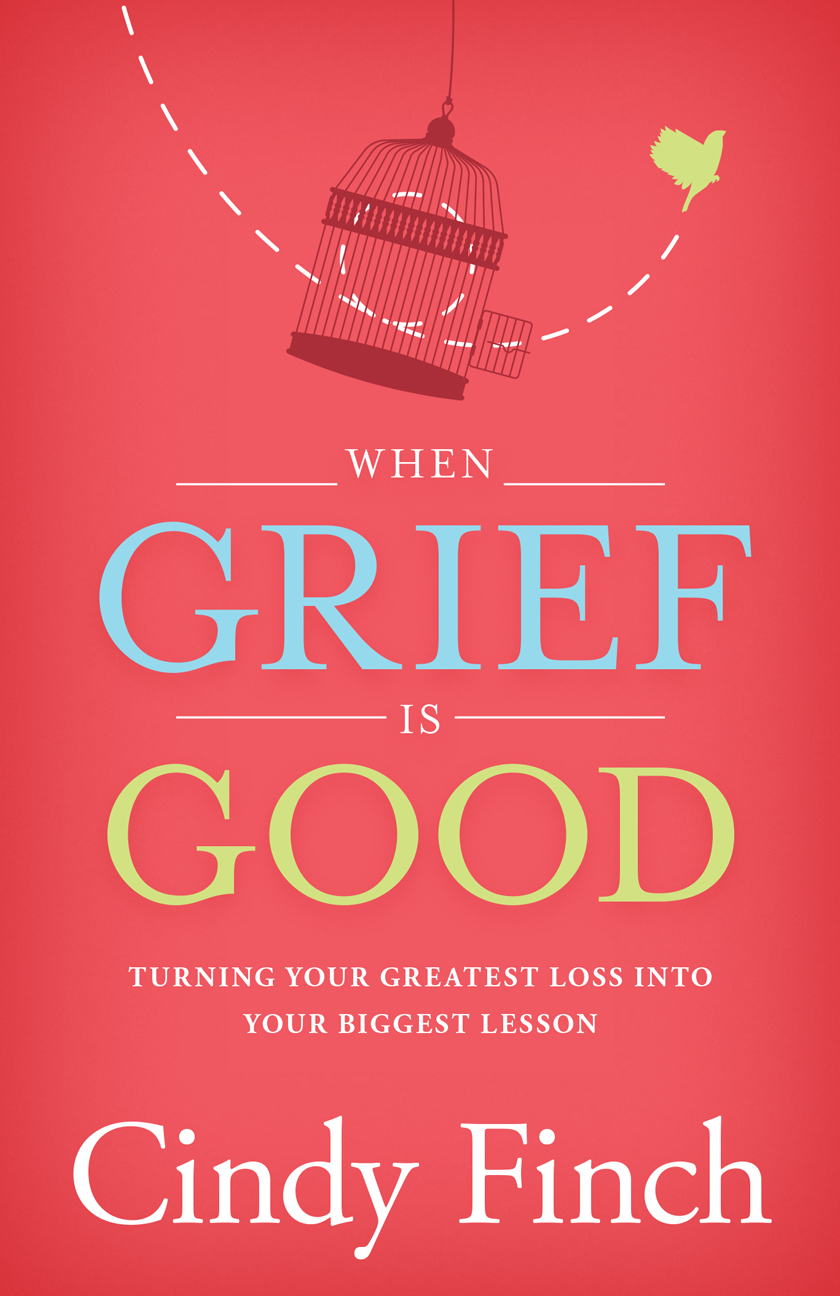
Cindy Finch: When Grief Is Good: Turning your greatest loss into your biggest lesson
Read the full transcript
Cindy Finch
Cindy Finch is a Licensed Clinical Social Worker (LCSW) who specializes in helping people through their darkest times. She trained at the Mayo Clinic and has been featured in the Los Angeles Times, HuffPost, and CURE magazine. A survivor of traumatic life events, Cindy writes and works from lived experiences. She’s helped thousands of people through their suffering, encouraging them to move forward and keep enduring to come out invincible.
📚 Books by Cindy Finch
Transcript
[0:00:32] JB: Although we will all face grief at some point in our lives, we won’t necessarily know how to process it. Through years of working with patients and dealing with her own grief, Therapist Cindy Finch has developed a way to help us through loss and come out the other side stronger for the journey. She’s written about this in her new book, When Grief Is Good: Turning your greatest loss into your biggest lesson. On Author hour today, she shares some of those specific skills, discusses what grief can teach us and explains how one can live with honor after a loss. Hi, Author Hour listeners, I’m here today with Cindy Finch, author of, When Grief Is Good: Turning your greatest loss into your biggest lesson. Cindy, thank you so much for being with us today.
[0:01:22] Cindy Finch: You’re welcome Jane, I’m super glad to be here.
[0:01:24] JB: I want to start just by thanking you for writing this book. Can you tell our listeners a bit about your path to becoming a therapist and a grief specialist?
[0:01:34] Cindy Finch: Yeah, absolutely. I think the best thing that I could possibly say is and that’s the most honest is I didn’t really want to write this book and because it’s about grief and it’s a heavy topic but I couldn’t deny that life had sort of set me up to write it and then I realized with the difficulties and challenges that life had presented me that it would actually kind of had me in a funnel to write this book and to also help people come through hard times. That’s what I do now, I’m a therapist and writing this and being able to put on the page the many different things that it takes and the lessons and support and encouragement for other people facing difficulties that are hoping it can also take them somewhere is what the book is about.
[0:02:26] JB: You write and a part of your argument I suppose is that grief can be good for us and you call grief the best guru. What does that mean?
[0:02:36] Cindy Finch: I’m glad you asked. I can sum it up with a really little tiny quote, it’s one of my favorite quotes that failure speeds learning and when I go through loss, failure, rejection, other tragedies if you will, I hope it’s not offensive to people but there really is, when life puts a hard stop on us through difficulties, it forces us to look inside of ourselves and to grow if we will. Now, a big part of my book is about grief avoidance and how we basically want to do anything other than face the reality that we find ourselves in, you know, grief on the hot pavement of real life, loss, pain, all of that stuff, man, give me the check, let me get out of that restaurant, I just don’t want to go there. When I do go there and I do allow myself to be changed by the process of loss, of losing of sitting still with my difficulty, it actually grows a muscle inside of me when I face hard things to actually working on your muscles in a gym that when I allow myself to be put under the leadership of loss, if you will. It actually develops many things in me. One of them is endurance, another one is strong character, another thing that it develops is the possibility for resilience. The other thing it develops is a capacity to help other people who have gone through the same thing. Another one is self-confidence, you know, when I face hard times and I have to overcome difficulties, once those things are past me, I look back and say, “Wow, I can do hard things” and so if other things, other challenges come before me, I feel more confident in myself that I can face difficulties. That, Jane, I’m not even talking there about the byproduct of growth, I’m just talking about self-esteem at that point of okay, I have some capacity here as a person, I can mange hard times and why is that important? Because life is really hard. I meet people in my practice and they come in and you know, some portion of our early work together, if they haven’t been through what I say is a thing or three in life — is really reorienting them to the fact that life is hard, it’s supposed to be hard, we do not sign up for personal growth unless we are backed into a corner because most of us, like on Instagram or social media, I just want to be happy. I want things to go well, I want to fall in love, I want to sit in bed and watch 12 hours of Netflix, that stuff would make me happy but you know, the flipside of happy can often be shallow and so unless people face difficulties and grow, it’s very difficult to develop meaning in life if I haven’t had to really dig into who I am and what life is about and it turns out that there’s a lot of happiness can actually be found when I’m able to develop meaning and purpose in my life. That’s where grief being a really good guru, grief’s not going to make me happy but it’s going to lead me to some dark gifts if you will.
[0:06:29] JB: All of that is on the other side of grief if that’s even possible to say, if you ever get fully through it.
[0:06:36] Cindy Finch: It can be. It can be on the other side.
[0:06:38] JB: We do have to get through it and there’s no other way, there’s no up around or over, right?
[0:06:45] Cindy Finch: No, I don’t want to put that out there that hey, let’s just silver lining things and let’s get to the good part. A big portion of my book is actually about how to wade through the dark rivers of grief.
[0:07:00] JB: What do you mean when you say the phrase, grieving on purpose?
[0:07:03] Cindy Finch: Well, grieving on purpose is actually to set aside time with intention for grieving, what I notice as a therapist is that people will do this when they have the heavy emotions that come with grief, they want to jump out like super uncomfortable and by jump out, that looks like a lot of things, especially in movies and media, you can see people that are really uncomfortable, anxious, sad, they’re at a bar, they’re drinking and the reason is because alcohol and other substances really do act as a numbing agent because I don’t want to feel it, I don’t want to feel it. The idea is actually to grieve on purpose in the feelings to understand and process the emotions. One of the phrases I use in my book, I say that emotions are just indicators on the dashboard of our lives. When I have the heavier or more unsortable emotions, they’re indicating something to me. Sadness, despair, I feel sad and I have despair because something that I really loved, something that I very much wanted to be is no longer. Whether that’s a marriage, that’s a beloved, that’s a child, a job, my health, any number of things, my house. When I lose things, the evidence that I valued it is that once it’s gone, I feel the loss. One of the problems is, if I short circuit those feelings of loss and I just want to jump back into normal life, those feelings really don’t go away, what happens is they end up just kind of hanging out below the surface and then they can come out sideways. I meet a number of people in my practice who have unexplainable panic attacks or treatment resistant depression or an onset of an addiction or physical, medical complications that seems to have no source. When we peel back the layers on many of those things, not all of them but many of them, it is literally compartmentalized, heavy loss that’s sitting underneath the surface for many people that they just didn’t take the time or didn’t have the time or didn’t know how, to actually work through and feel and process, and then, put to rest the events that happened that brought those heavy emotions. Grieving on purpose is actually a practice of sitting with understanding processing and then putting away the messages that the grief and the loss are trying to transmit to us.
[0:10:06] JB: These are not skills that society and culture are teaching us.
[0:10:13] Cindy Finch: Not typically. I mean, we’re really pushed to be productive in the United States, to be efficient, to be happy, to be wealthy, when we’re raising our children, we really evaluate how well they’re doing, I hate that they did the chores, are they getting gold stars or good grades in school, are they making sure to follow the path of being obedient, compliant, kids or are they looking a lot like mom and dad like this is how we evaluate whether our children are doing well. One of the things that we don’t do is teach a lot of emotional intelligence to our children and one component of emotional intelligence is self-awareness. Being able to help a child sit with the heaviness or the emptiness, or the anger, or the anxiety that comes after the loss of a pet, a loss of a friend, the divorce of a parent and actually call it what it is. This is grief and we’re going to take some time off of school, we may take some time off of soccer, we may push back some tests, we may not go on that trip because we’re just going to let it be here because you’ve lost something. I mean, I can distinctly remember when I was four years old, isn’t that such a young age but I had a little friend across the street named Jeff. Jeff and I would play together, he was just directly across the street and I would say, Jeff was my best friend as much as a four year old can have but we had some wonderful play at each other’s houses and our moms would take walks together and I just really enjoyed who he was and then one day, he just wasn’t there anymore and I did not know that Jeff had leukemia. I did not know about anyone that was going on. Of course, it’s a four-year-old, my parents weren’t going to tell me all those details that are going to be appropriate but one day Jeff just died. I remember having this heavy feeling in my chest and kind of this emptiness with it and you know Jane, it was just sad that Jeff died. What do you do with that, you know? For us it’s really young and maybe there is not a lot you can do except hold each other and cry but we don’t have what I call a good grief IQ in our culture. We usually want to push that stuff away. They don’t want to talk about it.
[0:12:57] JB: This book has a lot of specific advice and tools for what to do and I would love to get into some of them. First, I see that you work with dialectical behavioral therapy in your practice. Can you tell our listeners what that is and how that helps people process grief?
[0:13:18] Cindy Finch: Yeah, absolutely. Dialectical behavioral therapy is a really wonderful and very specific, how can I say this best? It’s a very linear therapy that is based on tracking emotions and working through a repertoire of I think more than 75 skills that are based on mindfulness, emotion regulation, interpersonal effectiveness and the number of other categories but anybody who comes to DBT, which is what we call it, the short because dialectical behavioral therapy you know that’s a mouthful for most people but it was developed by a psychologist named Marsha Linehan. Who she herself really struggled with severe emotion disregulation, so regulating emotions was very hard for her. She spent a couple of years if you can imagine in a psych hospital. Like who spends years in a psych hospital anymore? But she did and then she realized that ECT, which is electric shock therapy and medications even talk therapy weren’t working for her particular condition, so she developed this strategy if you will for regulating emotions and self-soothing and basically self-management. One of the big things that DBT teaches is radical acceptance and radical acceptance first of all is not an in them to itself but it’s a big pause in life where things that I do not like have happened, things that I would love to change, things that I would fight against, things that are absolutely unacceptable to me still happened and this is the essence of dialectics, concept of dialectics is that two things that seemed like polar opposites can both be true at the same time. It can love somebody and hate them. It can be sunny outside and still raining. In radical acceptance is the big skill that says, “I can really stand against something. I can be fighting cancer, my loved one can be fighting cancer and they can still die” and so radical acceptance teaches exactly what it sounds like, “I must learn to radically accept very difficult things if I’m going to be able to cope in life” and the step-by-step skill is pretty powerful and the big part of this DBT skill is actually grieving with intention for the lost of the things I cannot change.
[0:16:02] JB: How do we grieve with intention? Can you talk about some of the skills you recommend in the book?
[0:16:10] Cindy Finch: Yeah, absolutely. There is several in there that are based in each chapter but one of the things that which seems so simple but it’s sneaky and that it’s pretty powerful is just a checklist. I call it the grief response checklist, where you just look and see, “Okay, these are the actual symptoms of grief” and I have about, I don’t know, maybe a hundred, which is probably too many for a book and I’ve got them on my website but just to know that body aches not being clear headed, can’t remember things stomach aches, wanting to avoid life even being really short fused. I remember I have a client and it was just so true for this right here, she had lost her daughter to an overdose. Just a terrible situation. Her daughter was so young and a couple of days after her daughter passed away her husband and her took the dog out because the dog was just going crazy in the house they were so busy. They took the dog out for a walk and the dog did what dogs do and just squatted on the pee-pee on the neighbor’s lawn as they are walking by. The neighbor shot at them like, “What are you doing? Get that dog off my lawn” and she turned and looked at their neighbor and blasted him. “My daughter just died” it’s basically like that because that’s so true with grief. You know, if somebody leaves me, if I lose somebody, if I am in a car accident, any number of things, there is so much anger and frustration and rage that goes with that. The grief response checklist is a place where people can look and see, “Am I normal?” “Okay, if it’s on here then this must be part of my grief” so I call it the grief response checklist just as a way to locate yourself and that’s one of the tools that I start with and the next one is called the story and this is where I begin to write just little tiny phrases, here is my name and here’s what happened and then I even put in little what I call process prompts like one of them is, “If I had a time machine, I would…” and this is just a way for people to begin to access some of the things that are sitting under the storyline for them and it’s so essential because a lot of times when we go through a loss like let’s say my partner divorces me and that’s not what I wanted. One of those things that you know, “If I had a time machine that I would…” is I would go back and spend time. I would have that conversation, I would follow my gut, I would have went to counseling but it gives a way for the person to put it out on the page. It doesn’t mean anything more than that but a lot of times, this stuff is rattling around in us anyway, so if I have a place to just get it out then that’s it, a good thing and then there’s, oh I don’t know, five or eight or ten more skills after that one.
[0:19:29] JB: What I really connected with is some guidance around a cry closet.
[0:19:34] Cindy Finch: Oh, the cry closet. I came up with this idea because at one point, we left the house where we lived for a number of years and you’re cleaning the carpets and there’s a lot this black stain on the floor of our walk-in closet and I was like, “What is that?” and then I realized I literally spent so much time in there crying over different events that my mascara had stained the floor and then I thought, “This is a bit of a sanctuary if you will for grieving” and that were breathing room, however you want to look at it. I thought, “Why not just make it a thing?” and not just say I can honor it and it is kind of a sacred space if you think about it. When I cry, do you know how cleansing? I know you do if this stood out to you. When you cry, man that does the body good. That’s been medicine and that can actually move those emotions through me. It’s pretty powerful.
[0:20:34] JB: Well, speaking of honor, what does it mean to live with honor after your loss?
[0:20:39] Cindy Finch: Well, I think that would use a story there. I have a client whose mom died far too young from ovarian cancer and one of the things that her mother was talking about when she was on hospice was that she had a bucket list that she had been sort of following the year before but it had been a pandemic obviously, the pandemic, what else pandemic is there but she didn’t get to finish her bucket list and she’d actually thrown it away because she got a little frustrated. Her daughter went and combed the trash and found that and then she put it on her refrigerator and after her mom passed, she decided that one way to honor the life of her mother was to take she and her family and to go do with intention the things that are on her mom’s bucket list and that’s one way to live with honor and there is so many more. You know, setting up a foundation, working like I do in service to other people who are facing the same difficulties. You know, I write about the Barton’s from Sandy Hook, the nationwide life altering programs that they have, those are just some of the ways we can live with honor and those are some of the bigger ones but there are littler ones too just everyday remembering to make time for gratitude. Gratitude for the life that I have, the day that I’m in, the time I had with my person in my marriage, with that friend, that’s a small one.
[0:22:19] JB: What would you like readers to walk away understanding from your book and your work?
[0:22:26] Cindy Finch: That’s a good question. A fancy term I always want to use but my friends who are not therapist tell me to stop using it because I don’t think it makes as much sense to people but this book is really about post-traumatic growth and the possibility that the very things we wished would never happen to us are actually the doorway for the greatest changes and not to avoid it. To actually go in and it’s unique stuff.
[0:22:56] JB: Well, thank you so much. Readers again, the book is, When Grief Is Good: Turning your greatest loss into your biggest lesson. Cindy, it’s been a pleasure speaking with you. In addition to reading the book, where can people go to learn more about you and your work?
[0:23:13] Cindy Finch: Yeah, thanks for asking. My website is cindyfinch.com. It’s pretty straight forward and simple. I’d love to see you guys there.
[0:23:19] JB: Great, thanks.
[0:23:21] Cindy Finch: You’re welcome Jane.
[0:23:25] JB: Thanks for joining us for this episode of The Author Hour Podcast. You can get Cindy Finch’s book, When Grief Is Good: Turning your greatest loss into your biggest lesson, on Amazon. You can also find a transcript of this episode as well as previous episodes on our website, authorhour.co. Make sure to subscribe to The Author Hour Podcast for more interviews and insights into life-changing books.
Want to Write Your Own Book?
Scribe has helped over 2,000 authors turn their expertise into published books.
Schedule a Free Consult