Experience Thinking: Tedde van Gelderen on Connected Experiences in the Age of AI
✨ Episode Summary
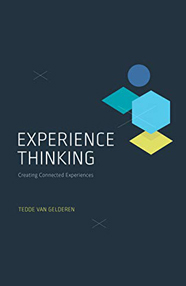
Tedde van Gelderen is the founder and president of Akendi, a UX research and design consultancy with offices in Toronto, London, and the US, and previously held senior roles at Nortel, KPMG, and Philips Design. His Scribe Media book Experience Thinking: Creating Connected Experiences came out in 2018 and argues that most organizations deliver broken experiences because brand, content, product, and service are each built on their own island.
Eight years later, Tedde returns to Author Hour to explain why that message matters even more in the age of AI, why prompts feel like a step back to the command line, and why practitioners, not the executives he wrote for, became the book's most vocal readers. He also shares that the book came together within six months because it was the work he lives every day, and that it gave him a succinct story to tell.
“Next week, they should talk to each other. I'm amazed what we find sometimes in our client meetings, is that we introduce people to each other from within the company to each other for the first time, because they haven't talked to each other.”
⭐ Top Moments
- A book built for the boss. “This is a book that gives you a high-level overview of what this is about, why you should care, and also why you as an executive need to start connecting these dots better.”
- Six months, start to finish. “The process even went very fast when I wrote the book. Within the six months, we had the full thing done.”
- AI is still stuck at the command line. “It's a prompt. I mean, how backwards can that be? We're back to the command line interfaces.”

Tedde van Gelderen
Tedde van Gelderen is an Experience Architect with over two decades of experience in strategy, research, and experience design across the public and private sectors. As President of Akendi, an end-to-end user experience and service design firm, he works to make customer and user experiences extend beyond a single product or service. Dutch-born and a graduate of Radboud University in the Netherlands in cognitive ergonomics, he previously worked as a design manager and consultant, was a founding partner of Maskery and Associates, and held roles at Nortel Networks, KPMG Management Consulting, and Philips Design. He is the author of Experience Thinking: Creating Connected Experiences.
★ Scribe Case Study
Tedde van Gelderen's Experience Thinking Holds Up Eight Years Later, in the Age of AI
Akendi founder Tedde van Gelderen wrote Experience Thinking with Scribe in six months. Eight years later, the AI era has made its argument sharper.
📚 Books by Tedde van Gelderen
Transcript
Teddy Smith: Hi everyone and welcome back to Author Hour. Today's guest actually first recorded with us back in 2018 when his first book came out, Experience Thinking, Creating Connected Experiences came out. And Tedde van Gelderen is the founder and president of Akendi, which is a Toronto, London, and US global-based UX research and design consultancy. And before that, he held senior roles at Nortel, KPMG, and Philips Design. And in his book, he argues that most organizations deliver broken experiences because they work in silos. And eight years on, he says that the message is even more relevant than ever, especially with AI. And today we're going to talk about connected experiences, why the people who most need this book are hard to reach, and also what AI changes. So Tedde, welcome back to the podcast. Ah, thank you. Well, so you published your first book with Scribe, Experience Thinking, back in 2018. At the time when you wrote that book, what did you see in organizations that made you want to write that?
Tedde van Gelderen: Well, in the UX space, the approach that often is taken is one that's really good, of course, and people really like, which is involving the user throughout the design process in different ways. And that's really the premise of that whole industry and the way they're looking at it. What I felt was missing was a need to recognize that not all experiences are created in the same way. And so when you look at product design, yes, you may involve the users and you may do those kind of things. When you look at service design, the design is slightly different because it's much bigger and it's more involving different products and different services. But I didn't stop there because I felt like there's actually more to this than just those two processes that most people think about when they think about service design in UX and CX, even, to a degree. And one of them was brand. And brand is something that often is overlooked or not seen as part of the experience, even though it has a huge impact on what happens to the perception and what people see of organizations and how they see products and services. So why not incorporate that or take that into account when you're designing products in a more structured or formalized way and say the product design process needs to include a distinct moment where you think about brand. So that's number three. Number four is that I have in my model is content. And content really has, I would say, grown in the last eight years in terms of importance because of AI, mostly because all the generative things that we're dealing with right now. But content back then, and I would say still to this day, is seen as a sort of secondary thought, as saying, well, I'm creating content. And I mean by that, creating audio, video, writing, of course, all kinds of things that we're very familiar with. But it's, again, not having a specific process to deal with and to incorporate that into the brand, the product, and service experiences that we have. And so I felt it needs to really have that place and creating the framework really helped with that.
Teddy Smith: When it comes, the first thing he talks about was the brand. When you talk about the brand, what exactly do you mean when you're talking about a brand in terms of the connected experience? Because it's not just the logo or the colors you use. What do you mean by the brand?
Tedde van Gelderen: Yeah, the brand is really the first starting point of the experience. I would say many organizations, when they create a brand, like you said, it starts to think about the logo and the colors and font. But it starts to become more interesting when you look at the experience, when you think about tone of voice, for example. Even with AI tools nowadays, everybody can see the tone of voice that these tools have. And it colors the way we see JetSuite and all the others in ways that connect to the brand. And so the brand is not just that logo and color. It is also the tone of voice. But on top of that, it's also the starting point of product design, I would say, when you think about the brand promise, which is a very typical point in brand design when you look at. So what do we promise the customer, the user in the experience they're going to get down the road with their service or products, the thing, the content even. And so brand promises are very nice little one-liners that tell you a bit about who they are, but also about where you need to go in terms of product design and service design. And this is the start of design. Like really, that doesn't start with thinking about the user necessarily. It starts with thinking about the brand.
Teddy Smith: And so that's basically what the connected experience is. All those things you're talking about is bringing them all together.
Tedde van Gelderen: Yeah. And seeing that these things are often done in sort of an island approach, where brand is done by the communications team or sometimes by the C-level, sometimes with the founders. Then content is done by the marketing slash communication team, or it's been externalized often because a lot of times it's just being freelanced. And then the product is seen as a core saying, well, we have an engineering team to think about the product. And again, that's the third island. And so the connected experience is really about how do we make those bridges? How do we make sure that these things are not stay on the island? Because when we throw it out there in the marketplace, you as the user or customer need to make these connections and need to make those bridges between these islands, whether you like it or not, because you're forced to do that. And if it's really done poorly, it's so obvious that, oh, these are three different departments doing their own thing. And they happen to be launching at the same time, but it doesn't feel connected at all.
Teddy Smith: When the brands don't do this well, and they become quite siloed, what does that do to the customers? Do you have any good examples of that?
Tedde van Gelderen: Well, it's the brokenness that you see. Very often it's very often visible when you look at, for example, changing channels. When you see a broken experience, you notice it because you start on your mobile, you do some stuff there, then you're thrown into the main website, or you're thrown to a phone conversation, or an email that's been sent, and then somebody else calls you back. Or you have to redo the whole process and flow again, because the phone actually doesn't allow you to do the full service. And it allows you only to do 20% or 30% of it. And there's so many organizations that tend to do it. The most egregious ones are the insurance companies, I would say. They're really good at that, to break that channel, to break the modality that you're in. So that's one example. But it comes back to a lot of times, organizations are not ready for digital yet, because they start in the paper world, and then they start to inject some digital form of the service. But it's never end-to-end. It's always pieces of that are digital, and then pieces of that are still in paper, or even in person. How often do you start? You can download a PDF, you fill it in, and you're still forced to go then to some physical place to hand it in, or to have the last bits of that process done with you.
Teddy Smith: Yeah. I know how that feels, living in Portugal, dealing with a lot of bureaucracy and having to do different parts all the time. Absolutely.
Tedde van Gelderen: Absolutely. And that's what it is.
Teddy Smith: What about on the other end? Do you have any examples of organizations where they do this really well?
Tedde van Gelderen: Luckily, I take the insurance companies as an example. Again, they started to become more aware, and they started to see how this service delivery needs to have one platform only. And the banks have been starting to become better at it too. This is not always the first kind of issue you think of when you think of innovation, but since the mobile banking became a thing, they've become more and more and more self-serve on your phone. And that's another interesting part too. They're not focusing on the desktop anymore as much. They're focusing on the phone as being the main vehicle for the interaction. And so, when you think mobile first, the banks are actually on the forefront of that, and they have taken it farther than most other industries in that regard. And like you said, it's always a bit ironic to think that banks are on the forefront of things, but in this case, they are.
Teddy Smith: Yeah. But your book itself, and we talk about these examples, but your book is aimed at more like the directors and the VP levels, and you're quite specific about them when we were chatting before. But you said that actually more of the feedback tends to come from either the practitioners or the marketing people who are actually doing this work on a day-to-day basis. Why do you think that audience is quite hard to reach?
Tedde van Gelderen: Yeah, and that's a funny thing. I never intended this to be a practitioner's book for people that do UX work and they know it well. And when they read it, they go, well, I already know this. And I want to say to them, yes, but you're really not the intended audience. You need to talk to your boss or to people out there or your clients or any C-level person, but you need to introduce it. Because the words that I use are simply not familiar at that level. They don't know how to speak connected, and they know how to say these things in a way that, because like any field, we have jargon. We have things that people just don't understand, and not because people don't understand them as an intellectual thing, but they just don't understand because it's a jargon word where we have a specific meaning for itself. We need to introduce that ourselves to those people and say, this is a book that gives you a high-level overview of what this is about, why you should care, and also why you as an executive need to start connecting these dots better. But it needs that introduction without going into the depth of the how do I do this now? Because that's where the feedback sounds uncomfortable. We didn't go far enough into the details. Yes, that's deliberate. I stopped at that level. I stopped at the process and at the activity level without going into the detail of what that activity really entails, because C-level people don't do that anyway. They will go and they will read it, but they do need to understand the story behind it and understand the vision that goes with that.
Teddy Smith: Yeah, that's very interesting that you sort of wrote for one audience, but it's ended up being picked up by a different audience. When you wrote this book, obviously it's not designed to be like a mass market book. It's aimed at very specific people. When you planned on writing it, what was your aim for that? Did you have a particular target in mind?
Tedde van Gelderen: Well, first I wanted to capture the idea. And so the idea of experience thinking is half sort of a play on design thinking, which is a more marketed, I would say, process, design process for people out there. And so experience thinking is for me the obvious step up from there, because it's not about just design. It's about the experience that we're trying to figure out. So that was something I really wanted to talk about in the book. And the second thing is that connection with these other elements apart from product design. So service design, content and brands, that's the major pillars. And not many people talk about that. We're very siloed that way. UX people, user experience people that do this work are still very blind and focused on the product side of things. And they don't see beyond that. And they think everything else is another department or other. And even though we talk in general about doing well for humans and for users and for customers, it doesn't express itself in that way. And I felt the need to tell that story and say, this is something we need to pay attention to.
Teddy Smith: Yeah. What I quite like about this conversation is it sounds like you've got so many thoughts and experience and practices that you put into work on a day-to-day basis. Did you find that writing the book helped you to bring those ideas down into a set of core values that you work with?
Tedde van Gelderen: Yeah, for sure. The process even went very fast when I wrote the book. Within the six months, we had the full thing done. And I didn't have any issues coming up with the ideas or telling the story because it is something that I live every day. I run a consultancy and we deal with these clients and with these kinds of issues on a daily basis, I would say. So it didn't come as a hard thing to do. But the other part is that the notion that people have around design is often, when you look at user-centered design or human-centered design or design thinking, all those processes are trying to bring the user inside the design process. What I really wanted to have in there, and why it came easy because I'm dealing with this so often, is that when you do brand work and even when you do content work, it's much more an inside-out kind of activity. You start with yourself, what you want to say when you're a content creator. And you start, yes, you listen to people, of course, but initially it comes from you. It's your brainchild, if you will, and then you want to communicate that out and you think about ways to do that effectively. Brand is very similar. You think about a brand and a brand value proposition and promise and the tone of voice, all those things are something that you want to be for the outside world. And I found that world was so different from how UX people think about the world where you say, no, no, no, no, no, don't stop talking about stuff that you think of, internal person, start to listen to what the external audiences think. And I'm going, yes, that's absolutely true, but we all know that's just not the whole story. We always will have executives. We always have people that are subject matter experts, and they're really passionate about what they know, and they want to put that into the experience. They want to put that into the product and services. So as UX people, we have to learn to listen to both those users out there, but also be very effective in listening to the internal business people that are there in the industry.
Teddy Smith: Yeah. As a consultant, did you find having a book that brought all your ideas into one place helped you to get your message across to clients and help them to understand a bit more about how you work?
Tedde van Gelderen: I think so. I think the book is, it was definitely a bucket list kind of thing to me to have a succinct story to tell. It is evolving though. I find even after eight years, I'm massaging the story to change slowly into what happens in the world. And AI, of course, is a big one as it happens today. I definitely felt that that was part of the story and it helps solidify the thinking. Yeah.
Teddy Smith: Yeah. That leads on almost perfectly to what I was going to ask next about the, because before we talked on this call, we were talking about the changes that have happened in the eight years since the book came out, especially to do with AI. So what do you think has held up from the original book that you wrote and maybe what's proved ahead of its time?
Tedde van Gelderen: Well, it's still ahead of this time to a degree. So the parts that I think held up in general, because of the sort of the universalness of the process, which is the product design and the service design, that is still in space today is as valid as it was eight years ago or even 20 years ago. It really didn't change that much. And it's really still hard to do because you're dealing with people and that's always the hard part in the creation of products and services. The change I saw mostly is happening in the content area where content now, as we all know, is being created in a different way and it's still evolving and the goalposts are still moving on that. And we don't know where it stops, I would say, for the next, I don't know, five years before we actually know where it really ends. But I think that has been the biggest change for me in the kind of thinking, because the content, as I saw, it was more a human content creation process. And now it's a human plus AI content creation. And I think, I'm not sure if it's going to move over more to the AI front. I don't think so, even though they think they're pretty smart. I think the human will stay very firmly involved in all of that and make the big decisions. But I think that notion grew. I think that concept grew as saying, yes, this is really part of the experience now, because now all the obvious examples around creating content with AI are now much more on people's forefront than it used to be.
Teddy Smith: Yeah. One of the problems with creating content with AI, I found, is that it's actually quite hard to get that brand voice, which goes back to your original point about the connected brands and the connected thinking. What's your thoughts on that? Because, you know, I do, my personally, I like using AI to speed up a lot of processes, like emails and stuff like that, but I wouldn't want it to completely run my whole advertising or marketing campaigns. So, again, how do you see that working?
Tedde van Gelderen: I see it still being fed by humans. So I think what's happening now, and when you look at brand voice, for example, the best way, best way to do that still is make it look back at what has been written in the past without AI, what has been written by the organization, by the team, even by the individuals to say, look at my writing, learn my writing, talk like me. And I think a lot of people that use that in their prompting is the best approach to get that voice nailed down to who you are. And even in blog writing, and I find myself doing the same thing, just look at my old blogs. The way I talk, I need the new blog to sound the same way. And I think that is still a huge challenge, because I would argue that we've become very adept at finding out that something was written by AI. Little sentence structures and all that, we're very good at that. So it's still a challenge that needs work, because I don't think the AI tools have been able yet to really grasp a tone of voice in the finesses that we can as humans. I think we're still better than them in that sense, and that's why we recognize it so easily. I find myself after two sentences going, okay. And I'm sure that is a very common experience that people have when they're reading new content now and go, just don't give me this, just give me honest, because somebody would write this differently. If it's a human, you would get a different cadence and a different... And it's subtle, because we're talking tone of voice, we're not talking just words. Sure, the words and the dashes and dashes and all that is gone, we figured that out. Now it's the real subtleness of tone of voice of, how do you say this? What's your style? You're a little bit quirky, you're a little bit funny, you're a bit funny. Humor, so hard to replicate by a machine. So hard to get nailed that to the point to say, okay, that's why that person has personality. That's why that person is funny. That's the person why they have a character of their own. Like I said, I think we're quite a bit away from that right now, and the only way to do it so far is to look back.
Teddy Smith: Yeah, I'm a bit annoyed that AI took over the em dash, because it was one of my favorite punctuation marks. Now I can't use it. We're talking about, because we're talking about AI and content, but when we're talking about the five dimensions, you mentioned before, in Experience Thinking, we've got other things like the products and the services. Now, with some companies, we see AI just bolted onto their products, kind of feels a bit like an afterthought. I'm thinking maybe like some chatbots I've dealt with on websites, just as one example. But what does it look like to have a good experience of using AI in your products? And what are people doing wrong?
Tedde van Gelderen: Well, a lot of it is still that AI is very visible right now. I'm still surprised that the experience needs to be overtly AI. And that's what I always wonder about, because a lot of times when I look at experience design, it's actually to massage that away. We talk about seamless, smooth, effortless. Well, it becomes effortless if you don't have to think about it. If you're not making me think at the moment, I'm interacting with a piece of technology. That's when, when you drive a car, you don't go in the mechanics of how the car works. You just feel it. When you're steering and when you're driving it, it connects with you as a human. And I don't care how many bolts were used to make that happen. And that's what I still, we're still in the early stages with AI, because we're still chosen to, now you're going to the AI tool, you're going to do even worse, have a very archaic way of interacting with those tools. It's a prompt. I mean, how backwards can that be? We're back to the command line interfaces. We don't even have a GUI that is AI. Think about the GUI interaction that came up in the 80s last century.
Teddy Smith: Which means, sorry, what's GUI mean?
Tedde van Gelderen: The GUI, sorry, Graphical User Interfaces.
Teddy Smith: Yeah.
Tedde van Gelderen: So having the mouse and having a desktop and having icons and that kind of interaction, or dragging things over and putting things on top of each other, having that desktop metaphor, which was a revelation in the 80s back then. And since then, we haven't really evolved that much, a little bit with the phones and the swiping and the haptic is a bit better. So the feeling part of the interface, but it hasn't been moved that much. And now we're relying mostly on speech recognition, which is a great fit for some and really not a good fit for many, many, many others. Because I don't see many people still talk to their phone. Well, unless they just talk to somebody, but they don't talk to the phone to issue commands. So we're still in a state of seeing the technology as a special element of the experience, not as an integrated sort of below the surface kind of like, and that's what it should be. That's where it needs to go. It just needs to give you the right content at the right time, the right functionality at the right time, because it simply knows quote unquote. And that's what AI, I think the promise of AI should be in the end, in the long run, but we're definitely not there yet.
Teddy Smith: Yeah. It sounds like you should be writing a new book about these topics. It sounds like you need an update on this book, I think, because a lot of leaders are going to have read it, but how should they be thinking about those connected experiences in this age of AI? What would an integrated approach look like?
Tedde van Gelderen: It's starting with what AUX is really trying to do first, which is looking at the journey. It's the overall end-to-end story, journey, activities that people do in order. And instead of just bolting on the AI tool, regardless of that, it's looking for the right place to have AI in there. Because right now, I feel you used chatbots as one example. It's just bolted into a chatbot. And I would argue right now, and maybe never, these things are not suitable for a chatbot. Everybody's frustrated with them. And you notice right away that you're talking to a machine, and you want to talk to a human because your question is so conceptual. It's so hard to grasp for a piece of technology that oftentimes, because otherwise you wouldn't be asking the question in the first place. Never the simple stuff. Do you know where to go or where do you live? No, it's always a complicated story that needs nuance, that needs conceptual thinking. And these tools are well far away from thinking in concepts yet. So I would say that that part is never going to change unless we start to think about it in a different way.
Teddy Smith: So if you're going into a business, and we're talking about making sure this team is integrated, talking about connected experiences, what does it look like working with you? How does that process work?
Tedde van Gelderen: Well, the first part is the awareness piece. And I hope to do that with the book, of course, and through our website. Most of the time, it starts with a problem that is connected to a specific element, either service design issue or product design issue. That's the reality. That's most of the time where it starts. But then it's about expanding that conversation and saying, did you know that when you think about connected experiences, you're also looking at other elements? And can we talk about that? And practically speaking, very often we end up in those conversations anyway, because if you do product design, there is, I would say, at least a third, if not more, of the conversations end up talking about brands. Because when you change a product, sometimes the company offering is the product, is the brand, is everything. And so when you start to talk about that, and you say, let's fix the product, you cannot do that really nicely, it's not fixing the brand or improving the brand or refreshing the brand in some way. So we end up often talking about that. And so the interaction is one of an inkblot, I would say, that is just growing as we talk, slowly as we uncover it. But it also scares people, because once you start to realize how big the challenge is, that it scares in a way, so okay, now let's shrink back to the product. Let's shrink back to this small and just fix this first. And then later on, we'll start to think about these other elements. And that's a typical dynamic. We start small with a problem, we expand it a bit in a conversation, and then we shrink it a bit more, because the practicality of this, well, we can't solve everything at once.
Teddy Smith: Yeah, but so if someone is working in a team at the moment that does work in silos, what would be the first steps they should be taking, like, next week?
Tedde van Gelderen: Next week, they should talk to each other. I'm amazed what we find sometimes in our client meetings, is that we introduce people to each other from within the company to each other for the first time, because they haven't talked to each other. It's, yeah, I'm not kidding. It's crazy sometimes where you go, well, this department, I've never talked to this department. What do you mean? Is this involved in the experience? Yeah, they write some of the content that you put on your website that is then, oh, yeah, do they? And then you start to talk, so connecting them, talk about connected experiences, but also talking about connecting people. And that, it's such a big, big element that turns out to be successful.
Teddy Smith: So actually just be more human rather than thinking about it. In a way, yeah, in a way. That's great. Well, we haven't got the new book coming out soon, but I'm sure we'll get you back on when it does come out.
Tedde van Gelderen: I hope so.
Teddy Smith: It sounds like it's needed. I think there's a lot to update, but where can listeners find you? Where's the best place for them to get in touch and to find more about your services and things like that?
Tedde van Gelderen: Yeah, they would go to, so if you want to find the book, it's on Amazon, but if you want to find out about more, it's Akendi. It's the company that I run, and you would find more information on our blog and on the sometimes the webinars and the white papers that we write about that. But it's Akendi, A-K-E-N-D-I, and that's where everybody can find us. It's a pretty unique name, so it's quite easy to find.
Teddy Smith: Yeah, perfect. Well, thank you so much for coming on. Well, I've put links to the book in the show notes for this so you can find it easily. But yeah, thank you so much for coming on, Tedde, and hopefully we'll speak to you again soon when the next book comes out.
Tedde van Gelderen: All right. Well, thank you very much for having me.
Teddy Smith: We'll speak soon.
Want to Write Your Own Book?
Scribe has helped over 2,000 authors turn their expertise into published books.
Schedule a Free Consult