Greg Hiebert on Facing the Fear, Choosing to Win, and Why You Can't Give What You Don't Have
✨ Episode Summary
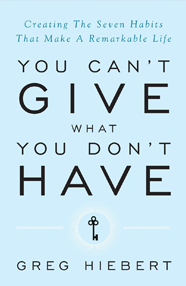
Greg Hiebert is the co-founder of leadershipForward and a two-time Scribe Media author. Writing a book sat on his goals list for 16 years because he was afraid no one would read it. Years after launch, You Can’t Give What You Don’t Have is still required reading in his leadership program, CEOs have bought it for 500 of their top leaders, and the royalty checks keep coming.
In this episode of Author Hour, Greg talks about how he finally faced the fear, why he did much of the writing himself to keep the book in his own voice, the reader who bought a copy for her 13-year-old daughter, and his candid advice for new authors: books do not sell themselves. He also shares how he met prostate cancer twice and a Parkinson’s diagnosis with a daily choice to wallow or win.
“I don’t think it would have happened without Scribe being a tremendous partner in that journey, to get me through the fear.”
⭐ Top Moments
- CEOs bought it for their leadership teams. “The first book in particular, I’ve had CEOs buy it for 500 of their top leaders.”
- Still required reading, years after launch. Greg’s first book came out in 2018. His leadership program starts its third year in November, and “it is still required reading. I’m launching a program in October with supply chain executives and it’s a required reading for them as well.”
- Sixteen years of fear, then nine months to a book. “I had on my goals list for approximately 16 years to write something, but deep down I had this deep fear that if I wrote something, no one would read it, and if they did read it, they wouldn’t like it. So in 2018, I decided to change that resistance and fear and reached out to Scribe, and it was a phenomenal experience.”

Greg Hiebert
Greg Hiebert is the co-founder of leadershipForward and the bestselling author of You Can’t Give What You Don’t Have. He has served as a leader and mentor for an eclectic mix of organizations like the United States Military Academy, the United States Army, McKinsey & Company, and the Yale School of Management. His coaching approach incorporates deep levels of authentic and courageous dialogue to create conditions for personal and organizational transformation.
★ Scribe Case Study
Greg Hiebert's You Can't Give What You Don't Have Is Still Required Reading Years After Launch
Greg Hiebert put off his book for 16 years out of fear no one would read it. Years later, CEOs have bought it for 500 of their top leaders.
📚 Books by Greg Hiebert

Transcript
Travis Stoliker: I am honored to be joined by the two-time Scribe author, Greg Hiebert. Greg, could you introduce yourself?
Greg Hiebert: Yeah, I'm Greg Hiebert, and I had on my goals list for approximately 16 years to write something, but deep down I had this deep fear that if I wrote something, no one would read it, and if they did read it, they wouldn't like it. So in 2018, I decided to change that resistance and fear and reached out to Scribe, and it was a phenomenal experience. And out of that, about nine months later, I had my first book, You Can't Give What You Don't Have, which continues to be a very meaningful book that people, once they read it in its entirety, and when they do read it in its entirety, they often give me feedback, or I receive feedback, that it was well appreciated. And it's a timeless book because it's all about self-care, in order so that you can be a giver to others of love, patience, kindness, insight, and if you don't have it yourself, how can you give it away?
Travis Stoliker: Man, I'm so glad that you just jumped right into the fear, because that's something that we have to try to talk to authors about very frequently, because pretty much every author goes through that fear, through that journey. How did you overcome that? How did you end up deciding that you were going to start the book?
Greg Hiebert: I think I just got so sick and tired of putting on my list something that I wasn't really committed to do, and having a partner like Scribe in the beginning made it easy. Just the first person who reached out to me to walk me through an outline, it came out relatively straightforward, and they have partnered me with a very gifted writer. And yet, I feel very good that I did a lot of the writing myself, because I wanted to make sure that the voice was as authentically me as possible. And so again, I don't think it would have happened without Scribe being a tremendous partner in that journey, to get me through the fear.
Travis Stoliker: Well, thank you so much, because as I was looking through our notes, too, that I believe our first writer didn't quite get your voice, and you had to do—but you were really gracious about the whole thing, and worked with us to help find the path to find your exact voice and get out the book that you were looking for. So thank you for being so kind in that.
Greg Hiebert: Oh, you're welcome.
Travis Stoliker: I didn't want to sort of say that, but since I had already told you that earlier— Hey, we started this off with the idea of being candid and vulnerability, so I wanted to jump right into the soup with you.
Greg Hiebert: Well, one of the things that I would say, a positive outcome from that, is I had to do a lot of rewriting. And so what I do feel very, very good about it, it is indeed my book in terms of my contributions to it, to make sure that that voice was very clear and compelling.
Travis Stoliker: Mm. So, Greg, the unlovable, worthless failure. Ha, ha, ha. How did that come about, and then how does that lead to one of your readers, after—my understanding is you said that to your counselor. You felt you were the—Greg, the unlovable, worthless failure. And then, years later, a reader of your book comes up to you and says, your book was better than 17 years of therapy. Ha, ha, ha. How did you go from that to that?
Greg Hiebert: Well, I think a couple sort of things are at the core of that. First and foremost is I find that my journey of not being enough, of feeling unloved, of feeling if you really stripped away all of the layers, that you'd see that I was a big imposter. I found, Travis, that that's a common, much more common experience of the human beings I interact with than one may think. And so I had the privilege of going through some developmental experiences where I came face-to-face with some of my deepest fear that if you really knew me, you too would see I'm not enough. And so the book was—the first chapter was an opportunity for me to sort of get that story out and to be very vulnerable, to be very open, to discuss the shame of some of the things I encountered as a young boy and the conclusions I came to that, as I've come to know, are just wrong. So I think that vulnerability, that authenticity, I mean, I have family members that I'm not sure they've read the book because that first chapter tells some family stories. And I come from a family of warriors. Every single one of my siblings and I served in the military as my father did. Nieces, nephews, cousins, in-laws. My family has just a long history of serving in the military. And in that history, you try not to tell people that you have problems. By all means, never tell anybody that you get therapy. That brings shame on the family itself. And I found that there's no shame in that. Matter of fact, being able to ask for help, I think, is one of the greatest gifts that you can exercise. Because it turns out that when you ask for help, many human beings are very kind and compassionate to extend that help and just needed to be asked.
Travis Stoliker: And it really opens up a door too, right? Like you said, I suffer with those same thoughts frequently. And it's only when you're vulnerable with your friends, with your spouse, that you open up about those things. And then it feels to me like the floodgates start to open. Then it's I do that too. And it's almost like you give them permission to confess how they're feeling too.
Greg Hiebert: Absolutely. I had the privilege on Friday night to speak to a leadership program that I had helped start 20 years ago. And it was celebrating 20 years of this program. And they asked me to speak whatever I wanted to talk about. And my talk was called Breaking Our Hearts Open. And it was a talk I'd given a couple of weeks earlier to one of the largest men's retreat of men who are going through or have battled over cancer. And essentially, the message was the same, which is life is going to break our heart open whether we want it to or not. But when you do share that broken heart with another human being, most of us respond to that with tremendous compassion and empathy. And that's what I found. And my message to these men who have cancer is the tendency for men who go through something like that is to go in their cave. And instead, what I'm trying to advocate is to share your heart with others. And you'll be surprised by what you find and what's extended to you.
Travis Stoliker: Well, your cancer journey is quite remarkable in the worst sense, you know, at your high point. Could you tell that story of ringing the bell?
Greg Hiebert: Yeah, what's high point about is my second bout with prostate cancer. They had removed it in 2019. And I guess it started to grow back. And the cancer, the prostate cancer I had was very aggressive. I had a genetic test that showed that it needed to be treated pretty rapidly. And so the treatment in 2025 for that prostate cancer was 37 radiation treatments. And they're in sequence. So it is a little bit of an ordeal. But I bonded with the other men who were sitting in the waiting room, waiting, all waiting for our turn. Emory University, where I sought treatment was phenomenal. And they have a procedure that when you finish your last radiation treatment, you get to ring a bell. But the story that I told certainly on Friday night and at the cancer retreat was that at about the same time I was diagnosed by my neurologist with Parkinson's. And unlike cancer that can be treated depending upon its typology, there are no known cures for Parkinson's. All we can do is treat the symptoms. And I would tell you, Travis, that was a devastating blow since I was ready to conquer cancer. But I would tell you a year later, it's actually been and people are going to think this is crazy, but it's been a gift. Because, you know, after a couple of days of self-pity, I had to make another choice. And the choice I had is, you know, rather than letting this define me, how can I use Parkinson's to refine me? And I'm really proud that as of today, both times I've been back to my neurologist. She says, whatever you're doing, keep doing it, because I cannot see any physical evidence of Parkinson's I diagnosed you with. And I, thank you. So I attribute that to one, you know, I try to exercise, you know, six days a week, a lot of high intensity interval training to get my heart rate up, to get my lungs being stressed with, you know, just challenged breathing as I'm working hard. And that seems to be the research that's emerging from the field of science and medical technology is exercise may be the greatest drug of choice for not only Parkinson's, but if you want to live long, if, I mean, I just read a New York Times article this morning that talked about cancer patients being treated with exercise and health plans beginning to adopt it as a, you know, probably a pretty insignificant cost compared to, you know, some of these drug treatments that are $400,000 that may get you eight, eight more months of life.
Travis Stoliker: That is just, well, first of all, you're not unlovable. And I know you've heard that from a lot of people, but you're just so sweet. And you, you said a quote to Nathan that something like, you know, you can choose to wallow in it or you can choose to get over it or something like that.
Greg Hiebert: Yeah. So my daily decision is do I wallow that, that I have Parkinson's or do I choose to win? And, and winning for me just says, I'm not going to be defined by this degenerative disease. And I, you know, I, and, and, you know, a year from now, maybe, maybe Parkinson's will get the better of me, but right now I'm getting the better of Parkinson's and I'm really proud of that. So I attribute it to not only my exercise regimen, but my positive emotional state. I have this crazy system called my positive point system that every day at the end of the day, I reflect on what were the positive things in my life and I assign points to it. So if it's day worthy, it's a five pointer. If it's a 10 word, 10, if it's a week worthy, it's 10 points, month worthy, 25 and year worthy, 50. And just, again, the key is not to attribute points, but it's to sort of notice that, you know, if you, if you really hunt for the good stuff, you find it everywhere. And I think that's contributed to my, my state of being right now.
Travis Stoliker: And you went, so this was something that we kind of relate on too is you went 489 days of doing a gratitude journaling streak. Right. And, and I believe that was related to Jim Collins. So to my story is I wanted to get into journaling and I had seen a Jim Collins interview where he said he, at the end of the day, he rated his day on a plus two or a negative two. And I started that. I literally call it my Jim Collins daily journal. I didn't go as long as you did. I made it a year every single day, but it absolutely helped. Did that, did your, did your point system and everything, did that come from Jim?
Greg Hiebert: It certainly was part of the inspiration. I had read that as well. The, the, the, the one thing that's different Travis is for me is I don't track the negative stuff. That doesn't mean that I'm not, I'm, I'm oblivious to it. You know, I, I, I, I know there are some people that are really smart.
Travis Stoliker: As soon as you said it, I thought that is really smart because as soon as you think about that thing, you're giving meaning to it. You're you're it's all it's yes. That is so smart.
Greg Hiebert: Yeah. Like, like last week I really let myself down. My, my eight year old grandson was having a baseball game and I, I was supposed to attend. He lives about nine miles away and I just didn't want to go through the traffic, uh, in a, in a Friday afternoon on in Atlanta. So I didn't go and it turned out that he got the game ball and it was the best game he ever had. And I felt tremendously guilty and sad that I didn't go. I didn't give myself negative points for that, but I felt it acutely and I'm committed not to doing that again. And the next time he has a game that I can show up at, I'm going to be there because I'm going to give myself at least 10 points for that.
Travis Stoliker: That makes so much sense too, because it's already there, but you don't need to give more importance to it by dwelling on it because there's, it can, it should just flow through you. I love that quote that I'm sure I'm butchering, you know, no man steps in the same river because he is not the same man in the river is not the same river. You just, you let it go. It's those things. I, I probably am way too guilty of that. I give too much attention to my negative emotions. That is really smart, really.
Greg Hiebert: Well, we all have, I think deeply rooted in our DNA, this negativity bias to begin with where we're really skilled at hunting for the things that are going to harm us and hurt us. I know I am like you, you could tell me 20 good things about me and then you go, but, but I've got one thing and I'm going to spend the next couple of days dwelling on the butt.
Travis Stoliker: Yes, man. That is so, that is so true. And that I identify with that directly. I've started keeping whenever those friends send me that really nice thing or, or somebody I've been blessed to have some kids that I've mentored that'll send me something. And I now save all of those and timestamp it. And I will just go back through and read those. And cause you're totally right. I will get so caught up in the negative that I'll forget the million times that people have said or done something so kind for me. That is, I just love that way you live. And do you think that that is related to how well you've been able to overcome cancer now twice and, you know, be able to stave off the worst parts of your Parkinson's condition? Does, does your positive mental attitude, not wallowing, getting to the gym, do you think those are related?
Greg Hiebert: Oh, I, well, I, I, I, I don't have no scientific research that says there's causality there, but I, I, I think as my neurologist said, whatever you're doing, it's working for you really well. So I'm, I'm going to stick to that and, and keep doing it because I think it's having just an extraordinary positive impact on my life. Right. And going back to the title of my first book, you know, you can't give what you don't have, you know, maybe I should have written this, the third book called you, you, you can give what you have. You know, I, I remember there's, there's two thoughts that I want to sort of weave together. One is a book that really changed my life was called the power of full engagement where the two authors, sports psychologists sort of wrote a book about how to be an exceptional leader in the corporate world by drawing upon the lessons of sports psychology. And one of their paradigm shifts was that we can't make more time in our lives, but we can create more energy. Right. But to create more energy in our lives, you have to be like a Michael Phelps and think about your life in terms of, you know, how do, how do I peak my performance? It's, it's making sure I'm making equal investments in my recovery. You know, so usually the very best athletes are getting more sleep, are thinking it just as, as thoughtfully about the recovery as they are about the performance. And that was profound for me, but, but so is this notion of social capital, like the, the, the more you give away, the more you have, I mean, that's a crazy notion, right? And so I, I think about that in terms of positivity, the more I have, the more I give away, the more I get in return. So I, I'm losing.
Travis Stoliker: And that relates to your books, right? For all the people that have come up to you and been changed by your books, you know, as I am understanding, your book is required reading at an university academic medical program. It is. Yes. You've had people, you've had people come up to you with 40 different sections flagged in the book. Obviously you had the one that said it was worth 17 years of therapy. What are the, is, is, are there any of those that stick with you as the coolest, unexpected, great thing that happened as a result of your book?
Greg Hiebert: Yes. So the wonderful healthcare leader that had the 40 different colored tabs, she, she bought another book for her 13 year old daughter. And she came back to me with a testimony that her 13 year old daughter loved the book and it made a real impact on her. And then her husband tried to borrow her book and she said, no, get your own. So that to me, that was just proof that this book is still a gift. And this was only several months ago. So it wasn't that long ago. And I'm in my, now my third year, we'll start a third year of this program in November and it is still required reading. I'm launching a program in October with supply chain executives and it's a required reading for them as well because the, the, the, while the first chapter sort of gets into my story, struggle as, as a human being, the rest of the book is about the things I've learned about how, how do we bring about our best selves? And there just seems to be this universality to the seven habits that I described, you know, and, and the first being, you know, live a life of meaning and purpose. The second is to do everything you can to create more positive emotion for yourself. Third, it's, it's recognizing that the greatest thing we'll ever do in life is to build deep, intimate relationships with others. And there's all this compelling research that said, if, if, if you, you have one friend, you can call it 2am who will drop everything for you. You live longer. I mean, that's, that's crazy, but the research is just more and more compelling and it's showing up in, in so many different sectors about the universality of deep, intimate relationships. And number four, the fourth habit is to express and reflect on gratitude every day. And, and, and the fifth is to understand that optimists outlive pessimists by three, three and a half years. So we now know more than we've ever about how to cultivate greater optimism in our lives. And then the sixth habit is about being mindful and, you know, whether that's meditation or being on a power mower, you know, going through three acres of your yard, just being, being in a state of stillness and welcoming nature into your life, you know, nature bathing, you know, however you find stillness and peace, it, it, it seems to be something that we all need. And the seventh is keep moving your body because again, you know, we're finding just unremarkable research that supports staying active, you know, in, into as, as old as you can possibly stay active.
Travis Stoliker: Those are all such good lessons. Do you, you know, you've mentioned the 2am friend, or I've heard of the 5am friend. And I know you've, you've done a lot of looking at and researching the, the blue zones for longevity and looking at the Harvard longest happiness study. Yeah. And, and, you know, from my reading of that, it seemed like one of the strongest things was social connection to longevity. Those people that have people in their life that, you know, are in a community, church community, even retirement community, but have lots of, lots of weak ties and strong ties. Do you, are you worried at all about culture right now? Like I don't know what to believe, but I see the news a lot, or even sometimes I'll talk to younger kids and like, they don't, you know, not, not to say that drinking is a good thing, but like, they don't party much anymore. They don't have these, a lot of people are still living at home with their parents until really late. They don't have these, these connections. And it seems like the, the, those social, you know, we've replaced some of the social ties with these artificial ties with social media and likes.
Greg Hiebert: And are you at all worried about that? Oh, absolutely. I mean, I think the last surgeon general talked about the epidemic of loneliness and then a very famous Harvard sociologist by the name of Bob Putnam wrote a book 20 years ago called Bowling Alone. And he began to chronicle, even back then it was, he was sort of the canary in the, in, in the coal mine that said, you know, America, one of America's strengths is the plurality of how we were bowling leagues and, and the VFW and these things that brought people who had different political, maybe beliefs and brought us together. And bowling was more important than that. You are a fact that you were a Republican and I'm a Democrat. And I think we're losing, I think we're losing those connections. We're letting the politics divide us. And so our tribes are becoming more and more smaller and, and, and more defined by who doesn't belong in our circle than who, who, who does. And, you know, we used to be very comfortable with the Baptist praying next to the synagogue, next to the, the, the mosque. And I, and I, I believe that our capacity as human beings to evolve is rooted in our ability to see ourselves with a bigger identity. I identify with you as we're both human. And my, my view is the smaller we get, I think the more in trouble we get. And I think that gets to people who, who, you know, their, their connection to other human beings is through Facebook, which is fine. But I think we, we, we need the, the, the in-person connections and, and just being present to another human being struggling. I mean, this cancer retreat that I attended a couple of weeks ago in the Poconos, just the, the, the thirst that these men, 200 men had for being in each other's company, and of just not judging each other on how much money you had or how many titles you had amassed, but just, you know, we, we were sharing this cancer journey with each other. And that, and that, that in itself is hard and difficult and, and having each other to sort of work through that has been, I think, life-giving.
Travis Stoliker: You have such a beautiful way to look at the world. And, you know, I, I was raised Catholic. I kind of became atheist when I was a young rebellious kid, you know, just to rebel. I tell you now, I still am probably like agnostic. I'm still not sure, but I, I feel a connection. But I tell you what, I love going to our church. I love being there with other people and learning from the pastor and being in the presence of other people that are there to do something together, to dress up for something, to greet each other warmly. And the fact that my eight-year-old will voluntarily come with me, you know, I, when I was a kid, I had to kind of be dragged along, but it, there is something about that, that just, I think a lot of us yearn for.
Greg Hiebert: Well, you know, you mentioned the blue zones and I keep going back to that, that if you look at the five areas, they call it the power nine, Travis, these nine common commonalities, whether you're in Loma Linda, California with the Seventh Day Adventists, or in the peninsula of Costa Rica called Nicosia or Aquaria, the Greek islands or Okinawa, the top three of the nine have to do with relationships, family first, having the 2am friends, and then having a community where people have missed you. You know, the, you know, one of the most popular sitcoms was Cheers. And, you know, that song that said, you know, where everybody knows your name, you know, I'm, I'm sure that indeed that there are probably some people suffering from alcoholism, but so maybe that's the virtue of that show may be debatable, but still this notion that, you know, you could show up in a place and like, Greg, you haven't been here in a couple of days. We've missed you. I think there's something profound in being missed and that people are expecting you and, you know, people who are able to maintain higher levels of fitness have, you know, they've made their fitness social. And so people are counting on me to show up, you know, at the class that I'm a part of.
Travis Stoliker: I think that's what my wife, she's always been very athletic, but I think that's what she loves about her fitness experience. She loves the classes. She loves Orange Theory. She likes being there with somebody leading and in a group of people. She loves the, you know, doing races together. And yeah, I think you're, I think you're so on to something that it seems something very important to the human experience.
Greg Hiebert: Well, and it's a book that really informed me and, and, and challenged me. It was called the five regrets of the dying. A hospice nurse kept track of, kept a diary of all of these regrets that her patients would, would share and, and it went viral. And so she wrote this book and turns out that the five top regrets, you know, usually most human beings know what they are.
Travis Stoliker: Work more, spend more time at my desk, probably up there. Amass more stuff. Right. So I bet it's probably something living for myself, not for others. I imagine would be.
Greg Hiebert: Yes. I spent too much time doing what other people wanted and not enough time doing what I wanted to do.
Travis Stoliker: Yeah. Yeah.
Greg Hiebert: Not taking enough risk.
Travis Stoliker: Right.
Greg Hiebert: Not spending enough time with the people I loved.
Travis Stoliker: Right. Risk is one of those weird things that seems so scary when you're looking at it. When you, you look backwards and you go, what was I scared about? Oh, I took this big career risk. I made this investment. It's, it's not fatal. These things are, but when you're staring at it, like you were alluding to earlier, you know, we have this heightened sense because we were, had to be on guard for everything that was going to eat us when we were coming about as a species. But it seems hard to turn that off. It seems like our threat detector runs a little haywire in this really safe society that we live now.
Greg Hiebert: Well, and I, I, I think we, at least our superficial selves buy into the, the illusion that more stuff, having, having more is the key to a successful life. And, you know, I, the Stoics have it right that, you know, we all have a termination date. And, and, and so if, if we all, you know, regardless of your religion, regardless of how much you have that we meet the same phase, then, then what, what's the, what, what's really important in, in living. And it turns out to, to live as virtuously as you can, beginning with, you know, how you treat yourself, right? There's this very, very dear friend who married my wife and I, he always said, there's no U-Hauls behind the hearses, right? You can't use, you can't take anything with you except the, maybe the legacy that you've left of the, the, the quality of the relationships, the people who are going to carry the memory of you in their, in their hearts and heads for as long as they can, that, that, that may be the only thing that, that, you know, we, we, we take with us.
Travis Stoliker: Especially you with such a military background and your family and Marcus Aurelius, I only got turned on to meditations probably within the last two or three years. What a powerful book. And for somebody to be basically inheriting the most powerful army of the most powerful country at that time, and then to say, I'm going to do power sharing with somebody else because I don't want it to all go to my head. I don't trust myself. And then to write a journal of all of these thoughts. And I love the first chapter where it's just him thanking, you know, when he's like, from my, from my grandfather, I got this and all this just gratitude. I am. It is so powerful. Those old Stoic philosophers. I'm so glad that I learned of them late and that they've kind of had this Renaissance. But in a certain extent, I'm wondering like a lot of the books that I read, the contemporary books were just rehashing things that were literally written like 2000 years ago.
Greg Hiebert: It's interesting. You say that I keep this little 23 page book at my desk and I read it, try to read it every day. It's called Courage Under Fire by James Stockdale, who Jim Collins referenced in his book, Good to Great. And the under the sort of the understatement of the, of this little pamphlet is called Testing Epictetus's Doctrines in a Laboratory of Human Behavior. And so Admiral Stockdale in 1966 got shot down over North Vietnam and he had been a student of Epictetus and Stoicism at Stanford University. And he, he swears that as he's parachuting out of getting ejected and he can see the villagers below, not very happy. He said, I'm going to see if this Stoic stuff really works under, under, under fire. And, you know, he was awarded the medal of honor for doing some very courageous, extraordinary things of his eight years in captivity. Four of them were in isolation and, and he, he, he swears that it was the Stoicism of, of being able to sort of live virtuously, recognizing that the only thing he could control is, is himself. And that was hard enough. And just being able to make sense of life using these theories, you know, that were, that were created, you know, well over 2000 years ago, much longer than that.
Travis Stoliker: Man, there, there's something about books, isn't there? I've already got three, three new ones on my list here. We've talked about Jim Collins. With your books, can you talk to somebody? Because this is something that we hear all the time is, I know I want to write a book, but I'm so terrified. No one's going to show up. I'm not going to sell enough copies. I'm going to insult some of the people that I wrote about. Can you tell somebody that is, that is, or can you speak to yourself when you had that fear to try to overcome that fear for others?
Greg Hiebert: That's a great question, Travis. And what, what it, I think the first thing is to recognize that all of us, not all of us, I think to have ideas that are worthy of being shared with others. Like I think my positive point system that, that may be the third book in me and I'm not fearful of putting it out there. I, what, what I want to do is make sure it's concrete enough and simple enough so that others can make sense of it as well as I've made sense of it for myself. So there, you know, if you never put it out there, what, what, what will be gained? Right. If you have, I think, I think there's these stories of, you know, that each of us has this sense of, of, of wonder in ourselves, but if we never share it with others, you know, what, what, what kind of legacy does that mean for us in terms of what we leave? So, you know, I, I, I would tell that this person who's fearful, who says, well, what do I have to say? I mean, if you have something that you want to share with the world, you know, what, what, what's there to lose? That's, that's what I'm trying to say. What's there, what, you know, that, that if, if you keep your music and there's that, that story about keeping your music inside, that if you never share it with the world, that's a struggle. I'm not, I'm not being very articulate right now.
Travis Stoliker: No, no, no, no. You, no, you are. Cause you're, you're talking about that, that idea of like self-actualization, I think it's called, right? Like the, what you can be, you must be that idea that if you have it in you, if you know that you have it, you not sharing it is depriving the world of that. If you die with the, with your best thoughts inside you, you are depriving that, that 13 year old that read your book and doesn't want to put it down. That medical school that is using it as a curriculum to inspire others through your words and your stories, or, you know, now the three new books that I have on my reading list of the things that I know have inspired my friend, Greg, that I need to now read it is my friend, Eric Jorgensen, the, the CEO before me, he, he used to say that it, a book is the highest return on $20 that you can spend, right? You can spend $20 on something or $30 or whatever the book costs you, sometimes a lot less than that. And it can literally change a life. Like what else can do that? You know, music can do that, but art is the thing that can really do that, that high, that high payback.
Greg Hiebert: I completely agree. The only thing I wish I is that I had come, I had faced the courage to write something earlier, but I don't know if I was ready to meet Scribe at the time.
Travis Stoliker: Well, I think that's what you, you said that it's so important too, because now in this era of AI, the other thing that we hear all the time is, well, so-and-so publisher is telling me that I can do, I can publish this book in two weeks and I can just talk into Claude and get a book out and Claude and all the AI tools are great thinking partners. But what I love that you said is you want to make sure that the ideas are concrete and that you really have a sense of it. That idea of sitting with the thoughts and letting it, improving it through editing and, and getting peer review from it. That is so critical to making a great book. It's still hard for me to fathom that anybody could write a book in two weeks and have it change a life.
Greg Hiebert: Maybe, maybe, I don't know. I agree with you because I would tell you my second book experience was even better than the first because I had, I had a partner and Denny O'Neill is still my business partner. And what having someone skilled at being able to synthesize both our voices and, and to be able to help us put those two voices into the book Changing Altitude in a way that when you, when you, when you read it, you can tell whose voice is whose, but I'm not sure we could have done that by ourselves without a very skillful editor. She was phenomenal that we had. Emily, she was just a brilliant partner and the book could not have been successful without her help. Oh, do you mean Emily from our team?
Travis Stoliker: Yes.
Greg Hiebert: Yes.
Travis Stoliker: Ah, yes.
Greg Hiebert: Excellent. Excellent. I can't pronounce her last name and I feel terrible for that.
Travis Stoliker: No, no, that's okay. That's okay. Well, that is amazing.
Greg Hiebert: Yeah.
Travis Stoliker: So would you encourage others to use Scribe?
Greg Hiebert: Oh, especially if, if you're lacking the skills and, and you have a little fear in yourself and you're, you know, you have some, you know, fear of failure, having someone who's walked the path before can be enormously helpful, like a guide and a mentor. Again, I, I, I'm not sure I could have done what I did if it had not been for the support of Scribe, you know, having as, as my writing partner. Wow. And was the investment with Scribe worth it? Well, the first book was very worth it. Matter of fact, I still have not made it an audio book and I'm contemplating making a decision of having someone do that because I just know it is so hard to do, you know, that the, to the person who doesn't understand, you know, it might seem easy, but why wouldn't you narrate your book? Well, the book is somewhere around 800 pages, you know, 80,000 words. And, uh, uh, getting that right. And the time it would take to get it right versus someone who's skilled in that. So the second book, uh, we, we, we had the, the fellow who also narrates some of, um, Tom, who's the top gun and shadow warriors and a very famous author, Tom Clancy.
Travis Stoliker: Yeah.
Greg Hiebert: The person who narrated our, our book changing out to do was the same voice, Tom force who had done Tom Clancy's books. So I don't think we got the return on investment in the second book, but that's not Scribe's fault. That's our fault. We, we, you know, that there are, you know, whenever someone comes to me and says, you know, I'm going to write a book, I go, that's great. But just understand books do not sell themselves and that your marketing plan, your sales plan and the followup and the discipline it takes to sort of do the heavy lifting to, to, to, to show up for book signings and, uh, like, you know, something as simple as this, Travis's, I have a local bookstore and, and it was, it was Nathan who planted the seed, like, why don't you have your book being sold at the local bookstore? And Nathan deserves an email from me because I, I've been avoiding answering some of his questions, which are very action oriented. What are you doing to do this? And what are you doing? And I appreciate him. And I haven't written him back only because I've not stepped up the way I need to. Now, the good news is I've, I've had a very productive, active and still have a very active coaching and educating and team development business. So the, the, the having the book has not been central to my continued success, but I, but we could have made the book sell a lot more by being deliberate in our sales and marketing. Whereas the first book B because that message is timeless around those seven habits. I like, I got a royalty check this morning, you know, and, and I get a lot of those on the first book. Yeah. So I think it's a gift that keeps on giving.
Travis Stoliker: Well, that is great advice for people too, because that is one of the things that we also see is the author will get so excited about the launch, but then if the launch doesn't immediately sell a million copies, they can get, they can get discouraged. But like you said, it's doing those little things every week just to put a little motion into that flywheel to get it going. Then yeah. The we're sending it to some colleagues asking for reviews, going to book signings, putting, you know, putting it in the hands of the people that influence the people that you want to influence. That, that is really good advice for, for other authors. So thanks for sharing that.
Greg Hiebert: Yeah. Yeah. I, and I've been very blessed though. The first book in particular, I've had CEOs buy it for 500 of their top leaders. Amazing. And I wish I had a couple more of those on the changing altitude opportunity.
Travis Stoliker: That's awesome. Well, I'm so glad to hear that. Greg, it has been a real pleasure to talk to you and thanks for the kind words about Nathan because he's an amazing guy and he'll love hearing that. So I'll, I'll make sure to pass that on too, but he'd love getting an email from you as well. Just, I really, really appreciate your positive outlook. You're all of the lessons that you've shared with so many people that you overcame the fear to start and you're just, you're really making the world a better place. So thank you, Greg.
Greg Hiebert: Travis, I'm really grateful. I, I didn't know how this was going to turn out and what, what would, what, what would unfold, but you made it really easy. And so I appreciate you and just your, your kindness and your affirmation. I am, you ever, ever read the book, The Five Love Languages?
Travis Stoliker: This is a, so yes, I have. And it was one, I was like, to my wife before we were getting married, I'm like, you've got to read this book. Like it explains, like you're a different language and I'm a different language. And she, she, it took her like a year to read it. So it hits close to home, but yes, it's, that's a great book.
Greg Hiebert: Yeah. So on the words of affirmation, that's my love language. My, my wife's love language is acts of service. So, you know, I sometimes will give her lots of affirmation, but she wants me to clean out the refrigerator. So.
Travis Stoliker: Well, I'm glad that I was able to speak your love language and I sincerely meant it. Greg, you're really just a pleasure. And it's really, really amazing to hear all your success and reach out anytime. I love talking to you. So let us know if there's anything we can do to help. And thanks for being on Author Hour today.
Greg Hiebert: My pleasure. It was good to meet you in person.
Want to Write Your Own Book?
Scribe has helped over 2,000 authors turn their expertise into published books.
Schedule a Free Consult