Healing Hacks: Bringing Your Body Back to Nature with Ian Hart
✨ Episode Summary
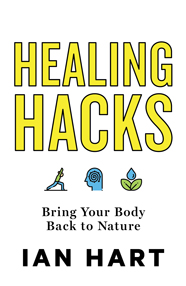
Fitness and wellness professional Ian Hart nearly died from a mystery illness in 2009, then spent years rebuilding his health naturally and turned that hard-won system into Healing Hacks: Bring Your Body Back to Nature, the book Wim Hof wrote the foreword for after hearing his story. Six years after launch, readers with herniated discs and sciatica still reach out from around the world after following the book’s program, some going from barely able to walk to getting their lives back. As Ian puts it, “I learned way more after writing this book. It took me to the next level.”
⭐ Top Moments
- Why a human book still beats AI. Asked how first-time authors should think about the writing process in the age of AI, Ian pointed to what a book carries that generated text cannot: “you’re putting a piece of your spirit and your soul into this book and then that’s transferred to other people.”
- Wim Hof wrote the foreword overnight. Ian trained as a Wim Hof Method instructor and shared his healing story at a master’s certification in Poland. Wim Hof heard it, and when Ian asked him to write the foreword he agreed immediately: “he did it that night and that was it. It was done the next day.”
- Readers who couldn’t walk, getting their lives back. Ian specializes in back pain relief, and it is part of the book. “We’ve had people that can’t even walk. Their spine is so bad. And then they open up the book, they follow some of the steps in the program and their life is getting back to normal.”
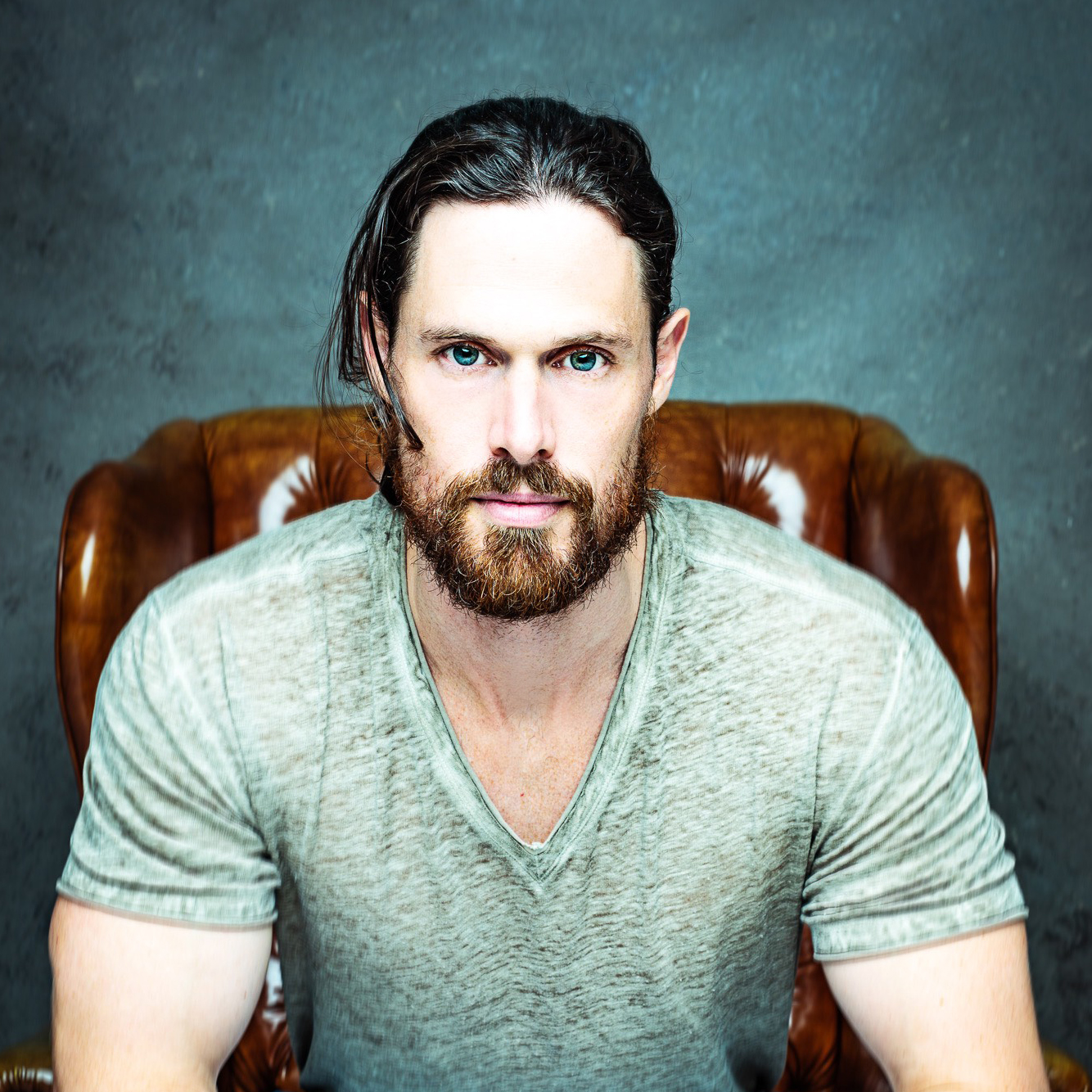
Ian Hart
Ian Hart is a fitness expert and the author of Healing Hacks: Bring Your Body Back to Nature. He is the owner of Back Pain Relief4Life, co-founder of My Back Pain Coach, and owner of EarthFIT, a top-rated group training facility with multiple locations. His work has been featured in Men's Health magazine and on New York 1 News. After a health crisis left him near death in the hospital, he developed a step-by-step system for sparking the body's natural healing, which he shares in Healing Hacks and at the wellness retreats he hosts.
★ Scribe Case Study
Ian Hart’s Healing Hacks Earned a Wim Hof Foreword and Still Reaches Readers Worldwide
Ian Hart nearly died from a mystery illness, then turned his natural-healing system into Healing Hacks, the book Wim Hof wrote the foreword for. Six years on, readers wor…
📚 Books by Ian Hart
Transcript
Ian Hart [0:00]: Writing a book, I mean, it's a challenging thing. And most people say, yeah, I want to write a book. I'm going to write a book. And they don't get it done. I'm what you call a quick start. So I like to start things, but I'm not good at finishing. And so Scribe was perfect for holding my hand and making sure that I got to the finish line so that it could be published. And it could be published within a time frame that was reasonable and that I felt comfortable with and that I was able to review all the information and I got it done.
Travis Stoliker [0:33]: Ian, thank you so much for joining me on the Author Hour podcast. Thank you for having me. I appreciate it. So let's just jump right into it. How you had a remarkable health journey. And can you just tell me what led up to the book?
Ian Hart [0:51]: In 2009, I got really, really sick. I figured out that there were some underlying issues that had built up to that moment. And through a lot of research and kind of just, you know, deep dives down rabbit holes, I started to figure out what was going on with my health. And I started to tell people a little bit about it, you know, because I've been a health and fitness professional. And so I've been helping people reach optimal health and fitness for about 20 years. And so I would tell people my story and I could tell people like starting to lean in and kind of taking it all in. And it kept them on the edge. And then after about like, I don't know, maybe. And the spirit of it was to try to help the other person, right? Because they may be dealing with health and I'm telling them my story. And then after about, I don't know how many times I was telling the story. I'm like, I don't want to tell this story anymore. And so I always heard, you know, like a book is a great way to kind of just get your story out there. And so that you don't have to repeat the story and that it can help people, right? So the whole mission, the whole goal was like, all right, now I have this replicable thing that I don't have to tell over and over again. I can just say, hey, if you want to know my story, here's my book, right? So that's kind of how the idea started. And that was the beginning of it.
Travis Stoliker [2:18]: Wow. And you started off with like 500 pages, right?
Ian Hart [2:25]: Yeah, I had a lot of pages and we had to whittle it down. And yeah, part of me wants to go back and look at all those pages and maybe turn them into like blog posts or something. Cause there is a lot of really good information, but we had to just take out a lot of stuff.
Travis Stoliker [2:42]: Kind of the addition by subtraction process there.
Ian Hart [2:46]: Yeah. The more simple, I think you make everything. Some of the best books I've ever read in my life have been like really short and simple and sweet. And so you try to do that, but you know, you want to just add the most value. That's the way I look at it. It's like, how can I get the most bang for the buck for the people that are getting the book? And like, what can I can just condense it down? So it's short, simple and easy. And that's how I am. I'm like very simple and to the point and I try to be. And so Scribe actually helped me be less like that. Really? Can you tell, can you tell me more about that? Yeah. Because working with Scribe helped me kind of expand on my story and tell a narrative. And I'm more of a, like a bullet points person. Like I'm just like, get to the point, get to the, you know, the part that's the crux of it so that you can get the value. And so they had me just walk through my story and explain my story and then took out the pieces that, you know, helped along the path, explain how I got to where I was, you know, where I was, where I was at then, and then kind of the story behind it so that it can help other people.
Travis Stoliker [4:00]: So you had the great Wim Hof, right? Your forward, right? How did that all come about?
Ian Hart [4:07]: Yeah, that's a good question. So I was an instructor for Wim Hof. I'd worked with him a few times. I went out on one of his retreats in Spain and then I started the certification process. And then I was doing a master's certification in Poland and we all had to get up and share like 10 minutes of our story about why, you know, this has changed our lives and how impactful it's been and kind of like what brought us there. And Wim heard my story and the instructors heard my story and they were like, wow, this is like pretty powerful. And Wim came and talked to me and I said, hey, would you be willing to write the forward in my book? And he said, absolutely. And the next day he said, hey, I have your forward. And he did it that night and that was it. It was done the next day.
Travis Stoliker [5:00]: That's amazing. And for those that might not be aware, can you explain kind of Wim Hof and the method?
Ian Hart [5:07]: Yeah, Wim Hof is a Dutch guy who's been around for about 40 years sharing these teachings. And for about 30 of the years, people kind of thought he was like a gimmick or just like a party trick guy where he would do these stunts and he'd do these amazing feats. But in the reality is they started to realize what he was saying, what he was doing was actually true. And science backed up what he was saying. And that was that you have control over your autonomic nervous system, which no one thought was possible. And in fact, one of the scientists who we worked with, one of the teachers, he said, do you realize that we're going to have to change all these books here? Because what you're doing is never thought to be like reality. It's not thought possible. So he would do these breathing techniques and the breathing techniques have a wealth of benefits. And then he would go into the ice. So he's known as the Iceman. And he would be able to stay in the ice for two hours and controlling his body temperature through the breath and through the mind. And so he's inspired a lot of people to change our lives through using breath and cold therapy to bolster their immune system, heal their bodies, get rid of disease and having more control over their nervous system in their body, really. And so like people do who do the breathing technique. This is something I share in the book, which is really important. Most people don't really know. And that is that carbon dioxide is actually what expands. It's a vasodilator, right? So people are always talking about oxygen, right? Well, oxygen is a vasoconstrictor. It actually constricts your blood vessels. So when you do the breathing, you breathe in a lot. The oxygen constricts your vessels. And then when you exhale, so you breathe and then you exhale and you hold the exhalation. So your body's filled up with oxygen and you exhale it all out and then you hold the exhalation. So you have a lot of oxygen. You're vasoconstricted. And then as you exhale and hold the carbon dioxide, so say your oxygen's here and your carbon dioxide's here. As you exhale and hold, all of a sudden carbon dioxide starts to go up and the oxygen goes down and you reach a point when the carbon dioxide gets to a point when your body says, okay, I need to take a breath. What happens is your arterioles go from vasoconstriction to vasodilation. And so it's like strength training for all 80,000 miles of your arterioles. And so that's where the dramatic changes are in the body. And that's where the power of this is. And that's just one of the benefits of it. And then you go in the ice bath because you are now strength training again through the ice and the cold. So, I mean, I can talk endlessly about that, but I wanted to just give one powerful benefit that most people don't know and most people can't explain it to people simply. And so when people hear and see this, that might inspire them to try it out because it really is life-changing.
Travis Stoliker [8:30]: I think, isn't breathing, like breathing deeply, like one of the most proven ways to actually improve like mental health and your emotion. And it's like getting to that deep breath and that taking in a lot of oxygen. Like that's the one of the most studied, right?
Ian Hart [8:50]: Yeah, and so meditation, a lot of times when people say meditation, it really just means to breathe, right? I used the word inspiration before. Well, inspire means to breathe in and it actually means to be in spirit. And so when you're breathing, it's actually the only thing that connects us with the spirit world because we go into this state and we're clearing our mind when we just focus on the breath. And then life is oxygen. And I always share with people that the game of life is actually who can utilize oxygen the most efficiently, right? And so whoever is the most efficient at utilizing oxygen wins in the game of life in terms of lifespan, in terms of whatever, everything, right? And so the better your breath is and the more and better you use it lies oxygen, which the Wim Hof method in that type of breathing allows you to become more efficient at utilizing oxygen. And so it puts you in a meditative state through breath. It puts you more in connection with whatever you want to call it, your higher power, God, whatever, spirit. And so, yeah, it's powerful beyond what most people can believe.
Travis Stoliker [10:12]: I had a, after I sold a company with some friends and let myself go, got really big, was really unhealthy. And then one of the guys that I did it with and two other friends died within a short period. And I did what I called my year of the opposite and just the opposite inspired by like Seinfeld and David Goggins and a few other people. And one of the things that I got really addicted to was the cold plunge. Like that was just it doing that hard thing and that feeling that you have for me, it's after about two and a half minutes, like after two and a half minutes, it's where I like really lock in. I haven't tested this, but I'm convinced that my eyesight gets better. Like it just feels like everything dials in. And my longest is 20 minutes at 42 degrees. And I just got addicted to it where I just felt like I was missing it when I didn't do it.
Ian Hart [11:13]: Yeah. And you said, you know, your eyes get better. It's true because you're, yeah, because you're training. Like I said, you're vasoconstricting and vasodilating these small arterioles in all of your body by doing the ice bath. And so when you vasoconstrict it, you're pumping the one, you're pumping the lymphatic system, but your strength training. So you're reaching these, these small arterioles that you wouldn't be able to reach or train in any other way besides this way. So you'll get blood flow to areas that you maybe couldn't get blood flow to before. And so, and it helps with healing and it helps with like myriad of things.
Travis Stoliker [12:00]: Wow. And that's amazing. I was going to bring in a little like eye chart because I'm nearsighted and I was going to, because at the gym that we go to, there's one up on the wall and I'm like, I can't read that. But then two and a half minutes in, I feel like I can read it better.
Ian Hart [12:14]: Yeah. And part of that too is also probably the adrenaline dump. So when you have an adrenaline spike, your senses become more poignant. And so you, your nervous system will be in a specific drive that like it's kind of fight or flight. And so you'll be able to like see better. So there's probably a couple aspects to that.
Travis Stoliker [12:39]: So it's been, if I recall, it's been about five, six years since the book came out, right? Yes. Yeah. I was wondering what was kind of, we call it the champagne moment. Like when you're coming through the process with scribe, you know, what is that thing that you would break the champagne out and say, my goal achieved what I wanted it to for me and for the reader? Did you, do you recall that champagne moment that you had and did you achieve that?
Ian Hart [13:07]: You know, I'm not a guy that really celebrates too much because I just kind of do the thing and move on. But with that being said, I launched while I was in Costa Rica during the pandemic, during the quarantine. And so I actually took the last flight out to Costa Rica when they said, like we're locking down and shutting down. And so I took the last flight out. I was in the middle of the jungle, like, like all the hotels were closed. I was like out in the middle of the jungle. And I realized the book was about to be launched. And I had a bunch of interviews and all this stuff. And so I came out of the jungle to like some Airbnb and that's where the book was launched. And I did all the interviews and all that. And it was a little bit bittersweet for me because I had spent 10 years building this business, fitness business. And then COVID tried to shut it down for a couple of two weeks, two weeks, it was only shut down where I was in other places and people were shut down longer. So I wasn't in my normal habitat. And I was kind of, I had this vision of like, I was going to be at my gym. I was going to launch the book that was going to take things to the next level in terms of helping more people and growing the business. And the book's subtitle was Bring the Body Back to Nature. Right. And so I realized that I was doing what was in my book even though I didn't mean to do it that way. Like I left my business. I left that kind of world behind and went to the jungle when the world was going crazy during the launch of my book. So, you know, it wasn't a champagne moment, but it was a, it was like I was following what the book, what I wrote the book about and the stress of my business was not helping me heal, but actually stepping away from my business while I was launching the business or while I was launching the book was actually the catalyst that really took my healing next level. In fact, I was sharing with, oh no, I'm blanking on his name. Yes, Javier.
Travis Stoliker [15:31]: He's so excited. He said you're coming to Paraguay.
Ian Hart [15:34]: Yeah, yeah. That's on our top on our list. Yeah, I was speaking with Javier and just about that whole, that whole process. So I don't know if that really answers your question. I'm trying to think of like when it launched, if we, if we had a champagne moment.
Travis Stoliker [15:55]: Well, is there anything that sticks out as like somebody that reached out to you that your book inspired or your book helped? That is one of the memorable moments of your launch or even in the five, six years, because a lot of times it doesn't happen on launch. It happens, you know, a long time after the book actually comes out where, you know, just it hits home with you.
Ian Hart [16:20]: Yeah, I had, I've had a lot of people reach out over the years, trying to think of one in particular. I mean, you know, I specialize in back pain relief and that's part of the book. You know, it's like healing hacks where we have a specific program for spinal relief and, you know, helping people with herniated discs, sciatica, bulging discs, et cetera. And we've had people that, you know, can't even walk, right? Their spine is so bad. And then they, they open up the book, they follow some of the steps in the program and their life is getting back to normal. Like people that can't pick up their grandchildren or have basically put all their hobbies on the sideline. And they don't even actually know how much pain they're in. Like, I don't know if you've been in this position before, but like you're just living with this daily pain and it's just gnawing and irritating. And then you're just living with it until one day you decide to actually take action. And then you realize, wow, this had been draining my whole battery. It had been draining everything in my life. It has actually made me miserable and almost every aspect of my life. And so, you know, they start the process of healing and then I'll get, you know, messages from people all around the world in regards to that, that they're now have more freedom. They have more, you know, energy. They have more ability to, you know, do the things that they love, the hobbies that they, they stopped doing or the biggest things are like the things I just said is like picking up their grandchildren, you know? So, I mean, we have actually the most video testimonials in the world or any back pain relief program. So, I'm trying to think like I have like. That's amazing. A role in. So many. All these videos and endless testimonies, but I'm trying to think of the specifics off the top of my head.
Travis Stoliker [18:19]: Wow. I mean, that's amazing though, that you have that many testimonials too. I mean, those are profoundly impactful when you ask the question of, do I ever have that? Yeah, absolutely. I lost 60 pounds through that process and I didn't know how bad I was feeling. You know, just that lethargy, just thinking that you're never getting enough sleep, but actually you're just, you are never actually sleeping well, constantly waking up during, during the night and. Just feeling tired all the time and that paradox too of how you exert yourself so much and for me, it's running. I just love running. So exert yourself so hard and running, feeling like, oh, well, that's going to make me more tired and it's the exact opposite. Obviously, right? Never realizing that before. Yeah, I think what you've done for people. Is huge. I mean, back pain is something that you can't escape your, you know, when you have it, there's nothing you can do. Every every single thing you do is impacted by the back. So when you're able to solve that for somebody, that that's something that changes every aspect of their life.
Ian Hart [19:35]: Yeah, absolutely. And like you were just saying in my book, I talk about a simple concept that I think is easy for everybody to grasp, which is, you know, we're if you think about us as a battery, right? We're a battery, we're an electrical being and we have a certain amount of life force that extends to a certain amount of time. And basically everything you're doing is either charging that battery or it's drawing energy away from it. It's basically like lengthening your life or, you know, taking away from your life. And so like you just said, you like to run when you go for run. You're actually like you ever seen those cars that when they're coaching, they're actually charging the battery?
Travis Stoliker [20:22]: Absolutely, yeah.
Ian Hart [20:24]: Yeah, so that's what you're doing when you do these runs, you're actually charging hurry up, right? And people think it's going to. Well, it depends on how you do it. I mean, I can get very detailed with that, but essentially you're charging the battery. Right? And then everything you're putting in your mouth, you know, everything you're doing mentally is that giving you life force or is it taking away from you? And so that's the simple concept that I like to teach people. And I especially like to teach kids that because I was never taught that in school. And I never understood that concept. And it took me a long time to really understand those things.
Travis Stoliker [21:02]: And that relates to like for me, the running, you know, it started off with I literally and I couldn't run around our little block. I mean, it's maybe a tenth of a mile, like not even not even a mile. It was it was brutal. But then when you get a half a mile under your belt, you get a mile, then you get seven. It shows you what you're capable of and it's kind of what was what is that rule that they say about, you know, the guy that broke the four minute mile and it was like thought that nobody could do that. And then as soon as he did it, like everybody after all the sudden just started doing it. It's like once your mind, I feel that same way about the cold plunge, right? Like once I do that and show, oh, well, I got to 10 minutes. Well, why not? You know, now it's like that's the new standard that my brain has set for myself. Shows me what I'm capable of to go into, you know, an activity that I don't want to do. Well, if I can do that, if I can put myself through that kind of pain, I know I can do that. I know I can do, you know, a longer run. I know I can push myself with the with the heavyweights.
Ian Hart [22:13]: Yeah, and and so what you're talking about is changing yourself, right? But most people don't know that impact is that you're actually changing other people by doing that. And so because you're upgrading your DNA, you're upgrading your your life force, right, and your your heart's becoming bigger and larger. And so your force field of life is actually expanding. And I don't know if you've heard, you know, where they do like like you're talking about with the four minute mile, right? You know, they've taken rats and they have them learn a maze, right? And those rats are in the US, let's say, right? Well, the rats on the opposite side of the world are learning this through DNA without being taught anything. They're just automatically because we're all connected, right? So the more you improve that aspect of yourself, you're actually impacting everybody. So it's like the more healthy everybody is, the more healthier the consciousness of the globe is. And so that is the impact that we have that most people don't know. And they don't we don't talk about. Right. And so people talk about like, oh, getting in shape. Well, now I'm in shape. And now all of a sudden I make more sales and my business is better. And my well, yeah, you're actually now able to impact more people's lives. And there's the seen impact. And then there's the unseen impact. And so and sometimes the unseen impact is even more big, more bigger, let's say, right?
Travis Stoliker [23:51]: That makes so much sense. Yeah, yeah, that absolutely hits home. So how do you relate when you're impacting all these people through the book? How does that relate to your business, too? Are they all clients or is your book going way further beyond your your fitness business? How how does your book interact with your your business?
Ian Hart [24:12]: It's a good question. Like, so I had training facilities and the training facilities were designed for optimal health and fitness in the shortest, fastest, most effective way possible. So it was a body mind transformation center. And then we also did the back pain relief stuff. But. As I started to do all those things, I started to realize that everybody needs healing and actually what they're there for is is some type of healing, right? So like if you had come to me and you're like 60 pounds overweight, you know, like, what am I going to do? That the fitness is the first step. Right. And so we also incorporated the detox. We incorporated, you know, the like the mind body, spiritual stuff as well in the process. And so it kind of just kept expanding into deeper aspects of the health and healing. And so that book was a part of that aspect. And so as I grew, I started to realize, like, well, I got to share this information. How do I share this information with, you know. My staff or how do I share it with my clients? So that's what brought the book about is that I can write the book and then give it to my clients. And then the people who aren't my clients, they can buy it on Amazon or whoever wants to know. So, yeah, that that was a part of the reason why I wrote the book.
Travis Stoliker [25:36]: And yours, yours was a if I remember right, it was like a twisted intestine or something. Is that like how did you even figure that out? Is it my do I have that right?
Ian Hart [25:49]: Yes, well, the doctors told me that that's what I had. So I guess whatever they said I had, I had. But so one thing. Oh, yeah. This is the thing I was going to say that one thing I told Javier. And this is important, I think. For anybody. You know, there's a lot of people that will read books and criticize books and say, oh, yeah, I didn't really like that. Or this wasn't didn't have enough of this and I didn't have enough that. Well, like I would challenge them to write a book and see what it's like, because, you know, it's a challenging process. And I was telling Javier that. It's almost the tuition, writing your first book is like the tuition to get to the next level mentally, to understand things in that field at another level, at a higher level. And so I learned way more after writing this book. It took me to the next level. And in fact, you know, when I look back at the book now, I'm like, wow, I need to change a lot of that stuff because now I know ten times more. And that comes, I think, with the territory. Like, I don't think if I challenge myself to share this information, to like take everything I had and put it into a book, I don't know if I would have gotten to that next level of understanding. And so that's that's the benefit and the power of of taking all that information out of your brain, out of your your spirit and putting it on paper and then putting it out into the world for people to read and criticize. Like, I don't care when people criticize me. I just look at it as like, hey, how can I do that better, you know?
Travis Stoliker [27:28]: Yeah, that is so that is so perfect because especially in the era of A.I. now, a lot of the first time authors that come to us, they look at the 12 or 15 month or nine month process to write and publish their book. And they think, well, you know, in the era of A.I., why can't we do that in four weeks? But it's exactly what you said. It's that process. It's sitting with the ideas that helps you think about it and gets you to that next level in what turns just a book into a great book and something that you can be proud of that can sit on the shelf for five, six years like yours has. That piece is so hard to convey to the first time author that sees all the Facebook ads. It says, you know, I can publish your book in two weeks for this amount of money. Just speak into Claude. And that's just that's missing the whole value of the process of going through the book process.
Ian Hart [28:29]: Well, that's what exactly you said it perfectly. The value, right? So it's it's easy for someone in that position for me to say, well, you know, well, what's your goal? You know, like, do you want to add value? Are you trying to make this a valuable piece or do you just want to put junk out, which is what everybody can do right now, because I can just create it. But what separates us from AI is that we have these unique experiences and these these emotions and the spirit aspect, like I was explaining, is like they will never be able to take that. And so you're putting a piece of your spirit and your soul into this book and then that's transferred to other people. And so that's what I would say to those people is like, listen, this understand the process and the understanding that you're taking your energy of your own. There's no one else like you in the world. There would be no one else with these experiences, these thoughts, these ideas, and they have to be put down on paper. And that's the attraction. When people read it, they'll know and they'll connect with it. If it's not like that, they're going to read it and go, you know, throw it to the side and go, oh, whatever.
Travis Stoliker [29:43]: I don't want to engage. That's so true. So my last question is, what was it like going through the scribe process? And would you recommend it to a friend?
Ian Hart [29:55]: Yeah, so going through the scribe process, as I share with Javier, writing a book, I think it's probably, I mean, it's a challenging thing. And most people say, yeah, I want to write a book. I'm going to write a book. And they don't get it done. And I'm the type of person that's called, like in some of those categories of tests, I'm what you call a quick start. So I like to start things, but I'm not good at finishing. And so scribe was perfect for holding my hand and making sure that I got to the finish line so that it could be published and it could be published within a time frame that was reasonable and that I felt comfortable with and that I was able to review all the information and I got it done. And so I probably would have never got it done if I didn't hire a scribe. And so I would definitely recommend it. And I would definitely recommend it to anybody and everybody who is in that same position.
Travis Stoliker [30:55]: And well, thank you so much for making the time today, Ian. It's great. And thanks for helping so many people on their fitness journey. And I've just really valued this conversation. Reach out to me anytime. We're here to help with anything that we can help with.
Ian Hart [31:11]: All right. I appreciate it, Travis.
Want to Write Your Own Book?
Scribe has helped over 2,000 authors turn their expertise into published books.
Schedule a Free Consult