Invest Like the Best: Chris Belchamber on The Low-Risk Road to High Returns
✨ Episode Summary
Chris Belchamber spent 42 years in the investment industry, including a run as managing director of proprietary trading at JP Morgan, before he decided the argument he kept having with people was better made in print. Invest Like the Best came out in 2021. Five years on, he is back on Author Hour with Travis Stoliker to test what has held up: the case for compounding over chasing returns, why he thinks the stock market peaked against gold in 2000, and where he lands on Bitcoin.
The reason he wrote it was practical. He had come from England to America, moved from proprietary trading into investment advice, and found that the approach he believed in was too far from the industry default for people to follow in conversation. “So I realized that instead of talking about it, it would probably make my life easier if I just wrote it all down — then people could say, ‘Look at chapter one, chapter five, whatever — it’s all there.’” The book now does some of the sorting for him. “It’s good to have the right clients — not everybody is appropriate for this, as I’ve discovered.”
What he did not expect was what the writing did to his own thinking. Asked what came out of the book that he could not have predicted, he did not name a sale or an opportunity. “It focuses the mind in an incredible way. That’s what I got most out of it.”
⭐ Top Moments
- Five years on, the thing he got most out of the book was not a sale. Asked what unexpected things came out of writing it, Belchamber went straight to what it did to his own thinking. “Clarity and purpose. The great thing about writing in general, and especially a book, is the depth and commitment that the words demand — in my case, 18 months. It gives you a real sense of something very strong. You dig deep and you stay there, and you have to commit it to print, to black and white — you live by it. It focuses the mind in an incredible way. That’s what I got most out of it.” He is candid that he never pushed it commercially. “I didn’t try to market it particularly at the time — I’m probably going to start marketing it now more than I did at the launch. I was too exhausted after writing the book.”
- The partnership at Long-Term Capital Management he walked away from. Asked whether he was a Meriwether or a Druckenmiller, Belchamber answered “Druckenmiller. No question,” and then explained how he knew. “I had a one-on-one with John Meriwether, because I was managing director of proprietary trading at JP Morgan at the time, and they were looking for someone to join their team. It was 1997 — four years of a hundred percent returns — and suddenly I found myself in a room one-on-one with John Meriwether. It was a fascinating discussion, but toward the end of the meeting we just fell out, because we talked about risk and we didn’t see things the same way.” He had sized up what he was being asked to join: “they were 30 times leveraged — they had about $4 billion in capital and $125 billion in positions. So no surprise, within a year...”
- “They should write it because they feel they have to.” Asked what he would tell someone considering a book, Belchamber did not reach for the business case. “They should write it because they feel they have to. There’s something in them that they really need to commit to, that they’re fascinated by — something that may be misunderstood, something you can only communicate by writing down every word. It’s a lot of hard work, so you need a level of passion about it. If you have a passion for something, a book is a great thing to do.” On whether a finance book written in 2021 still holds up: “It’s timeless — it’s like gold. Whatever happens has already happened before.”
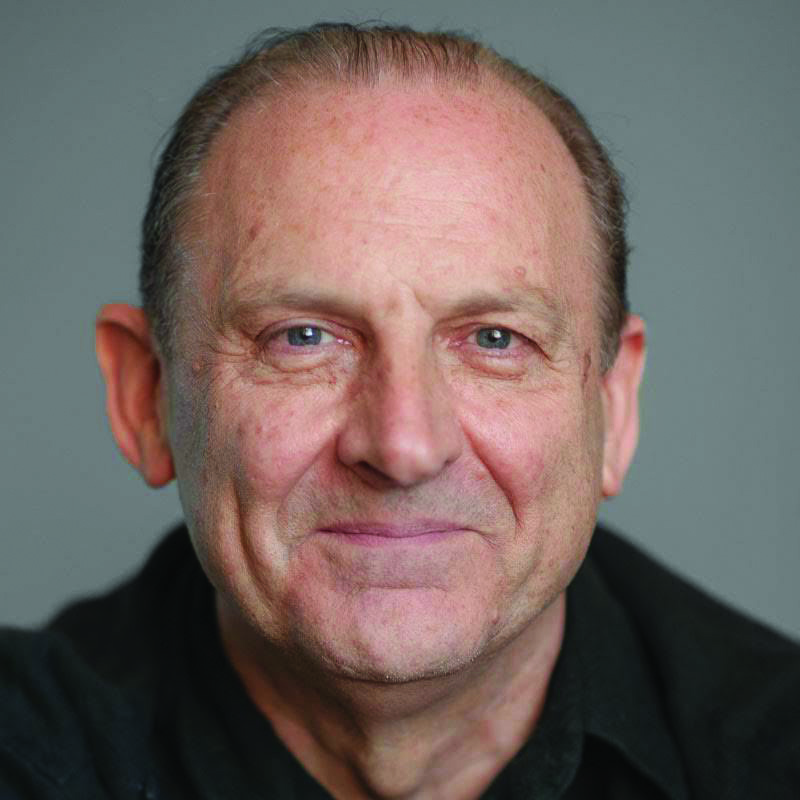
Chris Belchamber
Chris Belchamber holds a Math MA from Oxford University. He has been an investment professional since 1984. His first investment book was published by Credit Suisse First Boston in 1988. He was recruited by JPMorgan in 1989 to run their UK Sterling Bond Sales and Trading and then focused on Proprietary Trading, where he was promoted to Managing Director.
He presented JPMorgan's UK Bond Market's development paper, endorsed by Margeret Thatcher, to the Bank of England in 1989. In 2003, he started his RIA in the US. He enjoys music, reading, writing, and almost any sport, and is currently an active golfer.
★ Scribe Case Study
42 Years in Finance, One Book: How Chris Belchamber’s Invest Like the Best Draws His Right Clients
After 42 years in finance, Chris Belchamber wrote Invest Like the Best. Five years on it still works as a lighthouse, drawing the clients who get his low-risk method.
📚 Books by Chris Belchamber
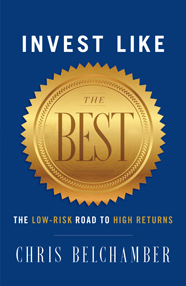
In this episode of Author Hour, Travis Stoliker sits down with Chris Belchamber, author of Invest Like the Best, five years after his first appearance on the show, to talk about the one-on-one with John Meriwether he walked away from in 1997, why he thinks the low-volatility half of the market quietly beat the high-volatility half, where he lands on Bitcoin and gold, and what 18 months of writing gave him that he did not see coming.
Transcript
Travis Stoliker: I am happy to be with the author of Invest Like the Best. Chris, it's really good to see you and have you back on the Author Hour podcast — I think it's about five years after your first appearance. So nice to see you, Chris.
Chris Belchamber: That's right. Well, thank you, Travis. It's generous of you to invite me.
Travis Stoliker: So it's been five-plus years now, and I know one of the early beliefs you had about the industry you're in — financial advising — is that the financial industry wasn't set up with the end client in mind. I'd love to hear more about your thoughts on that.
Chris Belchamber: Oh boy, yeah, that's a very good question. I could spend a long time just addressing that issue.
There's the fiat currency system we're in, rather than gold, and that's been a long story for about 5,000 years, so I won't get into that in particular.
What exercises me in particular is that, having been in this business for 42 years as a finance and investment professional, I think the standard of service the average investor gets from the industry is simply appalling. My passion is to do something about that. My specialty is investment, and what people get as investment advice is unacceptable. There is a solution, which is so much better — and provably so.
As I've been in the industry for so long, I've branched out into financial planning and then taxes, and there are issues everywhere — a lot of mystery and misleading guidance, which is a long way from best practice.
So I've just started a Substack, Best Interest Wealth Management, to try to address that. I've become a comprehensive, best-practice wealth manager to try to address that too. But I guess the source of this, where my strongest views are, is on investing. And we could go into that a little more.
Travis Stoliker: Yeah, I'd love that. My understanding is one of your concerns with the industry is that people are told they have to choose — if you want high returns, you must choose high risk — and that you find those to be false choices. Is that correct?
Chris Belchamber: Yeah — it's a false choice. I even have a little chart here which shows that if you take the S&P 500 and pick a bull market — not difficult — you go from 1995 to the end of 2021, that's 27 years of a bull market in equities. If you take the most volatile quintile and rebalance it for 27 years, then compare it against the lowest-volatility stocks in the S&P 500, rebalanced for the same 27 years, the lowest-volatility stocks outperform the high-volatility stocks by double.
Travis Stoliker: Wow. How has the industry gotten that so wrong?
Chris Belchamber: I think it's an evolution. The excitement is always about making money right now. If you're in a bull market, the high-volatility stocks in general will perform better today, this week, this year, maybe. But what an investment advisor is supposed to be doing is compounding real purchasing power for the long term — because the objective is that you'll have wealth when you need it in retirement, when you don't have earned income. So you should have a long-term perspective.
What people don't understand — and I've had arguments with people who claim to be the number-one financial advisor in America for three consecutive years — is that they don't understand compounding. Everybody thinks they understand compounding, but on examination, they don't. Provably so. Whenever I come across it, I take people on. I say, no, you're using this incorrectly and coming to a bad conclusion. You've got 80,000 followers — they need to know that what you just posted is nonsense. Provably so.
The amazing thing is that once you cross that bridge and realize what compounding actually is, and how you do it, it's very precise as a term. It gives you four metrics, which you can get any day. So as an investor, you have constant transparency and accountability about whether you're compounding, and at what rate.
The result is you get a higher long-term return with significantly lower risk. Whenever I do a seminar and ask, "Is there anybody here who'd like to have a higher return with less risk?" — everybody puts their hand up. Everybody. But when it comes to actually doing it, it's just... not that.
Travis Stoliker: Is it that it's not sexy — there's no immediacy to it? You're taking less risk and looking at a longer time horizon. Is that part of what makes it a powerful illusion to go the other direction?
Chris Belchamber: It's behavior. Part one of my book is behavior. As Benjamin Graham, Warren Buffett's mentor and teacher, says in the quote at the beginning of my first chapter: the investor's worst enemy is almost certainly going to be himself.
What happens to most people is they say, "I'm investing — what do I want? I want a return." So people start chasing returns and think a higher return is the greatest thing in the short term. What they can't distinguish between is what's luck and where the skill is, and what's going to happen over time. It affects everybody. I don't think our behavior and our brain system are naturally developed to be an investor making consistent decisions all the time. It's part of all of us — and all the best investors I study have to realize, "Okay, I'm my own worst enemy. I need a checklist, a framework, a mindset to deal with myself, because I'm going to have to manage myself."
Travis Stoliker: That has to be a really hard thing as an advisor, too — using that Ben Graham quote, I imagine that in times when the market is very volatile and the client is watching their portfolio go down, you're the first person they call, and you know that what they're asking you to do — selling at that moment — is the worst possible thing they could do. But you're also in a client relationship where you need to do what your client is asking. Their immediate goal conflicts with their long-term goal. Is that one of the burdens of being the financial manager?
Chris Belchamber: Oh, definitely. It's a constant issue, because people always want the markets going up — "I must be rich" — because that's how everybody else reacts, how everybody else is invested by Wall Street. So it needs a huge amount of constant education and reinforcement every quarter: this is what we're doing. Fortunately, I can show that over time the drawdown is so limited — I started at a higher level, and when the bounce comes, I get my share of the bounce, and over time that hugely improves the compounding. You can demonstrate, over time, against any kind of benchmark, that it works. You have to be able to see both sides. In the first part of the book I show the example of Long-Term Capital Management, John Meriwether, which was the biggest hedge fund.
Travis Stoliker: My next question was going to be: are you a Meriwether, or are you a Druckenmiller?
Chris Belchamber: Druckenmiller. No question. I was actually interviewed for a partnership at Long-Term Capital Management in the '90s.
Travis Stoliker: Oh, wow.
Chris Belchamber: I had a one-on-one with John Meriwether, because I was managing director of proprietary trading at JP Morgan at the time, and they were looking for someone to join their team. It was 1997 — four years of a hundred percent returns — and suddenly I found myself in a room one-on-one with John Meriwether. It was a fascinating discussion, but toward the end of the meeting we just fell out, because we talked about risk and we didn't see things the same way. I didn't know their exact positions, but they were 30 times leveraged — they had about $4 billion in capital and $125 billion in positions. So no surprise, within a year... but in 1997 he was master of the universe. He'd say, "We've got six Nobel Prize–winning scientists, we've made a hundred percent the last four years." People would say, "How much money can I give you?" That's the problem. People see the return and think, "My God, I want that."
Travis Stoliker: Only when the tide goes out do you discover who's swimming naked.
Chris Belchamber: That's right. Whereas in chapter three, I show a compounding method — probably middle-school math — where you just run a simple trend system. It's all explained in the book. You compare it to stocks, bonds, and gold, over 40 years. If you spend five minutes every month doing a little simple rebalancing — this one's going up, we'll keep that one; that one's not in an uptrend, it's junked — that's simple, and it beats stocks, bonds, and gold with less volatility over 40 years. That covers the '70s, '80s — every kind of condition.
The reason, which we get into in part two, is that by minimizing drawdowns, you maximize compounding. The number-one factor in compounding is minimal drawdown. Some of the best investment researchers now — I don't know if you've heard of Hedgeye, but they're astonishingly good with their research, they advise about $10 trillion in assets — they're now going into asset management, and every ETF they come out with has a drawdown objective. They understand that superior investing means minimizing risk to maximize compounding.
Without a clear objective about what makes you a best investor, how you allocate, how you measure — if you're not doing those things, you can't allocate and risk-manage appropriately. If you don't understand what compounding actually means and requires, you're never going to be a best investor. You won't have the security, and you won't have the relentless outperformance that comes from compounding. Compounding is actually the only metric that's the equivalent of your account value — twenty years from now, what's the value of your account? It's defined by what you compounded at. So an investment manager's job is to optimally manage the compounding rate, because that's the exact equivalent of what you're supposed to be doing.
If you're not managing drawdown, if you don't have consistency and safety, how do you plan? In passive investing, you're wealthy today, but — oops — the market's down 50%, and now you're going to have a very different retirement. The risk to other people's money is horrendous, in my view. It's irresponsible.
Travis Stoliker: Back in your last Author Hour interview, you were a little critical of passive investing and the ETF boom. Five years later, what are you seeing now?
Chris Belchamber: Exactly the same — except the leverage, the positions, the confidence, the complete belief, are like nothing we've ever seen. It's quite extraordinary. When I mention to people that the stock market actually peaked in 2000 relative to gold, so what's the big deal about stocks — how do you know what your return's going to be? The best trend has actually been in gold, and it's been low-risk — you haven't had 50% drawdowns, and you didn't have to do much.
I think people are very confused. If you want your purchasing power in retirement, you've got to be asking, what's the best asset? Stocks? Everybody thinks, "Oh, you've got to be in stocks, right, end of story." No — the S&P 500 is 70% down relative to gold. How do you feel now? People don't even know that. Why isn't Wall Street telling them that? Because Wall Street doesn't get fees on gold. Try to buy a commodity, or hold any commodities or gold, in your insurance investing or your investment annuity — I've never found it, and whenever I ask, they say, "Oh, well, maybe... no, no."
The average allocation to gold, even now, is something like one or two percent. People are ridiculously underinvested in commodities. Commodities have had a rough time, so you can understand why they've been abandoned in general — but not gold. Gold is an absolute cornerstone. If you understand what money and credit are — Ray Dalio said it — if you don't own gold, you don't know the history or economics of it, which is 5,000 years old.
There are huge gaps in understanding and practice that I think are a scandal. I'm terrified — I look at 401(k) portfolios from time to time, and people are losing money for years and nobody's doing anything, or thinking about it. The beneficiary doesn't really have a clue. It's not an acceptable way to treat people, I don't think.
Travis Stoliker: There's lots of talk about Bitcoin being the digital gold. What are your thoughts on that?
Chris Belchamber: I go back to this: the rules of money were established in Rome before Christ, and they haven't changed. At the end of the day, it's final settlement with nobody else involved. Credit involves a chain of people and institutions. In a chaotic situation, all the chains — trust, promises, guarantees, contracts — disappear. Ultimately, the only thing you're left with that's durable, that's valuable, according to ancient civilizations, is what hasn't changed. I was recently in Turkey — everybody go to the Grand Bazaar, gold is everywhere, flashing the gold price; in India, weddings — they know. There are certain conditions for what's really money, what's credit, and what's currency, and Bitcoin just doesn't stack up, because it's dependent on so many things. Is there electricity? Can I trade my Bitcoin? Does the jurisdiction you're in have rules on Bitcoin? There are all kinds of issues.
I'm not saying Bitcoin doesn't potentially have a place in the financial system — ideologically, I think it has many positive things — but it's certainly not money, and the volatility makes it impossible to regard as money. That's more or less what I think about Bitcoin.
Travis Stoliker: So back in 2021, you released your book. Can we flash back there? What was your intention with the book originally? I know you had 40-plus years in the financial industry and wanted to educate more people — I remember that being one of your life's works even back then, educating people on financial markets. What was your goal for the book at the time?
Chris Belchamber: I was in England and came to America for various reasons. I went from proprietary trader at JP Morgan into being an investment advisor, and I couldn't believe the investment advice people had. I thought, "This is good — I can do something different." But it's so different that people find it very difficult to understand, even if it's beneficial. So I realized that instead of talking about it, it would probably make my life easier if I just wrote it all down — then people could say, "Look at chapter one, chapter five, whatever — it's all there." It's timeless. If you don't get this, to some degree you're gambling. That's the way it is.
It helped in many ways — it was very cathartic for me, but it also reinforced my beliefs, and I came out of it saying, "I'm just going to produce models, or funds, or whatever, which have higher returns with lower risk." Five years later, it's going as it should, but it's a real struggle getting people to understand the benefit. With the passage of time it gets a little easier — I can show a longer track record now. We just did a video with my son on part one of the book, trying to make it higher-level, simpler, to get the idea across, because it's so powerful. I think everybody needs better safety and higher long-term returns. That's become my mission, as well as increasing best practice across finance.
Travis Stoliker: And now you're producing content — you've got a newsletter, you've got videos you're making with your son. You've got a content engine going again. What's your purpose behind all that?
Chris Belchamber: I just want to spread the word. It's good to have the right clients — not everybody is appropriate for this, as I've discovered — but if a person isn't going to be my client, I think I can still help them in a certain way, because this is so big, this is about other people's lives. I've got something here which I think is important, so I'm just going to keep at it and find a way to communicate better. My son has helped a lot with that.
Travis Stoliker: If I'm understanding correctly — you were coming at the financial industry from a very different perspective. You had concrete thoughts you felt you could defend in a book. You created the book, and now it's helping you find the clients who are the right mesh, because they understand your methodology. It's acting as a lighthouse to attract the clients you were looking to attract.
Chris Belchamber: Yeah, that's right. It's the core of the whole story. There are always new parts, elements, and developments — nothing stands still — but it is a real prerequisite, I think. If people want more wealth and security, I don't think there's a better way. I feel the mission is good, it's a positive contribution, and my son gets it — a few people get it. It is a different way of thinking; it's very behavioral, and we're not designed to be good investors, so it's a natural challenge to be good at investing. I have to control myself every day. I've got a checklist, because we all have emotions, and we're not supposed to be emotional when we're investing — we're supposed to be clinical, objective. None of this is perfect either, but yeah — it's definitely my North Star.
Travis Stoliker: That's great — and to have a book on finance that's timeless, where five years later you can still draw on it, still use it, still create new videos and educate people off that original work — that speaks to how great a book you wrote.
Chris Belchamber: There are some things about finance that are very durable and very deep. The techniques and the way the market trades evolve every day — new approaches, new ideas, new science — and you have to keep up with that, because it's a different animal than it used to be, and it's not going to stop changing. But if those things aren't grounded in the fundamentals, you're at risk in ways you may not understand. You need the foundation to apply to the whole chain, so you've got the whole story right and secure. If you don't have that investment objective really clear in your mind, you're not making consistent, good decisions. The foundations are really important for whatever else you do.
Travis Stoliker: Since I have a world-renowned expert here, humor me — I want you to point out the error in my thinking. I was a big fan of Jack Bogle from Vanguard — I loved when he talked about compounding fees of investment advisors. I think he said something like, "The magic of compound interest gets overwhelmed by the tyranny of compounding fees," and that it's a shame the American people don't know that. So I've basically put most of my money in VOO, the S&P 500 ETF, and my other bet is on things I believed I had an information advantage in. Not that I'm an insider, but I've had Tesla vehicles for ten years, I've loved them, and because the public really didn't understand how great the technology was, I put maybe 10 to 20 percent of my money into that. But I've done nothing in gold, and I'm starting to think I have a huge blind spot here. So what am I getting wrong? Please be brutally honest.
Chris Belchamber: I'm not necessarily saying wrong — I think it's suboptimal, in terms of low risk and high return. We've had the most extraordinary bull market in history, and we're still in it. But people need to understand that the stock market peaked against gold in 2000. This is a fiat-money environment where manipulation, debt, liquidity, and all kinds of things engage the value of financial assets — the interests of politicians, Wall Street, and a bull market are good for all of us. It may not be good for people who don't own assets. The vested interests are extraordinary.
That said, one has to appreciate that this has worked really well — I'd say since 2009, just being long equities in dollar terms — and understand the mechanism behind it. Increasingly, what's happening this year is not naturally derived profits emerging from these companies — it's spectacular deficit spending from the government and the corporate sector, which looks like profits, because that spending becomes profits somewhere. The leverage is frightening. Bank lending to margin brokerage accounts has gone vertical. We've got circular financing by Nvidia, supported by Wall Street, $500 billion today. This is what happened in 2000 — sellers of the mechanics of technology lending money to their buyers, their customers, hoping the customers would buy from them.
If you look at the Buffett Indicator — take your GDP, which is already inflated by astonishing spending — the stock market has gone to well over twice the size of the entire capitalization relative to GDP. If you were to return to the highs of the 1970s relationship between the stock market and GDP, the stock market would have to go down 65%. JP Morgan put out a piece on the 10-year expected return on the stock market, using this valuation relationship — the R-squared on that relationship, using 50 to 100 years of data, was about 99%. The expected return on the stock market for the next 10 years in nominal terms is zero.
Industrial production in America hasn't moved in the last 20 years — it's flat. So it's financialization, it's debt — we've been doubling debt every 10 years. It's now $40 trillion; ten years from now it'll be $80 trillion. And we've still got to pay for Social Security, because the funds run out, and Medicare. So how does the math work over the next 10 years?
You can be passive if you want. I own some equities — I own a good allocation, because the short-term indicators are still there. The deficit for July alone was $460 billion, for one month. Money supply is going up, liquidity is going up — they don't want to raise interest rates, they're producing liquidity. If you put a fire hose on, you're going to get some water. So I'm not standing in the way of a fire hose — but you've got to realize the extraordinary nature of where we are, and the danger, too. You can spend ten cents on some puts, just so you understand where your drawdown is and you're not going to get blindsided by it.
Certainly with the passive thing — you could have bought the S&P 500 in 1965, and your real return for the next 30 years, to 1995, was zero. And you had a 75% drawdown during that period. That's what passive investing can do for you, too.
Travis Stoliker: And that's because you're comparing it to gold?
Chris Belchamber: No — that's in dollars, just in dollars. Your real return in the S&P 500 can be zero for 30 years — it has been, 1965 to 1995. This amount of leverage, this amount of debt — I wrote a blog about this a month ago — we're already in recession, and not just the US, the G7. It's debt creating the spending. That's actually the reason we haven't had a recession for so long: whenever they see growth going down, they say, "Spend" — because spending goes directly into the GDP number. So you don't get recessions anymore. It doesn't mean the economy is strong; it means you're spending extraordinary amounts. This is the game we're in, and it's actually how fiat currencies die.
I was born in Africa, and my sister was born in Zimbabwe, and there was a time I looked at the Zimbabwe stock exchange and thought, "Holy smoke, it's up 2,000 percent — why didn't anybody tell me?" Then I noticed the currency was down 5,000 percent. That's what happens when fiat currencies collapse. How many fiat currencies have ever survived? None. So why would this one be different? Japan is probably the basket case for this right now — it's already creating the problems.
Travis Stoliker: What about the belief that the United States is different, because we control our own money supply, we can print more, we don't have to go to another authority, and ultimately we have the most powerful military behind us? Is that argument silly?
Chris Belchamber: It's become silly. Because even the central banks — the people who manage the world's currency — are selling their treasuries and buying gold, and they've been doing that for five years. So what does that tell you? Foreign holdings of treasuries have gone down; foreign holdings of equities have gone up, but treasuries are going down. Treasury Secretary Bessent is obviously highly reactive to anyone selling treasuries — Japan said, "We're selling our treasuries," and he reacted very strongly. Unfortunately they're playing king and knave, because Japan has intervened twice recently, and it holds for a week, a month, two months, and then it's back to where it was — unless they raise interest rates in Japan, it's not going to stop the yen going down, and the Japanese needing to get their dollars back. China and Russia are ready for a gold standard — they have it all prepared. Just this week I heard that Africa is changing its currency to enable its own gold standard, linked to China. The money is already moving. There's no question.
Travis Stoliker: Does the US have any hope of readopting the gold standard?
Chris Belchamber: It's not in the power of the interests to do so. According to the Iranians, Trump has made $5 billion in his personal accounts in the first two years. Every action being taken so far — the idea that anyone's going to do something about the deficit — there just isn't the constituency or the power structure indicating any sobriety. At this point, international investors — and I don't think the press covers this well in the US — have very clearly already made up their mind. Sanctions, tariffs, confiscation — it's not attractive.
Travis Stoliker: I could talk to you for a long time. One of my last couple of questions — we hear all these unexpected, great things that happen as a result of a book, things you could never have predicted. Do any come to mind from your book?
Chris Belchamber: Clarity and purpose. The great thing about writing in general, and especially a book, is the depth and commitment that the words demand — in my case, 18 months. It gives you a real sense of something very strong. You dig deep and you stay there, and you have to commit it to print, to black and white — you live by it. It focuses the mind in an incredible way. That's what I got most out of it. I didn't try to market it particularly at the time — I'm probably going to start marketing it now more than I did at the launch. I was too exhausted after writing the book.
Travis Stoliker: I think this book will be timeless — I could see you being interviewed on the next Big Short movie, with someone saying, "Chris was predicting this exact set of circumstances long ago, and wrote about it in this book."
Chris Belchamber: It's timeless — it's like gold. Whatever happens has already happened before.
Travis Stoliker: My last question: for anybody considering writing a book — or someone who, 10 or 20 years from now, looks back on you before you wrote a book — what would you tell that person about why they should write it?
Chris Belchamber: They should write it because they feel they have to. There's something in them that they really need to commit to, that they're fascinated by — something that may be misunderstood, something you can only communicate by writing down every word. It's a lot of hard work, so you need a level of passion about it. If you have a passion for something, a book is a great thing to do.
Travis Stoliker: That's a perfect way to end. Chris, thank you so much for joining me. I hope we can do this again, and I wish you a lot of luck on your resurgence in the content generation game and re-stimulating some marketing here. Let us know how we can help. Thanks so much, Chris — I really appreciate it.
Chris Belchamber: It was great, Travis. Thank you so much.
Want to Write Your Own Book?
Scribe has helped over 2,000 authors turn their expertise into published books.
Schedule a Free Consult