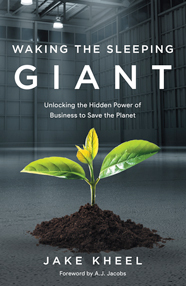
Jake Kheel on Waking the Sleeping Giant: Unlocking the Power of Business to Save the Planet
✨ Episode Summary
Jake Kheel has spent 20 years solving environmental problems from inside a large resort company in Punta Cana, Dominican Republic. His book, Waking the Sleeping Giant: Unlocking the Hidden Power of Business to Save the Planet, brought him invitations to sit on the boards of two companies in two different industries, paid positions he says came almost directly from the book. Five years after launch it is still selling to visitors in Punta Cana, in Spanish, English, and audio.
In this episode of Author Hour, Jake joins Travis Stoliker to talk about why he went to work inside the private sector expecting to fight it, why he chose a book over more newspaper columns, how an experiment with worms turned into a compost business, what it really takes to become a paid speaker, and how he is turning the book into Instagram content today.
“Like you don’t realize how much information and knowledge and experience you’ve accumulated until somebody asks for your help doing it.”
⭐ Top Moments
- Two paid board seats he never planned for. Jake expected the book might lead to a few speaking gigs. It launched as the pandemic shut down conferences, and the board invitations came instead, one from a resort development in Turks and Caicos that wanted to do the same work with garbage and corals at its new resort. “And for the first time I was invited to be on the board of two separate companies in two totally different industries, and both came almost directly from the book.”
- The book is a calling card, not a speaking career. Asked how authors get paid to speak, Jake was direct. “So I think it’s important to note that the book will open doors and will give you kind of a credibility and give you that first calling card to get the door open. But you really have to build out kind of the whole ecosystem internally.”
- Five years later, still selling and still relevant. Visitors who tour the foundation’s facility walk away with a copy, in Spanish or English. “Five years later, I’ve reread the book and I feel like many of the messages and stories and things that I put in the book are still highly relevant.”
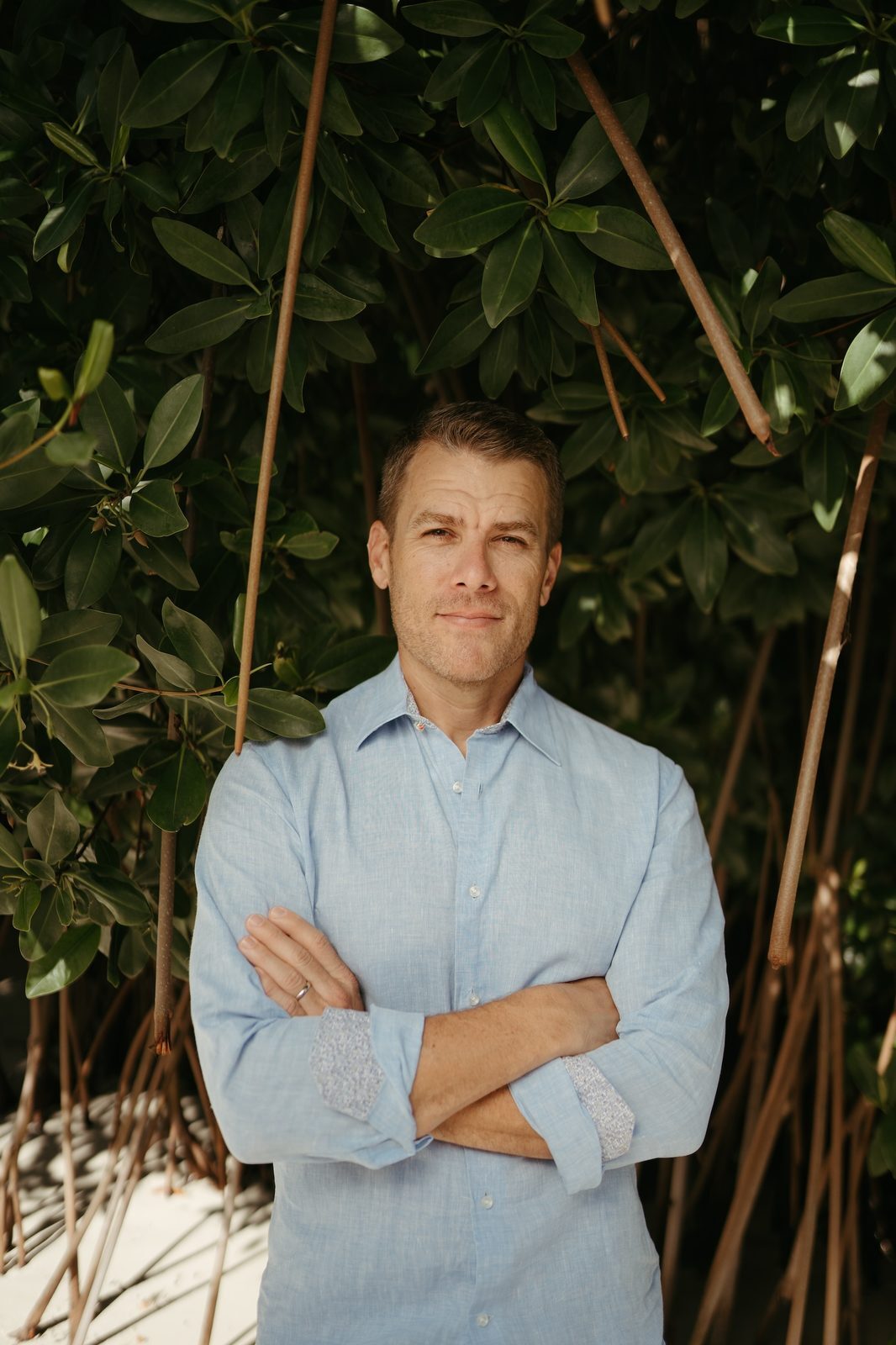
Jake Kheel
JAKE KHEEL is an environmental innovator whose efforts in the Dominican Republic with the Grupo Puntacana Foundation have won numerous awards and made the country’s tourism more competitive and environmentally sustainable. Jake directs the Center for Sustainability, a think tank partnering with renowned universities to conduct environmental research, and helped pioneer one of the Caribbean’s largest coral reef restoration projects. Jake frequently speaks at international conferences, including TEDx Santo Domingo. He’s been widely published, including the Huffington Post, Luxury Hotels magazine, and Harvard’s ReVista. To learn more, visit JakeKheel.com.
★ Scribe Case Study
Jake Kheel's Waking the Sleeping Giant Brought Him Two Paid Board Seats He Never Planned For
Jake Kheel wrote Waking the Sleeping Giant hoping for a few speaking gigs. Instead, the book brought him two paid board seats in two different industries.
📚 Books by Jake Kheel
Transcript
Travis Stoliker: I am honored to be joined by the author Jake Keel, the author of Waking the Sleeping Giant. Jake, can you introduce yourself and tell us a little bit about yourself and your book?
Jake Kheel: Yeah, thanks so much for having me. I'm Jake Keel and I work in tourism sector. My focus is solving different environmental challenges and using the private sector really as a key focus to unlock some real key insights in how the private sector can contribute to environmental solutions. I've been doing this work for the last 20 years in the Dominican Republic. My book shares experiences that I've had here just in working with the private sector, insights of really how to take better advantage of the private sector as a good partner, and some of the achievements we've had over the years and how they can be applied to other businesses and particularly for sustainability professionals coming out of universities or starting their careers, really giving some insights to try and share how they can magnify their own impact in solving major global challenges.
Travis Stoliker: So can you go into a bit about your book and why this book and why this topic and how you've dedicated your life to environmental sustainability and how working with the private sector has been one of the solutions that you've seen?
Jake Kheel: Yeah, this was really a revelation for me. I never expected to work in the private sector. I really had no expectations when I took the job here in Dominican Republic in Punta Cana and thought, you know, it would be a good opportunity to get to know the private sector because these are the SOBs that are causing all these environmental problems. So if I get to spend some time on the inside, I can probably figure out how to defeat them. And it was totally the opposite. I realized that there was this huge potential that was not being met that could be taken better advantage of by working from the inside, by understanding what the goals and aspirations of companies are and people that work in those companies, and understanding the tremendous amount of assets that private industry holds and can be applied to environmental problem solving and also holding them to task when needed and really understanding what's happening when things are being presented in a way that's sort of defending greenwashing or trying to cover up environmental sins and really understanding how that works from the industry perspective. So that's where the title came from, Leaking the Sleeping Giant, is really there's this huge potential that we're not fully taking advantage of because we don't often, as environmentalists, get engaged with the private sector. We don't see companies as anything more than the problem and someone to sue or someone to protest. And often, some great innovations can really come out of the private sector. So that's what I've been working towards for the last 20 years. The book was an attempt to really try and share some of that experience and put it out there for sustainability professionals to really apply it in their day-to-day.
Travis Stoliker: That's amazing. And what led you to the Dominican Republic?
Jake Kheel: Yeah, I think it was almost like fate. I had the opportunity to come here when I was in high school as a study abroad program. I just went really to learn Spanish and just fell in love with the country and ended up coming back pretty frequently. I did my master's thesis at Cornell University here on deforestation in the border area between Dominican Republic and Haiti. And really, I was just fascinated by the island. It's a small country. It has a huge diversity of habitats. It has an amazing culture, very warm people, and just this growing economy with that real tension between environmental protection, which you need on an island. You have limited space. You have limited resources. And then the economic development, which is a necessary and desirable goal for any developing country. So how do you have these two desirable goals that, frankly, we need them both, but we have to find some balance. And that's where I was really convinced that sustainability is the answer. There has to be a little bit of give and take. Companies aren't all good, and they're not all bad. There's a little bit in between. And I think all of us have a responsibility to come up with ways to find that balance. Humans, in general, want to evolve. They want to grow. They want progress. They want to have something better for their family and for the future. And that can't come by sacrificing the resources that we rely on for our sustenance, for the local environment, and often cases in the Dominican Republic. And our business depends very much on the environment and the tourism sector. So it's been an amazing journey to really try and understand where is the negotiation and the mediation that has to happen between these two very important goals. And that's what I've basically spent the last 20 or so years working on.
Travis Stoliker: That's amazing. And I'm glad that you point that out too, that sometimes people can think that there's a tension between the idea of doing what's right for the environment and that that necessarily means that that has to be at a business cost. But there's a way that you can do them together and they can be mutually support each other, right? Which is one of the things that you really talk about.
Jake Kheel: Yeah, I think that is the key when you're inside a company is really uncovering what is the value of protecting the environment, of solving sustainability problems. And often it comes down to something simple like this, what I call the low-hanging fruit of greening up your image, looking better because you're doing these environmental things. That's what customers gravitate towards. But there's really a lot more opportunity there. That can be efficiency gains. There's almost no CEO out there that wouldn't like their company to be more efficient, to have better use of the resources they have, to spend less on energy, water, waste, and really fine tune their operations. And then innovation comes out of sustainability. And I really believe that by being challenged to solve these very difficult problems, it often leads you to a new way of looking at that problem. And sustainability really pushes that. And that means looking at new technologies, looking from what the experience of other industries and applying it to yours, looking at academia and looking at the experience of nonprofits and how that can be applied in business cases. And I think often we kind of get siloed into, well, this is private sector, that's nonprofit, that's university, that's civil society. I don't really think that way. I think a lot of these things converge in business and you have to be able to manage all of them. And it often leads you to some pretty amazing solutions and great innovation. And so I think that's what sustainability brings to the table for companies, that it solves problems in the real world and for local communities and for countries like the Dominican Republic. And I think we have to be open to it. Now, it's gotten a lot of bad rap as well as being just another cost for a company and greenwashing and it's not being done well or it's not really contributing value. But I think, you know, there's amazing examples of where it really contributes to solving problems and improving the bottom line.
Travis Stoliker: So, Jake, how did you come to write this book? Why this book? Why this topic? And how did you get over the fear that usually holds a lot of authors back from publishing?
Jake Kheel: Well, I was, I've been a avid writer, you know, even dating back to college, I was a Spanish literature major. So I always feel like one of my most important tools in communicating the work I'm doing and, and really try to understand like environmental issues is writing. And so I had a regular column for years in the Dominican Republic in Spanish, and I would publish the work we were doing and observations and how it was relevant to the Dominican Republic. And over the years, I became convinced that the lessons on this one small island in the Caribbean, a lot of them were applicable outside of this context, that the things that we were learning, the experiences that I was gaining, the problems that we were solving were relevant, not just in the Dominican Republic. So we deal with, you know, waste, we deal with conservation of endangered species, we're working on restoring coral reefs, we've now taken on a major challenge, which is impacting the Caribbean at a huge scale of this in this seaweed that's now been that's been landing on the beaches for the last 15 years, and we've had to manage that. And so these are, you know, issues that are very local to us, but also global in scope and relevant for many places. So became obvious to me that, you know, that sharing that experience to try and do it by doing articles was going to take a really long time to reach a wider audience. So I decided that a book would be a great format for that. And it was something I always wanted to do. And really, the process was, was quite easy, it was just coming up with an outline, coming up with the stories that I wanted to tell and sort of focusing my mind around the things that we had done over the last, you know, at that point, about 15 or so years, and really trying to break them into usable lessons for other people. You know, the idea of the book is to serve others, not to serve myself, it's more about what information can I share that's going to be useful to someone else. And if you frame the writing of a book that way, the whole time you're writing, it was like, was somebody reading this actually care what I'm telling this? Is this just to promote myself? Is this just to, you know, toot our horns? Or is this something, you know, there's a lesson here that someone can learn from. And that's really kind of the frame I took to writing the book. And it made it a lot more fun, you know, like it positions it so you're having a conversation with someone else, and you kind of make up this other person that you're talking with. And you try and make it as conversational as possible. Because, you know, I didn't want to read an academic text as I was writing it. And I wouldn't want anyone else to think of me as an academic that's just doing purely theoretical thought experiments. I wanted to share like, yeah, we tried to solve our resorts, you know, 15 ton a day organic waste problem by feeding it to worms. And here are all the ways that the wheels came off on that experiment. And all the ways that we had to overcome them over the course of 10, 15 years, and how we've now turned it into a functioning business. And we've convinced lots of other resorts, not necessarily to take on worm composting, but to take on composting to take on the idea that organic waste is a serious issue that we need to confront. And really just exposing this, you know, at the time, somewhat of a niche idea, and making it something much more interesting to a wider audience. And so that's what I the way I thought of the book. And I've been fairly proud that that's where most people have have seen it and received it like this is a useful kind of case study of, you know, things that they tried and what didn't work and how it might apply to me and my work or my life.
Travis Stoliker: Did you say you've turned at the resort, you've been able to turn that composting business into a business? That's right. Yeah.
Jake Kheel: And we, you know, we've tried every experiment in dealing with organic waste, you can imagine. And just to get an anecdote from the book, when I got to Punta Cana, you know, kind of surveying the scene, and we run a large resort with hotels, private residencies, an international airport at the time, when I got here, it's probably about 1015 restaurants. So you can imagine the total sum total of garbage, usually 50% of it is organic waste. And at that time, you know, for the entire resort we were managing was probably about, you know, 1015 tons of organic waste a day, not including lawn waste and clippings and all that stuff. And so immediately, you know, I came from New York, and I've, you know, a little bit of a hippie background and had, we always had worms under my sink in my apartment in New York City. And that's how we dealt with our organic waste. So I was like, Oh, that's the most obvious thing in the world, we'll just bring worms to Punta Cana, that'll, that'll make a lot of sense. And that turned out to be a terrible idea, because it's very difficult to grow large quantities of worms and feed them 10 to 15 tons of organic waste. But it also turned into this amazing experiment that we went through different iterations, we introduced new methodologies of dealing with the garbage, we involved our community, we involved the local community. And really, I think people now think of worms, worm composting is not such a scary, strange idea. It's something that, you know, it makes sense for certain properties or for certain situations. But compost and dealing with organic waste is really a major cost. For a lot of places, it's an environmental impact that's incredibly important. It impacts the image of the country, the health condition of the country. So attacking that problem, you know, we kind of got to in a roundabout way through worms. But that story really resonates with a lot of people is, here's something really strange that they tried that worked. And then eventually they worked through it and turned it into a business. But the underlying message is, you know, that there are certain environmental issues that are entirely solvable, if we're willing to work at them.
Travis Stoliker: So does the resort sell the compost? Or how does that work as a business? So it's through our foundation.
Jake Kheel: So we receive waste from horse manure. So we have a ranch with polo horses. We have all these kitchens, you know, resort kitchens, hotel kitchens, private residences. We try and segregate that organic waste as much as we can at the point source, comes over the foundation. We compost it through an aerated process without getting too technical, feed it to worms. What comes out is this incredibly rich soil. And then we sort of filter it, bag it, then we sell it. And so this year we're on pace to sell about 20 tons of worm compost. And we sell it locally. And then we use it to grow vegetables that we sell back to the resort. And then we also use it in our golf courses and landscaping. So it becomes an asset for the resort. I mean, most people, it's pretty turnkey. They're not having to deal with the worms the way we are. And we've moved into other types of more industrial scale composting to really take on the larger volume, that larger fraction of organic waste that we generate. But I think the message is that, you know, sometimes these things start as experiments and then they turn into, you know, incredibly successful projects and also great sort of, you know, representations of what can be done if you're really committed to solving some of these problems.
Travis Stoliker: That is so cool. What a great use of that whole, and such a good thing for the resort and for the planet. And it's amazing.
Jake Kheel: And we had this amazing experience. We often have travel writers come down to the resort, you know, and they give them the red carpet tour where they, you know, go take them to the spa. They give them the signature cocktail with the special flower in it. And the whole, you know, brigade of beautiful things they could do, the diving and everything. And this guy wrote for a magazine called Black Book. And the title of his article was like the latest in luxury experiences, worms. And his article started with how he had this amazing experience. They did all these great things. The spa was great. The diving was fun. The color of the ocean, all these, you know, everything was awesome. But his favorite thing was the worms. And I feel like that authenticity of who we are as a company and as a resort really shines through. People come and they see now how these things have evolved, the other things that we're doing and sustainability and how we share it with our visitors and really make it an experience that they come here. You can go meet, you know, an endangered hawk and see it all over our property because we reintroduce them and have a, you know, a conservation program. You can go diving on reefs that we've been working to regenerate and to restore for the last 20 years. And you can see that work and we have experiences where people can actually participate in it. So it becomes kind of part of the identity of the place and it becomes, you know, something really fun that, you know, families can do. And, you know, it's really incredible work. Like we're not doing anything, you know, just for show. We're really actually trying to solve some of these problems, but sharing that experience. So the book was a big piece of that.
Travis Stoliker: That's incredible. And it has to give your visitors, your guests, a deeper connection to the resort because they know that it's mission and purpose driven too. And obviously somebody that is coming to a beautiful location like that obviously cares about the environment and what they're looking at. So now you're able to connect them with a deeper purpose. That's just brilliant.
Jake Kheel: Yeah. And I mean, a big part of our resort, you know, we have three hotels and a fourth one opening in the next six months, but we also have private residences. You have, you know, about 2000 private residences inside the resort, you know, all different types of communities, people that live here year round, some people that have second homes. So it's, you know, it's a little bit of a mix and that really adds a dimension to living here. You know, the quality of life that people want to have. If you're investing in the Dominican Republic, you want to know that the place you're investing in takes the place seriously, involves the local people, involves the local culture, and is really concerned and committed to solving major environmental challenges because eventually that's going to make your investment more safe and less risk. And so that is very important for home sales and for real estate as much as for hotel guests and visitors that are just coming for a week or a couple of days or whatever. So I think that story has really played out. And one of the things I'm kind of most proud of is when we started the sustainability work in the Dominican Republic, we were sort of like outliers, right? Like no tourism company was doing anything as comprehensive as we were and putting the kind of investment behind it we were. Very few companies in the Dominican Republic were doing anything on this scale. You know, they were still like, we're a developing country. There's not that much we can do on the environment. It's too expensive. And that's really changed. And I think that our resort, our company, and a lot of my work has been really normalizing sustainability for big companies in the Dominican Republic and in the region. I think that's an incredibly important lesson for us because the idea is not just making one sustainable company surrounded by a bunch of bad actors. It's really showing that this can be done at scale and convincing others that this is good business.
Travis Stoliker: Ah, that's amazing. And so my favorite question for author hour is, what is the coolest unexpected thing that came as a result of the book?
Jake Kheel: So, you know, I wrote the book thinking if I get some exposure and I get, you know, some interest, then maybe that'll turn into some speaking gigs and I'll get to go out and talk to schools or universities or companies. And that was really kind of in the back of my mind. I mean, I have a full-time job, so I wasn't like looking for a new career, but I was, you know, thought that would be an interesting new kind of sidelight. And what happened in reality is I let the book, released the book right around the time of the pandemic, right around the time when, you know, in-person meetings and conferences and presentations were at an all-time low. And there wasn't a whole lot of invitations out there for that kind of thing. But yet there was a lot happening in the space that I'm in, both in the waste sector and in the tourism sector and new developments and new properties. And for the first time I was invited to be on the board of two separate companies in two totally different industries, and both came almost directly from the book. So these are paid board positions, one with a resort development in Turks and Caicos, which has read the book and said, this is the blue point for what we want to do at this new resort. But we want to do all these things with garbage and with corals and with everything. And I'm still on the board and I'm watching how this is, you know, evolving in real time. Like this resort is actually doing these things and supporting coral restoration work and committed to waste management. And it's amazing. And the other one is with a company in the Dominican Republic that was committed to solving major, large-scale garbage issues using a kind of a circular economy mindset and making it a business. And so they invited me to be sort of a subject matter expert on waste issues. And so it's been incredible learning experiences for me, great career growth opportunities, but also, you know, really being able to contribute some of the things I learned. Like you don't realize how much information and knowledge and experience you've accumulated until somebody asks for your help doing it. You know, for me, I was like, I'm just grinding away here in Punta Cana and doing my thing. And then other people say, well, you know, what you're doing is really applicable to what we're trying to do in this other circumstance or this other context. So that was the most surprising thing to me.
Travis Stoliker: It never crossed my mind. That's amazing. And you've also, now that the pandemic is a bit behind us, you've, you have used your book to get a bunch of speaking opportunities and paid speaking opportunities. Can you talk about, that's one of the biggest things that our authors ask, how do you get on the speaking circuit and how do you go from doing those speeches for free to being a paid speaker? Yeah.
Jake Kheel: You know, I think it's, you have to understand that it's now a new career almost, right? So it's not just a little side hustle where the calls are just going to come flooding in because you published a book or because, you know, it doesn't matter how much you sell the book. Now you have to repackage that information for a new format and you have to market it. You know, you have to be out there talking about it. You have to be engaging with people. You have to have kind of a presence. You have to practice, like speaking is not the same as writing, which is not the same as, you know, doing interviews on podcasts, like everything has its own art form. And so you really have to work at it. So I think it's important to note that the book will open doors and will give you kind of a credibility and give you that first calling card to get the door open. But you really have to build out kind of the whole ecosystem internally of, you know, having the presentation, having the information, being able to speak in front of people and getting comfortable with that, knowing the mechanics of interacting with people. I think often it's better to have sort of an intermediary that's doing the kind of negotiating of the business aspect of speaking and then have, you know, your focus much more on sharing with the audience and presentation of the information and really engaging with that, you know, format of people. And so it's a lot of work. And I think it's important to note that, you know, that's one outcome of a book. I mean, you can do lots of other things with it. And I think it's incredibly, you know, edifying experience. Personally, just to have said, I read a book, I wrote a book. Mine's actually in Spanish, English and an audible book. And we still sell a lot of books right here locally in Punta Cana. We have visitors come and do tours at our facility and then walk away with a book. I'm now for the most part trying to give away the book online just to try and have a wide as reach as possible. And really, you know, five years later, I've reread the book and I feel like many of the messages and stories and things that I put in the book are still highly relevant. So hopefully other people feel the same way.
Travis Stoliker: That's fantastic. And from your talk with Javier, your pre-interview, you're using the book again to create more content. So you're getting that content flywheel going again. Can you tell us about how you're using the book as a part of your content strategy now?
Jake Kheel: Yeah, I've I've developed much more of a consistent presence on Instagram, producing reels about different aspects of the things I work on with a huge focus on waste, circular economy, organic waste and composting, which is something I'm pretty passionate about. And then my day to day here, being able to share these experiences, things I'm seeing because I've been around for a long time, I've built up relationships and credibility. A lot of companies or a lot of partners that maybe wouldn't be so comfortable letting anybody, you know, in the back of the house and snooping around and asking a lot of questions feel more comfortable with me because they know what my intentions are, are discovering solutions and sustainability, really. So I've been able to get into a recycling plant and go behind the scenes and talk about what are the policy issues that are slowing down real scaling of plastics, recycling the Dominican Republic. I've gone on site visits to a mushroom farm that's doing compost and how they're turning different types of agricultural residue and turning it into a really valuable, profitable business. I've visited other hotels and seen their back of the house and the things that they're doing and how they're accomplishing it and why. And then I've been able to share that through this kind of new medium of, of social media and just sharing these experiences. And, you know, sometimes giving a critical eye on public policy that I think doesn't make sense or companies that, you know, maybe are edging the line of greenwashing or, you know, initiatives that are just a lot more about getting views and likes and shares than it is about actually solving a problem. So I think that's the book is for me, I've been able to use a lot of the material from the book, repurposing it into reels and content for Instagram, but also it's really opened me up to exploring new information. That's not just my own personal experience from Punta Cana, but really getting out and seeing what other people are doing, both in the DR and abroad.
Travis Stoliker: That's amazing. Jake, what would you say to somebody that is struggling with that fear of not knowing if they're worthy of writing a book? And what if nobody shows up and buys it? What sort of advice would you give somebody for getting over that fear and actually getting to publishing their book?
Jake Kheel: I think Scribe was, was spot on from the earliest days of starting the process of writing the book and helping me as they said, you're not writing a book for the entire world and everybody in it. Like find who you're writing this book for and that try and target that audience and then just have a conversation with them as you're writing. And I think the more and more you dig into what's happening with content creation and with people that are out there just making their own material, the world is very niche and there's a lot of interest in what you're doing and you just have to connect with that group of people. You know, whether it's my case, sustainability and waste and compost and dealing with seaweed, there is actually a pretty large market of people that are interested in these very strange niche subjects. And I think that's the thing that authors need to remember is, you know, your first book, you're not necessarily seeking to be a New York Times bestselling author that's going to reach eight gazillion in sales. You know, Ryan Holiday, he wrote a book. It's basically the idea that this material, you want it to be as long lasting as possible. And you want to apply to a core group of people that are going to be very passionate about the things you're presenting. And he gives the example of, we talked about earlier, is one of his examples was a book called Worms Ate My Garbage and is literally the most niche book you could think of. It's this woman who's passionate about worm composting in her backyard and wrote all about it. And it sold like tens of thousands of copies. And it's been a perennial seller for a really long time. Actually, that's the name of the book, Perennial Seller by Ryan Holiday. Basically, it's like finding your crowd, finding your little group and speaking to them. And that's what the writing of a book for me really turned out to be is don't worry about, you know, trying to get to the largest audience possible and talking to everybody all at once. Just be who you are, share what you know and what you're passionate about and try and orient that information towards an audience of people who will find it interesting and you'll be going to be successful. Even if you sell 10 copies, well, your mom will probably read it. So other than that, you know, we're all out there. You got to take risks anyway.
Travis Stoliker: Well, that is a perfect place to end. Jake, thank you so much for your time today and sharing all this. And I know a lot of people will benefit from it. So thank you very much, Jake. Thanks so much for having me. It's great to connect.
Want to Write Your Own Book?
Scribe has helped over 2,000 authors turn their expertise into published books.
Schedule a Free Consult