Paul Zak on the Neuroscience of Immersion and Why Every Good Book Is a Sitcom
✨ Episode Summary
Paul Zak runs a behavioral neuroscience lab at Claremont Graduate University and founded Immersion, the company that commercialized his lab’s measure of how much the brain cares about an experience. His book Immersion: The Science of the Extraordinary and the Source of Happiness closed out a ten-year research program, and within the first month of its 2022 release it booked him more paid corporate talks than the book cost.
In this conversation with Eric Jorgenson, Paul explains how he turns a decade of lab findings into narrative nonfiction, including the time Sony brought him in to help test the trailer for Bumblebee. He shares why every good book works like a sitcom, why he chose Scribe Media’s à la carte model after publishing with a traditional house, and what he tells anyone thinking about writing a book.
“I think there’s nothing better than a book from a branding perspective.”
⭐ Top Moments
- The book paid for itself in a month. Immersion launched in 2022. “Within the first month of the book being released, because you guys [at Scribe] are so smart on marketing, helping us market our books, I booked more paid corporate talks than the cost of the book in the first month.”
- Where the money in a book really comes from. Paul is candid that most authors will not get rich on book sales. “Most people are not going to make money from the book itself. I think that’s fair to say. There’s some exceptions [...] but you can make money by promoting your business, by promoting your ability to speak and communicate, and that gets you on podcasts.”
- Control, without the fight. Paul’s first book was with Random House. Now he picks what stays in, and even who narrates. “I’ve published with traditional publishers who kind of dictate to you. I like having the control to say, no, actually I really need this chapter in there.”
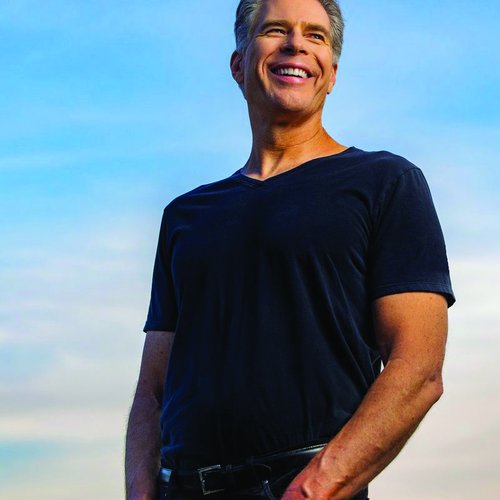
Paul Zak
Dr. Paul J. Zak is a neuroscientist, professor at Claremont Graduate University, and the founder of Immersion Neuroscience, a company that measures neurological responses to optimize experiences and teamwork. Known for his pioneering research on oxytocin's role in trust and economic behavior, his TED talks and books have made complex neuroscience accessible to mainstream audiences.
★ Scribe Case Study
Paul Zak's Immersion Booked More Paid Corporate Talks Than the Book Cost in Its First Month
Neuroscientist Paul Zak turned a ten-year research program into Immersion. Within a month of launch, the book had booked him more paid corporate talks than it cost.
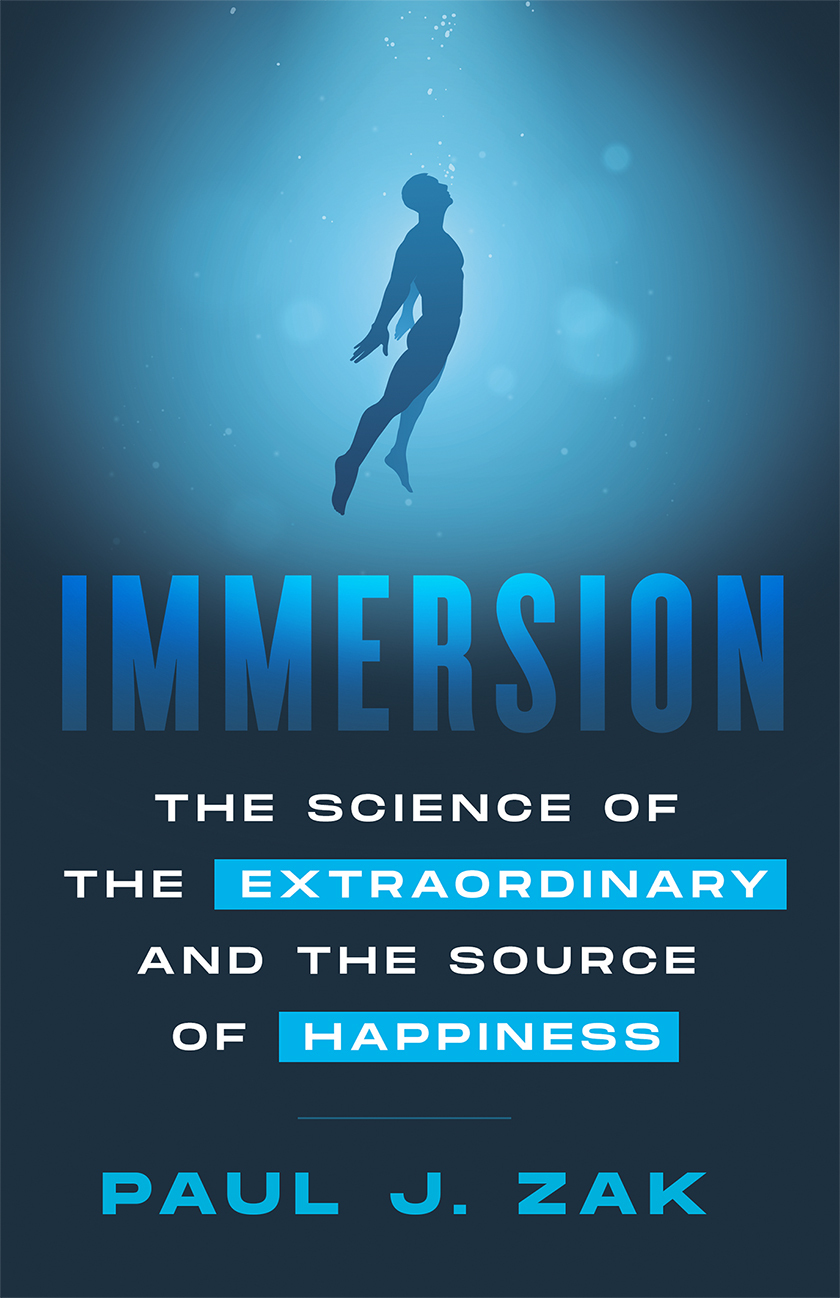
📚 Books by Paul Zak
Transcript
Eric Jorgenson: Paul, I really appreciate you coming on here. It's exciting to finally chat on the record. Absolutely, Eric. Thank you. Before we get into the nitty-gritty here, would you just give us a bit of your background? I know you're a three-time author, but what's the career path and personal history that led you to start writing books?
Paul Zak: That's a good question. I'm a professor at Claremont Graduate University and run a busy behavioral neuroscience lab there where we develop knowledge and technology so people can live longer, happier, and healthier lives. When I'm working with graduate students, I always emphasize to them that we should not only be making contributions to the scholarly literature, but we should be improving society in our work. We do use it as a screen. Is this a project we want to spend? A project takes a year, sometimes longer. Do you want to spend a year of your life working on this thing? I'm not saying it will have any impact besides two dudes who are going to read it in some obscure journal. I'm not interested in that. Perhaps I'm delusional enough to think that my work has broader impact. One way I communicate that is by writing books.
Eric Jorgenson: I love that. How many of your students have you talked into writing something other than papers?
Paul Zak: That's a good question. When they're in the lab, they're just research monkeys because they're getting trained to be independent scholars. I don't know. I've had over 100 PhD students. I try to keep in track of all of them, but no, I don't know how many have written books. That's a good point. Good point.
Eric Jorgenson: Yeah. I mean, that kind of tragic gulf between useful papers and applied knowledge in society is, I think, something that could do with a little more attacking, and I think AI is going to help us attack it, but so do people like you who do the work to simplify and broaden the audience for your work.
Paul Zak: Well, let's talk about that. I think there's an abyss there between useful research and communication. Many funding agencies, particularly private foundations, but increasingly the NIH and others do want their funded researchers to communicate to the general public. I think the general public's paying for this in one way or another. They should get a return that's not an obscure paper. First of all, we could talk about not writing obscure papers, which I work very hard to do, but also for other researchers, you can write a blog, you can be on a podcast, you can give a TED talk or TEDx talk, right? So there's all kinds of ways to package what you're doing so that it's accessible to the general public. So even when I write scientific papers with my students, we want to be as inclusive as possible. Again, perhaps I'm delusional, but I want you to understand exactly what we've done. So a journalist, a regular human can read most of that paper, maybe the technical part they don't get, but they can read the title, the abstract, the introduction, and really understand what we're working on and get a sense of the effort we've made to write in a clear way, in a responsible way that allows almost anyone to understand what we've done. So I gave a guest lecture at a colleague's class two weeks ago, just had him read some of my technical papers. I said, Hey, you're, you're not a technical field. These are management students. You're not, you can skip the technical part. That's only everything else you can understand, right? That's okay.
Eric Jorgenson: Oh, so is this the, I know you're coming off your third book now, but I think it's particularly interesting sometimes to look at that original book and book idea. Was that the motivation for your first book was to sort of translate your academic learnings into something that was accessible to a broader audience?
Paul Zak: Yeah. I'm on my fourth book actually. So the first book came out of kind of final mental work I had done showing that this neurochemical oxytocin that most people have heard of, that was my original research. No one was focused on that from a behavioral perspective in the early two thousands. And then kind of discovered something really big on the journals. Got me on TV, gave a Ted talk. And even prior to the Ted talk, I said, Oh, this, we, again, it's not one scientific discovery. It's a portfolio of findings that tell us something in our, in our case, something important about human nature, nature of good and evil. This goes back to, you know, the book of Genesis, right? This is one of the ultimate questions. Are we human beings innately good or evil? And we had a lot to say about their, I had a lot to say with all my helpers and collaborators. So I'm using the Royal we here because it really is a group endeavor. So yeah, so that, you know, that led to my first book, the moral molecule. And then in my lab, and maybe this is helpful for, for listeners, you know, we, for successful research programs. So we have a lot of research going, we do 15, 20 projects a year. So big, big, busy lab. Some of those are one offset and they don't go anywhere and that's fine. We can publish that. But the successful research programs run eight to 10 years in my lab. And so after eight or 10 years, again, you have this portfolio of findings. You have what causes this, what inhibits this you have, you know, you really have a great sense of, of what's happening. And because we do applied behavioral neuroscience work, we're really always focused on problem solving and not kind of just kind of deep issues on how a nerve cell works or something. And so very human focused as after eight or 10 years, no one, you know, no one wants to read 12 or 13 or 14 scientific papers, but if you can package it in a book, you can, you can again, share this with a larger audience. And again, I feel like that's an important part of my job as an educator, as a, as a researcher, someone pushing the frontiers of knowledge. But as you know, that can't be, you know, fact, fact, fact, hypothesis, proof, whatever, it's got to be full of stories. And so one of the things that allows me to write books is that my lab is an open door policy. I love to have people come in and bring problems to me, partially because I'm just curious about everything and why should I think a very good idea to work on, but also because I'm a cheap bastard and neuroscience is expensive. And so you show up at my door, you know, with a suitcase full of money and go, Hey, we have this problem you want to work on. I'm like, Hey, if I can work on that and you can help support the lab, that'd be great. And so we do a lot of field work. And so I'm just involved in a lot of weird situations where, you know, the, the, the place, the setting, the people generate a narrative that can illustrate a larger scientific point in the context of storytelling. So this, I, I really use narrative nonfiction as my approach. Yeah. Lovely.
Eric Jorgenson: Is there, should we focus on immersion? Is the, as the, as the, the book or do you want to deep dive on any of the others? We can just focus on immersion. Sure. Okay. I, that one sort of jumps out to me as like the, you know, maybe the broadest universal appeal, just the science of happiness and understanding, you know, who, who lives happy lives and how everybody can, can work towards that. How did that book in particular, let's just like use that as a case study of kind of like what came out of the lab? What were we learning? What papers got published? How did that sort of develop into the book itself?
Paul Zak: And again, it always, that book starts with a story, which is again, I'm not clever enough to make up stories, but it starts with me getting my ass chewed out by a intelligence operator who just got back from Afghanistan from interviewing terrorists to try to get intel for the war on terror. And because of some of the discoveries we'd made in the lab, like wanted to know how to use oxytocin to get more intelligence for people. So probably illegal, which I told him, but this guy was really nose to nose. I mean, I'm six, four, this guy's probably six, five and had 30 pounds. I mean, like he was a, he was a beast and he was like super intense. Like he, you know, need a little vacation, I think. But in any case, so it really came out of the war on terror on how could we identify combinations of brain signals that capture, I'm going to use one bad word, sensitive listeners, cover yours. So the give a shit measure, how to get you to care for all the things your brain's doing, how to get you to care about this thing right now. And care means I can, I induce an action, caring, I don't believe in self-report, I'm a behavioral guy. And so I want to see like, could I communicate in a way that motivates you somehow neurologically to take an action? And then so we began running experiments on that and ultimately identified this network in the brain. That's a combination of brain signals that I've named immersion. That seems to be that kind of give a shit and measure and, and then built a company to commercialize this because every customer wants a better experience. Every business wants to increase what's called customer lifetime value, right? That, that have that customer be loyal in return and get more money because from that customer, because they're so pleased with the experience they're having. And so in the experience economy, there hasn't been a really good measurement tool other than kind of bogus self-report. Did you like it? Again, I want to know is, did it shake up your brain so much that you were just turned on and excited? So that got me working with movie studios and working with educators. And right. So again, for me, from a writing perspective, once we develop a tool and that tool is made available to the world, all kinds of people are using that tool in ways I wouldn't have never expected, right? So being able to go into a theater and help theaters turns out to be very expensive and most plays lose money. So being able to give them a tool to say, Hey, what works in this play? What does it not just asking the audience, cause they don't know, but their brains know. And that's really interesting. And so again, you can see how this enlightens the story. So for my writing, it's really narrative first and then science light, right? I'm always going to come back to the science because what do you care about my opinion? I mean, maybe it's an informed opinion, but again, the stories from a writing perspective, the stories are meant to illustrate a larger scientific point, and there might be a little science. So I'm hoping that as I write my books, that people do learn a little bit of neuroscience and also learn to be critical. I always say that my books like, you know, we've done this research for 15 years, still could be wrong or still could be, you know, could be improved or whatever. So that's the way science, it evolves and changes. But as far as I can tell, most of it, because we've replicated many times in different settings, is probably right. And then again, the point of the book is not to give you stories and teach you some science, but to give you some takeaways. So in that book, if you remember the immersion book, each chapter ends with five things you can do. So here's kind of the summary. You wrote all this stuff, you understood the stories, maybe you got the science, maybe you didn't. But oh, if I want to be a better educator or provide better corporate training, here are five things I can do based on this chapter. And so I kind of like that approach. Some other authors do not like that. They think if I've written clearly enough, then why do I need to summarize for you? But my perspective is your brain is a very lazy organ because it's so expensive to run at full speed. So let's make it easy for you. Again, I want to communicate as clearly as possible, tell you the stories, tell the applications. What happened when I showed up at the Sony studios and help them make, which is a true story, help them improve the movie trailer for the Transformers, Bumblebee movie and a couple of others like that's fun, right? Like how do they make movie theater, movie trailers? Why do they care so much about them? So you have to go into the kind of economics of that. How do they get paid? And so there's a bunch of storytelling. And then I show up and then, you know, whenever you show up somewhere, weird things will happen, right? Every, for writers who are listening to this, I think every good story starts with, in my case, I met a dude. So I think if you're writing, you think about that. I met this dude and then something happened, right? Like, okay. So Sony had this problem. They need to get butts in chairs. So I met a dude and he said, Hey, we need your technology. Can you come out to the Sony studios in Culver city, California, and help us use, cause I was on version one of the tech. So it was still pretty clunky and just help us. I'm like, Oh, I want to see you use it. So we're trying to make this technology better. And then I guess spend a couple of days on the Sony set. And then I met another dude and then I get it ended up being in some movies and it's a long story. Very cool. What did you tell them or show them? So the way movie trailers are made is that they, they have companies to just make trailers and they make basically rough cuts and make a bunch of them. And so what we did is we measured or they measured using my technology, the, the value that the brain got to sort of give a shit measure for those rough cuts. And they took the one that on average was best and then began to edit it and then test it again and then edit it in a way that not only is more valuable to the brain, like, Oh, I really am interested now in this, seeing this movie, but also ends on a high note. And that's really important from a brain perspective. Like you put a lot of tension in your brain and now to find out what happens in that movie, you've got to buy a ticket.
Eric Jorgenson: And so literally measure, like you've got people watching this brain, watching the Transformers trailer with like helmets on or sensors.
Paul Zak: The innovation is that we wrote so much software that can get these signals from wearables. We can get data from the cranial nerves at the brain's output file. So, you know, this Arthur C. Clarke quote, right? Every sufficiently advanced technology is indistinguishable from magic. So it turns out your brain's connected to a body and they talk to each other. And one of the ways they talk is through the cranial nerves. So this is part of the book, and maybe this is interesting for the people listening. It turns out that you can pay people to take drugs in your lab. Who knew? So once we identified the neurochemical constituents of this valuation network in the brain of called immersion, we can pharmacologically manipulate those systems and trace out the pathways from the cranial nerves to the heart. So by the standard sports heart rate sensor, we can do a bunch of math and translate very subtle changes in cardiac rhythms into what the brain's telling the body about its need for metabolic resources to process this experience. Well, super interesting. And that's why it's, you know, software as a service. Anyone can do this. It's made, you know, with all due respect, it's made for the 19-year-old intern who's at an event and at a movie screening, whatever, and could just wave a wearable over an iPad and go, hey, we want to measure your brain activity. It's anonymous. You know, can we put a wearable on your arm? Sure. Again, if you've got to wear a helmet, right? Yeah. So there's something that's called a thing. So science, we talk about ecological validity, right? If I'm putting in an MRI scanner or something noisy or sterile lab, it's not really ecologically valid. It's not what people normally do, but people wear these things and people sit in movies. And so it's really valuable data. And I think that's why the book is important, even for people who don't want to measure it. Like, oh, we measured 50,000 brain activities. Neuroscientists just don't get to get that much data because they're stuck in a lab. But we have this technology that, you know, people on six continents use every day. And so a lot of times people send me that data and go, hey, it's their data. They're paying for a subscription to our software. But like, hey, we got these interesting results. We're not really sure what they are. Could you help us with this? And then sometimes that data is so interesting. I'll say, hey, if we suppress the name of your company, we would actually, my lab would like to do more research and maybe publish something on this, which might help you, or maybe you don't care. Or, you know, would you give us permission to use the data you collected? So again, a lot of that movie studios, blah, blah, blah, is because I have a whole army of people collecting data for me. So again, think from a writing perspective, think of the, the ways you can scale yourself so you don't have to do everything and you have, you know, other people who are helping you. And that could be research assistants. It could be a lab.
Eric Jorgenson: It could be audience, clients. Like there's a lot of people who have decades of results from their work. And I think a lot of times you're exactly right. Sort of sit down and confront the blank page on their own and try to like dredge up memories. But, you know, you could probably in a one hour recap with a client that you met with five years ago or helped a few years ago, like just collect that story. And that becomes the first draft of a chapter just by recording a one hour chat.
Paul Zak: Yeah. I mean, one way to exactly right. Or one way to do that is I use, you know, a Google calendar and I can just go back and just look at all the appointments I had and where was I traveling to? Oh yeah. I was at this conference where I met the dude who set me up with the whatever. And so, but I do like that hook, right? If you think of the story as I met this person, I was on a plane. I met this weird person, right? Yeah. And then we started talking and they're like, oh, holy crap. You're interesting. And so again, I think those are little hooks for each chapter. And I do think one of my dear friends who's a real full-time professional writer said, you know, writing a book is like writing a sitcom, right? Not only do you need a hook after every chapter, so they turn the next page, but every section change, you need a hook throughout. So I think, you know, I think of writing as I'm weaving this oriental rug and I'm going to pull some threads out. I'm not going to tighten all the threads right away. I'm going to, I'm just going to pull a little. And by the end of the book, it's going to be a beautiful rug, but I'm going to drop in some little hooks here and there and just let them, let them stay open for a while. So my first book, The Moral Molecule, which is nature, good and evil, you know, just in writing this good and evil is there's no religious or spiritual component to that. I'm a science guy. My mother was a, was a former Catholic nun. Dropped out at some point, wasn't her thing, but she kind of tortured us, tortured us children to be like hyper-religious. And so, you know, I was writing, I'm like, okay, that's an interesting little tidbit that I can just drop in because you don't want the Paul Zak story. You want the science story or the insight about nature, but that's a little thread that was dropped into chapter one and got picked up in chapter four. And then it's closed in the final chapter. So I think from a writing perspective, again, I don't want to, depending on the kind of book, uh, you know, I don't want to actually pull off those threads. I don't want to close every story I open within that chapter or within that section of a chapter. You can let them write.
Eric Jorgenson: Yeah. I like the idea of a sort of opening parentheses and you, you need to have those open loops, you know, in fiction, in a nonfiction, like starting a mystery and sort of leaving it open and teasing along that that's like a really enjoyable thing for a reader. That's, you know, when you're not just doing like, how clear can I possibly be business writing, especially for long form. And it gets more important to have those like engagement hooks and curiosity loops. I'm curious what, you know, shifting a little bit, like what benefits you've gotten from the books, what has changed as you've sort of added author to your academic career? What doors is it open? What relationships has it started? What, you know, where has it gotten you? What's it given you?
Paul Zak: Yeah. I think for the immersion book in particular, you know, part of that is to close this 10 year research program. So it's, that's the way I get to put this to bed. It's also promoted the company, which is called immersion. So, you know, there's a second wind. And then the third wind is, I remember the, when that book came out, which is 2022 within the first month of the book being released, because you guys are so smart on, on marketing, helping us market our books. I booked more paid corporate talks than the cost of the book in the first month. So now I'm getting a return on that, which is really nice. So again, I'm trying to do the, the triple dipping wheel, and then maybe this is good for others. Again, most people are not going to make money from the book itself. I think that's fair to say. There's some exceptions, Goggins, exceptions, but you can make money by promoting your business, by promoting your, your ability to speak and communicate, and that gets you on podcasts and right. And so you can kind of build up your own personal brand. And so I think the book is a good way to do that. So that's certainly has done that for me, because I've been on the road for 20 years, giving talks. I do feel like I need something new to talk about, right. I don't want to talk about the work at Inoxytocin, you know, in 2005, uh, you know, I mean, yeah, if, if there's a corporate client that really wants to hear about that or whatever, yeah, I'm happy to talk about it. It's, it's, it is my greatest hit. It's my, you know, jumping jack flash or whatever.
Eric Jorgenson: You always got to play it.
Paul Zak: You know, but I also want to talk about the new things. And so I think it's, it's really important that authors continually kind of recreate themselves. My lab's doing a lot of work in AI now for, for obvious reasons. You know, what, what is it doing to the human brain? What's it doing to human agency? Is it going to increase or decrease our ability to thrive as human beings? That's a good hot topic. I can run with that for a while. Right now it's in the, you know, year one of this eight year research program. So who knows, you know, what we're going to find probably will turn into a book eventually. But I think, you know, looking for the new, new thing is still kind of important. So for me, I'm doing a book every two, three years because I have these multiple research programs running in my lab. So I have enough material. And so I think that's a, that's a fairly good pace. A lot of people do one, do you know, they'll do one book and that summarizes a lot of their, they found in their life. And I think there's nothing at all wrong with that. I think it's just great. And again, I think there is a sense of closure. Once you've written a book, sometimes when I give talks, people will go, you know, afterwards you're signing books or whatever. And people go, oh, have you read, you know, some pop neuroscience book? I'm like, no, no, I, I contribute to the leading edge. Like I'm in the journals. Like I don't read other people's pop, you know, I'm just making me unhappy because it won't be precise enough. And so, yeah. So when, you know, once the book is written to me, that part of my life is over, we're not doing a lot more work in that area. And I, I don't want to hear more about it. I'm kind of done because I, again, I spent 10 years on that.
Eric Jorgenson: Right.
Paul Zak: So yeah.
Eric Jorgenson: Yeah.
Paul Zak: But people will spend an entire lifetime and, and, you know, at age 55 or 60 or something and write a book. So I do think for personal branding, it's really important. I think there's nothing better than a book from a branding perspective.
Eric Jorgenson: And your most recent is the little book of happiness, scientific approach to living better. Is that similar to, it's, it's the culmination of one of these long-term research projects or. Yeah.
Paul Zak: And it is, it's a little book. It's 8,000 words. And it, uh, that one has a free app as a QR code for a free app in it. And it's just a manual on how to live better. And that came about because of a dude, right? Because I got, no, I started, you know, I give these public lectures on thriving and happiness and people start asking me like, give me 10 things to do. And I can, I can do that. But I started thinking, gosh, you know, I've been accumulating this knowledge for all these years and all the research for that book was done and was done years ago. I mean, it's still happening a little bit, but I thought, can I encapsulate that into something little? And so I do think, and this is a question for you, I, since I'm talking your ear off now, but I do think from what I've read, books are getting shorter in a 8,000 word book is very short. And there was a reason to do that. I just wanted to make it a manual, something you can live with for six months. And you try these activities and you have an app to show you if you're getting happier or not. But I do think people should think about, you know, books that are 25 or 30,000 words. I think there's nothing wrong with that. Is that your experience as well?
Eric Jorgenson: I agree completely. I think there's, there's a study that's showing that books are getting shorter and that's no surprise, right? I mean, we're, they are competing with dopamine machines that are readily available in the phones. I think people have a shorter attention span and just a little less tolerance for an overwritten book. And why should they, right? Like how quickly can you deliver the value? I think especially in nonfiction is, is a perfectly reasonable thing for a reader who recognizes that sort of their time is at a premium to, to ask of an author. And I love reading, you know, I would rather reread a great short book three times as a reader that like really hammers at home, then sort of have a point belabored over a longer book that just doesn't do as much to stick with me. My other theory on this is that people only recommend books they finish. So as an author, having a book that is finishable and very easily, so really increases the, like the virality of the book in the sense that people talk about it and recommend it because, you know, they've fully comprehended it. And there's not like a twist ending where all of a sudden it sucks and they're out there, you know, recommending it to people having not finished it themselves. So I think there's some wisdom in that.
Paul Zak: Yeah. And also I think this is why I think the scribe media, all the cart models so valuable, which is you need an outside person, an editor who will go through and go, you got to cut this thing down. You got, you know, here's some suggestions. Okay. I like the, you know, I've published with traditional publishers who kind of dictate to you. I like the, having the control to say, no, actually I really need these, this chapter in there. I need these four pages. As opposed to having to fight with someone who goes, well, we own your freaking IP, so we're going to do whatever we want with it.
Eric Jorgenson: Yeah. It's a very, especially when you have, you know, an app or a business or, you know, you want to build the relationships off of this book, you have a personal brand you're trying to build. You don't want a sort of a controlling partner with different incentives and goals than you. And a lot of people do find themselves in that situation for, for ultimately like a relatively trivial amount of money given where advances are for most people these days. So yeah, the, the freedom and the speed that comes with self-publishing I think is, you know, increasingly relevant. And, you know, you're a great example of like, you're, you're on the news, you're on the Ted stage, you're publishing multi-published author, you've been publishing traditional and, you know, just the, the trade-off of like, I want control, I want speed, I want editorial support, but ultimately like the flexibility and ownership that comes with self-publishing so that you can use the book how you want in your career. And you can get the book that really fits your needs.
Paul Zak: Right. Yeah, exactly. I should say I am working on book number five. I thought I was done with four, but I got another, another one going. So I'll talk to you guys in a, you know, some months from now. You want to, you want to tease anything or? I don't, it's such a good idea. I don't want to give it away. So it's, uh, it's, it's one of those things where, you know, it's one of my, my hooks when I'm on stage giving a talk and everyone just lights up on that and you think, okay, I'm just using it as a hook to get into something else I want to talk about, but like, okay, people really care about this thing. So again, I think for, for authors or potential authors, you can stress test your ideas by putting them out there on a podcast or on a stage or in a blog or whatever, in an interview and then kind of see if it resonates or not. And this one, I, I did, you know, I tried it out in a bunch of people I knew, like, would you be interested in a book on this topic? Like, oh yeah, hell yeah. I'm like, oh, well, okay. That's all my brain too. So maybe I should write that book. Would you be one that the role of AI now in, in writing, I think. So in the scientific journals now, when you submit scientific papers, you have to say, did I use AI to, you know, do any part of this thing? Are you guys concerned? Is it a good idea, bad idea? Do the journals treat you differently if you did? We haven't used, uh, so I did train a combative coauthor. I fed in, I made an agent that absorbed all my research and then I made it be mean to me basically. So show me the error. So I will do that. I'll have it say like, am I missing something? Is this argument logically consistent? So I'll kind of very lightly use my, my, uh, AI coauthor, but it's very light. It might be do a final run through with papers written. So, um, I don't know. I haven't seen anyone treat differently. They have, they, I got my first AI scientific reviews, which by and large were very good, almost better, actually much better than human reviews because humans are just too biased. We're an AI reviewer, you know, it's pulling from the corpus of the, and it doesn't, it's not nasty, right? It's just factual. I'm sorry, but I cut you off in writing. I'm curious.
Eric Jorgenson: I'm delighted to hear that there there's like AI review and that they're doing a better job. That's a fascinating sort of additional layer. That seems like one of the functions that AI would be naturally superhuman at is just the ability to sort of contextualize much more broadly than any one human can can store. And that's kind of, that's kind of where I use it. I find it still not great at like a line by line editing and it, it misses sort of your like tone or focus a lot of the time. I don't really use it because of my normal process. I don't use it to generate, but I have found it very useful in saying like, Hey, you know, here's a 50,000 word manuscript. I'm pretty sure I've duplicated some ideas or some phrasing or some sentences. Like, can you help me find redundancies across this? And when you've worked on 10 different versions of a manuscript and you've been working on it for two years, like it is very difficult to read and maintain the mental context to remember what you've edited in and out. And so it's really helpful for some of those, you know, it powers transcription tools and grammar tools and things that are naturally helpful. And it can give, you know, I find it helpful sometimes for like generating options of like, Hey, this is my best chapter title. Come up with 50, come up with a hundred. Like, can we, can we make this alliterative? Is there, you know, a synonym that's, but ultimately like I find human taste is still a very relevant part. And if you generate, if you generate a bunch of slop, it's very hard to edit. But as like, if you take something human generated for the most part and use it to either add ideas or do research or help you hone and deduplicate and really be deliberate about your phrasing that can be a really, it's like exactly the way you phrase it. It's sort of like a genius coauthor where you don't ever have to take the recommendations, but you, you know, it pays to solicit them sometimes because it suggests something that you love that you wouldn't have noticed or thought of on your own.
Paul Zak: So I would think of this as augmented intelligence, not artificial. It's just augmenting your intelligence, right? Can you tell me, I do all my books in audio because I love audio books. I have read, and I don't know if you guys are doing it yet. Also AI generated audio voices. Here's something wonderful about having a human. I've had the same voice actor do my last two books with you guys. He's wonderful. And he, he, he's human, right? But now it seems like the AI bots are almost as good as humans or maybe as good. What's your view on the audio books?
Eric Jorgenson: I think it'll be a gradual transition. I think it will, most will eventually transition due to cost. You know, it's so much cheaper to get a, even if it's an eight out of 10 or nine out of 10, like AI performance, but it's half the cost or one 10th of the cost or 1% of the cost. You know, most people are not, most books are not able to afford a human audio book unless they're subsidizing it with another business or something like that. And so I think a lot of books that are not necessarily budgeted to do that, we'll get a good or solid or decent AI audio book over time. I've seen rapid progress in the tools. And I think where we'll have a phase where a human with taste will need to sort of direct the tool to perform the way you want it to, in the same way that like a good director sort of teaches an actor or shows an actor, you know, where you want the emphasis and where you want the emotion and where you want the speed and that human taste of like knowing what's going to sound good to a human is still necessary to close the gap between, you know, a five out of 10 or an uncanny Valley and something that sounds good. But I think that gap will close over time. And I think eventually AI will be quite good at that. But I think for, you know, the very best audio books I've ever heard are often still human performances. I don't know. I really don't know what happens at the very, very tippy top of the power law, you know, whether there's something about like, you know, you had hands in your human hands and your chocolate chip cookies that like, we can't explain why, but you can still feel the difference for a feeling that's almost supernatural. Like I have a suspicion that's somewhere up there, like some people will be able to tell whether or not it's human, but that's more, that's probably like a woo woo opinion, even from a like very techno optimist guy.
Paul Zak: Well, even, yeah, I'm optimistic too, I think even the breathing and the, I did my first book, I did the audio book, the random house asked me to do it. And it's very hard and like learning how to breathe and how to articulate and not sound like a robot. You really need a great actor, but you hear. Sometimes I will buy audio books just based on the narrator, like a famous actor is doing it. And you're like, Oh, what a voice? Like it's maybe AI gets good enough. But anyway, I, what I like about, again, your business so much is I can choose, do I want an audio book? It's not, I get to choose the voice actor or maybe eventually AI. But, you know, again, having that imposed on you from, from random house was like, okay, you have to do the audio book because it's such a personal book and we need you. I'm like, wait, I am an actor. And so, you know, I had to go find some voice people I knew in Hollywood and have someone train me.
Eric Jorgenson: And, you know, it's hard work. You have a great voice, but it's still, you know, it's, it takes days to record, which people, and it, and it is hard work and you've got to practice and people underestimate the, the lift and how skilled, really good narrators are. You know, I've heard authors, I don't narrate my own books just because I've heard authors sort of take it on. And you can just tell the difference between like a really polished personal one. I'm really glad when they are personal books and people do them coach people generally that way, but you gotta be, no, you're biting something off, you know? Yeah. Yeah, exactly.
Paul Zak: Well, it's been so fun to talk to you and I do think everyone probably has a book in them and, you know, having different options on how to bring that out. Yeah. I have one more question for you, if I may, zero seconds. Fully flipping this interview on me. No, I'm so curious about the whole, cause I love to write, I write every day. I just love it so much between my scientific work and blogs and working on the book. What about if books go fully digital, what about books that are embedded with audio and music and video? Is that something you've thought about?
Eric Jorgenson: I've seen, I've thought about it. I've seen a lot of different sort of attempts at this come and go at different levels of technology. I expect they'll sort of merge and blend. Like what's interesting now is almost every YouTube video has subtitles and the short forms ones do too, but those platforms aren't designed for long form in quite the same way. You know, Kindle is moving like the Kindle reading experience and the audio closer together and you can merge them in some books, which is pretty interesting. I think the physical book form factor is like very enduring and rewarding to users in ways that sometimes audio and digital are though. I own a lot of Kindle books and a lot of audio books and I appreciate them for their own unique superpowers. I wouldn't be surprised if some sort of hybrid thing came out, but I expect that anything sort of, if you're going for dopamine, then I think you'll sort of end up merging with something more like movies or, or audio. And so the, like you end up with these kind of groupings of taste. And so I'm, I'm, I'm always a little dubious of like a platform innovation in books just because it seemed, I've seen so many people try things and fail for various reasons. It's, it's difficult to get like a, a massive leap in improvement, I would say from, from a form factor that's so old.
Paul Zak: Interesting. Yeah. I, in my immersion book, a couple of times I said, I was talking about a specific commercial we measured, measured or like, okay, finish this chapter and then, you know, go watch that. Yeah. Go watch the thing. And by the way, you guys are really nice. You frame the titles and put them here. So my flag's hiding my happiness book, just my immersion book. So I keep it in my background whenever I'm on camera. I want to make sure they see my book covers. So very nice of you guys to do that.
Eric Jorgenson: I've got mine hanging on the wall over there. It's a lovely little gift for, you know, memento for crossing an incredible finish line, navigating a maze. And, you know, I love seeing them kind of up next to people's diplomas because I think it's sort of a, you know, an equal achievement in many cases. You, you've sprinkled a lot of this throughout the conversation, Paul, but I'm, I'm, it's one of my sort of closing questions and, uh, you may have more to give. What advice do you have for someone who's sort of considering they're flirting with making the commitment to write a book of the time, the effort, the money, you know, take us back to when you were sort of on the fence and what would you say to somebody who calls you up and says, should I give this a go? Is it worth it? You know, how can I decide whether to make this my priority?
Paul Zak: Let me think one of the important things about someone said this famous about writers is writers right. And so you can kind of test the market, test your own skill, find your voice by writing short things. Just take, take one of those customer stories or take one of those weird anecdotes that you had and just turn it into a 800 word blog, share with some friends or find a place to post it. So my first book, I was really had trouble finding my voice because I was both writing the book, but also a character in the book. And yet you don't want the Paul Zak story, certainly. And so I had a blog on psychology today and we'd get, you know, normally I get like a thousand reads, which is fine. And one of those got a quarter million reads. It was called how to run a con. And I talked about myself as a kid and I got, I worked at a gas station and I got conned out of a hundred dollars. And so, Oh, okay. So I can tell the story, but also be a character in the story. So it kind of helped me find a voice for that. So I think number one, right, just write every day, just practice, see, see, try it out, ask your dear friends to listen to you, or even try the story out loud. You can read it and get some feedback. The second is it's a humbling experience. And I think the two best writing books, Stephen King's book on writing, which is like 120 pages. The thesis of that book is, you know, uh, discourage yourself of everything. And then the beauty of writing is the polishing. And so just, just dump it out there, all the stuff in your brain, just dump it out and it can be polished up later. I think that's great advice. And, uh, Steven Pressfield's the war of art. Yeah. One of the best books ever written on the history of life in my view, uh, work rereading every year. You just have to do it a lot, right? But that's where the helpers come in. That's where your friends, that's where an editor. And so if you find a place where you can just put this up your company blog or your, your Facebook page or whatever, whatever people post stuff and just ask for feedback and, you know, people, people can be mean, but you actually want mean, right? You, you want to say, Hey, that story was too long, or, you know, you seem to have wandered or whatever. So, um, and by the way, there's just tons of great online resources, classes people can take. There's just wonderful, uh, writing resources. So even my science education, I w I love my English classes and my philosophy classes. And I just studied writing. I studied how to write and took online courses and read lots of books and, you know, read books for style and not substance like, Oh, how did they structure this book? So I think the key here's the last thing I'll say, the key to writing a book is structure. Once you have structured what the pieces are going to go in, then you just, it just plug and play. So really think about how to structure that. And if you read other good books for structure and you can see how they put these puzzle pieces, this. Oriental rug that we're weaving together. Um, it'll be super informative. Same thing with movies, right? If you, if you are a movie aficionado, you can see, you know, what they did, how they pulled this back in, how they close the loop. And anyway, you're writing a sitcom, every book's a sitcom. It's got to have interesting characters. They had to have a crisis and then you got to close the loop. It's got to be a couple of laugh lines in there. And, and if you're laughing at yourself, if you're like me, you're a doofus and you get all involved in stuff that you have no business being in. And, and yet you still are kind of useful in some way. That's, that's a pretty good story.
Eric Jorgenson: Uh, that's great fun. Thank you, Paul. And where would you send people to follow you, follow along, read your books, learn from you, become happier.
Paul Zak: Yeah. Um, thank you for asking. You can get information on the company at get immersion.com or immersion with an I. And my website's now pauljzak.net because the.com got stolen through some awful AI bots in Indonesia. So I'm working getting it back. But anyway, pauljzak.net, you can email me if you're listening, you have questions, I'll answer them. You people can email me.
Eric Jorgenson: Awesome. And we've got the two most recent books are immersion, the science of the extraordinary and the source of happiness and the little book of happiness, a scientific approach to living better. You wrote the moral molecule before. And what was the second one?
Paul Zak: The second one was called trust factor. Uh, the science of building high performance companies, I think.
Eric Jorgenson: Yeah. Yep. Nailed it. And a fifth one coming soon that remains an enigma. So stay tuned for more. I know who to talk to when I'm ready to publish. Yeah. We're, we're standing by and excited to work with you again. Thank you so much for appreciate you.
Want to Write Your Own Book?
Scribe has helped over 2,000 authors turn their expertise into published books.
Schedule a Free Consult