Positive Politics: Neil Thanedar on Building a Y Combinator for Politics
✨ Episode Summary
Neil Thanedar built LabDoor into a consumer lab that tests what the FDA does not, went through Y Combinator, and came out of it with an idea he could not shake: that there should be a Y Combinator for politics, an accelerator for people who want to pass a bill without ever running for office. He wrote Positive Politics to own that idea, decided on it in late 2024, and published in 2025 at a pace of a thousand words a week.
The book made the idea concrete enough to recruit for. Three of the five founders in his first accelerator class, a week of twelve hour days in a seven bedroom row house in D.C., found him through his writing, and when a VC told him “we don’t need another pundit. We need like someone who actually does the work,” having both the book and the accelerator was the answer.
On why the idea needed a book and not another blog post: “I think the books are a way to own an idea. I love like owning positive politics as an idea and blog posts can do that to some extent [...] But there’s nothing like a book.”
⭐ Top Moments
- Books are how you own an idea. Asked what he would tell someone sitting on a pile of writing and wondering whether to make the leap to a book, Thanedar went straight at the difference between a blog and a book. “I think the books are a way to own an idea. I love like owning positive politics as an idea and blog posts can do that to some extent [...] But there’s nothing like a book.”
- Three of the five founders in his first accelerator class found him through his writing. The class ran for one week in a seven bedroom row house in D.C., five founders plus Thanedar, every one of them sprinting on a specific bill. Asked how the book drove that, he said: “Multiple people found me through my writing. So I think three of the five people in the class were people who had read my stuff first.” His stretch goal for the year was to get ten new people into politics. One week got him halfway there.
- The book was his answer to the VC who said the world did not need another pundit. Thanedar had been getting the same pushback repeatedly. “If I just said the accelerator, people would be like, well, what is positive politics? Like explain it to me. I was like, oh, there’s a book.” This VC pushed anyway. “He’s like, we don’t need another pundit. We need like someone who actually does the work. And I was like, well, guess what? I’m doing that, too.” His read on why the pair beats either piece alone: “the accelerator by itself or the book by itself might not be as valuable. But the two together really work well.”
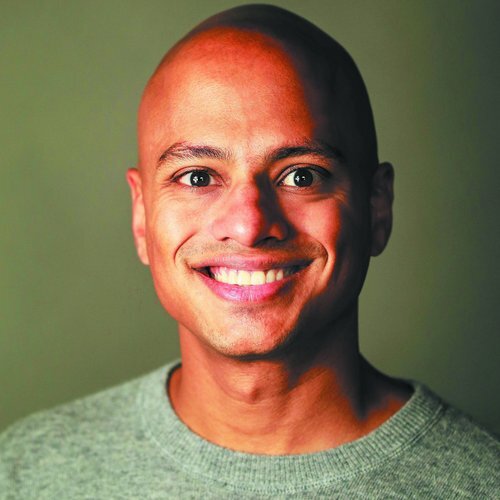
Neil Thanedar
Neil Thanedar is a nonprofit leader and activist who began his career as a scientist, founder, and angel investor, building three startups now worth more than $100 million. He is the founder and chairman of Labdoor, an independent alternative to the FDA, and executive director of the Michigan Campaign Finance Network, a nonpartisan nonprofit fighting dark money in Michigan politics. He has also served as executive director of the Detroit Partnership and as a senior advisor to his father, Shri Thanedar, in his campaigns for governor, state house, and US Congress. In his book, Positive Politics: A Proven Playbook to Get into Politics, Change Your Life, and Change the World, he draws on that experience to show readers how to get involved in politics.
★ Scribe Case Study
Neil Thanedar's Positive Politics Turned His Y Combinator for Politics Into a Real Program
Neil Thanedar went through Y Combinator with LabDoor, then wrote Positive Politics to own the idea of a Y Combinator for politics. Three of the five founders in his first…
📚 Books by Neil Thanedar
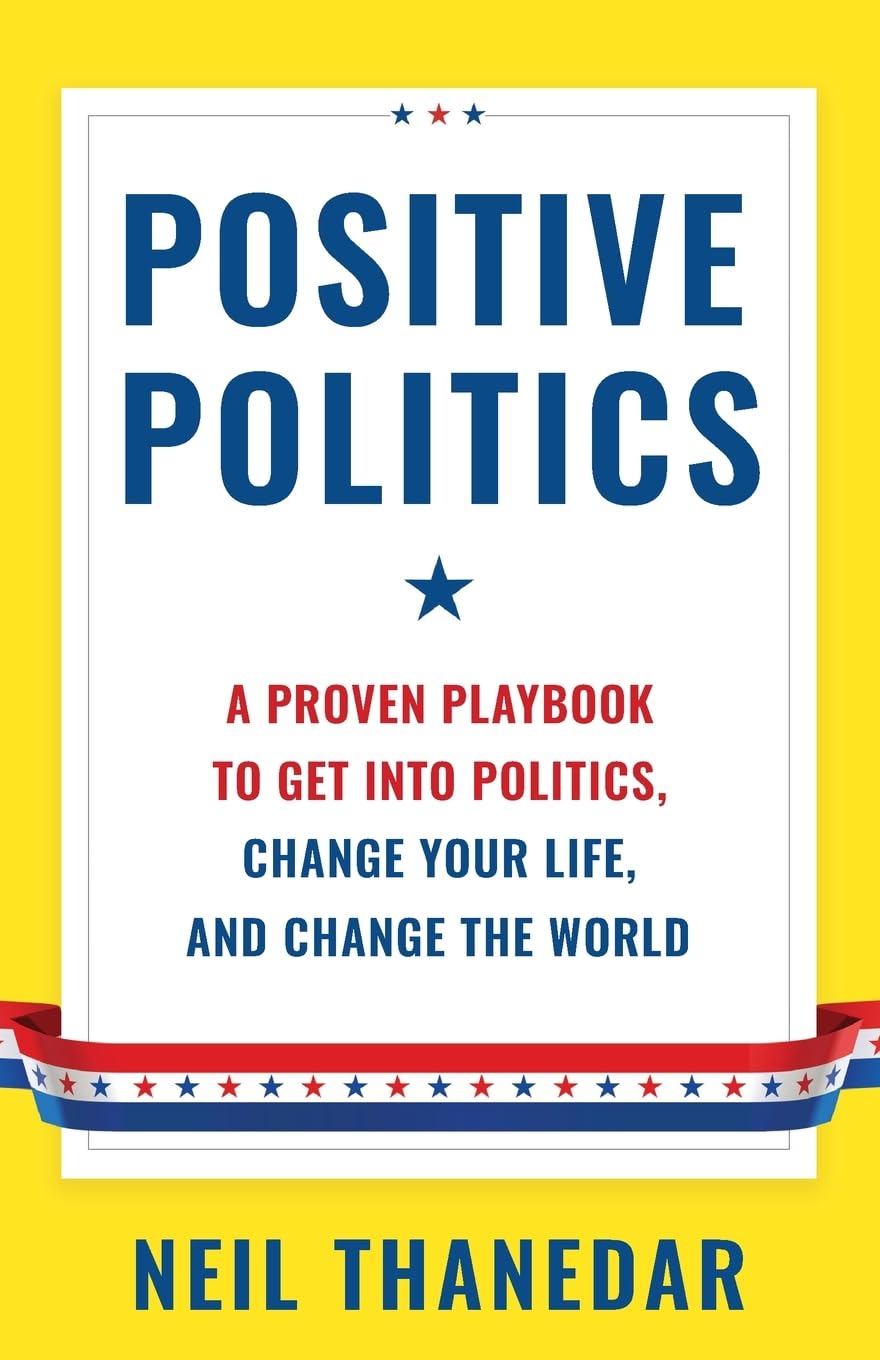
In this episode of Author Hour, Eric Jorgenson sits down with Neil Thanedar, author of Positive Politics, to talk about the 19 year old who got a C on a paper and turned it into the 27th Amendment, writing the book at a thousand words a week, the book coach who told him chapters one, two, three, four should run four, three, one, two, and the first class of his accelerator for people who want to pass a bill without ever running for office.
Transcript
Eric Jorgenson: Neil Thanedar, thank you for joining us. Yeah, thanks for having me. You and I've gotten the chance to hang out a bunch of times and I'm not sure. I mean, I definitely goaded you into writing a book, but I knew you were you were thinking about it. I'm really excited that we got to play a part in this one because I really appreciate like your you and your message and your book and I'm excited to unpack it all today. Awesome. Let's do it. OK, before we get into the book, can you just give me like your your background, your story, your upbringing? Who's the man who became an author?
Neil Thanedar: Yeah, absolutely. So I was born and raised in St. Louis, Missouri. I went to the University of Michigan, want to I went I got a molecular biology and business degree trying to be a biotech entrepreneur. That was my goal in 2010 was relatively early in that sense. And in the process of going through college, my dad lost all of his business in the 2008 recession. So he had started in 1990, had built it up to hundreds of people as an entrepreneur, had been incredibly successful and then had two bad quarters. The bank took the business, liquidate everything, sold our house, sold everything like and we had like a period where we were able to go to the house for a week or like one weekend and grab everything that was our stuff. And then we could like take it out of the house and leave. And that was it. That was. And so we we all went to Michigan, actually. My dad really incredibly asked me, like we want to start a business together. And he said, where should we start it? And I said, my my girlfriend at the time, now my wife, we have three kids. She was still had two years at Michigan. And I was like, I have to still be in Ann Arbor. Can we start the business in Ann Arbor? And incredibly, he said yes. He moved to Ann Arbor, Michigan. I found him a house to rent. Like he he went in sight unseen and we started a business. And that became incredibly successful. I learned from that experience that this kind of testing should be done for the people. And so I created Labdoor, Labdoor.com, which is the still to this day, the worldwide alternative to the FDA, which is anything that the FDA does not test. We test and we tell you what's in the products. And before you buy the products, you can see what's in those vitamins, supplements, all these things. And we went through Y Combinator. We did all these great things with the business. And it taught me this idea that there should be a Y Combinator for politics. There should be this way, this accelerator into politics for anyone who and not just to run for office, but to take action to pass bills without ever becoming an elected official. You can pass bills. And if you can find a way to just take this political action, that is something that just stuck with me when after I went through YC. And so I started doing a lot more politics, doing this work in nonprofit activism, wrote. And I think what really all came together was when I wrote the book is I had this whole idea for what I now call positive politics. And I think being able to convince a huge group of people that this is a good idea. I think there's something about a book that just does that. It puts that stamp on. And I love what we did.
Eric Jorgenson: Yeah, I think David Senra said when explaining the Nvidia story, if you're trying to create a movement, the first step is to write a book. And it's funny that that's kind of the core of like the religions and so many of the great IP franchises and things like that. So what was the or is the positive politics idea? What was the notion that sort of drove you?
Neil Thanedar: I think the biggest one is that you can get into politics through action and activism with and so you can focus on positive some solutions regardless of because I think there's an idea in elections where it was very zero sum. It's like one person wins and everyone else loses. And there is a way in politics where regardless of elections, you can actually pick any specific bill and run with it. And for me, campaign finance is one of the biggest issues that I think we can solve. And there are right now state level solutions for that. And so you can instead of fighting Citizens United through the Supreme Court, which is very difficult to do, and you might have to replace Supreme Court justice to try to make that happen. There's a state by state solution for fighting this, whether corporations can spend money in elections and these types of cases, figuring out where you can solve the problems in politics is incredible. There is there's a way where this idea that we've thought about for 20 years and hasn't been solved. If you just went to one state and solved it one state at a time, you can actually solve these problems. And this is what's amazing about politics.
Eric Jorgenson: Is there precedent for this sort of or a case study that sort of shows this sort of not you don't necessarily have to win an election in order to make an impact?
Neil Thanedar: Yeah, one of my favorite stories about this is Gregory Watson, who was in the 70s, was a 19 year old at the University of Texas, and he wrote a paper about this. So the Bill of Rights was originally 12 bills, not 10, and two of them didn't pass originally. And one of them, which is that congressmen should not be able to unilaterally give themselves a pay increase. So if they do increase their salary, it doesn't take an effect until after the next election. So you have to get reelected before you get your pay increase. So he wrote a paper about this and he got a C on the paper and he got really pissed off about it. And he was like, no, this is actually this would work. And he actually went state by state and he figured out. And so this is the 27th Amendment of the Constitution. The latest amendment in the Constitution is this guy went for 10 years and was like, this is what I'm going to do with my life. And it's it's now a constitutional amendment. And the University of Texas retroactively gave him an A plus on.
Eric Jorgenson: Oh, that's hilarious. He has a piece of paper that mirrors so many of the stories of like Fred Smith, the founder of FedEx, got a got a C on his paper with his business plan that became FedEx. That's just that's so funny. OK, well, when did the when did you actually start sort of solidifying, I'll say, like the this idea that you were going to write a book about it? When did positive politics turn from, you know, this notion into, OK, I'm starting a movement, I'm writing a book, I'm putting this on paper.
Neil Thanedar: Late 2024, I just decided that I needed to write this book, I think there's also yeah, it was very recent. I had this book came out in 2025. So this is a quick gestation period. Yeah, I've written a lot. Right. And so I originally wrote the chunk of a book, The World's Biggest Problems, which I think will still become a book one day. And there was a lot of pieces. There's a lot of blog posts in there. The Y Combinator for Politics is in that as a solution to the world's biggest problems. And one of the feedbacks I got, I was writing it in public, just world's biggestproblems.com. And people would say, like, oh, a lot of your solutions are U.S. politics. Like you're very U.S. politics driven. I'm like, that's a lot of the world's biggest problems can be solved through U.S. politics. And I think the more and more I focused on that, I realized that that was the first thing that I wanted to solve. I like if we could solve U.S. politics first. I mean, that's a huge problem in itself. Right. And so let's focus there first. And especially giving people an opportunity to take action, to just go right into politics and do work. I think the idea of like I might run for office one day is something that very few people have that dream. But even those people put that dream off for years or decades. And there is a way to get into politics right now. Anyone can get into politics, pick any specific bill. And I think the end of the book really talks about there should be that Y combinator for politics. There should be this accelerator that helps people pick a specific bill, take that action and do it. And we've done it. I think that's the most exciting part of the book is that we just had our first class a week ago in D.C. And we had five founders plus me. And every founder has a specific bill idea that they're sprinting on now. It's so cool to see from like a Monday to a Friday, people went from a big idea to a specific bill that 12 plus hour days for one week, you can do incredible work in politics. That's incredible.
Eric Jorgenson: Well, is there tell me more about the program? I mean, is it is it does it have a party line who qualifies? Like what did that class look like?
Neil Thanedar: Yeah, so it's completely nonpartisan. It's focused on bills just like positive politics. And so one of the one of my favorite ones is the there's actually that we're talking about the 11th amendment, the 11th part of the Bill of Rights. There is one more piece, that 12th, that hasn't been done yet. And Sean, one of the members in our fellowship actually is working on that 12th amendment, which is to which is actually Washington's original plan to cap the size of congressional districts. Right. So their districts originally were not supposed to be bigger than 50,000 people per representative. And now it's 780,000 per representative, because for over 100 years, that that amendment never got passed. It got to eight of the 13 states and then never got passed. And then since then, we've just the districts have gotten bigger and bigger and bigger. And Sean's working on just fixing that is like, let's go state by state and let's pass the bill in a Gregory Watson like way. And so that's one of the cases there are anything from, you know, in the SBA right now, there is $10 million for very established businesses. But if you want like a $10,000 micro grant, you can't get it right. The SBA has a really tough time giving smaller amounts of money out to businesses, which is actually a huge part of what that first $10,000 is a much bigger deal for a small business. And so and especially for native owned businesses, that's a big issue. And so one of our funders is working on pushing the SBA to give more funding to native owned businesses. And so there's all these different cases and these there's pharmaceutical manufacturing in the Midwest and there's sexual assault evidence testing that is backlogged that needs to be fixed. And each of these things is a specific bill in Congress. One bill in Congress can fix these things. And also with the congressional representation, you can also solve those things at the state or local level, too. So right now, L.A. is trying to increase their representation. I think there's 15 city council members and they want to go to 25. Right. And the idea is that going from 15 to 25 reps, you'll actually be able to more accurately represent L.A. And Austin just did this. Austin just expanded their city council. Portland just expanded the city council. I think Seattle is working on expanding the city council. So there's a lot of work that can be done at the city level, state level also. And you can do the same work and get the same stuff done.
Eric Jorgenson: Who are the people who show up for that? Is it like Y Combinator where it's like, you know, super high energy, you know, 22 year olds? Or do you have a kind of a I'm just curious.
Neil Thanedar: Yeah. So I wrote just yesterday, actually, a post. It's like what Paul Graham has is great. What I did this summer post, which is like when right after he didn't even call it Y Combinator, it was called like the Summer Founders Program or something like that. And he was just like, this is what we did. This is the eight founders. Like it was great. And I just wrote a post. It was so similar. Like as I was reading his post and writing my post, it was so incredibly similar. One of the big differences, not like a huge difference, but maybe a decade older. So I think instead of like like early 20s and we've got a lot of early 30s and I think what's happening with politics, I think what positive politics could be really great for is this trend, like this politics can be a great second career. I talk about this in my book, right? It's like I think that there's a lot of people trying to get like I started in startups. I think this is very much my path to is you can if you are in your 30s, 40s and you're ready to do something bigger after your career. I think that's something that politics can be an incredible force for. I also think that you can catch it early. You can catch it like I did in my 20s where you're you can be working on your business while you are working in politics and do both at the same time and then eventually transition to politics. So you have four of the six of us who are already startup founders, right? If people there's multiple exits in the grass, like there are so many people who they could be doing other startups, they could be doing other things, but they choose to do this and they choose to pick politics because that especially that specific issue that each of them have, it's it's a massive impact that you can have. Like there's something about creating you can create one pharmaceutical business in the Midwest and that's like that's one kind of impact. Or you could say, hey, there's a whole plan for political funding. The Midwest could have this rapid response act is about if there was any sort of future catastrophe, we would have this pharmaceutical manufacturing that is ready to basically sprint up at any time. It's something that one is incredibly valuable for the Midwest to actually have these resources, but also is incredibly valuable for everyone in the country and the world. Like America does provide pharmaceutical resources for most of the world in these cases, and so we should do that work more. And that's one bill in Congress.
Eric Jorgenson: Yeah, this is a it's a very specific version of something I have a rule that I try to follow, and it's very, very hard to follow. But like when discussing politics, never talk about parties, never talk about people, only talk about policies. And so like try to remove the tribalism, the emotion, your like gut human instinct about a person and just like have a discussion over what the optimal policy is for the broadest number of people and like what's actually fair and for the greatest good over the longest period of time. That's like the cooler heads kind of thing. And there's so many interesting discussions I've had with people and posts I've read where it's like, look, there's an easy button like that just solves this. And for a bunch of kind of crufty human reasons, either path dependent or, you know, people that are sort of entrenched in their their personal power or whatever, there's roadblocks to getting it done, even though it's relatively obviously good. And so having some of the high agency like entrepreneurial energy that. People bring to starting startups or starting companies go into just pushing forward common sense, good policies for the good of the republic, totally independent of someone's seat or role or party or whatever, I think is a kind of interesting and inspiring vision for for politics at a time when they, you know, we're looking for alternatives to the current. Yeah, absolutely. Yeah. I think you described positive politics. Great. Right there. Awesome. OK, well, tell me tell me the secret of getting a book out in 12 months, because you must have been absolutely cruising to go from, you know, basically late 24, starting writing to late 25, published, launched a book.
Neil Thanedar: Yeah, I've been writing a lot before that. And so, I mean, the book's forty two thousand words. I had a hundred thousand plus words on my website already. OK, OK. So did you repurpose a lot of it? Maybe five to ten thousand words. A lot of it. Most of it was brand new. But there were there were big chunks of ideas that I already had. Right. And so I knew the general flow of what I wanted to do. And I had the big idea. And then I think the the writing process, one of my favorite things was I just got into a flow. I said a thousand words a week, a week, a week.
Eric Jorgenson: Yeah. Yeah. It doesn't feel like that much.
Neil Thanedar: No. Yeah. Very achievable goal. And you could do like sometimes I had a thousand word day and then something and I could take a week off or whatever. And it's like I can do other things. I was working on politics. I was doing other stuff at the same time. And I it was that was the low difficulty. Just like keep on the pace. I had originally targeted twenty thousand words. I wanted a shorter book. And then it got a lot bigger over time. I just had more ideas and different things. And but it ended up being the just staying on that pace was a big part of it. I just had a good sense of and I did not write in order at all. It just bounced all around. It was just whatever. If I had it, if I had the motivation to write, it was like the the I think it was a Steinbeck quote. I was like the like, I only write what I'm inspired. I'm inspired at 9 a.m. every day or something like that. Like, did you have a rigid schedule? I like 9 to 11 a.m. as a writing zone. And I like 11 p.m. to 1 a.m. as a writing zone because I've got three kids. And so once they go to sleep, it's also easier. And so those are my two writing slots. Did you do both every day? Not both every day. I did 9 to 11 frequently. And then the 11 to 1 is just like when I'm extra inspired. OK, OK.
Eric Jorgenson: And how long was the did you work from an outline that you were kind of like filling out as you were jumping around? How did the how did you go from, you know, blank page to to manuscript?
Neil Thanedar: So I think scribe helped a lot here. Right. And so Greta was my book coach, and I think she helped a ton with the structure of it. As I was writing, I think the the challenges that like 10,000 plus words, 20,000 plus words, there were these like moments where I felt like the book was getting a little unwieldy and I was struggling with it. And there were moments where at one point she just it was like chapters one, two, three, four are going to go four, three, one, two. Yeah. And and she was right. And there's like she's like rearranged it and it was much better. And those types of things were just were incredible.
Eric Jorgenson: Yeah. Some of those big unlocks is sort of I and I still feel this myself on my fourth and fifth book, like the the hesitance to make big moves and like chop it up. And then you realize you're like, what am I waiting around for? Like, I can just copy this whole thing. I can come back to this anytime I'm going to make a duplicate sandbox. I'm just going to mess around and just like hack and slash and renovate and knock down walls and see what happens. And nine times out of 10, you stick with the new version and it's better and you keep going. But you have to like free yourself up to really like make some moves that make you nervous.
Neil Thanedar: Yeah, absolutely. And so that helped. I think having a book coach was huge in that part of it. And I also think that I loved it through the the writing process. It's just like it was fun to to get deep in all these ideas. I highly recommend it for anyone who wants who has a big idea that they want to share.
Eric Jorgenson: How did the book coach break down for you in terms of value? Like how much was, you know, useful accountability? How much was the actual like the creative work? How much was, you know, having a partner in this like a set of fresh eyes?
Neil Thanedar: I guess all of the above. I think the biggest one was the keep pushing forward. I think if I had maybe done this book by myself, I might have just not finished. I think I just like might have gotten stuck with the ideas or and I think that included the all the parts of the editing, the the idea that every detail would be covered, I think was incredibly important to me because otherwise I could otherwise get very stressed about all of that. There's just so many moving parts in a book. And the idea of it's a difference between a startup and a book, right? Is that like you can ship and fix with a startup and with a book. It's just like that's supposed to be the that's the thing. And I even thought about that with my audio book. Like when I was recording the audio book, I was almost scared of like, I'm going to find a mistake. And like, I think it was just like one weird sentence that I was like, it's a little bit choppy. And we were like, I read it as it was written, because that's what we needed. And I was like, I maybe would have edited that if if I had a second chance, but it's like that was the one sentence that I was bothered by. And it's like when you get through an entire book, it's not bad, it doesn't not bad for 5000 sentences or something more.
Eric Jorgenson: Yeah, yeah, we'll take that. What was the the dream for the book as you were as you were deciding to write it? What did you hope that this book would help you accomplish in the world?
Neil Thanedar: I think it's what I'm doing now. It's the accelerator. It's the it's getting people into politics. In this year, my stretch goal was to help 10 people get into politics, right? If I can get 10 new people into politics, that'd be a great year, in addition to everything else I'm doing. And one class one week, we did five people, right? And so it's like, let's just do one more. So we already scheduled there's a class in November. It's simple stuff like I was a it was an it's a we got a seven bedroom Airbnb. It's a row house in DC, like everyone lived there for a week. It was a great experience. We had great guests. The conversations were incredible. The putting people that's a very wise thing. It's just like if you put excellent people into a room together and just let's all sprint and everyone's pushing each other because they all have big ideas. Everyone's ideas got so much better from Monday to Friday. It's it was it one of the best experiences my life was that first class. And I just want to do it over and over again. So cool.
Eric Jorgenson: I feel I feel the like the energy and addiction. It's so much fun. Yeah. How did the book drive that outcome? Like, did the did everybody who was in this class read the book? Did they discover you through the book? Did it play a role in the curriculum, for lack of a better term? How did this happen?
Neil Thanedar: Yeah, I think so. Multiple people found me through my writing. So I think three of the five people in the class were people who had read my stuff first. And so that's really cool. There was also like there were people in Europe and Asia and Africa who applied and I couldn't travel to D.C. in the time. And so there's like there's all these opportunities. There's so many other people who could do this. And we'll have to figure that out. Like I was very U.S. politics focused. And now maybe it's an international thing. We'll have to figure those things out. But each what I think in the book that really helped the the strategy is I've been telling people to start with activism and to focus on what you were saying with the instead of the people or the politics, if you focus on the policies. One is a lot of these things are nonpartisan, right? It's like, you know, rape kit testing backlogs being like, if you want to fix that, that's not a that's a nonpartisan issue. It's just right now only police, like public police labs can do that testing. And I know like private labs do great testing, too. And they're all in the house. Yeah. And they just don't it's it's illegal for a private lab to do rape kit testing right now. Right. And so it's like that's one bill in Congress. So, of course, it's behind. Yeah. Yeah. So there's one bill in Congress that solves that problem. These types of things is every founder that goes to the program is one of these ideas. And and if you do that 10 times this year, can we do it 50 times next year? Can we do hundreds? Can we do thousands like that's incredible. That's the biggest thing that we could do in politics is potentially get thousands of people into politics through this kind of action without running for office, without any of the other stresses of it. Just pick a bill and run with it. What do you call these people? I call them founders. OK, right. And so I think it's like founding fathers like these are founders of an idea. They're sprinting on it very much like founders. Right. And I think that the. That was part of the experiment of the first class is what is the most. Can we bring all the startup ideas into politics? And I almost wrote the book as startup politics, which I think would be a more of an issue as I wanted positive politics to be broader than startups and broader than tech. Right. I wanted to be outside of Silicon Valley. But I think those strategies work incredibly well. And we should we should let that kind of that sprint mentality of the pick a bill, pick an issue and run with it. We should do that more in politics. And that startup mentality, those founders, I think, are incredible. And the more we can get those people into politics, we'll all be better.
Eric Jorgenson: Yeah. I mean, you can kind of think of it more as a side quest or a tour of duty or a mission that you can go on without feeling like you're committing your whole life or let alone committing your family. I mean, you know better than anybody, you've got, you know, political figures in your family, like how much of a tax that can be. Yeah. And how challenging that is.
Neil Thanedar: Yeah, I think it's it's tough. And I think I've in my time, I want to I think my instinct is to try to convert everyone originally. And I think one of the things I learned over time is that positive politics is especially the book does this, too, is you just focus on the early adopters. It's a very tech startup thing, too, is just if you can just get a few of these people, a few of these founders to do politics instead or in addition, that's it. That's the that's the dream. And you don't need to convince the angry people on the Internet to change. You can just like pick a few people who really want to solve a problem and just focus there. Yeah, that's a much more relaxing way to go through life. Also, I'm doing my best. I mean, I've got I still save stuff here. Like I've got like a death threat letter and like different things, like things are have happened right to us. And I don't want to say that that doesn't happen. It does happen. But there is a way there's a better way to do politics. And it's by focusing on these issues, passing these bills that could absolutely change the world one at a time.
Eric Jorgenson: Yeah. So what's been one of your biggest celebration moments since publishing the book?
Neil Thanedar: My first one was definitely like the physical books. Like I got to show the physical books to my kids and like I still have my book up here and like I just I love great unboxing video with like your whole family kind of pouncing on this box of books was really cool.
Eric Jorgenson: Thank you.
Neil Thanedar: Yeah, I love it. And like and just that's the thing. It's like the kids seeing the book and just like the idea of that you can do you can do things right. Like it's the same thing with startups. Like I like to show my kids like here's the lab. Here's the thing. You can see these are real things that happen. So that was my big one. And then now I think last week with the accelerator, that's the true future of the idea is like the whole reason why I wrote the book was as much as you can pick up the book and read it yourself and try to do these actions yourself. I'd love to help and I want to pick up and like help as many people as possible. And I think there's there is a playbook that's in the book, but it's also in the accelerator of how to pick this issue and run with it. And it's working. And it's like each of these people, it was these like demo day videos. We did it. We had like a videographer show up on Friday and film each person's pitch. And the difference between the like vague ideas on Monday and how sharp the ideas were on Friday, it really validated the idea that this is a great way to get into politics. And if we can and they loved it. I loved it. It was so much fun. It's like, you know, like we had like dinners that go from seven to nine and then people are talking until 11 or later, you know, it's like people just like hanging around the kitchen and just like so many ideas. It's just it was so much fun.
Eric Jorgenson: What's the feedback loop going to be on this? Like in, you know, in a YC class, you know, the the cohort feels amazing. And then it's, you know, two years before you find out if anybody fundraises again and before you feel like you figure out if the company is is going to, you know, be a big returner. How can you how can you sort of assess the impact as you go? What is the turnaround time going to be on some of these?
Neil Thanedar: Some of these could be weeks to months. That might be more fun in that way, right? Like I think there's some of these bills could pass in the next. I think the that constitutional amendment is going to take probably a decade, just like so some of these things are going to take time. But even then, like November 2026, there's a win in L.A., right? So there are wins along the way, too. And but some of these bills, I think they're like they're like this rape kit testing bill has been sitting in Congress for years. And it just it's had weak sponsors and it's not written well. So it needs to be rewritten. But like those details is like you can you can rewrite a bill in days. You can get you co-sponsors in days. Like all these things are not that complicated. They just they get stuck because the person running them, like the random congressman who's running it, decides not to care that much or is like they're not they're not running the ball down the field.
Eric Jorgenson: Needs a new founder like the founder energy is which is. Yeah. Back to that term again, which is a great one. OK, how did you decide, you know, when you're sitting there in 2020, late 2024, thinking that you want to go write a book? How did you decide on on Scribe and on the you know, the guided author process that comes with a book coach? Like why was that the right path for you?
Neil Thanedar: I think that I was between that or doing it myself. I just think I really I meeting you, I think really did help. I think I got a lot of trust out of that. I also just I think putting all the pieces together, it's it's like I explain this to other people who I recommend to write a book is it's like building your own house versus like hiring someone to build your house. Right. Like there's there are people who are just specialists at this and there are many pieces. And if I had to, I mean, I love my cover and I like all the details of the book to like I love the audio book. I was able to record my audio book locally, which was really nice. Right. Like all these things like all it was just it was easy. And I think that was a core part of what I wanted to do because I wanted to do it fast. I want to publish fast. And I think Scribe helped all those pieces.
Eric Jorgenson: Awesome. How do you use the book in in the pursuit of building positive politics into this, you know, this bigger incubator, this bigger project among the rest of your career and your projects like what are the what are the tactical ways that you kind of deploy it?
Neil Thanedar: So I definitely share it with people like anyone in the class obviously gets a copy. I think the audio book helps a lot. I think it's interesting how much people were like it would tell me when I would say like, I wrote a book and they're like, when's the audio book coming out? I'll read it when the comes out. I'm like, OK, fine. Give me another three months and I'll figure that out. And so that I think was nice. I think people appreciate that that I read it myself. I think that was nice, too. So I think those parts I shared a lot. But I also think it's almost like it just it's the the idea that it's there is actually valuable, too. It's just one of the things I actually had a VC that I knew that I wanted to talk to about this. And he was a little bit difficult about the idea. And he was kind of pushing on when I wrote the book, I would like told him about the book. And I hear this kind of feedback a lot, whereas like if I just said the accelerator, people would be like, well, what is positive politics? Like explain it to me. I was like, oh, there's a book. And I think when I explained this VC, there's a book. He's like, we don't need another pundit. We need like someone who actually does the work. And I was like, well, guess what? I'm doing that, too. And so but I think the challenge of having both together, I think is is super valuable. And so the accelerator by itself or the book by itself might not be as valuable. But the two together really work well.
Eric Jorgenson: Yeah, it's a very good I mean, the trust building it takes to bring in mentors to bring in people to, you know, fly from all over the world or all over the country to D.C. And, you know, risk their time, their effort, their attention with with you. It takes a certain amount of credibility building in the book can help do that. And then, of course, they reinforce each other. Right. So these founders who are out accomplishing things can recommend the book or talk about the book or share it with people who then sort of understand better about the process and come down the rabbit hole. So the whole cycle kind of feeds itself, which is fantastic. And, you know, I tell authors all the time, like the there's a lot of concentric circles around readers of your book. There's people who read it. There's people who've like own it, bought it. There's people who know it exists and you wrote it. And then there's people who just kind of like vaguely heard about it. And it, you know, it incepted them with an idea that didn't used to exist because there's a book about it and there's a title and there's a name for it. And there's like it just makes it tangible, intractable for people, especially, you know, when you're trying to start this new kind of amorphous thing that requires a lot of explanation and you're putting a label on it. That's just such a such an important part of the playbook. OK, thank you so much. A couple of kind of quick closing questions here. What's one piece of advice you have for authors who are maybe sitting where you were in the early fall of twenty twenty four, like teetering on? Maybe I need a book. Maybe this is a thing I've got a lot of writing, but I don't quite know if I need to make the leap into like writing a book itself.
Neil Thanedar: I think if you have you're launching something new, I think that's a huge place to start. I think the books are a way to own an idea. I love like owning positive politics as an idea and blog posts can do that to some extent. Right. But there's nothing like a book. And what I'd love to see is you have more people, right? People say that all the time to me. Oh, how did you do that? How do you write a book? It was like a thousand words a week. It's not, you know, it's like 40 weeks and a thousand words a week and you have a book and you can trust yourself. And I think there's once I got there, like I was just targeting that like twenty thousand words. And I was like, I had I had a lot to write about. I had a lot of ideas. And I think the the book process itself actually pushed me to get all of it out. And I'd love to do it again. I think I definitely think World's Biggest Problems will be another book. It's a great book title. Yeah. Yeah. I'd love that. I write at some point I'll write a memoir of my own life, too. That's actually a feedback I got from one of my my negative reviews. I got a two star review and I reached out and asked. I was like, hey, what's the deal? And she was like, I actually like gave it to him. I didn't. It's like politics is not really my thing, but I gave my son and he loved it. And like if you ever write a memoir, I would read that. I was like, oh, that's like really interesting feedback. That's cool. And so I do think that it's like the there's a there's a great I think Benjamin Franklin quote is like either like like do something worth writing or do something worth reading. Right. And I think there's something very special about this, like either either right or do or both. And that's what I'm trying to do.
Eric Jorgenson: Yeah, this is this is fantastic. I love that. I love that quote. Where should people go? Find you, follow along, learn more about you, your book, your projects.
Neil Thanedar: Yep. So it's positive politics.org is the organization. And so the accelerator you can apply there and then positive politics book.com is where the book is. Awesome. And world's biggest problems. Yeah, world's biggest problems.com. Some of these there's a little bit of crossover. There's a lot of US politics in the world's biggest problems. But yeah, I think that'll be the next book. And you're on X all the time. I am less now. But yeah, I've been doing that. So I'm at Neil Thanedar on X. I'm on and I've been really just mostly at NeilThanedar.com just writing my own post.
Eric Jorgenson: Yeah, it's great writing. Great thoughts. I've been reading and following a long time, and I'm very glad that you took the leap to write a book and wrote it with us and that we were able to to help you out with this. And I hope I'll be eagerly following the results of the of the incubator and looking forward to the world's biggest problems. Thank you for taking the time. Appreciate you.
Want to Write Your Own Book?
Scribe has helped over 2,000 authors turn their expertise into published books.
Schedule a Free Consult