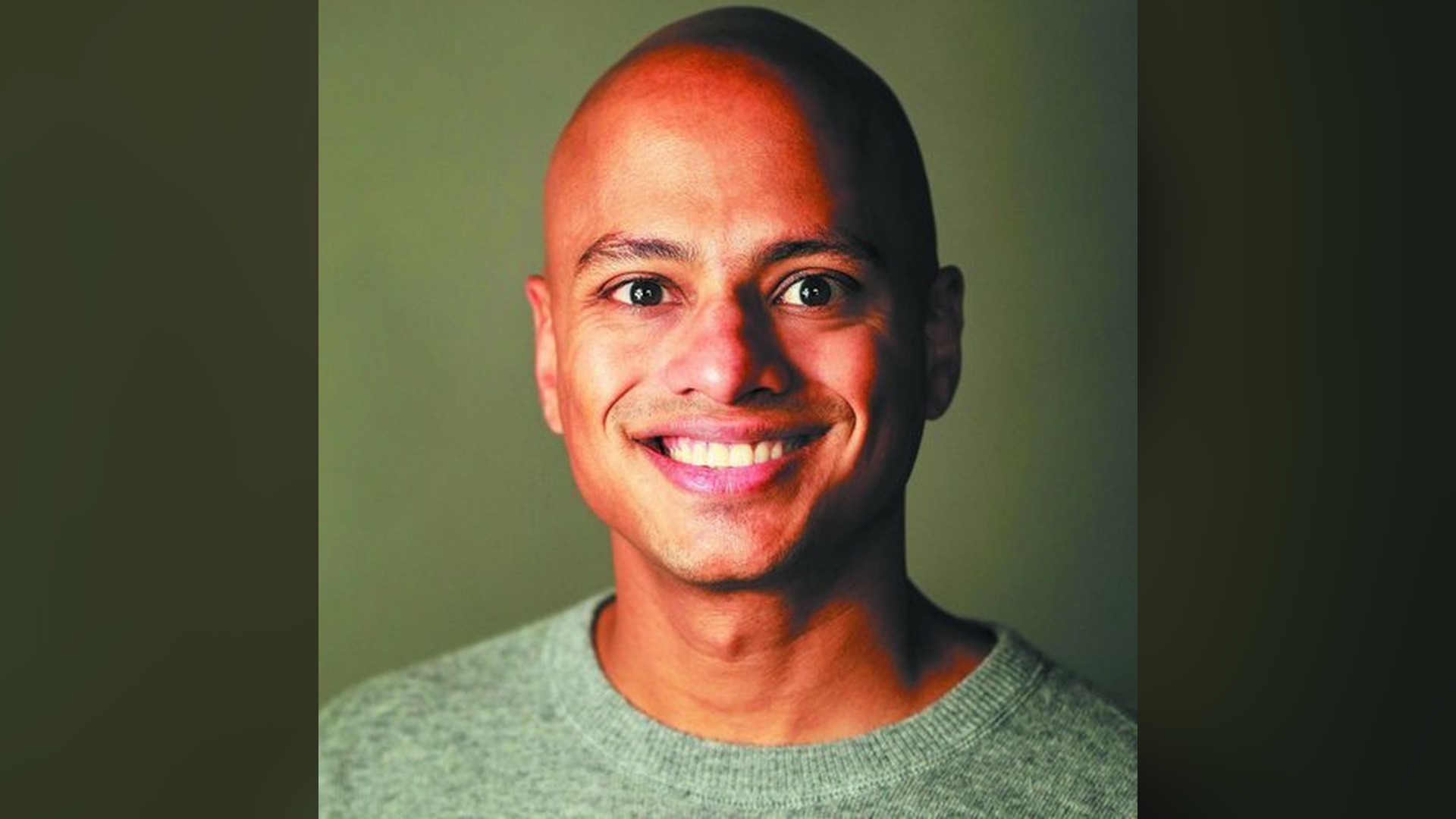
Neil Thanedar's Positive Politics Turned His Y Combinator for Politics Into a Real Program
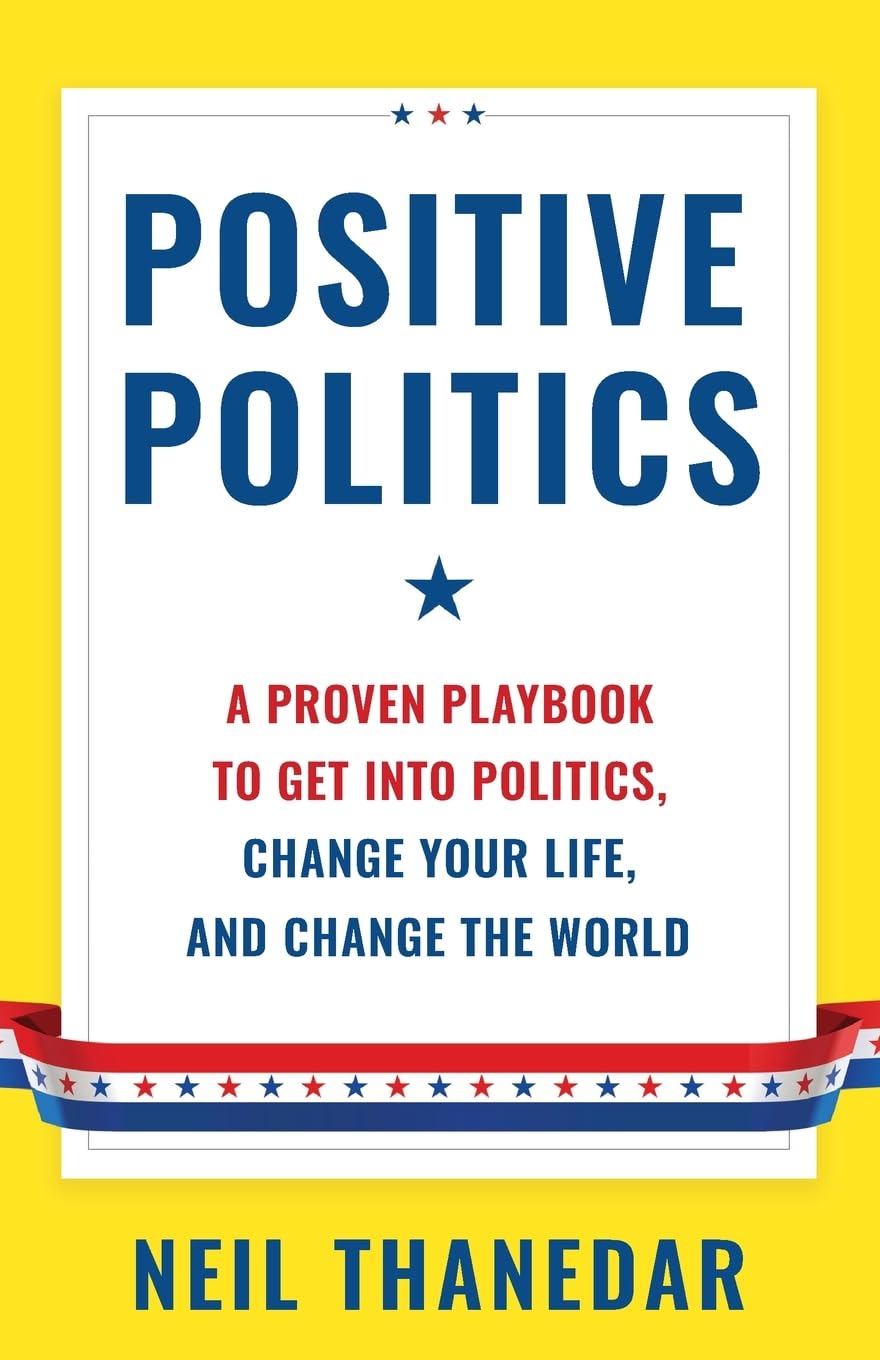
“I think the books are a way to own an idea. I love like owning positive politics as an idea and blog posts can do that to some extent [...] But there’s nothing like a book.”
Neil Thanedar · Founder, Positive Politics
Neil Thanedar founded LabDoor, the consumer lab that tests what the FDA does not, and took it through Y Combinator. He came out with an idea he could not put down: that there should be a Y Combinator for politics, an accelerator for people who want to pass a bill without ever running for office. He wrote the book to own that idea, and by the time he sat down for Author Hour the accelerator had run its first class in Washington, D.C., with three of its five founders having found him through his writing.
The idea he carried out of Y Combinator
Thanedar was studying molecular biology and business at the University of Michigan, aiming at biotech, when the 2008 recession took his father’s business. A company his father had built since 1990 to hundreds of people went under after two bad quarters. The bank took the business, liquidated it, and sold the family home. They got one weekend in the house to carry out what was theirs.
His father asked him where they should start the next company. Thanedar asked whether it could be in Ann Arbor, because his girlfriend, now his wife, still had two years at Michigan. His father moved to Ann Arbor sight unseen and they built the business together. Out of it came LabDoor, and out of LabDoor came Y Combinator, and out of Y Combinator came the thought that would not leave.
“And it taught me this idea that there should be a Y Combinator for politics.”
— Neil Thanedar, Founder, Positive Politics
The premise underneath it is that elections are not the only door. Pick one specific bill and run with it, at the federal, state, or city level, and you can change something without ever putting your name on a ballot. His favorite proof is Gregory Watson, a 19 year old at the University of Texas who wrote a paper arguing that a discarded piece of the original Bill of Rights could still be ratified, got a C on it, spent a decade going state by state, and turned it into the 27th Amendment. The University of Texas retroactively changed his grade to an A plus.
Why the idea needed a book
Clip · Neil Thanedar on what a book does that a blog post cannot · 23s
Thanedar had already been writing in public at worldsbiggestproblems.com, more than a hundred thousand words of it, and the Y Combinator for politics lived in there as one solution among many. Readers kept telling him his solutions were heavily U.S. politics driven. He decided that was the thing to solve first, and that it needed its own container.
“And I think what really all came together was when I wrote the book is I had this whole idea for what I now call positive politics. And I think being able to convince a huge group of people that this is a good idea. I think there’s something about a book that just does that. It puts that stamp on.”
— Neil Thanedar, Founder, Positive Politics
A thousand words a week, in two slots a day
Clip · Neil Thanedar on his two writing slots · 37s
He decided on the book in late 2024 and published in 2025. The pace was the whole system.
“I mean, the book’s forty two thousand words. I had a hundred thousand plus words on my website already.”
— Neil Thanedar, Founder, Positive Politics
Only five to ten thousand of those words made it in. Most of the book was new. He had originally targeted twenty thousand words and it grew as he went, and he never wrote in order, bouncing to whatever he had the motivation for that day. The schedule was built around a house with three kids in it.
“I like 9 to 11 a.m. as a writing zone. And I like 11 p.m. to 1 a.m. as a writing zone because I’ve got three kids. And so once they go to sleep, it’s also easier. And so those are my two writing slots.”
— Neil Thanedar, Founder, Positive Politics
The book coach who told him chapters one, two, three, four should run four, three, one, two
Clip · Neil Thanedar on the chapter reorder that fixed the book · 23s
Around ten and twenty thousand words in, the manuscript started to get away from him. His book coach at Scribe made the move he had not been willing to make himself.
“There were these like moments where I felt like the book was getting a little unwieldy and I was struggling with it. And there were moments where at one point [my book coach] just it was like chapters one, two, three, four are going to go four, three, one, two. [...] And she was right. And she’s like rearranged it and it was much better.”
— Neil Thanedar, Founder, Positive Politics
Asked to break down what the book coach was actually worth to him, accountability or craft or fresh eyes, he said all of the above, then named the one that mattered most.
“I think the biggest one was the keep pushing forward. I think if I had maybe done this book by myself, I might have just not finished.”
— Neil Thanedar, Founder, Positive Politics
Building your own house versus hiring someone to build your house
Clip · Neil Thanedar on building your own house versus hiring a specialist · 41s
He was choosing between Scribe and doing it himself. This is the analogy he now gives other people when he recommends they write a book.
“I explain this to other people who I recommend to write a book is it’s like building your own house versus like hiring someone to build your house. [...] Like there are people who are just specialists at this and there are many pieces.”
— Neil Thanedar, Founder, Positive Politics
Speed was the point. He wanted the book out fast, and he wanted to keep the pieces he cared about, including recording the audiobook in his own voice, near home.
“I love my cover and I like all the details of the book to like I love the audio book. I was able to record my audio book locally, which was really nice. [...] it was just it was easy. And I think that was a core part of what I wanted to do because I wanted to do it fast. I want to publish fast. And I think Scribe helped all those pieces.”
— Neil Thanedar, Founder, Positive Politics
The audiobook turned out to matter more than he expected. When he told people he had written a book, the response was often a question about when they could listen to it, and he thinks readers appreciated that he narrated it himself.
The first class: five founders, five bills, one week
Clip · Neil Thanedar on how the class found him · 22s
A week before the interview, the accelerator ran its first class in Washington, D.C. Six people including Thanedar lived in a seven bedroom row house for the week. Four of the six were already startup founders. Every one of them walked in with an idea and walked out with a specific bill: capping the size of congressional districts, pushing the SBA toward micro grants for native owned businesses, Midwest pharmaceutical manufacturing, clearing the sexual assault evidence testing backlog. A videographer filmed each pitch on Friday.
“It’s so cool to see from like a Monday to a Friday, people went from a big idea to a specific bill that 12 plus hour days for one week, you can do incredible work in politics.”
— Neil Thanedar, Founder, Positive Politics
His stretch goal for the year was to get ten new people into politics. One week got him halfway. The next class was already scheduled for November. And when Eric Jorgenson asked how the book drove that outcome, the answer was the recruiting pipeline.
“Multiple people found me through my writing. So I think three of the five people in the class were people who had read my stuff first.”
— Neil Thanedar, Founder, Positive Politics
The VC who said the world did not need another pundit
Clip · Neil Thanedar on the pundit objection · 32s
The book does something in conversations that the program alone does not do. Thanedar hears the same gap over and over.
“I hear this kind of feedback a lot, whereas like if I just said the accelerator, people would be like, well, what is positive politics? Like explain it to me. I was like, oh, there’s a book.”
— Neil Thanedar, Founder, Positive Politics
One VC he wanted to talk to pushed back anyway, and got an answer that only worked because both halves existed.
“He’s like, we don’t need another pundit. We need like someone who actually does the work. And I was like, well, guess what? I’m doing that, too.”
— Neil Thanedar, Founder, Positive Politics
“the accelerator by itself or the book by itself might not be as valuable. But the two together really work well.”
— Neil Thanedar, Founder, Positive Politics
The two also feed each other in the other direction. Founders coming out of the program recommend the book, which explains the method to the next group of people who apply. Even the reviews he did not love pointed somewhere useful: he got a two star review, reached out to ask why, and learned the reader had passed the book to her son, who loved it, and that she would read a memoir if he ever wrote one.
What he tells people sitting on a pile of writing
Clip · Neil Thanedar on why books own an idea · 34s
He is direct about the arithmetic when people ask him how it is done.
“People say that all the time to me. Oh, how did you do that? How do you write a book? It was like a thousand words a week. It’s not, you know, it’s like 40 weeks and a thousand words a week and you have a book and you can trust yourself.”
— Neil Thanedar, Founder, Positive Politics
He plans to do it again. World’s Biggest Problems is the next one, and a memoir is somewhere after that. On the process itself, his recommendation is not hedged.
“I highly recommend it for anyone who [...] has a big idea that they want to share.”
— Neil Thanedar, Founder, Positive Politics
Ready to Write Your Success Story?
Join 1,600+ authors who have published with Scribe Media and transformed their careers.
Schedule a Consult
Course
Write and Publish Your Best Possible Book
Six modules. 28 lessons. Everything Scribe has learned helping 2,000+ authors, organized into the same process we use with our professional clients.
A Wall Street Journal Bestseller
The Scribe Method
No catch, just everything you need to write, publish, and own your book.