The Generosity Conversation: Steve Lear on Helping the Wealthy Find Purpose
✨ Episode Summary
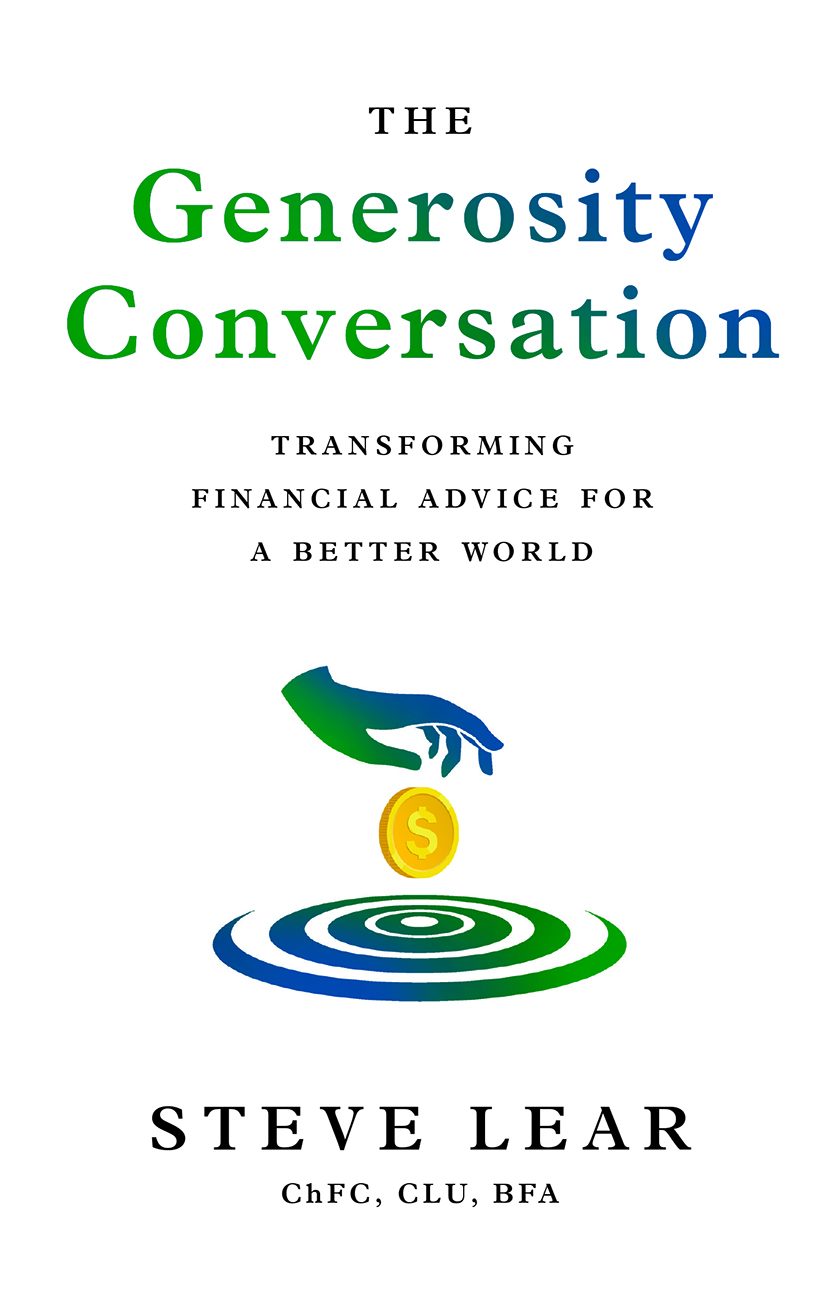
Steve Lear has spent 45 years as a financial advisor, and he believes his profession helped create today’s wealth gap. His book, The Generosity Conversation: Transforming Financial Advice for a Better World, out November 10, 2026, gives wealth managers the questions to ask once a client has more than enough, so the conversation can turn to purpose and generosity.
In this episode of Author Hour, Steve tells host Lex Statzer about the question from his mentor Doug Lennick, who wrote the book’s foreword, that turned his first year around, what 40 disaster-response deployments taught him about what people value, the three currencies of generosity, and how one family in the book doubled its annual giving once it knew how much it could give and still be okay.
“I was in the business of making people feel wealthy. And I still am in that, but there's more to wealth than wealth itself.”
⭐ Top Moments
- A family that doubled its giving. On the Karasoff family, named in the book: “They ended up doubling their annual giving because they figured it out that, okay, our kids only need this much at the end of our lives.”
- The question that changed his career. After his mentor asked if he was pushing too hard: “I starved for the first four months. Barely made any money. And then what happened is when Doug said that to me and I started loosening up and having more fun, I ended up making $60,000 in 1981.”
- What a great advisor looks like. “They have the brains of a capitalist in the heart of a social worker.”

Steve Lear
Steve Lear is a financial advisor, educator, and generosity entrepreneur who has spent forty years helping people think differently about attitude, time, and money. As a founder of Affiance Financial, he has led a firm serving hundreds of clients. He is president of the Minnesota affiliate of the JumpStart Coalition for Financial Literacy. He was a founder of NECHAMA, Jewish Response to Disaster, which provides comfort and hope to communities by engaging volunteers in disaster recovery work. Steve is leading a movement, equipping advisors to guide clients beyond accumulation toward lives of intentional, impactful generosity with clarity and purpose.
★ Scribe Case Study
Steve Lear Wrote The Generosity Conversation to Help Wealthy Clients Find a Purpose for Their Money
After 45 years as a financial advisor, Steve Lear wrote The Generosity Conversation with Scribe Media to give wealth managers the questions to ask once a client has enoug…
📚 Books by Steve Lear
Transcript
Lex Statzer: Hello, welcome to Author Hour. Today I am here with author Steve Lear, who wrote The Generosity Conversation, Transforming Financial Advice for a Better World, which is coming out November 10th. Steve, welcome to Author Hour.
Steve Lear: Thanks. Thanks for having me.
Lex Statzer: So let's begin with the missing piece that The Generosity Conversation is kind of built around. So you witnessed this missing, this gap almost, firsthand after almost four decades or more than four decades as a financial advisor. What was that gap and how did it move you to write this book?
Steve Lear: Well, over the last 45 years, what I've witnessed is an amazing amount of wealth gap that has come into existence in our society. There's, you know, a number of individuals who have substantial net worth, then there's another number of individuals who have some net worth, and then there's a bunch of people who don't have much of a net worth. And our role, my role as a financial advisor, what ended up occurring is that we actually helped create that wealth gap. I mean, we didn't do it on purpose. We came into existence to help people get from not having a net worth to having a net worth to becoming financially independent. And then all of a sudden, this huge wealth gap came up, and it's created a tremendous amount of challenge for society. So that was one of the missing pieces was the wealth gap came into existence, which did not exist when I started in the business. Now with the wealth gap present, what's occurring is that, you know, I feel that we are faced with a tremendous amount of frustration. I mean, you got to be one of my kids' ages.
Lex Statzer: 27?
Steve Lear: You're 27. All right. Or you're younger. All my kids are 30 to 45.
Lex Statzer: Okay.
Steve Lear: I feel for you guys. That's one of the big reasons why I wrote the book is because I believe that my generation now needs to embrace kind of a new financial concept, and that is behaving generously. Just behaving generously. So that was one of the huge missing pieces is the wealth gap coming into existence. And now I'm trying to figure out, well, how do we stop it? How do we make that gap smaller?
Lex Statzer: When you talk about generosity, you mean something bigger than just writing a check. What do you mean when you're talking about generosity?
Steve Lear: Well, I've come to a place to understand that there's at least three different kinds of generosity. One is attitude, one is time, and one is money. The concept of attitude, you know, if you walk around, I believe, if you walk around with a frame of mind of generosity, you end up with a lot of gratitude. You recognize that you didn't do anything by yourself. There was always a group of people, and you simply embrace the concept of embracing others. Well, there's the attitude. So people will be kinder to each other. The time issue is we're so stretched regarding time these days, and there's an amazing amount of distractions that exist in our society for our time, for the attention of our time. Well, does anybody ever really talk about, I'm going to do an act of generosity? Yes, there are. There's a whole bunch of people who do. But I don't know why it can't be more. Why can't we just be more generous? Instead of spending all sorts of time going to sporting events and doing this other stuff, that we just be, we take time and help somebody who needs help. And the last measurable piece is the money. Lex, what's the greatest thing that you can ever do for somebody else?
Lex Statzer: Oh, my gosh. I don't know. Help them be a positive influence in their world.
Steve Lear: I've come to a different place to believe that the greatest thing you can do for somebody else is give them the opportunity to make their own income. Give them the power to basically be independent and to act generously themselves. And that's what a lot of generosity is. It's providing work, providing jobs. Lex, did you ever think of going to work for a nonprofit?
Lex Statzer: I did, yeah. My undergrad was in international relations, so there's a lot of nonprofit work with that, yeah.
Steve Lear: Okay. So there's this whole population that thinks through their head that maybe I should go to work for a nonprofit and basically trying to help others.
Lex Statzer: Mm-hmm.
Steve Lear: Well, you can't do that very well if you can't make a living.
Lex Statzer: Mm-hmm.
Steve Lear: So this is the monetary aspect of being generous is, yes, you're providing somebody food, you're providing somebody art, you're providing all of those types of things. But in addition, you are doing the most effective way of being generous, which is to give somebody the ability to make their own living.
Lex Statzer: Mm-hmm.
Steve Lear: So that was the answer to the question.
Lex Statzer: Yeah, I love it. So the three currencies, interesting.
Steve Lear: It's attitude, time, and money. And they all kind of piggyback on each other.
Lex Statzer: Mm-hmm, yeah, absolutely. I want to talk a little bit about Doug Lennick. He asked you one question that changed your whole career. So let's start with what that question is because he ended up writing this book's foreword. So what was the question that Doug asked you?
Steve Lear: I'm going to quote it.
Lex Statzer: Okay.
Steve Lear: Don't mess it up. Steve, do you think maybe you're pushing too hard? I have a certain level of intensity that for a lot of people, it drives them nuts. But I kind of can't help it. I live with an intensity-type background. And I just decided, you know what, I'm going to move my intensity back. I'm going to try and be more cheerful, try and be more fun, try and ask the right questions and listen to the answers and not put the pushing to such a high level. And what occurred is that, I mean, I'll get real specific. I was 24 years old, brand new into business. I starved for the first four months. Barely made any money. And then what happened is when Doug said that to me and I started loosening up and having more fun, I ended up making $60,000 in 1981.
Lex Statzer: Wow. Exactly. That speaks to that attitude piece for sure.
Steve Lear: There was no question. I just learned a lot from a lot of people. But Doug kind of put it right in my face. When he turned to me, he said, maybe you're pushing too hard. So that's what the Doug Lennox contribution, that's what his generosity was to me. Wow.
Lex Statzer: Yeah.
Steve Lear: Is that he, in essence, had enough guts to turn to me because he didn't know me that well and come up with a question. Are you trying too hard? Are you pushing? Is that really what you want to do? That's what happened.
Lex Statzer: Wow. And then he ended up writing the foreword of your book. So full circle, completely.
Steve Lear: Completely. Yeah. I was supposed to walk with him on Sunday and he had to go somewhere. So I see him at least once a month. And we talk about this and we're confidants to each other and help each other. I would consider him to be wiser than me. His organization is Think to Perform. So it's one of the things I'd like to do is make sure people recognize like nobody ever does this alone. I did not do what I did alone. And Doug was the initial person who got me started in doing personal financial planning and thinking about being generous. Yeah.
Lex Statzer: I can imagine that being a message that needs to be heard both in your industry and just around other industries. Are you pushing too hard? Are you pushing yourself too hard? Are you pushing others too hard? Are you pushing the work too hard? Absolutely.
Steve Lear: I don't need to add anything that you just said. I mean, that's just a reality. Can I make another comment about Doug? Absolutely. He's been consistent and he hasn't been perfect. Okay. But his message has been consistent for 45 years. To me, at least. And I think to the population. And, you know, like everybody, he's made mistakes. He's apologized. He's always tried to get better. And he just demonstrated to me a very generous attitude about anything and everything. It simply, I was going to say taught me, but it wasn't. It just gave me a great example of what I wanted to be on a long-term basis.
Lex Statzer: Yeah. And now you have a book that's really shaped by his influence. That's incredible.
Steve Lear: Yeah. Well, he's got seven books.
Lex Statzer: I got to catch up. Now you have to catch up.
Steve Lear: He's writing another one.
Lex Statzer: Oh, my God. He's not giving you space to breathe. Okay. So I want to ask about accumulation versus meaning. So at some point you got less interested. What flipped that switch for you?
Steve Lear: There was a number of things that switched. One, I became quite successful early. That was cool. And then I had client experiences that I had people say no to me and not want to do business with me, simply because I was spending so much time and energy thinking about the rate of return and the tax planning and all of those things. And that started planting a seed in my thought process about money. Okay. About the whole thing of money. So some of the client reactions, my clients have taught me a ton, like every good person should learn from their clients that they deal with. They did. They stuck out to remind me that it wasn't just about the money. It was about an attitude. It was about relationships. It was about those things. The next incident that really shifted was I was the founder of an organization called Nakama Jewish Response to Disaster. Our nickname was Jews with Chainsaws.
Lex Statzer: Okay. Okay.
Steve Lear: So you have to imagine there's a tornado or something of that sort, and we would go out afterwards and take our chainsaws and cut down trees and clear people's yards. Well, you go on to a disaster site and you witness and you experience the people who experienced the disaster. What do you think they talked about most? Do you think it was about their stuff?
Lex Statzer: No, absolutely not.
Steve Lear: It was about the pictures. It was about the family, you know, the family issues. It was about the relationships that they had built. So, and this is one of the things I urge every financial advisor to do, wealth manager. Go on a disaster response run. A hurricane happens or a tornado or anything of that sort and somebody's property gets destroyed. What happened to me is I came to a conclusion very quickly that the accumulation of stuff really did not have that much meaning in comparison to the accumulation of relationships. And that's where I think the tongue shifted for me. I was in the business of making people feel wealthy. And I still am in that, but there's more to wealth than wealth itself. There's relationships. There's the purpose behind the wealth that were very important. So, that's what happened to me is I just realized how less important physical stuff was in comparison to experiences and relationships and purpose and things of that sort.
Lex Statzer: Yeah. I mean, that speaks to something else you say, which is generosity grows when people actually experience it, not just when they fund it. And it sounds like what you did with disaster relief really allowed you to experience firsthand what generosity is in action, right?
Steve Lear: Yeah. I went on 40 deployments over a course of 20 years. And this, again, is one of my biggest suggestions to the wealth management business is go on a disaster response run to see what happens after a disaster. Yeah. I mean, that incident, that whole experience that I had truly made a difference to turn away from accumulation to meaning and generosity. And it felt so good. Yeah. You're tired, you're dirty. I should show you the first pictures I have on the first deployment we went. I mean, we ended up taking a shower in a parking lot of a bank. Wow. After we got cleaned up. So, I got these pictures where we're down to our skivvies. But it did. It just felt so good helping somebody who really needed the help.
Lex Statzer: Yeah. And perspective really is everything. And it sounds like that put all of life into perspective for you.
Steve Lear: For me, Lex, it was.
Lex Statzer: Yeah.
Steve Lear: You ever been on a disaster response?
Lex Statzer: I have not. You're inspiring me, though.
Steve Lear: Try it.
Lex Statzer: Yeah.
Steve Lear: It's really, I mean, there's nothing like it.
Lex Statzer: Yeah. A lot of people have more than enough wealth. I'm sure you're familiar with a good amount. And they still can't bring themselves to give it away. How do you help someone get past that? What are the conversations you're having with them about generosity and their wealth?
Steve Lear: The role of a financial advisor in the conversations is to ask the questions and open up the door for the client to be able to analyze themselves, what they're doing, and come to their own. The best way is to get them to come to their own conclusions of what they want to do. One of the questions is, what do you really want to see? What is the purpose of the wealth that you've accumulated? That's a simple question.
Lex Statzer: Yeah.
Steve Lear: And that's a great starter. All right? So somebody says, oh, I want my kids to be safe. Well, what does safe mean? Paint me a picture. Paint me a picture of what safe looks like for your kids. One of the advancements that has occurred in the financial planning industry, in the wealth management business, is something called Monte Carlo Simulations, where we're now able to turn to you and say, Lex, you want to be 50 years old and you want to have this kind of standard of living. This is the kind of money that you might need. And this is the probability that your money is going to last as long as you do. Okay. It is the beauty of our industry. It's, like, so astonishing. So in being able to do that and being able to – it's not about how much money you make. It's about how much you make in comparison to the context of what you want to do with your time and what you want to do with your attitude. So that particular ingredient kind of turned me into being able – and I have been called this, and this is not good, an evangelist regarding being generous. But I can tell somebody when they got enough.
Lex Statzer: Yeah.
Steve Lear: All they got to do is paint me a picture of what they want to do with their time. And I can tell you when you got enough. And the conversation turns to, if you got enough, what are you going to do? And this is where nobody taught us how to ask the questions when somebody had enough. Because 20 years ago, virtually nobody had enough. Now, all of a sudden, I'd say in the last 10 to 15 years, people are getting enough.
Lex Statzer: Yeah. And they're not sure what to do with it.
Steve Lear: No. It's astonishing. And you turn and say, well, what do you really want to do? I don't know. I want to give it to my kids. They said, do your kids want it? Do you think they need it? Mm-hmm. So that's why conversation, that's why the book is called Conversation. Because for wealth managers to be able to know how to have a great conversation with somebody is meaningful. It's great for the occupation. You know how I describe a really good financial advisor? They have the brains of a capitalist in the heart of a social worker. Not of a commercialist. Not of a commercialist. They have the brains of a capitalist in the heart of a social worker.
Lex Statzer: I really liked how you used the word purpose in your example of a question. Like bringing purpose into that conversation of what is the greater picture here? What is that context? You have the money. What is the purpose?
Steve Lear: This is the big question. And let me explain how I got to that observation.
Lex Statzer: Mm-hmm.
Steve Lear: I'm in a dark place. And I was really struggling with trying to figure out what purpose was and what was going to take me out of this dark place. And it was suggested to me to read the book. It's Viktor Frankl's book.
Lex Statzer: Man's Search for Meaning.
Steve Lear: Thank you very much, Lai. Yep. Man's Search for Meaning. And Man's Search for Meaning, the first part of it, and what Viktor Frankl had a purpose in, he loved his wife. So he survived the concentration camps, even though she unfortunately died in it. But because he kept thinking about being back with her.
Lex Statzer: Mm-hmm.
Steve Lear: And then he also said work. Work was another purpose. Because he went into the concentration camp with a manuscript. That manuscript got destroyed. And when he came out of the concentration camps, he just sat around and wrote about why did some people survive and why did some people not. And it always circulated around those who survived ended up having purpose.
Lex Statzer: Mm-hmm.
Steve Lear: They could imagine a purpose. So the reading of Viktor Frankl's, read it once a year during some holidays, and it constantly reminds me to search for purpose.
Lex Statzer: Mm-hmm.
Steve Lear: And with purpose, you know, I can handle virtually any problem that is thrown at me. And that was Nietzsche's concept. Mm-hmm. That you can survive any problem if you have purpose. And that's where I think a lot of our society needs to refocus. Mm-hmm. And I'm promoting generosity be people's purpose.
Lex Statzer: Yeah.
Steve Lear: Get yourself financially secure. Shift to a generous mindset, generous use of your time, a generous use of your money.
Lex Statzer: Mm-hmm.
Steve Lear: And blacks, I think we wealth managers and financial advisors are the people to do it.
Lex Statzer: Yeah. Yeah. And for the wealthy, you not only can have a purpose, but you have opportunity. Right? And once you find that purpose, you have what you need from a financial perspective to actually take action and do something with that purpose.
Steve Lear: Yes. And you said some magic words in that what I'm hoping this book does is it drives the wealth management business, the philanthropic advising business, to focus on action. Mm-hmm. There's a concept out there of how you help somebody take action, and that is change the question. And the question goes from, oh, I think you should do this, I think you should do this, so forth and so forth, to what additional information do you need to be able to make the decision?
Lex Statzer: Mm-hmm.
Steve Lear: So if, as a wealth manager, you're trying to promote somebody to take action, which, Lex, you talked about, that's kind of the ideal situation, people sometimes don't take action because they just don't know all the right questions to ask.
Lex Statzer: Okay, yeah.
Steve Lear: And that's where, what additional information do you need to be able to make a decision regarding this issue? And that has helped me tremendously. It's helped me as a wealth manager, talked to my clients, it's helped my clients dramatically, and I think it's the right way to help people take action.
Lex Statzer: Yeah. If you had a client come to you and you're having that conversation and they say, I have the wealth, I have a purpose, I have the desire to be more generous, but I don't know where to start, where would you steer them?
Steve Lear: Okay, well, where you start on this quest, and this whole generosity conversation, it's a new chapter. This is a whole, like, a lot of people haven't lived this chapter. Mm-hmm. So you were a kind of person before, now you're turning into a different person with a new, where do you start?
Lex Statzer: Mm-hmm.
Steve Lear: You take an inventory of what in your gut inspires and motivates you, what kind of action motivates you. Oh, I love the arts, I love to go to theater. Okay, there's one. I love to help people who are poor and who can't feed themselves. Right? Mm-hmm. I love mentoring. I love to help a younger person get on their feet and be able to be successful. For me, I love to start stuff. I love to create movements, to create things that will stick over a long period of time. Okay, that's one of the things I love to do. So that's the first step. The second step is talk to a lot of people. And you said it nicely. You said, hey, I got the money, I got the time, I got the will, I don't know what to do. Well, you just say that to somebody else and they'll turn to you and say, well, why don't you do this? Why don't you do this? I mean, that's just an invitation for somebody to solicit you for your attention.
Lex Statzer: Mm-hmm. Oh, there's people out there that'll tell you exactly what you could do, yeah.
Steve Lear: Yes, I mean, tons of people.
Lex Statzer: Yeah.
Steve Lear: So it's a trial and error. What happens, you know, for me, it took me years to kind of center in that what I really wanted to do was financial literacy, career readiness, and generosity. So those are the three things that I totally focused on. And so what will happen is if you keep asking questions and you stay curious, you will get your answer.
Lex Statzer: Mm-hmm.
Steve Lear: That's what will happen.
Lex Statzer: Yeah, really brings in that conversation piece, yeah.
Steve Lear: Right. You want to know, because there's one element of the book that I thought was interesting that I experienced. Mm-hmm. How much do you give? You know, what's the right dollar amount to give?
Lex Statzer: Yeah.
Steve Lear: Here's the conclusions I've come to answer that question. First of all, I've got to figure out how much do you need to have a satisfactory standard of living?
Lex Statzer: Mm-hmm.
Steve Lear: Okay? And it's all individualized.
Lex Statzer: Yeah. Like your baseline, it sounds like.
Steve Lear: You do like jewelry, I'm sorry, but you don't have a ton of jewelry on you. So it sounds to me like jewelry isn't as important to you.
Lex Statzer: Not really, no.
Steve Lear: But what's important to you is travel?
Lex Statzer: I was about to say, travel would probably be one of my top ones, yeah.
Steve Lear: Okay. But you know what travel translates to?
Lex Statzer: Experiences?
Steve Lear: Bingo. Mm-hmm. Okay. So I'm talking to somebody who doesn't seem to be obsessed with stuff and is far more interested in experiences.
Lex Statzer: Mm-hmm.
Steve Lear: You have to figure out how much that's going to cost. And in today's world, you can go to an artificial intelligence machine and say, hey, I want to do this and this and this, and they'll give you an idea of how much it will cost. You need to then start on a plan that accumulates that kind of net worth so that you don't have to work if you don't want to.
Lex Statzer: Mm-hmm.
Steve Lear: I'm almost 70 years old. Lex, do you think I want to quit working?
Lex Statzer: Doesn't sound like it. You sound pretty passionate about it.
Steve Lear: Yeah. I mean, my mom took early retirement at 78.
Lex Statzer: Mm-hmm. Oh, wow.
Steve Lear: Right.
Lex Statzer: Wow. Yeah.
Steve Lear: Well, the safest way to be financially secure is never stop working. In other words, turn work not into work, but turn work into a passion.
Lex Statzer: Mm-hmm. Yeah.
Steve Lear: So let's say you come to a conclusion that you need $100,000 a year to have a good time, and you've already dreamed about what your life is going to look like and so forth. But you turn around and you work very hard at accumulating that money. And through the Monte Carlo simulation, we, financial advisors, can inform you of what you need to put away to get to where you want to go. And I'm advocating for people, put that away first and then spend the rest.
Lex Statzer: Okay.
Steve Lear: That's my wealth creation, my accumulation, my going to work.
Lex Statzer: Okay.
Steve Lear: Now you've hit that number. You go back to the Monte Carlo simulation. You go back to the financial planning process and say, I'm going to live to 100. And Lex, you need to be concerned about living to 100. Really sorry about it, but oh my God. When I started in the business, we were lucky to get people to think about living to 70.
Lex Statzer: Yeah. Yeah. I got long jeans too. My grandma's 96, so I'm probably going to make it there. Yeah.
Steve Lear: So that means you either need to save more money or you need to work longer or you need to lower your standard of living or a combination of all of them. We are building, at stevelair.org, we are building something called the Generosity Capacity Report. And what it does is it takes all of the information and the answers to all these questions I just asked you, and it puts it into a simulation that says, well, how much can you give away and yet still reach all your goals?
Lex Statzer: Wow. That's amazing. Yeah.
Steve Lear: It will, it will be amazing. We're just, we're fine tuning it now to try and figure out how to make sure that it's accurate and precise. With that information, I can turn, and this happened to the Karasoff family who was named in the book. They ended up doubling their annual giving because they figured it out that, okay, our kids only need this much at the end of our lives. This is what we want to do. We're going to live to a hundred. What's our capacity to be generous? And that's what the generosity conversation will attempt to do for the wealth manager is turn to them and give them the powers by which to inform somebody, what can you give and still be okay? That's a fascinating conversation.
Lex Statzer: Yeah. Wow. Amazing. Like you've said, you've done this for 45 years. So I want to know why did this have to become a book and why is now the time for it to be a book?
Steve Lear: I started this whole process with the thought that I'm just going to wait until I'm dead. This book will be written and then people will distribute it at that time. It was too self-serving. It was too much about me and too much about my stories and stuff like that. I just didn't feel really comfortable with it. Recently, there's just been so much crap that has been going on in society that for you to have a great life, because I got to tell you, Lex, I had a great life. I had a great life. My parents did not have the life I had. And if we don't take care of some of the crap that has occurred, you're not going to have a great life. And I got seven kids and I got ten and a half grandkids. You like that? Ten and a half.
Lex Statzer: Yeah, I love that. I'm not sure what it means, but I love it.
Steve Lear: One's in the oven.
Lex Statzer: All right. All right. Cooking a little bit. We're almost there.
Steve Lear: But it is, you know, I would really like you to have a great life. I'd like you to have a great life and then be able to turn it around. And if you choose to have children, if you choose to have offspring, that they can have a great life as well. So, you know, I'm rambling.
Lex Statzer: I would argue. I mean, you said that you were nervous about releasing the book while you were alive because it was so self-serving. And then you gave the most selfless explanation for the book I could imagine. I mean, it sounds like every motivation you had to get this book out there is to serve others. And it's incredible that we have it now.
Steve Lear: Well, thank you. Thank you so much. I think part of it is that I've grown older. I don't take on clients unless I have a younger person with me willing to do that. That's not what I'm trying to do. I'm trying to get a bunch of other wealth advisors, financial advisors, philanthropic advisors to have these relationships with people. I think the whole thing will be leveraged and we'll end up with a better one. So that's why I decided to do it, to publish it, rather than wait. I had a great scribe, Mario Milosevic. So this, again, I just got set up with all these great people at Scribe that continued to motivate me. I look back, it took me a year to write it. But he was so enthralled with the concept that I just felt incredibly proud of being able to produce it. You know, if it moves the needle and a bunch of people become more generous, it's a win-win for me. It's a win-win for society.
Lex Statzer: What a legacy.
Steve Lear: That's why it needs to be written now.
Lex Statzer: Yeah. No, it could not be more timely, I would say.
Steve Lear: That's what people are telling me. I didn't realize that there was such a need to hear these stories.
Lex Statzer: Yeah. No, I just want to know, Steve, where can people find The Generosity Conversation and how can they keep up with you?
Steve Lear: The Generosity Conversation is at bookstores. It's on Amazon. I got a lot of people who are not thrilled about the fact that it's on Amazon, but that's where it is. It's on my website. You know, I don't think it's very expensive. I just read it yesterday again. Good. It was like, wow, I can't believe I said all those things.
Lex Statzer: You're like, wow, somebody who wrote this is really smart.
Steve Lear: It's hysterical. Did I really say that? Oh, my God. That's one. SteveLear.org is going to be my website. I'm hoping to be able to attract more people because although I've started a lot of things, I never really wanted anything to be named after me. I wanted it to be kind of a group because I never did anything by myself. It was always with a group of people. But SteveLear.org is my adventure into continuing the momentum to build the Generosity Conversation. I'm planning on stories. I've already talked to another 27-year-old, okay? And he told me a story. This was like a month ago. He told me a story about how he wanted to open up a business and he needed money to open up the business. And he kept asking this one guy if he would give him the money and be an investor. And the guy who was in his 80s finally turned to him and said, yeah, I'll put money into it as long as you promise me this. The first three years, 25% of the revenue will be given away. We'll go to generosity. So, you can't take the profits for yourself. You have to take the profits and you have to help others. I go, whoa. And the guy goes, whoa. He ended up signing the deal. He got the guy to give him the money. Here's the amazing thing about that. The guy who gave him the money to start the business, when he went to give him the check, he said, you know that agreement we made? Tear it up. Do what you think is right. Right. So, this older gentleman, and I never met this guy. And I met the kid like a month ago for half an hour. But this older gentleman acted in such a generous way. He basically gave him a loan, made him, you know, and helped him get started. And then once he knew that the person was serious, he said, you know, do what you think is right. Do what you think is right. So, I'm hoping more and more of that type of behavior creeps into our economy so that young people can get up and started and old people can feel really good about their mentorship to the younger generation.
Lex Statzer: Yeah. Yeah. And it's just the beginning of the generosity conversation. And you like to start things. And I think you started something really amazing with this. So, thank you so much for the generosity conversation. And thank you so much for being on Author Hour, Steve. It was great to have you.
Steve Lear: It was great. Thank you.
Want to Write Your Own Book?
Scribe has helped over 2,000 authors turn their expertise into published books.
Schedule a Free Consult