The Illusion of Care: Why Patients Leave the Doctor's Office Confused with Dr. Joey Rotella
✨ Episode Summary
Dr. Joey Rotella has practiced family medicine for more than 20 years, and he kept watching the same thing happen: patients show up with nothing, leave with nothing, and can’t remember what the doctor said. His book, The Illusion of Care, makes the case that patients do not need more information. They need a simple care plan that tells them what to do next, and it hands doctors a fix they can start using tomorrow.
In this episode of Author Hour, Joey talks about the care plan he emailed his daughter that started it all, why the Latin root of the word doctor means to teach, how rushed visits feed physician burnout, why he kept the book short on purpose, and how a mostly written manuscript became a finished book with help from Scribe Media.
“So even though you’re not good at something, doesn’t mean you can’t do it.”
⭐ Top Moments
- A short book a doctor can use the next day. Joey read plenty of healthcare books that call for new policies. He wanted one that changes a visit tomorrow. “I wanted to do something where a physician could read this book and that’s why I intentionally made the book short, easy reading, non-technical just so they can do something tomorrow.”
- Not a good writer, and he did it anyway. Joey had a manuscript mostly written and knew it was not yet a book. “Well, I know that I’m not a good writer. I needed help.” Late nights, skipped gym sessions, and rounds of rewrites with his Scribe editor turned it into one.
- The care plan that went home to dinner. A patient stopped Joey to tell him his wife loved the care plan and the couple talked about it at dinner. “So the care went home with them. They talked about it at dinner, which basically means they’re willing to make some, change some habits, to change some things so they can get better.”

Joey Rotella
Dr. Joseph A. Rotella is a board-certified family medicine physician and doctor of chiropractic with more than two decades of clinical experience. He founded and built a multidisciplinary medical practice from the ground up that grew to serve more than twenty-five thousand patients. Throughout his career, Dr. Rotella recognized that excellent medical care depends not only on making the right diagnosis, but also on helping patients understand what to do after they leave the office. This realization led him to develop the PENCIL framework and found Pencil Health, an initiative dedicated to transforming patient education into standardized written care plans that patients can understand, follow, and remember.
★ Scribe Case Study
Dr. Joey Rotella Wrote The Illusion of Care So Patients Stop Leaving the Doctor's Office With Nothing
Family physician Dr. Joey Rotella wrote The Illusion of Care so patients leave every visit with a simple plan. He knew he wasn't a strong writer, so he asked for help.
📚 Books by Joey Rotella
Transcript
Lex Statzer: Welcome to Author Hour. Today I am here with Dr. Joey Rotella, the author of The Illusion of Care, Why Patients Leave Confused and the Clinical Operating System That Fixes It, which is out now. Joey, welcome to Author Hour.
Joey Rotella: Thank you very much. I appreciate you having me, Lex.
Lex Statzer: So let's actually get into the origin of the book to start. So it surrounds your own daughter walking out of a doctor's office, sure she understood everything they told her, and then calling you a few minutes later with no idea what to do. What did that moment make you realize?
Joey Rotella: Well, let's backtrack a little bit because the fact is that being a physician for the last 20 years, there's a common theme. The common theme is physicians getting busier and busier and busier, and schedules are getting fuller and fuller and fuller. And the electronic medical record system came in 2005, six, seven, when I was in residency. That's a long time ago. And that kind of complicated things a little bit. But one thing over the course of these, you know, spanning these 20 years is patients, they show up with nothing, they leave with nothing, and they can't remember anything. So and you know, and my daughter was one example. Because she always used to call me up and say, Dad, what did the doctor mean when the doctor said this? Or I can't remember what the doctor said. I'm so glad my dad's a doctor because he can explain things to me. So she called me that one time, and I used one of my pencils to help explain things. I didn't talk to her on the phone. I just said, Kayla, look at this pencil, I'm going to email to you and you tell me what you think. So that's one of the I started my my ideas that I was I was building. And she read the email. And she said, That's exactly what the doctor said, but I couldn't remember it. And a couple days later, the condition was completely resolved. So we knew that I knew at that particular time that this handout that I've created would make a difference. And it doesn't replace the doctor's advice. It's evidence based care plan instead of an evidence based patient education. What we found out is that patients don't necessarily need more information. You don't throw somebody a physics book and say now you know how to now now you know how to you know, you know, learn physics or do physics, you know, you what we do is we don't give more people education. You give them care plans because they want to know what to do next. So I think that's a really important key characteristic.
Lex Statzer: So you spent 20 years over 20 years as a family doctor before publishing this book. What's the thing you kept seeing over and over again that most people never really think about? You mentioned not going home with anything. What exactly were you seeing?
Joey Rotella: Well, the simple thing was, is that when you first get out of residency, as a physician, you're excited. You really want to help people. You want to learn you want to utilize your skill set. And during your residency program, you're you were handed out a lot of educational materials and most doctors kept a file cabinet drawer full of these educational materials. And when a patient came in, we were excited to teach. So we, you know, so that's where early on in my book, the Latin word for doctor is docere, which means to teach, therefore, the patient is the student. So there's an obligation there that that was lost because of the, I would say, the busyness of clinics and the business of medicine, you know. But what was lost is, is the doctor as a teacher and the patient as a student in that file cabinet drawer remain closed over time. But I remember when I first started it, that file cabinet, I remember giving really excited to give out a couple of handouts and explain conditions to the patients. I was really excited to, you know, some some doctors use a whiteboard or we get sticky notes or a piece of paper out and we're really excited to teach. But over time, with this electronic medical record system, it seems like we do more documentation, more authorizations than we do teaching. And I feel like that's been lost.
Lex Statzer: Hmm. I'm sure a lot of us, I know I have, nodded along at the doctor and said, got it, and then sat in the car just like your daughter with no clue what we were actually supposed to do. What's at stake here? When people leave confused, what actually happens down the road?
Joey Rotella: Well, you, you, it's a good question. But what we found out is the compliance rate of taking medications. Is low and the noncompliance is high. We also find out some people utilize their medications wrongly. We have a lot of callbacks with questions, which leads to frustrated staff. Then we have a lot of portal message to physicians and then physicians call their patients noncompliant, which I also stated in the book. But the fact is, is that if the doctor didn't teach the patient correctly and the patient didn't understand it, you can't be noncompliant and assume that the patient understand when they really didn't. So that's an important distinction to make. And I would say like a lot of bounce backs to the emergency department, a lot of anxiety about what is going on in their body. They were noticing that a lot of the care plans were decreasing the anxiety and patient had more confidence in their care. So just a few points to make is that if somebody is confident, less anxiety about their care and doctors have fewer portal messages, more messages and phone calls. To me, that's a winner. And also people get better. Now, there's some studies show depends with what kind of patient education there is. But for specific diagnosis, the outcomes haven't been studied broadly because there's a lot of conditions. So when I'm building these pencils, we're already at 3000 pencils for every trying to get to every drug condition and procedure. So there's a lot of them. So it's hard to say about outcomes just yet. But that's that's a future study and excited to be a part of.
Lex Statzer: OK, so was there a moment where you saw up close what this lack of communication or lack of written instruction was doing, not just to patients, but to doctors, too? I know you mentioned, you know, the staff getting more calls and getting getting into more conversations that should be unnecessary. But was there a moment where you saw doctors specifically having a negative impact with this kind of care?
Joey Rotella: Well, let me let me let me answer something, not that specific question, but I'll go into something else really quick is one of the reasons I say it's an illusion of care is because and a hot topic about five to 10 years ago was burnout. And that burnout was a lot of it was placed on insurance companies. No, you know, undoubtedly. However, when a physician. Is taught in residency and learns more, continue education and excited to teach their patients something, and you only have 15 minutes or so with each patient, you know, when you left that room, they didn't fully grasp what you told them because you didn't have enough time, you didn't have the appropriate handouts and you have to move on to the next patient and then you have to move on to the next patient and there's two more patients up and you're seeing this high volume practice that in itself. Leads to a burnout because the fact is that a physician goes home every night knowing that most of their patients didn't grasp what they said. You can't teach somebody with a high risk condition in a high risk medication, everything they need to know in 5 to 10, 5 to 10 to 15 minutes. And they leave with nothing. And then you go on and you repeat that over and over again. You know, you feel it doesn't make a physician feel good. Knowing that none of the patients grasp exactly what you said. And so I think that is a form of burnout. So when I've been handing out my pencils, it seems to get a little bit of a gratitude where you have patients are saying thank you, I understand this and that feeling of them grasping your information and knowing what to do next does make a physician feel good and it decreases, I'm going to say some of the burnout, right? Because burnout is a broad definition and there's different reasons, but I think it does help for sure.
Lex Statzer: Yeah, so in situations where physicians aren't handing out those pencils, which we'll get more into in a second, and these patients are looking at their doctors and they're nodding along and they're saying that they understand, but then immediately walking out of that office not understanding, why do you think the patients in the moment are saying that they get something that they're not quite actually grasping?
Joey Rotella: Well, it's because medicine has built a routine and it's habitual. I mean, I didn't make it up. I'm just a part of it, right? Your front office collects copays. You get seated. The medical assistant rooms you with the vital signs and you get shoved into a relatively cold room with sterile paper or stuffed in a corner and says, wait there till the doctor shows up and you sit there for a very long period of time and you might be playing on your phone or reading something and then all of a sudden you hear a knock on the door and you get startled a little bit and all of a sudden, has this happened to you, Lex?
Lex Statzer: Absolutely, yeah.
Joey Rotella: Exactly. It happens to most of us. And then all of a sudden you get startled a little bit and you can tell the doctor's in a rush. No doctor comes in here and sits back and says, hey, Lex, what's going on? Some doctors do, but most doctors don't. And then all of a sudden you're like, okay, doctor. And in the back of your mind, you're like, he's in a rush. I'm just going to tell him what needs to be told. He asked me a couple of questions and he says, okay, this is what you need to do. And you're like, okay, do you understand? And you're like, yeah, I understand. I think, I don't know, maybe. We'll see. And then, all right, we'll see you next time. And then you both walk out and then the front office says, hey, before you leave, do you want to reschedule? And that's basically the routine that we've developed here. And correct me if I'm wrong, but this normally happens. Yeah. So that necessarily doesn't have to completely change, but I think that you can change a couple of habits and rearrange the workflow a little bit in order for most of the focus to be on patient understanding and comprehension, confidence and clarity before they leave.
Lex Statzer: I mean, and that goes back to the whole conversation of doctor actually coming from the word teacher to teach. It's an instruction more than it is just throwing information at somebody and hoping that it sticks, right?
Joey Rotella: Yeah, you have to realize, well, I don't mean to be you personally. I'm saying people need to realize, and I also teach this to my third year, fourth year medical students in residence when I taught. I had a 10-year of teaching and I still teach today, actually. I was a student yesterday. But nobody in my practice wants to be there. Nobody in a doctor's office wants to be there. Usually, they're anxious. They have symptoms. Most people think that they go to the doctor's office for common colds and this and that. But some people wake up with paralysis. Some people wake up with blindness. Some people have strokes. Some people have all kinds of issues. They don't want to be there. They want a diagnosis. They want to know what's going on and what's going to happen next and what to do when they leave that office and what to do at home. So nobody at the doctor's office wants to be there. So we have to treat people with a little bit of empathy, as well as what I call goal-oriented medicine, if it's not something acute but more chronic issues, like get to know the person so you can relate to them on a personal level in order for them to have the best health outcomes. For example, here in Scottsdale, where I live, there's a lot of golfers. So if somebody comes with an issue, I'm like, okay, we need to take care of this issue. This is how we're going to do it so we can get you back on the golf course, swinging away and back with your buddies. That'd be great, doc. What do I need to do? Now we put the plan together so you can actually get some information from patients and turn it into a goal-orientated response. Some people call that motivational counseling or motivational goal-setting, but it's the relatability of each particular patient in order for them to comprehend and get motivated to follow through with an action plan.
Lex Statzer: What would you say to a doctor listening to this who says, I just don't have time to get to know all of my patients in this way?
Joey Rotella: Well, I would say that most doctors do get to know their patients. I'll say that they do. Most of them do. I wouldn't say a pathologist working in the hospital, they don't get to see patients or a radiologist, they don't. But most people who go in outpatient specialties and then have continuity of care, like a family doctor, a pediatrician, a neurologist, an endocrinologist, a cardiologist, they get to know their patients. But the time is a lot of people don't have time to discuss these care plans, which I completely understand. And I get because of the fact is that the electronic medical record system didn't built this in from the very beginning, nor did they built in a lot of issues that patients could have solved or say our physician's office could have solved that deals with patient education and comprehension and understanding. So it's very simple. For example, somebody who's born in America, the United States, they should have a permanent health address from birth for the rest of their life. They carry around all their medical records. That should just happen. Especially in the future with AI. So if you wanted to take your medical records and ask, let's say, an AI, you would just be able to if your medical records from birth or just email to you, you'd have an email, all your medical records, then you can ask your AI or questions if that's the way you want to go. But also each doctor's office would have all of those that doesn't exist. I know it's scattered and it's piecemeal through portals. But it's a simple thing that patients really need to own their own medical records, not scattered through multiple states and multiple portals. So I think it's very important to start that now. It should have been started 15 to 20 years ago. And then two is that we turn patient education into evidence-based care plans. So we're not necessarily telling people and people don't want to know like, you know, the pathophysiology of disease. Well, some people do. But they just want to know, OK, Doc, this is what I have. What do I need to do to get better? And what do I need to avoid? You know, what should I be doing at home? What habits do I need to change? What do I need to change in my lifestyle? How do I take my medications? What do I need to look out for? And if those are in paragraph format on four or five pages, nobody reads them. So my pillars for the pencil is they're very intentional. The first point of my pencils is that they're relatable. So when you get a new drug, a new condition, or have to go through a procedure, it's relatable. And they're all written in first person. So when somebody reads it, they're reading it. You know, I need to do this. I should look out for this. I know that if my blood pressure is this high, I know to call the office when it's this. So all the pencils are written in first person. And they're appropriate because they're given for the new diagnosis, condition, or procedure. Second of all, they're an action steps. So they're all check boxes, and they're all action items. So first person, action items. So you can actually, the front office could actually notice a person reading them and checking them off really quickly, right? And so you can kind of, in a roundabout way, not studied, but verify a level of comprehension and understanding. And they're all written between the third and fifth grade reading language on purpose. So everybody, and we're not talking about like reading level as in the form of like the general population's reading level. We're saying medical reading level. So when you look at these long words that are difficult to pronounce, even for some physicians, all these newer drugs and some conditions have long names. But think of somebody who's never heard that before, when you have somebody talking to them that's been studying it for years, there's a difference. So we need to make this a third or fifth grade reading language. And we need to make it recognizable, meaning that we have a pencil for each condition. And medication across all specialties. So if you go to a primary care doctor's office, or you go to a cardiology office, or you go to your pediatrician's office, they all give you a pencil care plan. And it takes literally five to 10, 20 seconds to print them off and hand them to the patient. And at least they're going home with something. And I think that one of the best compliments that I've gotten so far was not of my book, but of the pencils, was when a patient of mine was, I was saying, and he stopped me for a second, he said, just want to let you know that my wife really loved your pencil. And we talked about it at dinner.
Lex Statzer: Wow.
Joey Rotella: And I was like, well, you did? So the care went home with them. They talked about it at dinner, which basically means they're willing to make some, change some habits, to change some things so they can get better. So it's really important. I mean, I don't know. I mean, you're young, but I have a new, a new granddaughter. And I asked my daughter, you know, what vaccines did you get at the last visit? Because it was last week and she had two, two band-aids on her thighs. And my daughter was like, I don't remember. So did you, did you get anything when you came home? She's like, they didn't give me any paper. And I'm okay. So then, you know, and then you call my dad and my dad, he's like, Joe, what about my blood pressure medication? It's kind of high today. I'm like, what are you taking? I don't remember. Let me look at the bottle. Hold on. And what did the doctor say? I don't know. I think I go for a test. Okay. So we're used to it in the society of going to a dinner table. And, and the answer is, I don't know. And then as you know, or maybe you don't know, but as a lot of people know that a lot of people come to the doctor's office with their parents, right? Not, I mean, you know, as you're getting older, you know, so they can understand what the doctor said, because they know that their parents are not going to understand what the doctor said, and they don't know what to do next. So I think it's important to start off with something that we've ignored for a very long time and something to make it very simple that takes less than, you know, 15 seconds to print out a pencil for a patient before they go home.
Lex Statzer: Yeah, I, I really like what you're saying about that accessibility piece of making it readable for most people who are not familiar with the medical field. I mean, I'm in a similar situation as your daughter, where my mom's a nurse and she's really, really good at it. And so growing up and even into my adulthood, I would leave doctor's appointments and I would call her and say, this is kind of the situation. I don't think I'm really understanding. Can you break this down for me? And she would have to kind of re-explain it in a way that made sense to me. But with pencil, it's, it's automatically doing that. You're making it relatable and you're making it accessible. And it's something that somebody can walk away with and not have to make that phone call. Right?
Joey Rotella: Correct. And this, well, that's the goal. And when you asked me earlier, like what you think pencils will do as an outcome, it will, for example, give you clarity, comprehension, understanding of your condition when you left the doctor's office, your phone calls to your mom, it was, was the easy, easiest way because you know that she had the knowledge to do it. And thank God your mom's a nurse. That's a wonderful profession. Very, very caring. And, but the whole point is, is that most people don't have that. Nope. So you have everybody that's, that's not like my daughter or not like yourself going home, going like, what the hell the doctor said? And then some, and the worst case scenario is they don't follow through. They just ignore it and they move on. And you see that sometimes, and I've seen that, of course, I mean, being a physician for a very long time, you see a lot of people just don't pick up their prescriptions or, you know, they're like, I really didn't, I feel okay. So I really don't need to take it. Right. Or though I see this a lot, actually, they go to the hospital, they, they, they, the hospital discharges them with 30 days of medication, let's say for high blood pressure, because an easy example to discuss. And then all of a sudden they call me, they call us up, you know, let's say a month or two later and say, my blood pressure is high again. Did they give you any refills? No. Did you make an appointment with us so we can make sure you're continuing on the medication? Well, I didn't know how to take it anymore. You're like, yeah, you do. And, but that's not the patient's fault. Again, that's the doctor's, the teacher, the patient is the student, the doctor need to teach the patients that you, you need, you need to continue this, you know, unless, you know, things change or when to stop it or when to start it. So there's a lot of confusion out there and it doesn't have to be. So, I mean, I'm, I'm nitpicking on one particular aspect of medicine, being, being a physician and a chiropractor, as you know, I'm really good at, you know, diagnosis treatments, but at the same time, within this, this realm of, of electronic medical records, a little bit of the patient burnout, me switching from insurance-based practice to a direct primary care practice and always wanted to write a book. I'm like, what topic should I really pick on that I could really make a difference that we can do today? So I know there's a lot of healthcare books out there and I've read them and they're wonderful. Some are, some are hypothetical. We need to do this. We need to change this. We need better policies for this, which, which probably we do. But I, I wanted to do something where a physician could read this book and that's why I intentionally made the book short, easy reading, non-technical just so they can do something tomorrow. And then when a patient reads it, I would say, act like a student, go in there with a pen and a paper, take notes, learn as much as you can from the doctor before you leave. And if we can just change the culture a little bit to bring that doctor as a, as a, as the teacher and the patient as a student, I think would be better off in the healthcare scheme of things.
Lex Statzer: Yeah. The beauty of this book is really that it's applicable to both sides. I mean, I'm not a physician, but I can imagine just like you're talking about that feeling of frustration, that burnout of, it's seeming like you're doing all you can to help your patients and they're just not getting it. And then on the side of the patient, which I have been, that feeling of that went over my head. I have no idea what they're talking about. And now I'm going home and I'm by myself and I have nobody to turn to with this kind of medical advice. And I don't know what, what I'm supposed to do with it. And I think that's, what's different about this book compared to other healthcare books is that it does go into both sides and almost everyone's been on one side or both sides at some point. So I wanted to know, did you have somebody specific or a group of people in mind when you were writing this book that you were hoping you could reach?
Joey Rotella: I would have said, no, I didn't. So, you know, they always ask that question before you write a new book. Who's your audience? Yeah. But I thought like, you know, my audience is physicians. My audience is healthcare providers. My audience is the general public because I want to know, I want to tell them why there was a disconnect between physicians in a hurry, which I did. I'm not blaming physicians either. It was just the whole, how the whole system came together. And also, I want to discuss the topic of, with patients to arrive a little bit more prepared and eager to learn. And the solution to that is very simple. So it's not, it's not, this is not really complicated. It's just basically taking the mindset of the physician to make sure that they teach the mindset of the, of the, the patient to learn a little bit. And moving forward, I would have to say that when, when a physician goes into the exam room, you have different levels of comprehension. You have somebody that comes in with not a lot of, let's just say, healthcare data. They forgot, they forgot the medications they used before. They don't remember the imaging studies that they had before. They don't even remember the doctor's names that they've seen. Versus somebody comes in with high levels of comprehension, that they have a binder with them, with a care plan, previous doctor's visits notes, previous imaging studies, as well as their recent labs. Those are highly productive visits and they don't take very long because all the data is there. And so those could be quick visits, but they're highly, they're usually those quick visits are more productive than re-explaining yourself with somebody that has a lower level of health comprehension because they didn't, they didn't gather their data all along. So the whole point is, is that with this, and I've seen patients that have high levels of comprehension with those binders, take on insurance companies, get prior authorizations, get an imaging improved all on their own without the need of a physician, because they had all the data. And I'm not saying that's, that's, that's what we want to do that across the board, but I've seen that multiple times. So I think that if we can show, show patients that with the comprehension that's lower, a way to make each visit compounded over time with education, we can turn all the low, low levels of comprehension to high levels of comprehension. For example, if you teach a diabetic every single visit, and we know they need to come in there at least three months to check on their hemoglobin A1Cs. If we teach them every single visit over the course of two or three years, they should be an expert in diabetes. So instead of just coming in and leaving, you know, we, we, we, we really ascertain the idea, the doctor is a teacher and we, we need to educate these patients and they need to take ownership of that education, you know, and I'm not even, to be honest with you, I can say that if every patient really carried a health binder, it would be much better for them. For example, if my daughter had a health binder, but on every pediatrician's appointment for my granddaughter, Monroe, she would have that for the rest of her life. You carry that in from your teenage years to your college years to your young adulthood. And then when you're older, you know, you can kind of take out the fluff, but what I'm saying is you can still keep that binder. And as you're getting older, that, that binder carries around with you to each doctor's office. Now that binder could be electronic somewhere, but that doesn't exist where everybody goes that the medical records follow you. For example, if you went to California and then you got, you got sick and you're in the hospital, those records don't automatically transfer somebody else. And then you went to somebody else and they go to, they go to another state and they go to another state, or you go to independent provider's offices, those, those records can start to be scattered over time. And so, but there's only one person that's been to each of those particular locations and that's the patient. And so they could, they could potentially do that. Now, I hope some tech person out there in this world will create something from, from, from like an email account or permanent address, a health address from birth to the rest of your life to carry all of this. And I think it'd be better for everybody. There'd be no more searching around. I can't tell you how many times a day I hear, did you get my records? I'm like, I'm working on it, but you were there. You could have grabbed your records while you were there. You sign a little piece of paper, have them emailed to you, but we can't do certain things because of, because of HIPAA, whatever. But at the same time, like these people were there, they could gather their medical records and keep them with them and then bring them in. Some people do, some people don't, but we need to make that process easier.
Lex Statzer: Yeah. And that goes right back into that pencil method where the patient comes prepared, they have their materials, and then the physician can add to that. I mean, every appointment, if you're walking away with something written down, you're walking away with something tangible, then that just feeds right into that, that exact loop of coming more and more prepared every visit.
Joey Rotella: Yeah. So that's two points. One is that you're, you're, you're preparing for the visit because you know that if you did, if you looked at what you're supposed to do, these are the questions and comments and concerns you can bring up with the physician that you know, like, and trust, which is the goal of medicine. And then the doctor can teach you or you can follow the same plan or change directions, depending on how you feel. So I think that's, that's very important, you know, and so it's the heart of it, you know, it's, it's not, it's not complicated. I know we're advancing so much, especially with, you know, new technologies, new surgeries, you know, we're advancing new medications. And even with these electronic records, hopefully we'll, we'll start to advance. But out of all these advancements, I've always thought to myself, like, you know, the patient level of understanding is not advancing as fast. And there's a, there's a, in my book, I've described like, it takes a drug company a whole lunch, an hour to explain medications to the doctors, the new doctors, they take them out to dinners, you know, and give talks and there's seminars. And then we're supposed to translate that in five minutes to a patient, you know, without any handouts or without, you know, you know, anything that with, with multiple conditions and multiple, you know, problems all at one visit, it's, it doesn't make that much sense. So we, we need to improve that. And I'm not saying, and I'm, you know, being honest here, I'm not saying that pencil is the solution to everything. I'm just saying, like, it's a first step where when somebody shows up with nothing and leaves with nothing, we got to correct that. Now a patient could show up with a level that they want to learn, they can write some things down and they leave with a care plan. And I think that's a first step to better patient comprehension and understanding.
Lex Statzer: Switching gears just a little bit, I'm curious about the bookmaking process. So how did you and Scribe come together? And what was the hardest part of actually laying this all out on the page?
Joey Rotella: Well, to be honest with you, I mean, I always wanted to write a book and, you know, I had a concept of a book about four or five years ago about preventative medicine. I just never really fully, you know, wanted to, I didn't have a lot of passion because of the way the, the, the insurance company was, was looking at the, the preventative exams versus what the patient's expectations were. And then I came across David, David Goggins' book. And I know that was by Scribe.
Lex Statzer: And I'm like, can't hurt me. Yep.
Joey Rotella: Yeah. Can't hurt me. I'm like, you know, and then all of a sudden I'm like, well, that's Scribe Media. They write books. They can help people write books. And I'm like, I, and then I, next thing you know, I, I reached out and because I had this concept of a book written, mostly written, I would say, but there's a big difference between like what you put down on paper and, you know, basically what is published. Yeah. And I knew that, well, I know that I'm not a good writer. I needed help, you know? And so, you know, when you, when you, when you ask for help and, you know, you get help and you have to work at it. So even though you're not good at something, doesn't mean you can't do it. So, you know, it took me, you know, a couple late nights of work, you know, outside the clinic office to come home, you know, skip a couple of gym sessions, a lot of gym sessions, actually. But, you know, I skip a lot of gym sessions and you go home and, you know, read, reread, rewrite, and then, and then talk to, you know, the editor and, and make changes and then reread and rewrite and make changes. And all of a sudden, when I was looking at the manuscript that when I first started with it, you know, chapter by chapter, I'm like, oh, this is turning into a book. And so it was, it was nice to see that transformation. So even though that you have, you know, let's just say 200 pages, hypothetically speaking, 200 pages on a piece of paper does not equal a book.
Lex Statzer: Yeah. Not quite. So what would you say to someone who's got an idea they think could fix something real, just like yours, but feels they're not ready or that they'll never be ready to write it all down?
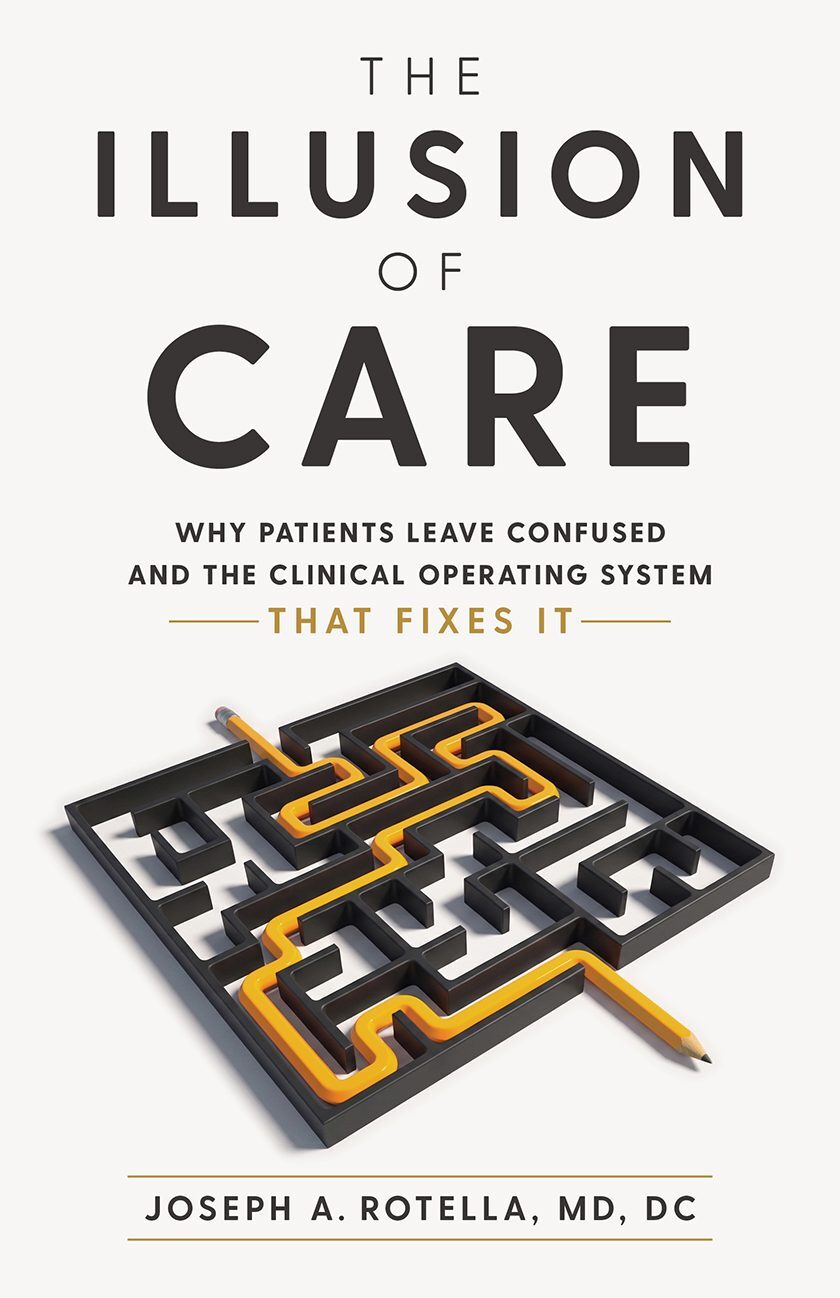
Joey Rotella: Well, there's a, that's a good question because there's a saying, I don't know who I'm quoting, but there's a saying that says ready enough. So, you know, you don't, you don't, I mean, you don't need to be ready exactly in the right moment to do something. You have to start somewhere. And so, like, my advice is that you're probably ready enough. If you've got your thoughts on paper, you have a good conclusion that can come up with a summary of what you want that ends with the conclusion and you think that you're ready, you're ready enough. You've got to start. And also, I would say that, you know, there's people willing to help you. So, you know, I'm not good at podcasts, you know, like I write, you know, so we're here. I mean, I mean, I don't know if the light's right. I don't know if your microphone's right. I mean, but I'm ready enough. I'm willing to put myself out there and do it. And then if I can look back at this and I made a mistake, I can fix it. So, you know, just like a manuscript or a book. But what I liked about Scribe is that they take people who are ready enough, they polish it, and you have time to go over and over and over it again to make sure it looks good and it reads appropriate. And then there's small little nuances that most people don't think about that Scribe really helped me out with. I mean, you don't think about the size of your book. You don't think about the font. You don't think about the page layouts. You don't think about the front cover, the back cover. And then, you know, I mean, and you have to have the illustrator artist to create the cover. And by the way, I'm getting a lot of compliments on my cover. And I don't take credit. I take credit for the idea of the maze of the pencil, but I'm not an artist. And the illustrator was amazing. And so that's a little that's that's a big deal on a book, too. You want to have that appeal. And so there's there's a lot of a lot of things that go into a book rather than just, you know, a pen and paper.
Lex Statzer: Yeah, it is a great cover. I love the cover. And Joey, you were absolutely more than ready enough for today. But to close out, where can people find the book and where can people keep up with you?
Joey Rotella: Thank you very much. And you can find me at the www.illusionofcare.com. There's no the before the illusion of care. So just www.illusionofcare. And my pencil health method is www.pencilhealth.com.
Lex Statzer: Thank you, Joey, for coming on. We are so glad that The Illusion of Care has hit shelves.
Joey Rotella: Thank you so much. I appreciate that. And I appreciate everything that Scribe did for me.
Want to Write Your Own Book?
Scribe has helped over 2,000 authors turn their expertise into published books.
Schedule a Free Consult