Timothy Arrigo on Why Real Change Starts from the Inside Out
✨ Episode Summary
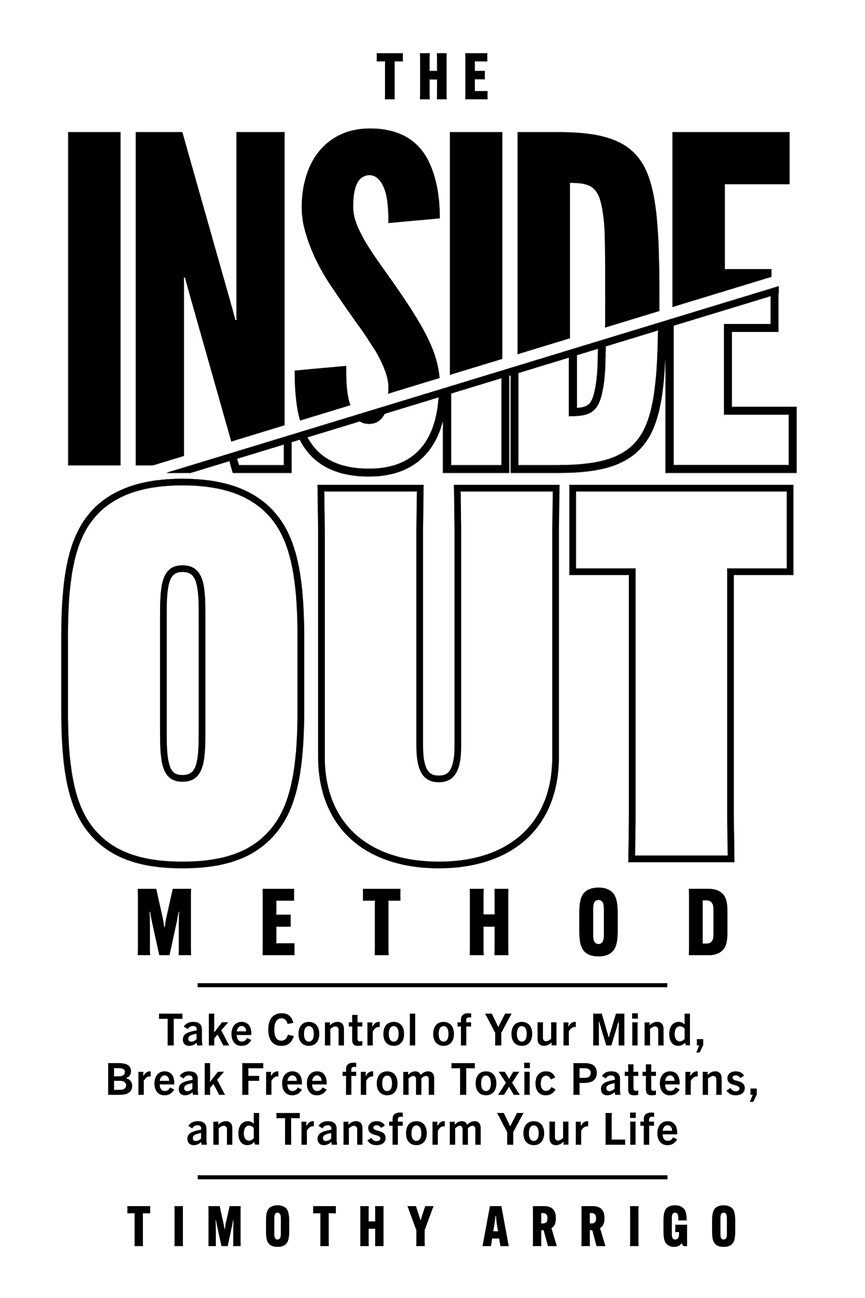
Timothy Arrigo is the co-founder of Beyond Driven, where he and his team have worked with over 5,000 clients. In The Inside Out Method, published September 1, 2026, he turns what that work taught him into a sequence a reader can walk through, with exercises and daily practices built in, because “information can only become transformation through application.”
In this episode of Author Hour, Timothy explains why most problems are really symptoms, what he saw from inside the clinical field, why he put his hardest experiences on the page after first telling his story in a documentary on Amazon Prime, the two years it took to write the book with Scribe Media, and how he plans to use it as an authority builder and client acquisition strategy for Beyond Driven.
“I don’t think that I would have been able to complete it in a timely fashion and be able to get it done correctly in the right way without Scribe’s help.”
⭐ Top Moments
- A book signals you are serious. “I also think it’s great in terms of an authority builder. If you do have a business, I think that having a book out there, it shows that there’s a level of seriousness and true commitment and dedication to whatever it is you’re doing that you do put in that book.”
- The book as a client acquisition strategy. “Also the book, I think is just a great client acquisition strategy. If you do have a book, it’s just a great resource. It’s also a great gift to give to new clients if they come in the program.”
- Data from 5,000 clients, distilled into one book. Timothy built the book on what Beyond Driven learned from working with over 5,000 clients: “And we’ve been able to look at what exactly needs to happen in someone’s life for them to change. And so with that set of data, we developed a sequence from that data.”

Timothy Arrigo
The founder of Beyond Driven, Tim Arrigo is a certified counselor, marriage expert, and transformational leader who has guided thousands of people through profound life change, helping them break free from destructive patterns and build lives of purpose and fulfillment. After overcoming his own battles with childhood trauma, addiction, homelessness, and divorce, Tim developed the Inside Out Method, a comprehensive approach to personal transformation that combines clinical expertise with spiritual principles. His personal journey from addiction to redemption is featured in the documentary The Threshing Floor. He lives in Southern California with his wife, Nicole.
★ Scribe Case Study
Timothy Arrigo's The Inside Out Method Turns Data From 5,000+ Clients Into a Step-by-Step Path to Change
Beyond Driven co-founder Timothy Arrigo distilled what he learned working with over 5,000 clients into The Inside Out Method, a book readers walk through in sequence.
📚 Books by Timothy Arrigo
Transcript
Lex Statzer: Today on Author Hour, we have author Timothy Arrigo, who wrote the Inside Out Method, Take Control of Your Mind, Break Free from Toxic Patterns, and Transform Your Life, which came out September 1st, 2026. Timothy, welcome to Author Hour.
Timothy Arrigo: Thanks for having me.
Lex Statzer: So today we're going to look into a little bit what your book's about, who it's for, and how it came to life. So your book grows directly from your own story, one that goes through childhood trauma, addiction, homelessness, and divorce towards redemption. Before we turn to the method itself, was there a defining moment when you realized that what you'd learned was something that others needed to hear?
Timothy Arrigo: Yeah, that was, it came out of my work in the clinical field. So working alongside psychiatrists, psychologists, licensed marriage and family therapists, medical professionals, I got a real inside look at, you know, the system, so to speak. And I had the opportunity in my career, I was given the opportunity to lead a team of clients. And so I was put in a position of leadership. That was when I started kind of testing some of the theory and really started to institute some of what I believed was necessary in order for someone to change their life. You know, the therapy industry is, it's great, but like anything, right, it has its deficiencies. And so the model is a model that in a lot of ways is kind of predicated on dependency, right? You go to somebody, you see them once a week, they use a technique on you, you leave that session and, you know, it's a slow crawl a lot of times. You have to build rapport with that person. You know, let's say something happens on a Tuesday and, you know, you saw your therapist on Tuesday, something happens Tuesday night and you got to wait till next week to go back and process it. So, you know, I always tell people you wouldn't go to the gym once a week and expect to be in great shape. So, you know, my, you know, I would sit in these clinical meetings and I would hear clinicians talk about clients and they would almost talk about them like they were incompetent, like they were incapable of changing their life. And I had already lived this, so I knew that that wasn't true. And I knew that with the appropriate pathway and the right information and the right action steps that somebody can change their life. It's just about empowering them and not continuing to feed them this narrative that they're not strong enough or not capable or that somehow they need to use A, B or C as a crutch because they're broken. So, that was where a lot of it came from. That was kind of one of the biggest turning points when I really realized that I had something that I wanted to bring to the market. I had something I wanted to share and I had a message that I believed was important for people to hear regardless of whatever station in life they're at.
Lex Statzer: Yeah. So, at the center of the book is a single demanding premise that our lives flow from the inside out and that the problem is rarely our spouse, our boss, our past, our circumstances. Walk us through that idea. Yeah.
Timothy Arrigo: Well, your subjective experience with life is synonymous with how you perceive and experience life in general. So, I kind of give the metaphor of if we're standing on a street corner and a car full of people drive by and they point in our direction and they laugh as they drive by, well, I might think they're laughing at me and I might feel ashamed. And I might maybe yell back at the car. The person next to me might have thought they were laughing at something behind us and he feels indifferent towards the whole situation and he just keeps walking down the street. Whereas the person next to him might have thought they thought he was handsome and maybe he feels all excited and maybe he's gregarious and wants to go meet them and he wants to find out who they are. So, a lot of our interpretation of the world around us shapes and forms how we perceive reality and how I think affects how I feel and how I feel affects how I behave. And those behaviors then feed back into that same feedback loop of thoughts, feelings, and actions. It's what's called the cognitive triangle, which was originally developed by Aaron Beck in the 1960s. So, the idea of the inside out method, things flowing from the inside, is that everything is an iceberg and what most people consider to be problems are actually symptoms. And the idea of changing your life from the inside out for a lot of people is scary because what we're used to doing is manipulating the external in order to meet our internal reality, right? So, I'm hurt so I need you to apologize, right? Or this scares me so I need it to be easier for me, right? So, we want the external to accommodate our internal world and so we have a tendency to put demands, commands, expectations on the external and we we externalize a lot primarily because of cognitive dissonance. If something challenges my worldview, then I have two choices. I can upgrade my belief systems and actually acknowledge that I had the wrong information I didn't know, which studies have proven that the most intelligent people in the world are the people that can do this. The people that can actually say, interesting, I didn't actually, maybe I'm wrong. Or as people that dig in deeper to their position. So, if I can be willing to upgrade my worldview, right? If I'm willing to face dissonance, right? And what dissonance is, is my beliefs and my actions are not congruent with one another, right? So, I say that I value spending time with my children, but I neglect them. Oftentimes, as a way to mitigate dissonance, what we do is we do a couple things. So, we'll minimize, right? Well, I mean, come on, like what kind of dad has the time to spend time with his kids every night, right? We'll compare, right? Oh, John down the street, I mean, he's way busier than I am, you know? I mean, I spend way more time with our kids than your uncle Ronnie does, right? Or we'll minimize, we'll compare, we'll bargain, you know? Well, I mean, is it really that important or am I just making a big deal out of it, right? We will externalize. Well, I mean, if I didn't have such a demanding career, I would spend more time with them, right? So, we find ways to avoid looking within because looking within requires us to shift our identity. It requires us to look at that the common denominator in my entire life, the whole experience is me.
Lex Statzer: Mm-hmm.
Timothy Arrigo: And the way that I perceive reality, the world is not as it is, it's as I am. So, the dominant ideas of what I perceive and how I think and how I feel in accordance to how I think and act is exactly why I have the results that I have. I make the decisions that I make and I have the actions that I have. So, the book is really about taking ownership and it's about looking at your part. And I think that in a lot of ways, we live in a society with a lot of people that have a victim mentality, unfortunately, and that don't even realize they do. And blaming gives us temporary relief, but an ownership is a longer, more arduous road that we have to traverse and it's not easy, right? To take ownership of your life and to look at, hey, why am I here? I got myself here. So, I know for me, no one was going to come and save me. If I didn't take ownership of my life and look inside myself and take ownership and responsibility for every situation that I had ever been in, then there was no changing it because I was basically placing the responsibility for my circumstances onto things that I couldn't control, right? And so, trying to control anything other than how you think, feel, and act is just a form of insanity, right? So, when you focus on things you can't control, you end up out of control. And a lot of people are out of control because they don't look inside. And looking inside is not something that's, you know, the ROI is often, it's not something tangible, it's intangible, right? A lot of it is how you feel. It's what are your relationships like? They're things that are not easy to measure, right? Whereas in the external, things are very easy to measure. How much money do you have? How nice is your house? How does your wife look, right? What kind of, you know, how are your kids doing in school? What kind of car do you drive? I mean, all the things in the external are very, we can get very caught up in those things. Those things don't guarantee happiness. They might make you feel good, you know, but they don't guarantee that you'll be happy. So, the book is really about, it's really about starting by looking inside yourself and to understand that, you know, the very beginning of the book, I had a quote from Joseph Campbell that says, you know, the cave that you fear to enter holds the treasure that you seek.
Lex Statzer: Yeah. Yeah. So, the book is described as both clinically grounded and faith-inspired, drawing on your training as a counselor alongside biblical principles. So, how do you bring those two together without diminishing either one of them?
Timothy Arrigo: It's a great question. I love psychology. I love neuroscience. I'm kind of a nerd with those things. I actually really am. And I believe that faith is an important component because we have a tendency a lot of times to shrink life down into concepts and theories that we can wrap our mind around. And the faith component is important. My personal belief is that things, they're synonymous, is that what can be described psychologically with somebody can very well easily be described spiritually. You could talk about spiritual stronghold, right, in somebody's life. Or you could talk, you could also say that it's, you know, self-destructive behavior, right? And I think that the terminology and the words can be interchangeable. And they're kind of things that they describe the same experience just in a different context and through a different lens.
Lex Statzer: Interesting. Okay, so walk me through who you wrote this book for. Describe the reader that you most hope picks up this book.
Timothy Arrigo: Yeah, I really hope that someone that picks up this book would be somebody who they've tried everything in their life to change and there's something that's missing and they know. Maybe they've been lost in therapy, they've tried counseling before, they've maybe achieved a lot of success in their life, or maybe they haven't achieved the success that they wanted. But they know that there's something calling them to look inside themselves. They know that there's something going on internally, but they don't know where to start. Really what this book, you know, for me what this book is about is this was the book that I wanted and that I believe that I needed. I believe that I created the book that for me, I took all the most life-changing experiences for me personally, but also clinically, as well as it's backed by a lot of research, right? So it's not just my opinion. There's a lot of really great research in the book that supports everything that's talked about inside the book. So for me, I think it's somebody that kind of it's a one-stop shop, so to speak, for somebody who they want to get a crash course in psychology, neuroscience. They want to break free from self-destructive patterns. Maybe they're in, you know, toxic relationships. Maybe they're dealing with, you know, some traumas from their history that they're not sure how to get over and they feel like just something's missing and they're looking for a place to go to walk through the experience. The great part about the book, too, is that the book has exercises in it and daily practices in it. So when you go through the book, it's an actual journey. It's not just something you read. It's an experience because, you know, information doesn't change us, right? Information can only become transformation through application. So we have to apply the things we're learning to have an experience with them, right? To overcome them. It's like, how do you overcome a fear of, you know, spiders? Well, you got to hold one, right? So, you know, you got to expose yourself to these experiences in order to, you know, it's a lot different reading a book about a gun and then firing, right? So, you know, I think that there's a lot of books and that's what I didn't want to do with this book. I didn't want to have it just be just another book of information and good ideas. I mean, nowadays with AI, most people can get that on their own. So for me, I really wanted to put something together that I was proud of and that I would want to give to somebody as a resource, because I encounter a lot of people. I travel around, you know, the world and I speak and I meet lots of people and it was always kind of hard to, you know, what course can I give them or, you know, I only have so much time to speak to them and interact with them. And so I wanted to give something to people that I could hand out to them. That would be something that I could feel confident that, hey, if you go through this, it will be powerful for you. And also the book provides a really great baseline education so that conversations that someone might have with their therapist, the quality of the interaction will go up dramatically because it's very hard to educate someone while you're also trying to talk to them about that concept. So for example, if I'm trying to help somebody get a breakthrough on their attachment style, but they don't know what attachment is and they don't know what the styles are, it can be hard to try to do those two things simultaneously. So what I really wanted to do was provide a book that gave a great baseline education so that if somebody did interact with a clinician or someone helping them, they would have a foundation that would then optimize the interaction. So the quality of the interaction would go up dramatically. And that was really part of my other goal with the book as well.
Lex Statzer: This book really is a method that is built to turn insight into practice. Just as you were saying, it has exercises throughout so you can work on that application. So for a listener ready to begin today, what is one step that they could put into practice this week?
Timothy Arrigo: Good question. I would say stopping and inquiring within and asking myself and getting curious about what's coming up for me internally. A simple practice of what am I thinking? What am I feeling? And what am I doing right now? And I think we have a tendency to externalize, exterocept and just focus on things in the external. So I think one thing is that everyone can start doing is just some simple self-analysis, self-observation and introspection, just to ask yourself, what am I thinking? What am I feeling? And what exactly am I doing right now? And to start taking inventory on your thoughts and feelings. You're not your thoughts, you're the thinker of the thoughts. You're not your feelings, you're the one experiencing them. So you're the awareness behind those things. So I would say that the first step to change in any domain when it comes to personal development is you have to have awareness. Because if you don't have awareness, awareness is synonymous with conscience. You have to be conscious. And if you're not conscious, you can't make choices. If you're not aware, you can't make choices. And if you can't make choices, you can't change. So we need to become aware. So the very first step I would tell somebody is to develop a level of self-awareness, because self-awareness will yield empathy because you'll be able to understand what other people are feeling easier. It'll also yield to a certain level of self-control because you'll understand what's coming up, what's the best course of action. You'll be able to differentiate between values and emotions, desires. And you'll be able to see like, okay, let me make a values-based decision versus just let me do whatever feels good in the moment, which oftentimes is not good because you later regret it or you wish you could go back and do it over. So that'd be something I would tell somebody to practice right away.
Lex Statzer: I really love what you said about curiosity about the self. I feel like that's a critical piece as well, like that self-awareness, but also having that innate desire to know yourself. It starts with that desire as well of, who am I? And you have to be curious about yourself. I really love that. So you guide people through this work every day at Beyond Driven. So what convinced you the method also needed to exist as a book? What made a book the right vehicle for this?
Timothy Arrigo: Yeah, that's a great question. That there was so much that when I initially co-founded Beyond Driven, I was so passionate to get this out to people, but then I realized that it was like drinking from a fire hose. Like a lot of the clients were just like, bro, this is way too much, right? This is so overwhelming. Like, I love it. I'm like, I'm so in this with you and this is amazing, but I'm overwhelmed and I'm all over the place. And I've kind of always tried to describe it to clients, like, hey, just chill. It's all good, right? It's a spider web. It all connects. So I think that, you know, it was, I wanted to put it into a book that you could walk through in sequence and working with over 5,000 clients in Beyond Driven, we've collected a lot of data and a lot. And with that data, we've analyzed it and distilled it down. And we've been able to look at what exactly needs to happen in someone's life for them to change. And so with that set of data, we developed a sequence from that data. And it's not necessarily like a one, two, three, four, but it's more like lights that go off at different times. And as a part of that model, which is kind of the backbone of what we do at Beyond Driven, which is all evidence-based, what we wanted to do, what I want to do is take all of that data and then really lay it out into a book where somebody could walk through it and be able to bite off really deep concepts but lay it out in layman's terms for people for them to see, okay, well, if I talk about, if I think about like, let's say cognitive distortions, for example, it's like, well, I don't do that. And say, yes, you do. Let me show you how you do it. You've done it. And then it's like making it practical for people so they can go, oh, I have done that. Oh, wow, that's really interesting. And I think what that does for people is it normalizes their experience, number one. And I think it makes it less about something's wrong with me and more about, I've always said this, that it's about the patterns. It's about the programming. It's about your conditioning. And those things, they operate in your life without your permission until you become aware of them. And when you can separate your identity from those things, you can start to become aware of, okay, this makes sense. There's a reason that I do this. And it's not about just me being a bad person or being unhealthy. There's a reason. And that reason is not an excuse. It's just that. It's a reason. And a big part of it was, like I said, back to the awareness. If someone doesn't have awareness, it's very hard for them to see and understand things. So it's like if we're in the forest and we're walking through the forest and I ask you, what do you see? You're like, well, rocks, trees, and plants. What are you talking about? And then I kind of go, well, what do you see? You're kind of getting pissed off. And you're like, well, is this some kind of joke? But then if I take you to school for botany, horticulture, geology, ecology, and we come back to the same spot in the forest and I say, what do you see? Well, you're going to, you're going to be like, well, what do you want to know? Yeah. There's a lot of things I see. I mean, you have the ability to make what's called distinctions, right? You can now, you can distinguish between this and this and what this means and how this affects this. And I think that that level of understanding of ourselves is directly correlated to our ability to understand others because then it just becomes a process of reverse engineering. I can look at what someone's doing and I can see, okay, well, I can see the emotion that would motivate that. And it's okay, you're feeling guilty, right? That's why you're overcompensating and buying your children lots of gifts in the middle of this divorce because you're overcompensating because you feel guilty. And then I can speak to the guilt without you even having to tell me that you feel guilty. So it gives us the ability to, once we can attune to ourselves, we can have clarity, work through the story, our identity, we can then attune. And that attunement then yields a level of connection and relationships that is unparalleled. It's unbelievable because people are experiencing, how did you know that? How did you know that that was going on with me? Or how did you pick up on that? It's the subtleties. And I think we're all better off in relationships with people who are self-aware and who can attune to us because that's what makes a great relationship. Because relationships aren't about what I'm getting, it's reciprocity. Yes, of course, but it's also about what you're giving. What do you bring to the table in the relationship? So I really wanted to make the book so that somebody could walk through a step-by-step process. And it starts off kind of breaking down some heavier concepts and kind of shattering reality in the beginning with the first chapter into the last chapter of like, well, where do you go with all this? And what do you do with it? My personal belief is that it's not to be coveted. It's not just for us. It's to be shared with the world and for us to go out and make a difference with it, regardless of what we do with it. We don't have to go be a coach, counselor, or therapist or pastor, right? You can take this and you can use it in your everyday life with just strangers.
Lex Statzer: Yeah, and you walked that talk when you put your experience down on the page. I want to know, you made a deliberate choice to put some of your most difficult experiences in this book. So how did you decide how much of yourself to reveal to the world? And why did that vulnerability matter to the book?
Timothy Arrigo: It's a good question. I made a Amazon, I made a documentary that's on Amazon Prime. And in making the documentary, it was very hard because I had to divulge a lot of details about my life that weren't easy to talk about, especially in a film. And after making the film, it's very hard to summarize a lot of the things that I had been through, which was insanity. It was a movie. And it was very hard to summarize a lot of that into a film and a lot of things got left out. And there was a lot of things that were very detailed that I believe were relevant to my story that I didn't get to put in the film. And so with the book, I wanted to put more specificity in some of the stories to describe in greater detail, like what it's actually like to be in those places. And I wanted to provide the reader with an experience of the dichotomy between, wow, this is very heavy and raw. I've always told people, if vulnerability is the portal to true healing, and you only really know a master of transformation if they don't resist their own. So if I'm going to ask the reader to go there with me, well, I better go there with the reader. And I better be the one to go first to say, hey, I'm not talking to you from the top of a mountain saying, hey, this is what you need to do. It's I'm on the journey with you. And I'm with you on this journey. Although I might be your guide or your help in this book, I'm right next to you in the journey. And I'm no better than you. Regardless of where you are, I wanted the reader to experience me as a person in my fallibility to be able to relate to me in the book.
Lex Statzer: Yeah. And that relatability builds trust with the reader. The reader can now feel with you and take that experience and know that you know exactly what you're talking about. You've been there. Exactly. So how did you come to work with Scribe? What made us the right home for your book?
Timothy Arrigo: Yeah, it's a great question. So I had a friend of mine. He had he had done a book with with Scribe, Michael Francis. He did a book with Scribe. And I saw that the process was really great for him. And so it was kind of a. It felt kind of like just a shoe in, like it just made sense. And it was great. I just I felt like I. I felt very lost and scattered with where to start, what to do, how to get it out there. And I think having a team to help you fulfill on that and carry some of the especially the logistical elements of it, that might be very time consuming or just you don't have the time for it or it's not your zone of genius. You know, my my zone of genius is not finding, figuring out how to, you know, publish a book and get it out. And it was just it was great to have the experience with Scribe because I got a lot of feedback that was challenging in the beginning. And yeah, just having copy editing, having people proofread and go over stuff, challenge me on certain ideas of, hey, why do you feel this is relevant to put in the book? Me pushing back a little bit, going through variations of covers, you know, polling the audience to see what cover they preferred. You know, the process was writing a book. It is not easy. It took me two years. And it's funny because I would always say, like, I'm clogging up your pipeline. I'm sure your pipeline is clogged up and I'm sure you guys want to, like, you know, help me get going. But I think, you know, when you write a book, at least for me, it wasn't like I sat down every day and it just came out. It came in waves. And I get that second win, that third win, the fourth win that I I would go back to it and go back to it and go back to it. And you're constantly it's kind of like you're it's it's a piece of art. You're constantly touching it. You're adding a more shading here, right? You're adding more light here. So it was a process. And I don't think that I would have been able to complete it in a timely fashion and be able to get it done correctly in the right way without Scribe's help. It would have it would not have happened. It probably would have taken far longer and it just wouldn't have been up to par. It would have it would have been suboptimal. So I think going with Scribe was just, you know, when you when you when you want to get something done right, you go to the people that do do a good job with it. You know, you go to the people that have are proficient and experts. And so for me, it was kind of a no brainer. I just said yes right away.
Lex Statzer: Thinking back to some of those conversations during the bookmaking process, was there a piece of guidance that was the most valuable? Maybe it was writing advice or just advice about the industry in general. What was the most valuable advice you got along the way?
Timothy Arrigo: I think it was from my editor. There was a lot of things. My manuscript looked nothing like the original and getting challenged by my editor and then also just on formatting a lot of, you know, the design of how actually to lay out these chapters to make the to actually how to speak to somebody in a book also, right? How to how to convey a message in a book, because there's a proper, most appropriate way to do that. So I think honestly, getting I got challenged by my editor, Kathleen, a lot in the beginning. And that was great. And I actually, I think about nine months later, asked her to revisit it. And it was great. I just I appreciated everybody's very candid, very honest, very open feedback. And that's not easy to do, right? That's like you're, you're, you're, you know, drawing something on a paper and someone is, you know, giving you feedback on it's like a piece of art, right? It's like making a film and somebody giving you feedback. So it's not, you know, it's you're opening yourself up and making yourself vulnerable to being challenged on something that's so deeply personal, you know, it's a book that you're writing. So I just appreciated the feedback. I appreciated that things were very easy and smooth. And just especially once Jamie started helping me, I mean, it was amazing. When, when Jamie and I started working together, she was so just on top of everything, her speed, her efficiency, her communication, it just made the whole experience fantastic, you know, and it was just great. So I would say definitely probably in the beginning with, with my editor.
Lex Statzer: Yeah. If there's a listener out there who carries a book like this inside of them, but hasn't yet begun it, maybe someone whose own hard one story could help others too. What would you say to that listener?
Timothy Arrigo: Well, I can tell you, you know, I've built companies and organizations, I've accomplished quite a bit in my life, and it's been very humbling. But, you know, having this book is, it's a really great feeling. And it's the feeling of accomplishment that's come from it, knowing like when people buy it, that the sense of, you know, and I just said this, this, the sense of, you know, like a healthy pride in, in accomplishing it. And I had just mentioned to a colleague of mine last week that it was kind of the first time where, you know, you're in the rollercoaster of everything and it's coming out and there's everything so exciting and everything's moving so fast. That was kind of the first time where I told him, I said, Hey, you know, like, I'm so proud of this book. You know, I'm so proud of this book. And I'm so proud of, you know, I, I'm glad that I took the time to do it. So I would, I would just tell somebody, you have to get it out there, do it. It's, it's valuable. It's, it's, it's such a powerful resource to give to people. And also, you know, one of the greatest parts about it is, you know, when I'm gone, you know, the book is and, you know, it's a part of my legacy and, you know, whether it's something I pass on to my family and they have copies or, you know, just something in general that, that you can give to people. I also think it's, uh, it's great in terms of like an authority builder. If you do have a business, I think that, you know, having a book out there, it shows that, you know, there's a level of um, seriousness and true commitment and dedication to whatever it is you're doing that you do put in that book. And, and so I just think that if you, if you do have an idea, if you do want to write a book, I would just highly encourage you to do it. I think a lot of people get overwhelmed by the process and it's just, like I said, it's like building a model airplane that has, you know, 500,000 pieces. You just have to take your time with it. It's like a puzzle. You take your time with it, you visit it when you can, you chip off a little bit, right? You get as much as you can done, but you just don't, don't stop. And so I would tell the person, I would just really encourage you to do it and, and you'll be really grateful that you did. And you'll be very proud of yourself for completing it. You know, it's, it's a big accomplishment if it's on your heart, do it.
Lex Statzer: Yeah. It's a huge accomplishment. You should absolutely be so proud. It's incredible to see the work that comes out. So how does the Inside Out method fit into the larger work that you're doing through Beyond Driven and where do you hope to take it from here?
Timothy Arrigo: Yeah. So the, really we, what we want to do with Beyond Driven and what we have been doing is, and this is kind of going back to the book is to make the hidden secrets to how people change their life and relationships accessible to everyone, really democratize the tools back to the people. And so with the book, you know, really the design is my hope is to use this as an authority builder to get on other platforms, to, you know, to help with my speaking, to be a resource that I can give to people that we can, we can use to help more people whether or not they work with us directly or not. The book is a way to do that. Also the book, I think is just a great client acquisition strategy. You know, if you do have a book, it's, it's just a great resource. It's also a great gift to give to new clients if they come in the program. So, you know, it's, it's, it's a companion to the program in a lot of ways. And so the bigger goal with the book is, is really to help us build the brand and to, to cover kind of all areas in terms of brand. And now, you know, having a book, yeah, it's just such a vital resource and asset to our business just because of what we can do with it and how many people we can help with it.
Lex Statzer: Where can listeners find the Inside Out method and how can they continue to follow your work?
Timothy Arrigo: Yeah, well, you can find the on Amazon. It's on Amazon. You can order it there and I'll be doing the audio book. I'll be recording that in Los Angeles in January, and that will come out on Audible as well as potentially some other audio book platforms. Working that out now, kind of the details on that. You can find me on anywhere on social media. You can follow us on Instagram at Beyond Driven. Facebook is Beyond Driven. TikTok is Beyond Driven. And then YouTube, of course, is Beyond Driven. So you could just find us on there. And yeah, we're pretty much you can find us on any major platform and you can find the book on Amazon.
Lex Statzer: Well, thank you so much, Timothy. I speak for the entire Scribe team and a lot of readers out there when I say I cannot wait for the Inside Out method to hit the shelves. Thank you for coming on Author Hour.
Timothy Arrigo: Thank you so much for having me. It's been an honor. Thank you. Thank you to everybody at Scribe.
Want to Write Your Own Book?
Scribe has helped over 2,000 authors turn their expertise into published books.
Schedule a Free Consult