Tom Wells on Giving Back, Telling the Hard Parts, and Writing Three Books
✨ Episode Summary
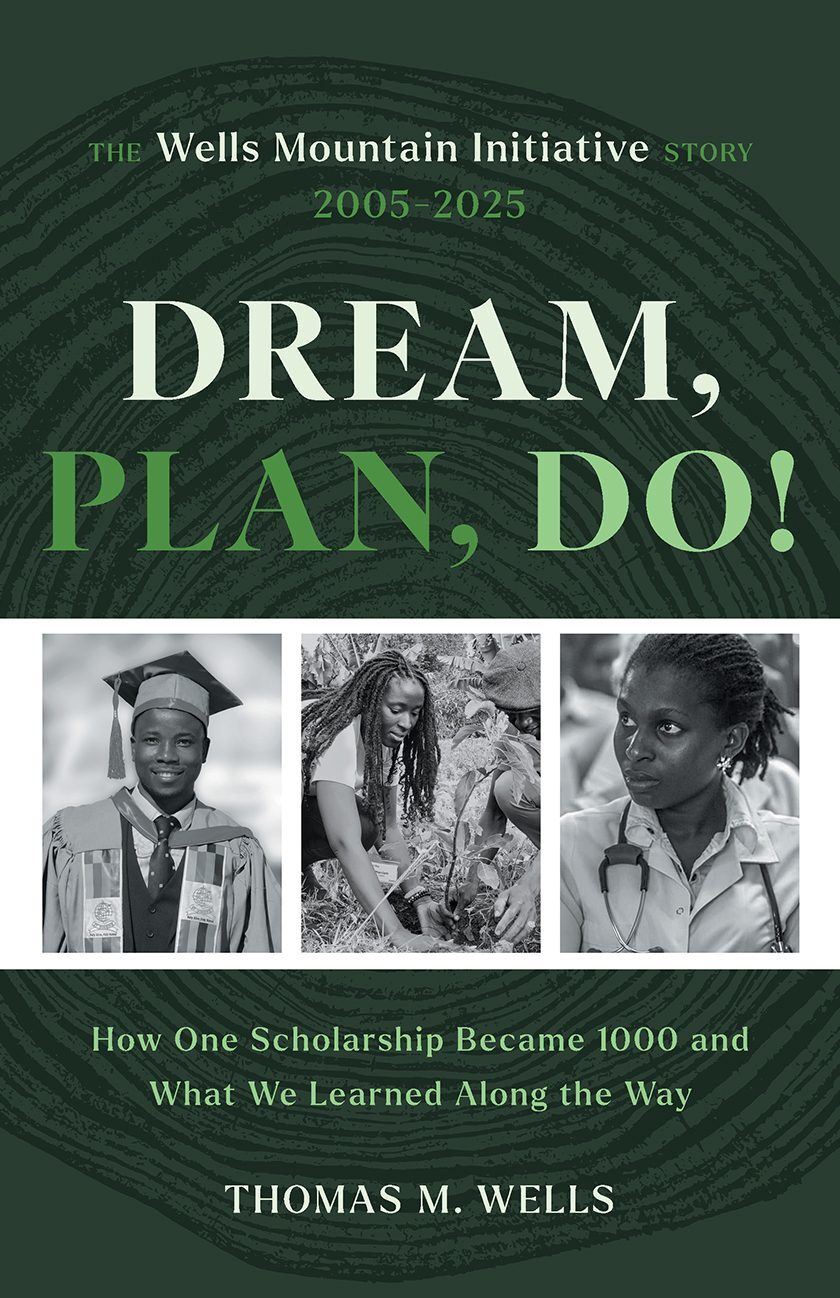
Thomas M. Wells practiced law for four decades, built his own firm in New Jersey, and served on bank and nonprofit boards. He has now written two books with Scribe Media: Naked on the Highway, a memoir told in 40 stand-alone chapters, and Dream, Plan, Do!, the history of the first 20 years of the Wells Mountain Initiative, the foundation he started in 2005 to fund scholarships for young people in the developing world.
In this episode of Author Hour, Tom tells host Travis Stoliker how one tuition gift for his daughter's host sister in Africa grew into a thousand WMI scholars in 56 countries, each asked to give 100 hours of volunteer service every semester. He also explains how his Scribe editors pushed him to put adversity on the page, which led him to write about his depression publicly for the first time, and how they turned his twelve-clause lawyer sentences into clean prose while still letting him write the book his way. He is now at work on a third book, Walk the Walk.
“[Scribe] let me do it my way, but it's professional.”
⭐ Top Moments
- One scholarship became a thousand. “So we now have this cadre of really special young, bright people in 56 countries, a thousand of them who are very committed to giving back and helping in their communities.”
- The hard part made it onto the page. “I wrote a really candid book [...] I've suffered from some level of depression most of my life and admitted that never had talked about that anywhere publicly before.”
- From lawyer prose to a readable book. “Instead of my lawyer sentence, which is 12 clauses, that it's now three sentences [...] they helped me clean it up.”

Thomas Wells
Thomas M. Wells founded the law firm Wells, Jaworski and Liebman and practiced law for more than four decades before becoming of counsel. A graduate of Bucknell University and Case Western Reserve Law School, he founded the Wells Mountain Initiative in 2005, which has funded undergraduate studies for more than 800 students from high-need areas around the world. He and his wife, Carol, received Distinguished Citizenship Awards from Bucknell University and honorary doctorates in humane letters from Middlebury College. He is the author of the memoir Naked on the Highway, drawn from a lifetime in law and service.
★ Scribe Case Study
Thomas M. Wells Wrote Two Books With Scribe Media to Share a Lifetime of Giving Back
Retired attorney Thomas M. Wells wrote a candid memoir and the story of a foundation now supporting a thousand scholars in 56 countries, and he is writing a third book.
📚 Books by Thomas Wells

Transcript
Travis Stoliker: I'm honored to be joined by the author Thomas M. Wells, the author of Naked on the Highway and Dream, Plan, Do!. Thomas, thank you for joining me. Could you introduce yourself and tell us a little bit about your books?
Thomas Wells: Okay, sure. Thomas M. Wells is the name, but I go by Tom for everybody these days. When I was a kid, I was Tommy, which is a little bit relevant because the one book is a memoir and I started out as Tommy and become Tom. I spent my career as an attorney. I am now retired or we use a fancy parlance for retired attorneys. We just say we're of counsel. The firm still has my name in it. I still hang out once in a while, but I'm now of counsel. In addition to practicing law, I was very active in business. I had a number of business interests, partnerships and so on. I've served on a number of boards, both public boards, primarily for banks, but also nonprofit boards as well. I have a very long interest in philanthropic type things, giving back to the community. I'm second generation to that. My parents were both that way. That's a big part of what I do. Then the second book that you mentioned, Dream, Plan, Do!, is actually a history of a foundation that I started that gives scholarships and support of young people in the developing world. It was a history of the first 20 years of that, beginning in 2005 and through 2025. That's sort of my basic background. That's perfect.
Travis Stoliker: Now, you have a story about clashing with your father over Vietnam. Could we start there?
Thomas Wells: Sure. Well, a child of the 60s, very much in an interesting time. If you think of the 60s, I came in at eight and I left at 18. These were tumultuous years to grow up in. A lot of things happened during that period. But the big thing that happened during my high school years is we had a Vietnam War, our war in Vietnam. My father was the second lieutenant in the Korean War, very patriotic, very Republican. When we got to junior, senior year of high school, we're in the middle of the Vietnam War. I came to the viewpoint that I didn't think the Vietnam War was smart at all. In fact, I pretty strongly felt that, except under rare circumstances, I didn't ever want to kill anybody. I felt that I was virtually a conscientious objector. Not quite, because even when I registered for the draft, I wanted to do my patriotic duty, but I didn't want to have to be a soldier. So I registered 1AL, which means you would be a medic. We forget all that because we don't have a draft anymore, but that was my crisis at 18. My dad was a man of very big character, very strong character, and believed in expressing his strong views and wanted his children to have strong views. Unfortunately, we didn't have the same views. So my dad, for example, he was on the school board when I was in sixth, seventh, eighth grade. And at that time, that was the time when they considered whether the Lord's Prayer should be told in the school. And my dad felt that it should be. He resigned from the school board when they decided not to have that. So he had very strong views. I don't happen to agree with even that view. I did then, I think. But I'm a big believer, although I'm a strong Christian, I'm a believer in the separation of church and state. But what happened with Vietnam was he believed that it was your duty to back up your country that was in a war. And the whole concept of dissent was pretty new, and it was coming from young people. I didn't agree with him. And I started doing things like wearing black armbands and organizing, and he got more and more unhappy with that. And even though he thought I should have my views, he at one point finally said, no more of that. In other words, you live in my house, you can't do that. So I got into open defiance. I would go to school and put the armband back on. And it came to a point where I was the organizer of a group of students going to Washington from New Jersey, where I lived. And my dad caught wind of it, and then pushed very, very hard. What he did was he, we had a family vacation planned to Florida. Back in those days, when you'd drive all down the trailer and all the rest of that. And we had a family vacation. I was the oldest of six children, and he announced that the family would not be going on vacation because of me. So what he did is he used a sort of a pressure tactic. I'm an attorney now, or I was an attorney, so I understand pressure tactics to basically put a lot of pressure on me. All my brothers and sisters were now, who were younger than me, thought I should give in on this. Anyway, it became a real crisis. So bad that we were, literally, I wasn't in school. I stayed home. The family minister was called in to talk about this with everybody, and sat me down. And I would say the family minister, quite frankly, agreed with me. He basically sat me down and said, you're killing your mom. Your mom is just, this is too hard. To make a long story short, I gave in. I said, okay, I won't do it. And he was wrong. I still think he was wrong. My dad's been dead. I love my dad. But he should have respected the viewpoint that I had. So it was an important learning lesson. I don't know what the going lesson is, because he tried to teach me something, and he taught me to be like him. But when it came time to be him, or when my views differed from his, it didn't work out. So it's kind of a long story. But it was instructive also for me when I became a parent, because I needed to know when my kids started to disagree with me, that if I wanted them to stand up strongly for their own viewpoints, I needed to not make the same mistake that I think my dad did. So that's that story.
Travis Stoliker: The only thing that I've ever protested in my life was the second Iraq war. Man, was that February 15th, 2003? It was around 9-11. And we protested here in Michigan from the Beaumont Tower, and we marched down to the Capitol. And the whole point was, hey, we don't think they have weapons of mass destruction. We think this is about something else. And in my mind, it seems like we turned out to be correct on that. In my view, it looks like that was probably an erroneous war, and it looks like they probably didn't have weapons of mass destruction. And I remember that feeling of people looking at you. And at the time, I remember being told, you should move to Canada. You know, you're not American. And that hurt. Like, did you feel that?
Thomas Wells: In 2015, trust me, it was more in 1969.
Travis Stoliker: That's what I was thinking.
Thomas Wells: Yeah. The world has changed a lot. Even if we think of our current politics now, we're way more divisive now. But at that point, it was really my country right or wrong. And in other words, it was unpatriotic to not back the president. Now, we've come miles away. Up until very recently, I think probably up until Trump, there was a sort of a rule that, you know, when a president was in foreign countries, we never speak ill of them, other politicians and stuff. That was very prevalent. Wow. I mean, we've heard and remembered that in the last 10 years since Donald Trump's been president. Everybody speaks, says whatever they want all the time. But there was a very deep sense of that my country right or wrong. And that was the 60s was the first time. And especially when it was young people declaring no, it's a no. I can still be patriotic, but I but I don't agree. I don't think the president was right. By the time it came around later times, I think it became more acceptable to do that. But protest, free speech is a part of democracy. And democracy is messy. It really is. It's gotten messier, but it's always been messy. I mean, if you're a student of history, you know that it was messy for Lincoln. It was messy for Washington. He had it was it's always been messy because we don't all agree.
Travis Stoliker: How did these you've had such an amazing life you from student council to Woodstock to the bookstore to philanthropy to starting off with one scholarship to thousands of scholarships that you do in Ghana to becoming an attorney, all of the different boards that you've served on. How did what was the like the chronology of all of this? How how did this all? Yeah. How did one thing like where did you fit in law school in all this?
Thomas Wells: Well, I'll do the rough chronology, but let me let me back up a little bit and just say that that's one of the things that makes my memoir a little different. Most memoirs are chronological. In other words, they start your kid and they keep on going, you know, until present time or if if you're no longer with us, they told about till the end. I'm not to the end yet. But why I wrote it really in in a collection of chapters or stories. In other words, each one almost stands on its own. So but it's divided into sections. So the very first section is called Backstory, I think, and it's my early years when I was a kid and so forth, includes the story. By the time I was a teenager and and what you're what you're talking about. And then the next section is a section called Giving Back and Giving Back is sort of my life philosophy. It's all about giving back and it tells about that. And then the third section is just stories. Yeah, mostly happy stories about my kids growing up and stuff. Then I have a section called on the soapbox where it's opinions, big opinion pieces. And that's when I write about my feelings about representing Trump and what I felt like when he was running for president in 2016, which was not good. And then finally, it goes back and is biographical again. It's sort of the end story and tells about it. But so the book is written in sections like that. But each one of those chapters kind of stands alone as its own story. To give you the rough chronology, graduated from high school in New Jersey, went to college in Pennsylvania, Bucknell University, met my wife, married her as we were about to graduate way back in 1973. So twenty fifty three years ago, hung out in Pennsylvania, was involved in politics, worked and owned a couple of businesses. Then I went off to law school in Ohio and then stayed in Ohio for a while. I practiced law there, then moved back to New Jersey, started briefly practicing with somebody else, started my own law firm, grew it quite big and it became very successful. But twenty five years ago, while the firm was still going strong in New Jersey, bought a vacation home in Vermont and then ultimately moved to Vermont, became the first of the telecommuters. So I would go to New Jersey three or four days a week and the rest of the time work long distance, much like I am right now talking to somebody on, you know, before Zoom and all the rest of that, and then stayed here in Vermont ever since. That's where I am now, retired and divide my time between here and the Virgin Islands. Along the way, involved in a lot, a lot of different things, a lot of business, a lot of law, a lot of a lot of stuff. Very, you know, had a very busy life. And that's why I decided to write it up in a memoir.
Travis Stoliker: Tell me about your scholarships. This is amazing what you're doing for for kids that need help and or the helping them pay for this. Tell me about how that all came about and where it's at now.
Thomas Wells: That's the that's the Dream, Plan, Do! story of the second book. And I love to tell the story because it's something I'm particularly proud of. In 2005, I'm in my mid 50s. My youngest daughter is graduated from college or not graduate from college. She's graduated from high school and is going off to college. So she's the youngest of our three kids. We had a business where I always love bookstores. So we had a bookstore here in Vermont. Didn't make any money, but it was great. You know, very popular. We loved it. But we had decided that it was time to let that go. And I had been involved in a lot of work in internationally, especially with the YMCA. And I was meeting young people in Africa in particular who I thought had great potential, but not enough opportunity. I would meet people who really wanted to do more, wanted to study, wanted to go to school, but didn't have the resources to do it. About the same time my one daughter had had been to Africa a number of times, she had a host sister over there who needed to go to school. And my daughter came home to me and said, could we help her? And I said, what does help mean? And she says, well, she needs help for tuition and books and stuff. And it was going to cost about $2,000, $3,000 in that neighborhood. And I said, yeah, we could do that. My daughters were in school, but that was a doable amount and a lot less than they cost here in the United States. So we did help her. And then I liked doing that so much. I said, we could do more of that. I don't know how many. I can't do too many more because I can't afford it, but I can, I could get some friends to do this too. So basically that's how it started. And I started to fundraise for it and we started finding more people. And then we developed a selection process. So it started with just one student. Next year it was four. The year after that, it was nine, I think. And then 11. And for a long time, my big goal was, could I get to a hundred? And then it just grew. And we, we eventually, I always just did it myself and my wife and my daughter. And then we got some staff and flash ahead to now. We've, this year we have a thousand scholars. They're called WMI scholars who have been supported through their education. We don't let them go. We keep their, they stay WMI scholars so that we have big international conferences every third year. They're given continuing financial and support and they're unified around a common experience of coming from really pretty impoverished situations, but being very bright and willing to use their educations. For the most part, they stay in their own countries that we encourage that very strongly. We really don't necessarily want people to be educated and then come to the United States or something. We want them to stay home and help in their own areas. And then the other thing is that philosophy I told you about, that I have about giving back, that spilt right into the foundation. So right from the time they get the first scholarship, they're asked to do volunteer service. And volunteer service is a really strange thing in, in, in developing nations because most of these people are just getting by. I mean, they're, they're, they're struggling just to be able to do it, to go to school. So the, the idea of volunteering, and they have to do a hundred hours of volunteer service every semester they're in school. Initially can be, they are a little resistant to do that, but they're happy to get the scholarship and they do it. Not every single one, but they, so many of them have come and told me that, that volunteer experience changed them and in many times became the key to their education and their direction. So we now have this cadre of really special young, bright people in 56 countries, a thousand of them who are very committed to giving back and helping in their communities. So it's, it's a cool story and one that, you know, it's very exciting to give you an example of how, how I get to realize the excitement. We have something called the Dream Big Conference. Dream Big is a theme and a motto we use. Dream, plan, do is, is what we preach to these young people. And we have Dream Big Conferences every third year. So we just had one in Nairobi this year and we, we, we limited to 200 of the scholars. I think there were 204 there this year and we provide a big four day long event where there's a lot of learning and seminars and panel discussions and, and keynote speakers and they all come together. But it's really cool for me because they call me Papa Tom and they're, you know, they're very, very grateful and very, and they're, it's very special to see these people coming. At a Dream Big Conference, it won't be all 56 countries, but it'll be, I think there were 23 different countries represented and they come together with a common experience and a common desire to make a difference in their own worlds. So we get to see it in firsthand what it's like and what the effect that this has had on them. They very much appreciate the support and make us proud. That's amazing.
Travis Stoliker: Your life has been, you know, one of your core philosophies is about giving back and sharing what you've learned and sharing what you have. And is that what the memoir was about? Is that, is that a giving back? Is this a legacy piece that'll outlive you?
Thomas Wells: I mean, I, people, people, as I told you, it's 40 chapters and each one stands alone. It is a core philosophy of mine. I talk about it, talk about where it came from. It came from, there was a plaque on my kitchen wall that said, what we are is God's gift to us. What we become is our gift to God. My mom had that on there. That seems like such a brilliant thing. And I always thought, well, you know, there was, it was either from scripture or some funny famous, turns out it was said by a woman named Eleanor Powell, who was a dancer. But I learned that and wrote about it later on, but it became my sort of core philosophy. It's made my life really very special, you know, that by just always focusing on trying to give back wherever I can. And you know, it's something I've instilled into my kids, but I've also, I preach it loud and clear to these scholars. I really do believe that by giving back and, or we could make it even simpler. We can use the golden rule, do unto others as you would have them do unto you. And that particular rule, and I'm, the third book that I'm writing right now is called Walk the Walk. And it says that, it stands for a lot of things, but it says that that philosophy isn't just a Christian philosophy. It's a philosophy that's deeply entrenched in virtually all moral living and other religions as well. But I think if we do that, follow that simple rule, things get a lot better. It may sound overly simple, but it's as simple as that. We'll just pay attention to the effect that we have on others and try to help others. If we all do that, the world becomes a much better place.
Travis Stoliker: So this could apply to either of your books, but my favorite question that we've asked for almost 10 years on Author Hour is, what was the coolest, unexpected, great thing that you could have never expected that happened as a result of your book?
Thomas Wells: Boy, I don't know. You should have told me that in advance. I had to think about it, but you wanted spontaneous. I did.
Travis Stoliker: I did.
Thomas Wells: I can't think of, there's no like one great thing or one seminal event. What about the Marcus Whitney podcast? Yeah. It's just, writing the book, I wrote the book. I have a friend who did a memoir at the same time as I went and he spent his early life riding motorcycles and then was quite a famous chef up here in Vermont and opened a number of restaurants. He was a very entrepreneurial and he was very determined that his book would make money. And I said, oh yeah, money. I mean, I never intended to make money. I'm pleased that people, a fair amount of people have read it and I like to talk about it, but I don't think it's a life-changing thing for people. The dream plan, the WMI story, the Wells Mountain Initiative story has been very life-changing. And I have had many, many people come to me and tell me that knowing that somebody who didn't know them from another country cared enough about them to, you know, to make a difference in their lives, changed them. And then they tell you all the things that they've done. So you've got that gigantic effect of, you know, those, when we have statistics that people want to read the book, Dream, Plan, Do!, all the statistics on it, the, you know, by, by, by helping a thousand people, they've helped hundreds of thousands of people and it just keeps spreading outward. So that's a really dramatic effect. So I'm really very proud of all that they've accomplished. The book isn't really, it's the story of WMI, but it's really the story of all these people. And the best section in the book is, wasn't written by me. It's, it's a chapter where I asked 12 of them to write their own stories and they each write their own stories about their lives. And I think it's, you know, living by giving back, telling your story, trying to multiply your effect. That's the thing that's that's the special sauce here as to any one event. Yeah, it was, it was, it's a little hard writing a book. I did. One of the things I learned from the scribe people was, you know, I started out very upbeat and said, you know, I'm, I'm very blessed. I've had a really good life. Everything is good. And they said, well, you gotta put some bad stuff in here. So, I mean, you gotta pull a little adversity in here too. So I did, you know, I wrote a really candid book and I talked about my weights never really wanted to be, I've, I've suffered from some level of depression most of my life and admitted that never had talked about that anywhere publicly before. And so, so some of that was, you know, kind of different because I talked about myself in a way that I normally don't. So that was a little bit traumatic, but also a little, you know, enlightening to do it. The process of writing, it wasn't as hard as I thought it would be. Process of editing was harder than I thought it would be. So then I did a second one and now I'm working on a third one. So I'm, you know, I'm kind of having fun with it.
Travis Stoliker: I was just talking to our CFO about this that, and I was just kind of lamenting or complaining to him as, as CEO and saying, you know, now in the world of AI, we have oftentimes some of our prospects or our leads that are considering writing a book. They might say, well, I'm just going to talk into AI. I don't need you all to help me write this book. And the thing that we hear very frequently from authors like you is, but it was my team at Scribe that pushed me into those vulnerable corners. It was the team that said, no, you need to put some adversity in here. You need to push. Can you speak to that as, as a experienced author, like what is the value of having the Scribe team? Because obviously you're, you're very successful. You can do your accomplished writer yourself. Why do you need an editor? Why do you need Scribe as a part of that?
Thomas Wells: How does that help? There's a couple of thoughts I have, and then I can speak to AI a little bit because I didn't use any AI on either of the books, but, but I have used it some now because I realized that it, you know, to not use the tool is foolish. But starting with your basic question, it's good to work within a structure and Scribe has a structure and helps you a little bit. I, they have a program. I don't even know that you guys still have it, but where you, you came out to this, the initial session with people and then you kind of write the book together.
Travis Stoliker: Guided author. Yeah.
Thomas Wells: Right. Yes, exactly. And what I learned some things I've been writing all my life because I'm a lawyer and your words are, you know, are, are currency, but legal prose is pretty torrid clause written, you know, and, and not all that much fun. So I had to learn to change my writing style a little bit. And that was helpful in the editing on that. The other thing I would say is they, they did give me a piece of advice, which I write about in the book that I didn't follow. In fact, I, I do something that the generally editors don't like. I actually talk about the process a little bit, even what the editors from Scribe told me in the book, which you're not supposed to let people look behind the curtain. But what, one of the things they said is a book is either to share knowledge or it's just stories and you know, or, and if it's, and if it's, it's got to be a little bit thematic thematic. And I said, I'm going to do both. And they said, well, it's not too good to do both, you know, people be, you know, you gotta remember people read books because they want to learn something that because you want to tell it, you know, unless you only want this book read by your grandchildren, you know, maybe you'd better follow our way. And I said, well, except that knowledge share is kind of what I do. I'm a little, you know, that's I'm, I'm a guy who likes to mentor everything and give this up. So, so I'm going to kind of do both. And I'm going to try to be aware of that right in my own, a little informal style and so forth. So I didn't write a bestseller, didn't intend to, unlike a lot of Scribe people, a lot of people I think are writing for the purpose of sort of putting down in writing the kinds of things that'll support whatever they're doing professionally and selling. In other words, it's a book about what, what it is they do. And I guess I could have written a book like that about practicing law and given, I can give, you know, a lot of pointers as to that. I didn't, I wrote, I lost in it and a lot of other things are in it, but I just wanted to talk about my, my, my opinions and my, and my story and, and share a lot of knowledge. I put the books full of lists. I make up lists, you know, 38 things of this and 12 of this. And, you know, so in a sense, I indulge myself in writing what I wanted to write, but I wrote it in a way that it was, they, they, what they did is help me make it. They let me do it my way, but it's professional. In other words, it's, the sentences are well-written. Instead of my lawyer sentence, which is 12 clauses, that it's now three sentences, you know, and, and it's, and they helped me clean it up and put it, you know, they, when I first didn't always have exactly 40 chapters, but they helped me know which ones just didn't make any sense. Why put that in there at all and reorganize it a little bit and that and so forth. So all that was very helpful, but it also allowed me to do really what I wanted to do. You know, so my goal wasn't necessarily to sell a product. I'm having a little bit more fun lately because now I'm marketing a little bit more. I, I did, I'm doing sub stack and medium things. I'm writing some columns, mixing stuff in as I marketed it a little bit more in the way books are marketed nowadays, which is entirely different. I told you I own a bookstore, so I know a lot about how books was, you know, were done before, but in this world, we're now so much of it is self-published in a, in a more sophisticated way and, and then marketed that way or marketed through the internet.
Travis Stoliker: I'd love to explore that a little bit more. So when did you own the bookstore? How long was that? What, what years was that approximately? And can you tell us about what it's like, obviously all of the viewers of this love books. So obviously most of us love bookstores too and miss them. And usually we have one or two that we just adore in different cities. You had to be like a celebrity for somebody that owns a bookstore.
Thomas Wells: Adored bookstore. We had a home in Vermont already and I got restless in my fifties and wanted to do something a little different. I actually think I've, for a little while, I actually thought maybe I'll stop practicing law. So it was 19, gosh, what year was it? 92. We bought a book, an existing bookstore in Bristol, Vermont called Deerleap Books that had been started by a woman who had a publishing company. It was not, it didn't make money at all, but it was, it was a nice bookstore. We bought it and I started to operate. We increased it, made it much more successful, but it still didn't make a lot of money. In other words, my wife came to work there full-time running the thing. And I would work there all the weekends. In between practicing law, we had it for about 10 years and it was a lot of fun. We did all the bookstore things that you do in a little town that has its own bookstore with author signings. And we actually did something every Friday night where we didn't have author signings, we had music and other kinds of, so there was a Friday night event there, community event every single week and that people were compensated with credit in the bookstore. They weren't paid to come or anything and enjoyed the heck out of it. It was a good time, but really the end of the bookstore tied into the beginning of the foundation. I basically said after a while, I like doing this a lot, but if we're going to put this much time and effort and money into something, it should be something, I don't know, more meaningful. That's a bad thing to say to people who love bookstores and I'm one of them, and I decided to do the foundation. So when we closed the bookstore, we decided to put our effort into the international education component and did WMI. So really one after the other. I always loved bookstores before, used to visit them all the time, still love them, still think they're special. I will confess, I now frequently buy books from bookshop.org or even occasionally Amazon, which was like, oh, Amazon. We hated Amazon when we were in the bookstore business, but the world's changing a little bit and small independent bookstores, not an easy play. Light is too strong a word, but not an easy life. You got to be very dedicated to it. And as I just said a few minutes ago, books are marketed differently. The whole world has changed and also instant publishing and it's a different world now.
Travis Stoliker: Well, Tom, as somebody that loves bookstores and knows that it's very difficult to run a bookstore, thank you for you and your wife for taking that time, because I know you made a lot of great memories for a lot of people that were able to participate.
Thomas Wells: Well, we still have a little one in Bristol. It was started out in the building we still own, and it's now down the street. And in order to be successful in a business, it sells a few other things, some musical instruments, some toys and other stuff, but it still manages to be an independent bookstore, used and new. And we're a little town, only 3,000 people.
Travis Stoliker: That's amazing.
Thomas Wells: So I think there will always, I mean, the written word is terribly special. It's changing because we have audio books now and eBooks. Honestly, the publishing industry probably supports the eBooks more than they support the written books at this point. They make more. It's just easier all the way around. What I do is I still read a lot. So I frequently read books in an eBook form on whatever happens to be in my hand. It's something as small as my phone sometimes. But if I like the book, I buy it. Well, you can see there, well, you can't see actually, but there are books all around me. And every room in our house has bookshelves because we like books. I like them. I like being around them, but I know that's changing. In my law firm, when I first started the law firm, now 40 years ago, we put a library in and we had a law library. But for the better part of 15 years, that's just decoration because all legal books, everything became online. And publishing books for relatively small audiences in gigantic form wasn't always expensive. So those books cost $700 or something. And now it's all electronic. So the way we access information has changed a lot. Scribe's been a great experience. I lived through the Scribe 1.0 to 2.0. So I was a little bit of a victim of the change. I thought it was valuable before and I think it became, it continues to be valuable. I think you provide a way to help somebody do something that they're not necessarily good at. You bring your professional expertise to the forefront and help me accomplish something I want to do. It was a bucket list item for a while.
Travis Stoliker: Well, Tom, thank you so much for joining me today. And I'm so excited about everything that you've accomplished and glad to hear that you're working on your third book and that your second book is doing so well and your odds are stacking.
Thomas Wells: I'm going to be doing it for a week.
Want to Write Your Own Book?
Scribe has helped over 2,000 authors turn their expertise into published books.
Schedule a Free Consult