Happier Family Meals Start With Your Own Relationship With Food

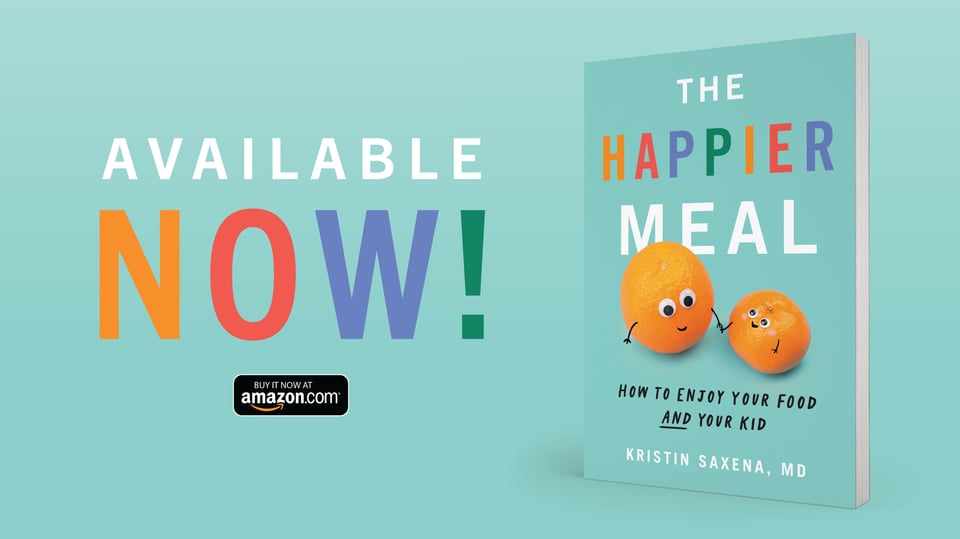
The following is adapted from The Happier Meal by Kristin Saxena.
In my early twenties, I looked like someone who had my life together. I was in medical school, focused, ambitious, and determined to help others. What most people didn’t see was that I was unraveling behind the scenes.
Medical school was the most demanding experience I had ever faced, and as the pressure mounted, my relationship with food shifted. I was so anxious that I lost my appetite almost entirely and lived on saltine crackers to keep the nausea at bay. I told myself I was managing, but the way I was eating (or not eating) was a clear signal that my mental health was suffering.
Eventually, I got help, including treatment for anxiety. But healing didn’t just come from the prescription pad. It also came from the quiet comfort of shared meals. My mom cooked for me without pressure, simply inviting me to sit down. Shikhar, my high school sweetheart and now my husband, made time to grab quick meals with me between study sessions. Those ordinary moments helped me reconnect with my appetite. Food became less about calories and more about connection and joy.
That experience taught me something essential: our eating habits are inextricably linked to our emotional well-being.
Your Food Story Shapes Your Child’s
As tiring as it sounds when you’re already stretched thin as a parent, the first step to creating happier mealtimes is addressing your own relationship with food. When we don’t confront our own food baggage, we tend to pass it on through the way we talk about bodies, the rules we make, and the subtle messages we send about appetite and control. Our kids absorb it all.
Four Common Food Issues and What They Reveal
In my practice, I see four food issues come up again and again: picky eating, overweight and obesity, eating disorders, and disordered eating. With picky eating, what escalates the problem isn’t the child’s limited preferences. It’s the parent’s anxiety. The more we coax, bargain, or bribe, the more resistant the child becomes. It’s not really about the food; it’s about the power struggle around it.
Kids are observant. They hear the sigh when we step on the scale and catch the offhand comment about carbs. When parents untangle their own conditioning, kids learn that food is just food, not a moral test or a reward.
There’s No Such Thing as a Perfect Eater
As a young pediatrician, I handed out lists of dos and don’ts. Then I became a parent and realized families don’t need another list. They need a shift. My own kids love candy and fast food, but they also love mangoes, sushi, and broccoli. They eat when they’re hungry and stop when they’re full. That, to me, is success, and it came from structure, consistency, and the freedom to explore food without shame.
…
For more advice on building a healthier relationship with food for your whole family, you can find The Happier Meal on Amazon.
Kristin Saxena, MD, is a board-certified pediatrician, author, and mother of four. She currently practices at Boys Town Pediatrics in Omaha, Nebraska, where she cares for children and families across all stages of development.
Drawing on both her medical expertise and her experience raising four children with her husband, Shikhar, Dr. Saxena is passionate about helping families create healthier, happier relationships with food. Through her writing and speaking, she provides practical, evidence-based guidance that helps parents reduce mealtime stress and build lasting family connections.
Dr. Saxena earned her medical degree from the University of Nebraska College of Medicine and completed her pediatric residency at the University of Minnesota.

Lex Statzer
Lex Statzer, Publishing and Marketing Lead at Scribe Media
Ready to Write Your Book?
Scribe has helped 1,600+ authors turn their ideas into published books. Schedule a free consult to get started.
Schedule a Consult