In the Ruins of East Berlin, We Were Birds

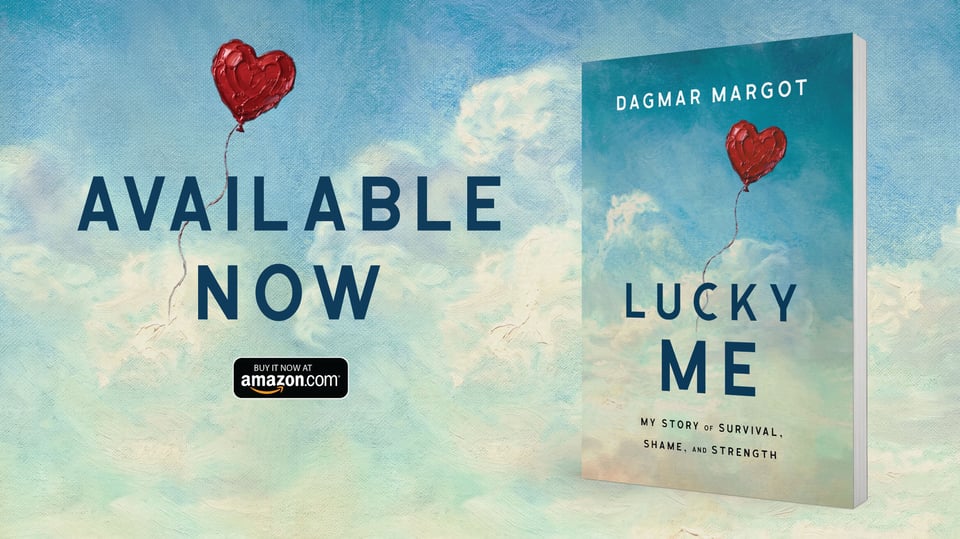
The following is adapted from Lucky Me by Dagmar Margot.
I could always tell when Mutti was building toward a tantrum. Now that she was pregnant again, she wanted her alone time, and my little sister Gigi and I knew to disappear.
“Don’t talk to me until we are out of the house,” I would whisper. Gigi, only about eighteen months old, nodded and followed me like a little dog. We put on our coats and slipped out of the apartment.
“Come back when it’s dark,” Mutti called. She always said this.
It was 1958 in the Köpenick district of East Berlin. The war had ended more than ten years earlier, but our neighborhood still lay in ruins. There were no street signs because they had all been bombed away. No one wanted to live there, so there were no other children.
Germany had been stripped bare after the war. The Russians took the cars, the art, the furniture, even the beds and tools from the farms. The Americans claimed whatever they could, including entire companies. Most of the men were in Russian prisons, so there was no one to rebuild. Many never made it home. My own grandfather was pulled off a train in Poland on his way back from Russia and shot.
We lived in the attic of an old apartment building with holes in the roof. When it rained, the water came in.
But a few streets away waited the greatest adventure any child could wish for: the bombed-out villas.
No adult dared go there. It was our kingdom. Nobody scolded us for getting dirty or peeing in the corners. In the ruins, we were birds.
I was careful. Whenever I entered a new room, I threw stones ahead of me, like creeping out onto a frozen sea. If I heard clink clink clink, I knew there was a hole to the floor below and told Gigi to stay back. I built little stone monuments to mark the houses we had already searched.
And oh, the treasures. Small coins, cutlery, broken dishes painted with blue windmills. Hair clips, toy soldiers, doll parts, shards of colored glass that blinked in the sunlight. Gigi loved the wooden animals most, since we had no toys of our own. We dreamed of finding gold so we could buy food, because we were always hungry. Once I found a spoon I was sure was silver. Mutti later told me it wasn’t, but to me it was a true treasure.
Sometimes we found photographs of the families who had lived there. I hoped they were still alive and had found a better life.
When the shadows grew long on the walls, I told Gigi, “Let’s go.” I held her hand on the walk home under an orange and purple sky, hoping Mutti’s tantrum had passed.
After a day in the ruins, it felt easy to believe every bad experience would end. Tomorrow, everything would be fine.
…
For more on finding hope in the hardest of times, you can find Lucky Me on Amazon.
Dagmar Margot was born in East Germany in 1952, during the Soviet occupation. Her earliest memories are of a world that felt both ordinary and quietly constrained. A few weeks before the Berlin Wall sealed her family’s lives in place, they—with American help—fled to West Germany, a journey that left Dagmar with a lifelong sense of being between multiple worlds. In 1997, she moved to San Diego, California, with her husband and children.

Lex Statzer
Lex Statzer, Publishing and Marketing Lead at Scribe Media
Ready to Write Your Book?
Scribe has helped 2,000+ authors turn their ideas into published books. Schedule a free consult to get started.
Schedule a Consult