Is Vaginismus Really a "Brown Girls' Disease"?

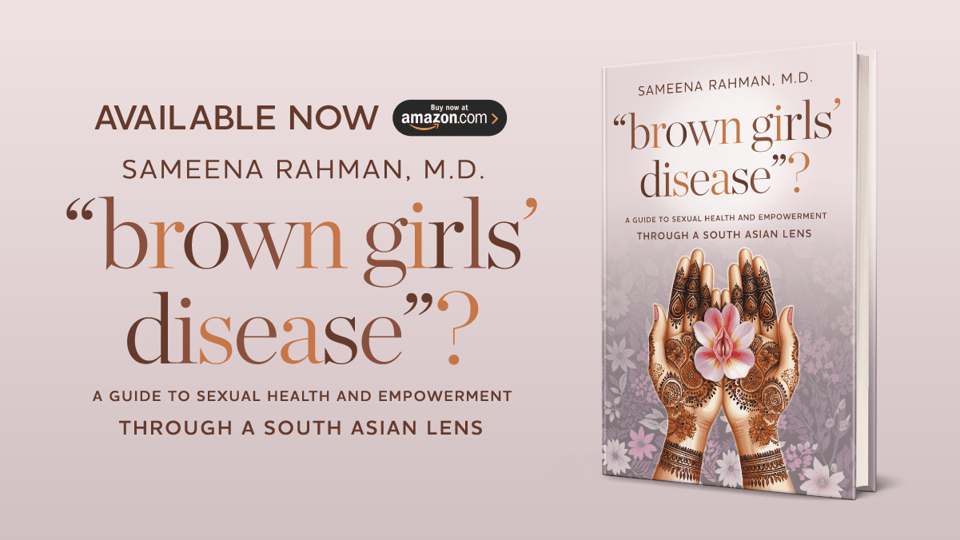
The following is adapted from "Brown Girls’ Disease"? by Sameena Rahman, M.D..
Does vaginismus only happen to us Brown girls? Definitely not. But understanding the relationship between South Asian culture and this particular kind of sexual pain can help you, and your practitioner, get you the help you need. My research shows just how widespread these issues are: 56 to 82 percent of South Asian women report some form of sexual dysfunction, with India, the largest South Asian country, showing rates above 55 percent.
Let me tell you about Noreen. She came to see me in her mid-thirties, married almost six years without ever managing to have penetrative sex with her husband. I see this often with women who don't have sex until later in life. Their body just says "nope," even when their mind is ready, even excited. For Noreen, coming from a devout Muslim background added another layer of pressure, with a heavy emphasis on consummating the marriage and starting a family. Every failed attempt compiled her fears. Her marriage eventually ended, for several reasons, as they often do, but I'll never forget how she blamed herself, feeling like she'd failed as a wife because she "couldn't provide that" for her husband. These things spiral, and the pressure soon started affecting her husband's sexual function too, until it became an awful cycle of anxiety for both of them.
Noreen's story illustrates a pattern I see often in my practice. Younger women tend to seek help because they want a pleasurable intimate relationship, while older women typically face these issues head-on only when trying to conceive. The inability to have children adds cultural shame and family pressure to an already complex situation. Vaginismus affects 58 percent of Indian women and is the leading cause of unconsummated marriages there.
The medical risk factors for vaginismus, anxiety, trauma, and lack of sexual health education, are amplified in South Asian communities where discussion of female sexuality remains largely taboo. Religion plays a role too, with higher rates reported not only among South Asian Muslims but across conservative religious groups, including Orthodox Jewish and Catholic communities. The common thread isn't the specific religion. It's the culture of silence around women's bodies and sexuality.
I never discussed menstruation with my mother, let alone sexual health. I never wore tampons or received a pelvic exam. I kept my legs crossed and saved myself for the man I wanted to marry. And when I finally found him, my body wouldn't receive him, having internalized years of messages about sexual shame. I see versions of this story in my Brown patients every day. Our parents think they're protecting our values, but what actually happens is we grow up not knowing the basics about our own bodies.
Being a "model minority" makes things worse too. We're told we shouldn't have these problems because we're educated. One patient, a fellow doctor, once told me she could teach a class on female anatomy, but that didn't stop her own body from freaking out. All the medical knowledge in the world doesn't override years of cultural programming.
…
For more advice on sexual health in South Asian women, you can find "Brown Girls’ Disease"? by Sameena Rahman on Amazon.
Dr. Sameena Rahman is a board-certified doctor of obstetrics and gynecology, sex-med gynecologist, menopause specialist, and a clinical assistant professor of OB/GYN at the Northwestern Feinberg School of Medicine. Dedicated to evaluating and treating each patient with compassion, Dr. Rahman is the founder of the GYN & Sexual Medicine Collective, a successful concierge practice emphasizing evidence-based medicine. She hosts the podcast Gyno Girl Presents: Sex, Drugs & Hormones and has been featured in dozens of publications and programs, including Cosmo, Daily Mail, Healthline, Women’s Health, and Good Morning America. Dr. Rahman resides in Chicago with her husband and three kids.

Lex Statzer
Lex Statzer, Publishing and Marketing Lead at Scribe Media
Ready to Write Your Book?
Scribe has helped 2,000+ authors turn their ideas into published books. Schedule a free consult to get started.
Schedule a Consult