Life Isn't Fair, Accept It

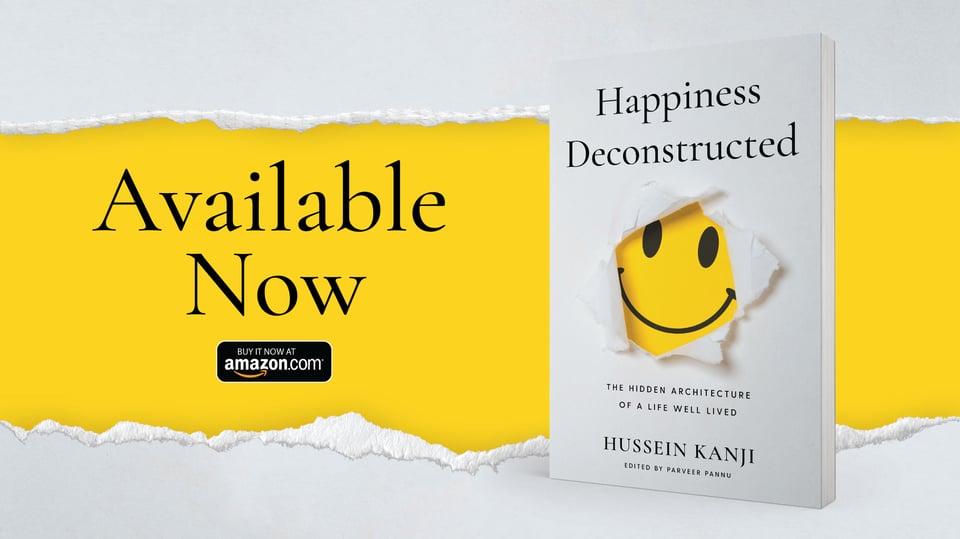
The following is adapted from Happiness Deconstructed by Hussein Kanji.
Knowing that life isn't fair doesn't comfort you. It doesn't tidy grief or make suffering "make sense." What it can do, slowly and unwillingly, is remove a hidden assumption that keeps inflaming everything: the idea that effort, decency, and good intentions should purchase proportionate outcomes.
I remember a patient who came into the ICU after a sudden collapse at home. Forty-five years old, a regular runner, no smoking, no obvious risk factors. The kind of person people describe as "doing everything right." Within hours he was intubated and surrounded by monitors. His wife stood at the foot of the bed repeating the same sentence in slightly different forms: "But he's healthy." As if that fact should change the trajectory of what was happening.
In most parts of life, it would. We're used to the idea that effort and responsibility produce predictable outcomes. But illness doesn't read the equation that way. In the ICU you see this often enough that the lesson becomes difficult to ignore: the world does not distribute events according to merit. Biology breaks. A vessel ruptures. A clot travels. That doesn't make effort meaningless. It simply means effort cannot guarantee immunity from reality.
Most of us live with that assumption without admitting it. We call it hope, or optimism. But underneath, it behaves like a contract: if I do the right things, life will meet me halfway. When the contract gets broken, the pain isn't only the event. The pain is also the violation. The mind starts prosecuting reality: This shouldn't be happening.
Then my younger sister died. I was nineteen. She was my best friend. It was sudden, and it tore the floor out from under everything I'd assumed was stable. For years I carried two lives at once: the visible one, showing up and functioning, and the quieter one underneath, angry and braced. I wasn't processing. I was waiting for reality to correct itself.
It didn't work.
What changed later wasn't that I became okay with it. It was that I stopped treating fairness as a feature of reality and started treating it as a preference, something I can want without confusing it for a rule. That sounds small. It isn't. When fairness stops being assumed, a certain kind of secondary suffering loses its fuel. The loss still hurts. But the mind stops adding the extra burn of disbelief.
Acceptance isn't passivity or "moving on." It's dropping the demand that reality justify itself before you agree to live in it. Once you stop expecting fairness as the baseline, you stop interpreting every hard moment as a personal indictment. Reality stops feeling like a tribunal and starts looking more like terrain. This acceptance shifts our inner dialogue away from "Why me?" to "What now?" And that question is where resilience begins.
Recognizing that life is not fair isn't meant to make us cynical. It's meant to make us honest.
…
For more advice on accepting life's unfairness and finding resilience, you can find Happiness Deconstructed on Amazon.
Hussein Kanji is an intensive care physician, medical leader, and lifelong student of the human condition. Years spent bedside in critical care have enabled him to witness life’s fragility and resilience, powerfully shaping his perspective of a well-lived life. A father, thinker, and curious observer, Hussein is trained in science, medicine, psychology, and public health. His work bridges the clinical and philosophical with themes of awareness, perspective, and inner peace.

Lex Statzer
Lex Statzer, Publishing and Marketing Lead at Scribe Media
Ready to Write Your Book?
Scribe has helped 2,000+ authors turn their ideas into published books. Schedule a free consult to get started.
Schedule a Consult