Why Systems Beat Hustle Every Time

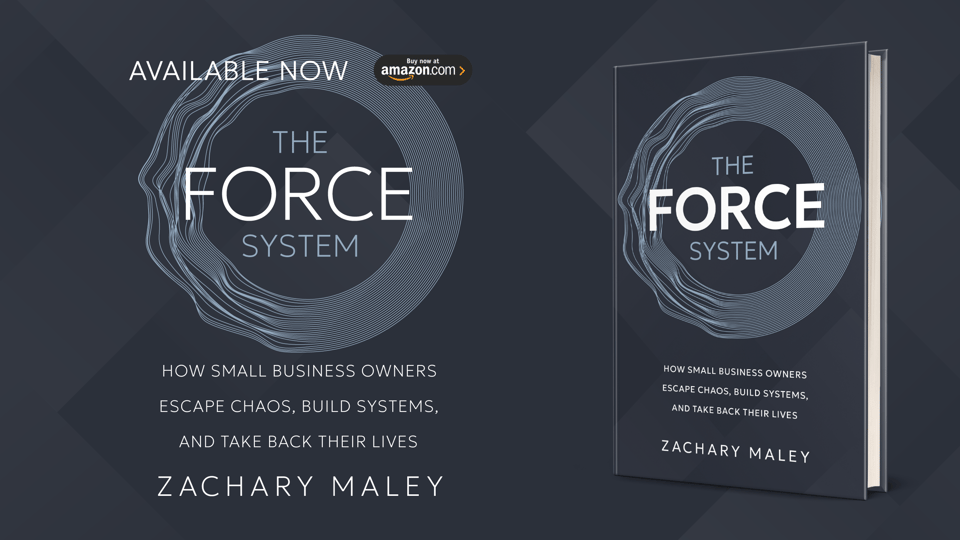
The following is adapted from The FORCE System by Zachary Maley.
A system is built on processes. Think of a system as the overall structure and the process as the step-by-step method within that structure for getting something done. Systems create consistency, whereas processes create repeatability. Together, they eliminate the guesswork.
The Power of Process
When we took over our hotel, every housekeeper cleaned rooms in a completely different way. One started with the bathroom. Another stripped the beds first. Others vacuumed before dusting. The result? Fifty rooms were cleaned fifty different ways.
Cleaning times ranged anywhere from twenty-five to forty-five minutes per room. That inconsistency wasn’t a people problem; it was a systems problem. So we created a standardized process for every room:
- Strip the beds and remove the trash.
- Clean the sink, toilet, and bathtub.
- Wipe down and dust all surfaces.
- Vacuum all floors.
- Make the beds.
- Reset the thermostat, draw the curtains, and turn off the lights.
Now, no matter who’s cleaning the room, the process takes exactly twenty-five minutes.
A twenty-minute difference per room adds up fast. Without a standardized system, we would need two additional full-time housekeepers to clean the same number of rooms, at an extra cost of $70,000 to $80,000 a year.
That’s the real power of systems: predictable timing, consistent quality, lower labor costs, higher productivity, and measurable outcomes. You can only improve what you can measure, and you can only measure what you standardize.
Getting to the Root of the Problem
Hustlers jump straight into solutions, only to face the same problem again next week. Systems force you to slow down long enough to understand why a problem keeps happening. Instead of treating symptoms, you can identify the root cause and solve it once and for all.
Say you need to hire staff for your restaurant.
The hustler approach is to assume the last five bad interviews mean there aren’t enough applicants, so you post listings everywhere, pay for boosted ads, and hope the next batch is better.
A system makes you ask deeper questions. Where do great employees already exist? How can I create a pipeline instead of waiting for luck?
Instead of relying on job boards, you carry business cards with you. When you encounter exceptional service at a restaurant, store, or café, you introduce yourself, tell them you’d love to have them on your team, and invite them to apply through your referral process.
That one habit eliminates randomness because you’re proactively sourcing talent. It improves quality because you’re recruiting people who’ve already demonstrated excellence. And it creates consistency because anyone on your team can run the same play.
In business, every problem has many possible solutions. Systems replace vague hope with predictable pipelines by pushing you to explore the root cause, test your assumptions, and design the workflow that produces the outcome you want.
…
For more advice on building systems that drive consistent results in your business, you can find The FORCE System on Amazon.
Zachary Maley is a marketing and growth executive with a track record of scaling revenue engines at the enterprise level. Leading from the intersection of brand, performance, lifecycle, and data, Zachary is an expert at establishing systems, teams, and strategies that transform marketing into a growth accelerator. He is the Vice President of Growth and Lifecycle Marketing at Wynn Resorts, where he leads enterprise-wide initiatives across lifecycle marketing, CRM, paid media, predictive analytics, and marketing technology.

Lex Statzer
Lex Statzer, Publishing and Marketing Lead at Scribe Media
Ready to Write Your Book?
Scribe has helped 1,600+ authors turn their ideas into published books. Schedule a free consult to get started.
Schedule a Consult