Your Business Has a Culture, Whether You Like It or Not

The following is adapted from The Million Dollar Hurdle by Jim Fitzgerald.
I didn't think about culture at all in the beginning. Once Taradel was growing, I needed people, so I hired people. My interview process focused on ensuring each person had the skills I needed. If they passed that test, I showed them to their new desk.
I naively assumed that surrounding myself with competence was enough to create a good working environment. Boy, was I wrong.
Before long, the whole office was steeped in drama. Two of my designers hated each other and lived to share that fact with others. They feasted on drama like starving vampires in a blood bank. Whisper campaigns spread like a virus. I started dreading Mondays, not because of the work, but because I knew I'd walk in and have to referee a cold war over who got to use the good scanner.
Eventually, I had to accept the resignation of one of the drama vampires.
I learned my lesson about hiring, but I didn't know what to do about it. It wasn't until I hired Wendy, who would later become my COO, that I finally learned how to tackle the problem. The diagnosis was a bad company culture. I was just fortunate it wasn't terminal.
Wendy helped me develop the company's values and a new interview process. The most important value, in many ways, was this: no drama. Zero.
Once I had that value down, I brought it up in every interview. I told candidates that no matter how rough their morning had been, I expected them to walk in with a smile and put the happiest spin possible on the state of their life. Because that's what adults do. Of course, we made exceptions when something was really wrong in an employee's life. But no one was allowed to bring their standard bad-day nonsense into my office.
That pitch alienated some qualified people, and they chose not to work for Taradel. For most, though, it was exactly what they wanted to hear. I ended up hiring a team of people who hated drama as much as me, and I had the kind of office I looked forward to every day.
So many business owners make the same mistake I did. They assume culture is for big corporations, or that it isn't a real thing at all. Let me put you straight: culture is real in every business, and if you aren't addressing it consciously, you're letting it develop by default. More likely than not, you won't be happy with the result.
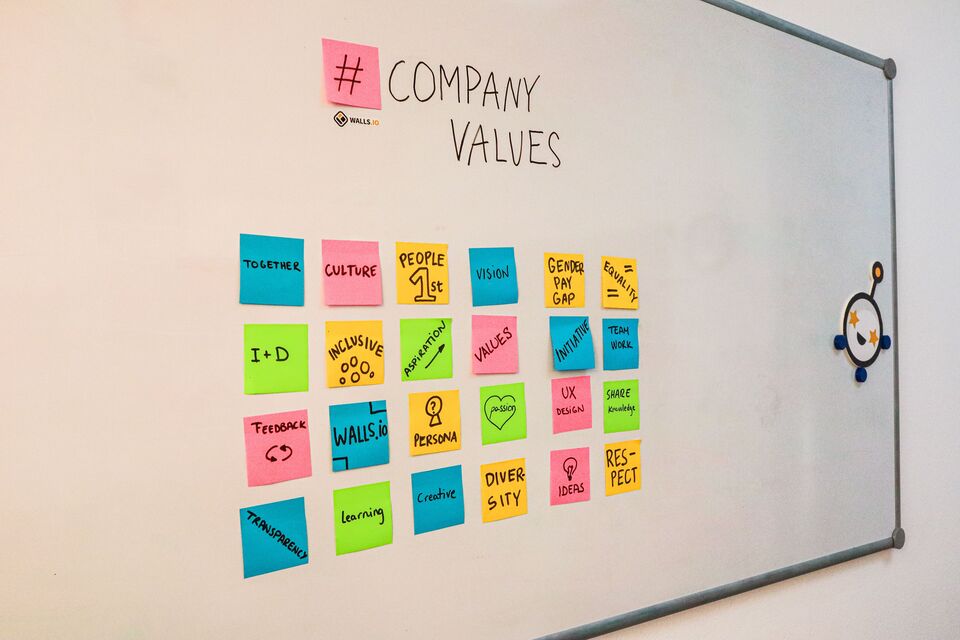
If you want to change that, take a hands-on approach. Set a small number of core values you believe in completely, then let them guide everything your business does, from hiring to customer relations. What value would you stand by even if it cost you a new hire or a customer? Narrow your answers to four or five principles, refine them, and let everyone in the organization know. Then start living them.
…
For more advice on building a strong company culture, you can find The Million Dollar Hurdle on Amazon.
Jim Fitzgerald is a serial entrepreneur and the CEO and co-founder of Paycile, a financial technology firm helping organizations streamline payments, reconciliation, and cash flow forecasting through AI-driven automation. Before Paycile, Jim founded Taradel and created a martech platform named to the Inc. list of the 5,000 fastest-growing private companies for 12 consecutive years, an achievement shared by only 35 other companies nationwide at the time. An entrepreneur at heart, Jim is passionate about scaling software companies and solving complex business challenges through technology, data, and innovation. He lives in Richmond, Virginia, with his wife, Sandy.
(Royalty free image: https://www.pexels.com/photo/sticky-notes-on-a-whiteboard-with-company-values-15543046/, Credit: Walls.io)

Eric Jorgenson
CEO of Scribe Media. Author of The Almanack of Naval Ravikant.
Ready to Write Your Book?
Scribe has helped 2,000+ authors turn their ideas into published books. Schedule a free consult to get started.
Schedule a Consult