Be Amazing or Go Home: How Shep Hyken Turns Books Into Speaking Business
✨ Episode Summary
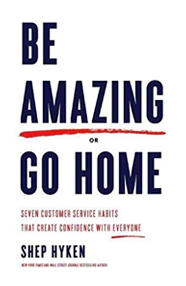
Shep Hyken has spent his career on one question: what makes customers come back? The Chief Amazement Officer at Shepard Presentations has written eight books plus five co-authored books, and Be Amazing or Go Home, which he published with Scribe, was produced so well that a few years later a traditional publisher came to him asking to take it mainstream.
In this episode of Author Hour, Shep explains why the real value of a book is the reputation and speaking business it builds, why owning the rights lets you give the book away as an “expensive business card,” how he builds a target list of the people who should get his book, why he uses AI to edit but never to write, and how one book can become a year’s worth of content.
“The job isn’t doing the speech, it’s getting the speech.”
⭐ Top Moments
- A traditional publisher came calling. “But the book was well done and produced in such a way that maybe a couple, three years later, a regular publisher comes along and says, we noticed you wrote this book with Scribe, would you like to go mainstream with us?”
- The books paid off in credibility. “And I’m not going to say I made a million dollars off that book, but definitely over time that all the books really contribute to the credibility of me as a speaker and my content for training purposes. So it really, in a way it has probably made well over a million dollars for me.”
- Own your rights. “And by the way, that’s another key reason to want to use a company like Scribe is you own the rights to the book.”
Shep Hyken
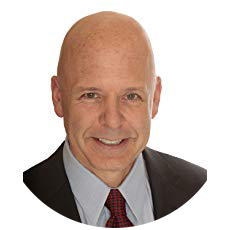
Shep Hyken is a customer service and customer experience expert and the Chief Amazement Officer of Shepard Presentations. He is a keynote speaker and a New York Times and Wall Street Journal bestselling author whose books include Moments of Magic, The Loyal Customer, The Cult of the Customer, The Amazement Revolution, Amaze Every Customer Every Time, The Convenience Revolution, and Be Amazing or Go Home. He is a member of the National Speakers Association Hall of Fame and works with organizations that want to build stronger loyalty with their customers and employees. He is also the creator of The Customer Focus, a customer service training program.
★ Scribe Case Study
Shep Hyken's Be Amazing or Go Home Was Produced So Well a Traditional Publisher Came Calling
Customer experience expert Shep Hyken published Be Amazing or Go Home with Scribe. It was produced so well that a traditional publisher came asking to take it mainstream.
📚 Books by Shep Hyken
Transcript
Teddy Smith: Hi everyone, welcome to the Author Hour podcast. My name is Teddy and my guest today has spent his entire career on one question, which is what makes customer come back? And that is Shep Hyken. He's the Chief Amazement Officer at Shepard Presentations. He's New York Times, Wall Street Journal, USA Today bestselling author. His books include The Convenience Revolution, Amaze Every Customer Every Time, and also Be Amazing or Go Home, which he actually published with us here at Scribe. He also hosts The Amazing Business Radio and he's worked for companies like American Airlines, AAA, AT&T, and I think Shep, this is either your first time on the Author Hour or it's been around nine years, so welcome to the show.
Shep Hyken: Thank you very much. Great to be here. A pleasure and honor and here we go.
Teddy Smith: Yeah. Well, thank you very much. I mean, well, so you've written, how many is it now? Around 10 books? And I think...
Shep Hyken: I have eight books plus five co-authored books.
Teddy Smith: Perfect. And I think when we spoke just before... I don't know if that's perfect. Well, it's not.
Shep Hyken: It's impressive to some. It's daunting for others.
Teddy Smith: You have to start using whisper flow so that you don't get like bad fingers to get it. You know what?
Shep Hyken: That is one of the coolest products. I just started using that within the last probably six months and it is, I'm going to say it's life-changing because I talk and write the same exact way. And this is maybe... People obsess. Maybe this is the first key point we're going to make today. People obsess over perfection in writing. I obsess over making sure that what I say gets out without being filtered or blocked is a better word. Because from the time it takes for my brain to the keyboard and I'm just flying on the keys, and then I go back and look at all the mistakes. I don't worry. And when I say mistakes, they're typo mistakes, not grammatical mistakes. When I speak, I am grammatically incorrect. There is no doubt about that. But here's the beautiful thing. It's exactly what I'm thinking. And what I do is I constantly look for ways to repurpose content. So if I'm writing an article or I'm writing a book, I'm just typing. I'm not even worrying about making mistakes, worrying about the punctuation. I can fix that later on. And later on, when I do write an article or a chapter of a book, I can turn that into a video because I can just clean up the typos as in commas, periods, things like that. Forget about the grammar. And the reason is, is I speak and talk and write the same way. I can throw that exact transcript or manuscript, if you will, or article, because it's what came out of my mouth, not like fixed, into a teleprompter. And when I read it, it sounds exactly like I should sound. However, if I get somebody on your team to edit and make it beautiful and perfect, and then I go to put it in the teleprompter, it may read real well, but it sounds like poop. That's in case your four-year-old daughter is listening, OK? She'll laugh at that word and you'll cringe at the other word I was about to use.
Teddy Smith: I have to say this episode isn't sponsored by WhisperFlow, but it does make you sound very authentic when you're writing emails and stuff.
Shep Hyken: That free commercial's got to get me six months worth of free. WhisperFlow is amazing. By the way, that's the point I was trying to make, is that now I don't have to worry about the typing. I just have to talk. And I still have to go back and look for places where I want to put commas. And the reason I put the commas there, even if they're in the wrong spot, is it forces me to pause when I'm talking on camera. And I'm sure that my editor, when she goes to look at it, is going to pull some of those out.
Teddy Smith: Yeah. This actually leads quite nicely into my first question, because we were talking about reputation and speaking. And, you know, one of the main parts about speaking is the way you speak is obviously very important. And one of the things you said before was that the real value in the book is actually in the reputation and the speaking you get from it. Now, when did you work that out and how did it change how you wrote your books?
Shep Hyken: So I wrote my very first book back in the late 1980s. It came out maybe around 90 or so. It's called Moments of Magic. By the way, I still, in every speech, talk about the moment of magic, which is that moment that the customer says, that was nice. I like that. And if we do them again and again, they keep coming back. Anyway, that wasn't the question. My friend said to me, Steve Miller, Steve Miller band. You've heard of the Steve Miller band? My friend, Steve Miller, different Steve Miller, he said to me, you're going to make a million dollars with this book. And I go, wow, that's a lot of books. He goes, no, no, you don't understand. You get this book in the right hands. They're going to book you to do speeches. They're going to, you're going to, you know, do work with companies as a result of them seeing what's in this book. And I went, wow, that's pretty cool. And I'm not going to say I made a million dollars off that book, but definitely over time that all the books really contribute to the credibility of me as a speaker and my content for training purposes. So it really, in a way it has probably made well over a million dollars for me.
Teddy Smith: And the, looking back on like Be Amazing or Go Home, which turned nine, that was the first book you wrote with Scribe. Yes. How did that have an impact on your career? Because that was quite an important book for you, I think.
Shep Hyken: Yeah, well, I think every book that I write is my personality coming out. It's new content coming out. Be Amazing or Go Home, even though I stayed in the lane of customer service and experience, which is everything I do, that book can cross over into any area of almost straight up motivation. You need to be amazing. So even if you're not in the customer service world interacting with customers or are on the front line of anything, you could say, okay, this is all about building relationships and making myself look amazing to my colleagues at work, even friends and family members. So that was really good. Well, it's nice about that book. And it was so well done. And I'm not talking about my writing. My writing is my writing. But the book was well done and produced in such a way that maybe a couple, three years later, a regular publisher comes along and says, we noticed you wrote this book with Scribe, would you like to go mainstream with us? And so they actually took the rights and we made a deal that I got distribution direct to my clients. I could buy my books at the price I bought them for in the past, at least initially, so that I had a nice surplus of the ability to sell books. And by the way, that's another key reason to want to use a company like Scribe is you own the rights to the book. And you can when I say you, the author owns the rights to the book and therefore they can print the book on demand, print extra copies to keep in their garage if they wanted to. But the point is you can afford to give away the book rather than have to buy a book that's retail. It's a twenty five bucks. And you are lucky if you get 50, 60 percent off from your publisher. So I can give away these books as a as an expensive business card, if you will. And that's why that book made a million dollars, because I had the ability to give it away. This was back before Scribe even started. It was a self-published book. And that was it was a beautiful thing to do. Also, the book, I know I'm getting off track here, becomes a negotiation tool. If a client is really close to her feet, come on, you got to do something for me. Well, let's give them some books. But anyway, back to the book and how it positioned me, Be Amazing or Go Home was a fun book to write. As a matter of fact, right before we came on, I am doing a speech for a client in November. And the title of the speech is Be Amazing or Go Home. Client loved that. And I'm pulling content from that and inserting it into the speech. So it's it's a strong title and it's a great book. And I really appreciate that you guys were willing to do it.
Teddy Smith: No, thank you so much. I mean, when when you one of the things you said there about being a business card on steroids and you able to use it to negotiate and, you know, basically to use it to build your brand. How did you get that book out to the right people? Did you make a list of people and say, these are the people I want to give it to? Or was it how did how did how does it actually help?
Shep Hyken: So I'm really good at creating lists of people I should do business with. So I'm amazing, but I go back to a long, long time ago when I had hair and a lot of hair, it was right about the time I got out of college and I was all I was already not realizing it starting to recede, not succeed, but recede. I was voted most likely to recede in high school. But that's another story. The when I got out of college, I saw two motivational speakers and one of them was Tom Hopkins, the famous sales trainer, and he wrote a book, Matt, How to Master the Art of Selling. And I bought that book and it said, you need to create a list of all the people. You know, you just can't say, OK, I'm going to start calling people or reaching out to people and then say one at a time. Do it now. Do all the homework up front. Back then, there was no Internet. There was no email. I went to the library and I got a nice lady to help me look at microfiche, which if you're younger than probably 40 or 50 years old, you have no idea what that is. But magazines and everything were transformed or transferred to like what looked like a negative from a traditional photograph. And it would have just tons of information and get an entire magazine on this microfiche. So I would go through and I'd look for the full page ads of companies in different business publications. I actually went and bought all the business publications I could find, which were like five or six. But I knew there were many more, which is why I went to the library. I ripped out the full page ads or I wrote down the names of the companies that had full page ads when I went to the library. And then I started to do the research. Where were they? What's the main phone number? Who's the VP of marketing or sales, which is traditionally who I would be talking with or at least would be in charge of a meeting unless it was a smaller company than I might be actually talking to the president of a company. But larger companies that had full page ads, that meant they were big enough to probably have a meeting. Maybe they're going to hire a speaker. And so I created this list. Tom Hopkins said, get a list of 100. I said, I'm going for 200. And and I would just start smiling and dialing. And that's that's how it all started for me. And making the list of people you want to send the book to is the same way. But here's the beautiful thing today that we didn't have back then. LinkedIn, we can go on and we can do a filter on the people we want to talk to and get in touch with and and we can get high level execs. Now, here's the difference. High level execs may or may not be active on LinkedIn. So if you're really going to do a target to people that you want to get the book into the hands of and start a conversation with, find people that are in your criteria of the filter who are also active on LinkedIn, meaning they post, they comment. They don't have to post a big article, but you know, like what we should do as authors. But at least they're involved. And the secret to getting connected to them isn't just blindly reach out and ask if they want a copy of your book. It's to comment on their comments or comment on their posts and see if that executive engages with you. And if that potential client or executive does engage, stay with the conversation on their side. No sales, no whatever. And then at some point say, hey, you know what, you might be interested. I'm happy. You know, I really enjoy talk with you. Can I send you a copy of my book? I'd love for you to have it. I think it's something that you might enjoy and people in your company might enjoy it as well. And that's how I would approach today's list differently than I did back in 1983 when I started, which is probably a year or two before you were even born.
Teddy Smith: Yeah, I was born in 1989, so it was quite a few years before.
Shep Hyken: So I've been doing this longer than you are old.
Teddy Smith: Yeah, well, I mean, I completely agree. I think LinkedIn is a great way to find the right people. Have you had any success with like actually, you know, in real life type events and trying to find people that way, like real life, like meeting people in like conferences or.
Shep Hyken: Oh, sure, sure. Absolutely. That's part of what we do. When I do a speech, which is the primary way that I make money, the speech in my mind, the goal is to be good enough to get booked for another speech. Makes sense. So you once you get your calendar to a point that you like it, what can we do to make sure that every speech is replaced with at least one more speech? That's easy to do when you're working with associations. For example, you walk into a meeting of an industry and there's 200 business owners in front of you. That's a prime audience if they meet the right criteria. And there's 200 potential speaking engagements right in front of you. Obviously, with a client who books you, you know, let them buy your book. By the way, my favorite way to sell books at an event is not after the event in the back of the room. It is before we even get there. The client buys the book for everyone. And I'm willing to discount that book at a pretty dramatic price just to make sure that book gets in the hands of everybody. And that's really important if there are 200 people that are potentially going to hire me. Another way, if you do want to sell in the back of the room, boy, am I going off into this is what happens when I drink coffee. I just start talking, which is about every morning. So the other interesting way of selling the book is just put a pile of books in the back and say, there's a little bowl, drop a 20 dollar bill and make your own change. I trust you. And ideally, nobody has to work the room, nobody has to stand in the back with you. Just, you know, I'm going to say that most people are pretty honest, never had a problem with it.
Teddy Smith: Nice. One thing that comes up quite a lot in our conversations is obviously now people think, OK, could I just write a book using AI? And I always say, like, go back to your point before about it being a business card on steroids. You have to remember that people are actually going to read this book. So it's important to make it really good. So I kind of want to walk through like what what does your what does a Shep Hyken book actually, what's that writing process look like for Shep Hyken?
Shep Hyken: Right. Well, you know, I since the AI has come around and I would say what's been about three years now, 20, 19, 20 or 19, 2022. Is that November 22 or 23? I think 23 is when AI became ChatGPT. I've not written a book using ChatGPT. I still write lots of articles which eventually can be compiled into a book. But I would say this based on my writing and when I write articles, if I let ChatGPT or Claude or Perplexity or any of these other AI fueled technologies write for me, I am not going to be as smart as I am about what I do. So my favorite thing to get education is I'm invited to a conference, especially one that's in my world of customer experience. There's quite a few conferences out there, user groups where a technology that's for a contact center or customer service, you know, like our call is very important to you type of stuff. Right. They'll hire me to speak, but I like to listen to the case studies from clients that are using technology. That's a great education. I do a podcast just like this every week. The number one reason I use my podcast is not for exposure and I get pretty good exposure with it. But the number one reason is I get to talk to an amazing person who knows what they're doing. It could be an author. I like it more to be an executive at a company, a VP of customer experience of a major company that can give me some insight as to what they're doing that might be different. You know, if I'm talking to somebody at Verizon, what are they doing different than AT&T or one of the other competitors in that world? And so that's the number one reason. Of course, it's always nice to do a podcast with somebody that might potentially hire you. And you're doing you know, you're getting to know them. You're putting their word out there. And maybe that helps to engage into a conversation. I'm starting to lose track of the original question you asked me, but it's all about the importance of writing a book and how well does your writing process look like? Yeah. So that process when I write that book, I'm pulling off of content that I'm learning all along. So give you a great example of how I use chat GPT to write an article, which could be a chapter of a book. And I use chat and Claude and I have them compete against each other to see what which what they come up with. I do an interview and in that interview, I'm I'm taking notes along the way. And once I'm finished with the interview, I go straight to my Word document and I start putting in what I thought the highlights of the interview is from that interview before I even ever look at the transcript. I use Riverside as well. And I mark the places where somebody says, oh, that was really smart. Boom. I put a little mark there and I can go back later on and see if I remembered or made a note on that. So now I have like what I consider, oh, this is worthy of an article, hence worthy of a chapter. And then I will write the opening, usually a couple of paragraphs, and then I'll start looking at all the sub. I like to do things in a little category. So I'll do a sub headline and I'll write a couple of paragraphs on that. So if if my interviewee said something pithy and smart, that becomes more or less the sub headline. And then I give my take on it and I'll write a couple of paragraphs from there. I take the transcript. I put it in the chat and I put it in the Claude and I say, here is what I've written so far. And usually my articles, if it's a Forbes article, it's going to be about eight, nine hundred words. I'm usually at that point at about five or six hundred words before I even go here. But it's very loose. And I know I'm going to add more to it. And I know I need a conclusion. I always wait to the very end to write my final chapter or my final words in an article. And I'm amazed at sometimes how right I am. But I've convinced ChatGPT to tell me when I'm wrong, too. And it'll say you did not make this point clear. And actually, you made the wrong point. The interviewee said this and you said that. And I'm going to go, OK, this is and then I rewrite it. So this is what it said. This is what I thought about when they said it. So I could get away with writing the opposite thing. But it's really interesting how it clears me up. Next is I put it through the process of the actual editing. Is it clean? So once I've written it to the way I like to say it, I hand it off to my assistant because it's an article. We're going to put it into a teleprompter and I'm going to create a video off of it. But once it gets to that point, I now have to get it cleaned up before I actually give it to the gal in my office that does the editing. I will go in and and play with it using Grammarly. And then I throw it back into one of the large language models to make sure that it still reads well and makes sense. So I'm really using it as an editing and filtering process, but not a writing process. If you start letting these technologies write for you, anybody can do that. You're not an expert. You're going to get asked a question one day. And if you don't have you've not used your brain the right way, chances are you're never going to remember what it is that you wrote.
Teddy Smith: Yeah, it's quite interesting. You said that it's almost like you interview yourself like after you're, you know, you're exactly what I'm doing.
Shep Hyken: Good point.
Teddy Smith: Yeah, because it's a bit because a lot of people say with so with Scribe Professional, we have a ghost writing service and they say, well, if it's been ghostwritten, how does that count as your words? But actually you'll have been interviewed so much by the writers that they're really taking exactly what you're saying and just writing them in a way that, you know, they're professional writers. They're good at that. But it sounds like you do quite a similar process, but with yourself.
Shep Hyken: Right. And even prior to all these, I have an editor that has worked on every book that I've written since well, he's done six out of the eight books with me and he charges a very reasonable fee. It's not like, you know, ghostwriters are very, very expensive. This is an editing process. And what happens is I, I have, for example, a lot of articles that I've written. It's time to put them into a book. So I assemble the articles and, and I write a minimum of two, usually three articles every single week for at least two or three decades. So I've got like thousands of articles. So, and I'm, and that's just what I do. It keeps me smart. It keeps me totally at the top of my field and understanding of what's going on. Anyway, I digress. I take the articles, I put them into different categories. These three articles belong in this chapter. These four belong here. This, uh, I think, you know, I'm not sure where it goes. So once I get them all laid out and I think I know where I'm going, his job is to stitch them together and make it cohesive. And also he's, his job is to give me a clean manuscript because I love to go to someone like scribe and say, here, do the final edit. And when the final edit comes back, it's like, well, well, Shep, there really wasn't much here to do. And what I'm trying to really avoid more than anything, because I work with Wiley on one of my books and Wiley came back and said, you have a really clean manuscript, but you need to rewrite this chapter because it isn't making the sense. And that was even using my editor. And when you go to rewrite something that you thought was already really good, it's really freaking hard to do. That's, that's to me, the most painful rewrite or editing process ever is rewriting something I already thought was good because somebody doesn't think it is and, uh, or doesn't think it's good enough. So other than that one, and that was a great learning lesson. I've never handed in a manuscript to a publisher and even the scribe, when you guys did my final edit and said, there's, there's not a lot here to do. I mean, we can play with the Oxford commas. Should they be in, should they be out? You know, I am a, I think you'll appreciate this being from where you live. I'm a total Oxford and I'm a guy.
Teddy Smith: Yeah. The other thing is so important because I think a lot of people see it as, you know, almost like a secondary thing, but it's like the most, well, after the writing is the most important part of the whole book process, because, you know, without the editors have such good attention to detail way better than like anything I could ever do. And I think people always forget how important that editing part is.
Shep Hyken: You do not want to lose credibility because you have a book that's riddled with errors.
Teddy Smith: Yeah. A hundred percent. Yeah, I completely agree. That could be like a good tagline for like the chief and what the chief amazement officer would say about books in history. What does that mean in practice? Like the chief amazement officer? What, like, why, why do you make that difference? Sure.
Shep Hyken: Sure. Well, if you take the CAO, if you take a look at most of the, well, every book I've written has the idea of being amazing in the book and the titles, the amazement revolution, be amazing or go home, amaze every customer every time. All of these create an amazing experience that gets customers to come back again and again. That is my last book titled, I'll be back. It's, it's in the book. And one day there was an author, Pine and Gilmore, Joe Pine and Jim Gilmore wrote the book, my favorite book of all business books is the experience economy. These guys wrote this book, I don't know, 20, 25 years ago. And in the book, I was just always loving it. I met both of them and I'm friendly with both of them, but Jim Gilmore and I spent a lot of time workshopping both of our books and our content together. And he said to me, you know, everybody has a word. Our word is experience. I mean, we're the experience economy. That's what we're known for. And I said, okay, he goes, do you know your word? I don't know. Moments of magic. He goes, no, no. You talk about moments of magic. You talk about moments of misery. Your word's amazing. Everything you do is about being amazing. And if you define the right way, amazing fits everywhere. And I go, amazing, amazing. I'm going to be the chief amazement officer. And so our mantra at our company is always be amazing. Every email that I've sent to you at the end, it says always be amazing. And what we want to do is three words. We want to be amazing for our clients. We want to teach our clients to be amazing. That's what I do, customer service and experience work. And we want to create the amazing experience internally that makes people love us and want to come back to work the next day. So always be amazing, just fits. And that's how I came up with the amazing idea, the amazing title. Everything about it is amazing.
Teddy Smith: Yeah. Cause every year you produce this, the state of the customer experience reports, which kind of goes alongside your books, like tell me about those. Cause you said to me that that's in some ways, they're more important than your books.
Shep Hyken: It is more important. I'll tell you why. And it's a lot of work. It is every bit as long to write. And this is only a 36 page report with eight and a half by 11, big letters, lots of pictures. It takes me as long to write this as it does a book. I spend about six weeks working hours and hours on weekends to get this done every year. But here's the difference. I used to quote lots of different companies and their reports. You know, the Salesforce state of the customer report is, uh, says that 35% of customers do this. And I go, why am I quoting someone else's work? I'm supposed to be the expert around the world. So I reverse engineered all these questions that I thought were really good. And by the way, a lot of companies who do these types of reports, they're the same questions and same, and they come up with the same findings, which actually validates that it's probably a good statistic and it's really something worth paying attention to. So I reverse engineered what I thought the questions would be. I hired my first year, I hired Qualtrics who's recognized as one of the good companies in surveying. Uh, and they're, I guess when they become, well, their PhDs in surveys and analytics and data, and they helped me make sure my questions were not biased because I can make the statistic go any way I want if I write the question the right way, but I want real data. So I put all this into a report and this is what happens when I write a book. I get posts around the world by different people who wrote the book and they hold up the book, they take pictures of the book. But when I write this report, this research stats and findings with the link back to my website show up every day, all over the world, people using it. They're putting it in their annual, you know, uh, public companies put it in their annual report. How many of us have been fortunate enough to have one of our books represented in a major company's annual report? Yeah, it doesn't happen, but my findings do. And so it's just, it's huge credibility and people don't expect to be sent like a book is if you send somebody a PDF of a 200 page book, they're going to look at it and say, thank you very much. You send somebody a PDF of a 32 page report and they're going to go and they're going to start thumbing through it. And I also tell them, look in the report and you'll see the different headings. And you, if something stands out, let me know, cause I'll put that in my speech for you. So you could say the same thing about a chapter in a book. If there's a chapter that you really like or an idea that you really like out of the book, let me know and I'll put that in the speech for you.
Teddy Smith: Yeah, that's the, I mean, that is amazing. Well, that's the report, right? Free backlink service, isn't it?
Shep Hyken: Right. And that's how you, number one, let the client know you've got a really good book. Hopefully they'll read the book and then they'll tell you this because now they're, they're thinking, well, I'm going to find something in there that he would use in a speech and I'm getting closer to be the guy they're going to book on the speech. By the way, one other idea, if you are being considered for speech and you have control over buying books at a reasonable price, who else is involved with the decision that you're going to make as a speaker, you could be talking to the VP of marketing or the president of the company because we've got a team of three or four people. I've got my VP of marketing, my, my sales guy, myself go, why don't I do this? I'm going to pop three books in the mail to you today. And all three of them get it. By the way, once they book me to do this speech, just send them a half a dozen books, say, Hey, use this to give out to some of the people in the audience. Let me tell you what that, that's like planting a seed. And if you water it the right way, it grows. And that means you just made a, you know, 200 book sale, 300, 500, however many people are in the audience.
Teddy Smith: Yeah, definitely. And just before we finish, I just wanted to suggest if you give one piece of advice to people who are looking to try and get more speaking work off the back of a book, like what would the main piece of advice you'd give them?
Shep Hyken: Wow. Well, I kind of feel like we've done that, but I want you to think about this. The job isn't doing the speech, it's getting the speech. And that means you're actively engaged in marketing techniques. And if you're going to use your book, which I, which I think we all want to do, we want that book to get us credibility, to get us booked on stages, if that's the reason, or we want that book to get to a customer that chooses us as a, like I have a friend of mine and he wrote a book on the mortgage industry because he is a mortgage company. He wants to give this book out to establish the credit credibility to get to them. So I would say, use the book the right way, take that book, chunk it up into little pieces of content and on a weekly basis, post a short article. It could be, it could be 150, 200 page article. If you can't go through a chapter in your book and pull up three or four really good points, the chapter is probably not worth reading and therefore you're probably not worth getting booked or doing business with. So find those points, write them, post them online, put them on your LinkedIn, you know, by the way, LinkedIn newsletter, great way of doing it. So get, get the subscribers posted on your blog, on your website, send it to a mailing list, repurpose this. And then if you feel like, like what I do is I take that exact blog that I wrote or that article, put it into a teleprompter, I read it, I have, I put a pretty front and back to it and my, uh, and we post it on YouTube and several other places, Instagram, TikTok, whatever. My goal is to be exposed everywhere. And you can take one piece of content, your book, and you can repurpose that into a year's worth of incredible social media content. So that's how I would use the book. That's, that's where I stand today.
Teddy Smith: I'm going to clip that last bit and that's going to be my repurpose content for this. That was amazing. If people want to get in touch with you, find your books, like follow you around the internet, how would they do that?
Shep Hyken: Well, at this point, all you have to do is put my name in and it's going to happen. I'm the good news is there's not many Shep Hyken's out there. I know I'm going to bet there's a few Teddy Smith's out there, so you won't get confused. You can go to Hyken.com, which is irritated all the other people who have the last name of Hyken, because back in the eighties, when they were dishing out domains, I grabbed Hyken.com. So go there, go on Amazon, you know, go to my YouTube channel, which is ShepTV.com. It'll take you there and you'll see I have a, so you've got, I mean, this is so important for everybody. You're going to write these articles, you're going to post them, they're on, you need to be optimized to be found. The number two search engine, well, things are changing. Google was number one, YouTube was number two, and YouTube was owned by Google. Still be there, but also the AI optimization that you have. It's all because you're writing content that's important to what people are asking about. So there I go. I haven't quite finished yet, have I?
Teddy Smith: No, I think I think I think that's that's covered everything. I think that was amazing. I tried to get Smith.com, but it was taken. So you do bother. Yeah, well, thank you so much for coming on. Looking forward to seeing your new books come out. And yeah, thanks for coming on.
Shep Hyken: All right. Great to be here. Thank you.
Want to Write Your Own Book?
Scribe has helped over 2,000 authors turn their expertise into published books.
Schedule a Free Consult