Called to Care: Dr. Larry Benz on Why Connection Is the Best Medicine
✨ Episode Summary
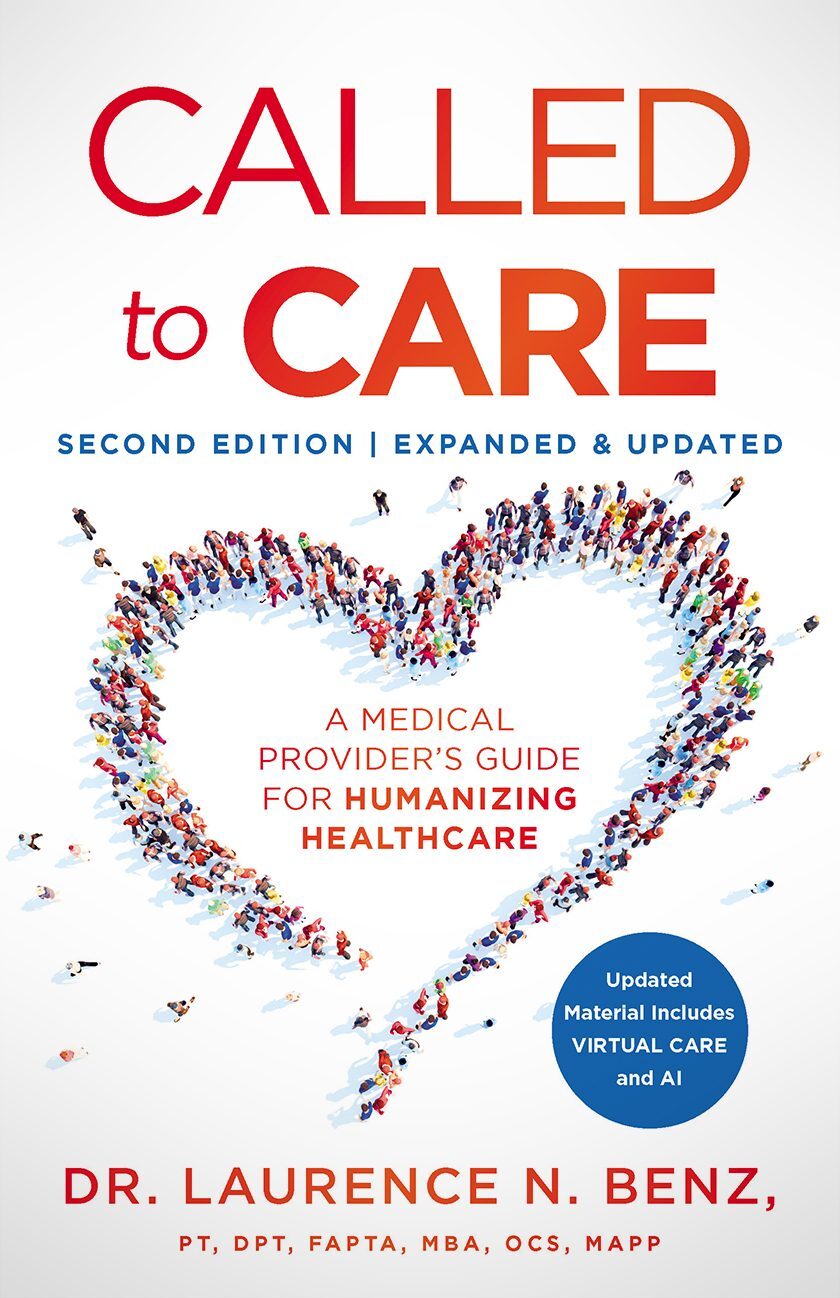
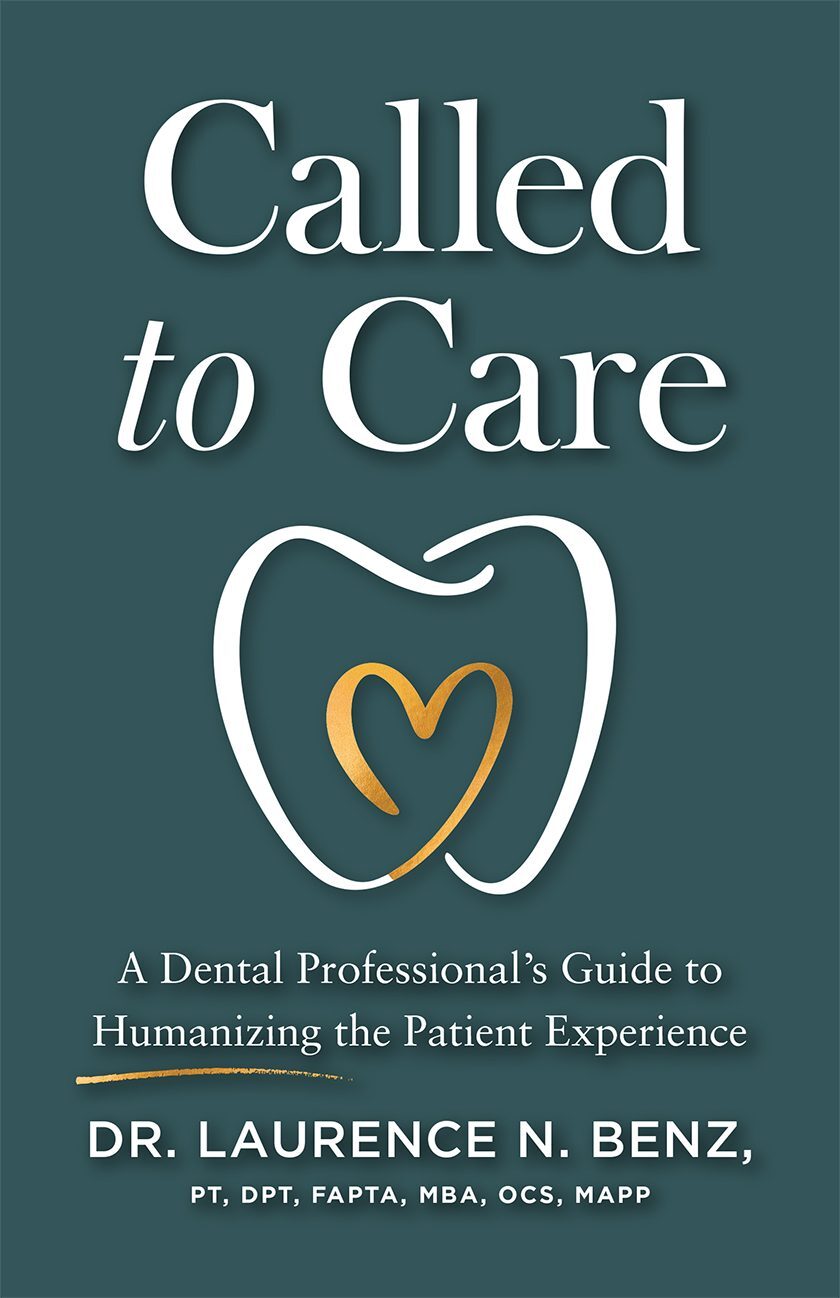
Dr. Larry Benz is the founder of Confluent Health and the CEO of Dental Care Alliance, a dental group of about 400 offices. He has written two books with Scribe Media this year: the second edition of Called to Care: A Medical Provider’s Guide for Humanizing Healthcare, and Called to Care: A Dental Professional’s Guide to Humanizing the Patient Experience. Both argue that how a provider connects with a patient is part of the treatment, and he has already turned the material into an online course that trained hundreds of dental clinicians.
In this episode of Author Hour, Larry tells host Lex Statzer why a 2002 patient study started it all, why he treats explanation as a dose, how a Green Beret learned that believing is seeing, why shame keeps people out of the dentist’s chair, and why the hygienist is the most important relationship in a dental practice.
“It's not the caring that depletes you. It's caring without connection.”
⭐ Top Moments
- From book to training at scale. “We just trained hundreds of dentists and dental assistants and dental hygienists in these soft skills. So we took Call to Care, and it amounts to about 15 different, call them interventions.”
- Proof the soft skills work. “And we did an incredible third-party outcome study that showed the providers who had gone through that training got better clinical outcomes.”
- Language is a dose. “And what changed it for me was I stopped treating explanation as a courtesy and started treating it as a dose.”
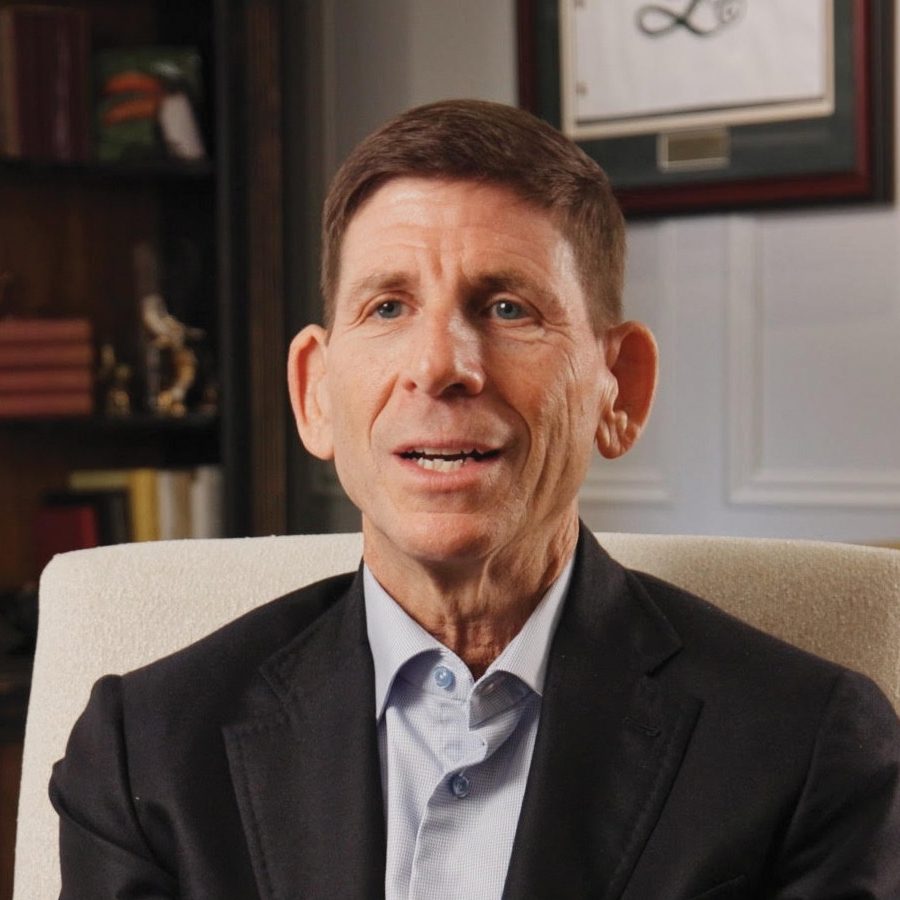
Larry Benz
★ Scribe Case Study
Dr. Larry Benz Turned Called to Care Into Training for Hundreds of Dental Clinicians
Dr. Larry Benz rebuilt Called to Care for dentistry with Scribe Media, then turned it into an online course that trained hundreds of dentists, assistants, and hygienists.
📚 Books by Larry Benz
Transcript
Lex Statzer: Hello, welcome to Author Hour. Today, I am here with author Dr. Lawrence N. Benz, Larry, and he wrote Called to Care, a medical provider's guide for humanizing health care, as well as Called to Care, a dental professional's guide to humanizing the patient experience. Both of those books are out now. Larry, welcome to Author Hour.
Larry Benz: Oh, thanks. I appreciate being here, Lex.
Lex Statzer: So, let's jump into you first before we get into the book. You're a physical therapist, and then you wrote a book for dentists, and then you went and became the CEO of a dental company. So, how did that jump happen? What happened there?
Larry Benz: Yeah, so it sounds like, you know, that went in that sequential order. It was actually a little bit differently. So, I am the founder of a company called Confluent Health. I've done two physical therapy, you know, multi-site health care roll-ups. We also had education and occupational health. And I had transitioned into a founder role of that company. And while I was on it, I jumped on a private equity backboard of a dental company called Dental Care Alliance that is a DSO. It's a very large one, about 400 offices. DSOs are, you know, just various brand names of dental clinics. Think of it as that way. And after a few months of being in an executive chair role, they asked me to step in as CEO. The CEO had departed to another vertical health care, actually, veterinary. And so, that's how I became the CEO of Dental Care Alliance. And what I found was, you know, when I was rewriting the second edition of Call to Care, I had a lot of dentists who I knew at that time would say, you know, this was our story too. And then, all of a sudden, I landed, become the CEO of Dental Care Alliance. So, what I found out, actually, not really quite was their story. I was hoping to just take the word, you know, provider, health care provider, and substitute the word dentist for it, and then publish a new book. As it turned out, there were significant differences between the two. Your patients seldom talk to you. They talk to the hygienist. Dental fare anxiety is a big part of it. The meaning effect of placebo and placebo is way different. And so, it became a much different book. Only about 50% of it really was able to convert. And that was at the same time I was revising Call to Care, which you have to update the literature, added a number of chapters, including burnout, AI, virtual health, things that, you know, had changed since 2020. So, that's kind of how it all sort of happened.
Lex Statzer: Amazing. So, with the second edition, you mentioned there were some updates in the industry that made it necessary to have that second edition. What made now the right time to go for that second edition?
Larry Benz: Yeah. So, I think of it in two different ways. As a manager and an operator and executive, you know, how do I manage differently between pre-COVID days, COVID, and post-COVID? So, I had kind of the experience of doing that. But more importantly, what changed in that venue that would make Call to Care or transporting, you know, psychological interventions into health care, what changed? Well, some of the evidence clearly changed. The little side effect of positives to negatives, which we may talk about. There were massive changes in virtualizing health care. So, if you think of your experience as a patient pre-COVID, you probably didn't have a FaceTime visit or another type of virtual care visit. But during COVID and certainly post-COVID, where you had remote therapeutic monitoring and virtual health, huge difference. Then, of course, you had AI, and that kind of speaks for itself. And so, we had to add that to Call to Care. And then I think the other major one was burnout. If you look at the number of providers, you know, COVID took out thousands and thousands of health care providers of all types. So, massive shortages occurred. Why did those shortages occur? Well, many of the providers got burnouts. So, we had to identify burnout, talk about it as adults, and really drill down. On top of that, I felt there were some other interventions that mattered. There's an intervention called Limitation Intentions, which is how to get things done, that I thought mattered to health care providers. Mindfulness, breathing, all of those things, areas around it, that really go to more of the provider well-being. So, we expanded it to sort of systemic and provider-based interventions. And all that told, the book, Call to Care, is not just a revision. It's a 25 percent larger book with a lot of new content. And then certainly all the references. That's the body knowledge of science. Things change. You got to update references.
Lex Statzer: Absolutely. The claim that kind of runs through your books is that the way a provider treats a patient is part of what makes them better, not necessarily the atmosphere, but the actual medicine. Where did that certainty come from?
Larry Benz: Well, you know, it didn't start as certainty. I will tell you that. It started as an annoyance. I remember distinctly, I've had this whole career where, as a provider, and I'm speaking with a very left-brain orientation here, where some things were happening that didn't make sense to the scientific side of it. And I remember in 2002, very specifically, I'll talk about some military experiences as well, but in 2002, we were participating in a randomized, large-scale, patient loyalty questionnaire study. Think of it as a patient satisfaction study. But a lot of the questions were open-ended. And one of the things that I kept looking at was the feedback on our clinical quality. And one of the things I found was that there wasn't anything a patient ever wrote about technique, about the specific intervention, about equipment, about anything that we had invested a lot of time, effort, and money. What they wrote about was about how we made them feel. How did the patient listen? Or how did we listen to them? Did we treat them as a whole person? Were we friendly? Were we caring? You know, who remembered their daughter's name? And I remember talking to all my managers, and I said, you know, it's really not about treatment. Treatment is a given. Treatment is an assumption. They assume providers know what they're doing. And before that, I had this Army experience, where you take this certain percentage of patients, soldiers, and you would say, look, your x-ray is normal. And right after you got those words out, they just walked out, said, okay, that means it's nothing serious. I'm just going to go out, and I'm going to go back to my unit. Then I had these experiences in Haiti, pre- and post-earthquake 2010. And what I found was that regardless of the conditions that we were treating them in, it wasn't even whether we got the patient better or worse. They all left with this incredible smile, this Duchesne smile. And so then all of a sudden, I started looking at the literature. What does the literature say about all of these kind of things? And what it shows is they have fancy names for it. You know, in the old days, we called it good bedside manner. Then they created, you know, this concept in science called therapeutic alliance. How do you talk? How you communicate? And then all of a sudden, you turn and you look at, well, you can create high-quality connections. What about your empathy? All those things around it, your compassion. You take all those soft skills, which we now call the new hard skills, and you get people to understand them and you train them because these are psychological interventions that are like a muscle. They grow with facilitation. And we did an incredible third-party outcome study that showed the providers who had gone through that training got better clinical outcomes. So irrespective of the independent variable, their clinical skills, the additional skills led to better clinical outcomes. And that's really where the certainty came from.
Lex Statzer: So it sounds like there is this customer service almost kind of side to being a physician. And there's also what seems like a gap in that education of how to handle these new hard skills. In your world, how would you implement a fill for that gap? Like, how would we be teaching young professionals these skills that are kind of getting overlooked right now?
Larry Benz: Well, it's a timely question because we just trained hundreds of dentists and dental assistants and dental hygienists in these soft skills. So we took Call to Care, and it amounts to about 15 different, call them interventions, or different teaching constructs from high-quality connections to empathy, to placebo, to active-constructive responding, to gratitude, to meaning effect. And we put it in an online course. We effectively took the book and the evidence behind the book. This is extremely scientific evidence-based. I'm a left-brain science guy, right? So it's very research-based. But then you have to put it in language to be able to teach all these, call them again, soft skills. And the way you do it is through scale. You do it through a combination of cohort-driven, where you're participating with groups and discussion boards so people can lend in on reflection and their experience. Then you have the didactic component, where they watch videos that are a couple minutes long, maybe some cartoon videos and maybe other animations of the concepts that you're teaching. And then you reflect on it, and you get feedback from them. Did they learn from it? How did it impact care? And dental, we know that dentists and dental hygienists that have better soft skills have better treatment case acceptance. Patients less likely to cancel, they last longer in the clinic, and they then refer friends and family. And so there are very objective, business-oriented reasons to do all this as well. But at scale, you have to go to an online platform in a very organized way through a learning management system and the right cohort facilitators to really get it to scale.
Lex Statzer: So for a professional in your industry listening to this, wondering, I mean, I feel like I have these skills, but I don't know if I do. What's a good kind of litmus test for them to reflect and be like, is this something that I've implemented enough in my practice?
Larry Benz: No, it's a fair question, because everybody who's got experience believes they have those skills. I'll give you the clearest example is empathy. So we know that there are plenty of studies that show that providers, both medical and dental, actually start to lose empathy while they're still in school as measured. And so you use validated third-party outcome instruments to tell you that. We also know that a high percentage get burned out while they're in medical school or dental school using Maslach's burnout inventory score. And so you have to, I think, show providers with some validated instruments. The beauty is, what I will tell you is that when you start talking to providers about the meaning effect about placebo and nocebo, about how language really is a clinical dose, it's like a drug, they really, really respond well to it. They then start to learn that empathy is a muscle, for example, that can be facilitated. It's a multidimensional construct. It's perspective-taking and it's cognitive empathy. And then on top of it, it's non-judgment. And so it's got all these various aspects to it. And you really get them to buy in to the training side of it. And then you start to talk about language, of using these languages, you realize when you say this is going to hurt a little, that there are actually studies that use that and show that it actually does hurt more when you say it's going to hurt a little. And so what language can you institute on top of it? You start talking to them about placebo effect and the meaning effect. And dental, for example, you've got a lot of these sharp instruments that just kind of sit there and you're a patient in a chair, usually upside down to your desk. And all of a sudden, you've got these instruments. Well, what does that do? Well, if you cover up those instruments where the patient doesn't see them, it's probably a good thing. And so there are all kinds of smells in an operatory and a dental that you don't necessarily have in healthcare. And so there's a number of things that they learn. So I do believe that providers who are intellectually honest with themselves reflect accurately and say, this has really helped me. Now I can take some breaths in between a patient and I see what impact that has. I'm not dehumanizing the next patient. Or I start to say to myself, yeah, we have the knee patient at room there, examiner. Well, no, that tells me I'm calcifying a bit and I need to unwind from that, start reminding them of it's a three-dimensional person. And so you use case scenarios and real life examples. In our case, in the dental book, which is why I had a lot, I had some fun writing it too. All the clinical vignettes are based on a set of characters that continue throughout and really show what happens when you're impacting patients. So applying it to something that can then do right away that has very practical implementation, I think is also key.
Lex Statzer: So if a provider read your books and they only took away one thing come their next shift, what do you hope they take away? What is like the heart of the book that you hope really sticks with that reader?
Larry Benz: Yeah, I, you know, I've been asked that in different contexts and sort of think of it this way. I think that we oftentimes have been led to believe informally that having a boundary between us and the patient is a good thing, that we should not get too close to the patient, that we should have this, you know, distance that we keep. What you find in the research is on mental health professionals is fascinating because mental health professionals have two things true at the same time. They have the highest burnout rate, but they also have the highest number that has been at their profession the longest. So they have both ends of the continuum. And what you find is that the providers who connect the most with their patients, who have high quality connections, have the longest longevity, and they have the least burnout. So if there's one thing I hope you get out of it is that it really is your calling into this profession to care. And so your connection really is the secret sauce. And so does it have an element of being well-boundaried? Of course, but not disengagement. So connection really is the connective tissue. It really is the fluid and the secret sauce that allows you to be a better provider. Because I fundamentally believe people who go into health care and dental care, they're not looking for a job or a career. They are really doing it because they were called to do so. And the thing that'll keep them doing it is the connection and the humanness that they have with the patient, not the AI scribe, not the technology, not all of these other things, but it truly is their ability to connect.
Lex Statzer: Yeah, absolutely. I'm thinking of every health care professional in my life, and every single one, the most selfless person that I know. So that connection really is the heart of the profession as a whole. Absolutely.
Larry Benz: Yeah. And to go one step further, again, it's not the caring that depletes you. It's caring without connection. So if you're surface acting, pretending to feel it, you're really going to check out. That's the most exhausting thing a human can do, is be with another person, especially as a caregiver, and be a surface-level actor for eight hours. Because the wall doesn't stop caring. You just make sure it never lands anywhere. So to the burned-out clinician, you don't need less of what you brought here. You need a way to let it land. Sit down, breathe with the patient, celebrate their small wins like you mean it. That isn't spending your reserves. That's actually refilling it. Works in opposite.
Lex Statzer: And I'm sure it reminds you consistently why you got into the profession in the first place. When you allow that wall to come down a little bit, you can find that connection and remember, oh, this is why this is so important to me.
Larry Benz: That's exactly right. And somebody much wiser than me told me one time, he says, there's two types of heroes in a clinician's life. One is obvious. Those are your teachers and parents and professors you had and all the things that go with it. But the second is less obvious, and that is your patients. The patients that you remember, the patients that you celebrated, the patients that you connected with. Take pictures with them. Enjoy those. Save the thank you notes that they sent you. Save pictures of the cakes that they baked you. Because at the end of the day, you need to be reminded, that's why I became a caregiver. And that's what will remind you as your heroes, particularly the patient heroes.
Lex Statzer: No, that's a beautiful way to put that. I love that. So you mentioned earlier, placebo, and there's a there's a piece of research in your book that I find really interesting that I'd like to dig into a little bit. So you talk about how placebo still works, even after the patient is told to their face that it's a placebo, which is such a strange idea to me. So what does that change in you, knowing that that's the case with your patients?
Larry Benz: Yeah, so, you know, placebo is an interesting phenomenon. It's one of the reasons why we try calling it now the meaning effect. And I'll give you another example that I think is a little more practical to people who are not clinicians. If I go into a group lecture hall and I'm going to give a presentation, here's what I can do. I can say to them, look, we're going to have a lecture today. And please pay attention, because at the end, we're going to have a very short quiz. And whoever answers the most questions on is going to get a prize is going to get 20 lottery tickets. I could then say, look, what I just did to you, there was a placebo. The data will tell me even telling you that I just lied to you. You'll remember more in this lecture. Okay, so that's interesting. Okay, yeah. So that's in fact, what ends up happening is placebo is not in your mind, there's a drug impact that is released because when they've done placebo research, particularly at Harvard, they have found that, you know, putting a block in that drug will stop the placebo effect. So you have to absolutely believe in it and use it. You know, the best example is the guy at Harvard, his name is like Ted Kachuk. He had all these, you know, basically a lot of patients with, you know, kind of BS. And, you know, what he told him, he says, look, these are sugar pills. There's nothing in them. And there's no science on why they might still help you. But statistically, many of you are going to get better. It's comparable to the real drug. And he would give them to it and he found out that it worked. They would do the same thing for low back pain, knee arthritis, migraine. The old placebo required lying. The new one, however, and this is why now I like calling it the meaning effect, isn't about lying or misleading patients. And what changed it for me was I stopped treating explanation as a courtesy and started treating it as a dose. The ritual of the care, the warmth, the confidence in my voice, the fact that you took, you know, took time with the patient. These are the active ingredients and you could prescribe them very, very honestly. And the flip side of this, all this, by the way, is what is called nocebo. This is going to hurt a little. It's not a warning. It's a prescription. So I rewrote the sentence. You're going to feel a little pressure instead of this will pinch. Here's what this does and why instead of let's try this, the patient's nervous system can't tell a pill from a ritual, you know, as it turns out. And we need to know that. So it's a real, real important research for clinicians to know and understand and keep up with. And the reality is we use it every day, whether we want to or not. Some of the best messages I've gotten back from the book already is, man, I've already changed my language around this. I didn't realize that I was, you know, introducing a placebo in a negative way or worse than nocebo. And it's really helped me. So, yeah, it's a real, real critical concept for clinicians, not that they should be lying or practicing placebo, but they should use language and meaning effect and ritual that promote a healthier and more healing atmosphere.
Lex Statzer: Yeah. And thinking about it from the patient side, you walk into any kind of physician office. Most people don't know anything about the science behind what's going on in that room. And so when you hear anything out of a provider's mouth, that is sacred. That's that's something that you don't understand. So every word that they speak is vital to how you're reacting in that moment, especially because you don't quite know what's going on. So their language is directing the entire conversation from beginning to end.
Larry Benz: A hundred percent.
Lex Statzer: You tell the story of Tommy, a green beret whose injuries had fully healed. Every test said he was ready. And so you asked him to walk a short, pretty easy distance. And he got about 50 or so feet and then had to sit down. What do you do with a patient when there's nothing left physical to fix?
Larry Benz: Yeah, this is a good topic because it transitions from placebo to nocebo really, really well. And I will tell you at a high level just about confidence. If you think about your own confidence, you actually have confidence in somebody else before you have confidence in yourself. So if somebody says something with authority to you, you really did that well. You have more confidence in them, and that helps you believe that you can now have the confidence in yourself. There's level one and level two confidence. I just say that at a high level as I tell you the story. But what you have to start doing is stop fixing things and get people to believe. And that whole concept is called self-efficacy, like the little engine that could, right? A guy spent his whole career on this guy by the name of Bandera. But Tommy was a green beret, multiple, multiple lower extremity trauma after a parachute jump on a windy day, bad accident, a train wreck. But he was a perfect patient, 100 percent attendance. Every measurement said go. 50 feet into the Mars, this was through his rehab, long rehab, 50 feet through it, he sat down and he wouldn't move. Nothing physical, but it was all fear, anxiety. And you can't cajole that away. I tried. What worked was we formed a pact. Soldiers understand pacts. We co-created a phrase, believing is seeing. We've all heard seeing is believing, but it's actually the opposite. You've got to believe before you can see. He'd repeat that back to me. Tommy, your body says it can achieve. And he would borrow my confidence until he got his own level of confidence and settled into the end of the system, the imagery that we would create between sessions. A few weeks later, he did every march that his status to get back to where he wanted to be as a soldier required. So when there's nothing physical left to fix, what is left to fix is self-efficacy or belief. Again, that's not soft. Bandera spent a career on it. It's the best predictor of whether we have a patient who will actually do the things we ultimately want them to do. So as practitioners, I've included all this in the book because you have to really get patients to believe. Now, I'm a physical therapist, and it oftentimes affects us really, really well. But think of a dentist and a patient who doesn't want to floss, who has fear and shame and anxiety around their smile, around their teeth. And so it really is, again, another thing that transports from medical to dental, but it has a lot has to be written entirely different.
Lex Statzer: Yeah, I really do want to dig into the thing that you're seeing in the dentist chair. That's not something you're seeing across all medicine, which is shame. Like you just mentioned, people stay away from the dentist for years because they're embarrassed. They are ashamed of the state of their own mouth, which feels more prevalent in that industry than others. So when did you realize that that was the thing keeping people out more than the fear of pain? And how are you addressing that in the office?
Larry Benz: Yeah, from what we call contrast. So I spent decades in orthopedic musculoskeletal health care. Nobody's ashamed of a torn rotator cuff that they did skiing. In fact, sometimes they're proud of it, right? Nobody apologizes to a cardiologist for their high blood pressure, right? In dentistry, the patient walks in expecting a lecture, and often they've already had one from a provider who meant well, but he communicated clinical disappointment. And that's kind of when it clicked. Fear makes you avoid treatment or things. Shame makes you avoid the one place where your avoidance will be seen. And it's a spiral. And the research now calls dental shame both a consequence and a determinant of your ultimate oral health. And we now know that oral health influences everything, including your cardiac health and your systemic health around it. So about 2 million Americans a year take a dental problem to the emergency room rather than to a dentist.
Lex Statzer: Wow.
Larry Benz: And those are the people that this book is about. And they're just not in anyone's chair. It's like 40% of the American public doesn't even see a dentist on a regular basis. So what do you do about it? Part of it is nonjudgment. Part of it is this empathy around nonjudgment and really communicating with. It's what I call, as I said earlier, the fourth component of empathy. And in dentistry, I'd argue that it's the most important. Curiosity instead of criticism, warmth instead of disappointment. So you look forward in the treatment instead of backward. That's what I mean by contrasting effect. Look, we're going to lock arms around your future here, not about your past. And you never lecture. You know, I had one dentist tell me in the course that we just were part of, he says, I got over this years ago of trying to guilt people into cleaning their teeth with a string. He learned very early on that you can't. It's more than just telling a patient that they need to floss. An operatory that doesn't look like a museum of extracted teeth, right? You want a patient should be able to say it's been nine years in here. Glad you're here and nothing else. Not shame about the last nine years. And that's a big part of it. So big portion of the book is really teaching dentists about dealing. They all learn about the dental anxiety and fear, but they never really click as to what to do about it.
Lex Statzer: Yeah. Yeah. And another interesting facet that you mentioned a little bit earlier about dentistry that sets it apart a little bit is that the most important relationship isn't necessarily between the dentist and the patient. So who is it between? And why does getting that wrong maybe cost a practice a lot?
Larry Benz: Yeah. And that's the fundamental difference between a dental and a dental hygienist. So do the math on kind of a recall visit. 45 minutes you spend with a hygienist. Five with the dentist. Yep. So it's the hygienist that knows who flinched at the injection last time it happened, right? It's the hygienist who knows whose mother just had got sick. It's the hygienist who knows one bad visit from the patient disappearing for a decade. And the profession has built the hierarchy on top of a hygienist. Dental students in the research describe hygienists as the assistants of dentists. That's not just inaccurate. It's clinically dangerous. The patient loses twice, the hygienist clinicalized, and the trust that the treatment acceptance case rides on. So you have to have a better understanding of that relationship. And it's not, you know, it's not a surprise that it's the longest chapter in the book. And here's what it costs. Hygienists who've considered leaving, you know, score lower on compassion, satisfaction, and higher on burnout than a dentist does because they spend so much more time with the patients. And the themes that they name are lack of respect from their dentist, lack of communication from them, production over patient care. And these are all things that have to be confronted. And so if they're not, the hygienist just leaves. So one of the highest turnover rates and the biggest shortages is now dental hygienists. And they're also now making a lot of money. They're walking out. And that's an asset that you can't lose because they've built all that quality, equity, and emotional time with the patient. And so the fix is mutuality. It's the relationship. And for the dentist, I say, get over yourself, sit down, ask the hygienist what he or she saw and learn from them because the reality is they're the secret sauce of your practice. They're not your assistant.
Lex Statzer: Yeah. Sounds like a bit of an ego issue that needs to be addressed.
Larry Benz: 100%. Yeah, that's right. Yeah.
Lex Statzer: So talking about burnout in the industry, you have a name for what happens when a provider kind of goes numb and starts seeing the next procedure rather than seeing the next patient as a human. And then you also in the book, you point out AI as part of the fix for this, which might be kind of last place. A lot of people would look for more humanity in healthcare. So make the case for that.
Larry Benz: Yeah. So the name, by the way, is calcification. And we learned this from, of all things, call center research. Because think about people who are at a call center. They're literally on the call asking people for money all day. Or they're asking people to do this all day. They're asking you to do anything. And what they found is after a certain amount of time, many of them naturally calcify, meaning they start seeing a person as a two-dimensional object rather than three dimension. And so it happens in dentistry. It manifests itself a little bit different in healthcare. When it's 915, it's the lower right part of the mouth that needs an SRP. And that replaces the name Elena, who's the mother of three people. Same patient. And both descriptions are accurate. It's the same patient, but only one keeps the connection. And so what you're trying to do is to gently remind folks that it's very natural to calcify. This is not burnout. Burnout is almost a clinical manifestation that has very reproducible. It's a diagnosis, effectively. De-calcification, think of it as like fatigue, dehumanizing. It happens naturally, but you can get yourself out of it naturally. Some people may calcify after two patients a day. Some, it may take eight hours. Some are just energizer bunnies. But it absolutely happens. Everybody calcifies, but not everybody burns out. But calcification is sort of the on-ramp, if you will. Now, how does AI sort of help? And this is a point of a lot of discussion, but I also think a lot of misrepresentation. First, the disclosure. AI usually stands for appreciative inquiry into psychological circles. But I assume you're speaking of it, AI, in terms of ambient documentation and artificial intelligence. So software will listen to you and write the note. That's a good thing. It speeds things up. In a sick system, a health system, burnout dropped from 52% to 39% 30 days. That is fantastic, right? That's a good thing. That matters because the one thing providers do lack is time. And as much as a quarter of their day goes to things other than the patient. So you give 15 minutes back to the provider, and you've created the conditions for all the great things that you can do in this book. So AI doesn't make us more human. It makes us less busy. The question is, what do you do with those 15 minutes? So it's not AI that's either good or bad. It's what are you encouraging the provider to do? Are you encouraging them to go home early? Are you encouraging them to take a break? Or does that free them up to spend quality time connecting with the patient? And I'm gambling on them becoming more human and using that to spend the time with the patient.
Lex Statzer: Yeah, letting AI take away some of the administration and giving you more time for that connection, which is really what it all circles back to.
Larry Benz: Yeah, absolutely. Yeah.
Lex Statzer: So this is kind of a series now. So now we have three total books built with Scribe. And you had to take something you made for one profession and rebuild it for an entirely different profession. What surprised you about the book creation process?
Larry Benz: Yeah, so I was somewhat of a deadline for the revision of call to care. And as I said, I had gotten word from a lot of dentists that said, this is kind of our story too. And there's no examples of dental and call to care. And so then I started working in dentistry. And so I'm going to keep going to some operatories and go to the clinics and be a good CEO managed by walking around. And it was the walking around that really changed a lot of my thinking about this, again, fear and trust of your dental experience, what happens in the first 30 seconds, the relationship on the dental hygienist. And there are problems that are sort of medical problems, but dental has its own uniquenesses. And a lot of it is the human in the chair. And they're upside down, the providers talk to them, they usually have a mascot. The same side of it, I didn't know a profession could be so generous. And so they were always really, really, really good about answering a lot of my questions that I had and letting me observe. And nobody ever hesitated once. And I like to say, again, I'm a physical therapist, but I like to say physical therapists and dentists are twins of different mothers because they're just sort of genetically piece coded with really nice people and really love to care for folks. You know, the dental has a issues that they're dealing with from a payment and reimbursement side that healthcare is dealing with as well, but differently. And so you have, you know, sort of the macroeconomics of it. Dentistry is also consolidating on the private equity side through DSOs, like 180 of them. Healthcare is also consolidating and there's a lot of private equity investment. So you have a lot of those things happening, some of which I try to address in the book and some of which I don't. But as I said, it's very, very different. And I've not had the experience as a CEO of a dental company. I would never known that. But then you start looking at the data and the research and it tells you a thing. One last thing that I think is important. Dental is a lot dependent on technology and equipment and overhead. And so you have really disruptive technology in dental right now. You have these three-dimensional scanners in part created through imaging and now AI. And AI could read those scans. In fact, I tell all my friends, if you're going to a dentist and you're not getting a three-dimensional scan of your teeth, go to another dentist. And now those three-dimensional scans have AI that through are able to read it just like reading an x-ray. And you as a patient can almost look at that scan. We call wellness scans and almost diagnose yourself. And what we find is that dentistry is one of the most underdiagnosed professions. People are walking around literally with all kinds of dental issues that didn't know they had them or the dentist said, maybe we wait or they didn't read the x-ray correctly. And so that has been largely disrupted. The flip side of that is I come from healthcare where they tend to be overdiagnosed, overutilized and overly medicalized. So that would be the other subset of different. And I don't dwell on that at all too much in the book, but it is something that I'm considering writing some additional things about.
Lex Statzer: Okay, scribe is here if you do. Absolutely. Well, to close on that connection piece, where should people find your books and how should they keep up and connect with you?
Larry Benz: Yeah, so I'm easy to find. The books, by the way, are both on Amazon, call to care for dental professionals is genius.us backslash call to care. We have a great website called the care of the book.com. We updated the second edition of call to care. And by the way, every dollar of the medical book goes to an organization that I'm proud of called Rising Tide. A friend of mine started a good foundation there for underrepresented minorities to get scholarships and support services to help them get through physical therapy school. And then on the dental side, we're supporting a variety of different foundations. I make no money off the books by design. It's all what I do. It's one of my one of my charitable missions. And but I also write a sub stack called the operator, which is about running health care companies. But I talk a lot about these kind of things as well. And I'm on LinkedIn a lot where I'm Larry Benz. And as I said, the dental job of the founder there, but at physical therapy on Twitter, physical therapist on Instagram. And most people don't have a hard time finding me.
Lex Statzer: Wow. I did not realize that you donated what you make from the books. That just goes back to exactly what I was saying. Every health care provider is just so selfless.
Larry Benz: Incredible. Thank you.
Lex Statzer: Well, on behalf of so many patients who are out there looking for more connection, looking for less shame. I am so glad that called to care has hit shelves. Thank you so much for being on Author Hour, Larry.
Larry Benz: You're welcome.
Want to Write Your Own Book?
Scribe has helped over 2,000 authors turn their expertise into published books.
Schedule a Free Consult