How a Book Took Cameron Herold's Speaking Fee From $3K to $40K
✨ Episode Summary
Cameron Herold was the second in command at 1-800-GOT-JUNK, where he helped scale the company from $2 million to $106 million, and he now runs the COO Alliance with members in 17 countries. He has written four books with Scribe, and he is blunt about what they did for his business: his speaking fee climbed from $3,000 an event to $40,000 for an in-person keynote.
His strategy is to give away the secret sauce. "they end up hiring me to speak about the same content that's in a $25 book, or they ended up paying me $50,000 a year to coach them on the same content that's in the $25 book." The Second in Command now runs the same play for the COO Alliance, mailing hundreds of copies a week.
For Herold, a book is not optional for a modern leader. "I don't think as a leader of a company today, you will be respected or understood if you don't have one."
⭐ Top Moments
- A book took his speaking fee from $3,000 to $40,000. Herold traced the whole climb back to authorship. "when I wrote my first book, I was getting paid about $3,000 an event. I then went to 10, then to 15, and now I'm 40,000 for an in-person event and $10,000 for a 60 minute keynote over zoom."
- Give away the secret sauce, get hired for it. Herold put every system and cheat sheet into the book on purpose. "they end up hiring me to speak about the same content that's in a $25 book, or they ended up paying me $50,000 a year to coach them on the same content that's in the $25 book."
- No book, no bureau: the Simon Sinek lesson. Herold watched a top speakers bureau pass on Simon Sinek before Start With Why existed, purely because there was no book. "David Lavin missed out completely because he didn't have a book." His takeaway for every leader: "I don't think as a leader of a company today, you will be respected or understood if you don't have one."

Cameron Herold
Cameron Herold is a top business consultant, best-selling author, and speaker. He’s the mastermind behind hundreds of companies’ exponential growth and he’s touched thousands of businesses indirectly through his work.
At age 21, he had 14 employees. By 35, he’d helped build his first two 100 Million Dollar companies. By the age of 42, Cameron had engineered 1-800-GOT-JUNK?’s spectacular growth from $2
Million to $106 Million in revenue in just six years.
His companies landed over 5,200 media placements in those same six years, including coverage on Oprah.
Not simply a theory guy, Cameron teaches what he knows from experience and is passionate about sharing his expertise with
today’s most dynamic business leaders.
★ Scribe Case Study
Cameron Herold’s Books Changed How Workplaces Operate Worldwide
Cameron Herold used his books to share his superpower with the world: building world-class cultures. Read how he did it on Scribe.
📚 Books by Cameron Herold
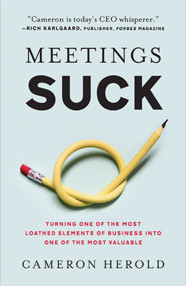

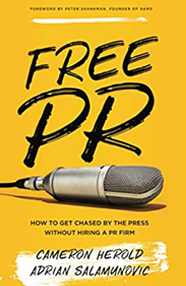
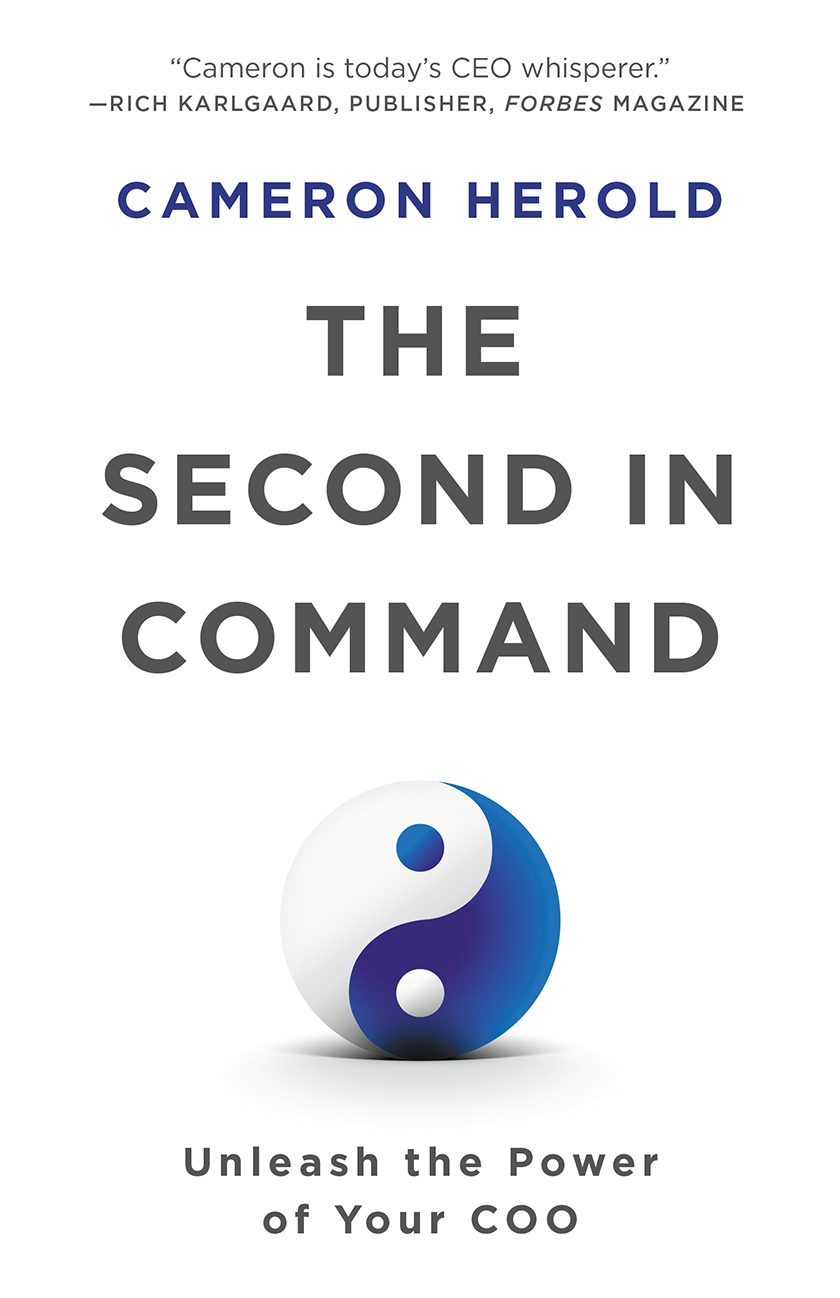
In this episode of Author Hour, Travis Stoliker sits down with Cameron Herold, the former COO of 1-800-GOT-JUNK, founder of the COO Alliance, and author of four Scribe books including The Second in Command. They talk about how his books took his speaking fee from $3,000 to $40,000, why he gives away his best material on purpose, and what a book does for a leader's credibility.
Transcript
[0:02] Travis Stoliker: I am proud to be joined by Cameron Herold, one of the longest and most prolific scribe authors out there. Cameron, thank you for joining me.
[0:11] Cameron Herold: Hey, Travis, welcome, or thanks for having me. I actually want to start with a really funny story because there was no reason for me to ever be a scribe author. I was at an event, gosh, I'm going to have to say maybe 14 years ago, maybe 13 years ago, and my wife at the time didn't want to come in and see a speaker. I was going in to see this speaker and she's like, I don't want to go see him. So she went outside and she ended up meeting up with the original founders of scribe, Tucker and with Zach. And they were sitting out in the lot with them and I came out and she goes, Hey, I want you to meet Tucker. And I'm like, I don't really want to meet Tucker. I'm so busy talking to all my friends. She goes, I really want you to meet them. So I met them, liked them, but then she came up to me and she goes, Oh, by the way, I bought you a birthday present. And I said, well, what's my present? She goes, I just signed you up to do another book with them because I'd done my first book double double a couple of years before. And I go, I don't want to do another book. She goes, well, too bad. I also signed you up for a three book package. You're doing three books with them over the next five years. I'm like, what are you, he's like, I don't want to do any more books. Anyway, that was why I wrote Meeting Suck and Vivid Vision and Free PR was because she signed me up to do a three book package with scribe. And then, you know, after that, I did my fourth book with you guys as well. So yeah, of my seven books, I've done four of the seven with scribe. Wow, that is amazing. I didn't know that story either. I, I don't think I've ever told this story. It was pretty funny. Yeah.
[1:40] Travis Stoliker: That's quite a present to your wife are quite extravagant gift givers.
[1:45] Cameron Herold: Well, well, and it was different back in the day and, and they gave me a price for, you know, if I'm doing three instead of one, there was a good deal on the pricing and, but I never wanted to be an author. You know, I never had this burning desire to go and write a book. But what she saw was that my first book started to land me some bigger speaking events and started to build my credibility. And then she realized if I had some additional ones, it would help. And what she really realized was a lot of the content I'd covered in double double wasn't substantial enough. Like I did a chapter about meetings and it could have been a whole book. I did a short little chapter about vision. It could have been a whole book. So she really was bang on with the concept. And again, I didn't want, I didn't want to be an author, but she understood what being an author would be or would mean.
[2:32] Travis Stoliker: So can you tell me about how that did impact? Because your book, when you ended up publishing with Scribe, that ended up really changing your speaking fees, your everything for your business. There was a lot of, there was a lot of impact that your books had on your business, correct?
[2:49] Cameron Herold: Yeah. And it was much more than I think what a lot of authors try to go out and do. And they try to be like an Amazon bestseller. I mean, why are you so chasing this Amazon? Everybody gets Amazon bestseller. And then like three days later, you're, you're number 2 million on the list. So you're not really a bestseller and you make yourself look stupid. I published with Scribe because I wanted to get the ideas out to establish my credibility as a thought leader in the entrepreneur space and then later in the space. And then I realized that the more information I gave to my audience, same audience as you guys have got, the more they would want to hire me to help them put the ideas in place that were even in the book. So when I wrote the book, I put everything there. I gave every system, every cheat sheet, everything that I've used over the years to coach and help companies. And what's ended up happening is they end up hiring me to speak about the same content that's in a $25 book, or they ended up paying me $50,000 a year to coach them on the same content that's in the $25 book. So even by giving away the secret sauce, they still ended up, I guess it just built that credibility.
[3:57] Travis Stoliker: Yeah, that's exactly right. Obviously. And what was your background too? You, you built the, I got 100 got junk, right?
[4:06] Cameron Herold: Well, I was the second in command for 1-800-GOT-JUNK. I was the COO and that was the fourth company that I'd built. So I also was a senior executive with a group called College Pro Painters. I opened up the West coast of the U S for College Pro. Then I was a partner in a chain of auto body collision repair shops, which became known as Gerber Auto Collision in the U S and Boyd Auto Body in Canada. And then I was hired as the president of a private currency company. Then I joined my best friend, Brian to be his COO at 1-800-GOT-JUNK. And we scaled that from 2 million to 106 million in six and a half years. When I left there 19 years ago, that was when I started, you know, really working as a coach and a speaker. And then did, I think, did my first book in around 2011.
[4:52] Travis Stoliker: Wow, man, I didn't realize that you had all of those other business growth stories too. That's amazing.
[4:58] Cameron Herold: Yeah. I think what happened was the convergence of the success of 1-800-GOT-JUNK and then me leading in May of 2007, right when the Facebook launched. So Facebook was launching, Twitter had just launched, and I was able to now share all of my successes that I'd had. 1-800-GOT-JUNK was on this really apex of its kind of growth trajectory. And I think those two coincided. So what's funny is people ask me about 1-800-GOT-JUNK, but they never ask about College Pro Painters. That's probably where I got my real world MBA. You know, I, I'd coached 120 entrepreneurs before 1993 and I didn't join 1-800-GOT-JUNK until 2000. So I'd already been in this business coaching space for a long time.
[5:43] Travis Stoliker: And what is your, can you tell the listeners about your coaching space now, your COO Alliance and all the different things that you're doing now?
[5:52] Cameron Herold: Yeah. One of the things I noticed over the years was there were a lot of groups for entrepreneurs. You know, we've got Vistage and EO and YPO and Genius Network and Baby Bathwater and GoBundance and Maverick. Like there's so many amazing groups for entrepreneurs. And then there were conferences for lawyers and doctors and engineers and marketers, but there was nothing for that second in command. So we started a group 10 years ago called the COO Alliance. And actually one of our very first 10 members was the original COO from Scribe. Zach Obrant was one of our first 10 members 10 years ago. And then about a year or so later, the second COO for Scribe, Brittany, was a member of our COO Alliance as well. So we've had two of your COOs as early stage members of the COO Alliance. So now we have members from 17 countries. We do two in-person events every year. One is held at MIT's Endicott House in Boston. One is held at either Vancouver or Austin, Texas. And then we have two hour events online every month over Zoom. So yeah, that was the purpose was to build a mastermind community for that COO to give them the skills and the confidence and connections to scale up their CEO's company. It's amazing.
[7:07] Travis Stoliker: And that was kind of my role too. I was fortunate to grow up next door to a guy that built a company called Liquid Web. I was not the COO, but we basically had two people. I was the marketing and sales side. And my friend Chris was the operation side. That is like an underappreciated layer in the business, especially when you're working with a founder that has kind of stepped back, that second in command really becomes the one that's doing a lot of the driving of the growth, like obviously, like you've been mentoring for a long time.
[7:43] Cameron Herold: Well, and even if the founder is still there, it's very much a yin and yang relationship that we've noticed that most successful companies have a good leadership team, but they have a yin and yang partnership between the CEO and someone who is their second in command, whether it's a mentor or it's an executor or it's some MVP, or it's somebody that they can truly lean on to do all the stuff that they suck at and don't like to do, you know, even when Mark Zuckerberg was starting the Facebook back in around 2005, 2006, he hired Sheryl Sandberg to be his COO. Mark was a 21 year old and hired Sheryl to be the adult in the room. She was his second in command for 15 years. No one ever really knew the name Sheryl Sandberg until the last one or two years that she was even there. She was really an inward facing operations, kind of really the one scaling his ideas, allowing him to be the technical expert, maybe more of the thought leader and evangelist, but she was a very inward facing role in, in my case at one 800 got junk. I was a very outward facing COO. I was about PR. I was about marketing. I was sales. I was franchising because I built that before. So it's a really strange relationship as to what that second in command is, but it's not always more important when the CEO becomes less active. I think it's almost more important right in the early days when they need someone else to lean on because the CEO's role is pretty lonely and scary often in that journey, right? They can't tell the leadership team. They don't know what's going on. They don't want to go and tell all the people in the company that they suck at a few different business areas. It's easier to delegate that to someone who is really good at it. So it becomes a real strong partnership, I think.
[9:30] Travis Stoliker: That's a really good point. And yeah, I think you're right that it is even critical at the earlier stages and that yin and yang that, yeah, that's, that's perfect. That's a perfect metaphor.
[9:41] Cameron Herold: You know what a fun example I have for that is from the Northeast in the US was imagine what the ice cream would be like if it was just Ben or just Jerry. I mean, you needed to have Ben and Jerry to have Ben and Jerry's, right? Like, and that was the yin and yang partnership of the two, but that is, that is true in almost every single company.
[10:01] Travis Stoliker: Yeah. I wonder what is your take in this role? Cause like EOS is trying to formalize some of this. What is your take on EOS?
[10:10] Cameron Herold: I like EOS and Gino and I are friends. Mark Winters and I are friends. Mark wrote Rocket Fuel for Gino. They're talking about the visionary and integrator role. Very similar. What they talk about is slightly different from what I do, where they'll talk about the integrator being the tiebreaker. So if they go into a meeting with seven people, they say the second in command is the tiebreaker in the vote. I disagree completely. What I say is that second in command's job is to get really good debate, really good discussion, share all the facts, the feelings, the restrainers, the drivers have a really good, healthy discussion. So the team makes a decision and the team chooses that decision together. So their job is to be more of a facilitator versus a tiebreaker, right? And you're never going to have a really strong leadership team of people that are going to turn to one person and say, okay, you make the call. It's kind of like when mom or dad, you know, say, well, this is my house, do what I say. That works until you're about a teenager. And then at some point the teenagers are like, yeah, sorry, mom and dad. Or we're kind of adding to this discussion. So I like their rules and their system for smaller companies. Once you get past about 50 employees, most of our clients go off from EOS and move to a company called Next Level Growth, which is actually named pretty appropriately, and actually I think that the founder of Next Level Growth, Michael Erath is an author on Scribe as well. His first book was called Arise. His second book was called, oh shoot, something organizations, Five Obsessions of Elite Organizations. He's a Scribe author as well, but most of our clients leave EOS and move up into the Next Level Growth world, which is just operating systems for real companies with real teams and, you know, kind of once you're past the 50 people, Mark.
[11:56] Travis Stoliker: Yeah. How did you handle that personally? When, like when we at Liquid Web, when we got past the probably 100 employee Mark, definitely 150. It wasn't for me. I liked the smaller company, you know, we got past Dunbar's number. We didn't know each other. It seemed like the infighting started, you know, now we're managing seven locations, two continents. Like what did, what was you personally? What do you like? What is your sweet spot?
[12:22] Cameron Herold: Yeah. Dunbar's number is 150 and said that you can only really have relationships with about 150 people. We noticed the same thing that when you get to about that number, I remember a couple of days when I saw people walking into the office and I didn't know if they worked here or they were visiting someone. When someone told me somebody worked here, I didn't know what business area they worked in. I certainly didn't know what their name. I didn't know if they had pets or dogs, or I didn't know anything about these two people. So it became very complicated at that point. What became very simple was to focus on the core values, our core purpose, our vivid vision, make sure that we built a culture of alignment. That was what was easy. So what became my strong suit was getting results through people and growing leaders and growing leadership skills. Thankfully, I learned all that back in the college pro painters days. What people don't realize about college pro every year, there were about 60 of us at the head office, 30 back office, 30 front office. I was in front office and we had to go out and recruit, hire and train 800 franchisees. So imagine recruiting, hiring and training 800 franchisees. And then those 800 franchisees had to hire 8,000 students and train them to paint houses. So in one month to six weeks, we had to train 8,000 people to paint $64 million worth of houses in four, in four months. And then everybody would quit and go back to school. So at a young age, when I was 22, I was getting trained on things like situational leadership, coaching, priority management, delegation, one-on-one coach, like all the executive functioning skills. So I became very good at leading teams and teams of teams at a very young age. Where business started to get complicated for me, like you was, we got to 3,100 employees system-wide at 1-800-GOT-JUNK, 330 cities, four countries, 13 operating P&Ls, that's when I was pulling my hair out. When I left 1-800-GOT-JUNK as their COO, they brought the former president of Starbucks USA to come in as my replacement. She came in and said, wow, what a cute little company. Yeah, I was out of my sandbox. So my real sandbox is probably the 50 person to 500 person companies. That's my sweet spot. That's where I'm really strong.
[14:39] Travis Stoliker: That with college pros, that is, I can't even imagine how you manage that. That is, that is amazing.
[14:46] Cameron Herold: We managed based on the critical few things versus the important many. We managed to simple, simple systems that we could write down on a post-it note. Yeah, we, we basically called it, you know, minimum viable, everything. It was like, get it done and get it out the door. We reverse engineered everything. So everything was plan your work and work your plans, started a goal, reverse engineer it. We were really, really good at priority management. I'll give you one example of how we would do stuff throughout the course of a year, your company, anybody watching, anyone listening, we always have ideas for our website, oh, tweak this, change that, tweak this, change, meaning you're like editing your website all year long. At college pro, all of those ideas would go into a file folder. And then once a year we would pull out the ideas. So let's say it was changing our manual. All of the ideas would go into a folder and one week we'd pull out all the ideas and we'd edit the manual for one year. We do it all in one week. Then we would put it away and not think about it for a whole year. So instead of always working on everything, we really focused on working on specific things during specific points in time.
[15:53] Travis Stoliker: I'd like to pivot to book. So maybe talking about, I've just asked you the question, why should every business owner write a book?
[16:04] Cameron Herold: I don't think as a leader of a company today, you will be respected or understood if you don't have one. So if you write a book, it's going to codify your ideas, your vision, your skills, it's going to align people. It's going to inspire people. It becomes a really solid marketing tool. Right now. One of the things we're doing for the COO Alliance is we're giving away copies of our book, the second in command. I'm mailing them. I'm including shipping and we're sending out hundreds of copies a week. Because the more people that read the book, the more that are signing up for the CEO Alliance. Right now we're finding out that the average client is signing up for the CEO Alliance within 62 days of receiving the book. So my lifetime value for a client's around $14,000. I can send out a thousand books at $10 each. If I convert one people, I make more than my cost. So like the numbers are just really, really working for us. So a thought leader, aligning people, inspiring people becomes a really good recruiting tool. It becomes a way to educate your partners and suppliers. Most people never even read the book, but placing the book in front of them establishes you as a thought leader and some credibility. I've had clients of mine that have had a book that have walked into a bank and put their book down and the banker finances them because of their credibility. When I got my green card going into the U S from Canada to get my green card, I walked in with three of my books and put them down and that was like a credibility play. So there's this instant credibility that most people out there don't realize how easy the process with Scribe is to actually get a book from your brain, you know, out into print.
[17:51] Travis Stoliker: That's just amazing. I didn't realize that you used that as a part of your green card application.
[17:57] Cameron Herold: Yeah.
[17:58] Travis Stoliker: That's amazing. What is going on with Canada and U S relationship right now?
[18:04] Cameron Herold: I don't think it's Canada, U S I think it's the president of the United States and his just like, I don't know, man, he's just being wonky. I think he likes distracting people with these weird things and, you know, he's, he's fighting one fight, but if he says something strange, he distracts you from the core. But he's definitely wonky.
[18:21] Travis Stoliker: I don't know. Things, things are going to be all right between us. Right. I mean, I'm in Michigan, so it's a Canada and Michigan or, you know, I used to play floor hockey in Canada.
[18:30] Cameron Herold: We got another couple of years. We'll be fine.
[18:32] Travis Stoliker: Good. All right. Good. Good. Your book increased your speaking fees a ton and that got you into a speaking bureau, right? Like how does the book, how, how does somebody that's listening to this, how do they connect their book? You know, a lot of our authors, obviously they're business owners that are looking to transition their career. They may be sold their company. They're looking to move on to the next thing. Maybe that's a professor spot. Maybe that's getting more on the speaking circuit. How do you recommend somebody transitions that already has a great pedigree, you know, a great set of experiences and accomplishments that is qualified to be a speaker? How do they actually do that? Are there some tactics that you follow? Like, how do you, how do you connect those dots?
[19:21] Cameron Herold: Yeah. Let me speak to a couple of points there. First off, I'm going to tell a story about a friend of mine who was on our board of advisors back at 1-800-GOT-JUNK. Do you know the name Simon Sinek, who wrote the book, Start With Why, was his first book? So Simon was on our, Simon was on our board of advisors four years before, five years before he wrote the book, Start With Why. And so Simon used to come to my home for dinner. We've been friends. We hung out together last or two weeks ago in San Antonio. We both spoke at a 5,000 person event called Keller Williams. We spoke at their annual conference. I did the opening keynote. He did the closing. But anyway, when Simon had not written his book, Start With Why yet, he had done his original TEDx talk at TEDx Puget Sound in Seattle, and he wanted to land more speaking events. I had him out to speak to a couple of EO chapters. I introduced him to a couple of smaller events. He wasn't even getting paid for his speaking events back in those days. This was like 2009. I introduced him to a big speakers bureau in Canada and the U.S. called the Lavin Agency. And David Lavin was like, don't want to talk to him. He doesn't have a book. There's no way I could represent him. I'm like, dude, he's really, really good. Nope, won't talk to him. Don't want to talk to him. I'm like, whatever. You're missing the point. I introduced him to another agency and they're like, yeah, we like your recommendation. We'll take a chance on this guy. We wish he had a book, but you know, it sounds like we really respect you and like you. They signed Simon. And about six months later, his book Start With Why came out and his TEDx talk went crazy. Eight or nine years ago, his speaking fee was $100,000 and he was doing a hundred events a year. David Lavin missed out completely because he didn't have a book. So my lesson to everybody is if you have a book, it gives you credibility, right? Not only with the biggest speakers bureaus, but just with anybody. Now, if I go back to how I started doing speaking, I recognize that most events, most conferences, most masterminds can't afford to pay for speakers, but they want someone to deliver some content that will help their community. So I offered to speak for free to any conference I would go to. So if I was planning to go to a conference in six weeks, I would reach out to them and say, Hey, I'm coming. If you need a speaker, if you need a breakout speaker, a keynote, happy to do it. Here's what I can speak about topic A, topic B, and I won't charge you. They would always come back or often come back and go, yeah, we'd love to be to speak. We can't pay you, but we'll, we'll comp you your registration, which I was paying anyway. I'll take the free registration. That's amazing. And then I was also, I used to be very shy going to events. I was a little bit socially awkward. So I would ask them if I could speak on the opening day. And the reason was if I could speak on the opening day, I would have two and a half more days at the event, talking to people who had seen me on stage, and it was easier than me walking up to random people I didn't know. That's when I noticed very quickly that speaking was a really easy way to enter into a community and get known and get credibility. And then you have the book then raised my, I, when I wrote my first book, I was getting paid about $3,000 an event. I then went to 10, then to 15, and now I'm 40,000 for an in-person event and $10,000 for a 60 minute keynote over zoom. So yeah, it's definitely, you know, the payback on it is huge. Right. And I love doing speaking over zoom because my, my commutes about a minute and a half from the kitchen.
[22:48] Travis Stoliker: That is amazing. How would somebody that has a book, how would you recommend that they go about getting introduced to these conferences?
[22:57] Cameron Herold: One is to make sure that you get a very, very basic speakers page, like get a landing page built. You can do that with Claude or chat GPT. You can get a 16 year old to build you a speaker website. Now that has some testimonials, some pictures of you speaking, some videos of you speaking every event that you do for free, add some testimonials, some videos, and some, some, some video, just something that's basic that's there. So offer to speak to free to any groups in your city, the chamber of commerce, rotary clubs, Vistage or EO chapters, whatever it is, whatever your industry events are offered to speak for free in exchange for get some testimonials, get some video, hire a 16 year old to come in with a DJI or an iPhone and get some video footage of you on stage, just kind of pull it together slowly. Don't worry about it being perfect. And then I would also come up with at least two speaking topics so that you give them option a or option B, not a yes or a no. That would be my starting point. Well, that was my starting point.
[23:58] Travis Stoliker: That's perfect. You'd mentioned AI too. I wondered how, how you're using AI. What are the opportunities? What are the threats related to your, you know, your, what you've dedicated your life to the second in command, making great COOs. What are the opportunities and threats in that area? And then I'd love to also hear what you're thinking in the book space too, because obviously in the book space, we're facing an onslaught of more and more AI slop generated books that are coming out and what are you seeing in AI? And how are you leveraging it? What are the opportunities and threats?
[24:33] Cameron Herold: Well, one of the interesting ones right now is that most books going forward will never be read by a human. They'll be read by an AI LLM to summarize the book for a human, which is really intriguing. If you go on any LLM right now, Claude, Chachapiti, Gemini, you know, Grok, whatever, and say, give me a three page summary of Cameron Herold's book, the second in command. Boom. It does it. I never uploaded my book, but it somehow found it scrapes. It pulls it together. Does that bother me? No. The reason it doesn't bother me is I might not get paid my fee for selling that book, but if more people can access my ideas as a two pager or a three pager, they're then going to reach out for me to say, can you help me put those ideas in place? Or can you come and speak to my audience for free or for paid? So I just think it gives us more ability to get our ideas out there. I think we have to adapt or die as an author. And again, I didn't, I do make money off my seven books. Thankfully I make money off all of them, which is really nice, but I didn't write a book to make money off of selling books. I wrote a book to make more money as a coach, as a speaker, as a thought leader. And as that, and I ended up doing both. So I'm not really worried about it. I think on the AI slop side of things, people have to be very cautious with putting their name on something that really doesn't sound like them. That's one of the things that I'm most happy with. In fact, when I wrote my book, vivid vision with scribe, I went back to them when the first draft came back to me and I said, this sucks, this does not sound like me. I don't like it. It's horrible. And the team looked at it when, oh my gosh, you're totally right. We actually just fired that writer. We're going to do a full rewrite of the book, vivid vision for you. And when I looked at version two, I was like, oh my God, it sounds like I'm literally saying it out loud to you right now, they got my voice down. They dialed it. I think it's, it's kind of an iterative process that you work with a group like scribe, but when your content sounds like you and feels like you, your audience is going to resonate with that. So yeah, I, I, I guess I wouldn't use an AI tool to produce it. I might get an AI tool to help me get me some of the way, but I want the book to sound like me and to, to get my points across. I don't want it to be just filled with nonsense. Even if you write a shorter book, right. I would rather write a hundred page book that is absolutely me than write a 220 page book that's filled with fluff that nobody wants in the first place.
[27:05] Travis Stoliker: Yeah.
[27:06] Cameron Herold: Here's, here's one tool that we're actually, I just, this morning sent a note out to my team. I said, can you actually test my current video avatar and my current AI voice that we used, I think 11 and Delphi and another group to create some voices and video of me, I said, I want to do a full test using the highest quality we have of both my sound and video avatars of me reading a section of my book, the second in command. And I said, if it's perfect, we'll create a whole bunch of video content that we can push out across all the social media platforms. Currently 65% of all social media is viewed on a phone. So nobody really cares whether you're an AI version of yourself, as long as it sounds like you, looks like you as coming across really well. So that's one way we're going to have like, you know, 150 pages of my content, ideally being read and filmed by me without having to, you know, me spend any time there's some big upside, you know, with that content for sure.
[28:03] Travis Stoliker: Wow. That's, that's really cool. I wanted to touch on potentially a sensitive one. You've introduced a ton of authors to Scribe, two of those being your friend, John and your friend, Steve. And we just, you know, and of course, if, if you don't want to, I wanted to give you an opportunity to talk about your friends, if you wanted to.
[28:25] Cameron Herold: John Rulon and Steve Sims, John Rulon and I met 19 years ago this week, we met at an event called the entrepreneurs organization. We met in Las Vegas at their global university. And I had just finished doing a speaking event about my vision concept. And John came up to me and asked me if I would come and speak to his EO chapter in Cleveland. Long story short, the first chapter of his book giftology was about when I showed up in Cleveland and he'd filled my entire room of my hotel with Brooks Brothers clothing. We ended up becoming very, very big friends. I got him onto his first stages as a speaker, introduced him to Scribe to be an author. You know, he stayed at my home. I've stayed at his home, blah, blah, blah, blah, blah. John passed away two years ago, last month, left four girls under 13 years old. Pretty tragic story, but John Rulon was a gift. It's interesting that his first book was called giftology. His team went out and wrote a second book and Scribe got heavily involved in helping them produce that. And I think you guys did that without fees, which was a really nice gift to his family after he passed away. And his second book was called beyond giftology. And that was really a tribute to John and how gifting can change business and change your relationships and change the world, so that was one. And then a second friend of mine who passed away last year was Steve Sims. Steve was the founder of the blue fish group. We've got some crazy stories about Steve. But wonderful human ran a really, really great mastermind community. His son is now running his mastermind forum. And Steve and I met in a group called the genius network founded by Joe Polish. And, and yeah, they, they were both authors that I introduced to Scribe. Both had profound impacts on their business and they both became referrals to Scribe as well. I know they both referred lots of authors to Scribe too. I think that's kind of what happens is you realize the process works so well and it has so much success in your own business that you can't help but start telling the rest of your communities about it.
[30:34] Travis Stoliker: I was at strategic coach two times ago, so like six months ago and a guy, you know, we're going around and you know how it is in those groups where everybody starts shouting out their favorite books and what book everybody needs to read. And you're just jotting down, okay, these are the four that are next on the list and the guy right next to me is like giftology, that's the book that everybody in the room needs to read. And I just turned to him and I was like, ah, thank you. And we had an amazing talk obviously.
[31:01] Cameron Herold: I love that. I'll tell you a funny story about strategic coach and a book then. So this was about 10 years ago. I was in my seventh year of strategic coach as a member. And I was talking about this really incredible book that had always had a profound impact on me. And it was called the dream manager. And the whole room kind of cracked up laughing. And I'm like, what's so funny? The dream manager was amazing. It had a profound impact on me. And this woman puts her hand up and she goes, I'm Mary Miller. The book, the dream manager was about me and my business. I'm like, what was that even, how's that even possible? But there is the power of a book and the stories that it tells and the impact that, you know, a book like that can have on businesses.
[31:42] Travis Stoliker: And that is absolutely perfect. And Cameron, I think that's a perfect place to end. Is there anything else that you'd like to share?
[31:50] Cameron Herold: I guess it's kind of the story that I've been, well, interesting that I call it a story. It's the story that I've been saying for years now, which is to remember that none of this actually matters, right? We're all just walking each other home. The death rate is still a hundred percent. Let's enjoy the journey. Let's love bomb our clients, spend time with our friends and family, you know, chase down our bucket list activities and enjoy the journey because the business is only one part of us. It shouldn't be who we are. It should just be one part of us, but let's, let's enjoy the journey we're on.
[32:22] Travis Stoliker: Man, that is absolutely perfect. Well, thank you so much, Cameron. I'm looking forward to the fifth time we do this together.
[32:30] Cameron Herold: Travis, appreciate it. I'm also working on my very final book, which is going to be the highs and lows of CEOs. And it's navigating the emotional rollercoaster ride of entrepreneurship. And I'll be producing that with Scribe and I'm about 85% written with that book. So that'll be my very, very, very final book as I am, I'm moving into semi-retirement.
[32:49] Travis Stoliker: So congratulations on that. And we are so excited to be a part of it again. Thanks Travis. Appreciate it. Thank you.
Want to Write Your Own Book?
Scribe has helped over 2,000 authors turn their expertise into published books.
Schedule a Free Consult