Mummy, Can Boys Also Be Doctors? Marlene Belfort on Muddling Through to Success
✨ Episode Summary
Dr. Marlene Belfort is a molecular biologist, a member of the U.S. National Academy of Sciences, and a recipient of the International RNA Society’s Lifetime Achievement Award. After a career of writing scientific papers, she worked with Scribe Media on a very different kind of book: Mommy, Can Boys Also Be Doctors?, a memoir of growing up in apartheid South Africa and building a science career while raising three sons, written as a message to young scientists and other humans.
In this episode of Author Hour, Marlene tells host Teddy Smith why writing a book felt like an adventure with no guardrails, why every career involves a lot of muddling through, how a grandson’s question at a family gathering became the title, and what it means to her when young women in science tell her the book makes them feel they are not alone.
“I always felt that raising a family and having a career were mutually reinforcing.”
⭐ Top Moments
- The book reaching the readers it was written for. “And there are many young women who really feel like I'm giving them a gift, and that's very, very satisfying because that was really the intent for the book.”
- From scientific papers to a memoir. “So writing a book is a very different experience. There are no guardrails, there are no checks and balances. So putting it out there was really an adventure for me.”
- The question that became the title. “One of their little boys, when we were at a family gathering, turned to his mom and asked the question, Mummy, can boys also be doctors? Because his mom and his aunts were all doctors.”
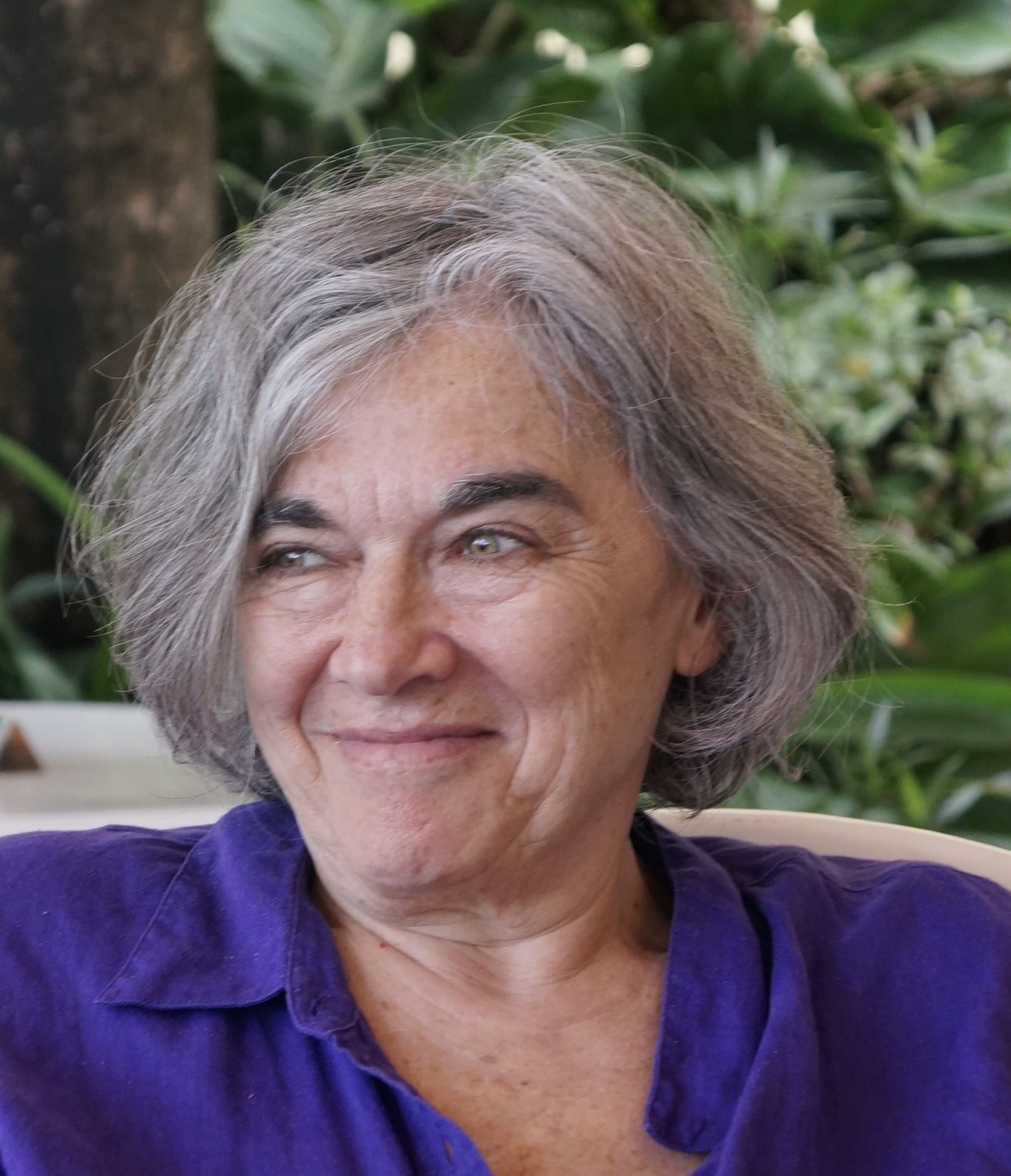
Marlene Belfort
Marlene Belfort is a pioneering molecular biologist internationally recognized for her research on introns and inteins, the non-coding regions of DNA that help regulate genes. She is a member of the U.S. National Academy of Sciences, a Fellow of both the American Academy of Arts and Sciences and the American Academy of Microbiology, and a recipient of the International RNA Society's Lifetime Achievement Award. Her memoir, Mommy, Can Boys Also Be Doctors?, traces her path from a childhood in apartheid South Africa, and the loss of her father, to a career at the forefront of science while raising a family, with reflections on resilience, ambition, and balancing work and motherhood.
📚 Books by Marlene Belfort

Transcript
Teddy Smith: Hello, and welcome to the Author Hour podcast from Scribe Media. Today's guest is Dr. Marlene Belfort. She's a distinguished professor of biological sciences at the University of Albany and a member of the US National Academy of Sciences. And for over four decades, her lab has studied how genes and proteins are edited, regulated, and it's work that's earned her the International RNA Society's Lifetime Achievement Award. And in 2025, she worked with Scribe to turn her backstory into a different kind of story with her book, Mummy, Can Dub Boys Also Be Doctors? A Message to Young Scientists and Other Humans. And it's kind of a mixture of a memoir that follows her childhood in apartheid South Africa, but also a message to young people about wanting to become doctors when they grow up. So Marlene, welcome to Author Hour.
Dr. Marlene Belfort: It's a pleasure to be with you, Teddy. And it was a pleasure working with Scribe, I need to say.
Teddy Smith: Brilliant. Well, your book went down extremely well. You had an indie reader score of 4.8 out of 5, which is very rare to get such a high quality score for a book.
Dr. Marlene Belfort: Yeah, I was pleased to see that. I've done a lot of writing in the past, but very different kind of writing from this. And so it was a nice surprise to see that.
Teddy Smith: Yeah, that's actually, you've led on very nicely to what my first question was. Because you've written over 200 scientific papers, I think that's right. And so obviously writing a book is a completely different experience to that. Tell me about the differences from writing the papers to writing a book.
Dr. Marlene Belfort: So I think the major difference for me was having checks and balances when I wrote scientific papers. I would send them out and reviewers would comment and then the papers mostly would be accepted eventually. But there were guardrails, there were guardrails imposed. So writing a book is a very different experience. There are no guardrails, there are no checks and balances. So putting it out there was really an adventure for me.
Teddy Smith: How many words is a scientific paper typically?
Dr. Marlene Belfort: Oh, you know, I've never counted words, but my estimate would be about 5,000.
Teddy Smith: Right. Because I'm thinking writing a 5,000 word scientific paper compared to writing a 60 or 70,000 word book is obviously a completely different undertaking. When it came down to doing the writing, how did you break up your writing day to make sure that you got that word count done?
Dr. Marlene Belfort: Yeah. Well, you know, I have a day job. So the writing needed to fit in with that. And I'm fairly disciplined about writing in general. And so I left the book to when I felt like writing it so that I was motivated to write at the time that I did it. And throughout my career, I've worked around the clock. So whenever I was moved to write a few paragraphs, that's when I would do it. And also when I had time, right.
Teddy Smith: How long did it take you to write the book?
Dr. Marlene Belfort: I would say I worked on it for a couple of years, but I thought about it probably my whole life. It didn't occur to me that it would land up in a book, but I often had reflections on what my life might teach others. And yes, so formally two years and informally a lifetime.
Teddy Smith: And what was it about, why was it a memoir you wanted to write rather than sort of a different format of book?
Dr. Marlene Belfort: So I thought, first of all, that I had an interesting life and an irregular path to where I am now. I think young people look at adults, they see success, they think it's a linear path and that gets one there. But really, it's highly irregular. There are fits and starts in careers and there's a lot of muddling through. And so I actually make the point of muddling through in the book because young folks think there's none of that and they're the only ones who muddle through. But we all did it. I still do it. It's part of my process and I thought it was useful to get that out there.
Teddy Smith: I know that we're going to come on to your growing up in South Africa a bit later, but talking about what you just said with the muddling through, what's muddling through in your career looks like? Because I know you've been a scientist for a long time, but it sounds like you've worked on different projects. So how's that muddling through kind of, what's that path look like?
Dr. Marlene Belfort: Yeah. So in the lab, the muddling through was getting data that was surprising and perplexing. And what did it mean? And initially, one has no idea of what it means. And so one in the lab does experiments that come at the problem from different directions. And the muddling can last quite a long time until eventually all of the muddling converges into an epiphany, if you will, of what this all means. And similarly in life, regular life out of the lab, I experienced quite a bit of confusion, not quite knowing where I was going, but going anyway until a clear path forward emerged. So that's what I mean by muddling through is part of the process.
Teddy Smith: Were you a scientist, focusing on different areas before you started focusing on the RNA science that you're more well known for now?
Dr. Marlene Belfort: Well, I was always interested in doing science in model systems that were experimentally easy to manipulate. So all of my work is in microbial systems. All of the RNA work was RNA work in microbes. Yes.
Teddy Smith: Yeah. Because one of the big things you talk about in your book is about building a career whilst you're raising a family. And just before we came on, you said how big your family was. I'll let you tell me exactly what it was. It was too big for me to remember. So I was going to let you introduce it. But what was it like building a career whilst raising that family?
Dr. Marlene Belfort: Yeah, it was difficult. I have three sons. They are adults today. They have three lovely wives and among them seven children. So I have seven grandchildren. That was another message from my book. The fact that I always felt that raising a family and having a career were mutually reinforcing. Difficult, but when I was burning out at the lab, I got home and there were these loving kids with little problems that I knew how to solve. And when the kids exasperated me, I said, I need to go off to the lab now. So I actually found that raising kids while having a career was very helpful to me. Guilt notwithstanding, I was always guilty that I wasn't spending enough time with the children or that I wasn't doing justice to my research. But I think not spending too much time with children is actually giving them a gift in retrospect. As long as they have the support and love that they need, I think not dwelling too much on them is a gift. And this was at a time when moms were at home waiting for their kids when they came home from school. And so I couldn't do any of that. And I thought my kids were missing out on something. But actually, I think that taught them independence in a way that was helpful to them. I wish I'd known that back then.
Teddy Smith: Was there any other advice that you think you wish people had told you early on?
Dr. Marlene Belfort: Yeah, yeah, yeah. So I did a lot of catastrophizing. Like, how am I messing up these kids by going off to a meeting and being away for a week? How was I messing them up by being exhausted at night and reading them a story and flopping to sleep in the middle of it? And so I really thought that I was harming them by some of these actions. And also early on in their lives, we moved a lot from California to Israel, from Israel to Chicago, from Chicago to Albany. And I thought, my goodness, are these kids ever going to learn to put down roots? But really, what I was doing is having them become each other's best friends, which they are still today. And they're certainly well able to establish roots. And so yes, the message I think I'm sending to young people is don't catastrophize about actions. A lot of these activities are actually teaching children resilience, and that's a gift to them. So I wish I had been told that earlier on. I'd have felt less guilty.
Teddy Smith: Do you think that's one of the messages you try to put across in your book?
Dr. Marlene Belfort: I think it is. I think it is. So there's no substitute for love and support when they need it. But aside from that, there's a lot of leeway in which one lives one's life.
Teddy Smith: Yeah, I completely agree. One thing that you do touch on this a lot in your book that has changed obviously since you started, and you just touched on it just now, is that women working in science obviously was quite rare when you were younger, and now has become more and more common. But apart from that, what has changed for women working in science, do you think, since you started?
Dr. Marlene Belfort: Well, that is an important change, so I had no female role models through graduate school and when I was applying for my first jobs. The male faculty when I was in graduate school, it was entirely male faculty. I think there were probably 20 or 25 professors in the department, and they were all men. And there I was as a graduate student, pregnant and insecure and not knowing who to look to in order to build a career. So there was a lot of uncertainty of whether I could pull this off. Then eventually when my career became more established, there was one female scientist at Yale. Her name is Joan Stites, who is a luminary in the field. She's still working, and Joan was very kind and supportive and was my role model. So that is something that's changed a lot, the fact that there now are female role models for the young women. And also there are support systems that exist now that didn't exist then. There are societies, there is an association for women in science, so there are many different supports that exist now that didn't exist when I was a young scientist.
Teddy Smith: Yeah, and you do talk about some of those things in the book. Have you heard from any women or young people starting in science who have read the book and those sort of messages you've put across have helped them?
Dr. Marlene Belfort: Yes. So I do quite a bit of work for scientific societies like the American Association for American ASM, American Society for Microbiology, sorry, for the RNA Society, et cetera. And there are many young women who really feel like I'm giving them a gift, and that's very, very satisfying because that was really the intent for the book. So all of the insecurities that I felt and expressed in the book and all the difficulties make these young women feel that they're not alone. So I enjoy a lot interacting with them, and I feel that they benefit from the message.
Teddy Smith: Yeah. Well, when you wrote the book initially, it sounds like helping the young people and especially younger women in the industry is a major part of it. I know you mentioned you had an interesting life, but who are the people that you wanted to reach, and how did you expect to help them with the book?
Dr. Marlene Belfort: Well, the people I most wanted to reach were young people, not exclusively women and not exclusively scientists, because I think the kinds of doubts and fears and imposter feelings are not exclusively ones of scientists. I think young people, as they navigate options for their future and as they start engaging in them, very often feel insecure, as I felt when I was at that career stage. I think for young people, simply knowing that they're not alone and that what they're thinking and feeling is a legitimate way to be thinking and feeling. I also know that young people at the moment are feeling particularly insecure, particularly insecure in science, that options are closing for them, that these are very hard times. I remind them that when I graduated with my PhD, it was during the Vietnam War. A war. You know, they're living through a remote war again. Again, jobs are scarce, in part because of our administration, federal administration. You know, I tell them it was so difficult to get a job when my husband and I graduated with our PhDs that we decided to go abroad for a few years. I did my first postdoc in Israel, where he was a young faculty member. Then when things got better, we came back and here we are. Those are the kinds of messages that I enjoy sharing.
Teddy Smith: I know, because you grew up in South Africa, how much do you think moving to the US had an impact on the rest of the story in the book? Obviously, just moving to America is a big part of the story, but what I mean is having that experience of growing up in South Africa, then moving somewhere completely new. How much do you think that had an impact on the way you wanted to work?
Dr. Marlene Belfort: Well, certainly I couldn't have done in South Africa what I did in the United States. First of all, my graduate education was something that simply wasn't available to me there. Then coming to work in a different country, it had two effects. The one was feeling very other, so feeling in some sense displaced, feeling in some ways less than, but also feeling different. Feeling different started to feel okay after a while. Being different in science and probably in most careers really has its values and I started to embrace that. I think that was very helpful to me in my later years in science.
Teddy Smith: One thing that I've talked about a little bit in these questions, but don't really understand myself, is what RNA is and what your research actually was as part of your professorial work. Explain what it is that you do, because obviously that impacts why you wanted to write the book in the first place. Explain a bit more about the RNA science.
Dr. Marlene Belfort: Yeah, so I'm really glad that you're asking me this question because...
Teddy Smith: I only know it from the COVID vaccines and you sort of hear the acronym, but you don't really know what it is.
Dr. Marlene Belfort: Yeah, so in answer to the question, when I got into my research career, I was and still am a fundamental scientist. I was simply moved to understand better and to know more, because I had the sense that that is eventually going to be helpful. So all I did in my career was burrow for the truth, to try to understand living organisms better. And RNA was an important way of understanding that, because it's a molecule that is a messenger. It tells cells and organisms how to live their lives. And then when I was an independent scientist and made a breakthrough, we found out that these RNAs that we were looking at could be more than messengers. They could actually be catalysts. That was a discovery that was initially made by a friend of mine, Tom Cech, and then we applied the same principles to the work we were doing. And then friends in the field started also from being basic RNA scientists to make very important discoveries. So another friend, Jennifer Doudna, developed CRISPR systems. CRISPR systems are these DNA editing systems that can now be used to make small changes in the genome in order to repair defects. So by the way, both Tom Cech and Jennifer got Nobel Prizes for their work. We're very proud of them. And then another friend, Katie Carrico, started to work on the fundamentals of putting foreign RNAs into humans as a way to develop vaccines. And her discoveries also led to a Nobel Prize and resulted in the COVID vaccines. And just in this last month or two, Moderna and Merck have come up with a marvelous discovery of using tailored RNA vaccines against skin cancer such that what was previously a deadly form of skin cancer, melanoma, has a much, much better prognosis than it did previously. So my plight is for fundamental research. We need to support it. It is the basis of a lot of precision medicine of today. And so it's really been a remarkable scientific journey. And one of the regrets I have is that the public is not yet more embracing of RNA medicines because they're our future. They are going to be involved in all sorts of cures and RNA medicines. There are now companies springing up all over and yet we're still struggling with saying, RNA is okay. Vaccines are good for you. So we still have a while to go with the public messaging. And probably scientists haven't done a good enough job on that yet.
Teddy Smith: And you're still working in RNA research now. What are you working on?
Dr. Marlene Belfort: So by the way, I closed my lab two years ago, so I'm no longer active in that sense, although we're still writing papers. And what we found in the course of our work is that some of these very specific RNAs that we were working on actually can move around the genome and can move from one genome to another. They're called transposable elements or mobile DNA or mobile RNA. And they are very important in development, sometimes in causing disease. They're important in ageing. So yeah, mobile elements and transposons occupied a large amount of our research time. It was very rewarding.
Teddy Smith: Very good. And obviously, because your book's called Mummy, Can Boys Also Be Doctors? It's a message to young scientists. When you were starting working in RNA, it sounds like you were near the vanguard of it right at the beginning of where research was starting with RNA research. So if you wanted to give some advice to young boys or girls as well who were thinking about starting a career in science in quite a vanguard area as well, what would your advice be to them?
Dr. Marlene Belfort: I would say, be thoughtful about the problem and follow your passion. By the way, when you mentioned the name of my book, I thought it would be fun to tell the listeners why the title, because it also in a sense ties into this generational women in the workforce thing. So it happens that my three daughters-in-law are all medical doctors. One of their little boys, when we were at a family gathering, turned to his mom and asked the question, Mummy, can boys also be doctors? Because his mom and his aunts were all doctors. And I was just so amused by that. First of all, from the minds of young folks come these incredible questions. But also, it's so much contrasted with what the scene was when I was that age, when all the doctors were guys. So it was really a sign of the times. When I heard it, I thought, if I ever write a book, that's going to be its title.
Teddy Smith: That's such a nice story. When you talk about those stories that you've brought into the book, how much of it was bringing your family stories around your grandchildren, things like that, into the narrative of the book?
Dr. Marlene Belfort: Yeah. So in a sense, the book is for them, right? And it's for them in the way that it is for young people in general, but it's also for them in that it tells them the story of their ancestry, which I think will be a lovely thing for them to have and to hand on to future generations.
Teddy Smith: Yeah, definitely. Well, it's been great chatting to you. Thank you so much for coming on and sharing your story. It's been fascinating to hear the backgrounds to your research and things like that. I mean, if readers are going to read the book and you want them to remember one thing from that book, what would that be?
Dr. Marlene Belfort: That the things one fears can be most damaging actually often turn out to be gifts. So to feel less fearful of one's actions as long as the intentions are always good.
Teddy Smith: Yeah, that's a great message. Well, thank you so much. Are you working on any more books at the moment?
Dr. Marlene Belfort: Yes, I'm working. So I'm working on behalf of a number of scientific societies. One topic we didn't cover is that I had some mental health difficulties. So I'm also working on behalf of a society called Dragonfly, which is involved in mental health care for young academics. So what exactly was the question? What am I doing now?
Teddy Smith: Yeah, what are you working on next?
Dr. Marlene Belfort: Oh, my books, books, books, books. Yeah. So as I said, I'm working for scientific societies. I'm working for the RNA Society. And we're hoping to come up with a book for the common person to understand the intricacies and values of RNA. So hopefully, that will be the next book.
Teddy Smith: Great. When do you expect that to come out?
Dr. Marlene Belfort: So it's in its infancy. So I imagine two years at least.
Teddy Smith: Okay, good. Well, we're looking forward to seeing that when it comes out. But thank you so much for coming on. If you want to get a copy of Marlene's book, you can find it on the Scribe Media website, scribemedia.com, and just search for Marlene Belfort on there. Or you can also find it in all the normal bookshops like Amazon, Barnes & Noble, places like that. Yeah, thank you so much for coming on, Marlene. It's been great chatting. It's been lovely. Thanks. Yeah. Thank you. Bye.
Want to Write Your Own Book?
Scribe has helped over 2,000 authors turn their expertise into published books.
Schedule a Free Consult