Ryan Bisio on Why Basketball and Music Are the Same Thing
✨ Episode Summary
Ryan Bisio is a basketball coach and a lead singer, a former FIBA player and the 2023 California Community College Men’s Basketball Coaches Association State Coach of the Year with nine studio releases as a musician. In Musicality of the Game: The Artistry of Basketball, the first book he spent 11 years writing, he argues that basketball and music are the same thing, and breaks the game down through rhythm, tempo, harmony, melody, and tone.
In this episode of Author Hour, Ryan joins Lex Statzer to map a basketball team onto a band, explain why the shot clock math makes the NBA top 40 radio, share how a playoff loss taught him that art is not a competition, and describe how the Scribe team pushed him to put more of himself on the page.
“As soon as I just really inserted more of my personality, my writing style, my experiences, my passion, my ways to turn phrases, just me, me, me, me, me, the book really came to life.”
⭐ Top Moments
- The book only he could write. “So I thought, I want to take a shot at writing the type of book that really only I could write and then structuring it in a way that is like a piece of standalone art.”
- “This book needs more of you.” Ryan credits the Scribe team with the change that brought the book to life: “As soon as I just really inserted more of my personality, my writing style, my experiences, my passion, my ways to turn phrases, just me, me, me, me, me, the book really came to life.”
- Finishing is the win. “And if you’ve created art that can be experienced by another human being, you won.”

Ryan Bisio
Former collegiate and FIBA basketball player Ryan Bisio is a coach, athletic administrator, and accomplished musician. In 2023, he was named the California Community College Men’s Basketball Coaches Association State Coach of the Year. The four-time Golden Valley Conference Coach of the Year has led his teams to seven conference championships in the past nine seasons. A singer-songwriter (ASCAP), producer, and performer with nine studio releases, Bisio holds a bachelor’s in contemporary music from California State, Monterey Bay and a master’s in coaching and athletic administration from Concordia University Irvine. He resides in Eureka, CA, with his neighbor’s cat, Bill.
★ Scribe Case Study
Ryan Bisio's Musicality of the Game Makes the Case That Basketball and Music Are the Same Thing
Coach and lead singer Ryan Bisio spent 11 years writing Musicality of the Game, a first book that maps a basketball team onto a band.
📚 Books by Ryan Bisio
Transcript
Lex Statzer: Welcome to Author Hour. Today, I am joined by author Ryan Bisio, author of Musicality of the Game, The Artistry of Basketball, which is out October 20th. Ryan, welcome to Author Hour.
Ryan Bisio: Thank you. Thank you for having me. This is great.
Lex Statzer: So let's actually start before the story. So in July 1988, a six-year-old wins a bowling gold medal and comes home to the piano his nana promised. When did you realize that afternoon just wasn't only an origin story, but the whole thesis of your book?
Ryan Bisio: Probably not until pretty late in the process. I had written that short story years ago, but it felt like isolated at the time. It didn't feel like it was necessarily connected to a larger body of work. It was a piece that kind of tongued at my heartstrings because my note had since passed when I wrote it. And so the origin story of how music came into my life, I didn't know how that was going to weave into the book, but I knew that I had to write that story and document it for some sort of purpose. And as the book began to develop and the sequencing began to take a hold, I knew it was going to make it in the story, just didn't know where. And I think with the help from some of the editors at Scribe and some of the test readers early on, it became pretty obvious that that should be an early piece in the book to introduce readers to not only just my writing style, but also to your point, just the thesis of the book itself and how music came into my life and then therefore infiltrated every element of my life. It's a pretty bizarre story though, just at face value. I mean, to win a gold medal in the sport of bowling. I mean, most people probably don't even think you can win anything in bowling, but I guess the 80s was a different time. And yeah, I just kind of took a natural inclination to the sport, ended up excelling as a very young child. And next thing you know, there's a piano in my house and the whole musical journey began in such a unique way.
Lex Statzer: So in Musicality of the Game, you don't say that basketball and music are similar, you say they're the same thing. So explain what you mean by that.
Ryan Bisio: Yeah, it's kind of the punchline there. But I think to me, I've always found that they are both artistic expression. And I don't think I come out verbatim in the book and say that I believe basketball is artistic performance or it is an art. But I do think that artistic expression is something that's very common amongst both of them that I've found. Basketball in particular is such a revealing sport, you know, with the uniforms that people wear, you can hear what everybody is saying. It's so revealing in a humanistic way. And I find that all sorts of mediums in art are very similar in that way. And they both thrive on human connection. You know, humans connect to pieces of art, humans connect to themselves creating a piece of art. And I feel the same way with basketball. You look at the way teammates interact with coaches, and it's like the power of a team's play and a power of their potential is tethered to how deeply they can communicate and connect on a human level. So in those specific ways, I think they are the exact same thing. And I also think that they both reflect the natural world, you know, and I try not to get too geeky about it in the book and talk about how, you know, the seasons change in 4-4, the universal alignment of our planets creates a harmony, you know, which allows us all to have this conversation and not be floating around, you know. And I think basketball, just in its truest nature, reflects the natural world in that way. Harmony, rhythm, and, you know, I make the argument, as you alluded to in the book, that they really are the same thing. And basketball, when applied to musical terminology, musical elements, it just responds so naturally to it. And it almost feels like the game has been waiting to be revealed in this way.
Lex Statzer: So how long did you sit with that before you trusted it enough to build a book on it?
Ryan Bisio: Yeah, I appreciate that question. What happened for me was I think the theoretical part of it had been around for maybe like 15 years. I wrote it over the course of 11 years. And I was living in Copenhagen, Denmark at the time, and I was coaching professionally. And when I had the first idea of like, what if you assigned different basketball elements to musical elements, like what would rebounding be in the five musical elements, you know, rhythm, harmony, tempo, tone, melody, blah, blah, blah. So I just kind of assigned those, all the basketball stuff to elements at the time and just kind of left it there. All of the ideas I had were very theoretical. But it took coaching at the professional and college level, and really applying these concepts into like, legitimate teams that I was coaching at current times to really put these theories to the test. And I think, when I started writing the book in 2015, to finishing it last summer, the theory became much more hardened, and it became like, no, I don't think this is true. Like, I know this is true based on not only just some of the ways that our teams performed over the years, but just having enough practice to put the theory in to test it. And to know that like, no, when this happens, this pretty much always happens, you know, type of stuff to where I think, you know, 15 years ago, it was like, ah, this is this kind of maps, you know, when you talk about it in this way, but then I created such a more sensory experience of the game for myself to where I could kind of peek around the corner a little bit, because I could sense what was about to happen, my body was feeling it the same way I would have a, my body would feel something musically, you can you can anticipate patterns that you can feel when the song's about to go to a chorus, stuff like that. And that's the same way that games began to unfold for me. So I think the tone of the book changed because my confidence in these ideas strengthened to a large degree.
Lex Statzer: Lay out the core framework for somebody hearing it cold. So the band, the positions, the ball as a note, how did you arrive at that comparison? And what exactly is that comparison?
Ryan Bisio: Yeah, thank you. I think I so the basically the five elements as it's laid out in the book, and they track to these five fundamentals. So there's rhythm, there's tempo, there's harmony, there's melody, and there's tone. So five musical elements, and the entire book is placed around those five musical elements. To your point, you talked about the band, you know, I think an easy way to map it for someone who knows a little bit of basketball, a little bit of music would be like the the center, the the big player on a basketball court is kind of like the drummer, they provide size, strength, you know, they provide boundaries that they kind of are like the umph of a basketball team. The power forward stretch forward is kind of like the bass player, they have a direct relationship with the drummer, it's really important that they're connected to drive a piece of music rhythmically. On the court, you know, the power forward would be a rebounder, a screener, hustle plays, you know, engaging the other frequencies, but adding, you know, strength and stability to to the sound. So they would constitute as the rhythm section. You know, the harmony section would be like the two and the three. So like the shooting guard in the in the small forward, where it's like, they're kind of in the higher frequency ranges, you know, that they can switch on defense, they create great floor spacing, they're very interactive, you know, they're they when they engage the the rhythm section, you know, the four and the five, something more powerful is built. And I think in music, you know, if you're watching a live band, and you know, you see a piece being started by a drummer, then the bass player hops in, it starts to get add strength, and then a guitarist and a keyboard player hop in, it's like, okay, all of a sudden, there's some different storytelling being being added to this piece. Right now, there's much more sonic depth to this piece. And it just it starts to to create a story and added a ton of momentum. Lastly, I think the point guard to me is like the lead singer, I used to be a point guard back when I played back in the day, I've been a lead singer of many bands, I really identify with that being the case on a basketball court. The point guard is, you know, he takes the, you know, the band's energy and creates a cohesive statement with it, right. So they're singing, but they're also having to interact with every player on the band to make sure that they're harnessing the energy and applying it on the floor directly. So that's a bit of a thought experiment that I have early in the book, then just kind of like, okay, here's five players on a band, here's five players on a court and how they would map. And, you know, when you and then throughout the book, as I as I break it down, according to the five principles, you know, rhythm, tempo, melody, harmony, tone, you know, the game tracks very, very harmoniously, to lack a better term to those elements. And that's the beginning of creating a more sensory experience of the game when it's being played, just kind of using that as an initial thought experiment.
Lex Statzer: Well, selfishly, as a former point guard myself, I really like that comparison. But what about the ball itself? Does the ball itself has to have a comparison as well?
Ryan Bisio: Yeah, so it's useful, useful to think of the ball as a as a note, right? And everything we do with the note is very, very important. As you know, the point guard, like, you have the ball most of the time, you know, as a player, so the mics in your hand a lot of the time, if you're going to pass the mic to a bandmate, you know, you want them to be open, you want them to be ready to, to take that note, and everything that they do with the note is very, very important. I believe the ball is its own energy source. And I believe that when it's when it's kind of handled with compassion, with poise, with confidence, players decisions become very innate. And it almost feels like you're a transmitter, when the ball's got energy, and it gets to you, it's it's almost implying what it wants, it's kind of speaking to you in that way. And when everybody's generating energy within the ball, it just makes players feel more confident and decisive. You know, sometimes as a songwriter, I've some of the songs I've written, you almost feel like you're kind of a transmitter, it almost feels like it all of a sudden, the song was there, and you kind of discovered it. And there was this energy source that you just, all you simply needed to do is be a conduit for this piece of art that you create. It's the same in basketball, when when everybody's kind of energizing the ball, putting some juice in it, you end up doing things that like you're almost even beyond your own capability sometimes. And it almost feels like you're a middle person in that, in that exchange of creativity. So, you know, the ball, sometimes it's needs like the barest of whispers when it's passed on to another, sometimes it calls for restraint, you got to hold on to that thing for a couple measures, for things to kind of be balanced before you move it on to the next bandmate, right? Everything you do with a note, it depends on the music that's come before it. And when you're really active listening in a band or on jazz, in jazz music, or on the court, you realize that like, you can't just impose your own agenda onto the ball, like that's the game doesn't respond well, like that music doesn't respond well to a guy who's just going to take a solo no matter what the band is doing out here, it really depends on what's happening before to know exactly how to handle that note at any given time. So I think when you when you think of the ball as a note, it's really helpful for players to kind of sink home like, okay, yeah, like it's it is about active listening. And everything I do with the note really does matter even when it feels like I'm not really doing much with it right now. That might be exactly what the song requires in that moment.
Lex Statzer: Speaking of energy sources, the shot clock has 120 BPM metronome, NBA at 120, FIBA at 100, NCAA at 80. Explain how you arrived at these numbers. When did that arithmetic click for you?
Ryan Bisio: Yeah, that clicked kind of in the process of writing the book, I was just trying to make some comparisons to the NBA. And I was like, you know, the NBA, it's kind of like, it's like pop music, you know, it's like top 40 radio, it's like the most popular league, everybody loves it. It's super addicting. We all watch the highlights, like, oh, there's an NBA game on love it, right. And then I got into the math of it. And I was thinking, okay, like, it's a 48 minute game. What if you divided that by the 24 second shot clock? Sure enough, it's 120 BPM, which is the standard pop music BPM for every most pop songs we love are right around 120. Like seven nation army. I use this example in the book. It's a stadium anthem that's played at every sporting event all around the world. We hear it pretty much every day. Sure enough, it's 120 BPM, right? So, you know, digital audio workspace, drum machines, all of these default settings are 120 BPM. So I thought that was really fascinating how, how well the NBA maps to just like that industry standard of kind of pop, because that's what I was feeling about the NBA. I coached in Europe for a number of years. So my inner musicality has been very much influenced by the FIBA game. The FIBA game, it's a, it's a 40 minute game with a 24 second shot clock. So when you track that and you divide the, the, you know, the, the number of seconds in a game by the shot clock, the FIBA is a hundred BPMs, which really it's a little more relaxed, you know, in terms of its flow. And then we break down American high school basketball for boys and girls, the WNBA, and they start to produce more jagged, rigid, really random type of numbers. There's a lot of states in the United States who don't have a shot clock in high school basketball, which makes them really rhythmically out of tune with the rest of the world. So we just talked about in the chapter comparing FIBA basketball to American basketball, how, you know, the mathematics of the grid that, that these leagues are based on are all different too, and produce different musicalities. Another example is the, the abundance of media timeouts and in a replay timeouts that you see in the NBA, they just, the game stops like every few seconds. Like as soon as the game starts to find a flow, there's either a media timeout or they're going to the monitor and looking at some replay for five minutes. It is every time there's a stoppage, an NBA game needs to regenerate its own internal dynamics. Whereas FIBA basketball has much more of a flow state in the way that its metrical system is organized. Coaches can't just be, players can't call timeouts on the floor. Like it's, like I say in the book, it's embalmed to preserve its, its flow. Whereas the NBA, even when it's trying to do the right thing, just keeps on kind of stopping the game. And I, like I say in the book, it's like a top 40 pop station that goes to commercial after every song. It's hard to kind of get into a flow with it, you know, but yet it's kind of the industry standard. And I think most people's favorite league to watch.
Lex Statzer: That is interesting and something I doubt most people have ever thought about. So the book is kind of built like a concept album with four acts and an encore, every chapter tagged with a BPM and readers invited to shuffle like a mixtape. So there's a real structural gamble for a basketball book here. What made you commit to it instead of writing this kind of straightforward playbook?
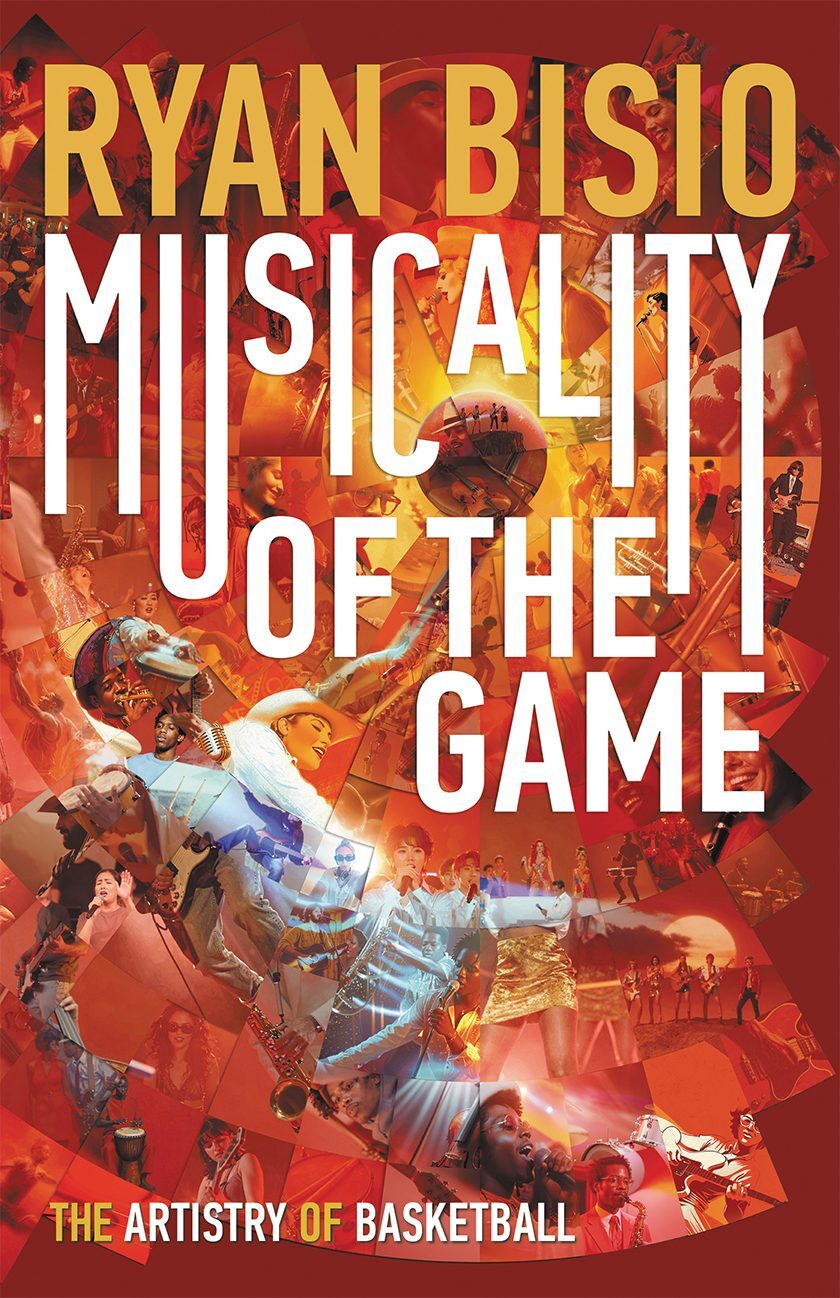
Ryan Bisio: Yeah, that's a great question. It's a huge risk. And I think sometimes when you, approach a creative project with a beginner's mind, you, when you don't know what you don't know, sometimes you're free to produce something that artistically could be an original statement. You know, I really find that I wasn't weighed down by the experience of writing previous books. This is my first book. So the way that I wanted this book to feel sequenced, I had to find the inner music within it for one. And when I did, it had a very unusual structure, which my hope is that it serves the book really well in its originality. I think a lot of coaches could write just like a playbook, you know, and they could write, you know, some guidelines and principles, which have worked well for them. And if you do this and do that, you'll win kind of a thing. For me, my identity as a coach is very unique with the experiences I've had working in the music industry. So I thought, I want to take a shot at writing the type of book that really only I could write and then structuring it in a way that is like a piece of standalone art. And I think the, you know, even the art of this book, you know, the famous mosaic artist, Charis Sebes, the Greek artist who did the cover art. It's kind of, even when you see the book, it's clearly like a piece of art. And my hope was that it would just had layers and layers and layers of meaning throughout it that were sequenced as in, like you said, as a concept album, but also equally responsive, like a mixtape. If you just wanted to like, I want to read the rebounding chapter, you could go straight to that and still be rewarded for taking the journey in that way. But if you choose to take it as a concept album, it's meant to go on that type of thematic ride and reward you at the end. The encores you alluded to are a series of short stories that kind of continue to speak to how I earned, you know, it's hard earned wisdom, you know, some of this stuff. I'm not really the hero in any of these stories. You know, I had to really get out there and dig my, roll my sleeves up and dig in the trenches for this information. And I think those stories in the encore reveal how all of this stuff kind of came full circle for me. Then how these basketballs ideas are so woven, not only into my music life, but how I kind of ended up living my life through these musical principles too, like as a whole. So there's a few levels to it, but to your point, very risky in kind of organizing it this way. And my hope is that people will see the beauty in it, see the ride in it, and also see the creativity and artistry in organizing these ideas that way.
Lex Statzer: I mean, even hearing you speak about the way that the book is laid out, there's a rhythm to the way that you explain it. So it makes total sense to do it that way. But I'm going to shift gears a little bit and talk about the 2023 regional final. So you hold the Sequoias to their lowest total of the season and still lose 58 to 49. And you tell a disappointed locker room, we won the music of the game. Our art was superior. What was it like to live that moment? And what was it like to write about that moment?
Ryan Bisio: I appreciate that question. It was, maybe you felt this way before some of our listeners where you're on the precipice of making your dreams come true. And you're right there. And you're not quite able to do that. And some people talk about silver linings and how, you know, what are still some positives we can take away from that? I think that loss helped me realize that art is not a competition. And there's still ways, you know, but basketball is and people's livelihoods are on the line and money is on the line and all sorts of things are on the line. But I realized after that game that from an artistic perspective, that we came in and pretty much created the piece of art that we were there to create together. And we won basically every metric you could imagine, except for the final score, which is what the only thing that most people look at, you know, and it really got me thinking that like, that's a way to soften losses from a coaching perspective is to really be clear about the type of art that you are trying to make. To your point, I mean, holding Sequoias to 58 points, they were averaging nearly 90 a game. We controlled the rhythm of the game. We controlled the tempo. You know, our harmony was superior. I even think tonally the game was played to our tone. They just had such melodic talent and so many just brilliant improvisers that they were able to just kind of win in the score. But I think all of the musical elements of that game, we were in complete control of. And that was what our intention was, was to create our music. And when you watch that game back as an artifact, it becomes clearer and clearer as the years went on that that's exactly what we did. And I think introducing that chapter early in the book, and we say, you know, our art was superior. It kind of pays out the reader later in the book when we read the chapter called art is not a competition. And it kind of helps coaches reframe, you know, maybe how to handle winning and losing in a way that that is much more artistic. I think, as you know, as an artist, like you're you as a musician, you're not trying to like beat anybody, you know, like when you when you're a visual artist, you're not trying to necessarily beat the gallery down the street. You're trying to create and express yourself in a way that's genuine and honest and hopefully can help people transcend and get them into a different mind space and inspire them in their own lives. And if you've done that, then you've won. And there's no doubt that in that game that we lost, that we inspired all sorts of people by the art that we made together. And in and of itself, like that is a win.
Lex Statzer: So speaking of your message to other coaches, you want to delete the word expectation from coaching and replace it with want and hope. And you describe a season as a photographic mosaic. Don't peak too early. So for the coaches staring at an ugly early record right now, what do you want them to understand about not judging the mosaic just yet?
Ryan Bisio: Yeah, thank you for that question. You know, that that season, I'm referring to a season where we started off one in five. And if you would have looked at the mosaic at that time, it would have looked very disturbing. I'm imagining. Right. I think my point to coaches and players and artists and whatever medium that they work in is that. You still have the ability to control the way the mosaic will turn out if you simply focus on the day to day brushstrokes and event and trust that eventually it will reveal the truth. It may be an inconvenient truth. It may be a truth that you're not prepared to confront, but it also may be a truth that is revealing and freeing and helps lead towards more growth in the future. And there's a symbolism to to that idea. Of course, the cover of my book is a photographic mosaic where all of these millions of little, you know, images of musicians create a basketball player who's laid it in. You know, it's kind of it's that same idea. But in the course of a of a season or a creative project that you're embarking on, that if you just day to day focus on your brushstrokes and just do the best you can and paint that day, eventually it will reveal something spectacular, something that's true and something that that hopefully you cultivated with love with that day after day approach. Stepping back too early and kind of in in in taking too much inventory and getting stressed out about what the painting looks like in the process is not as important to what the painting is at the end of the day. I think even the course of writing this book, if I would have stepped back and peaked too early, I would have not seen the book for what it ended up becoming. I needed to just paint every single day and then stepping back, I get the book revealed itself in a way that otherwise wouldn't have been possible or attainable by peaking, stepping back too early. We say the same thing about creative projects here with these teams. Like if you're chopping a tree down, which I don't promote doing that. I'm a tree lover. I've worked at College of the Redwoods for God's sake. If you're doing that, don't step back and look and see if the tree's leaning or not. Just kind of just keep hacking away as they say. The thing will come down if you have faith and confidence. I think that's ultimately what the answer to that is. I will just touch on this very briefly. You said want and hope. Expectations, dangerous word. It's a stifling word. If you expect somebody to do something, they start performing for your approval as opposed to their own personal growth. You say to somebody, I want you to become a better rebounder. There's much more hope in that message. If you can explain why it's great for their experience that they do that, then they're doing it for themselves. They're doing it for a greater piece of art. They're not doing it for your approval. I think coaches need to be very careful with that, being very clear about what they want, what they hope for people, and why it's important to our collective experience that they improve in that craft as opposed to I expect you to have eight rebounds. Then it's like you're just doing it to hit some random metric, or you're just doing it so the coach doesn't yell at you. That does not serve growth. That does not serve artistic understanding. It certainly doesn't serve musicality because if you want people playing great music, they can't be playing rigid. They need to play free and let it rip for God's sake. They can't be worried about approval or how it's going to be perceived. That's a very strong message in this book. I haven't said the word expectation. Even saying it now seems kind of weird. I have eliminated that word from my vocabulary, and I strongly promote coaches and artists in general doing that as well.
Lex Statzer: To zoom out a little bit to look at the entire Redwood Forest, if you will, you've released a catalog of your own music, so you know how to finish a creative project. What was transferred to the book creation process, and what did you have to learn from scratch during the writing part of this?
Ryan Bisio: I love that question. I think to me, to your point, I think I have nine maybe studio releases over my music career spanning 20 years now. I think it was just confidence of knowing how to finish projects and knowing that you can't be attached to what you perceive the outcome to maybe be. You just have to follow through with the process. Like we were talking about the last question, don't peak too early. Just keep playing. Just day by day, keep painting. Sequencing. It's so important to me. I know it's not important in modern times because a lot of folks, even that listen to albums now, they're not listening to it all the way through like folks have traditionally back in the day. I don't know if you listen to vinyls or not, but people that still listen to vinyls, they do want to take a thematic ride and feel the artist's statement in that type of cohesive and complete way. I still make art in that way. I still make albums that are meant to take you on a ride and make a certain type of statement. I think with me, one thing I learned about sequencing and making all those records, I was able to really directly apply to this book. There's a lot of chapters in this book. It's kind of like, man, they're all kind of short, but one wrong sequence could have taken the book in a completely different direction. I'm sure another artist presented with all of these chapters would have sequenced it a completely different way and take people on a completely different thematic ride that more mirrors their values and their taste buds. This is a reflection of my values, my artistic taste, and the confidence to execute that and stand by it is something that I think I learned in the music business. Even when you're creating a set list for a live show, that can go a million different ways. You start with the wrong song, you put the crowd to sleep, and then you're just playing uphill the whole night. I kind of felt this way with the book. You mentioned it, the bowling story to start. I actually wasn't going to start with that, but some of the wonderful folks at Scribe really encouraged me to be like, hey, this is a great way to tell people who you are, have them relax into your riding style and establish the type of credibility that will inspire them to then take this thematic ride that you're asking them to take with you. I think just fundamentally, all of my experiences in music gave me confidence that I could find that sequencing myself, and whatever sequencing that my body and soul say is right, gotta go with that.
Lex Statzer: Yeah. With sequencing, I think that's something that a lot of authors struggle with the most. So for you, what was the hardest thing to get on the page? The thing that you can feel courtside, but that fought you in words?
Ryan Bisio: Yeah. Ironically, the book, it didn't have enough me in it. I know that sounds outrageous and super self-absorbed and just like, well, who is this guy? What's that supposed to mean, right? But it's true. My instinct was to make the book about my ideas and just let the ideas stand for themselves. This is what you got to do, and this is what it sounds like when this is happening. These are ideas that some may find abstract, right? But what the book needed that I was kind of late to discover, but then once I started writing more of the biography type memoirish chapters that talk about games specifically, and then talk about the short stories in the music business, once I inserted more of myself into the book, then the idea started to come to life in a way that I didn't anticipate. And I got to give some of the folks at Scribe credit for that as well, where it's like, nah, this book needs more of you. And I was like, oh, I don't know. It's not about me. It's about the ideas. No, I was dead wrong. As soon as I just really inserted more of my personality, my writing style, my experiences, my passion, my ways to turn phrases, just me, me, me, me, me, the book really came to life. And I was really surprised by that, you know, because I was trying to be majestically modest about this, you know. But I found that, no, this needs more of me. Needs a little more swag. Needs a little more confidence. Boom. Put it out there. And that's what really kind of locked this thing into place and tightened it up. And I was really surprised by that.
Lex Statzer: So, speaking of you, you call yourself a basketball musicologist. How did writing the book give you the language for that idea?
Ryan Bisio: Yeah, self-proclaimed basketball musicologist. And what I think I can do based on this book is prescribe, whether it be, you know, player breakdowns, like a scouting report, let's say like a five-star player. And you can assign them, you know, two, three, four, five stars based on whether or not they apply these musical principles to their game. You can do that with teams, whether it be scouting, your own team, opponents, whatever. I feel like I have a way to introduce basketball into just really traditional basketball conversations. And the word basketball musicologist is pretty funny. I mean, it is kind of tongue-in-cheek, you know. I mean, if I told somebody I was a basketball musicologist, they'd probably want me to get my head checked out. I mean, what even is that, right? Like, what's that even mean? Well, once you start talking about these concepts, it's like, oh, maybe it is worth introducing music into some of this basketball talk or, you know, vice versa. So, I don't think there's any jobs out there for a basketball musicologist. I almost guarantee there's not. But, you know, I do think it's a pretty funny tongue-in-cheek little title. And I think I'm going to start using it informally when describing my relationship with the game and my relationship with music as well.
Lex Statzer: I like it. I think it rolls off the tongue. I like it a lot. So, for the reader or listener who has a book inside of them, but not yet the rhythm to get it out, so to speak, what would you tell them?
Ryan Bisio: Well, I don't know if this would be helpful at all, but I think it was kind of like we were just talking about the, you know, check and see if the book needs more you in it, you know, whether that be more of your emotion, you know, whether it be more of your experiences. You know, maybe the book just needs one big shot of like just unvarnished truth that only you could provide because this is your book. You know, like nobody else can write the book that I just wrote, I believe. And whoever, you know, the author is that we would be consulting with right now, it's like this book is yours. Only you could do it. So, how could you make it more you in any sort of way? You know, I think that would be my first instinctual piece of advice, you know, and kind of like the mosaic concept to like shed your attachment to any expectations of what you think it's going to be and just allow it to be the piece of art that it wants to be. You know, I think treating art like another human being is something that I'm a big believer in where it's like you got to listen to what the piece wants. You have to treat it with compassion, empathy, love, passion, all of those things. And it will respond well to you. So, like, you know, am I trusting it enough? Like, am I listening to the inner music it has that it wants to reveal? Or am I imposing my own music onto it as the creator, right? I think those are things maybe worth checking out to bring out your inner sound, the inner rhythm as you describe. And then, you know, lastly, I would say just, I know this is kind of cliche, but just perseverance, you know, like there's something to be said about finishing. And if you've created art that can be experienced by another human being, you won. You won. I mean, like, it doesn't matter if, you know, one person buys my book or 100 people or whatever it is, you know, if it can be out there in the world to be experienced, take the win. I mean, that's a win right there. And it's an incredibly rewarding feeling to win in that way, to have art that's out there that reflects who you are as a person and as a creator to be experienced by others and hopefully create an emotional response in other people. I mean, if you've done that, it's like the light of victory cigar.
Lex Statzer: Yeah. Yeah. It's like what you were saying earlier with the ball as an energy source. The book is an energy source to be unleashed and to tell the story that only you can tell. Yeah, absolutely.
Ryan Bisio: Yeah. Well said. Have you written any books?
Lex Statzer: Not yet. Not yet. So how do you see this book shaping your future? Is there another story inside of you or were you able to leave everything on the court with this one?
Ryan Bisio: As far as these ideas go, I think I left it all on the court. Like, I really had to refine these ideas, too. Like, there was a lot left on the cutting room floor with this book, you know, because I really could have flooded the zone and just overwhelmed people with these concepts. To be fair, Lex, I mean, this entire book could have been just about rhythm and tempo. Like, it's just an endless universe to explore there. So I had to really refine and edit this thing to make it as user friendly as possible, especially to folks who may view these concepts as super abstract. You know what I mean? Like, you got to just bring it right down there for them, you know? And I tried to do that. So I think I went all out and left it all on the floor. I do think in the encore portion of the book, it did expose my inclination to write very naturally in a certain voice that I want to continue to explore. The encore chapters are all, you know, musical chapters where there's a variety of short stories that do tie in to basketball at the very end. But it's a writing voice that I really enjoy, one that comes really natural to me, and one that I hope to explore in the future, whether it be fiction or hybrid nonfiction or whatever. But more so than anything, I just hope this book allows me to have more opportunities to have the exact type of conversation that I'm having with you right now, one that I'm super excited about, one that's a lot of fun, one that allows me to just kind of explain in my own way some of these artistic ideas. I really want to get these ideas out there in the world and hopefully have more opportunities to just have these type of conversations and just try to nudge people towards how music can really allow you to have a different sensory experience. Last thing, I want to create a technology to where like a coach comes in the office, like after a game, the first thing they do is turn the film on and watch it, and they just kind of like pout and be like, ugh. I want to create an audio experience for coaches. And there's ways in technologies, I believe, that we could do this pretty simply, where they come into the office, they put the headphones on, and they can literally listen to the music that their team was playing that night. I think creating a different sensory input for basketball is something that I really want to explore. Even if you're an analytics person and you're just staring at an Excel sheet and you're like, oh yeah, we got to shoot from here, that's still like a visual input. When you're watching a game on TV, it's a visual, I want to create an audio input to allow people to feel what is actually transpiring out there in a different sensory way. So that's something I hope can also happen down the line as these ideas start to take root, and also these conversations start to take place with folks who may be able to help me create that technology.
Lex Statzer: Wow. I mean, I can't imagine what that would do for coaches, but also just for fans, for viewers, that would be such an amazing experience to be able to plug in both senses like that. That could be game-changing, if you will.
Ryan Bisio: Yeah, I was just going to say really quickly, I really appreciate you saying that because there's things you watch on the court that visually might be pleasing to the eye, but you listen to it, it's like, oh, that sounds weird. Like, what is that? It's like, oh, I thought this was cool what we were doing here. Something is wrong with it, clearly, because it's making my body feel tense, right?
Lex Statzer: It's like a foreshadowing of sorts. Yeah, how interesting. I personally would love that. So hopefully you make that happen. I'll be the first in line. This might be a little bit of a tough one. This tends to be a little bit of a tough one just because there's so much to your book. But if you could choose one line or just one piece of thought from your book, put it up on a billboard outside of an arena, what would it say?
Ryan Bisio: Oh, wow. Yeah, you're right. It would say, musical principles reveal basketball's deepest secrets.
Lex Statzer: I love that. I love that. That's like the whole thesis right there. Perfect.
Ryan Bisio: Yeah, the five elements of music reveal basketball's deepest secrets, something like that. So true and right to the point.
Lex Statzer: And it sounds ominous a little bit in a way that gets you hooked. I mean, what does that mean? Basketball's deepest secrets? What could basketball be hiding? I love it. Musicality of the game is out in just a few days when this episode releases. So where do people grab it and where can they keep up with you, Ryan?
Ryan Bisio: Yeah, thank you. I mean, from what I understand, it's going to be available on Amazon and Barnes and Noble and all of the main websites where folks would want to buy books. It can also be purchased on my own website, which is ryanbis.io. Yeah, pretty clever. I live in Northern California. Where do you live?
Lex Statzer: I'm in Cincinnati.
Ryan Bisio: Yeah, so my book is not going to be available at any independent bookstores there. But in my own community, the book is available at a bookstore called The Book Lager. I'm trying to promote our community, you know, supporting local bookstores. It's actually been selling there in the weeks previous. I've made it available even prior to launch for folks that wanted to go into the store and get a copy in advance, which they have been doing and hopefully continue to. So The Book Lager in Eureka, California, or Amazon, I suppose, is the best way to get the book moving forward.
Lex Statzer: Perfect. Perfect. Well, thank you so much, Ryan. On behalf of the whole team, everyone at Scribe and everyone who's watched A Perfect Fast Break and felt a chill they just couldn't explain, we cannot wait for this book to be out in the world. Thank you so much for joining me.
Ryan Bisio: Thank you, Lex.
Want to Write Your Own Book?
Scribe has helped over 2,000 authors turn their expertise into published books.
Schedule a Free Consult