The Last Dungeon Crawler: From Special Operations Medic to Fantasy Author
✨ Episode Summary
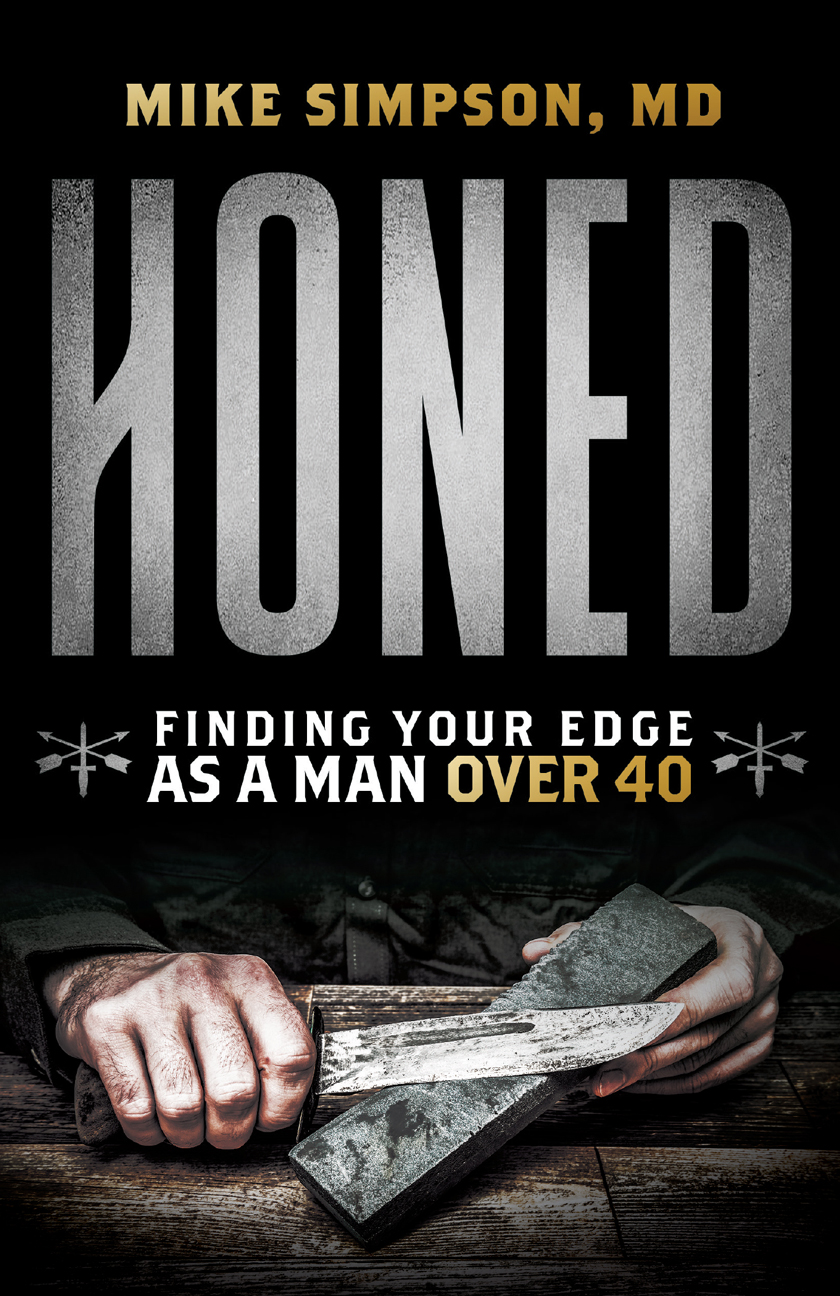
Dr. Mike Simpson spent 32 years in the U.S. Army, most of it in special operations as a Ranger, Green Beret, and physician, then wrote Honed, a men’s health book for staying sharp after 40, which he published with Scribe. Years later a former colleague at the Pentagon told him his name was getting kicked around in congressional hearings: Honed had been cited as a reference on screening the force for testosterone.
In this episode of Author Hour, Mike joins Scribe CEO Travis Stoliker to talk about the pandemic job cut that gave him three months to finally write The Last Dungeon Crawler, the first book in his Falgrim Firebeard trilogy, how publishing Honed with Scribe gave him a head start as an indie author, why today’s storytellers have to hook readers on the first page, and why Facebook ads, measured ad by ad, became his best marketing channel.
“Finding out after the fact that my name was brought up in congressional testimony and that my book was cited as a reference for the specific reason of screening the force for testosterone.”
⭐ Top Moments
- The book reached Congress without him knowing. “Finding out after the fact that my name was brought up in congressional testimony and that my book was cited as a reference for the specific reason of screening the force for testosterone.”
- His first book taught him how publishing works. “And luckily, as you say, I published honed through Scribe. So I was essentially self-published already. I’d seen how things work. I’d had [Scribe] to kind of guide me through that.”
- Measure every ad. “You can’t manage what you don’t measure. And the same is true when it comes to book marketing.”
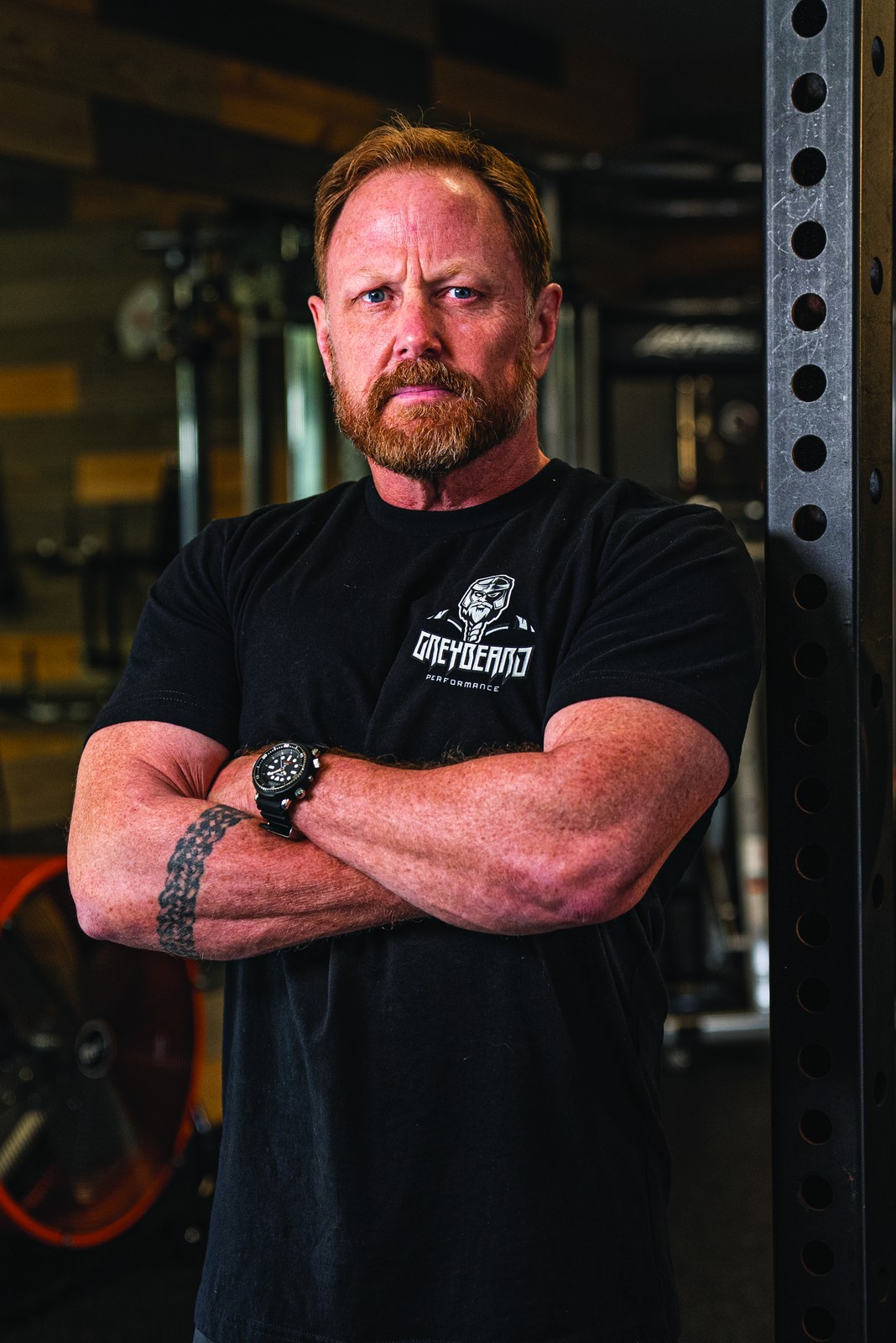
Mike Simpson
Best known for his role as an investigator on the History Channel’s docu-reality series Hunting Hitler, Mike Simpson has served over three decades in the military as an Airborne Ranger, a Green Beret, and a doctor of emergency medicine assigned to the Joint Special Operations Command (JSOC).
Trained as a demolitions expert, SWAT sniper, high altitude low opening (HALO) parachutist, civilian paramedic, Special Forces medic, operations and intelligence sergeant, and board-certified emergency medicine physician, Mike now uses his extensive knowledge of training and medicine to help men over forty achieve peak physical condition.
greybeardperformance.com
★ Scribe Case Study
Mike Simpson's Honed Was Cited in Congressional Testimony and Gave Him a Head Start on a Fantasy Trilogy
Special operations physician Mike Simpson published Honed with Scribe. Years later, it was cited in congressional testimony, and it gave him a head start on a fantasy tri…
📚 Books by Mike Simpson
Transcript
Travis Stoliker: I'm honored to be joined by Dr. Mike Simpson, who has just an incredible story and background and quite a pivot into an amazing book series that is quite a departure from his day job. So Dr. Mike, can you introduce yourself and explain some of your background and your book series?
Mike Simpson: Absolutely. First, first and foremost, of course, thank you for having me on, Travis. I really appreciate it. My name is Mike Simpson. I am a practicing emergency medicine physician. I retired from the United States Army in 2016 after 32 years of service, spent pretty much my entire career in the special operations community. For 17 years, I was an operator, first as a ranger in ranger regiment, then as an 18 Charlie and 18 Delta engineer and medic on a special forces operational detachment Alpha. Went to medical school, completed my residency, and then went back to the SOF community. Did six years in the joint medical augmentation unit, deployed five times with tier one SMUs and supported the global war on terror. I wrote my first book, Honed, which I did actually publish through Scribe. Wrote that book as a men's health book, kind of drawing on my experience as a physician, my experiences as what I like to call a warrior athlete. Basically giving advice to men over 40 on how they can keep their edge, how they can stay fit as far as diet, exercise, recovery, et cetera. But an odd thing happened when I was writing the book. I wrote the first chapter of the book as kind of a summation of a particular mission on my last deployment to Afghanistan. And I had so much fun writing that chapter because it's a narrative. Basically, it's a story about a night out on target with the Rangers, and I enjoyed writing that probably more than I enjoyed writing any other portion of the book. And I knew that I wanted to write fiction. It's something that I'd always wanted to do and something I kind of messed around with. I thought about writing screenplays. Fast forward to just a few years ago during the height of the pandemic, I was medical director for a pre-hospital supply company and they had to make a lot of cuts. So my position as medical director was one of the positions that got cut. So I had nothing to do for three months while I was waiting to get picked up and credentialed and start a new clinical job. I said, you know what? I've been kicking around this this idea in my head of a an epic slash contemporary fantasy novel slash series. I'll go ahead and and start writing it. So what I had done is I took a character that I had actually played in Dungeons and Dragons way back when I was going through emergency medicine residency, who was a dwarf cleric. And over time, I kind of fleshed out his background and I came up with all these ideas. What if, you know, what if he was still alive in present day? What if he was maybe fighting crime? And of course, if you're going to be a crime fighter, it has to be in New York City because there's just absolutely aside from the crime in New York City, there's just absolutely no better dramatic backdrop for somebody to be fighting evil than New York City. You know, you have your skyscrapers, your iconic locations. So I decided that, you know, by day he would be a professor at NYU teaching archaeology and history, borrowing a little bit from Indiana Jones there. And then in his free time, he would be adventuring around the world, retrieving these magical artifacts so that they don't fall into the wrong hands. And, you know, foolish mortals stumble upon them and and do themselves harm. So the gist of the story is he's six thousand years old. Millennia ago, he swore an oath to protect mankind, to destroy all these arcane artifacts so that we cannot hurt ourselves with them. And he's existed in our society, kind of blending in as one of us for thousands and thousands of years. And then it just so happens that he gets caught up in some modern day activities. He gets implicated in some criminal activities. So a journalist starts following him, thinking that she's going to uncover these crimes. And she ends up uncovering much more than she bargained for. And that's the that's what spawned the first book in the Falgrim Firebeard trilogy, which I called The Last Dungeon Crawler.
Travis Stoliker: It's absolutely amazing. I. I love how you just keep persevering, like it goes all the way back to from, I believe when you were going through medical school, you almost you almost stopped and somebody encouraged you to continue. And every time one of these adversities happened, like I know you started a supplement business that didn't go the way you'd hope, but you just immediately pick up the next thing and make these huge pivots in your life and just commit to it and go all in. Has that been something that has just always been a part of your I mean, you have so many different storylines in your life from Green Beret, medical doctor. Now, you know, you wrote your book with us then now to a totally different pivot into fantasy. How has that always been the story of your life?
Mike Simpson: I wouldn't say that. I mean, I had pretty resilient parents, to be sure. I was born in 1966, so I grew up in the 70s. I vividly remember in out-of-control inflation, the gasoline crisis, you know, kind of the worst parts of the Cold War where we thought the best days of America were behind us. And then seeing that, of course, all turn around in the 1980s. During that time, you know, we picked up and moved as a family so that my dad could start a new job opportunity that was supposed to really be a gateway to our future. I was born in the South Bay area in Redondo Beach, California, which is a suburb of Los Angeles. And at one point, my dad accepted a job with Rockwell International in the aviation industry. He was going to be working on the B-1 bomber project. So we packed everything up and we moved to a little town called Tachapi, California, which is out in the sticks of Southern California. It wasn't too long after we moved that President Carter, ironically, who my father had campaigned for, canceled the B-1 bomber project and my dad was out of work. So that was the first time that I saw an adult have to kind of pivot because of exceptional circumstances. And without missing a beat, my dad went out and started working for a local realtor. He didn't have a realty license at the time, but he's like, I can put up signs. I can help you set up for open houses. I can go out and find clients for you. I can get their contact information while I'm studying to become a realtor myself. And that's what my dad actually did for a while because he knew that he had to put food on the table. Ultimately, he pivoted again and was able to pick up a job back with Rockwell International in the space shuttle program, which he worked on for a lot of years and eventually did go back to the B-1 program when it was restarted. But that was the first example that I had of an adult kind of taking lemons and turning him into lemonade. That was reinforced all through my military career. If something went bad on a mission, you don't just sit down on your rucksack and cry about it. You have to do something about it. You do what's called a fragmentary order or a frago and you pivot and you say, OK, well, this this was a dry hole. You know, there was no intel here. We're going to either move on to another objective or we're going to call for Exvil. Oh, Exvil didn't show up. OK, we're going to walk out or we're going to call for an alternate Exvil or we're going to try something or we're going to link up with another unit. So that was instilled on me, really in me through my my entire adult life that, you know, you can't just sit there when the chips are down. And certainly I had times in my personal life when the chips are down. You know, I got injured during Special Forces selection. I had a miscalculation on one of the longer land nav movements that ended up costing me a lot of hours, but I just had to persevere and do it. So I wrote the book Honed in the early days of the pandemic. That's also when I started my supplement company. You know, I had a lot of free time on my hands. I had enough time to build a website, kind of figure out the ins and outs. And although that supplement company ultimately folded during the recession of twenty twenty four, I learned a lot of really valuable lessons. I learned lessons about marketing. I learned lessons about online presence. And I've been able to translate a lot of those into the promotion for the book. But to me, transitioning to something that I love doing, I mean, this is to me, this is like transitioning to playing to ice hockey or just something that I otherwise would do as a pastime anyway, because I just I love writing, especially I love writing fantasy so much that it's not a big stretch for me to pivot to it. It was really I look at losing my job with the medical company as a blessing, because ultimately this this book had been kicking around in my head between my two ears for for decades, but I wouldn't have got it on paper as long as I was working. And I'm so glad that I did, even if I never end up making a living off of being an author, even if I never have really renowned acclaim for being an author, even if nobody I don't want to be a household name, just coming up with the story, fleshing out the story, putting the story on paper and then going through the process. And luckily, as you say, I published honed through Scribe. So I was essentially self-published already. I'd seen how things work. I'd had you guys to kind of guide me through that. So coming around and doing it on my own and knowing how to set up KDP and utilize KDP, Kindle Direct Publishing and and everything else, I already had a leg up for that. So it's all I really had to do is go back and reset some passwords and watch a couple of instructional YouTube videos. And then I was off to the races.
Travis Stoliker: That's amazing. And how has how is the, you know, you went from honed, which had a bit of a different, you know, angle to it, helping men overcome. And now you've pivoted into the fiction book space. Usually the marketing for those are quite different. How have you navigated that, like going from one category to another? And what is different? What is the same? Mm hmm.
Mike Simpson: Well, ironically enough, my my my demographic ended up being largely the same. Sixty five percent of my readers are men over forty five. Right. Which is completely the demographic that I wrote home for that, that, you know, I've sold. I'd have to go back and look how many copies I've sold at this point. It's done tremendously well and continues to get sales.
Travis Stoliker: It has like seven hundred and thirteen reviews, which is a time four point five stars.
Mike Simpson: Yeah, it's done really well. And again, I'm immensely proud of that book. And I still get a lot of feedback from people who are like, I picked it up. You made the recipe so simple to stay in shape. I can't tell you how much I appreciate this. I've turned my life around and I love those testimonials. And now I think kind of a lot of the same people that read honed and kind of followed me because of that. They were like, hey, I'd like to check out this fantasy thing, too, when it comes out, this sounds kind of interesting. And I did. I kept it very old school. There's a lot about books today that I don't particularly care for about entertainment today that I don't particularly care for. I think I think storytellers have kind of sacrificed the art of storytelling in a lot of ways, some of it for marketability, some of it for political correctness. But I didn't like a lot of what I was seeing out there. And, you know, I was influenced by Tolkien and C.S. Lewis and George R.R. Martin, you know, who's, you know, he's been around for a long time, but he is considered more of a contemporary. But these are all my influences, people that just told good stories, you know, stories that helped you escape what's immediately in front of you for a few hours at a time. And that's what I wanted to do. And for whatever reason, like I said, I've kept a lot of that demographic, but I've also expanded it. I mean, certainly there are a lot of people, you know, I've some of the reviews, if you look at look on there, they're they're they're wives of people of guys that followed me and their husband was reading the book or their husband recommended the book and they decided to pick up a copy of it. But high school kids have read it. Middle school kids have read it and gotten a real kick out of it. I know for a fact that there's some kids have written school book reports about it, which I just absolutely love because I was a big reader as a kid. That was a big we didn't have YouTube back then. So if you wanted to escape, I didn't have anything terrible to escape, but like just, you know, escaping normal humdrum, everyday, small town life, you know, you'd you'd retreat into a book. And that's what I wanted to do with this. I wanted it to be something exciting, something that maybe mirrored the society that we all live in so you can feel like it's something you might actually be passing by in your normal day to day life. And that's the feel that I wanted to be there is that, yes, this is the this is our actual world, but right behind a very thin veil that you can't quite see through everything that you've ever dreamt of from Lewis and Tolkien and Martin. It's all right there. It's it's just right there. If you could reach through that veil, you could touch it, but it stays hidden. And that's the feel that I wanted to give everybody. And so far, it's been very, very well received.
Travis Stoliker: That's fantastic. And what are some of those things that you think. Our modern society is missing from storytelling, like one of the things that I notice is I have a eight year old and 17 month old, and everything is so fast paced, everything that you know, there's no gap in dialogue, there's no building up character, there's that long character development, it is everyone fits a particular archetype, everyone fits into a particular mold, there's not that long build up of really that story development. What are some things that like, are you noticing that? Or are there other things that you're noticing?
Mike Simpson: Yeah, well, first of all, I mean, as as somebody as a, you know, I'll just I'll bulk it all together and just call it storytellers in general, right? It's, you know, people that are specializing in this type of escapist entertainment, whether you're making movies, making television shows, or you're writing novels, we have a lot more competition today than we ever had before. We're competing against YouTube, we're competing against streaming services. You know, people, people have a supercomputer right there in their pocket that they can pull out at any time and be entertained, whether it's through an app or a game, or a YouTube video or a news story that they're reading online. So we have a lot of competition. And I think because of that competition, we have to be better. And so that's what I've tried to do. And a hundred percent agree with what you said is, is because you have to kind of close escrow more quickly. It's if P if people aren't feeling it within the first couple of pages, they're just not going to feel it at all. And I worked with Randy Searles at the story ninjas early on, and he helped me really understand about how to write hooks into, especially when it comes to like the opening of chapters and the closings of chapters, how to really hook right away, bottom line up front with, you know, you're in the heart of the action because that's what people want. If, if, you know, if, if they open it up and it says it was a lazy spring day, they're probably going to close it just after those few words. But if you open it up and it said the, the, the explosion threw him across the room. Okay. Well, okay. Why is there an explosion? Now you have my attention. And that's something that you really have to do as an author for that reason. I had an entire first paragraph that I thought was beautifully written, was a beautiful setup, set up the location, set up the characters, really set the feel for, you know, for what this was, this book was going to be like, and I ended up that, that entire first chapter ended up getting thrown away and some of my art readers even said, but that shot, that chapter was excellent. It was amazing. And I'm like, yeah, but it didn't, it really wasn't necessary. Cause if I'm going to start the action, didn't start until much, much later, but I can start in the action and reflect back and still fill in those gaps. So I think that's one way I I'm reading a 1956 adaptation of Robin hood. Currently. And wow, I'm really, really noticing the differences in writing styles from, from what we see today to the way writing was back then it's, it was much more of a, kind of a meandering way into the story, you know, more broad brush strokes up front, kind of painting this, this backdrop and then bringing the characters to life, whereas, you know, now you really have, you really got a gut punch in that first, that first sentence in that first paragraph, or you're going to lose your audience.
Travis Stoliker: Mm-hmm. How does marketing this, this series of books being fiction, fantasy, how does this, how does the marketing of that work? What has been successful? How do you find that audience? Obviously you have some great overlap with your first book. And that is, was a great seller. Are there new ways that you have to market this? Like, are you doing the, you know, the book talk, uh, on Tik TOK or the Instagram? Like, are there ways that you're marketing this that are different?
Mike Simpson: Yeah. So I haven't quite cracked the code on the whole book talk thing. I know that people have had massive success with that. And I've been so far, I haven't been really successful at kind of breaking into that space. Now, and I, and I'll say this, that, uh, the, that space in my opinion tends to be a little bit more female dominated just from the influencers that I've seen that have the most followers on that, and it probably skews a little bit more towards what we call the, the romanticy and the cozy mystery books. Those tend to, to take off a lot more in the, in the book talk spheres. And that's another thing that's also changed is there's a lot more female authors. There's a lot more, it's almost impossible to find a male literary agent these days. If you go looking for a literary agent, same with editors, you know, you, you, you know, you, you fight a lot. There's a lot more women behind those pages than I think there were 10 or especially 20 years ago or longer. And a lot more women are, are reading books, you know, it's so, but I don't think it's necessarily affected my genre too much, I mean, things tend to splinter off into genres. As far as marketing goes, I had a lot of built-in marketing with honed cause I was already, I had a pretty pronounced online presence. I had a podcast I'd already given health and fitness advice as well as self-defense advice and, you know, just kind of EDC type stuff. So I already had a built-in following. I didn't have a built-in following for this. I've, I've been kind of cultivating it as I go along, but I did find out that a lot of the people that follow me are what I call the adventure nerds. So they're, they're nerds. They're guys who would, who would play D and D one weekend, but then the next weekend they might be out doing a three gun competition or doing a Spartan race or something like that. You know, it's, it's amazing how many guys that I go to jujitsu with who used to play D and D who read this type of thing, and we'll be in the, we'll be rolling talking about, you know, the, you know, a three body problem or talking about operation hail Mary, things like that, or talking about this book. I've a lot of guys I do jujitsu with her or in my arc reader group. And so when it comes to marketing, I've, I've had to really focus less on kind of what my built-in following is and really trying to find people where they are and that's, you know, and most of them are surfing social media, looking for something to kind of break up the monotony of their day and Facebook ads are where I've had the most success in marketing, marketing my fantasy novels.
Travis Stoliker: Oh, that's, that's great to know. That's great to know. Do you, is it just an advertisement for the book or is it about your characters or how do you do that? What is the successful playbook for a great Facebook ad?
Mike Simpson: Well, so there's, there's a guy out there. His name is JD Karen. He's out of Canada. He's a writer. He has a, he also has a marketing background. He has a program called weekend publisher. It's also goes by the name of the, of the profitable author program. And what he does is he's, he's come up with a, a, a, basically a plan that helps you from everything from cover design to picking out your keywords on, on Amazon, which is something that, you know, scribe did for me when honed came out, I didn't even have to worry about it. So, but he, he has a system for how to identify what your keywords are, how to identify what your category is, where you're going to, where your book really fits, because you know, it's on one hand, you can pick a category that has almost no books in it, right? So you'll be number one in that category. But that might be a category that nobody's looking for. It also might be a category that your book doesn't even really fit it. And you don't want that because you don't want people to, to buy the book and then realize two pages in this book. Isn't it all what I thought it was going to be. So you need to be your advertising and your placement needs to be true to what your book is, uh, as well as kind of highlighting the features of that book. So through JD and his course, and you can, you can Google him. J.D. Karen is his name. C A R O N. Or you can, you can actually find him on Readsy, which is how I found him the first time and Readsy and Fiverr, by the way, if you're going to write books on your own, incredible resources for finding everything from cover artists to editors, to people that will help you with book marketing, just absolutely incredible. But JD showed me, he showed all of us. He has a series of videos showing you how to set up your ads, everything from how to do a 3d mock-up of your book to how to do ad images using chat, DPT, whether you're using chat, TPT prompts, or you're using an actual artist that you want to have do it. I know a lot of people are very down on AI right now, but as an independent author who does not have a tremendous ad budget, I just rolled out nine ads a couple of weeks ago. That would have run me almost three grand. If I would have commissioned those, those images, you know, based on the, on the estimates that I get, it would have cost me $3,000. Ultimately six of those ads did not work. So I ended up with three ads and even still with those three ads that are working, running. I'm not necessarily running a profit. So that's basically that's $3,000. I never would have gotten back. Right. And so, you know, that, that kind of leaves you with either doing AI or trying to sketch stuff out in Canva. And again, I know people have very passionate opinions on that, but I don't feel as an independent author, I feel a little bit boxed in when it comes to that. You know, I commissioned, I commissioned an artist for my covers. I do not use AI for editing. I do not, you know, I don't use it for any of that when it comes to the writing process, the creative process, but when it comes to ads, you know, again, I don't have $300 to spend per image only to find out that those images just aren't going to work right and most, most people in that space that are making those images too, there, they don't come from a marketing background, they come from an artistic background and they might give you some really cool looking images. So I'm going to be honest with you. Sometimes the coolest looking images sell zero books and the, and the images that I thought were kind of bland and uninteresting sell a ton of books. So you just kind of, kind of find that, but you know, I, I was, I was lucky enough to have somebody show me the ropes of not only what makes a good ad image, but how to set up the ad image with your, with your book in the image, with a quote in the image, and then doing an ad copy as well, and then getting it all out there and running an ad, how to run an ad set and set your budget and set rules for your ad set, who sees it, who doesn't sees it, when it, when it might be turned off and when it might be turned back on again. And these are all the keys that you have to look for. You have to run metrics. You know, there's a good friend of mine once said, and I quoted him in the book hone, I said, you can't manage what you don't measure. And the same is true when it comes to book marketing. If you're, if you're just throwing everything up against the wall to see what sticks and you're like, wow, I ran eight ads this week. I got five more book sales. Well, did you get five more book sales because of the eight ads or because of some confounding variable that you're not even figuring in? And luckily KDP gives you all the tools to figure that out through attribution links and everything else. You can figure out, okay, this, this ad, this link that I, that I connected to a specific ad is what's selling books. So I know that this is the ad that's doing well. And I know these other ads are not doing well. You have to be able to measure it. If you're not measuring it, you're just, you're just whistling past the graveyard. You're really not doing yourselves any favors.
Travis Stoliker: Yes. Yes. And now where are we at in the trilogy? You have your third one coming out in January, right?
Mike Simpson: Correct. Yeah. So book one did exceptionally well, still continues, continues to sell. I've sold four copies just today. Book two, also doing very, very well. I want to bring my read through rate a little up a little bit higher than it is right now. My read through rate is at about 70%. Oh, I'd like to see it. I'd like to see it at a hundred percent. Obviously book three is going to be coming out. I would like more than anything on this earth to have it out December 17th, because in looking at the data, that's a good day to release a book, but I get it back from the editor and December 10th. So I don't know if that's going to be possible. I still have to run it through vellum and format it and do a final proofread before it's going to be ready for the public, but I might just get it out there because to be honest, you know, book one, I was still catching things that I had to proofread even six months later, that does happen, unfortunately when you're an indie author, there's just no way around it. You know, you find out that you, you meant to say foul F O U L. And you said F O W L on page 125 and nobody, nobody catches that. Nobody in your art group catches it. You don't catch it. Your wife doesn't catch it. And then somebody catches it and, and makes a mean comment on, on their Amazon review because of it. And that's when you catch it and you go back and you make the change. So that, that kind of thing does happen and it might happen with this, at the absolute latest, it's going to be out January 5th, but my goal is to have it out December 17th. And it's been really anticipated. And I got to say, I'm not everything. When I was writing book three, I was like, I, I honestly feel like I'm getting better as an author. This is the best out of the three. Cause I really, really wanted to stick the landing, which caused me to a little bit of a delay in, in breaking the seal to start writing book three, because I was so paranoid about sticking the landing. But after writing it and submitting it to my art group and the feedback that I've gotten, I think everyone who came along on the adventure for books one and two, you're totally going to feel it pay off in book three. I think I've, I have, I've kind of, I've, I've upped my, my, my writing level and I've put some surprises in there and some twists and turns. And I've, I've tied a lot of stuff back together that, that calls all the way back to book one. Some of it intentional, some of it completely by accident, but it's still worked that I can always take credit for it because you'll never know which ones were on purpose and which ones were an accident, so it's been an absolute joy to write the series. And now once it's out, I get to go back and I have 6,000 years to explore with this character that I can fill in with kind of episodic stories that aren't necessarily, don't necessarily need to be read even in any specific way.
Travis Stoliker: Wow. That's amazing. All right. My favorite question from author hour is what is the coolest unexpected thing that happened as a result of your book, any one of your books?
Mike Simpson: Wow. Coolest unexpected thing. Well, I mean, Honed was a tremendous success and it was, I I'll tell you what was, was unexpected is that because of writing Hone, I don't know how in touch you are with, with the current news, with what's going on in the department of war in reference to screening, screening the force for testosterone levels and identifying where supplementation needs to occur. Finding, finding out after the fact that my name was brought up in congressional testimony and that my book was cited as a reference for the specific reason of screening the force for testosterone. Cause I, I go into great detail in the book talking about testosterone levels and soft operators, how it's affected by reverse cycle, how it's affected by elevated cortisol levels, sleep deprivation, as well as, you know, traumatic brain injury and chronic traumatic encephalopathy. I talk about all these things in honed and it all got brought up in congressional testimony. And I didn't even find out about it until a former colleague of mine who happens to be stationed at the Pentagon. He said, Hey, did you know your name's getting kicked around in, in all these, all these hearings? They're talking about you like you're some kind of expert on TRT. And I was like, well, I don't know if I'm an expert. I mean, I did, I had a TRT practice for a while. I don't necessarily consider myself an expert, but I I'm glad that the, the, the, the word is getting out there. So that was probably the biggest unexpected thing that ever happened because of honed. The unexpected thing that I would like to happen from my fantasy series at, well, I get actually, it's not unexpected because I'm expecting it or hoping for it. Right. Which means that I, I, I've always thought ever since I was a little kid that if I dream of something happening, that's like the surest way of it never happening because I've already manifested it in my brain. But I, I am looking forward to the day that a total stranger walks up in an airport or while I'm waiting for, for my coffee at a coffee shop. And it says, excuse me, are you Mike Simpson? The author? I think that to me, that's, that's the moment that I know I've arrived and I haven't gotten there yet, but I'm still hopeful.
Travis Stoliker: You're on that path. Well, I hope so. Dr. Mike Simpson, thank you so much for joining me today. And it's really exciting. The pivots that you've made in your life, the many people that your words have helped and they've connected with. So amazing to hear that your book was and your thoughts and your ideas were talked about in congressional testimony without you even knowing about it. That's really the power of books and thank you for putting your ideas out there. And we're just cheering you on for everything that you have to come.
Mike Simpson: Thank you, Travis. I really appreciate it. Thank you.
Want to Write Your Own Book?
Scribe has helped over 2,000 authors turn their expertise into published books.
Schedule a Free Consult