unPACKED: Alex Hunt and Matt Salem on Why Packaging Still Wins at the Shelf
✨ Episode Summary
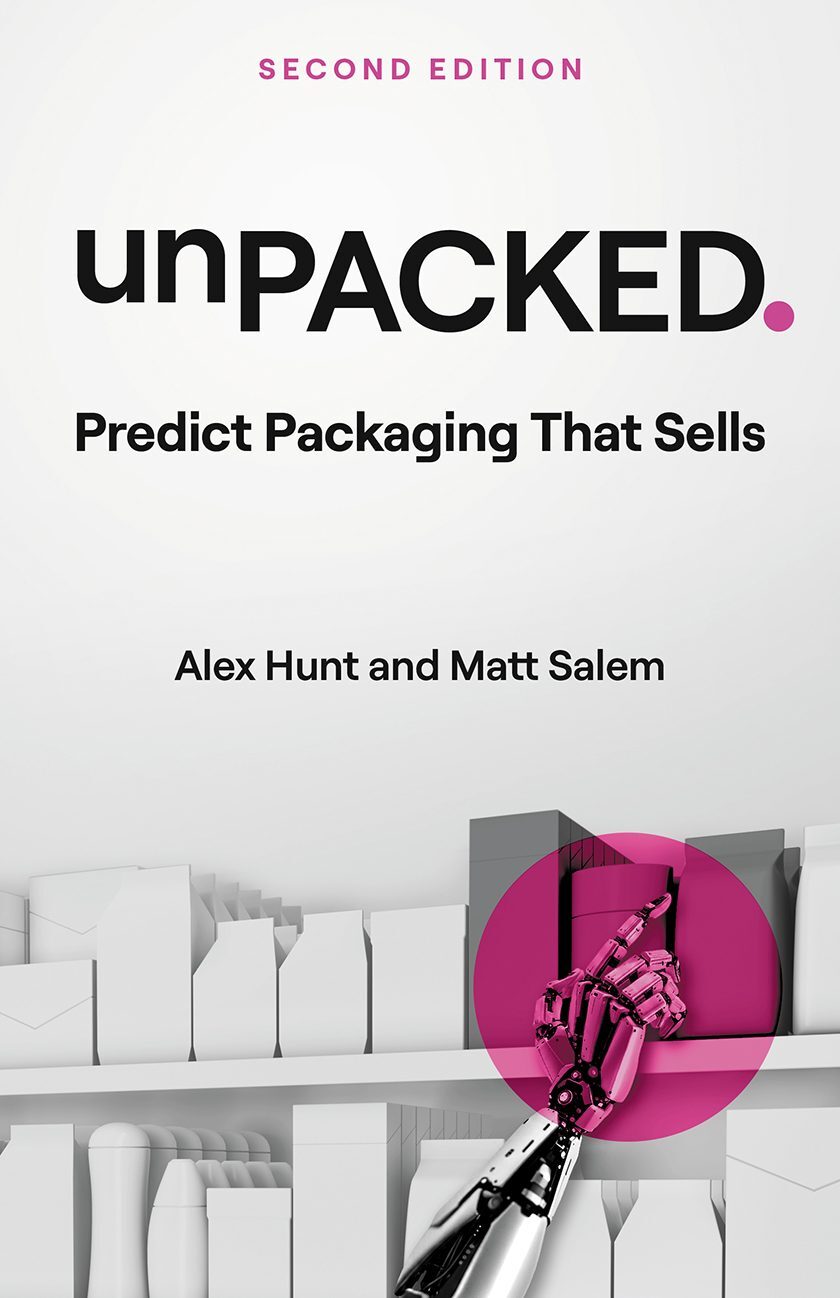
Alex Hunt and Matt Salem lead Behaviorally, the shopper research firm that works with all 20 of the world’s 20 largest consumer packaged goods companies by sales. Their book, unPACKED: Predict Packaging That Sells, now in its second edition, turns decades of shelf data into the 4S framework: a pack has to be seen, shoppable, seductive, and selected before it ends up in the cart.
In this episode of Author Hour, Alex and Matt tell host Lex Statzer why shoppers are poor judges of their own behavior, how a cleaner cold medicine redesign tested well and still lost its most loyal buyers, and why a five percent swing in sales makes packaging a boardroom decision. They also explain why they rewrote the book one year after the first edition: AI and agentic shopping are changing how people buy, and roughly three in four shoppers say packaging still matters even when AI helps them shop.
“People are really, really unreliable witnesses to their own behavior.”
⭐ Top Moments
- You can’t just ask shoppers. Alex on why the book is built on observed behavior: “People are really, really unreliable witnesses to their own behavior.”
- Packaging still matters when AI shops for you. Matt on the new chapters: “Roughly three in four shoppers will tell you that packaging is still critical in terms of their shopping experience, even when it’s A.I. assisted.”
- Five percent is a big number. Alex on the stakes: “Five percent, first of all, it feels small. But when you put it into the context of all of the different cans of soda or bars of chocolate or packs of chips that a company, a large CPG company sells, it’s a tremendous amount.”

Alex Hunt and Matt Salem
As CEO of Behaviorally, Alex Hunt transformed the company into a market-leading data intelligence partner for the world’s leading brands. An in-demand speaker and thought leader, he is a Market Research Society Fellow and member of the Board of Directors of the Insights Association. A native of the UK, he lives in Connecticut with his wife, Pam, and daughter, Gabriella.
📚 Books by Alex Hunt and Matt Salem
Transcript
Lex Statzer: Welcome to Author Hour. Today I am here with Matt Salem and Alex Hunt, who wrote Unpacked, Predict Packaging That Sells, the second edition, which is coming out November 3rd, 2026. Matt, Alex, welcome to Author Hour.
Alex Hunt: Thank you for having us. Good to be here.
Lex Statzer: So I want to begin in 2024. You ran a study of more than 300 chocolate bars and over 3,000 shoppers to track what actually gets picked up at the shelf. The packs that stood out the most were over 2.5 times likelier to be bought, not because they tasted better or because they cost less, but because the shoppers saw them. So how did that study open the door for the ideas in Unpacked?
Alex Hunt: I think that that study is more emblematic of the sort of work we do on behalf of all of our clients and the ideas behind Unpacked. So if we take a step back, both Matt and I are privileged enough to work in a company called Behaviorally, and Behaviorally partners with all of the big consumer packaged goods companies across lots of different categories to really understand what's going to drive the behavior of shoppers at shelf. And if you think about the shelf in a retail environment, what a shopper sees, what a consumer sees is packaging. So we've really become the world's leading expert in packaging design and how packaging design impacts what consumers choose and how they behave at the shelf. So if you fast forward back to that study, which is one of many in its one category we're delighted enough to work in, what we saw was that just the visual standout in the chocolate category is incredibly important, much more so than the lots of other different categories. And I think when you think about the chocolate category in and of itself, it's a very conventional category, but there's so many products out there that emulate color, the actual product in the packaging, try to emulate the tone of that product in their packaging, brown, purples. And for any brand that can really break the mold and stand out within that category, their impact at shelf, the number of times that they're likely to be chosen is just multiplied tenfold or whatever it might be. And that's what we saw in that study. It was a real insight into a couple of things, right? One, the power of packaging in general to drive sales and really what works in that particular category. And it's a window into a lot of the work that we do at Behaviorally.
Matt Salem: Yeah. I think, you know, generally just to build on that, what we've seen over time is that first and foremost, you have to be seen. So it's not surprising in some ways that being seen more leads to being bought more, because if you're not seen, you never even enter the shopper's consideration set. So it's of paramount importance to be seen generally. And then as we look at specific categories and we look at the impact of being seen in specific categories, we might see that there's greater returns in some categories as compared to others. And in chocolate, for sure, if you read the book, then you would have seen that there's some really great stories there. You know, we mentioned Tony's Chocolonely as one of them, which broke those conventions that Alex mentioned in terms of the more typical colors that are being emulated and such to really help promote standout and then ultimately win by facilitating purchase.
Lex Statzer: Yeah, I can imagine in the taste category that visuals play a huge part. I mean, you want to eat something beautiful and that extends to packaging, right? You want to see something that looks appetizing in some way.
Matt Salem: Yeah, for sure. I mean, I think even just taking it to kind of everyday life, maybe you go out to dinner on a weekend and you have that plate of food in front of you and the way it's plated makes a difference, right? So if it looks like a plate of slop, it's not even if it tastes good, it's just not going to be as good of a meal overall as if it's presented to you quite nicely. And I think, you know, we've seen time and again that the right food visuals and the right beverage visuals on packaging have great importance in terms of setting shopper expectations as to what the experience will be like with that product inside and planting good seeds, if you will.
Lex Statzer: Yeah, makes total sense. So cracking open the book a little bit, the engine of the book is a framework you call the 4S model. So what are those four ideas and why are they so important to get right?
Alex Hunt: Well, the four ideas relate to the four factors that we believe drive packaging success. And I'll let Matt break down the dimensions. But I think what is important is we've been working in this field for 50 years, right? We've spoken with literally billions of consumers and collected billions of data points from them. And these are four drivers of packaging success that we've seen work across all of those consumers and all of those different brands that we've been lucky enough to partner with. Right now, we work with all 20 of the world's top 20 largest CPG brands by sales. So we have a very clear data set that informs what we know will drive people to act and choose a particular product as a result of the packaging. And the 4S really pulls all of that together in one clear model. So Matt, I don't know if you want to talk through the 4Ss themselves.
Matt Salem: So jumping into the 4S framework a bit, quite literally, the 4Ss stand for being seen, shoppable, seductive and selected. When we think about how that really ends up manifesting itself with our clients in terms of using that framework to explain shopper behavior, it's quite simple. It's one, in our research, do shoppers visually engage with the packaging in front of them that's in full shelf context? And when it's in front of them in isolation, how do they view that pack? We want to make sure that it's seen first and foremost, because that leads to all of the rest of the Ss being unlocked. And from there, we want to then make sure that it's shoppable. Shoppable means if you're in that competitive environment, do you, one, facilitate shopability versus competitive brands? So if we have a bunch of SKUs on shelf, what happens for the brand that we're interested in versus all of the other competitive brands in terms of shoppers being able to locate what they want? And beyond that, within a given brand's franchise, can you isolate the SKU that you need within that set? So in other words, can you differentiate within the SKUs of a single franchise to ultimately find what you want? Now, as that process is unfolding at the shelf, the next S is seduction. Be seductive. You must seduce the shopper. And I always look at that in two different ways. One is through costs of entry, reaffirming those costs of entry, making sure that they get what they expect and what they need within the category. But beyond that, it goes to a point of difference. How does that SKU, how does that pack tell you something about the brand or the product inside that differentiates it from everything else at the shelf set? And when all of that works together, you're seen, you're easy to shop, you are seductive. That leads to being selected and ultimately shoppers putting the actual pack in their cart and going home with it. So that framework we've seen works across brands for certain, across categories for certain, across the world. All of the metrics that we collect are used time and time again to explain, be seen, shoppable, seductive and selected. And because we're collecting it with such frequency and such consistency, we can really look at packaging on a global basis to understand what makes great packaging.
Lex Statzer: Hearing this as a consumer is so interesting because everything you're saying I relate to, I've done absolutely, and I just it's not something I've ever thought when I'm walking down an aisle that I'm processing all of this information at one time to make one choice on a chocolate bar. One thing I think is super interesting about the book is this idea that shoppers can't really reliably tell you what they'll buy. So Alex, you have the beer study. Young men swore that they were loyal stout drinkers and then the purchase data said that it was actually older men. So what does that gap tell you about consumers and brands and the research that brings them together?
Alex Hunt: Yeah, it really says you have to have what we call behavioral research. So explain what that means. It means research, but actually observes real behaviors. So what people are doing, this is asking them what they say they're going to do. People are really, really unreliable witnesses to their own behavior. If you ask me, what am I going to have for lunch? I'd probably sit here with the best of intention, tell you I'm going to have a really nice salad or something healthy when in reality, when I'm down ordering lunch, I'm probably going to order something very tasty. It's probably not going to be a salad. And so I'm just a terrible witness to my own behavior. Now think about that in the shopping context. I'm going to tell you that I'm making a considered choice. I'm going to tell you I've got time to reflect. The truth is that it's a split second in a store and literally exposed to thousands of brands, thousands of products every minute. And so I'm making quick, default, instinctual, what we call system one intuitive decisions. And in order to really understand that part of the brain exactly that in a shopping trip, you have to have behavioral research. So what does that look like for us? You know, rather than ask people, Hey, do you think that this, this packaging design is going to make you more or less likely to buy the product? We actually put the design on the shelf, right? We'll go for a shopping exercise with consumers, we'll expose them to the whole shelf. So it's presented in context. We'll look at first of all, where their eyes are going, right? We can tell you and predict forward where people are going to look, what's going to catch attention that goes to the first S right is, is it, is it seen, then we'll see, okay, what do people pick up off the shelf? What do they look at? How long do they hold it for? Do they put it in that in the basket or not? And on and on we go. So we're picking up what we call behavioral metrics that we can then use to predict forward future behavior versus purely asking, you know, Matt or I, Hey, what are you going to buy? How's this piece of package you're going to impact your behavior?
Lex Statzer: Matt, another interesting study in the book is when you worked on a cold and cough medicine redesign that was cleaner, more modern packaging, and on paper it tested really well, but then once it hit shelves, the sales dropped. And when you, when you dug into it, you found that the new design had lost the brand's core customers, which were these older loyal buyers. So what did that project change about your research and how you understand packaging?
Matt Salem: Yeah, that's a good question. I mean, I think there, that was a very memorable project for me and I remember a lot of time spent on it. And you know, at the end of the day, I think it really speaks to a different question that's come up before that we've talked about, which frankly was a bit, a bit of a surprise for us as we put the book together, when we have been asked, well, what's, what's the most challenging things that your clients have gone up against? Because you know, we interviewed, you know, 20, 30, 40 clients prior to even putting together the first edition and a lot of their stories are reflected in the book through these characters that are interwoven in the book. And the one thing that kept coming up time and again, perhaps more pervasive than we had imagined was the struggle to align on findings and communicate findings up the food chain, if you will, and get alignment on what should be done next. And I think what we've emphasized since is making sure that everyone speaks the same language and that does come down to having something like the 4S framework, which, you know, we came in here at the, at the helm of Behaviorally and, you know, that, that framework and having that consistency and that language consistency is something that can help because with that specific project, despite the fact that my immediate contact there was talking about those core consumers, since all of the other results seem glowing by number of pages in the report, I think the leadership team at that time was willing to ignore the fine prints, if you will, when it came to the core consumers, because it might've only been two or three pages out of 20, but I think it's not about the number of pages. It's about who they are. And I think having a clear way of communicating upfront, Hey, here are the metrics that are going to matter. We're going to have a relentless focus on these metrics. In fact, even though there may be supportive data elsewhere to show that there are some advantages, modernity, whatever it may be, there is a clear no-go if we don't celebrate a month, if we're not celebrated amongst our core consumers, for example, in that case. So, you know, the findings were there. It's not that the findings weren't there. I think it's more about ensuring that upfront everybody's on the same page about what the key measures will be and how we'll interpret success going forward. And I think that was the really big learning from that story in the book.
Lex Statzer: Yeah. Yeah. It's interesting to see when the data and the human element comes together and how the humans shift what seems so clear cut in a report. Yeah. So something you make the case of is that packaging can swing sales five or so percent in either direction. If that's the case, why do you think so much of the industry still approves packaging in a conference room based on personal taste alone?
Alex Hunt: You know, it's a good question. I mean, five percent, first of all, it feels small. But when you put it into the context of all of the different cans of soda or bars of chocolate or packs of chips that a company, a large CPG company sells, it's a tremendous amount. So it's really, really, really important. I think, you know, there's a couple of reasons why often packaging is a second thought. You know, first, it's sometimes thought of as operational within the clients who tend to focus on above the line communications. And I think it flows from there in an operational, executional sense. And that's unfortunate because I think, you know, as with any sort of strategy, it's hard part one and lost in execution. So that's really a corporate mindset and corporate priority setting component. I think that the second bit, though, is more about the research. And for a long time, maybe a packaging research or any kind of research has been too expensive, too slow, not really at the speed of commercial decision making. And certainly the behaviorally, we've really worked hard to expedite research and decision intelligence data to support clients making a decision and make it available on time, but also in a way that's accessible, easily accessible, at the moment that it's needed. Too often in the past that the moment it's needed, it's a brief, the project or six weeks and a few hundred thousand dollars away, and that's just not helpful for anybody.
Lex Statzer: So you published the first edition of this book just last year, and you were back rewriting it almost immediately. So what did you see in those months that made you think we need to update this?
Alex Hunt: Well, I think it was really the pace of change. We're at a seminal moment, both in the change in the shopper landscape as AI and agentic shopping really takes hold. And it's a seminal moment in the insights ecosystem as well, where AI is really just completely overhauling the capability of the insights function to get closer to commercial decision making, including in package design effectiveness tested. So we really felt we had to put pen to paper and update the text. Well, what I would say is that our fundamental thesis, you know, that packaging has huge power to drive sales and the components of packaging that really drive effectiveness, you know, they haven't changed at all. But it was really about how that could be built upon in this new era that we felt we had to adapt for. So, Matt, I don't know, do you want to talk a little bit about one of the new chapters, which is just the complete change in the shopper environment? And I think our packaging play an even bigger role as a consequence.
Matt Salem: Yeah, absolutely. I think, you know, to Alex's point, the book when we released the first edition was 10 chapters and, you know, this book is now going on to 12 chapters and, you know, we've added to it. There's been updates made throughout, but nothing that fundamentally changes what existed prior. If anything, it's just pieces that now complement tied to the newer chapters. And one of the areas that we're focusing on is this idea of A.I. assisted shopping. So when we first put pen to paper, which was, you know, not when the book launched, obviously, but about a year before that, you really didn't encounter many people that were leveraging things such as chat, GPT or Gemini to help them shop day to day. Maybe you heard about it a little bit, but if anything, that might even be a stretch. I mean, I don't think it was pervasive in terms of topic and subject matter at the time. Sure enough, here we are now. And I mean, I I personally use chat GPT all of the time to help facilitate shopping. Now, admittedly, as we thought through this and put together the chapter, I think right now it's tied a bit more to big ticket items. But what we explore is how people are using. Agents and A.I. assistants to help them shop and how, yes, while it focuses a bit more on big ticket items as of now, it's going to surely move into the more common CPG, FMCG space. And, you know, just this past week we saw Walmart make a huge announcement where agentic shopping is being brought to you by Walmart in their own way. So this is the future of shopping. You're going to have A.I. help you drive decisions. You're going to have A.I. help take lists and shortlist for you, make recommendations for you, compare and contrast for you, ultimately ask you to make a decision or even in some cases, make the decision for you. And we explore all this and importantly, the impact that packaging will still have as A.I. assisted shopping prevails, because what we found as we put together the chapters is that roughly three in four shoppers will tell you that packaging is still critical in terms of their shopping experience, even when it's A.I. assisted. So there's a lot to think about in terms of the role of packaging and how packaging can be honed both for brick and mortar as well as e-commerce and then A.I. assisted and agentic shopping.
Lex Statzer: So when it comes to the packaging, where does the robot stop and the human take back over? Where are we thinking in this new era? We need to be careful about the human experience.
Matt Salem: Yeah, I mean, I think it's more of an interplay between the human and the robot. I'm not sure that the robot is officially taking over. You know, if we think about in the book, we outline that there's two core areas. There's a discover area and a confirmation area and then everything that falls in between. So if you think about discovery, you know, for example, in my own personal life, I'm doing some car shopping right now and I might want to go online and Google 10 dealerships near me, make a little list and then go on each of those dealerships individually, see what's in their inventory and then from there, select my top three and start Googling that and comparing. Right. Or I can go over to ChatGPT, for instance, and ask it to make me a list and I can review that list. I can then ask it to make me top car sellers from those dealerships. I can prompt it however I would like. And there's some degree of human interaction there and the degree varies. I might ask it to just give me lists and give me the data and I make my own decisions. I might give it a bit about me and what I'm looking for and then it'll start making recommendations for me. It'll shortlist for me without me combing through everything. Now, I'm certainly not going to be at the point where I tell it to then go buy the car for me, but I think there's going to be a day and that day is already here, actually, per that Walmart article, where you can have an agent finalizing that decision because there's a lot less to lose if you're asking an agent to buy you a 12 pack of carbonated soft drinks or shopping for a pain reliever that you might need for the week, headache medication, whatever it may be. So I think the human and AI will interact with one another a lot, but we will be at a point where agents will take over also and just make purchases on more habitual daily items. Still, the packaging is going to play a role. And what we focus on in the book is the idea of during that confirmation phase, visual confirmation that packaging provides for humans, certainly. But as technology costs continue to come down and computer vision becomes more day in and day out, something that's leveraged by AI because the costs are lower. It'll even cross-reference visuals on its own in order to ensure that I'm getting what I bought last time. I'm getting something that I've confirmed before is correct. And now I've asked AI to go ahead and do it for me.
Lex Statzer: So Alex, as you mentioned earlier, you've been doing this for about 50 years and behaviorally is the research firm that you mentioned and its origin can be traced back to the 1970s. What made 2025 the year to turn all of that knowledge into a book for the first time?
Alex Hunt: Yeah, it's a good question. Well, we collectively, I think, have been doing it for 50 years, but me personally, a lot less with the company I met as well. But I think the 25 and 26, really, as we published the second edition of the years that we had that database built, you know, we've been through a process as a company of digitization, productization, that's created a large database and it's given us the rich, consistent data from which to really create the rules of package design effectiveness. And that was really the trigger point for us. As for the trigger point around the second edition, you know, then really does become that change, you know, to the discussion, the shopper's changing, the insights function is changing as well. You know, that data is now being used, not just more predictively, but it's being used on a more iterative and immediate basis to help create new packaging design. And so, you know, it really felt like the right moment, again, to put that down on paper, because we're about to hit another seismic shift in the marketplace in the coming months.
Matt Salem: Yeah, I mean, I think that the timing had to be now in terms of putting together the second edition, because the pace of change is so fast. There's so much to capture, even though it's only one year later. So when you think about, you know, the other chapter that was added to the book, I mean, we're constantly having conversations with our clients to inform our roadmap, to ensure that what we're rolling out is going to be a product that is utilized or products that are utilized with ease and that fit the needs of our clients. And our clients have told us loud and clear what they need. They need their systems interconnected. That's the future. The future is not having isolated silos of learning so that teams are consistently learning in an ad hoc nature from study to study and repeating the past just to learn again what they may have learned already. The future is everything is interconnected. They can leverage data with ease at their fingertips, using agents to leverage data, connecting data sources and ensuring that the learning is very comprehensive, holistic and is embedded within their work streams day to day. And that's that's now. And that really wasn't as clear, I would say, you know, a year ago as it is now. Not to say it wasn't there, but the clarity has emerged even further within a year's time.
Lex Statzer: Is there one thing either from the first edition or now with the second edition updates that if a reader walks away, just remembering that single thing is the most important thing for them to remember?
Alex Hunt: The role of packaging is only growing in importance as the shopper changes, not that it's super important already, but it's becoming more and more important just the way that people are shopping and it should be top of any marketer's list of things to assess as they as they think about managing their brand.
Matt Salem: Well, Alex stole that one because I was essentially going to say the power of packaging in a nutshell and that that hasn't changed. But what I would say, and I think the other piece of it, which is a core component of the book, is leveraging the power of data to predict. And, you know, that's really what we're keen on and what we're doing and living and breathing here every day at Behaviorally. It's using data to predict and provide intelligence that has our clients operating at speed and keeping up with the pace of business day to day.
Lex Statzer: The book moves fast and stays pretty practical throughout. So how hard was it to keep decades of methodology from just collapsing into a bunch of jargon?
Alex Hunt: Difficult, but hopefully we achieved that quite well. I mean, look, we're very passionate about what we do. You know, we could talk for days about data and the predictive nature, but I think, you know, part of our task day to day is to really boil that down into what does it mean? So, for example, we have a one number score, the power score that just boils down. Is this packaging design change going to drive increased market share or not? Right? That's really what a lot of client decisions are based upon. And so part of our task day to day as well as writing the book was to boil what is a complex subject down into just what really matters and hopefully, but what it's all have to tell us, but hopefully we managed to do that.
Lex Statzer: Yeah, absolutely. I mean, I know nothing about packaging and I was able to understand it. So I'll give you guys credit for that.
Matt Salem: Yeah, I just wanted to add that. I think, you know, one of the things that makes the book a read that's enjoyable are the vignettes that we added that really do tell the stories through the lenses of the clients throughout. We've added a new vignette in the newest chapters that really helps to bring those chapters to life. And I think having true stories, you know, basically an amalgamation of stories, if you will, from our clients represented by these four characters within the book really helps as you read through the book and keeps it in terminology that doesn't consistently fall into business jargon as you mentioned.
Lex Statzer: Yeah. Yeah. I mean, even if you're not a marketer or a brand strategist reading this everyone's been a consumer and knows what it's like to walk down that aisle and have packaging make or break. I mean, I'm somebody who's absolutely guilty of making a purchasing decision based on visuals alone. So there's there's an understanding there that that anyone can really get behind. I am curious though. You could have self-published or gone the traditional route. How did you find Scribe and what made us the right fit for this story?
Alex Hunt: Well, we had some fantastic recommendations from other authors and I've said some of the support around publishing is just being first-class. So we thought that was why.
Lex Statzer: Good. I love to hear word-of-mouth working. It's it's amazing. You tell readers to lead with pack, but don't stop there. That this same engine could run on media innovation marketing. How is unpacked symbolic of a much greater structure?
Alex Hunt: Well, I think in unpack we're really telling the story about how insights is better able to predict create and improve one component of the marketing mix, but you know to the point you just made you don't have to stop that it could be priced and it could be product. It could be communications all elements of the marketing mix. I think being increasingly challenged to drive ROI and I think insights has really got the potential to act as the same engine for all of them. And so, you know as much as unpacked is about packaging that can equally be an understanding and there should be an understanding of what really makes great pricing strategy of what makes great product innovation. What makes a great piece of communication and the insights process behind it and predict overall that's going to be effective in the marketplace or not.
Matt Salem: Yeah. I mean, I think essentially what we tried to do is put together a playbook exemplified by packaging, but the playbook itself is transferable to other areas of the marketing mix. So, you know to the point you could take the framework generally that we've put forth not necessarily the 4s framework, but I would say the idea of having solutions that are consistent a framework that is consistent productization leveraging a large database and then using that in combination with AI and importantly behavioral observation particularly as it relates to packaging but behavioral observation in order to make predictions and I think then you can take that and run with it if you will in other areas.
Lex Statzer: So unpacked is coming out within the next few weeks. Where can people go to buy the book and how can they keep up with the both of you?
Alex Hunt: Well, they can buy the book on Amazon. They can find the company at behaviorally.com and do keep up with both Matt and I on LinkedIn. You can find us just under our names.
Lex Statzer: Perfect. Well, Matt, Alex, thank you so much for coming on author hour. It has been so wonderful to have you and I cannot wait for unpacked to hit shelves.
Alex Hunt: Thank you. Great to be here. Thanks.
Want to Write Your Own Book?
Scribe has helped over 2,000 authors turn their expertise into published books.
Schedule a Free Consult