Why Is a Verb: Stephen Butler on Turning Purpose into Productivity in the Age of AI
✨ Episode Summary
Stephen Butler trained as an economic historian, started his career at Boston Consulting Group, and came back to consulting to find every client stuck on the same problem: weak productivity, and a C-suite working itself to exhaustion while the front line felt nothing. He and coauthor Karissa Price built Why Is a Verb around the gap McKinsey found, where roughly 85 percent of senior leaders say they are living their purpose at work against about 15 percent of everyone else.
They told Scribe up front that the goal was not to sell copies. It was a platform for the idea, and the platform worked: a chief human resources officer at Marriott wrote the foreword they did not have when they started, a TEDx talk got globally featured, and a Bay Area founder who read the book and heard him speak told him it was exactly what she was building. He is now head of AI at that company, and nine chapters of his next book became the language model context underneath the product he built there.
On the part of publishing with Scribe he says most authors do not see coming: “what makes you a first-time author is that you’re going to be a second time, maybe a third time. I think that’s a dividend from working with Scribe that a lot of people may not fully appreciate.”
⭐ Top Moments
- The book was the bridge, and he did not know the door was there. Butler and Price had shipped the book and given talks on it. One listener in the Bay Area had read it. “She said, actually, what you’re talking about is exactly what I’m trying to build with, I’ll just call it product X, something out of its stealth mode. And so that’s where everything suddenly shifted in terms of, oh, OK, this book has done what it needed to do. It had been the bridge to this person who is already funded and building this thing.” He became head of AI at her company.
- The TEDx he could only get because the book already existed. Most TEDx talks draw about 4,000 views. His was globally featured by the TEDx team and, by his own count, landed around 30,000. He was clear about why the invitation came at all: “that was only possible because of the work we had done on the book. We weren’t showing up to play without having done the thing.”
- The real title of a book is its subtitle. Of everything the process taught him, this is the lesson he volunteered first: “one of the things we learned from the Scribe editors that we worked with is that the real title of the book is not the title, it’s the subtitle of the book.” Theirs reads How Well-Managed Teams Turn Purpose into Productivity.
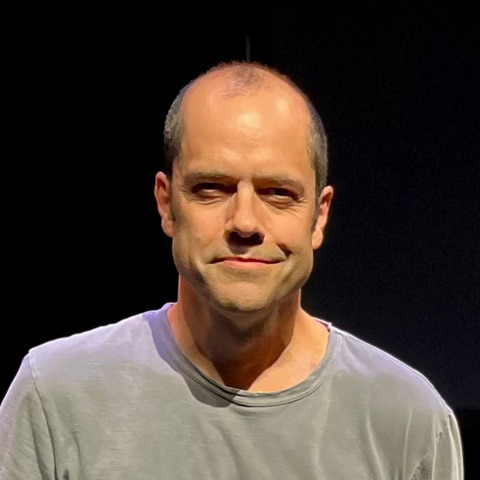
Stephen Butler
Stephen Butler is a management consultant and globally featured TEDx speaker. He studied economics at McGill, earned a PhD at Cambridge, and began his career at Boston Consulting Group before working as an executive and then a tech CEO. Advising growth companies on stubbornly weak productivity led him to the research behind Why Is a Verb, which he wrote with coauthor Karissa Price and which carries a foreword by Marriott's chief human resources officer. He now leads AI at a Bay Area software company.
★ Scribe Case Study
Stephen Butler's Why Is a Verb Was the Bridge to a Head of AI Role and a Globally Featured TEDx
Stephen Butler and coauthor Karissa Price published Why Is a Verb to build a platform, not to sell copies. It led to a Marriott foreword, a globally featured TEDx, and a …
📚 Books by Stephen Butler
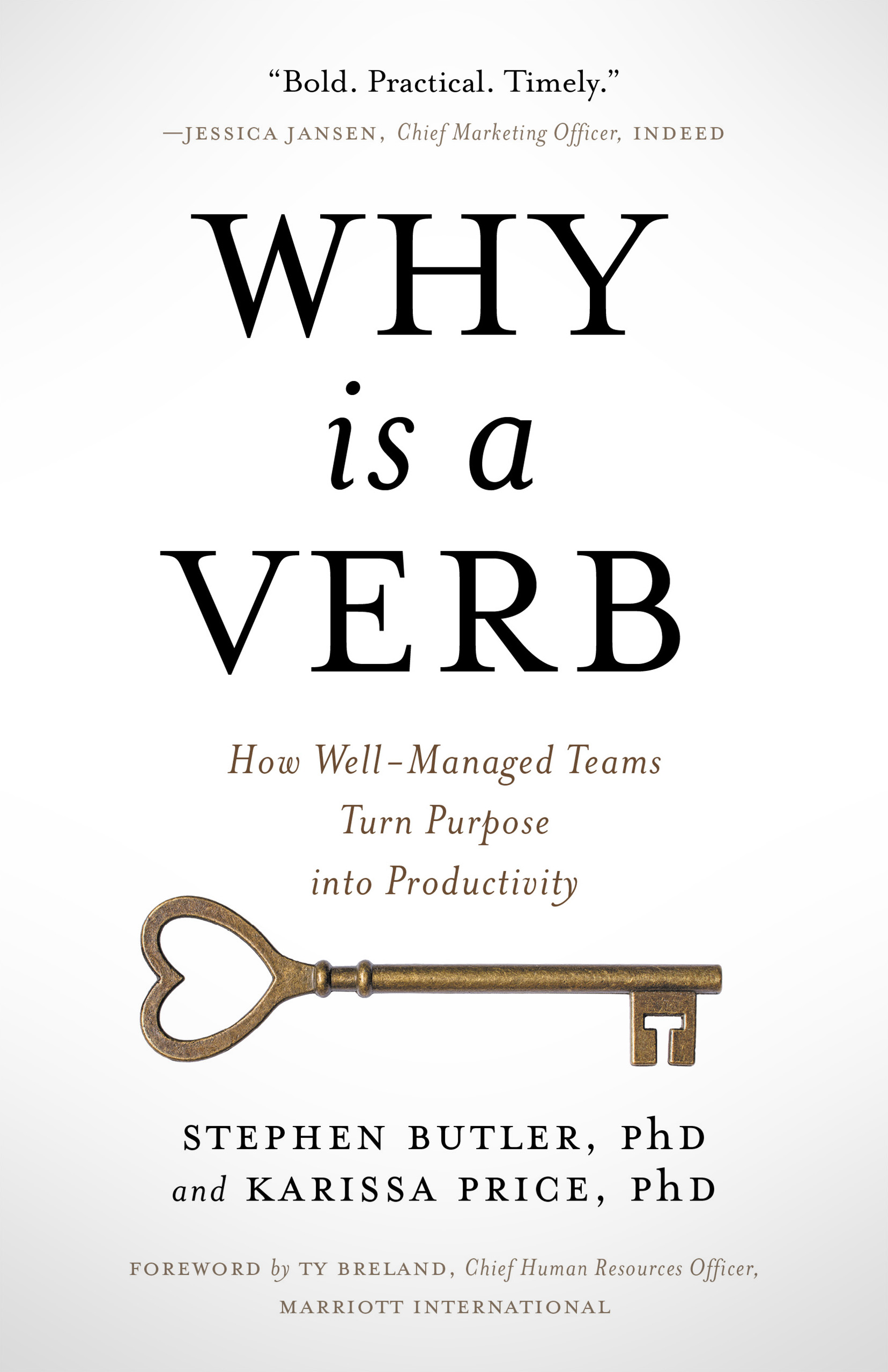
In this episode of Author Hour, Travis Stoliker sits down with Stephen Butler, coauthor of Why Is a Verb, to talk about the McKinsey purpose gap, the woman who felt like a musician who could not hear herself play, what a 250 year old political philosopher has to say about AI, and how the book became the bridge to a head of AI role he never went looking for.
Transcript
Travis Stoliker: Stephen, thank you so much for joining me on the Author Hour podcast.
Stephen Butler: Great to be here, thank you.
Travis Stoliker: So let's just jump into it. Your book is Why is a Verb, and you had a line in your TEDx talk that I just thought was amazing. If you want to find your purpose, don't look for it. Can you tell me a little bit about the book and what that means?
Stephen Butler: Sure. So the book was born out of my return to consulting. I started my, well actually I really started my career as an academic. I was an economic historian, and then started my career with Boston Consulting Group. And then after a sojourn through the world of being an executive and then being a tech CEO for a few years, I found myself advising Canadian growth companies. Basically, firms that are 50 to 100 million dollar revenue and so forth, all with a very common issue at the time, which remains an issue, frankly, globally, which was weak productivity. And what really inspired the book was recognizing that there's actually productivity. We all know it's related closely to engagement. There was a study in 2018 out of the UK which found that the average employee is engaged or on task at least about just shy of three hours out of an eight hour day. And it's probably higher in the States, which has higher engagement, but that was the basic problem, which is how do you get an extra hour a day out of people? And the other thing, so that was point one. Point two, these are the two sort of the rock and the hard place that came together, was the recognition that senior leaders had the opposite problem. They were all working way too hard. And there was a big gap between engagement at the C-suite level and on getting down at the front line. And so, Wise Verb was born from the recognition that while there was a lot of talk about purpose at work and trying to use purpose to inspire people to be more engaged and therefore more productive, a lot of that work was being produced by people who won't name names, but some of them are very famous, that literally had no business experience and no frontline experience. And I had just returned from having sort of been an executive coming back to consulting and a real sense of what it was like to be in the C-suite and even to be in the top chair. And so, I came at this, this was a problem that I thought this is eminently be solvable. So let me pause there. I feel I may have already forgotten your question, but does that sort of set the stage?
Travis Stoliker: Absolutely it does. No, it's perfect. And what is the purpose paradox?
Stephen Butler: Well, the paradox is actually our rebranding of a study that McKinsey consulted and McKinsey consulting, sorry, stumbled upon, which was they discovered, and this came out right at the beginning of COVID. And like so many, you know, this was a COVID book, right? This was sort of a personal project that sort of came off the shelf and moved to the front burner when there was more time to focus on it. What McKinsey found was that if you look at the number of people, if you ask people, are you living your purpose at work? And you ask that to people instead of the senior ranks of an organization, basically about 85% will say yes, they are living their purpose at work. They can sense their, and a lot, in fact, purpose is one of the things Chris and my coauthor and I found is really kind of a shorthand that people use for, am I having impact? And so not surprising, C-suite people tend to feel like they're having, you know, the impact when you move down the organization to, you know, basically sort of the middle management and down to the front lines, that number flips on its head. 15% of people feel like they're living their purpose at work. So that's basically one in six, right? So five out of six senior leaders feel that they're purposeful in what they're doing. One out of six of everyone else. That's what McKinsey, you know, called the purpose gap. And for us, that was a paradox. You know, that, that was something that, you know, given how much work organizations were putting into trying to, you know, bring the junior parts of the organization along was something that we felt was, was a closable. Yeah.
Travis Stoliker: Yeah. That makes a lot of sense. And how do you solve that for people that are on the front lines in those lower levels within a company? Like what are some tips for a leader of a company to make, to connect those individuals more with the purpose, with their purpose and with the company purpose?
Stephen Butler: Well, it's, it starts, I think you can respond to that question at two levels. So it starts with basically a set of basically a psychological model, right? And so Karissa, again, my coauthor who had been with Walmart, but I actually reached out with her to help sort of proofread and fill in some gaps. And she said, not only can I do that, I'm going to write you another three chapters and we're going to, we're going to make this a broader book. So if you, and I had consulted with a couple of industrial psychologists, you know, that actually have the degree as you're working on this problem. And so part of that comes through, actually, you would have seen in the TED talk, which is this model of thinking of purpose as not simply the moments where I have impact. A lot of people feel like we're not having impact all the time. I'm wasting my time. I'm, I'm, I'm not doing anything. In fact, the moments of impact are the result of sort of a, and we use the analogy of like an iceberg, there's a constant process of discovery that we're all engaged in, right? As we go through the world, figuring out, you know, how I'm going to get to the store faster or what I'm going to buy for someone for Christmas or whatever it might be, there's a discovery process. And in the workplace, it's how am I going to get this done faster? How are I going to, how am I going to get this done period that then can be consolidated into moments of learning. So moving up, you know, sort of three layers to this iceberg, the next level is moments of learning where you sort of crystallize, okay, here's what I get from all my discovery, right? Here's what I get from, you know, over the last month I've done this, this and this, but I can take, you know, be sort of three takeaways that I'm going to take forward with me to the next business cycle and maybe through the rest of my career, and then occasionally those moments of learning are really relevant to the moment we find ourselves in, and that's when you have impact. And so the, and, and that's why we'd come up with the, you know, the, the title of the book, you know, why is verb is that why is not something that we, you know, our purpose, our, why it's not something we figure out in a room through an exercise with a bunch of whiteboards and then say, okay, that's it. I need to make myself fit that. I mean, anyone in business like yourself would know that you don't come up with the business plan and then say, that's it, we're living by this for the rest of our cycle or the rest of our experiences as a firm, you're constantly, you know, revisiting that and, and, and improving it with learning. And so that's the verb piece. And then the, so that's the psychological model. Let me pause there. Does that all make sense and hang together the way I've described it?
Travis Stoliker: Yes, absolutely.
Stephen Butler: Okay. So then to move to the next piece then in terms of how do you operationalize that as a manager? It basically comes down to focusing on sort of the three levels. And actually, I like to tell a story here that we put on the cover of the book from a young woman that I worked with several years ago in central Canada, a CPG company, and actually cite her as well in the TEDx who complained that she felt like a musician who had a great instrument and knew that she knew the music, but couldn't hear herself play. She had no speaker. She had no headphones, no way to sort of understand. And if you think of most people in their work, they're, you know, shuffling deliverables across their desk and it's going to some part of the building and they don't know exactly how that's getting picked up and what, how exactly that's moving the needle, if at all. So the key responsibility of a manager is basically to support that, make sure that doesn't happen by creating, you know, what we call feedback loops. And it starts with a fostering that cultural culture of discovery, right? Not simply tolerating, but demanding that people are constantly looking for new and better ways of how to do what they've been asked to do within reason. Of course, we're on a tight deadline. Maybe not. Two then is to have these moments whereby that can be consolidated into learning and to have basically a dashboard or some, and there's a variety of different ways that people can come at this, but a way of helping people understand that. No, you have done something since Christmas. You know, we may not have shipped the product, you know, the project may not be done, but you have learned X, Y, and Z and you've achieved X, Y, and Z. Even if some of those learnings are negative, i.e. this doesn't work, you know, knowing which door is not to open again in business context is as valuable as, you know, getting through the right one. Sometimes more valuable. And then that lastly, it's when those moments of impact happen, it's making sure that the individual who has produced the work or whatever it might be, understands that that has happened. That's in effect, how many minutes that was, but that's basically 55, 60,000 words in about three minutes.
Travis Stoliker: Did you say that you were an economic historian originally?
Stephen Butler: Yeah. Yeah, I did. I, uh, I studied economics at McGill as an undergrad, and then I went and did a PhD in, well, really intellectual history in Cambridge, but it was basically sort of the, the foundations of, of the transition rather between a certain way of thinking about how markets work to basically Adam Smith and everything that's come since.
Travis Stoliker: Wow. With that hat on, what do you think of this moment that we're in now with AI, the, you know, a lot of talk about Luddite fallacy coming back, you know, is this the end of progress? Is this, you know, our, is the sky falling? Like where, where do you kind of land on all that? I would, I'd be really curious with your history perspective.
Stephen Butler: It's a great question. I think the fundamental idea, so the guy is at the core of my thesis. I'm going to, you've, you've let me into the detour. So I'm going to detour on this. Yeah. It's a fellow named Montesquieu. The American founders had a lot of time for him. Like James Madison quoted him, you know, all through the Federalist Papers and so forth. And Montesquieu's basic idea was that a lot of the, you know, the foundations of what we would now call modern economics rested on a system of property rights and a set of laws and laws rather than, you know, if you had laws that protected property rights for the rich, they would protect property rights for everybody. That's how the system would hang together. And so ironically, even though, you know, he, at one point in this document, he described a sort of ideal constitution with the legislature and the executive and independent judiciary that looks a lot like, of course, with the American founders adopted, and it was ironic that the founders went with that because Montesquieu was saying, no, that's actually, that looks strong, but that's actually pretty fragile. And what's really going to protect you is going to be the courts. So that's kind of interesting because certainly as we've seen, you know, a constitution, which I, again, I'm, I'm Canadian, I'm married to an American. I spent a lot of, you know, like all Canadians, I spent, seems like I spent half my life in your country and huge, huge admirer, of course, the U.S. constitution, obviously that's been tested sorely in the last few years. And we're going to see some, you know, regeneration of the words, I think, in the next decade or so, but it is interesting to see how the buck stops when you get, you know, you can say whatever you want on television and you can say whatever you want in your speeches, but buck really stops when you get into a courtroom. And so I think that's sort of in one regard, and I hope I'm answering your question, but I think in one regard, it's really fascinating to see how someone who wrote 250 years ago, a handle on how human beings can abuse institutions and how some institutions, because it's sort of a shared set of interests around them are self-sustaining, but let me pause there. Is that, is that an answer to your question? I know you want to get to AI, but does that, does that make sense the way I described it?
Travis Stoliker: Yeah. Yeah, absolutely. I love it. I love it. How does AI fit into that? Cause I love how you're going to connect this. And I just love that we're again, talking about a book from 250 years ago, which speaks to the power of books.
Stephen Butler: Absolutely. Probably something we should come back to. The fascinating piece about AI is whether it is indeed, you know, so much of, and again, one of the economists who Chris and I quote actually in the book was a guy named Giorgesco Rogan. He was a Princeton, I believe, academic after World War II, who was very interested in how it's sort of the physics of economics, if you will. I, you know, we think of economics as, oh, it's just these bunch of models that people draw at how the markets are going to clear and how interest rates affect the currency and so forth. But Giorgesco Rogan ultimately was saying, well, no, you're basically taking natural resources and you're mixing them with labor and you're processing and you're producing outputs. Some of which are valuable and worthwhile. Some of which are basically pollution. And he was considered a bit of a wingnut in the 1950s. I believe he got a Nobel prize in the eighties, maybe off on that, but he certainly came to be famous. I might be getting mixed up with Ronald Coates. But anyway, he, he, he, he finally got to the point or, you know, he's become a point where this idea of thinking about what actually markets are doing in terms of transforming the world and particularly understanding that waste components, that waste has to go somewhere we, you know, we can bury it in the ground, but you know, parts of it are not variable as we know. And the reason I think that relates to your question about AI, it's something a lot of us have been, you know, a lot of people smarter than I am and more experienced than I am in this area. I've been, I've been cogitating about is does AI change the laws of business? If we have this understanding that ultimately let's say in labor markets, right, labor markets will clear because, you know, if certain forms of labor become more valuable, others will be less valuable, people will get, you know, who are looking for work. If they, if they get laid off in some sectors, they'll find work in other sectors, as we all know, that takes a lot longer to happen than the economists expected, and that's had huge political repercussions really around the world. I mean, Americans are most, you know, most focused and aware, of course, of what's happened in their own backyard, but the Europeans have experienced that. And, you know, it's happened elsewhere. So the question of the, of the disruptions of AI is, you know, does AI shift the needle to the point that some people are going to be permanently out of work that I was listening to Elon Musk talk about this recently. And I was reminded that Elon Musk has made some great business decisions. But he's not an economist and he's not a sociologist. I don't think anyone has a crystal ball on this, but certainly the way the markets seem to be moving is that we're not going to see the kind of disruption. I mean, and again, we can make them back to this, but in my practical experience, working with companies and working with AI on the front line, it's become very, very apparent to me that we are a long way from anyone having their job actually taken over by this, right? In fact, it's much, it's much less about, you know, it's much less a cost-cutting story as, as was originally positioned by, you know, Gary Amadei and, and, you know, others. It's going to be a growth story. Let's all just leave it there.
Travis Stoliker: Yeah. That feels right. And, and I think you're, you're so spot on too. Like, you know, it, what was it three years ago that machines became better at reading X-rays and MRIs, but now we have more radiologists than ever, and obviously kind of the next domino that fell was software and programming, but now programmers are even in more demand than they were before and people that didn't generate software before, like myself now are able to create software that, that feels right, what you're saying, Stephen, how does, because your work is so much about why and purpose, how does AI, because there's so much fear out there, right? Like, how do you connect those two things where you obviously have this. Optimistic view that the sky is not falling. We still will have meaningful work. And I know you're, you're really passionate about people finding meaning in their work. How do you get that message out there to more people that, you know, don't, don't be scared and you will find meaning even in a world of AI.
Stephen Butler: That's a great question, Travis. Funnily enough, it was in the final month, I think we already delivered our first version of the manuscript, Wise Verb, and actually I should just double click here, one of the things we learned from the scribe editors that we worked with is that the real title of the book is not the title, it's the subtitle of the book and the subtitle of our book we have right here is how well-managed teams turn purpose into productivity. And so right towards the end of this, one of our readers who was, we had a lot of great readers through our BCG network, XBCG network. One of them said, Hey, you don't have anything on AI in here, which is very much a sign of the times because, you know, we'd largely written it. We were largely done writing it by let's say 2023. AI was the sort of interesting thing on the news, but it wasn't really in our daily workflows at the time. And I was talking to a friend, friend of a friend in Europe who works for a very large polling company that you would know globally right now, a polling company, and I was asked, you know, I, I basically interviewed him. I wasn't able to use it at the end because he didn't think any of it was ready for prime time, but he basically said, I said, well, what's the impact of AI on your business? And he said, look, AI is basically the world's greatest researcher. And he had a team scattered across Germany and Europe, probably in the States a little bit as well. I think it was 500 people globally that globally that was in his group. And when I spoke to him in 2023, this is 2023, Travis, he was down to 175 people. Right. He was already saying a lot of the real donkey work that's involved in A gathering information and B processing and turning it into insights can be done with computers. Wow. And he felt that the one sector, you know, people talk about call centers, you know, being at play a logical place where AI can have huge disruptive potential. Cause I should footnote what I said earlier. I don't think AI is going to have no impact on the workplace. It's just going to take, I mean, just, just like the people observed, you know, we have more food than ever now being produced. We have fewer farmers than ever. Farming technology has just moved. It's not like we've got a bunch of unemployed farmers sitting around. They're all doing other things. And so AI has this huge displacement, but the thought that then that set up for me was this problem of all our, you know, guitar woman, my, you know, who I mentioned earlier, a lot of the reasons why managers struggle to give that feedback loop to their employees is that that's effectively a research exercise to figure out how a document has gone through the organization, the kind of impact someone's work has had takes that's a huge exercise in talent spotting. It requires kind of hitting pause on business as usual to go and do that. For that very reason, I think it's why it doesn't happen. Whereas AI makes possible what has previously been unimaginable, I can participate in a bunch of conversations, but just this one, or let's say in a business, I could be on a dozen Zoom calls, right? In a couple of days, have transcripts of all of those, and then turn around and ask Zoom, how am I showing up in these meetings? What impact did I have? How, how clearly, you know, based on the questions that I received, was there high engagement with what I was saying? Was there bafflement, et cetera?
Travis Stoliker: You really hit home with me there. I limitless, this company had a pendant for a little while and I was testing it and I wore it and it would record everything. That's obviously a little controversial. So I didn't use it in settings with my friends or anything, because I felt it was a little creepy. But what I did use it for was my conversations, especially my bike rides with my seven and eight year old. And that was fascinating because then just like you exactly said there, Stephen, I would ask it like, how was I doing as a father? How did I do in reacting to that time when, you know, I was a little angry about something that happened. And it was the best mentorship because it was, it was, it was candid, right? It was seeing me showing up like you were at, like you were mentioning, right? It was, how was I showing up as a father in those moments that were only between me and my seven year old? And it, it was extremely powerful, like able to just ask like, well, how would you have recommended that I handle that crosswalk conversation about the dangers of crosswalks? That was, I think you, that was such a good point that AI enables that connection to meeting because it can participate in these zoom calls and give you that candid feedback. That's such an important point that you made.
Stephen Butler: So that was, so thank you. And, and of course I'm not the only one making it, but it was something that we were on to Chris and I pretty early, like it was the spring of 2024. We, or we published, we published in April, I guess, of 2024. So it would have been the winter of 2024 that we were starting to think about the implications of this. And of course, you've touched on it right there, Travis, there's privacy implications. But when you think about it, first off at work, private conversations is when you call home or when you talk to a friend by the water cooler. And, and I think I agree. That's what we don't want to see anyone carrying around some open AI and then they're in London. Let's hear what happens. That would be creepy. But every meeting we're in, every big meeting we're in or every, every meeting with more than one person. Let's start with that. It's a public place. There's three of you in there, right? If you're, if anyone's taking notes, then already there's a record that's being kept. And what's amazed me in the last three years is how quickly, really two years, I guess I've been really focused on this, how quickly organizations have gotten used to the idea that yeah, everything's being recorded when we have a meeting, you know, unless it's on particular, unless it's frankly, for reasons of corporate secrets and disclosure and so forth, very senior meetings, those might be handled in a different way, but general meetings, the meetings where, you know, most of us, which most of us participate in the workplace, that's, you know, pretty much fair game. The next thing as a manager is to then say, okay, if you have, you know, let's say three direct reports and you're going to say to them, look, I'd like your permission to record these meetings so that both of us can get insights out of your conversation and people can feel free to say no, but most of those employees, certainly the, a lot of the people that I deal with when I'm outside of the C-suite, they tend to be in their thirties, you know, so they're millennials and then they're older Gen Zs in their twenties. They're up for it. They're like, yeah, sure. I want to understand this too. In fact, if you think about guitar woman, she's looking for a feedback loop and you're saying, I'm about to give you one, it's built into this meeting. Not only is it built into this meeting, where they're going to have transcripts that are generated and we're going to have a living document maintained, let's say in a quad project or a custom GPT that records how we are relating to work so that you don't need to work or, you know, you don't need to sort of slave away instead of, you know, instead of darkness and, and silence or 364 days a year. So we can get together and have a sit down and talk about your performance review once. We have a living weekly, maybe even daily performance review that's going on. It's just, it's not called a performance review. It's just work insights. So I think that's the kind of thing that, you know, we look at AI replacing things that, that we currently do. Like let's say, you know, handling calls, deflecting calls in the call center would be a great example. But then there's the world of AI that just enables things that were just previously unimaginable. And this is where the book ends on a very optimistic note. And I've yet to give up on this, that if you were to extend the trends we've seen since sort of, you know, the last financial crisis of, you know, of growth and you were to sort of lever in this extra layer of productivity, let's just say we can bump people up from that three hours a day to four hours a day of engagement. We suddenly get to something like Dow 300,000 in 20 years, right? Like it's, we get to an incredible, we see it, you know, we could be entering a period of incredible abundance because we've all been laboring in this kind of factual darkness that isn't necessary anymore. So I, yes, I'm very excited about it. You write a book, yeah, you're inspiring me. I should probably write more about this, but I do have, I have half a chapter that kind of touches.
Travis Stoliker: I love it. And it, it feels like one of those times too, where like the people that are not embracing it, it, how do we make sure that they're not left behind? Like, how does that work? Like they're, especially in my town, we're, you know, we're here in the middle of Michigan. It's very much a, it was built by the auto industry. For instance, we just had a data center that, that got shot down for some fears over AI. And there's, there's a, a dark cloud of fear in some people's head about AI and, you know, understandable in some sense, but I just love your, your view of optimism. And are there any historical parallels to this where there's a, there's a certain group of people that are just really adamant that we're ushering in a computer that is, that is going to be bad for humanity, like, how do you think about that and do you have that in, like, I have some of that in my own family that I'm, that I'm trying to, you know, I, I'm a guy who obviously is biased. I used to build data centers back when they weren't controversial. And like, how do you think about that?
Stephen Butler: It's a great question. And I think the, the top line on this is we really have to think about it a lot because one disruption, I'm going to come to technology in a second, but just think about economic disruptions we've seen, you know, certainly in my business career, I came out of, you know, I graduated with an economics degree in the early nineties and, you know, Francis Fukuyama had just come up with the end of history, you know, liberal democracy is now going to win, take over everything. And I was shocked as anybody, when we got hit with the financial crisis of 2007. And I thought that was a bigger event, a bigger world historical event, frankly, than 9-11 because 9-11 resulted in some wars. 2007 changed how risk management was done everywhere. And it displaced tons of jobs. It destroyed lots of livelihoods and a lot, frankly, in a way that we're still recovering from. So I'm, so I would have been in my late thirties at the time. I feel like that was a wake-up call of my own naivety. I'd always thought I'm not really that ideological person. And then I realized in 2007, no, wait, I am ideological. I believed in markets. I believed in capitalism. And so when we take that to the, you know, to the question of how does, how does technological innovation disrupt capitalism? And so, and that was a disruption, sorry, that had been caused in effect by, you know, sort of a global advent of, of, of increasing, you know, intermingled trade and, and yes, pre-trade, you might call it an offshoring and so forth. And the benefits had not yet redounded to middle America. Right. And so, you know, for some, such as your part of the country, right. I used to drive by the way from Toronto. I was, I was Dave Matthews problem. I go see Dave Matthews concerts, Saratoga Springs, driving along that interstate upstate New York is always depressing because there's all these collapsed towns. So you sort of see it firsthand what the damage has been. Technology do the same thing. Absolutely. Right. I think if you look at the 19th century, right, which is, you know, the industrial revolution, the lives that were disrupted, disrupted by the, uh, you know, sort of say from the 1810s and 1820s through to when things sort of settled out in the 1880s, we're talking about a 60, 70 year process before labor was properly reabsorbed. And then in the meantime, we had kids working in workhouses and we had, you know, all sorts of starvation and so forth in various parts of, I'm really focused on the UK because I know that part of the industrialization history. So I think there's really something to worry about. And in this case, you know, I'm reminded of, cause you mentioned computers. It was in a celebration a few years ago or the 25th, the 30th anniversary of a law firm here in Calvert in Western Canada. And the only person who had been there when the place opened to that 20, it was the 25th, the only person who had been there was one of the admin people, right? She'd been there the whole time. And she was asked, what was the most disruptive piece? It was a computer. She said, well, computers was rough because some people had them on their desks and some did those that didn't were the partners. Frankly, all the secretaries as they were then called got the computers first. Right. And then there was what did she go to next cell phone and desktop, you know, computers getting standardized, so forth. The most disruptive thing from her perspective was the iPhone. Not the iPhone, the Blackberry, right? It was, it was everyone being able to, a fact machine came along, that machine meant you could no longer say the contracts in the mail. The contract was with you immediately. But the biggest thing was the Blackberry because that turned work into almost not quite a 24 hour day experience, but that kind of thing, I think, sorry for this long answer, but I think that's going to look like, I think AI is not going to look like the computer where someone's going to say, we do have AI, we don't have AI people are going to, you know, I mean, we're sort of seeing the early ripples of what's happening, California sort of work its way through the system. And in the next few years, just like we saw computers wash as a wave across all the desktops of corporate America, that's going to happen, you know, the impact is going to be less, are we dislodged from our jobs more of, do we have an excuse to stop working because once we start, once you start working with AI and maybe it sounds like you've done some vibe coding, is that right? Absolutely. Once you tumble down that hole, that's pretty deep hole and lots of people will not be engaging with it at that level. I think at almost every level, the ability to, you know, 50 is these models get right size so that we can start carrying them around in our pockets, which sounds crazy now, but frankly, so did mobile commerce back in 1999, for sure, I think that's something that's going to require a lot of adjustment and the most important thing we can do is make sure that we take that adjustment seriously this time.
Travis Stoliker: That is, man, that is another just great point because all of, all of my friends that we call it, get bit by the Claude bug or whatever, you know, everybody has their own term for it, but. I I'm an old technology guy and a lot of my friends are too. We're in that, I forget what generation we are, but we're born, you know, 1975 to 1985, a lot of my friends. And for all of us, it's like remind, it's reminiscent of when the first websites came out and when AOL instant messenger came out and it is just so much fun and all of these things. That you've thought that you wanted to build for years and years, but they've been too expensive or you can't, you know, get the time to do it now. All of those things, it's literally just a matter of what your imagination can dream up and, and how well you can use the tools to start building these things. But to your point, a lot of my friends, including myself went down these rabbit holes where we weren't sleeping a lot and we were spending way too much time on work in those, those boundaries between when you're working and not, especially with the work from home and everything. I know a lot of people who were losing a lot of sleep and we're working way too much, but we're loving it, but we're really feeling a lot of purpose through that work too.
Stephen Butler: So you just articulated, you went back to, to, to, with, not that you were trying to do this, but I'm just going to push it back to the point that, that we touched on earlier about that gulf between the C-suite and the front line, how engaged people feel, right? I think we're going to, there certainly is going to be a class of say, a stratum of, of individuals or their strata of individuals who, yeah, they're raring to go, they would love to, you know, you know, you know, they've maybe never made an idea happen because they couldn't, you know, get a whole tech team that couldn't, couldn't justify the budget of a whole tech team now with guide coding becoming better and better, you know, I think by the week or if you're flawed users, probably twice daily, but those people are going to be off to the races in some sense, right off of, wow, I can go and build the stuff that I've not been able to afford or get permission to build. A lot of others are going to be in that realm of, I don't know what to do with this, I don't really have any dreams of building anything, but really that's, that's really frankly, most people, most people just want to get a good job of work done every day and they just like to know they made a difference. That's why I think for them, you know, the most important applications of AI are probably more like what you and I were just touching on earlier, which is that ability in AI to give you a feedback loop on yourself, as opposed to your ability to go out and create, create stuff. So it's still gen AI, if you affect, but instead of your idea, doing all the Jenny, it's your actual behavior and how you show up if you're, you know, let's say a plumber and how you, how you visit customers and be able to told at the end of the day, here's the average amount of time you spend in conversation with your customers versus the average amount of time you're spending, you know, underneath the sink, those kinds of insights, I think are going to be useful for everyone.
Travis Stoliker: I mean, one of the most rewarding things that I started doing was I would just post on Facebook because I had a friend that was over and he was like, what are you doing with AI or you're really into it? And so I just sat down and we would just talk about an idea and then we just kind of do it together. And then I just started posting it on Facebook. I'd be like, Hey, tomorrow I've got two hours. Anybody that wants to come over can come over. I'll just talk to you about AI. And those just have kept growing. The last one, I think there were 15 people here. I mean, the secretary of the Senate for Michigan was here. A bunch of local real estate developers were here, some real estate agents. And we would just talk about different problems that they had and just start using it in front of them. And it was just amazing to see that light bulb moment in these people. And then later, I mean, one of the ladies, Gabrielle, she owns a dock company. They literally make docks for lakes. And she ended up redoing her whole inventory system for, for the docks because she always hated this software. It was so limiting. And that was just after one little session, kind of what, what you and I take for granted. And it's just seeing that breakthrough moment is just so amazing. And people, I just love your view, your optimistic view of the technology.
Stephen Butler: Thank you. Yeah. Well, and then, and then that, that optimism, I can segue to what we did with the book. Would that be a good place to go from here? I think, I think you've set it up nicely. So I, so, so basically again, I was working as a management consultant, independent management consultant when Chris and I shipped the book and we were actually, we had a firm we, we, we, we founded together called Sagely. He very quickly got recruited actually into an AI firm. And so Sagely became me and a short, short amount of hangers on. And the thing that we learned a lot from scribe was that the book, you know, in addition to a bunch of technical things like the, it will be, I guess the idea that hybrid publishing was a bit of an oxymoron, I think that was, that was one of the, one of the things I really enjoyed. It's just a bad deal on self-publishing, but one of the, one of the learning pieces was that the book was not the product, you know, enough front, you know, our, our, our sort of, you know, manager, I guess, I'm not sure what exact role title was, was, you know, what are you trying to do with this? And our answer was, yeah, we're not trying to ship lots and lots of books, right. We're trying to build a platform for getting this idea out there into the world, just kind of, I guess, three phases that a, that an advisory firm goes through. Right. The first is feasibility. You know, do we have any value to add? And then there's sustainability. Can we do it repeatedly or repeatability, I'll call it from. Ability, repeatability, and then scalability, you know, can we do this for more and more people, you know, within the constraints that we've got and most, you know, the most successful consulting firms struggle at that last piece, right? Because you can't scale yourself. You can't be in all these different places at once. And our thought that we had, and Chris and I were really inspired by the conversations we have described was that we're going to create a platform that will basically illustrate and do, you know, well, some of what you and I've spoken about and the funny thing, and the first iteration that took was I created a course that I put up on Udemy called leadership in the AI workplace. That was a sort of, you know, sort of the AI theme. Some of the things you and I've been touching upon is pulled that out. And that became another interesting calling card. But again, it was only scalable in the sense of like the book was scalable. Are we trying to sell thousands of these? Am I trying to get, you know, tens of thousands of people to take this course? No, that wasn't the purpose. I was trying to get into organizations where we could really move the needle and hopefully have a bit of a cultural impact. And in fact, that inspiration, which sounds a bit crazy, the reader, we didn't have a forward for the book when we first met Scribe, but through our network, we ended up with the chief human resources officer at Marriott named Ty Breland, this incredible leader who said, yeah, this is what we do. I'm putting my name on this. I'd like to write your first chapter or I'd write your forward. So we were thinking, how many more Ty Breland's are there out there that we can, you know, that really connect with in these larger organizations. And so with that stage set, began to look at, you know, what it would take to build a platform. And that's when the chocolate met the peanut butter for the second time for me is I met another firm, basically in the Bay Area where I spend about a third of my time, where my wife is based. It's San Francisco. Who had read the book and as she heard one of the talks that we gave, we gave talks to a bunch of different places and she'd heard talks at this, at this place called the mosh pit, which is a virtual group for commercial real estate, sort of thinkers, if you will, based in California. And she said, actually, what you're talking about is exactly what I'm trying to build with, I'll just call it product X, something out of its stealth mode. And so that's where everything suddenly shifted in terms of, oh, OK, this book has done what it needed to do. It had been the bridge to this person who is already funded and building this thing and now became, for all intents and purposes, the head of AI with this, with this company.
Travis Stoliker: So that's amazing how the book unlocks those doors that you never knew even existed. I don't think there's anything else but a book that can do that.
Stephen Butler: Right.
Travis Stoliker: Yeah.
Stephen Butler: Cause I mean, there's a lot, a lot of people try to self promote now, well, everywhere, but as you know, it's not just that we're an attention starved economy. We have way too much IP, right? Anyone, there's no, there's no barriers to entry to creating a LinkedIn newsletter.
Travis Stoliker: Yeah.
Stephen Butler: And so somebody that might've, you know, put up a great LinkedIn post and got I think I'm quoting an actual story, but, you know, I think there's some guy who put up a great LinkedIn post that went viral and he got 25,000 users back in 2021. And now he's up to a couple hundred thousand users, but he said himself, I'm never going to write another post like that because there's just too many posts. This does have a barrier to entry. And frankly, the key to that barrier are people like you guys, you know, you obviously have to put the work in to write it as well. Not only do people judge books by the cover, they often only read the cover, which is the seriality of the table of contents, but you have to have, it has to be, you know, it has to be well produced. It has to be well-written. They can't flip the page and find, you know, typos and poor grammar and stuff. So I think what you're doing is really helping a lot of individuals who have an idea that deserves a bigger platform that forgotten LinkedIn posts.
Travis Stoliker: And one of the things that we try to repeat all the time is having a bad book is way worse than having no book at all, especially in the era of AI. So many people trying to rush. I think Stephen, probably the biggest thing that we hear these days is, well, so-and-so publisher is saying that they can have my book released in five weeks, and we just, we just cringe at that because every author that we talked to talks about how it's the process of writing the book in sitting with the ideas and letting them ruminate and that it always, and then getting the, like you mentioned, getting the four, the forward to be written by somebody important, getting those first readers to give you feedback, having an editor that really does addition by subtraction to make the book way better. Like those pieces are so critical in making a great book.
Stephen Butler: Yeah. And you're right about how the process develops the idea. You can think you have an idea. I mean, the one thing I felt really fortunate with, I have to say the one thing I'm more grateful for than scribe is Karissa, right? Because it was when I got a thought partner, I bet I, I don't, I think, I don't have any coauthor groups you get come through your system, but I got the impression that it's a minority. Yeah. I don't know how people write books on their own, right? Like I am, I'm a coauthor by nature, right? I need to, I mean, you can get the impression from this conversation. I really value the interaction of talking it through with someone and the dividend of that and the whole process, as you described going through a structured process is a, you come out with better. And so when it was time, you know, when I got invited to, to apply to do this, this TEDx and ultimately to do this TEDx, which was, and not a lot of people know this, most TEDx is get 4,000 views. We got globally for, I got globally featured by the TEDx people. And I guess if you say 30,000, it's 30,000. I mean, it's down, it found its market, right? It made through to a bunch of people, but that was only possible because of the work we had done on the book. We weren't showing up to play without having done the thing. The other thing is once, and this may not be your favorite part of this discussion, but, but once you've learned how to do it properly, what is involved in doing about, and I've got friends that have basically published books with traditional presses and we've compared notes, right. On how we work with scribe versus how they worked with, you know, their, their presses on, on nonfiction books, exactly the same, right? Like it's, it's, there's really, it's really no mystery, right? The big difference I think with a traditional publisher is, is that they would then put tons of money into, well, Hey, they've chosen you because you've already got, you know, 30,000 followers or something, somehow, somewhere. So you've got that built-in market, but then, you know, then they're going to put some, some time into, into helping you get some, some placement. But the other thing we did, and so here's, here's exhibit B that I brought to the call, having learned how to write a book, this was the next book and this, I hate to say, we didn't use scribe at all, but I knew exactly how to lay out the pages and I knew how the structure should be. And I kind of did a little, an AI, frankly, helped a little bit with the structuring, not the content. But I think one of the things that you guys do for people is having helped them come in at the very top of professionalism in terms of what is the what does good content and giving them that experience. If that's not their last book. And if you're dealing with a lot of first-time authors, I presume you do. They are what makes you a first-time author is that you're going to be a second time, maybe a third time. I think that's a dividend from working with scribe that a lot of people. May not fully appreciate. I certainly didn't appreciate it until suddenly I thought, I mean, this book, Travis, like I said, was in the AI head of AI for this business. We were trying to create, we needed some natural language program. We needed some context for a whole bunch of what the platform was trying to do. And so I wrote nine chapters and then threw it together into here. This is basically the Intel inside of what is now a system of which I've by coded called Clayton. If you go Clayton get Clayton dot app, that's where you can experience the product that we've built standing on this bedrock.
Travis Stoliker: Well, I think that that is just amazing because our entire mission is to get more great books out there. So I'm just so glad that you published that and that we were able to help you in teaching you some of the things that we do, which is why we give it away for free in the scribe method and the blog and everything, and oh, great. Yeah. Yeah. Hey, thank you. Thank you so much. Tucker and Zack did great work with that. Stephen, this has just been amazing and it's, I just want to thank you for the historical context, obviously for being a scribe author. But you know, maybe it's just in my limited circles, but to hear, here's somebody so optimistic about the future and what AI can do in the historical parallels of where we're at in just to, to have a bit of reassurance that the sky isn't falling, that this is new, that this isn't going to take all the jobs, thank you so much for, for championing that message, because I think so many people need to hear that.
Stephen Butler: Well, you're, you're most welcome, Travis. Thank you. I got to thank you. Not only just, just again, for this platform, the opportunity to talk to you and share some of these ideas, because you brought back to me some of my own journey with scribe, I'll underline again, optimism. I think it's, it's something that we're going to see more and more of now that the mystery, you know, a lot of people who've been opining on what AI can do, such as Mr. Musk, haven't been actually working with it on the frontline. And there may be, there may be issues in sort of defense systems and so forth, but we don't need to touch that. I think in terms of the daily experience of the workplace, I think it's going to become better and better in the coming years. And I stand by that. And the other thing I'd like to thank you for is it's just the opportunity to work with scribe. Uh, you know, you guys are, uh, it was interesting to see scribe go through its, its transformation a couple of years ago, what came through was the power of brand and brand, not simply in the sense of, you know, a promise or work that someone's done creatively, but a real set of values that you guys embody. I think the world needs more scribes. I was delighted, Chris and I were delighted. I speak on her behalf. We were delighted to have found you guys. And we've already made two or three efforts to push people your way.
Travis Stoliker: So you have, you have, and I really appreciate it. And thank you so much, Stephen. I look forward to us speaking again, because this was just amazing.
Stephen Butler: So good luck in the new, in the new job. And it looks like you're off to a rolling start. And again, I wish you all the very best.
Travis Stoliker: Appreciate you. Thank you so much.
Want to Write Your Own Book?
Scribe has helped over 2,000 authors turn their expertise into published books.
Schedule a Free Consult